
Tony Visconti – David Bowie’s Longtime Producer and Sonic Architect
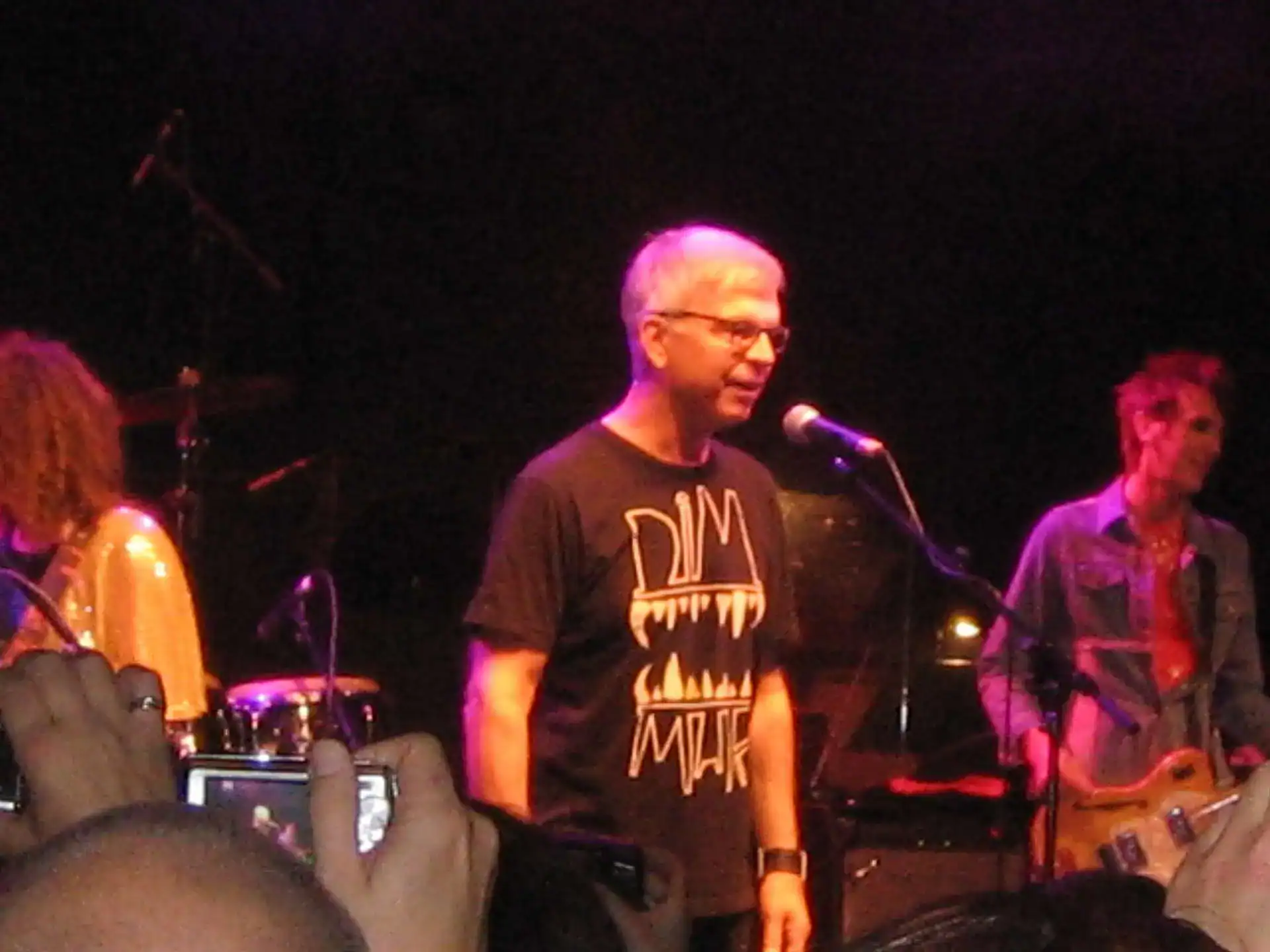
Photo: Unknown photographer / Wikimedia Commons / CC BY-SA 4.0 (editorial use)
Few people occupy a place in David Bowie’s recorded history comparable to Tony Visconti. Producer, arranger, bassist, engineer, mixer and musical collaborator, Visconti worked with Bowie across radically different periods of his career, from the experimental recordings of the late 1960s to the final sessions for Blackstar.
Their partnership was never continuous. Bowie repeatedly changed musicians, producers, studios and working methods, and there were periods of many years in which the two men did not make records together. Yet when they reunited, Visconti repeatedly became part of some of Bowie’s most important artistic transitions.
Their shared catalogue includes much of the 1969 David Bowie album, The Man Who Sold the World, the Philadelphia recordings that became Young Americans, Low, “Heroes”, Lodger, Scary Monsters (And Super Creeps), Heathen, Reality, The Next Day and Bowie’s final studio album, Blackstar.
- Full name: Anthony Edward Visconti
- Born: April 24, 1944, Brooklyn, New York, United States
- Roles: Producer, arranger, musician, engineer and mixer
- First worked with Bowie: 1967
- Final Bowie studio album: Blackstar (2016)
- Bowie connection: Longtime producer and musical collaborator
From Brooklyn to London
Tony Visconti was born in Brooklyn, New York, on April 24, 1944. A musician before he became internationally known as a producer, he developed skills as a bassist, arranger and record-maker that would later allow him to move unusually freely between the technical and musical sides of a recording session.
His career changed dramatically after he travelled to Britain in the second half of the 1960s. Working with producer and publisher Denny Cordell and becoming associated with the Essex Music organisation, Visconti entered a London music scene in which new forms of rock, folk, psychedelia and theatrical performance were developing simultaneously.
Two of the young artists he encountered during this period would become central to his career: Marc Bolan and David Bowie.
Meeting David Bowie – 1967
Visconti has consistently dated his first meeting with Bowie to 1967. At that point Bowie had already recorded singles with several groups, released his first self-titled album for Deram and begun exploring interests that extended well beyond conventional pop music.
Visconti later remembered that Bowie was interested not only in songwriting and recording but also in theatre, mime, acting and presentation. Their common musical interests gave them an immediate basis for experimentation.
Tony Visconti on meeting David Bowie
“I loved his voice and writing but rock was not his end goal. He loved musical theatre, acting, mime; he was a young Renaissance Man.”
— Tony Visconti, Penny Black Music interview
Their earliest recording work together included material made during Bowie’s final period with Deram, including Let Me Sleep Beside You, Karma Man, In the Heat of the Morning and London Bye Ta-Ta. These recordings belong to the transitional period between Bowie’s first album and the songwriting breakthrough that followed.
David Bowie / Space Oddity – 1969
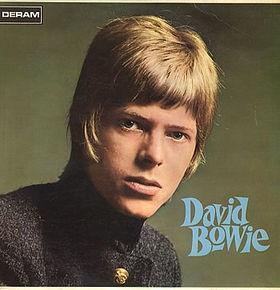
The first Bowie album substantially produced by Visconti was the record originally issued in Britain in November 1969 simply as David Bowie. It was later reissued by RCA under the title Space Oddity.
An important distinction is often lost in abbreviated accounts of the album: Tony Visconti produced the album except for the song Space Oddity itself. The hit single was produced by Gus Dudgeon.
Visconti’s production therefore belongs to recordings such as Unwashed and Somewhat Slightly Dazed, Letter to Hermione, Cygnet Committee, Janine, An Occasional Dream, God Knows I’m Good and Memory of a Free Festival.
The album shows Bowie rapidly moving away from the theatrical pop language of his Deram debut. Folk, progressive rock, long-form songwriting and increasingly ambitious arrangements began to coexist within the same record.
The Hype – from producer to band member
David Bowie and The Hype, 1970
In early 1970, Tony Visconti‘s relationship with David Bowie temporarily moved beyond the recording studio. Visconti became the bassist in the electric group that developed around Bowie alongside guitarist Mick Ronson and drummer John Cambridge.
One of the earliest documented appearances by this line-up was recorded for John Peel‘s The Sunday Show on 5 February 1970 and broadcast three days later. Significantly, the BBC credited the performers as David Bowie and The Tony Visconti Trio.
The extensive session brought together older Bowie material and compositions that pointed towards a heavier musical direction, including The Width of a Circle, Unwashed and Somewhat Slightly Dazed, Cygnet Committee and Memory of a Free Festival.
During the following weeks the group became known as The Hype. Bowie sang and played twelve-string guitar, Ronson played electric guitar, Visconti played bass and Cambridge was on drums. It was a short-lived working group rather than a permanent independent band, but it became an important laboratory for Bowie’s changing sound and stage presentation.
Costume, character and the Atomic Sunrise Festival

Click the image to watch David Bowie and The Hype performing at the Atomic Sunrise Festival, Roundhouse, London, 11 March 1970.
The Hype also placed Visconti directly inside one of Bowie’s earliest experiments with theatrical rock presentation. Instead of appearing as a conventional band, the musicians began performing in individual costumes and stage identities.
At the Atomic Sunrise Festival at London’s Roundhouse on 11 March 1970, Bowie and the group appeared in full costume. The surviving documentation shows Bowie already attempting to combine music, visual identity and theatrical presentation years before the fully developed Ziggy Stardust production.
Visconti therefore witnessed and participated in this experiment from the stage itself, not simply from behind the mixing desk. This period demonstrates how unusually broad his early relationship with Bowie had become: producer, bassist, arranger, colleague and live musician.
David Bowie on The Hype
“Although we’re all happy with the set up, I don’t think The Hype will become a permanent thing. I’d like to retain Hype and myself as separate things because I think they can work independently.”
— David Bowie, Melody Maker, 28 March 1970
From John Cambridge to Woody Woodmansey
The original Hype line-up did not last long. By the end of March 1970, John Cambridge had left Bowie’s group. He was replaced by another Hull musician, Mick “Woody” Woodmansey, who joined Bowie, Ronson and Visconti as the music continued to develop.
The revised line-up rehearsed at Haddon Hall, Bowie’s home in Beckenham. These rehearsals allowed Ronson, Visconti and Woodmansey to develop the arrangements, dynamics and heavier group sound that would soon be taken into the recording studio.
With Visconti on bass as well as production, the line-up of Bowie, Ronson, Visconti and Woodmansey became the core group that recorded The Man Who Sold the World. By this stage the public identity of The Hype was already fading, but the musical relationships created during those few months had become far more important than the band name itself.
The BBC sessions – 1968 and 1970
Tony Visconti’s connection with Bowie’s BBC recordings began before The Hype. On 13 May 1968, Bowie recorded a session for John Peel’s Top Gear with musicians credited as the Tony Visconti Orchestra. The session included In the Heat of the Morning, London Bye, Ta-Ta and Karma Man.
Their BBC association continued on 5 February 1970, when Bowie, Visconti, Mick Ronson and John Cambridge recorded the extensive Sunday Show session already documented above. The performance was broadcast on 8 February 1970 and credited to David Bowie and The Tony Visconti Trio, later identified with The Hype.
A second Hype BBC session followed on 25 March 1970 for Andy Ferris’ Sounds of the 70s, broadcast on 6 April 1970. The group performed Waiting for the Man, The Width of a Circle, Wild Eyed Boy from Freecloud and The Supermen.
Together, these broadcasts provide an unusually clear record of Visconti’s changing role in Bowie’s music: from arranger and musical collaborator in the late 1960s to bassist in the fully electric Hype line-up of 1970.
Rehearsals at Haddon Hall
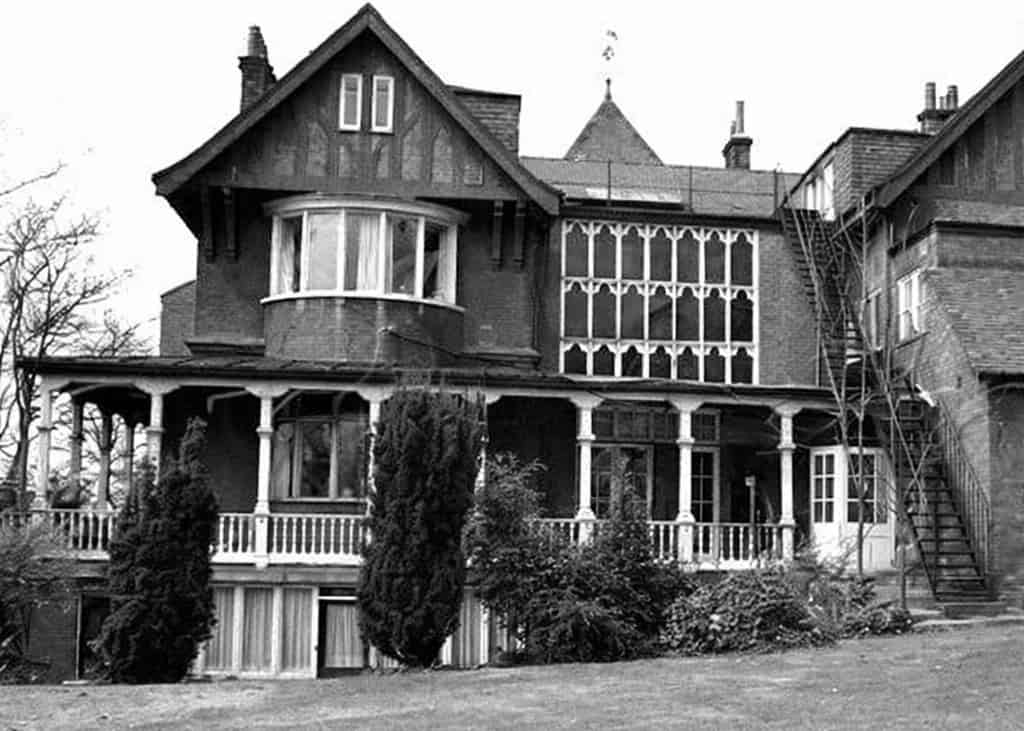
An important part of the development of The Man Who Sold the World took place away from the recording studio at Haddon Hall , Bowie’s home in Beckenham.
Visconti was living there during this period alongside Bowie, their partners and members of the developing band. In the basement wine cellar, Visconti, Mick Ronson and Woody Woodmansey spent weeks rehearsing and developing the heavy group sound that would soon be recorded for The Man Who Sold the World.
The makeshift rehearsal space was an important part of the process. By the time the musicians entered the studio, the arrangements had already been extensively rehearsed, allowing Visconti to approach the album not only as its producer but as a bassist who had helped develop the music from inside the band.
The Man Who Sold the World – 1970
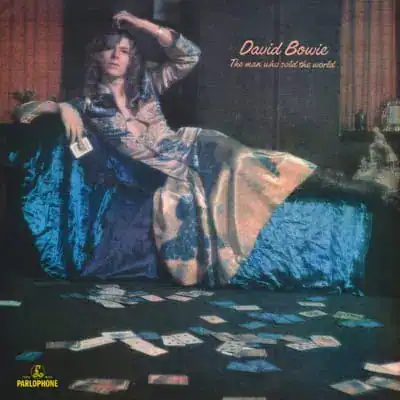
The next major collaboration was The Man Who Sold the World, recorded in 1970 and produced by Tony Visconti.
The personnel included Bowie, Mick Ronson, drummer Mick “Woody” Woodmansey and Visconti himself on bass. The resulting album was considerably heavier than Bowie’s previous work, with extended arrangements, prominent guitar, powerful rhythm playing and unusually dark lyrical subjects.
For Visconti, this was therefore not simply a production assignment. He was part of the instrumental foundation of the record as well as the person responsible for recording and shaping much of its sound.
Tony Visconti on The Man Who Sold the World
“When we began ‘The Man Who Sold The World’ David and I jokingly said, ‘Let’s make this our Sgt. Pepper’s.'”
— Tony Visconti, recording notes later published by DavidBowie.com
After the album, Bowie and Visconti went in different professional directions. Ronson and Woodmansey remained in Bowie’s orbit and bassist Trevor Bolder subsequently completed the rhythm section that became associated with the Spiders from Mars.
Visconti, meanwhile, continued his successful production career, notably with Marc Bolan and T. Rex.
Reconnection – Diamond Dogs and David Live
Visconti was absent from the production of Bowie’s best-known Ziggy-period studio albums, but the two men reconnected professionally during 1974.
Bowie had largely completed Diamond Dogs when he contacted Visconti. Visconti had recently constructed a sixteen-track home studio, and Bowie came there first for a trial mix and subsequently returned to remix the album with him.
Visconti later described his contribution as primarily a mixing assignment, although he also wrote the string arrangement for 1984. Among the effects added during the final mixing process was the repeated vocal treatment at the end of Big Brother.
Their renewed association continued with the live tapes recorded at the Tower Theater in Philadelphia in July 1974. Visconti was brought in to mix the material that became David Live.
Young Americans – Philadelphia soul
The collaboration deepened during Bowie’s move into American soul. Sessions at Sigma Sound Studios in Philadelphia produced the body of work that evolved into Young Americans.
Visconti produced the principal Philadelphia recordings and contributed arrangements, including strings. The sessions brought Bowie into close contact with musicians and singers such as Carlos Alomar, Luther Vandross, Robin Clark, Ava Cherry, David Sanborn and others.
The album was subsequently reshaped after Bowie worked in New York with John Lennon and producer Harry Maslin. The finished album officially credits Tony Visconti as producer, with Across the Universe and Fame produced by Bowie and Maslin.
The earlier configuration of the Philadelphia material later became known as The Gouster and was finally issued as part of the Who Can I Be Now? (1974–1976) box set in 2016.
Low – reunion and a new recording language
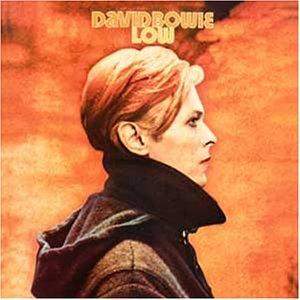
The next major Visconti-Bowie studio partnership began with Low, recorded during 1976 and released in January 1977.
Bowie was working closely with Brian Eno, whose systems, synthesizers and conceptual approaches became central to the sessions. But Eno was not the album’s producer. Low was co-produced by David Bowie and Tony Visconti.
Visconti arrived with a piece of technology that would become inseparable from the album’s sound: the Eventide H910 Harmonizer. Its pitch-shifting capabilities were used dramatically on Dennis Davis’s drums, helping create the enormous, unstable drum textures heard on tracks such as Sound and Vision.
The sessions combined short, fractured songs with instrumental pieces, electronic treatments and unconventional recording methods. The result represented a major break with the polished soul and rock language Bowie had pursued immediately beforehand.
Tony Visconti on the Eventide Harmonizer
“It fucks with the fabric of time.”
— Tony Visconti, describing the Eventide Harmonizer during the Low sessions
“Heroes” – the voice, the room and Hansa
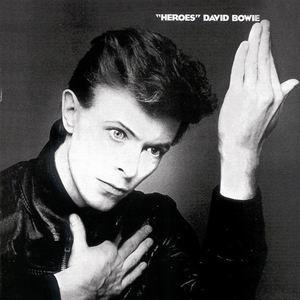
Later in 1977 Bowie, Visconti and Eno reconvened for “Heroes”, recorded at Hansa Studios in West Berlin. Once again the album was produced by Bowie and Visconti, with Eno making extensive creative contributions.
One of Visconti’s most famous technical contributions to any Bowie recording came during the title track.
Three microphones were positioned at increasing distances from Bowie. Electronic gates controlled when the more distant microphones opened, so the acoustic space surrounding the voice expanded as Bowie sang with greater force.
The effect is fundamental to the finished recording: the performance appears to grow physically larger as the song reaches its emotional peak. It remains one of the best-known examples of studio engineering being used as part of musical storytelling.
A personal story inside “Heroes”
Visconti’s connection with “Heroes” was not merely technical. During the Berlin sessions he was in a relationship with backing singer Antonia Maass. Bowie later explained that a couple seen embracing near the Berlin Wall helped inspire part of the imagery in the song.
For many years Bowie protected the identities of the couple. Visconti later confirmed publicly that he and Maass were the people Bowie had observed.
The episode became one of the rare occasions when Visconti’s personal life entered the mythology surrounding a Bowie composition.
Lodger – completing the triptych
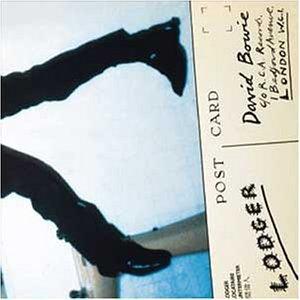
Bowie, Visconti and Eno continued their collaboration on Lodger, released in 1979. Although usually grouped with Low and “Heroes” as the “Berlin Trilogy”, Lodger was not recorded in Berlin. Major sessions took place at Mountain Studios in Montreux, Switzerland, with further work in New York.
The album deliberately disrupted conventional studio habits. Musicians were placed in unfamiliar situations, arrangements were altered, and Eno’s Oblique Strategies formed part of the experimental environment.
Tracks including Fantastic Voyage, DJ, Look Back in Anger, Boys Keep Swinging and Repetition demonstrate a very different approach from the extended instrumental landscapes of the preceding albums.
Visconti was never completely satisfied with the limitations of the original mix. Decades later, with Bowie’s approval, he began revisiting the multitracks. The resulting 2017 Tony Visconti mix was released after Bowie’s death in the A New Career in a New Town (1977–1982) box set.
Scary Monsters – the end of an era
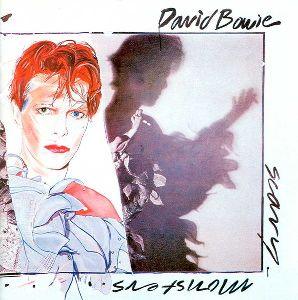
The Bowie-Visconti partnership of the 1970s culminated in Scary Monsters (And Super Creeps), recorded in 1980.
The album retained the adventurous instincts of the preceding records but presented them within a tighter and more direct rock framework. Robert Fripp returned on guitar, Pete Townshend appeared on Because You’re Young, and Bowie confronted his own past directly in Ashes to Ashes.
Visconti later regarded the album as one of the furthest points to which he and Bowie had pushed their shared studio language during that period.
Tony Visconti on Scary Monsters
“We were pushing the boundaries further than we ever had with this album.”
— Tony Visconti, A New Career in a New Town recording notes
Twenty-two years between Bowie albums
After Scary Monsters, Bowie chose other producers and collaborators for the studio albums that followed. Visconti was therefore not involved in the making of Let’s Dance, Tonight, Never Let Me Down, the Tin Machine studio albums or Bowie’s principal 1990s studio records.
This long separation is important because it demonstrates that their relationship was never a fixed production arrangement. Bowie continually changed his surroundings when he believed a different working method would serve the music.
Visconti and Bowie began working together again on individual projects in the late 1990s. By the beginning of the new century the creative partnership was ready to become central to a Bowie studio album once more.
Heathen – the partnership renewed
Released in 2002, Heathen was the first full Bowie studio album produced by Bowie and Visconti together since Scary Monsters twenty-two years earlier.
Much of the recording took place at Allaire Studios in the Catskill Mountains of New York State. The setting gave Visconti access to large natural acoustic spaces, something that reminded him of the possibilities they had encountered during the making of “Heroes”.
The album included Bowie originals alongside interpretations of songs by the Pixies, Neil Young and the Legendary Stardust Cowboy. Guest musicians included Pete Townshend and Dave Grohl, while Visconti contributed extensive production, arranging and instrumental work.
For Bowie and Visconti, Heathen was not an attempt to reproduce the sound of their 1970s records. It demonstrated that their working relationship could operate naturally within Bowie’s contemporary music.
Reality – producer and musician
The reunion continued almost immediately with Reality, released in 2003. Bowie wanted to make a record that reflected the musicians with whom he was then performing, and many members of his touring group participated in the sessions.
Visconti again co-produced the album with Bowie and also played bass. The record included New Killer Star, Never Get Old, The Loneliest Guy, Days, Reality and the long-developed Bring Me the Disco King.
The subsequent A Reality Tour became Bowie’s final concert tour. Visconti was not a member of the touring band, but his connection continued behind the scenes: he created the 5.1 surround mix for the concert film recorded in Dublin.
The years away from public view
Following the end of A Reality Tour in 2004, Bowie largely withdrew from public performance and released no new studio album for almost a decade.
That silence made what followed especially remarkable. When Bowie decided to record again, one of the people he trusted with the secret was Tony Visconti.
The Next Day – the secret sessions
Work on what became The Next Day was conducted under extraordinary secrecy. Recording began without a public announcement, and musicians were expected not to disclose that Bowie was making a new album.
Bowie and Visconti co-produced the project, principally working at The Magic Shop in New York. Longtime Bowie musicians including Gerry Leonard, Gail Ann Dorsey, Earl Slick, Zachary Alford, Sterling Campbell and others contributed to the sessions.
Tony Visconti on keeping The Next Day secret
“We vowed not to tell a soul that David and we were making a new album – and that even included our domestic partners.”
The secrecy was so complete that the announcement of The Next Day on Bowie’s sixty-sixth birthday, January 8, 2013, became an international surprise. The single Where Are We Now? appeared simultaneously with the announcement.
For Visconti, his role required not only production but absolute discretion. He was one of the small number of people who knew that one of the most closely watched artists in popular music had quietly returned to recording.
Sue and the road toward Blackstar
The next transition began with Sue (Or in a Season of Crime), recorded in 2014 with a large jazz ensemble and released on the compilation Nothing Has Changed.
Saxophonist Donny McCaslin participated in the recording. Bowie and Visconti subsequently saw McCaslin’s quartet perform in New York, and Bowie recognised possibilities in the group’s combination of jazz discipline, improvisation and contemporary rhythmic language.
McCaslin, keyboardist Jason Lindner, bassist Tim Lefebvre and drummer Mark Guiliana became the central instrumental group for Bowie’s next album, with guitarist Ben Monder also making major contributions.
Blackstar – the final studio collaboration

Blackstar was recorded during 2015 and released on January 8, 2016, Bowie’s sixty-ninth birthday. It was produced by David Bowie and Tony Visconti.
The sessions brought Bowie into a musical environment built around musicians who were comfortable with complex harmony, improvisation and rapid changes in direction. Rather than asking the group to imitate earlier Bowie records, Bowie encouraged them to bring their own musical language into the project.
Visconti’s responsibilities again extended beyond a conventional producer credit. He recorded, arranged, mixed and worked directly with Bowie on translating demos and ideas into finished recordings.
The album contains Blackstar, ’Tis a Pity She Was a Whore, Lazarus, Sue (Or in a Season of Crime), Girl Loves Me, Dollar Days and I Can’t Give Everything Away.
How Bowie and Visconti worked together
By the final period of their collaboration, Bowie and Visconti had accumulated almost five decades of shared musical references and studio experience. That history allowed them to work without rigidly dividing every creative decision between “artist” and “producer”.
Visconti has described Bowie as the source of ideas and direction while identifying his own principal tasks as hands-on recording, arranging, playing, backing vocals and mixing. The boundary between those responsibilities could shift according to what a song required.
Tony Visconti on working with David Bowie
“We were always a very intuitive team, we almost read each other’s minds.”
— Tony Visconti, December 2016
That intuition did not mean that Visconti simply agreed with Bowie. His value lay partly in being an experienced musician and engineer capable of converting ideas into practical arrangements and recordings, while also understanding when an accident or unconventional decision was musically useful.
Tony Visconti on their creative partnership
“But in all things we’d work side by side – no rules, no boundaries.”
— Tony Visconti, December 2016
The trust behind the mixing desk
One of the clearest demonstrations of their working relationship came in Visconti’s description of Bowie’s attitude toward mixing.
Bowie understood the difference between giving artistic direction and interfering with specialist technical work. By the later sessions he trusted Visconti sufficiently to allow him to begin mixes independently before joining him to evaluate the results.
Tony Visconti on Bowie’s trust
“David left most of the production decisions to me – he had confidence in me.”
Visconti recalled Bowie joking that he was hardly going to tell an experienced engineer which equalisation settings to use. It is a revealing detail: Bowie retained ultimate artistic authority while giving trusted collaborators room to exercise the expertise for which he had chosen them.
A final conversation and an unfinished future
Because Blackstar was released only two days before Bowie’s death on January 10, 2016, it can be tempting to describe every aspect of the album as though everyone involved knew it would be the end. The documented history is more complicated.
Visconti knew Bowie was seriously ill, but Bowie continued generating ideas and discussing future work. Visconti has since recalled that during their final conversation Bowie spoke about new material and the possibility of working on another album.
That detail is important. Whatever meanings listeners subsequently hear in Blackstar, Bowie was still thinking creatively beyond the record already completed.
After Bowie
Visconti has remained closely connected with Bowie’s recorded legacy. He has worked on archival mixes and later editions, including the 2017 mix of Lodger, and has created immersive and surround mixes of several Bowie projects.
He also returned to the stage as bassist with Holy Holy, alongside original Bowie drummer Woody Woodmansey and other musicians, performing music from the Bowie catalogue — particularly material connected with the records on which Visconti or Woodmansey originally worked.
These performances do not replace Bowie’s recordings. They instead give Visconti a rare position among producers: he can revisit the material not merely as the person who recorded it, but also as a musician who actually played on part of it.
Why Tony Visconti matters in Bowie’s history
Tony Visconti’s importance cannot be reduced to a single production technique, a single album or even the celebrated Berlin recordings.
He was present while Bowie was still trying to establish a post-Deram musical identity. He produced much of the 1969 album, played bass and produced The Man Who Sold the World, returned for Bowie’s mid-1970s soul period, helped construct the extraordinary studio language of Low and “Heroes”, completed that decade with Lodger and Scary Monsters, and then, after a long separation, became central again to Bowie’s twenty-first-century work.
Perhaps the clearest evidence of their relationship is not a dramatic quotation but the records themselves. Bowie changed producers repeatedly throughout his career. Yet when he secretly returned to album-making for The Next Day, Visconti was there. When Bowie chose an entirely new group of jazz musicians for his final musical reinvention, Visconti was there again.
Their partnership survived precisely because it did not require Bowie to remain the same artist. Visconti’s role was not to preserve a familiar “Bowie sound”. Across different decades, his task was to help Bowie find the sound required by the work they were making at that particular moment.
Red Bull Music Academy – Tony Visconti in his own words
Tony Visconti – Red Bull Music Academy lecture, Madrid, 2011.
Visconti discussed his career at length during a 2011 Red Bull Music Academy lecture in Madrid. The interview is particularly valuable because Visconti speaks directly about his development as a producer, his arrival in London, Marc Bolan, his first encounters with Bowie, the Berlin recordings and the technology behind some of his best-known production work.
It also helps correct a persistent simplification surrounding the late-1970s albums: Brian Eno was an enormously important collaborator on Low, “Heroes” and Lodger, but the albums were produced by David Bowie and Tony Visconti.
Selected David Bowie work with Tony Visconti
The following chronology shows the scale of Visconti’s documented involvement in Bowie’s recorded career. His precise role varied from project to project.
- 1967–1968: Early Deram-era recordings including Let Me Sleep Beside You, Karma Man, In the Heat of the Morning and London Bye Ta-Ta.
- 1969: David Bowie, later retitled Space Oddity — produced by Visconti except for Space Oddity, produced by Gus Dudgeon.
- 1970: The Hype — Visconti performed on bass.
- 1970: The Man Who Sold the World — producer and bassist.
- 1974: Diamond Dogs — mixing and string arrangement for 1984.
- 1974: David Live — original mixing.
- 1974–1975: Philadelphia sessions / The Gouster / principal Young Americans recordings — production and arrangements.
- 1977: Low — co-produced with David Bowie.
- 1977: “Heroes” — co-produced with David Bowie.
- 1979: Lodger — co-produced with David Bowie.
- 1980: Scary Monsters (And Super Creeps) — co-produced with David Bowie.
- 2002: Heathen — co-produced with David Bowie.
- 2003: Reality — co-produced with David Bowie; Visconti also played bass.
- 2013: The Next Day — co-produced with David Bowie.
- 2014: Sue (Or in a Season of Crime) — collaboration leading toward Bowie’s final recording period.
- 2016: Blackstar — co-produced with David Bowie.
Official website & further information
Tony Visconti continues to record, produce and perform. His official website contains information about his current music, production work and live projects.
Official website: TonyVisconti.com
David Bowie official website: DavidBowie.com
Article origin
This DavidBowieWorld.com profile was compiled from documented recording credits, contemporary and retrospective interviews with Tony Visconti, official David Bowie archive material and published accounts of the recording sessions. Particular care has been taken to distinguish Visconti’s documented production, performance, arranging, engineering and mixing roles from later interpretations of his relationship with Bowie.
Quoted statements by Tony Visconti are reproduced only where a traceable interview, official publication or archival source has been identified.
© DavidBowieWorld.com — David Bowie Collaborations & Creative Circle Archive.
