
Earl Slick – Guitarist, Rock Architect and David Bowie Collaborator
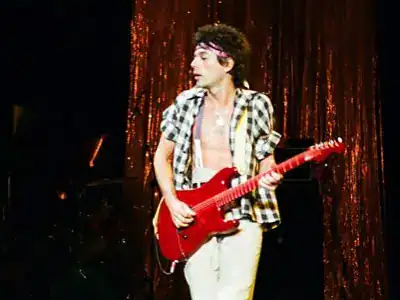
Photo: Jeffchat1 / Wikimedia Commons / CC BY-SA 3.0 (editorial use)
Earl Slick (born Frank Madeloni on 1 October 1952 in Brooklyn, New York) is one of the most important guitarists in David Bowie’s history. Across four decades he became a recurring musical partner whose aggressive, blues-based guitar style helped shape some of Bowie’s most significant live and studio periods.
Slick first entered Bowie’s world in 1974 when he was chosen to replace Mick Ronson during preparations for the Diamond Dogs Tour. At only twenty-two years old he suddenly found himself standing beside one of the biggest stars in the world. What followed was a collaboration that would include classic albums, world tours and some of Bowie’s most celebrated live performances.
- Born: 1 October 1952, Brooklyn, New York, USA
- Birth name: Frank Madeloni
- Role: Guitarist, songwriter
- Bowie connection: Diamond Dogs Tour, Young Americans, Station to Station, Serious Moonlight Tour, Heathen, Reality, A Reality Tour and The Next Day
- Known for: Powerful blues-rock guitar style and improvisational approach
From Brooklyn to the Bowie camp
Growing up in Brooklyn, Slick was inspired by the explosion of British rock during the 1960s. Like many musicians of his generation, seeing The Beatles on television proved life-changing. He quickly became fascinated by the guitar and immersed himself in the music of The Rolling Stones, Jeff Beck, Eric Clapton, Jimi Hendrix and the blues pioneers who inspired them.
Unlike many formally trained musicians, Slick developed largely as a self-taught player. His style evolved through countless hours of listening, experimenting and performing in New York clubs. By the early 1970s he had earned a reputation as an exciting young guitarist with a raw edge that combined technical ability with instinctive musicality.
His breakthrough came through composer and arranger Michael Kamen. Kamen knew both Slick and Bowie and recommended the young guitarist when Bowie began searching for a replacement for Mick Ronson.
Replacing Mick Ronson
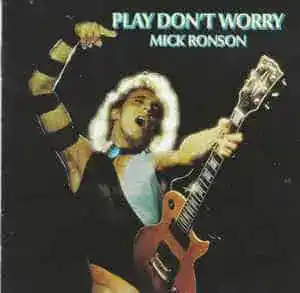
Replacing Mick Ronson was one of the most difficult assignments in rock music. Ronson had become inseparable from Bowie’s Ziggy Stardust image and was widely regarded as one of the defining guitarists of the glam-rock era.
Slick later admitted that the prospect terrified him. He knew fans would compare every note he played to Ronson’s work and feared the reaction of both audiences and critics.
When he asked Bowie how he should approach the material, Bowie gave him a piece of advice that would define their entire working relationship: he should not try to imitate Mick Ronson. Bowie wanted Earl Slick to sound like Earl Slick.
That trust immediately established a creative bond between the two men. Rather than becoming a copy of Ronson, Slick brought his own blues-based aggression and New York street energy into Bowie’s music.
David Bowie to Earl Slick
“I hired you because I like what you do. Do what you do.”
— David Bowie, recalled by Earl Slick
The Diamond Dogs Tour
Slick joined Bowie in time for the ambitious Diamond Dogs Tour of 1974. Initially built around George Orwell’s Nineteen Eighty-Four and the dystopian imagery of the Diamond Dogs album, the production featured one of the most elaborate stage sets ever attempted in rock music.
As the tour progressed Bowie’s musical interests began changing rapidly. The glam-rock material increasingly gave way to soul and rhythm-and-blues influences that would soon lead to the creation of Young Americans.
Slick found himself in the perfect position to witness one of the most important artistic transitions of Bowie’s career. Night after night he helped bridge the gap between the fading Ziggy era and the birth of what Bowie would later call his “plastic soul” period.
Young Americans and the Philadelphia sessions
During the second half of 1974 Bowie moved increasingly away from the theatrical world of Diamond Dogs and became fascinated by American soul music. Inspired by Philadelphia soul, rhythm and blues and gospel, he began recording material that would eventually become Young Americans.
The sessions took place primarily at Sigma Sound Studios in Philadelphia, where Bowie assembled a remarkable group of musicians including Carlos Alomar, David Sanborn, Willie Weeks, Andy Newmark, Ava Cherry, Luther Vandross and Earl Slick.
For Slick, the sessions represented a dramatic shift in musical direction. Coming from a rock background, he suddenly found himself working in an environment heavily influenced by soul arrangements, vocal harmonies and groove-oriented playing.
Although Slick later admitted that he was not always comfortable with the direction Bowie was taking, his guitar work nevertheless contributed an important edge to the recordings and helped preserve a rock sensibility within the increasingly sophisticated soul-based sound.
The resulting album, released in March 1975, became Bowie’s first major commercial breakthrough in the United States and produced the hit single Fame, co-written with Carlos Alomar and John Lennon.
The partnership with Carlos Alomar
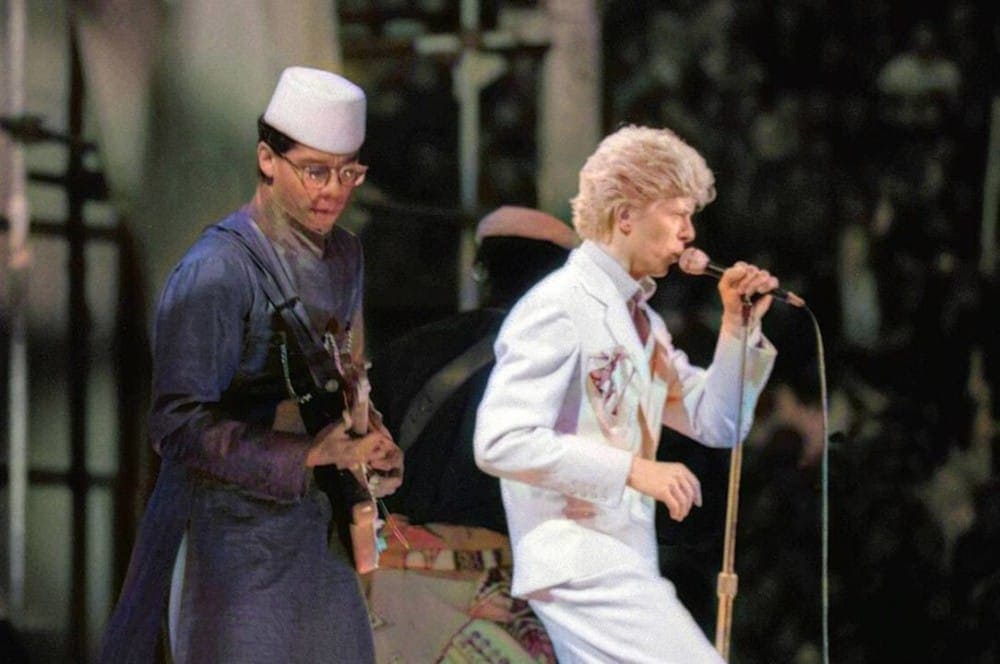
One of the most important developments during this period was Slick’s working relationship with guitarist Carlos Alomar.
The two musicians approached the guitar very differently. Alomar was disciplined, rhythmically precise and deeply rooted in soul and funk, while Slick relied more heavily on instinct, blues phrasing and spontaneous expression.
Rather than conflicting, these contrasting approaches complemented one another perfectly. Together they created a guitar partnership that became one of the defining sounds of Bowie’s mid-1970s work.
Their interplay would become especially important during live performances, where Alomar provided the structural framework and Slick supplied explosive lead lines and improvisational energy.
Station to Station and the birth of the Thin White Duke
If Young Americans represented a dramatic change of direction, Station to Station marked an even more radical transformation.
Recorded in Los Angeles in late 1975 and released in January 1976, the album introduced Bowie’s Thin White Duke persona and combined elements of soul, funk, art rock, European minimalism and experimental textures.
Unlike the relatively structured sessions for Young Americans, the creation of Station to Station was often spontaneous. Musicians contributed ideas freely, arrangements evolved rapidly and much of the material developed organically in the studio.
Slick later described the atmosphere as “every man for himself,” not in a negative sense, but as a reflection of the extraordinary freedom that existed during the sessions.
For a guitarist whose strengths lay in instinctive playing rather than carefully scripted parts, the environment was ideal.
A principal guitar voice on Station to Station
Although discussions of the album often focus on Bowie’s vocals, lyrical themes and emerging fascination with Europe, Earl Slick was one of the principal guitar voices throughout the project.
His aggressive phrasing, sustain-heavy leads and blues-inflected attack provided a vital counterbalance to the increasingly controlled and mechanical atmosphere Bowie was exploring.
The tension between Slick’s expressive guitar work and Bowie’s colder, more detached artistic vision became one of the album’s defining characteristics.
Songs such as Stay remain among the strongest examples of this partnership. Slick’s guitar performance combines funk rhythms with fierce rock improvisation, creating a track that continues to be regarded as one of the finest pieces of guitar playing in Bowie’s catalogue.
Many Bowie historians consider Station to Station one of the greatest albums of his career, and Earl Slick’s contribution forms an essential part of its musical identity.
The Isolar Tour
Following the release of Station to Station, Slick joined Bowie for the 1976 Isolar Tour, a concert series that introduced the Thin White Duke character to audiences around the world.
The performances combined material from throughout Bowie’s career with the newer, darker material from Station to Station. Slick’s guitar became one of the key elements holding the set together, moving effortlessly between glam-era classics, soul material and the more experimental songs associated with Bowie’s latest work.
The Isolar Tour effectively marked the end of the first chapter of the Bowie–Slick collaboration. During just two years together they had helped navigate one of the most dramatic artistic transformations in Bowie’s entire career.
The Berlin years and a common misconception
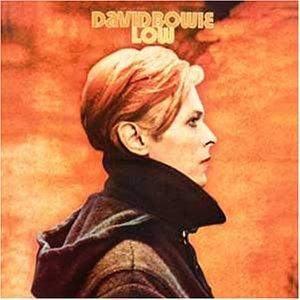
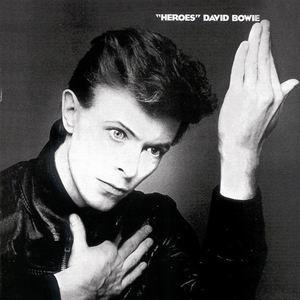
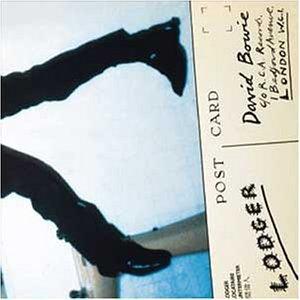
Because Earl Slick became so closely associated with Bowie’s mid-1970s work, many fans assume that he played extensively on the so-called Berlin Trilogy: Low (1977), “Heroes” (1977) and Lodger (1979).
In reality, Slick was not a principal studio contributor to those albums. The Berlin recordings involved a different circle of musicians, including Carlos Alomar, Dennis Davis, George Murray, Robert Fripp, Adrian Belew, Ricky Gardiner and Brian Eno.
However, Slick remained strongly associated with the transition that led toward that period. His work on Station to Station helped establish many of the musical ideas Bowie would continue developing during his years in Europe.
For that reason, Slick occupies an important position in Bowie’s creative evolution even when he was not physically present during the Berlin sessions themselves.
The Serious Moonlight Tour
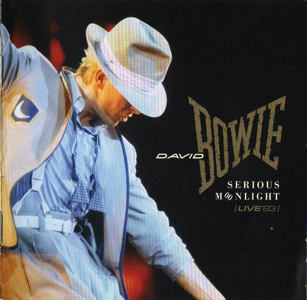
After several years apart, Bowie and Slick reunited in 1983 for the massively successful Serious Moonlight Tour, which followed the release of Let’s Dance.
The tour became one of the biggest concert successes of Bowie’s career. While the album had introduced a more commercially accessible sound, the live performances retained a harder rock edge, due in no small part to Slick’s presence on stage.
Night after night he tackled material spanning Bowie’s entire career, from Ziggy Stardust classics to contemporary hits. His guitar work brought energy and unpredictability to a production that was viewed by millions through television broadcasts, concert films and live recordings.
For many casual fans, the Serious Moonlight era remains the period most closely associated with Earl Slick.
Glastonbury 2000

One of the most celebrated performances of Bowie’s later career took place at the Glastonbury Festival on 25 June 2000.
Widely regarded as one of the greatest headline performances in the festival’s history, the concert presented Bowie as both a living legend and an artist still capable of delivering powerful contemporary performances.
Earl Slick was a member of the band and contributed heavily to the show’s musical success. His guitar work helped drive a set that moved effortlessly through nearly three decades of Bowie’s catalogue.
The performance was later released officially and remains one of the most highly praised live documents of Bowie’s career.
Heathen and Reality
The early 2000s marked another major reunion between Bowie and Slick. Working alongside producer Tony Visconti, Bowie entered one of the strongest creative periods of his later career.
Slick contributed to Heathen (2002), an album that combined reflection, experimentation and renewed confidence. The record was widely praised and signalled a creative resurgence for Bowie.
The collaboration continued on Reality (2003), where Slick’s guitar again played an important role. The album featured a stronger rock orientation and allowed him greater freedom to inject his trademark energy into the material.
By this stage, the relationship between Bowie and Slick had evolved far beyond that of employer and musician. They shared decades of trust, experience and mutual respect.
A Reality Tour and Bowie’s final tour
Following the release of Reality, Bowie embarked on A Reality Tour, the longest and most successful tour of his later career.
Slick was a central member of the touring band and performed hundreds of shows across Europe, North America, Asia and Oceania.
The tour demonstrated how effectively Bowie could combine newer material with classics from every phase of his career, while Slick provided a consistent rock foundation throughout the concerts.
Unfortunately, the tour came to an abrupt end in June 2004 when Bowie suffered a serious heart attack after a performance at the Hurricane Festival in Germany.
The incident effectively ended Bowie’s years as a major touring artist. As a result, Earl Slick unknowingly became one of the last guitarists to perform extensively with Bowie on a full-scale world tour.
The Next Day
After a decade of relative silence, Bowie surprised the world in 2013 with the release of The Next Day, his first studio album in ten years.
Earl Slick was among the musicians invited to participate in the sessions, further demonstrating the remarkable longevity of their partnership.
The album debuted to widespread acclaim and became one of the most successful releases of Bowie’s later career. For longtime fans, Slick’s presence provided an important connection between Bowie’s past and present.
Few musicians can claim to have worked with Bowie during the Diamond Dogs, Young Americans, Station to Station, Serious Moonlight, Heathen, Reality and The Next Day eras. Earl Slick is one of the rare exceptions.
Legacy
Earl Slick occupies a unique position within David Bowie’s history. He was never intended to be a replacement for Mick Ronson, nor a clone of any other Bowie guitarist. Instead, Bowie hired him precisely because he brought something different.
His guitar playing combined technical skill with instinct, aggression and emotional honesty. Whether performing soul, art rock, hard rock or experimental material, Slick always sounded unmistakably like himself.
Across nearly forty years of intermittent collaboration, he helped Bowie navigate some of the most important transitions of his career, from the end of glam rock through the Thin White Duke era and into Bowie’s final creative renaissance.
For that reason, Earl Slick remains one of the most significant and enduring collaborators in the entire David Bowie story.
Earl Slick remained one of David Bowie’s most trusted guitarists throughout multiple phases of his career. Their collaborations stretched from the Diamond Dogs era of 1974 to Bowie’s acclaimed comeback album The Next Day in 2013.
The partnership survived changing musical styles, shifting line-ups and long periods apart because Bowie valued exactly what made Slick unique: his ability to bring raw emotion, spontaneity and danger into the music.
Few guitarists contributed to as many different Bowie eras, and even fewer left such a distinctive mark on both the studio recordings and the live stage.
