
Carlos Alomar & David Bowie | Guitarist Behind the Sound
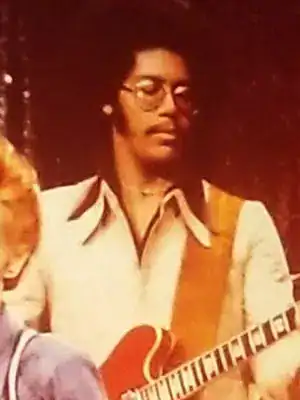
Photo: Vladimir / Wikimedia Commons / CC BY-SA 2.0 (editorial use)
Carlos Alomar is one of the most important and long-serving collaborators in David Bowie’s career. As guitarist, arranger, songwriter, band leader and musical director, he helped Bowie move from glam rock into soul, funk, art rock and experimental territory from the mid-1970s onward.
His work runs through some of Bowie’s most important recordings, including Young Americans, Station to Station, Low, “Heroes”, Lodger and Scary Monsters (and Super Creeps). Alomar’s rhythmic precision, discipline and deep knowledge of soul and R&B gave Bowie a new musical language at a decisive point in his career.
Working alongside musicians such as Dennis Davis, George Murray, Tony Visconti and Brian Eno, Alomar became one of the architects of Bowie’s most innovative period. His influence extended far beyond guitar playing, shaping arrangements, directing bands and helping transform Bowie’s musical ideas into finished recordings.
Over nearly three decades, Alomar became one of Bowie’s most trusted musical partners. He served not only as guitarist but also as arranger and musical director, helping lead Bowie’s touring bands and contributing to recordings that remain among the most celebrated of his career. Few musicians accompanied Bowie through so many artistic transformations while remaining such a constant musical presence.
- Full name: Carlos Alomar
- Born: 7 May 1951, Ponce, Puerto Rico
- Profession: Guitarist, songwriter, arranger, musical director
- Bowie connection: David Bowie’s longest-serving musical collaborator
- Active with Bowie: 1974–2003
- First Bowie album: Young Americans (1975)
- Key Bowie albums: Young Americans, Station to Station, Low, “Heroes“, Lodger, Scary Monsters, Let’s Dance, Heathen, Reality
- Co-written: Fame, DJ, Dancing with the Big Boys, Never Let Me Down
- Known for: Rhythm guitar, musical direction and arrangements
Early life and musical background
Carlos Alomar was born in Ponce, Puerto Rico, and grew up in New York, where he developed as a guitarist within a rich musical environment shaped by soul, rhythm and blues, gospel and professional session work. Before becoming closely associated with David Bowie, Alomar had already built serious musical experience, including work connected to the Apollo Theater scene and American soul and R&B performance.
This background was crucial to what he later brought to Bowie. Alomar was not simply a rock guitarist: he was a rhythm player with a deep understanding of groove, arrangement, timing and band discipline. That made him especially valuable when Bowie began moving away from glam rock and into a sound influenced by American soul and funk.
Meeting David Bowie
Alomar first crossed paths with Bowie in the early 1970s, and their working relationship developed during the period that led to the Young Americans sessions. Bowie was looking for a new musical direction, and Alomar became one of the key musicians who helped him enter a more rhythm-driven world.
Alomar’s presence gave Bowie access not only to a different guitar style, but also to a wider musical network. His connection to New York soul and R&B musicians helped Bowie build the sound that he would famously describe as “plastic soul”.
Young Americans and the soul influence

Cover of David Bowie’s Young Americans (1975), the album that introduced Carlos Alomar‘s distinctive rhythm guitar style and marked Bowie’s acclaimed move into soul and funk.
On Young Americans, Alomar played a central role in shaping the feel of Bowie’s new sound. His guitar work was controlled, sharp and rhythmically exact, supporting the album’s blend of soul, pop and funk rather than dominating it. This was one of the reasons the album sounded so different from Bowie’s earlier glam-era records.
The Young Americans period also brought Bowie into contact with singers and musicians from a different musical world. Robin Clark, Alomar’s wife, was part of that circle and contributed backing vocals during Bowie’s soul period. Together with musicians such as Luther Vandross, Ava Cherry and others, this environment helped Bowie reshape his sound during 1974 and 1975.
Robin Clark and Carlos Alomar
Carlos Alomar‘s professional and personal life became closely connected through his marriage to singer Robin Clark. The couple met during New York’s thriving soul music scene and married in 1970, going on to work together on numerous recording sessions and live performances throughout their careers.
Robin Clark became one of the vocalists associated with David Bowie’s Young Americans period, contributing backing vocals during the sessions that introduced Bowie’s acclaimed “plastic soul” sound. Together with Carlos Alomar, Luther Vandross, Ava Cherry and other New York musicians, she formed part of the circle that helped shape one of the most significant musical changes in Bowie’s career.
Carlos and Robin continued to collaborate long after the Young Americans era. Their enduring musical partnership reflects the close-knit community of musicians that surrounded Bowie during the mid-1970s and contributed to many of his most influential recordings.
“Fame” and breakthrough success

Cover of David Bowie’s Young Americans (1975), featuring the hit single Fame, co-written by David Bowie, Carlos Alomar and John Lennon.
One of the most famous results of Bowie and Alomar’s collaboration was Fame, released in 1975. The song was written by David Bowie, Carlos Alomar and John Lennon, and Alomar’s guitar idea formed the rhythmic foundation of the track. Its tight, clipped funk pattern gave the song its instantly recognisable identity.
Fame became Bowie’s first number one single in the United States. It was a major breakthrough in America and showed how effectively Bowie could transform outside influences into something unmistakably his own. Alomar’s contribution was essential: without the guitar figure and groove, the song would not have had the same force or character.
Station to Station and the D.A.M. core
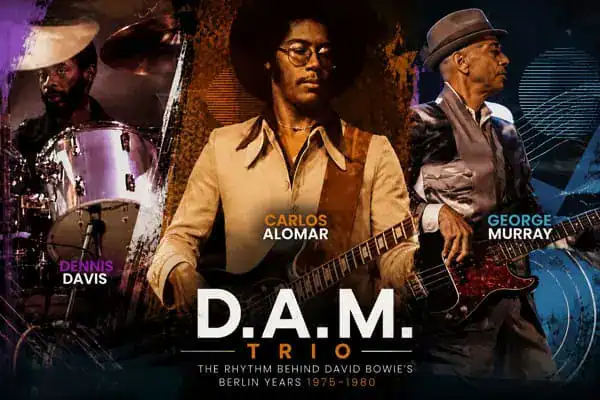
David Bowie’s Station to Station period, featuring the rhythm-section sound associated with Carlos Alomar, George Murray and Dennis Davis.
Alomar remained central during the Station to Station period, one of Bowie’s most powerful transitions between soul, funk, rock and European experimentalism. Alongside bassist George Murray and drummer Dennis Davis, Alomar became part of the rhythm section often referred to by fans as the D.A.M. Trio.
This rhythm section helped give Bowie’s music a new physical weight. On songs such as Golden Years and Stay, Alomar’s guitar playing combined funk discipline with rock power, creating a tense and angular sound that matched Bowie’s Thin White Duke era.
The Berlin Trilogy
David Bowie’s Berlin Trilogy: Low (1977), “Heroes“ (1977) and Lodger (1979), three albums on which Carlos Alomar played a major musical role.
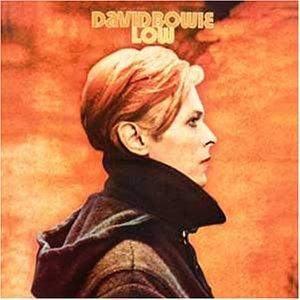

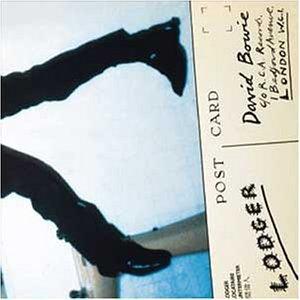
Alomar’s role continued through Bowie’s Berlin Trilogy: Low, “Heroes” and Lodger. These albums pushed Bowie’s music into more experimental territory, combining rock, electronics, ambient textures and fragmented song structures. Alomar adapted to this shift without losing the rhythmic clarity that made his playing so distinctive.
On these recordings, his guitar work often served the architecture of the track rather than drawing attention to itself. That restraint was one of his great strengths. He could provide structure, motion and tension while leaving room for Bowie, Brian Eno, Tony Visconti and the other musicians to explore more abstract ideas.
Scary Monsters and the 1980s
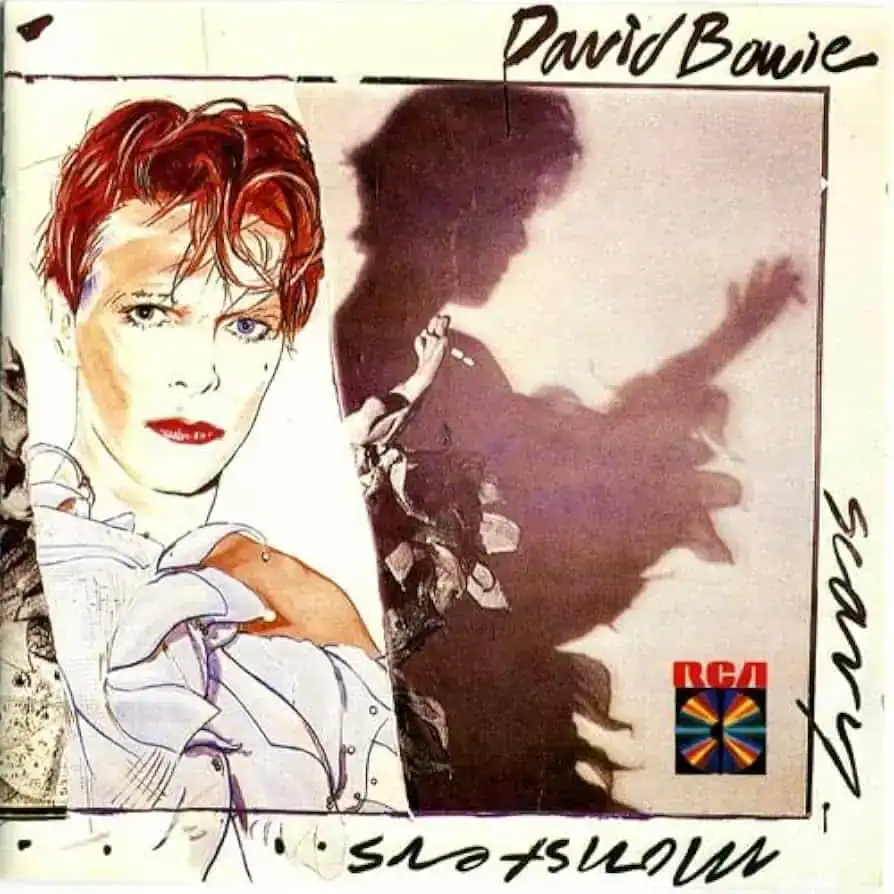
Cover of David Bowie’s Scary Monsters (And Super Creeps) (1980), featuring Carlos Alomar‘s continued collaboration with Bowie during the final chapter of their acclaimed late-1970s creative partnership.
Alomar’s importance did not end with the 1970s. He was also part of Scary Monsters (And Super Creeps), one of Bowie’s strongest albums of the 1980s and a record that brought many of Bowie’s earlier experiments into a sharper, more direct form.
During the 1980s, Alomar remained closely connected to Bowie’s live and studio work. He contributed to projects across the decade and helped Bowie maintain a professional, powerful stage sound during a period when Bowie was reaching a much larger mainstream audience.
Musical director and live performances
Beyond the studio, Carlos Alomar was one of Bowie’s most trusted live musicians. He served as musical director on major Bowie tours and helped translate complex studio material into strong live arrangements. His role required more than guitar playing: he had to understand Bowie’s vision, organise musicians, shape arrangements and keep the band focused.
His live work was especially important on tours such as the Station to Station tour, the Serious Moonlight tour and the Glass Spider tour. In each case, Alomar helped provide the musical structure behind Bowie’s changing stage presentation.
Later Bowie work


Carlos Alomar reunited with David Bowie for later studio projects, including Heathen (2002) and Reality (2003), extending one of Bowie’s longest musical collaborations into the twenty-first century.
Alomar’s connection with Bowie continued beyond the classic 1970s period. He contributed to later Bowie projects as well, including work connected to the 1990s and early 2000s. His presence on later recordings such as Heathen and Reality showed that Bowie still valued the musical intelligence and history that Alomar brought to the studio.
This long span makes Alomar one of Bowie’s most enduring collaborators. Few musicians were present across so many different Bowie eras, and even fewer helped shape so many changes in sound.
Beyond Bowie
Although Carlos Alomar is best known for his decades of work with David Bowie, his career has extended far beyond a single collaboration. Long before and after his years with Bowie, he established himself as one of the most respected session guitarists, arrangers and musical directors in the industry, working across soul, rock, pop, funk and R&B.
Over the years Alomar has recorded and performed with an extraordinary range of artists, including James Brown, Paul McCartney, Mick Jagger, Simple Minds, Duran Duran, Alicia Keys, John Lennon and many others. His ability to combine musical discipline with creative flexibility made him a sought-after collaborator in both the recording studio and on stage.
Alongside his performing career, Alomar has also devoted considerable time to education. He has lectured at universities, spoken about the creative process behind some of David Bowie’s most influential recordings and encouraged younger generations of musicians to explore collaboration, musical curiosity and artistic integrity. His continuing work reflects a lifelong commitment not only to performance but also to preserving and sharing musical knowledge.
Carlos Alomar on his role as a session musician
“I’m a New York City session musician, so this issue of who I am is always overshadowed by the fact of who I’ve worked for.”
Latin Rock and Puerto Rican Heritage
Although Carlos Alomar became internationally known through his work with David Bowie, he also played an important role in promoting Latin rock music. Born into a Puerto Rican family and raised in New York City, Alomar remained closely connected to his cultural heritage throughout his career.
Beyond his work as a guitarist, Alomar produced and supported Latin American rock artists and served as an advisor to the Latin Academy of Recording Arts and Sciences (LARAS). He also produced Doble Vida (1988), one of the best-known albums by the Argentine rock band Soda Stereo, contributing both as producer and guitarist.
Through these activities, Alomar helped demonstrate that Puerto Rican musicians were equally at home in rock, funk and contemporary popular music, broadening perceptions of Latin artists within the international music industry.
Education and Sound Synthesis
In addition to his work as a guitarist, songwriter and producer, Carlos Alomar has also worked in music education. He has been associated with Stevens Institute of Technology, where his work has focused on sound synthesis, music technology and creative approaches to modern performance.
Alomar’s educational work reflects a continuation of the same musical interests that shaped much of his recording career: rhythm, arrangement, technology and the relationship between musicians and sound. His work with students has allowed him to pass on practical experience gained through decades of studio recording, touring and musical direction.
This later chapter of his career shows that Alomar’s contribution to music extends beyond performance and recording. It also includes teaching, research and the exploration of how new technologies can be used by future musicians.
Songwriting and signature contributions
Alomar’s name is most closely associated with Fame, but his Bowie contribution goes beyond a single song. He also received writing credits on songs including DJ, Dancing with the Big Boys and Never Let Me Down. These credits reflect the fact that Bowie often relied on musicians who could bring strong ideas into the room rather than simply reproduce instructions.
As a guitarist, Alomar specialised in parts that were memorable without being excessive. His playing often worked like a machine inside the song: tight, rhythmic, propulsive and essential to the final feel.
Video: Carlos Alomar reflects on his long collaboration
Carlos Alomar reflects on his long collaboration with David Bowie in this interview, discussing his role as guitarist, arranger and musical director.
Carlos Alomar’s own reflections on David Bowie are especially valuable because he was not simply a session musician or occasional collaborator. For almost three decades he worked beside Bowie in the recording studio, on stage and behind the scenes, helping shape arrangements, rehearsals and live performances.
His interviews provide a unique first-hand perspective on David Bowie’s creative process. Alomar frequently explains how ideas developed during rehearsals, how Bowie encouraged experimentation and how the musicians worked together to transform simple concepts into some of the most influential recordings of the late twentieth century.
Watching Alomar discuss these experiences offers valuable insight into one of rock music’s most enduring creative partnerships, illustrating why he remains one of the most respected figures within David Bowie’s collaborative universe.
Long-term influence
Carlos Alomar’s influence is woven through some of the most important recordings in Bowie’s catalogue. He helped Bowie move into soul, supported the transition into funk and art rock, adapted to the Berlin period, and remained a trusted musician as Bowie continued to change direction.
His playing was rarely about showmanship. It was about architecture. Alomar built guitar parts that gave Bowie’s songs their shape, momentum and physical energy. That is why his contribution remains so important even when it is not always immediately visible to casual listeners.
D.A.M. Trilogy – Back to Berlin
More than four decades after helping create David Bowie’s celebrated Berlin Trilogy, Carlos Alomar reunited with fellow Bowie musicians George Murray and Dennis Davis‘s musical legacy through the D.A.M. Trilogy – Back to Berlin project. The performances celebrated the music of Low, “Heroes“ and Lodger, introducing these landmark albums to new audiences while honouring the musicians who helped create them.
Rather than recreating the original recordings note for note, Alomar approached the concerts as celebrations of the creative spirit behind Bowie’s Berlin years. The project highlighted the enduring importance of the musical partnership between Alomar, Murray and Davis, whose contributions remain central to the sound of Bowie’s most influential recordings.
The concerts also demonstrated that Carlos Alomar continues to share the history of Bowie’s music through live performance, keeping the legacy of one of rock music’s most innovative creative periods alive for new generations of listeners.
Place within Bowie’s universe
Within David Bowie’s broader creative universe, Carlos Alomar represents the musician who could translate vision into sound. Bowie often worked with bold personalities, but Alomar brought a rare combination of discipline, groove, loyalty and adaptability.
Together, Bowie and Alomar created music that crossed boundaries between rock, soul, funk, electronic experimentation and pop. Alomar was not merely a sideman: he was one of the musicians who helped make Bowie’s transformations possible.
Official Website & Further Information
Carlos Alomar continues to work as a guitarist, composer, educator and public speaker. Through lectures, interviews, live performances and special projects, he remains one of the leading ambassadors of David Bowie’s musical legacy while continuing to pursue his own creative career.
For more information about Carlos Alomar’s career, current projects and appearances, please visit his official website: www.carlosalomar.com
Article Origin
This article has been researched and written for DavidBowieWorld.com as part of the site’s ongoing project documenting the musicians, artists, producers, designers, performers, tours and creative figures who helped shape David Bowie’s extraordinary career.
