
Dennis Davis – Drummer of the Berlin Trilogy and David Bowie Collaborator
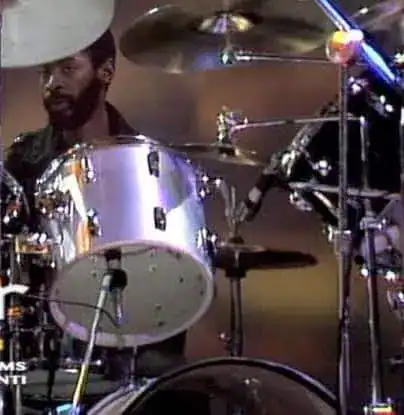
Image: David Bowie World collection / editorial use
Dennis Davis (28 August 1951 – 6 April 2016) was one of the most important musicians ever to work with David Bowie. Although his name is less widely recognised than some of Bowie’s producers or guitarists, his drumming helped define a remarkable sequence of albums that included Young Americans, Station to Station, Low, “Heroes”, Lodger and Scary Monsters (And Super Creeps).
Davis brought a unique combination of jazz discipline, funk feel, rhythmic imagination and technical precision. His drumming gave Bowie’s music movement, tension and character during one of the most creative periods in modern popular music.
Together with guitarist Carlos Alomar and bassist George Murray, Davis formed the legendary D.A.M. Trio, the rhythm section that powered Bowie’s transformation from the soul-influenced sound of Young Americans to the experimental landscapes of the Berlin period.
- Full name: Dennis Davis
- Born: 28 August 1951, Manhattan, New York, USA
- Died: 6 April 2016
- Role: Drummer, percussionist
- With Bowie: 1974–1980 (core period)
- Key albums: Young Americans, Station to Station, Low, “Heroes”, Lodger, Scary Monsters
- Tours: Isolar Tour (1976), Isolar II Tour (1978)
- Known for: The D.A.M. Trio with Carlos Alomar and George Murray
Who was Dennis Davis?
Dennis Davis was an American drummer whose career bridged jazz, funk, soul, rhythm and blues, rock and experimental music. While many drummers are remembered for power or speed, Davis became admired for something more unusual: the ability to make complex rhythmic ideas feel natural.
His drumming could be aggressive without becoming heavy, sophisticated without becoming self-conscious, and adventurous without losing the groove. These qualities made him an ideal collaborator for David Bowie at a time when Bowie was constantly searching for new musical directions.
Producer Tony Visconti later described Davis as one of the most creative drummers he had ever worked with. Bowie himself repeatedly encouraged Davis to experiment, recognising that his musical imagination could push songs into unexpected territory.
Early life and musical education
Dennis Davis was born in Manhattan, New York City, on 28 August 1951. He developed an interest in music at an early age and became deeply attracted to jazz drumming.
Unlike many rock drummers of his generation, Davis built his technique through serious musical study. He learned from legendary jazz figures including Max Roach and Elvin Jones, two of the most influential drummers in jazz history.
The influence of those teachers remained visible throughout his career. Even when playing rock music, Davis approached rhythm with a jazz musician’s mindset. He thought in terms of movement, interaction and surprise rather than simply keeping time.
This background would later become one of the key reasons Bowie valued him so highly. Bowie’s music increasingly demanded musicians who could think creatively rather than merely execute instructions.
Clark Terry, military service and professional experience
Before entering Bowie’s world, Davis accumulated substantial professional experience. In 1967 he joined the Clark Terry Big Band, giving him exposure to high-level ensemble playing and sophisticated musical arrangements.
He later served as part of the United States military’s musical organisations during the Vietnam era. This period further strengthened his discipline, technical control and ability to perform under demanding conditions.
After returning to civilian musical life, Davis became involved with a variety of projects that drew upon jazz, funk and soul traditions. By the early 1970s he had developed a reputation as a versatile and highly reliable drummer.
Roy Ayers and the road to Bowie
One of the most important chapters in Davis’s pre-Bowie career was his association with vibraphonist and composer Roy Ayers. Ayers was one of the central figures in jazz-funk during the 1970s, and working within that environment sharpened Davis’s ability to combine groove with experimentation.
It was also through this broader musical network that Davis became connected to guitarist Carlos Alomar. The friendship between the two musicians would eventually change both of their careers.
Alomar immediately recognised Davis’s talent. He later recalled being astonished by Davis’s drumming, particularly his ability to move effortlessly between complex rhythmic ideas while maintaining complete control of the groove.
Joining David Bowie
Dennis Davis first entered David Bowie’s orbit during the closing stages of the Young Americans sessions in 1974 and early 1975.
Carlos Alomar recommended Davis to Bowie when additional musicians were needed for recordings including Across the Universe and Fame. Bowie immediately recognised the drummer’s exceptional musicality.
More importantly, Bowie appreciated Davis’s openness to experimentation. Rather than resisting unusual ideas, Davis actively embraced them. This attitude would become essential during the increasingly adventurous years that followed.
What began as a recording opportunity quickly evolved into a long-term creative partnership.
Young Americans
Although Young Americans was largely recorded before Dennis Davis entered David Bowie’s musical world, the final sessions for the album marked the beginning of one of Bowie’s most important musical partnerships.
The main album sessions took place at Sigma Sound Studios in Philadelphia during August 1974, with drummer Andy Newmark among the musicians who helped create Bowie’s new soul-influenced sound.
By early 1975, however, Bowie was still reshaping the album. During sessions at Electric Lady Studios in New York, Dennis Davis joined a band that included guitarist Carlos Alomar and bassist Emir Ksasan.
These sessions produced two late additions to Young Americans: Across the Universe and Fame. Both recordings featured John Lennon and marked Dennis Davis‘s first appearance on a David Bowie album.
Fame and Across the Universe

Two of the most significant recordings associated with Dennis Davis‘s arrival in David Bowie’s musical world were Across the Universe and Fame.
Fame became Bowie’s first number-one single in the United States. Written by David Bowie, Carlos Alomar and John Lennon, the recording developed from Alomar’s distinctive guitar riff during the Electric Lady sessions in New York.
Dennis Davis played drums on both Fame and Across the Universe. His work on these recordings marked the beginning of a musical partnership with Bowie that would become increasingly important during the years that followed.
Davis subsequently became a central figure in Bowie’s rhythm section, particularly alongside Carlos Alomar and George Murray. He went on to play on Station to Station, Low, “Heroes“, Lodger and Scary Monsters (and Super Creeps), making him one of the defining drummers of Bowie’s celebrated late-1970s period.
The birth of the D.A.M. Trio
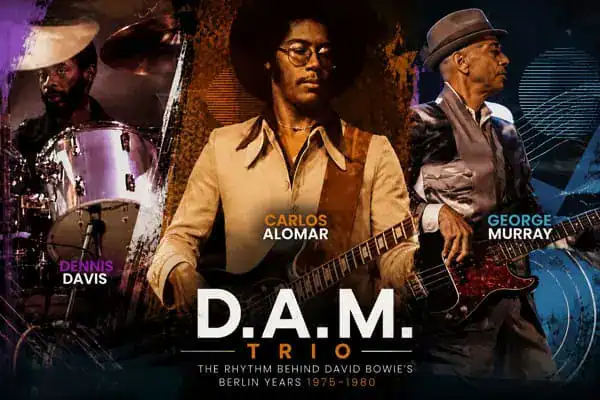
During preparations for what would become Station to Station, Dennis Davis recommended bassist George Murray to Bowie and Carlos Alomar.
The chemistry between the three musicians was immediate. Bowie quickly realised that Davis, Alomar and Murray could create arrangements together and adapt to new ideas.
The group later became known among Bowie fans as the D.A.M. Trio — Dennis Davis, Carlos Alomar and George Murray.
Unlike many studio rhythm sections, the D.A.M. Trio was given enormous creative freedom. Bowie often allowed the three musicians to work out arrangements themselves before other instruments were added.

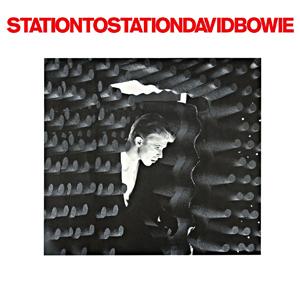
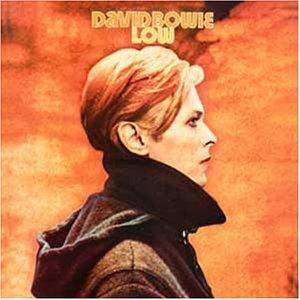
This approach became one of the hidden secrets behind Bowie’s music from 1975 through 1980. The D.A.M. Trio provided the rhythmic foundation for a sequence of albums that many critics consider the strongest sustained run of Bowie’s entire career.
Station to Station
Station to Station, released in 1976, was the first Bowie album on which the D.A.M. Trio became central to the sound. The record joined funk, soul, European art-rock, occult imagery and the cold theatrical identity of the Thin White Duke into one of Bowie’s most powerful works.
Dennis Davis’s drumming was crucial to the album’s sense of control and danger. On the title track, the music moves from a slow, mysterious opening into a driving groove that gradually gathers force. Davis gives the piece its physical engine without making it feel ordinary.
On songs such as Stay and TVC15, Davis combines funk precision with rock intensity. His playing does not simply keep time; it shapes the tension of the songs and gives Bowie’s increasingly strange musical ideas a body.
The 1976 Isolar Tour
Davis toured with Bowie during the 1976 Isolar Tour, also known as the Station to Station Tour. The performances were stark, dramatic and tightly controlled, matching the atmosphere of Bowie’s Thin White Duke period.
In this live setting, Davis’s drumming became even more important. The band had to support long, intense versions of Bowie’s songs while keeping the music sharp and disciplined. Davis brought power without clutter and precision without stiffness.
Together with George Murray and Carlos Alomar, he helped create one of Bowie’s most formidable live rhythm sections. The D.A.M. Trio could move from funk to art-rock to soul-influenced grooves with remarkable speed and authority.
Low
Low, released in 1977, marked one of the most radical changes in Bowie’s career. The album combined fragmented songs, electronic textures, studio experimentation and instrumental atmospheres. It was the first album in what became known as the Berlin Trilogy.
Dennis Davis’s drumming on Low is one of the reasons the record remains so powerful. The album’s surface may be electronic and fractured, but its rhythm section is physical, direct and alive.
On Sound and Vision, Davis plays with restraint and clarity, giving the song a steady pulse that contrasts beautifully with its detached vocal and bright arrangement. On Breaking Glass, which Davis co-wrote with Bowie and George Murray, the rhythm is tight, clipped and memorable.
Davis also helped make Low feel unlike ordinary rock. His drumming interacts with the production rather than simply sitting underneath it. The drums sound processed, shaped and architectural, yet the human feel remains unmistakable.
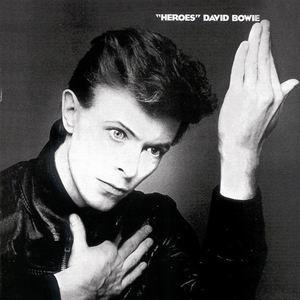
“Heroes”
Later in 1977, Bowie released “Heroes”. The album continued the experimental direction of Low but gave it a more forceful and dramatic shape.
Davis’s work on “Heroes” is among his finest. Producer Tony Visconti later pointed especially to the drum breaks on Blackout, praising Davis’s ability to tear into rock music with a jazz sensibility.
Davis often used percussion as part of his drum setup, including conga-style textures that made the rhythm feel as if more than one player were operating at once. This gave the music extra movement and depth.
On the album, Davis helps hold together music that could easily have become too abstract. His playing keeps the songs grounded while still allowing Bowie, Eno, Visconti and the other musicians to push the sound outward.
Look Back in Anger
Look Back in Anger, from Lodger, is one of Dennis Davis’s most celebrated Bowie performances.
The track opens with a ferocious drum pattern that immediately announces itself as something special. Davis’s playing is fast, explosive and precise, but it never loses control.
For many Bowie listeners and musicians, Look Back in Anger is one of the clearest examples of Davis’s genius. It shows how he could combine jazz-trained independence, rock aggression and rhythmic imagination in a way that very few drummers could match.
The performance also proves why Davis was so valuable to Bowie. Bowie’s songs often needed musicians who could make instability feel exciting rather than chaotic. Davis could do exactly that.
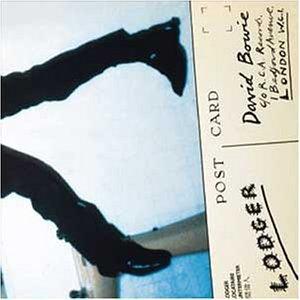
Lodger
Lodger, released in 1979, completed the Berlin Trilogy. Although it is less overtly atmospheric than Low or “Heroes”, it is one of Bowie’s most rhythmically varied albums.
Davis’s drumming is central to that variety. The album moves through travel imagery, fractured pop, world-music influences, angular guitar textures and unusual song structures. A drummer with less imagination could have made the record feel disjointed. Davis helps hold it together.
On tracks such as Look Back in Anger and Boys Keep Swinging, his playing gives the songs nervous energy and forward motion. He could be forceful, but he also knew how to leave space for Bowie’s voice and the surrounding arrangements.
Lodger shows Davis at the height of his ability to combine disciplined musicianship with risk.
Stage
Stage, released in 1978, documented Bowie’s Isolar II Tour and preserved the power of the late-1970s touring band.
The album captures Davis, George Murray and Carlos Alomar translating Bowie’s studio experiments into a live setting. The result is not simply a concert version of the Berlin-era material; it is a different way of hearing it.
Davis’s drumming on Stage is disciplined and muscular. He gives the instrumental and electronic material a live pulse while keeping the arrangements precise.
The Isolar II performances show how essential Davis was to Bowie’s ability to bring experimental music onto large stages without losing force or clarity.
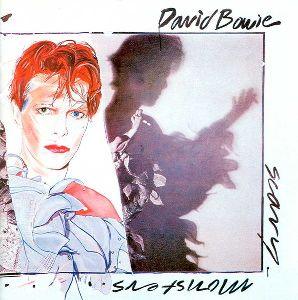
Scary Monsters (And Super Creeps)
Released in 1980, Scary Monsters (And Super Creeps) is often regarded as the final great statement of Bowie’s classic 1970s creative run. It brought together elements of the Berlin period, new wave, art rock and experimental pop while introducing a sharper, more aggressive sound.
Dennis Davis remained a crucial part of Bowie’s musical world during these sessions. By this stage, Bowie, Carlos Alomar, George Murray and Davis had worked together for years and possessed an almost instinctive understanding of one another’s musical language.
Producer Tony Visconti later praised Davis’s contributions to the album, noting that by the time of Scary Monsters he was creating drum parts that seemed almost impossible on paper yet fitted the music perfectly.
Songs such as Scary Monsters (And Super Creeps), Up the Hill Backwards and Because You’re Young demonstrate Davis’s ability to move effortlessly between power, subtlety and invention. His playing helped make the album feel urgent without sacrificing sophistication.
The Idiot and Iggy Pop
Dennis Davis’s contribution to Bowie’s creative circle extended beyond Bowie’s own albums. When Bowie worked with Iggy Pop on the landmark album The Idiot in 1977, members of Bowie’s musical team became part of that project as well.

The Idiot represented a major artistic reinvention for Iggy Pop. Produced by David Bowie, the album was recorded during a period of close collaboration between Bowie and Pop, with Dennis Davis contributing drums to several of its sessions.
Bowie’s production and musical direction played a central role in shaping the album’s distinctive sound. Davis’s disciplined and economical drumming complemented the minimalist arrangements and linked the project to the wider circle of musicians who were also working on Bowie’s recordings during the same period.
Dennis Davis‘s involvement illustrates how closely connected Bowie’s recording projects had become. Alongside Carlos Alomar and George Murray, he formed part of the group of musicians who contributed not only to Bowie’s own albums but also to important recordings by artists within Bowie’s creative circle.
Why Bowie valued Dennis Davis
Bowie consistently surrounded himself with musicians who could bring ideas rather than merely follow instructions. Dennis Davis embodied that philosophy.
According to Bowie, Davis approached experimentation with enthusiasm rather than caution. Bowie once described him as being completely open to trying new concepts, always eager to explore unusual sounds, techniques and rhythmic possibilities.
This openness made him invaluable during the Berlin years. Albums such as Low, “Heroes” and Lodger required musicians who could respond creatively to unexpected ideas from Bowie, Brian Eno and Tony Visconti.
Davis was one of the few drummers capable of combining technical excellence with genuine curiosity. He never sounded trapped by genre expectations. Whether the music demanded funk, jazz, rock, electronics or something entirely new, he adapted naturally.
The D.A.M. Trio legacy
The D.A.M. Trio — Dennis Davis, Carlos Alomar and George Murray — remains one of the most important rhythm sections in Bowie history.
While the Spiders from Mars defined Bowie’s Ziggy Stardust era, the D.A.M. Trio helped define the period that followed. Together they provided the rhythmic foundation for Bowie’s transition from soul and funk through the Berlin years and into the beginning of the 1980s.
Their chemistry allowed Bowie enormous freedom. Because the trio could absorb and execute almost any arrangement idea, Bowie was able to pursue increasingly ambitious musical directions without worrying about whether the rhythm section could keep up.
Many of Bowie’s greatest recordings from 1975 to 1980 would sound very different without the contribution of Davis, Alomar and Murray.
Later years
After his core Bowie period, Dennis Davis continued to work extensively as a drummer and recording musician. His reputation attracted artists from a wide range of musical backgrounds.
During his career he recorded or performed with musicians including Stevie Wonder, George Benson, Roy Ayers, Iggy Pop and many others.
Although his work often took place away from the spotlight, fellow musicians consistently regarded him as one of the most gifted and imaginative drummers of his generation.
A return to Bowie’s world
Video
Dennis Davis reunited with David Bowie during the BowieNet concert at New York’s Roseland Ballroom on 19 June 2000, performing Let’s Dance during the encore.
Dennis Davis‘s association with David Bowie did not end completely after their celebrated collaborations of the 1970s. In later years he remained connected to Bowie’s extended musical circle and occasionally took part in Bowie-related events.
One notable reunion took place during the BowieNet concert at New York’s Roseland Ballroom on 19 June 2000, when Davis joined Bowie on stage for the encore performance of Let’s Dance. The appearance reunited Bowie with one of the drummers who had played such an important role during his most influential recording period.
Although brief, the performance served as a reminder of the enduring professional relationship between Bowie and Dennis Davis, whose work together had helped shape albums including Station to Station, Low, “Heroes“, Lodger and Scary Monsters.
Death and tributes
Dennis Davis died on 6 April 2016 after a battle with cancer. His passing prompted tributes from across the Bowie community and the wider music world.
Carlos Alomar described Davis as both a childhood friend and an essential part of the D.A.M. Trio. He recalled their decades of friendship and spoke movingly about Davis’s importance to Bowie’s music and to the people who knew him personally.
Bassist Gail Ann Dorsey praised Davis as one of Bowie’s most creative collaborators and argued that he had often been overlooked despite the extraordinary originality he brought to some of Bowie’s most important recordings.
Producer Tony Visconti called Davis one of the most creative drummers he had ever worked with. He highlighted the drummer’s ability to bring jazz sophistication into rock music while remaining adventurous, humorous and endlessly inventive.
The warmth of these tributes reflected something that appears again and again in accounts of Davis’s life: alongside his remarkable musical gifts, he was deeply respected as a person.
Legacy within Bowie’s universe
Dennis Davis occupies a unique position in David Bowie’s history. Few musicians contributed so much to such an important sequence of albums. From Young Americans through Scary Monsters, his drumming became one of the defining sounds of Bowie’s most adventurous period.
His work helped transform Bowie from a successful rock star into one of the most innovative artists in modern music. The Berlin Trilogy, Station to Station, Stage and Scary Monsters all carry his rhythmic fingerprint.
Davis was not merely keeping time. He was helping shape the architecture of the music itself.
Today he is rightly remembered as one of the greatest drummers ever to work with David Bowie and as a central figure in one of the most creative partnerships in rock history.
