
The Making Of Scary Monsters (And Super Creeps) (1980)
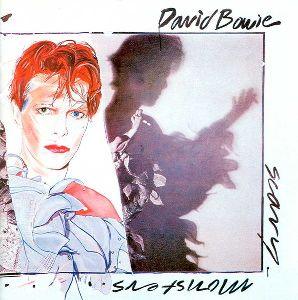
Image: David Bowie World collection / editorial use
Released in September 1980, Scary Monsters (And Super Creeps) marked the end of David Bowie’s remarkable RCA studio-album run and brought one of the most creative decades in his career to a powerful close.
After the experimental years of Low, “Heroes” and Lodger, Bowie returned with an album that was sharper, more direct and more commercially successful, while still retaining the artistic intelligence and sonic invention of his late-1970s work.
- Album: Scary Monsters (And Super Creeps)
- Released: 12 September 1980 in the UK; 15 September 1980 in the US
- Recorded: February – April 1980
- Main studios: The Power Station, New York; Good Earth Studios, London
- Producers: David Bowie and Tony Visconti
- Label: RCA Records
- Previous studio album: Lodger
- Next studio album: Let’s Dance
- Major singles: Ashes To Ashes, Fashion, Scary Monsters (And Super Creeps), Up The Hill Backwards
- Cover photographer: Brian Duffy
- Artwork: Edward Bell
- Costume designer: Natasha Korniloff
- Visual character: Pierrot
Introduction
Scary Monsters (And Super Creeps) arrived after a period of intense artistic experimentation. The so-called Berlin trilogy had given Bowie enormous critical respect, but by 1980 he was ready to make a record that combined experimentation with a more immediate rock and pop impact.
The album does not abandon the adventurous spirit of Low, “Heroes” and Lodger. Instead, it tightens those ideas into a more focused form. The sound is hard, bright, nervous and modern, with jagged guitars, powerful rhythm tracks, dramatic vocals and lyrics that repeatedly look back at Bowie’s own past.
It was also a personal turning point. The sessions began shortly after Bowie’s divorce from Angela Barnett was finalised, and he entered the new decade in a more settled and purposeful frame of mind than he had experienced during much of the mid-1970s.
The result was one of Bowie’s most acclaimed albums: commercially strong, critically praised and often seen as the final great statement of his first major artistic era.
Making Of The Album
The making of Scary Monsters was different from the fast, largely intuitive methods Bowie had used on some of his late-1970s albums.
With Tony Visconti again co-producing, Bowie began work at The Power Station in New York in February 1980. The initial sessions produced strong backing tracks, but many lyrics and vocal melodies were not yet complete. Unlike the more spontaneous vocal methods used on parts of the Berlin-era work, Bowie later took time away to write and refine the words.
This gave Scary Monsters a different kind of discipline. The album still sounds experimental, but it also feels carefully written, edited and shaped. The songs are direct enough to work as singles, yet strange enough to remain unmistakably Bowie.
The album also revisits Bowie’s own history. Ashes To Ashes famously returns to Major Tom from Space Oddity, while the cover artwork looks back at earlier album images. Scary Monsters is therefore both a new beginning and a deliberate reflection on the characters, sounds and images Bowie had created during the previous decade.
After Lodger
Lodger had completed Bowie’s late-1970s experimental sequence with Brian Eno and Tony Visconti. For Scary Monsters, Eno was no longer part of the team, and the working method became less dependent on chance procedures.
Bowie still used unusual textures, unexpected arrangements and experimental guitar sounds, but the album was more song-centred than Lodger. It was designed to be forceful, modern and communicative.
This shift was important. Bowie was not trying to repeat the Berlin albums, but he was also not simply returning to conventional rock. Scary Monsters sits between those positions: accessible, but still restless and highly stylised.
A New Decade And A Final RCA Statement
By 1980 Bowie had been with RCA Records for most of his classic 1970s period.
Scary Monsters became his final studio album for the label. In that sense, it closed the chapter that had included Hunky Dory, Ziggy Stardust, Aladdin Sane, Diamond Dogs, Station to Station, Low, “Heroes” and Lodger.
The album’s success gave Bowie a strong ending to the RCA period. It also placed him in an excellent position for the more commercially dominant phase that would begin with Let’s Dance in 1983.
Recording Sessions
The recording of Scary Monsters took place between February and April 1980.
The first stage was recorded at The Power Station in New York, where Bowie, Tony Visconti and the core band created the main backing tracks. The second stage took place at Good Earth Studios in London, where vocals, overdubs and final work were completed.
This two-stage process shaped the album. New York gave the record its muscular foundation, while London allowed Bowie and Visconti to refine the vocals, add guitar overdubs, create textures and shape the final arrangements.
The album also reunited Bowie with several crucial musicians from his previous work, while adding new guest contributions that helped push the record into harder and more aggressive territory.
The Power Station, New York

Image: The Power Station (later Avatar Studios), New York / Wikimedia Commons (CC BY-SA) / editorial use
The Power Station, known as Avatar Studios from 1996 until 2017, was one of New York’s most important recording studios of the period.
The studio gave Bowie and Tony Visconti a powerful, modern recording environment. Its distinctive acoustics and state-of-the-art facilities helped create the strong rhythm tracks that drive much of Scary Monsters (And Super Creeps).
At The Power Station, Bowie worked with Carlos Alomar, George Murray and Dennis Davis, the core rhythm section that had been central to his music since the mid-1970s. Their disciplined performances provided the album with its powerful musical foundation.
The New York sessions produced most of the album’s backing tracks, although many songs were still without finished lyrics or melodies. After recording the instrumental foundations, Bowie took a break before completing the compositions and returned later to finish the album in London.
Good Earth Studios, London

Image used with permission of Dean Street Studios.
After completing the basic backing tracks in New York, the recording sessions resumed in May 1980 at Tony Visconti’s Good Earth Studios on Dean Street in Soho, London.
The building has a long recording history. As far as can be traced, the premises were first used as a film studio during the 1950s. It later became Zodiac Studios before Tony Visconti acquired the lease in 1976 and renamed it Good Earth Studios.
During the break between the New York and London sessions, Bowie wrote the album’s lyrics, melodies and final song titles. This more deliberate approach marked a departure from the largely spontaneous writing methods used during the Berlin trilogy.
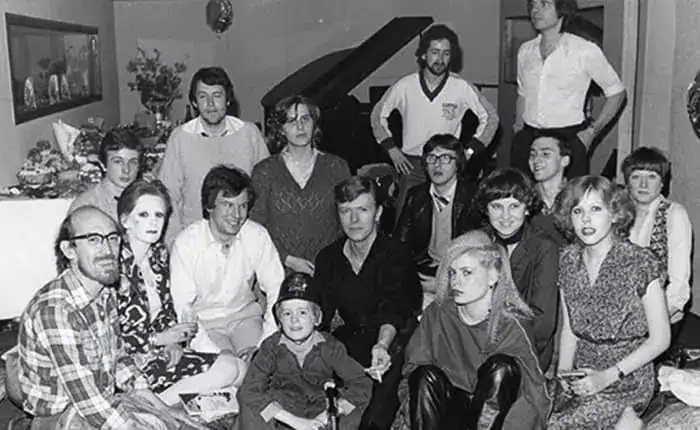
With Tony and a group of people sat in the live room in Good Earth Studios – Image used with permission of Dean Street Studios.
Good Earth Studios became the centre for the album’s overdubs and final performances. Robert Fripp added his distinctive lead guitar to six tracks, Pete Townshend recorded his contribution to Because You’re Young, and Michi Hirota performed the dramatic Japanese spoken introduction to It’s No Game (No. 1). Additional backing vocals and instrumental overdubs were also completed there.
The London sessions were equally important to the finished album as the earlier work in New York. Combined with Tony Visconti’s production, Bowie’s completed vocals and the carefully crafted overdubs transformed the powerful backing tracks into the finished Scary Monsters (And Super Creeps), one of the defining albums of his career.
Tony Visconti’s Production
Tony Visconti was once again central to the album’s sound.
He had already helped shape some of Bowie’s most important records, including The Man Who Sold The World, Young Americans, Low, “Heroes” and Lodger. On Scary Monsters, his role was both musical and technical.
Visconti helped capture the strength of the rhythm section, organise the overdubs and create the dense, aggressive sound that separates the album from the more spacious textures of Low and “Heroes”.
The finished record is one of the strongest examples of Bowie and Visconti balancing experimentation with commercial force.
Key Musicians
The musicians on Scary Monsters combined Bowie’s trusted mid-1970s rhythm team with major guest players and distinctive studio contributors.
- David Bowie: vocals and keyboards
- Tony Visconti: production, backing vocals, acoustic guitar and percussion
- Carlos Alomar: guitar
- Robert Fripp: guitar
- Chuck Hammer: guitar synthesizer
- Pete Townshend: guitar on Because You’re Young
- George Murray: bass guitar
- Dennis Davis: drums and percussion
- Roy Bittan: piano
- Andy Clark: synthesizer
- Lynn Maitland: backing vocals
- Chris Porter: backing vocals and engineering contribution
- Michi Hirota: Japanese spoken vocal on It’s No Game (No. 1)
Carlos Alomar, George Murray And Dennis Davis (DAM Trio)
Scary Monsters (And Super Creeps) was the last Bowie studio album to feature the full core team of Carlos Alomar, George Murray and Dennis Davis.
Together, Alomar, Murray and Davis were often referred to as the DAM Trio, a shorthand taken from their surnames. Their tight, disciplined playing had become one of the key foundations of Bowie’s late-1970s sound.
This rhythm foundation had been central to Bowie’s sound since Station to Station. Alomar’s guitar intelligence, Murray’s powerful bass and Davis’s precise, muscular drumming gave Bowie a band capable of moving between funk, rock, art-pop and experimentation.
On Scary Monsters (And Super Creeps), their playing is tighter and harder than on much of the previous material. The songs needed force, and the band delivered it.
Robert Fripp
Robert Fripp returned after his celebrated work on “Heroes”.
His guitar playing gave Scary Monsters much of its nervous energy. Fripp’s lines are sharp, angular and unpredictable, often cutting across the songs rather than simply decorating them.
His work is especially important on tracks such as It’s No Game (No. 1), Up The Hill Backwards, Scary Monsters (And Super Creeps), Fashion, Teenage Wildlife and Kingdom Come.
Fripp’s contribution helped make the album sound modern, aggressive and unsettled.
Chuck Hammer (guitarchitecture)
Guitarist Chuck Hammer brought a different texture to the album through his guitar synthesizer work.
His layered, sustained guitar-synth parts added a strange orchestral quality to songs such as Ashes To Ashes, Teenage Wildlife and Up The Hill Backwards.
These textures helped separate Scary Monsters from conventional rock records. Even when the songs are direct, there is often something unusual happening beneath the surface.
Pete Townshend
Pete Townshend of The Who contributed guitar to Because You’re Young.
His presence added another link between Bowie’s art-rock world and British rock history. The song’s emotional scale and broad guitar textures suited Townshend’s style.
Although his contribution was limited to one track, it remains one of the most notable guest appearances on the album.
Roy Bittan And Andy Clark
Roy Bittan, previously heard on Station to Station, added piano to the album.
His playing is particularly important to the atmospheric opening of Ashes To Ashes, where the piano sound was treated to create a strange, unreal texture.
Andy Clark’s synthesizer work also helped give the album its modern surface. Together, the keyboards and guitar treatments helped make Scary Monsters sound like a record entering the 1980s without abandoning Bowie’s experimental past.
Important Songs
Scary Monsters contains ten tracks, each contributing to the album’s sense of reflection, anxiety, satire and renewal.
The album works because it does not rely on one mood. It moves from aggression to memory, from pop brilliance to paranoia, from direct rock power to theatrical self-examination.
Important Song: It’s No Game (No. 1)
It’s No Game (No. 1) opens the album with confrontation and intensity.
The song is based partly on earlier Bowie material dating back to his youth, but the 1980 version transforms it into something much harder and more dramatic.
Michi Hirota’s Japanese spoken vocal gives the track a startling opening identity, while Bowie’s own vocal is shouted with unusual force.
The song immediately announces that Scary Monsters will not be a soft return to commercial pop. It is aggressive, international, theatrical and deliberately unsettling.
Important Song: Up The Hill Backwards
Up The Hill Backwards is one of the album’s key group-vocal tracks.
The song reflects uncertainty, adjustment and forward motion, themes that suited Bowie’s position at the start of a new decade.
Its arrangement combines tight rhythm playing, unusual backing vocals and Robert Fripp’s guitar textures.
Released later as a single, it showed that even the album’s less obvious songs had strong commercial and thematic value.
Important Song: Scary Monsters (And Super Creeps)
The title track is one of the album’s hardest and most anxious recordings.
Its rhythm is aggressive, its guitar sounds are sharp, and Bowie’s vocal shifts between menace, observation and theatrical exaggeration.
The song’s imagery of damaged behaviour and emotional disturbance gives the album its title and much of its atmosphere.
As a single, it continued the album’s strong UK presence and confirmed that Bowie could still place challenging material into the pop marketplace.
Important Song: Ashes To Ashes
Ashes To Ashes became the album’s defining single and one of David Bowie’s most important recordings.
The song revisits Major Tom, the astronaut figure first introduced in Space Oddity. Instead of presenting him as a romantic space-age character, Bowie reframes him as damaged, isolated and connected to addiction and regret.
Musically, the song is elegant and strange. Its treated piano, synthesizer textures, layered vocals and memorable chorus created a sound that was both experimental and instantly recognisable.
The single reached number one in the UK and became one of the most important Bowie releases of the early 1980s.
Important Song: Fashion
Fashion is one of Bowie’s sharpest commentaries on style, conformity and social behaviour.
The song combines a strong dance-rock groove with a cold, satirical vocal. It sounds commercial, but its tone is far from celebratory.
The repeated command-like phrases give the song an unsettling edge, suggesting that fashion can be a form of control as much as expression.
As a single, Fashion became one of the most recognisable tracks from the album and was supported by a memorable David Mallet video.
Important Song: Teenage Wildlife
Teenage Wildlife is one of the album’s longest and most emotionally complex songs.
The track has often been understood as Bowie reflecting on younger artists, fame, imitation and the expectations placed on new performers.
Robert Fripp’s guitar work and Roy Bittan’s piano help give the song a large, dramatic structure. Bowie’s vocal is expansive and controlled, moving through bitterness, empathy and distance.
Although not released as a single during the original album campaign, Teenage Wildlife has become one of the most highly regarded deep tracks on the record.
Important Song: Scream Like A Baby
Scream Like A Baby was developed from earlier material connected to Bowie’s mid-1970s work with the Astronettes.
The 1980 version is much darker and more disturbing, with lyrics suggesting persecution, fear and social control.
The vocal treatment and arrangement give the song a claustrophobic atmosphere. It is one of the clearest examples of the album’s interest in damaged identities and political unease.
Rather than functioning as a conventional pop song, it deepens the album’s darker emotional landscape.
Important Song: Kingdom Come
Kingdom Come is the only song on the album not written by David Bowie.
It was written by Tom Verlaine, best known for his work with Television. Bowie’s version fits naturally into the album because of its nervous energy and urban tension.
The song’s inclusion reflects Bowie’s awareness of the New York art-rock and post-punk environment surrounding the sessions.
Although it is a cover, it does not feel out of place. Bowie reshapes it into the album’s world of pressure, sharpness and unease.
Important Song: Because You’re Young
Because You’re Young features Pete Townshend on guitar.
The song has a broad emotional scale and a sense of generational address. Bowie’s vocal suggests both distance and concern.
Townshend’s guitar adds weight and a recognisable British rock character, helping the track stand apart from the colder textures elsewhere on the album.
It is one of the album’s more direct emotional statements, even though its meaning remains open and layered.
Important Song: It’s No Game (No. 2)
It’s No Game (No. 2) closes the album by returning to the same song that opened it, but in a radically different form.
Where the first version is angry and explosive, the second is slower, calmer and more resigned.
This contrast gives the album a circular structure. Bowie begins with confrontation and ends with exhaustion, acceptance or aftermath.
As a closing track, it gives Scary Monsters one of Bowie’s most effective album endings.
Track Listing
The final track sequence of Scary Monsters balances major singles, aggressive rock pieces, reflective songs and experimental textures.

Image: David Bowie World collection / editorial use
- It’s No Game (No. 1)
- Up The Hill Backwards
- Scary Monsters (And Super Creeps)
- Ashes To Ashes
- Fashion
- Teenage Wildlife
- Scream Like A Baby
- Kingdom Come (Tom Verlaine)
- Because You’re Young
- It’s No Game (No. 2)
Together these ten tracks created one of Bowie’s most complete albums: direct enough to produce hit singles, but complex enough to stand as a major artistic statement.
Singles From The Album
Ashes To Ashes
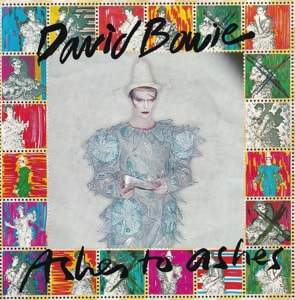
Image: David Bowie World collection / editorial use
Ashes To Ashes was released as the first single from Scary Monsters (And Super Creeps) on 8 August 1980, more than a month before the album’s release.
The single became Bowie’s second UK number one and revisited the character of Major Tom from Space Oddity, presenting him as a darker, more ambiguous figure associated with memory, addiction and personal decline.
Accompanied by one of the most influential music videos of its era, the song gave the album enormous momentum before release and demonstrated that Bowie could successfully combine artistic experimentation with mainstream commercial success.
Fashion
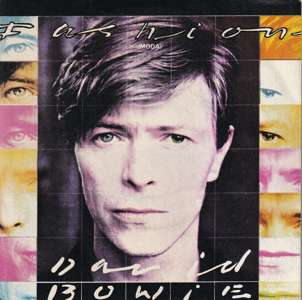
Image: David Bowie World collection / editorial use
Fashion was released as the second single from Scary Monsters (And Super Creeps) on 24 October 1980.
Built around a tight dance-rock groove, Robert Fripp’s distinctive guitar work and a sharp, satirical lyric, the song became one of Bowie’s most recognisable singles of the early 1980s. It reached the UK Top 5 and performed strongly in several other countries.
Supported by a memorable promotional video directed by David Mallet, Fashion became one of the defining visual and musical statements of the Scary Monsters era and remains a staple of Bowie’s catalogue.
Scary Monsters (And Super Creeps)
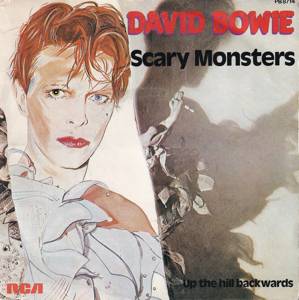
Image: David Bowie World collection / editorial use
Scary Monsters (And Super Creeps) was released as the third UK single from the album on 2 January 1981.
Its aggressive arrangement, driven by Robert Fripp’s angular guitar work and Bowie’s intense vocal performance, highlighted the darker and more unsettling side of the album. The single reached the UK Top 20 and further extended the album’s successful chart campaign.
Although less immediately accessible than Ashes To Ashes or Fashion, the title track remains one of the album’s defining recordings, perfectly capturing the tension, anxiety and artistic ambition that characterise Scary Monsters (And Super Creeps).
Up The Hill Backwards
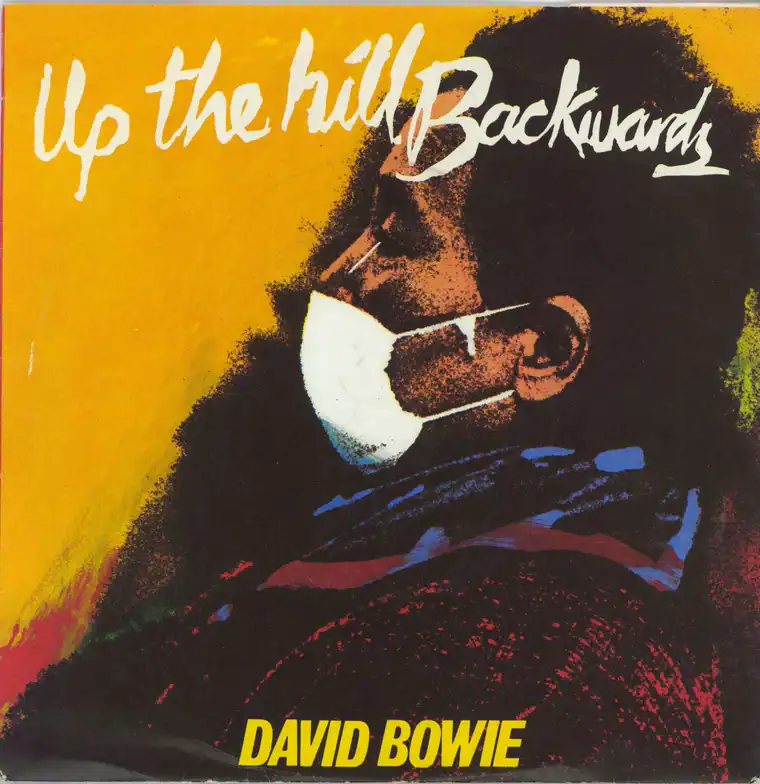
Image: David Bowie World collection / editorial use
Up The Hill Backwards was released as the fourth UK single from Scary Monsters (And Super Creeps) on 30 March 1981.
Featuring layered group vocals by David Bowie, Tony Visconti, Chris Porter and Lynn Maitland, the song combined an infectious rhythmic drive with lyrics exploring uncertainty, communication and the challenges of everyday life. It reached the UK Top 40.
Its release demonstrated the remarkable depth of Scary Monsters (And Super Creeps), confirming that the album contained several strong and distinctive singles rather than relying solely on its biggest hits.
Television And Promotion
Scary Monsters was promoted through singles, press coverage, television exposure and a strong visual campaign.
The video for Ashes To Ashes, directed by David Bowie and David Mallet, became one of the most famous music videos of its era. Its Pierrot imagery, beach scenes and surreal atmosphere created a visual language that immediately defined the album.
David Mallet also directed the video for Fashion, which matched the song’s cold commentary on style and social behaviour with a sharp, modern visual presentation.
These videos were essential to the album’s impact. They helped Bowie move into the 1980s with a visual sophistication that influenced the developing music-video era.
Promotional Videos
Music videos played an essential role in the promotion of Scary Monsters (And Super Creeps). Working with David Mallet, Bowie created a strong visual identity for the album through a series of official promotional films.
Ashes To Ashes

Ashes To Ashes (Official Video)
-
Ashes To Ashes (Official Video)
The official music video for David Bowie - Ashes To Ashes from Bowie's 'Scary Monsters (And Super Creeps)' album released in 1980, which featured the singles Ashes To Ashes, Fashion, Scary Monsters and Up The Hill Backwards.
Directed by David Bowie and David Mallet, the Ashes To Ashes video became one of the most celebrated music videos of 1980. Its Pierrot imagery, beach scenes and surreal atmosphere helped define the visual world of the album.
Fashion

Fashion (Official Video)
-
Fashion (Official Video)
The official music video for David Bowie - Fashion from Bowie's 'Scary Monsters (And Super Creeps)' album released in 1980, which featured the singles Ashes To Ashes, Fashion, Scary Monsters and Up The Hill Backwards.
David Mallet directed the promotional film for Fashion, translating the song’s satirical view of style and social behaviour into a sharp, modern visual statement.
Scary Monsters (And Super Creeps)

Scary Monsters [Official Video]
-
Scary Monsters [Official Video]
David Bowie performing Scary Monsters (and Super Creeps) live in Vancouver, Canada on the Serious Moonlight Tour in 1983. Scary Monsters (and Super Creeps) was written by David Bowie and originally released on the album of the same name in 1980.
The promotional video for Scary Monsters (And Super Creeps), again directed by David Mallet, matched the song’s unsettling atmosphere with dramatic performance sequences and expressive visual effects.
Promotional Releases
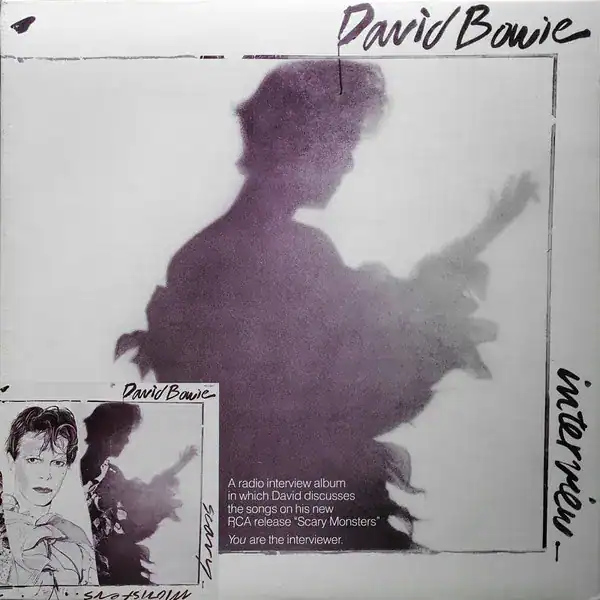
Image: David Bowie World collection / editorial use
RCA also supported Scary Monsters (And Super Creeps) with a number of promotional-only releases aimed at radio stations and the music press.
Among the most notable was The David Bowie Interview, a promotional LP issued exclusively to American radio stations by RCA as catalogue number DJL1-3840. Released in September 1980, the record featured Bowie discussing each song on the album, the cover artwork and the creative ideas behind the project.
The LP included cue sheets for radio presenters, allowing stations to broadcast the interview in a structured format. It was never intended for commercial sale, making it one of the most sought-after promotional releases from the Scary Monsters era.
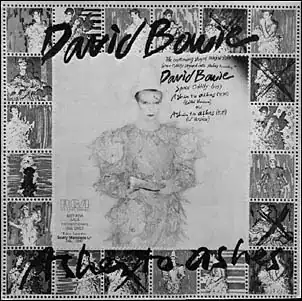
Image: David Bowie World collection / editorial use
In the United States, RCA also issued promotional editions of Ashes To Ashes, including a 7-inch radio edit and the 12-inch promotional release The Continuing Story Of Major Tom.
Released by RCA in 1980 as DJL1-3795, the US promotional 12-inch linked Bowie’s original Space Oddity with an edited version of Ashes To Ashes, creating a direct promotional connection between Major Tom’s first appearance and his darker 1980 return.
The A-side featured Space Oddity segued into Ashes To Ashes in edited form, while the B-side contained the full LP version of Ashes To Ashes.
This made The Continuing Story Of Major Tom one of the most interesting radio-only promotional items from the Scary Monsters campaign.
No Later Single Releases Needed
Unlike some earlier Bowie albums, Scary Monsters does not need a separate “Later Single Releases” section. The historically significant singles belong to the original 1980–1981 album campaign.
Making Of The Album Covers / Cover Story
The cover of Scary Monsters is one of the most sophisticated visual statements of David Bowie’s career.
It reunited Bowie with photographer Brian Duffy, whose earlier work with Bowie had helped create some of the most iconic images of the 1970s. The final sleeve combined Duffy’s photography with painting and graphic design by Edward Bell.
Image: David Bowie World collection / editorial use
Bowie appeared on the cover as Pierrot, the melancholy clown figure from the Commedia dell’arte tradition.
The choice connected directly to Bowie’s early theatrical background, including his work with Lindsay Kemp and his interest in mime, masks and performance.
Natasha Korniloff designed the Pierrot costume, which also appeared in the Ashes To Ashes video. The costume linked the album cover and the promotional film into a single visual world.
Edward Bell’s artwork transformed Duffy’s photographs into a mixed-media sleeve that looked both elegant and fractured, perfectly matching the album’s themes of memory, identity and self-examination.
The cover section also draws on the dedicated David Bowie World article David Bowie – Scary Monsters (And Super Creeps) (1980) | The Story Behind The Album Cover.
The Return Of Brian Duffy
Brian Duffy had been one of Bowie’s most important visual collaborators.
He had photographed Bowie for Aladdin Sane, Lodger and several major 1970s sessions. By 1980 he had largely moved away from professional photography, but Bowie persuaded him to return for one final album-cover session.
The Scary Monsters shoot became the final chapter in their famous sequence of collaborations.
The Pierrot Character
The Pierrot figure was not simply decorative.
Bowie had long been interested in mime, theatrical archetypes and the use of masks. Pierrot allowed him to return to those early roots while presenting them through the more sophisticated visual language of 1980.
On the sleeve, the character appears beautiful, weary and slightly damaged. This suited an album that looked back at Bowie’s past while questioning what those earlier characters had meant.
Edward Bell’s Artwork
Artist Edward Bell played a crucial role in the final look of the sleeve.
Rather than presenting Duffy’s photograph alone, Bell turned the image into a painted and graphic composition. This gave the cover a deliberately artificial and reflective quality.
The result was not just a portrait of Bowie. It was an image about Bowie’s history, performance and self-awareness.
Back Cover / Cover Versions
Image: David Bowie World collection / editorial use
The original back cover was much more than a simple tracklisting panel.
Edward Bell incorporated visual references to several earlier Bowie albums, including Aladdin Sane, Low, “Heroes” and Lodger.
These references transformed the sleeve into a visual summary of Bowie’s 1970s journey. The album did not merely introduce a new image; it looked back at the images Bowie had already created.
The sleeve therefore reinforced the album’s larger meaning: Scary Monsters was both a closing statement and a bridge into the future.
Release And Reception
Scary Monsters (And Super Creeps) was released by RCA Records on 12 September 1980 in the United Kingdom and 15 September 1980 in the United States.
The album was a major success. It reached number one in the UK and performed strongly in several other countries, restoring Bowie’s commercial position while maintaining critical respect.
In the United States it reached the Top 20, giving Bowie his strongest American album chart performance since the late 1970s.
The album received strong reviews and was widely recognised as a powerful return to a more direct Bowie sound after the more experimental late-1970s records.
RCA’s Final Bowie Studio Album
Scary Monsters was Bowie’s final studio album for RCA Records.
This gave the album additional historical importance. It closed the label period that had produced most of Bowie’s classic 1970s catalogue.
The fact that the RCA era ended with such a strong album helped preserve Scary Monsters as a milestone rather than simply a transitional release.
Reissues, Remasters And Later Releases
Scary Monsters has been reissued many times.
The album first appeared on compact disc in the 1980s through RCA. A 1992 Rykodisc/EMI reissue added bonus tracks, including later versions and related non-album material from the period.
Further reissues followed, including later remasters and the album’s inclusion in the 2017 box set A New Career In A New Town (1977–1982).
These reissues confirmed the album’s continuing importance within Bowie’s catalogue and introduced it to later generations of listeners.
Legacy
Today Scary Monsters is widely regarded as one of David Bowie’s greatest albums.
It brought together many strands of his earlier work: theatrical identity, experimental sound, sharp rock music, visual sophistication and self-reflection.
At the same time, it pointed forward to the 1980s. The videos for Ashes To Ashes and Fashion showed Bowie understanding the new visual power of pop promotion before many of his peers.
The album’s influence can be heard in later artists who combined art-rock, new wave, post-punk, fashion and video imagery into a single artistic language.
The End Of The Seventies Bowie
Although released in 1980, Scary Monsters feels like the final statement of Bowie’s 1970s artistic journey.
It looks back to Major Tom, references earlier album covers, reunites key collaborators and closes the long RCA chapter.
Yet it is not nostalgic in a simple way. The album examines the past critically, turning memory into new art rather than repeating earlier successes.
The Road To Let’s Dance
After Scary Monsters, Bowie did not immediately release another studio album.
His next major studio statement, Let’s Dance, would appear in 1983 and bring him a different level of global commercial success.
That later success sometimes overshadows how important Scary Monsters was as a bridge. It proved that Bowie could still create challenging, intelligent music while reaching a wide audience.
Why Scary Monsters Still Matters
Scary Monsters still matters because it captures Bowie at a point of control, reflection and renewal.
It is not as mysterious as Low, not as emotionally vast as “Heroes”, and not as restless as Lodger. Instead, it gathers the lessons of those albums and turns them into something sharper and more direct.
The album’s strongest songs remain among Bowie’s best, while the cover and videos created a visual identity that defined the beginning of the 1980s.
As the final RCA studio album and the last major statement before Let’s Dance, Scary Monsters remains one of the essential albums in the David Bowie catalogue.
Article Origin
This article was created using documented information relating to the writing, recording, production, release, artwork, singles, promotional videos and later reissue history of David Bowie’s Scary Monsters (And Super Creeps).
It incorporates historical album-session information, documented musician and producer recollections, RCA release history, chart information, artwork documentation connected with Brian Duffy, Edward Bell and Natasha Korniloff, and material preserved in the David Bowie World archive.
