
The Making Of Aladdin Sane (1973)
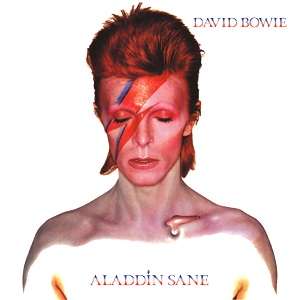
Image: David Bowie World collection / editorial use
Released in April 1973, Aladdin Sane was David Bowie’s first studio album after the breakthrough success of The Rise And Fall Of Ziggy Stardust And The Spiders From Mars. It had the difficult task of following one of the most important albums of the decade while Bowie himself was still living inside the chaos of the Ziggy Stardust phenomenon.
Where Ziggy Stardust had created a myth, Aladdin Sane showed what happened when that myth was thrown into the real world. Written largely while Bowie was touring, the album reflected fame, travel, America, exhaustion, glamour, violence and instability.
- Album: Aladdin Sane
- Released: April 1973
- Recorded: October 1972 – January 1973
- Studios: Trident Studios, London and RCA Studios, New York
- Producers: David Bowie and Ken Scott
- Label: RCA Records
- Key musicians: Mick Ronson, Trevor Bolder, Mick Woodmansey and Mike Garson
- Cover photography: Brian Duffy
- Make-up: Pierre La Roche
- Previous album: The Rise And Fall Of Ziggy Stardust And The Spiders From Mars
- Next album: Pin Ups
After Ziggy Stardust
By the end of 1972, David Bowie had become one of the most talked-about artists in Britain. Ziggy Stardust had transformed him from a cult figure into a genuine star, and the Spiders from Mars had become one of the most exciting live bands of the period.
The success created a problem. Bowie could easily have repeated the formula, but repetition was never his instinct. Instead of making a simple sequel to Ziggy Stardust, he began writing songs that reflected the pressure and disorientation of suddenly becoming famous.
Aladdin Sane was therefore not a second Ziggy album in the strict sense. It was more like Ziggy after fame had become darker, faster and more unstable.
Written On The Road
Much of the album was shaped while Bowie was touring, especially during his exposure to America.
The United States fascinated him. Its scale, mythology, cities, violence, glamour and theatrical excess all fed into the songs. Bowie was no longer imagining stardom from London; he was experiencing it while moving from city to city.
That restless movement gave the album its nervous energy. The songs often feel as if they are being written from hotel rooms, cars, backstage corridors and unfamiliar streets.
A Lad Insane
The title Aladdin Sane has long been understood as a play on the phrase “A Lad Insane”.
That wordplay suited the album perfectly. Bowie was still connected to the Ziggy Stardust world, but the new record felt more fractured and psychologically unstable.
The title character was not presented as a fully developed narrative figure in the same way as Ziggy. Instead, Aladdin Sane suggested a state of mind: a young man caught between fame, performance, travel and emotional strain.
Recording Between Tour Dates
The recording of Aladdin Sane took place in several stages between October 1972 and January 1973.
Sessions were fitted around the continuing Ziggy Stardust tour, making the album feel closely connected to Bowie’s live life at the time.
Most of the work was done at Trident Studios in London, where Bowie had already recorded some of his most important early-1970s material. Additional recording also took place at RCA Studios in New York.
This mixture of London and New York locations strengthened the album’s transatlantic character.
Ken Scott And The Studio Sound
Ken Scott returned as co-producer, continuing the creative partnership that had helped shape Hunky Dory and Ziggy Stardust.
Scott understood Bowie’s working methods and knew how to capture performances quickly without draining them of energy.
The result was an album that sounded both polished and urgent. Compared with Ziggy Stardust, the production on Aladdin Sane often feels bigger, harsher and more chaotic.
That sound matched the subject matter: fame had become louder, stranger and more dangerous.
The Spiders From Mars Return
The core Ziggy Stardust band returned for the sessions.
Mick Ronson provided guitar, arrangements and much of the album’s hard-edged glam-rock force. Trevor Bolder and Mick Woodmansey again supplied the rhythm section, grounding Bowie’s increasingly theatrical songs in a powerful band sound.
This was one of the final major studio statements by the classic Bowie-Ronson-Bolder-Woodmansey line-up.
Although the group still sounded strong, Aladdin Sane also revealed that Bowie was already moving beyond the original Spiders framework.
Mick Ronson’s Power
Mick Ronson remained one of Bowie’s most important musical partners during the making of Aladdin Sane.
His guitar work gave the album much of its aggression, especially on tracks such as Watch That Man, Cracked Actor and The Jean Genie.
Ronson’s playing helped keep the album connected to the glam-rock power of Ziggy Stardust, even when Bowie pushed the music into more theatrical, cabaret or jazz-influenced areas.
Mike Garson Changes The Album
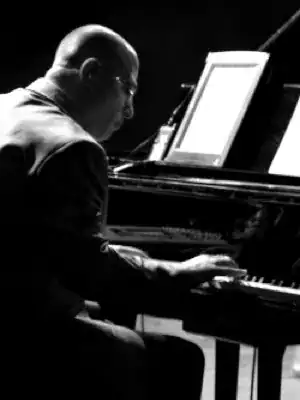
The most important new musical presence on Aladdin Sane was pianist Mike Garson.
Garson came from a jazz background and brought a completely different energy to Bowie’s music. His playing could be elegant, chaotic, romantic or aggressively avant-garde, sometimes within the same song.
His contribution was especially important on the title track, where his piano solo pushed the album far beyond conventional glam rock.
Garson’s arrival made Aladdin Sane less like a straightforward continuation of Ziggy Stardust and more like the first sign of Bowie’s next experimental phase.
The Title Track
The song Aladdin Sane (1913–1938–197?) became the album’s emotional and musical centrepiece.
Its unusual subtitle suggested a cycle of conflict and instability stretching across generations. Bowie later explained that the dates reflected major periods of international tension, while the final date remained open-ended, implying that history might repeat itself.
Musically, the song moved far beyond the straightforward glam-rock approach of Ziggy Stardust. The arrangement shifted between fragile vocals, dramatic piano passages and one of the most famous piano solos in rock history.
Mike Garson’s improvisational performance transformed the track into something genuinely experimental and announced that Bowie’s musical ambitions were rapidly expanding.
Watch That Man
The album opened with Watch That Man, a deliberately chaotic rock song inspired partly by Bowie’s experiences in America.
Many listeners were surprised by the mix, which buried Bowie’s lead vocal beneath the instruments. This was intentional and reflected Bowie’s admiration for the dense sound of contemporary Rolling Stones records.
The track immediately signalled that Aladdin Sane would not simply repeat the formula of its predecessor.
The Jean Genie
The album’s most commercially successful song was The Jean Genie.
Built around one of Mick Ronson’s most memorable guitar riffs, the song combined American blues influences with Bowie’s theatrical glam-rock style.
The title was inspired by French writer Jean Genet, although the lyrics themselves were not intended as a direct portrait of the author.
Released as a single before the album, The Jean Genie became one of Bowie’s biggest hits and helped maintain the momentum created by Ziggy Stardust.
Drive-In Saturday
One of the album’s most imaginative songs was Drive-In Saturday.
The track combined nostalgic references to 1950s and early-1960s popular music with a futuristic storyline set in a strange post-apocalyptic world.
Its mixture of doo-wop influences, science fiction imagery and rich vocal harmonies demonstrated Bowie’s ability to combine familiar musical styles with unusual lyrical ideas.
The song later became one of the defining recordings of the Aladdin Sane period.
Panic In Detroit
Inspired partly by news reports of political unrest and partly by Bowie’s observations during his American travels, Panic In Detroit introduced a darker atmosphere to the album.
Driven by hand percussion and an hypnotic rhythm, the song painted vivid images of violence, revolution and social instability.
Its cinematic storytelling demonstrated Bowie’s growing confidence as a lyricist and observer of modern culture.
Time
The dramatic Time explored mortality, ageing and the relentless passage of life itself.
Combining cabaret influences with rock instrumentation, the song showcased Bowie’s theatrical instincts at their most ambitious.
Mike Garson’s piano once again played a crucial role, helping create one of the most distinctive and emotionally complex tracks on the album.
Lady Grinning Soul
Closing the album was Lady Grinning Soul, one of Bowie’s most elegant recordings.
Built around Garson’s piano and Mick Ronson’s subtle arrangements, the song blended romance, mystery and glamour into a richly atmospheric finale.
Many Bowie historians regard it as one of the finest closing tracks in his entire catalogue.
The Original Back Cover
The rear sleeve continued the sophisticated presentation established by the front cover.
While the lightning-bolt portrait became one of the most recognisable images in popular culture, the back cover completed the visual package and reinforced the sense that Aladdin Sane was a major artistic statement rather than simply another rock album.
Together, the front and back artwork formed one of the most famous album packages of the 1970s.
Track Listing
The original 1973 release contained ten tracks that captured Bowie at the height of the Ziggy Stardust era while simultaneously pointing toward new musical directions.
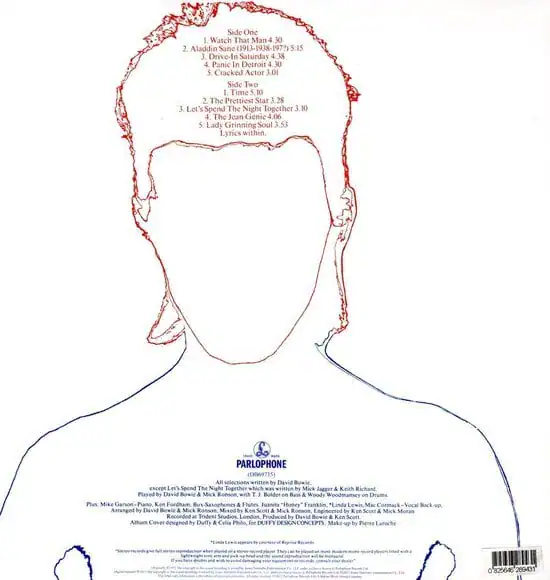
- Watch That Man
- Aladdin Sane (1913–1938–197?)
- Drive-In Saturday
- Panic In Detroit
- Cracked Actor
- Time
- The Prettiest Star
- Let’s Spend The Night Together (The Rolling Stones)
- The Jean Genie
- Lady Grinning Soul
The track list perfectly captured the transitional nature of the album, balancing glam rock, cabaret, blues, experimental piano and theatrical storytelling.
The Singles From The Album
Several songs from Aladdin Sane were released as singles and played an important role in expanding Bowie’s audience beyond Britain.
Unlike many artists who relied on one dominant hit, Bowie used the singles from Aladdin Sane to showcase different aspects of his rapidly evolving musical personality.
From hard-edged glam rock to futuristic nostalgia and theatrical cabaret influences, the singles reflected the remarkable diversity of the album itself.
The Jean Genie
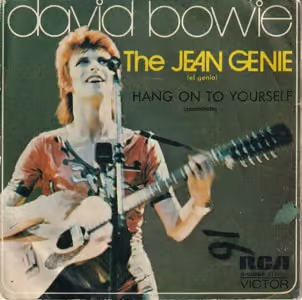
Released in November 1972, several months before the album appeared, The Jean Genie became one of Bowie’s biggest successes to date.
Driven by Mick Ronson’s powerful riff and inspired partly by Bowie’s fascination with American blues and rhythm and blues, the song reached number two on the UK Singles Chart.
Its success helped prepare audiences for the arrival of Aladdin Sane and confirmed that Bowie’s popularity was continuing to grow rapidly.
Drive-In Saturday
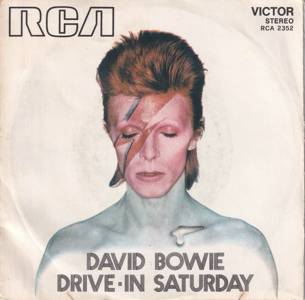
The second major single from the album was Drive-In Saturday.
Released in April 1973, the song combined nostalgic references to 1950s popular music with one of Bowie’s most imaginative futuristic narratives.
The record reached the UK Top 5 and remains one of the most beloved songs from the Aladdin Sane era.
Its mixture of romance, science fiction and classic pop influences demonstrated Bowie’s unique songwriting approach.
Time
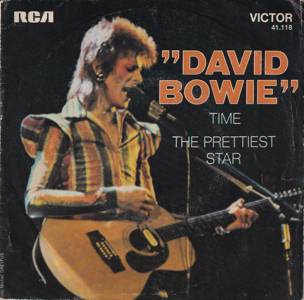
Although less commercially successful than the previous singles, Time highlighted Bowie’s increasingly theatrical ambitions.
With its dramatic arrangement, cabaret influences and philosophical lyrics, the song demonstrated that Bowie was already pushing beyond the boundaries of conventional glam rock.
Today it is regarded as one of the album’s most distinctive recordings.
The Making Of The Cover
If the music of Aladdin Sane captured Bowie at a moment of artistic transformation, the album cover became the image that would define him forever.
The sleeve photograph has frequently been described as the most famous image in Bowie’s entire catalogue and is often referred to as the “Mona Lisa of Pop”.
More than fifty years after its creation, the lightning-bolt portrait remains one of the most recognisable images in the history of popular music.
Want to discover the full story behind the legendary lightning-bolt cover? Explore Brian Duffy‘s famous photo session and the creation of one of the most recognisable images in music history.
Brian Duffy Returns
To create the cover, Bowie once again turned to photographer Brian Duffy.
Duffy was already one of Britain’s most respected photographers, known for his work with Vogue, Elle and numerous major advertising campaigns.
Bowie and Duffy had previously worked together during the Ziggy Stardust period, but this project would become their most famous collaboration.
Manager Tony Defries reportedly insisted that no expense be spared, resulting in what was widely regarded at the time as the most expensive album cover ever produced.
The Lightning Bolt
The famous lightning bolt was created by Bowie’s make-up artist Pierre La Roche.
According to several accounts, the inspiration emerged during discussions about how to create an image that would surpass the impact of the Ziggy Stardust cover.
La Roche reportedly noticed a lightning-bolt warning symbol and suggested adapting the design for Bowie’s face.
The result immediately transformed a simple portrait into something unforgettable.
Although many interpretations have been proposed over the years, Bowie generally described the image as representing a fractured or electrically charged state of mind rather than a literal character.
The Famous Tear
Another element that has generated decades of discussion is the liquid droplet positioned on Bowie’s collarbone.
Applied during the retouching process, the droplet added an additional layer of mystery to the image.
Some viewers interpreted it as a tear, others as a symbolic reference to vulnerability, while many simply viewed it as part of the surreal visual language of the cover.
Its true meaning remains open to interpretation.
A Revolutionary Printing Process
The final image was produced using a seven-colour printing process.
At a time when four-colour printing was standard for most album covers, this represented a remarkable technical achievement.
The additional colours enhanced the intensity of the make-up, increased the vibrancy of the lightning bolt and helped create the extraordinary visual impact that made the cover so distinctive.
The result was unlike anything audiences had previously seen on a rock album sleeve.
The Success Of Aladdin Sane
Released on 13 April 1973, Aladdin Sane immediately became Bowie’s most commercially successful album to date.
The record reached number one in the United Kingdom and strengthened Bowie’s growing international reputation.
Although some critics initially compared it unfavourably to Ziggy Stardust, many later recognised it as an essential chapter in Bowie’s artistic development.
The album captured a unique moment when fame, creativity and constant travel collided.
Legacy
Today, Aladdin Sane is widely regarded as one of the defining albums of the glam-rock era.
It preserved the energy of Ziggy Stardust while simultaneously pointing toward Bowie’s future fascination with experimentation, theatricality and artistic reinvention.
The album introduced Mike Garson’s groundbreaking piano work, produced some of Bowie’s most enduring songs and gave the world one of the most famous album covers ever created.
For many listeners, Aladdin Sane represents the moment when David Bowie stopped being merely a successful rock star and became a genuine cultural icon.
Article Origin
This page was created using documented research into the making of Aladdin Sane, including interviews with David Bowie, Ken Scott, Mike Garson, Geoff MacCormack and other participants involved in the album’s creation. :contentReference[oaicite:0]{index=0}
Additional information was drawn from historical studies of the Ziggy Stardust tour, Brian Duffy’s photography archive, Pierre La Roche’s make-up work, contemporary RCA Records material and research surrounding the creation of Bowie’s iconic lightning-bolt cover image.
