
The Making Of Young Americans (1975)
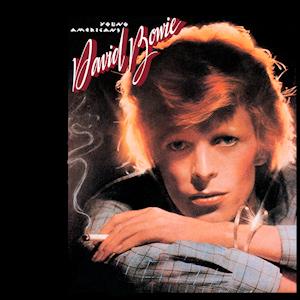
Image: David Bowie World collection / editorial use
Released on 7 March 1975, Young Americans marked one of the most dramatic musical transformations in David Bowie’s career. After the dystopian world of Diamond Dogs, Bowie turned toward American soul, rhythm and blues, Philadelphia studio musicianship and what he later famously called “plastic soul”.
The album was recorded mainly in Philadelphia and New York during 1974 and early 1975. It introduced new collaborators including Carlos Alomar, Luther Vandross, Robin Clark and David Sanborn, and it also produced Bowie’s first number one single in the United States: Fame, co-written with John Lennon and Carlos Alomar.
- Album: Young Americans
- Released: 7 March 1975
- Main studios: Sigma Sound Studios, Philadelphia; Record Plant, New York; Electric Lady Studios, New York
- Main recording period: August 1974 – January 1975
- Producers: David Bowie, Tony Visconti and Harry Maslin
- Label: RCA Records
- Previous studio album: Diamond Dogs
- Next studio album: Station To Station
- Major singles: Young Americans, Fame
- Highest US single: Fame reached number one on the Billboard Hot 100
- Cover photographer: Eric Stephen Jacobs
- Cover designer: Craig DeCamps, RCA
Introduction
Young Americans was the sound of David Bowie stepping away from glam rock and moving directly into American soul music.
The change did not happen suddenly. Hints of this new direction had already appeared in 1984 on Diamond Dogs, in the later stages of the Diamond Dogs Tour, and in Bowie’s growing fascination with American rhythm and blues during 1974.
By the time he entered Sigma Sound Studios in Philadelphia, Bowie was no longer interested in simply extending the world of Ziggy Stardust or Hunger City. He wanted a new language, a new band, a new vocal style and a stronger connection with the American market.
The result was one of his most important transitional albums. Young Americans closed the glam period, opened the door to Bowie’s American success and introduced several musicians who would remain central to his work for years.
Making Of The Album
The making of Young Americans began during a period of intense change. Bowie had moved to the United States, was touring with the elaborate Diamond Dogs stage production, and was becoming increasingly drawn to soul and R&B.
The first major sessions took place in August 1974 at Sigma Sound Studios in Philadelphia, a studio closely associated with the Philadelphia soul sound. Bowie wanted to absorb that environment rather than imitate soul music from a distance.
Many of the musicians came from his touring band, while others were newly recruited during the sessions. The arrival of Carlos Alomar, Luther Vandross and Robin Clark was especially important. Their musical instincts helped move Bowie away from glam-rock theatricality and into a warmer, more rhythm-driven sound.
The album did not remain fixed after the first Philadelphia sessions. Bowie returned to Sigma in November, continued work at Record Plant Studios in New York, and finally recorded Across The Universe and Fame with John Lennon at Electric Lady Studios in January 1975.
MainMan, Tony Defries And The Need For A Hit
The creation of Young Americans also took place during a difficult business period in Bowie’s life. His relationship with manager Tony Defries and the MainMan organisation was becoming increasingly strained, with financial pressure, heavy touring costs and questions over control of Bowie’s career all growing more serious during 1974 and early 1975.
Bowie’s move toward the United States was therefore not only musical. America offered a larger audience, stronger commercial possibilities and a way to build his career beyond the British glam-rock market. The success of Young Americans was important because Bowie needed a record that could firmly establish him in America.
The January 1975 recording sessions with John Lennon happened just as Bowie’s legal and management situation was becoming more complicated. Soon afterwards, Bowie began taking steps to separate himself from MainMan, making the album part of a much wider personal and professional turning point.
For that reason, Young Americans should not be heard only as a stylistic experiment. It was also a strategic record made during a period when Bowie was trying to regain control of his career, his money and his future direction.
From Diamond Dogs To Plastic Soul
Diamond Dogs had been dark, fractured and dystopian. Young Americans was different in almost every way.
The guitars became less dominant, the rhythm section became more fluid, and backing vocals became central to the arrangements. Saxophone, percussion, strings and layered voices helped create a smoother but still emotionally tense sound.
Bowie later described the result as “plastic soul”. The phrase was partly self-critical, but it also captured the deliberate artificiality of the project. Bowie was not pretending to be an American soul singer. He was creating his own stylised version of soul music from the perspective of an English outsider living inside American culture.
That tension is part of the album’s identity. Young Americans is both sincere and constructed, affectionate and analytical, deeply musical and unmistakably Bowie.
The Diamond Dogs Tour Connection
The road to Young Americans ran directly through the Diamond Dogs tour.
When the tour opened in Montreal on 14 June 1974, it was one of the most elaborate productions Bowie had ever attempted. The stage set translated the dystopian Hunger City concept into bridges, towers, platforms and theatrical movement.
However, the production was expensive, difficult to transport and increasingly restrictive for Bowie as a performer. The more he became interested in soul music, the less the rigid theatrical structure suited the direction he wanted to take.
The first part of the tour produced the live album David Live, recorded at Philadelphia’s Tower Theater in July 1974. Those Philadelphia performances proved significant because Bowie soon returned to the city to begin recording the music that became Young Americans.
The Soul Tour
Following the first leg of the tour, Bowie radically changed both the music and the presentation.
The elaborate Hunger City scenery was abandoned and replaced by a far more musician-centred performance. The emphasis shifted away from theatrical spectacle and towards groove, improvisation and the interaction between Bowie and his band. This second phase became known as the Soul Tour.
Songs from the unfinished Young Americans sessions gradually entered the setlist, while older material was rearranged with stronger soul, funk and rhythm-and-blues influences.
The Soul Tour effectively became a testing ground for Bowie’s new musical identity, allowing arrangements to develop on stage before they were finalised in the studio.
The Dick Cavett Show

The Dick Cavett Show 1974
-
The Dick Cavett Show 1974
The Dick Cavett Show'. Episode No.1539, Season No.7. Filmed at ABC Studios, New York, on 2nd November 1974. First broadcast: 4th December 1974. Dick Cavett's Wide World Of Entertainment screened this prerecorded appearance of David Bowie. It was recorded in New York a month earlier when David was there for his Radio City Music Hall gigs. During the Dick Cavett Show, David and his band gave performances of '1984', 'Young Americans' and 'Footstompin' (which would later became the blueprint for 'Fame'). Another song called 'Can You Hear Me?' was taped for the show but was not televised due to program length constraints. Bowie's band provided a musical cue for Cavett to open the show. After a preamble Cavett announces "Let's meet our guests in alphabetical order." To increasing applause he repeats "This is David Bowie" as he puts up each Bowie album cover. Then "if all of these are true, can this also be David Bowie?" Up comes a current picture from David Live and the applause is suddenly hesitant as it is nothing like the Bowie image they are expecting.
One of the clearest public demonstrations of Bowie’s changing direction came on 2 November 1974, when he appeared on The Dick Cavett Show during the Soul Tour.
Accompanied by his touring band, Bowie performed 1984, Young Americans, a medley of Foot Stompin’ and I Wish I Could Shimmy Like My Sister Kate, and Can You Hear Me.
The television appearance introduced American audiences to the soul-influenced Bowie months before the album itself was released. Gone were the elaborate costumes and theatrical staging associated with Ziggy Stardust and Diamond Dogs. Instead, viewers saw a confident frontman backed by a powerful rhythm-and-blues band.
Looking back, the programme stands as one of the earliest public previews of the musical world that would soon be fully realised on Young Americans.
A New Band And A New Sound
One of the most important changes behind Young Americans was the arrival of a new group of musicians.
Bowie’s earlier 1970s recordings had relied heavily on the Spiders from Mars, Mick Ronson‘s guitar and the production style associated with Ken Scott. By 1974 that musical world had largely disappeared.
For Young Americans, Bowie assembled players with deep roots in soul, funk, rhythm and blues. Carlos Alomar became particularly important, introducing Bowie to musicians whose experience in African American music helped define the album’s sound.
Rather than simply accompanying Bowie, the band actively shaped the arrangements, grooves and vocal ideas throughout the recording sessions, making Young Americans one of the most collaborative albums of his career.
Carlos Alomar
Guitarist Carlos Alomar became one of the central creative figures behind Young Americans.
His rhythmic playing, knowledge of soul music and understanding of American R&B brought a completely different musical vocabulary into Bowie’s work. His influence can be heard throughout the album and became especially significant on Fame, where his guitar riff formed the foundation of the song.
The partnership begun during these sessions developed into one of the longest and most productive collaborations of Bowie’s career.
Luther Vandross And The Vocal Sound
Backing vocalist Luther Vandross played a major role in shaping the album’s distinctive vocal arrangements.
Before achieving fame as a solo artist, Vandross brought sophisticated harmony ideas to the sessions and worked closely with Robin Clark and the other backing singers to build the rich vocal textures heard throughout the record.
His own composition Funky Music (Is A Part Of Me) was rewritten with Bowie and became Fascination, earning him a co-writing credit.
The layered vocal arrangements became one of the defining characteristics of Young Americans, giving the album much of its warmth, energy and unmistakable soul identity.
Sigma Sound Studios

The majority of Young Americans was recorded at Sigma Sound Studios in Philadelphia, one of the most influential recording studios in American soul music during the 1970s.
Founded by Joe Tarsia, Sigma Sound had become the home of the celebrated Philadelphia soul sound. Artists including Harold Melvin & the Blue Notes, The O’Jays, The Spinners, Billy Paul and many others had recorded there, making it the ideal environment for the direction Bowie wanted to explore.
Bowie had first become aware of the studio while attending sessions for backing singer Ava Cherry earlier in 1974. Impressed by both the musicians and the atmosphere, he decided that his next studio album should be recorded there.
Recording in Philadelphia was not simply a matter of location. Bowie wanted to immerse himself in the city’s musical culture and work alongside musicians who lived and breathed soul music every day.
Recording The Album Live
Unlike many contemporary studio productions, much of Young Americans was recorded with the band performing together in the studio.
Bowie often sang live alongside the musicians rather than overdubbing his vocals afterwards. This approach captured a spontaneity and energy that suited the album’s rhythm-and-blues foundation.
To reduce sound leakage into Bowie’s microphone, Tony Visconti devised an unusual recording technique using two microphones wired out of phase. The method cancelled much of the surrounding band while preserving Bowie’s live vocal performance, allowing several final vocal takes to remain from the original live recordings.
The result was an album that sounded less constructed than many of Bowie’s earlier records, while still benefiting from careful overdubs and sophisticated production.
The Sigma Kids
During the August 1974 sessions, a small group of devoted Bowie fans gathered outside Sigma Sound Studios almost every evening. They became affectionately known as the Sigma Kids.
The fans waited patiently outside the studio and Bowie’s hotel, hoping for photographs, autographs or simply a glimpse of the recording sessions. Bowie appreciated their dedication and occasionally stopped to speak with them despite his demanding recording schedule.
On the final night of the initial Philadelphia sessions, Bowie invited the group into Sigma Sound Studios during the early hours of the morning. There he played them what he believed was the completed album, apologising that the mixes were still unfinished before replaying the record a second time.
The moment has become one of the most celebrated stories connected with the making of Young Americans, illustrating Bowie’s generosity towards his fans during one of the most creative periods of his career.
Writing In The Studio
Many of the songs on Young Americans continued to evolve while recording was already underway.
Rather than arriving with fully completed compositions, Bowie frequently developed lyrics, melodies and arrangements inside the studio, responding to ideas suggested by the musicians around him.
This collaborative method encouraged spontaneous creativity. Carlos Alomar, Luther Vandross, David Sanborn and the rest of the band all contributed ideas that shaped the final recordings, making the sessions among the most collective of Bowie’s career.
Although Bowie remained firmly in creative control, Young Americans benefited enormously from the musicians’ experience in soul and rhythm-and-blues, giving the album an authenticity that could never have been achieved by imitation alone.
22 August 1974 – The Final Day Of The First Sigma Sessions
On 22 August 1974, David Bowie reached the final day of the initial recording sessions at Sigma Sound Studios in Philadelphia. After an intense period of work, this was the twelfth and final recording day of the first Philadelphia sessions that would form the foundation of Young Americans.
The material was still evolving rapidly. Bowie worked with musicians including Carlos Alomar, while Luther Vandross was becoming an increasingly important presence in the vocal arrangements. Several recordings and compositions were still known under early or working titles during this stage of the sessions.
Among the titles associated with this final day were The Young American, an early title connected with Young Americans, as well as Shilling The Rubes and Lazer. The latter was part of the developing material that would eventually lead to John, I’m Only Dancing (Again).
The end of these August sessions did not mean that the album was finished. Bowie would return to Sigma Sound Studios in November 1974, and further work in New York during the following months would radically alter the album before its release in March 1975.
November 1974: Returning To Sigma Sound
Following the autumn leg of the Soul Tour, Bowie returned to Sigma Sound Studios between 20 and 24 November 1974 to continue work on the album.
The months on the road had given both Bowie and the band a better understanding of the new material. Several songs had evolved during live performances, prompting Bowie to replace or improve earlier recordings with stronger performances and additional overdubs.
Tony Visconti again worked alongside Bowie during these sessions, while Sigma engineer Harry Maslin became increasingly involved in the project. New backing vocals, instrumental refinements and revised rhythm tracks helped bring the developing album closer to completion.
By the end of the November sessions Bowie believed the record was almost finished, although several important changes still lay ahead.
The Gouster
Before Young Americans reached its final form, David Bowie and Tony Visconti assembled an earlier version of the album under the working title The Gouster.
The title referred to a style and attitude associated with African American youth culture during the 1960s. Bowie understood the word as representing pride, style and identity, qualities he believed reflected the music recorded in Philadelphia.
This proposed version contained seven tracks: John, I’m Only Dancing (Again), Somebody Up There Likes Me, It’s Gonna Be Me, Who Can I Be Now?, Can You Hear Me, Young Americans and Right. At this stage neither Across The Universe nor Fame had yet been recorded.
After the January 1975 sessions with John Lennon, Bowie decided to reshape the album. The addition of Across The Universe and Fame meant that several earlier recordings were removed from the final running order. The Gouster remained unreleased until 2016, when it was officially included in the Who Can I Be Now? (1974–1976) box set, offering listeners a fascinating glimpse of Bowie’s original vision.
Record Plant Studios, New York
Towards the end of 1974 the project moved from Philadelphia to Record Plant Studios in New York, where further recording, overdubbing and mixing sessions took place.
Work continued on songs including Win, Fascination, Right and Somebody Up There Likes Me. The move also marked a gradual shift in production responsibilities, with engineer Harry Maslin becoming increasingly involved in shaping the album’s final sound.
Tony Visconti completed much of the mixing for the earlier recordings, even travelling back to London with the tapes before sending reference mixes to Bowie. Detailed instructions travelled between New York and London as Bowie continued refining every aspect of the album.
By the end of these sessions the record was close to completion, but one final recording date would fundamentally change both its running order and its commercial future.
John Lennon Enters The Project
While working in New York, Bowie renewed his friendship with John Lennon, whom he had met socially during 1974. Their conversations about music, fame and artistic freedom quickly developed into plans for a studio collaboration.
Lennon agreed to join Bowie at Electric Lady Studios during January 1975. What began as a session to record a new version of the Beatles’ Across The Universe soon evolved into something much more significant.
The chemistry between Bowie, Lennon and the musicians proved immediate. Their collaboration would produce one of the defining recordings of Bowie’s career and transform the final shape of Young Americans.
Electric Lady Studios And John Lennon
The final recording sessions for Young Americans took place during January 1975 at Electric Lady Studios in New York. By this stage Tony Visconti had returned to England, leaving David Bowie and Harry Maslin to complete the album.
The sessions brought together Bowie, Carlos Alomar, Dennis Davis, Emir Ksasan and, most notably, John Lennon. Bowie had admired Lennon for years, and the opportunity to work together represented one of the highlights of his career.
The first task was a new recording of the Beatles’ Across The Universe, a song Lennon himself had written several years earlier. Once that recording was completed, the musicians continued experimenting in the studio, allowing ideas to develop naturally.
What followed became one of the most famous recording sessions in Bowie’s career.
The Creation Of Fame
After finishing Across The Universe, the musicians began improvising around a rhythmic guitar figure played by Carlos Alomar. Bowie immediately recognised its potential and started developing a melody and lyric while the band continued playing.
John Lennon joined the performance on guitar and vocals, contributing ideas and helping shape the atmosphere inside the studio. Although Lennon later received a co-writing credit, Bowie repeatedly explained that the song’s central melody and most of the lyrics were his own, while Alomar had created the unmistakable guitar riff that drives the recording.
Engineer Harry Maslin also contributed several inventive production ideas, including the reversed piano chord that opens the finished master. Within a remarkably short period, the spontaneous jam had evolved into Fame.
Released as the album’s second single, Fame became David Bowie’s first number-one hit on the American Billboard Hot 100, establishing him as a major commercial artist in the United States.
Harry Maslin‘s Growing Role
As the project approached completion, Harry Maslin became increasingly important to the final production.
Originally brought in as an engineer, Maslin assumed additional production responsibilities after Tony Visconti returned to England. Working closely with Bowie, he supervised the remaining recording sessions, mixing and final overdubs.
Maslin’s experience with American studio recording techniques complemented Bowie’s increasingly sophisticated arrangements, ensuring that recordings made across several studios and over many months retained a consistent sonic identity.
His contribution helped transform Young Americans into one of the most polished albums of Bowie’s career while preserving the spontaneity of the original performances.
The Final Running Order
The January 1975 sessions fundamentally altered the album.
With the addition of Across The Universe and Fame, Bowie decided to remove several earlier recordings from the planned running order, including Who Can I Be Now? and It’s Gonna Be Me.
Although those songs remained unreleased for many years, they later emerged on archival releases and demonstrated just how close Bowie had come to issuing a very different version of the album.
The final eight-track sequence presented a concise and highly focused statement that successfully captured Bowie’s interpretation of American soul while pointing directly towards the more experimental work that would soon follow on Station To Station.
The Album Cover
The cover for Young Americans represented another deliberate reinvention of David Bowie’s public image. Having abandoned the colourful theatrical appearance of the Ziggy Stardust and Diamond Dogs years, Bowie wanted a portrait that reflected the sophistication of his new soul-inspired music.
Rather than creating another fantasy character, the cover presents Bowie as an elegant, almost classic Hollywood figure. The carefully colour-tinted portrait suggested glamour, confidence and maturity, perfectly matching the musical direction of the album.
The finished sleeve remains one of the most recognisable portraits of Bowie’s mid-1970s career and marked the beginning of a more refined visual identity that would continue through Station To Station.
Want to discover the full story behind the Young Americans album cover? Explore the Los Angeles photo session, Eric Stephen Jacobs’ photography and the evolution of the sleeve artwork.
Norman Rockwell: The Original Idea
Before the famous cover photograph was created, Bowie explored the possibility of asking celebrated American illustrator Norman Rockwell to paint the album cover.
Bowie personally contacted Rockwell, whose wife explained that the artist required at least six months to complete a commissioned portrait. Bowie wanted the album finished much sooner, making the collaboration impossible.
Although the idea was abandoned, it reflected Bowie’s growing fascination with American culture and his desire to give Young Americans a distinctly American visual identity that matched its musical ambitions.
Instead of commissioning a painting, Bowie began searching for a photographic style that captured the same timeless sense of classic Americana.
Eric Stephen Jacobs
Bowie found the inspiration he was looking for after seeing photographer Eric Stephen Jacobs’ portrait of choreographer Toni Basil on the cover of the September 1974 issue of After Dark magazine.
Impressed by Jacobs’ technique of hand-colouring black-and-white photographs in the style of classic Hollywood publicity portraits, Bowie contacted the photographer directly and asked him to create a similar image for the new album.
The photo session took place in Los Angeles on 30 August 1974 while Bowie was appearing at the Universal Amphitheatre during the Diamond Dogs tour. Hair stylist Jack Collello prepared Bowie for the session, while Jacobs carefully recreated the lighting style used for the Toni Basil portrait.
After the photographs had been taken, Jacobs hand-tinted the monochrome image using translucent oil colours, even painting the cigarette smoke by hand. The finished portrait became one of the defining Bowie images of the 1970s.
Track Listing
The final version of Young Americans, released on 7 March 1975, contains eight tracks. Although relatively short by Bowie standards, the album represents one of the most significant stylistic changes of his career, moving decisively away from glam rock towards soul, rhythm and blues and sophisticated studio musicianship.

- Young Americans
- Win
- Fascination
- Right
- Somebody Up There Likes Me
- Across The Universe
- Can You Hear Me
- Fame
Several songs originally intended for the album, including Who Can I Be Now?, It’s Gonna Be Me and John, I’m Only Dancing (Again), were removed after the January 1975 sessions with John Lennon reshaped the final running order. These recordings remained officially unreleased until later archival releases, most notably Who Can I Be Now? (1974–1976) in 2016.
Release And Reception

Young Americans | 1975 U.S. TV Ad
-
Young Americans | 1975 U.S. TV Ad
The release of David Bowie's Young Americans album, on the 7th of March 1975. Here is a new remaster of the 1975 U.S. TV advert for the album, featuring gorgeous footage of Bowie, perhaps at his most thin? • Chuck Braverman directed the shoot, on the 26th of March 1975. Like many Bowie fans, I have long been curious about the ad, the shoot and the possible existence of a full Young Americans promo video, made from the material. In March 2022 I managed to correspond with the director Chuck Braverman, about the shoot and the video: Nacho: I specialize in research and restoration and creation of archive music videos. About six years ago I posted on my YouTube channel, a basic restoration I made from the best sources I had, of the 1975 Young Americans TV Ad. In the upload description I wrote: "...Chuck Braverman is said to have directed the shoot, on March 26th, 1975. Legend has it that the entire song was shot, with the intention of creating a full promo video". In the comments that followed, and in online Bowie forums, there have been discussions and questions about the shoot and the "missing" Young Americans promo video. So I am tremendously interested to know about the shoot and the video. Did you in fact direct the video? Chuck: Yes, I did direct the video. It was shot in a small rented studio in Hollywood. Nacho: What in particular are you memories of Bowie that day? Chuck: Bowie showed up with two women, one on each arm. One black, the other white. Both tall and stunning. He was friendly and cooperative. That’s about all I remember. Nacho: Did you see Bowie again? Chuck: That was the only time I saw Bowie. Nacho: Was a complete Young Americans promo video created, and if so, why was it never shown? And does the full promo / the material still exist? Chuck: I don’t remember if there was a plan to make a longer film. Nacho: To confirm about the rumours of a full length Young Americans promo video - are you saying that you didn't create a full length version, and that to your knowledge one was not created? Chuck: I don’t remember or know anything about a full length version. Nacho: Lastly, on the off chance, do you have in your possession the material you shot and edited? Chuck: Sadly, I do not have any video other than what is online. Roger Griffins David Bowie The Golden Years book, has the following anecdote about the shoot: During a practice run, Bowie noticed photographer Ellen Graham taking pictures, so called a halt to the filming and disappeared into the dressing room. He sent a message out stating that she could she could not take photos because his make up wasn’t right and he had clips in his hair. Distraught, she apologized and promised to destroy the photos. She then asked permission to photograph him when he was ready. “I am a fair person”, Bowie told her, “All you needed to do was ask… Yes”. A couple of Ellen Graham's photos from the shoot can be found on her website: https://www.ellengraham.com/stage • For your viewing and listening pleasure, I’ve removed snaps, crackles and pops, synced a new audio of Young Americans and upscaled.
Young Americans was released on 7 March 1975 by RCA Records. Although some critics were initially surprised by Bowie’s dramatic musical change, the album received largely positive reviews and performed strongly on both sides of the Atlantic.
It reached number two on the UK Albums Chart and number nine on the US Billboard album chart, giving Bowie one of his biggest commercial successes to date. The title track had already become his highest-charting American single, while Fame would soon become his first US number-one hit.
Commercially and artistically, the album achieved exactly what Bowie had hoped: it firmly established him within the American market while proving once again that he could successfully reinvent both his music and his public image.
Singles From The Album
Only official A-side singles from Young Americans are listed here.
Young Americans

Released in February 1975 ahead of the album, Young Americans introduced Bowie’s new soul-inspired direction. Edited from its original album length for the single release, it became his biggest American hit to date, reaching number 28 on the Billboard Hot 100 and helping establish him with a wider US audience.
The song had already become a highlight of the Soul Tour before its release and remains one of Bowie’s defining recordings of the 1970s.
Fame
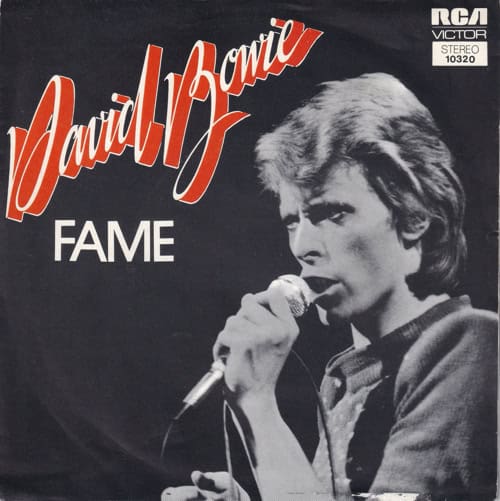
Released in June 1975, Fame became David Bowie’s first number-one single in the United States. Co-written by Bowie, Carlos Alomar and John Lennon, the song emerged from an impromptu studio jam at Electric Lady Studios following the recording of Bowie’s version of Across The Universe.
Built around Carlos Alomar‘s unforgettable guitar riff and featuring Lennon’s vocal contributions, Fame combined funk, soul and biting commentary on celebrity, success and the pressures of public life.
The single topped the Billboard Hot 100 in September 1975, becoming Bowie’s biggest commercial success in America to that point and firmly establishing him as a major artist in the US market.
Later Single Releases
Although only Young Americans and Fame were released as official A-side singles from the album, one important recording from the Young Americans sessions was issued later as an A-side single.
John, I’m Only Dancing (Again)
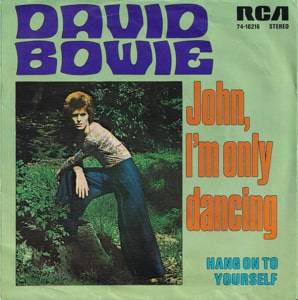
Recorded during the August and November 1974 Young Americans sessions, John, I’m Only Dancing (Again) was originally intended for the album and appeared on the early running order prepared under the working title The Gouster.
Following the January 1975 sessions with John Lennon and the addition of Fame and Across The Universe, Bowie revised the album’s track list and removed the song from the final release.
The recording remained unreleased for several years before finally appearing as a commercial A-side single in December 1979. Issued in a newly edited disco-style version, it gave audiences their first official release of one of the most significant outtakes from the Young Americans sessions.
Legacy
Today Young Americans is recognised as one of the most important turning points in David Bowie’s career. It demonstrated that he could successfully leave behind one musical identity and master another without losing his artistic individuality.
The album introduced collaborators including Carlos Alomar, Luther Vandross and Harry Maslin, strengthened Bowie’s position in the American market and produced his first US number-one single. Its influence can also be heard in the sophisticated soul and funk elements that continued into Station To Station.
Equally important, the record confirmed Bowie’s refusal to repeat himself. At the height of his glam-rock fame he deliberately abandoned the style that had made him a star, replacing it with a completely different musical vocabulary and proving once again that constant reinvention lay at the heart of his career.
Article Origin
This article has been compiled using historically verified research into the recording of Young Americans, including contemporary interviews with David Bowie and his collaborators, documented studio records, touring history, production notes and established Bowie reference sources. Every effort has been made to present an accurate and complete account of the album’s creation.
