The Hype – David Bowie’s Electric Band of 1970
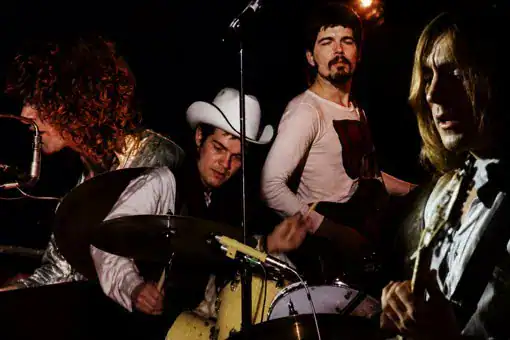
The Hype was the electric group assembled around David Bowie in early 1970. Its original line-up brought Bowie together with guitarist Mick Ronson, bassist and producer Tony Visconti and drummer John Cambridge. Cambridge was subsequently replaced by Mick “Woody” Woodmansey.
The group emerged while Bowie was moving beyond the predominantly acoustic presentation associated with much of his recent work. The arrival of Ronson gave him a powerful electric guitarist, while Visconti and Cambridge provided the rhythm section for a heavier live sound. Their first weeks together also coincided with Bowie’s growing interest in combining music with costume, character and theatrical presentation.
The Hype was short-lived and never developed into a permanent, independently established band. Its importance lies instead in the musical relationships and performance ideas that emerged during 1970. Ronson, Visconti and Woodmansey subsequently played central roles in the creation of The Man Who Sold the World, while Ronson and Woodmansey later continued with Bowie during the period that led towards Ziggy Stardust.
The Hype should not be described simply as an early name for the Spiders from Mars. The two groups had different line-ups and belonged to separate stages of Bowie’s development. The Hype was nevertheless an important precursor, introducing musicians and visual ideas that Bowie would expand considerably during the following years.
- Name: The Hype
- Formed: Early 1970
- Original line-up: David Bowie, Mick Ronson, Tony Visconti and John Cambridge
- Later drummer: Mick “Woody” Woodmansey
- Instruments: Bowie on vocals and twelve-string guitar, Ronson on electric guitar, Visconti on bass and Cambridge or Woodmansey on drums
- Musical direction: Electric rock with developing hard-rock and progressive elements
- Important appearances: BBC radio sessions and live performances at the Roundhouse in London
- Recording connection: Ronson, Visconti and Woodmansey played on The Man Who Sold the World
- Historical importance: An early stage in Bowie’s development of a heavier sound and a more theatrical form of rock performance
- Later development: Ronson and Woodmansey continued working with Bowie and later became members of the Spiders from Mars alongside Trevor Bolder
Origins and Formation
The origins of The Hype lie in David Bowie’s move towards a louder and more fully electric form of live performance during the opening months of 1970. Following the success of Space Oddity, Bowie wanted a working group capable of performing both his existing material and the heavier compositions he was beginning to develop.
Drummer John Cambridge had already worked with Bowie as a member of Junior’s Eyes, the group that supported him during part of 1969. Cambridge also knew guitarist Mick Ronson from Hull, where both musicians had played with The Rats, and helped bring Ronson into Bowie’s developing musical circle.
Ronson arrived in London in early February 1970 and joined Bowie, Cambridge and producer Tony Visconti, who took on bass guitar. Bowie sang and played twelve-string guitar, creating an original four-man line-up consisting of Bowie, Ronson, Visconti and Cambridge.
The new combination gave Bowie a substantially heavier sound. Ronson brought a forceful and melodic electric-guitar style, while Visconti and Cambridge provided the bass-and-drums foundation. Their formation marked the beginning of Bowie’s important musical partnership with Ronson, although the group had not yet developed into a permanent or independently established band.
John Peel’s The Sunday Show
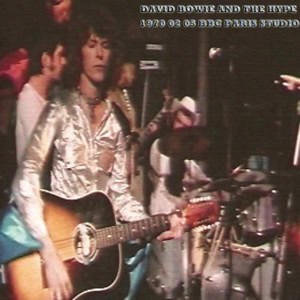
One of the earliest documented performances by the line-up was recorded for the BBC on 5 February 1970. The session was made for John Peel‘s The Sunday Show and broadcast on 8 February 1970. It was officially credited to David Bowie and The Tony Visconti Trio, a line-up subsequently identified with The Hype.
The extensive session included Amsterdam, God Knows I’m Good, Buzz the Fuzz, Karma Man, London Bye, Ta-Ta, An Occasional Dream, The Width of a Circle, Janine, Wild Eyed Boy from Freecloud, Unwashed and Somewhat Slightly Dazed, Fill Your Heart, The Prettiest Star, Cygnet Committee and Memory of a Free Festival.
The broadcast documented a transitional moment in Bowie’s career. Older compositions appeared alongside newer and more expansive material, particularly The Width of a Circle, demonstrating the heavier direction that Bowie and the musicians would continue to develop during 1970.
The Meaning Behind “The Hype“
The name The Hype was deliberately ironic. During the late 1960s, the word “hype” had become closely associated with publicity, promotion and exaggerated media attention within the music industry. Rather than choosing a conventional band name, David Bowie adopted the term with a sense of humour, acknowledging the growing importance of image while simultaneously poking fun at the industry’s obsession with promotion.
For Bowie, however, The Hype represented more than simply a band name. It became an opportunity to experiment with a new approach to live performance in which music, visual identity and theatrical presentation formed a single concept. Instead of appearing as a conventional rock group, each member would adopt a distinctive stage appearance, making the band itself part of the performance.
Despite his enthusiasm for the project, Bowie never intended The Hype to replace his own identity as a solo artist. While the group provided the ideal vehicle for developing his heavier musical direction and increasingly ambitious stage ideas, he continued to regard David Bowie and The Hype as two separate creative entities.
David Bowie on the future of The Hype
“Although we’re all happy with the set up, I don’t think The Hype will become a permanent thing. I’d like to retain Hype and myself as separate things because I think they can work independently.”
— David Bowie, Melody Maker, 28 March 1970
That philosophy shaped every aspect of The Hype. The music was only one part of the project; costumes, stage characters and visual presentation were equally important. Those theatrical experiments would soon become one of the defining features of Bowie’s live performances and laid the foundations for the far more elaborate stage personas that followed during the early 1970s.
Costumes and Stage Identities
One of the most striking features of The Hype was its visual presentation. At a time when most rock bands performed in everyday clothing, Bowie introduced a theatrical concept in which every member of the group appeared in an individual costume. The idea was not simply to attract attention, but to challenge audiences’ expectations of what a rock performance could be.
The costumes were assembled with the help of Bowie’s close circle, including Angie Bowie, using a mixture of purchased garments, customised clothing and theatrical accessories. Rather than creating matching outfits, Bowie encouraged each musician to adopt a distinctive visual identity. Contemporary descriptions and later recollections differ slightly regarding the names of the individual characters, but all agree that the appearance of the band was unlike anything regularly seen on British concert stages in early 1970.
David Bowie on The Hype‘s costumes
“We’ve had these costumes made by various girl friends. They’re really just another way of presenting ourselves.”
— David Bowie, Melody Maker, 1970
Bowie himself wore brightly coloured outfits inspired by science fiction, cabaret and avant-garde theatre, while the other members appeared in equally unconventional clothing that ranged from flamboyant jackets to comic-book-inspired costumes. The intention was to transform the band into a visual experience as well as a musical one, anticipating ideas that Bowie would later develop much further during the Ziggy Stardust era.
Although audiences were often surprised by the band’s appearance, the costumes represented an important stage in Bowie’s artistic development. They marked one of his first serious attempts to combine music, fashion and theatrical performance into a unified live presentation, an approach that would become one of the defining characteristics of his career throughout the 1970s.
The First Roundhouse Performance
The new line-up made one of its earliest documented public appearances on 22 February 1970 at the Roundhouse in Chalk Farm, London. Bowie and his musicians appeared in support of the British rock band Fat Mattress, giving audiences one of their first opportunities to experience the heavier electric sound that had emerged during rehearsals earlier that month.
Although the group had not yet fully established the theatrical identity that would soon become associated with The Hype, the performance marked an important milestone in Bowie’s development as a live performer. The concert introduced audiences to a band that differed significantly from the musicians who had accompanied him during the Space Oddity period, with Mick Ronson‘s powerful guitar work adding a new dimension to Bowie’s songs.
The set combined recently written material with songs from Bowie’s existing repertoire, reflecting the transitional nature of his career during the opening months of 1970. At the same time, the concert allowed Bowie and the band to gain valuable experience performing together before taking their increasingly ambitious stage presentation to larger audiences in the weeks that followed.
Although contemporary documentation of the evening is limited, the Roundhouse performance demonstrated that Bowie was moving decisively away from the predominantly acoustic style that had characterised much of his recent work. The heavier arrangements, combined with Ronson’s distinctive guitar playing and the band’s growing confidence, pointed towards the musical direction that would soon culminate in The Man Who Sold the World.
The Atomic Sunrise Festival
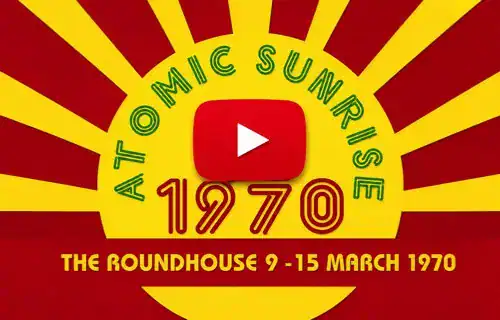
Click the image to watch David Bowie and The Hype performing at the Atomic Sunrise Festival, Roundhouse, London, 11 March 1970.
On 11 March 1970, The Hype appeared at the Atomic Sunrise Festival, held at the Roundhouse in London. Organised as an all-night underground event combining music, poetry, theatre and film, the festival attracted an audience accustomed to experimentation and countercultural performance. For Bowie and The Hype, it became one of the most memorable concerts of their short existence.
Unlike earlier performances, the band now appeared in full costume. Bowie and the musicians took to the stage wearing brightly coloured theatrical outfits, transforming the concert into a visual spectacle as well as a musical performance. Although later accounts differ slightly regarding the exact appearance of each band member, contemporary photographs clearly show that Bowie intended the costumes to be an integral part of the performance rather than a publicity stunt.
The surviving documentation confirms that the performance included songs such as Memory of a Free Festival and The Supermen, demonstrating the increasingly ambitious musical direction Bowie was pursuing during 1970. The combination of powerful electric arrangements and theatrical presentation made The Hype unlike any other British rock act performing at the festival.
David Bowie on The Hype‘s Atomic Sunrise performance
“It was really just the most depressing night of our lives. Nobody knew what we were doing. They just looked at us.”
— David Bowie, recalling The Hype‘s early performances
Although Bowie later remembered the audience’s reaction as disappointing, the performance has acquired considerable historical importance. The Atomic Sunrise Festival represented one of the earliest occasions on which Bowie fully combined rock music with theatrical costume and visual storytelling. While it would be incorrect to describe the concert as the birth of glam rock, it clearly foreshadowed ideas that Bowie would refine over the following two years.
Among those present was Marc Bolan, then still at an early stage in the transformation of Tyrannosaurus Rex into T. Rex. Later writers have often highlighted the significance of both artists appearing at the same event, although the extent to which they directly influenced one another on that evening cannot be established with certainty. What is beyond doubt is that the festival brought together two musicians who would soon become central figures in the development of British glam rock.
The March 1970 BBC Session
Following their increasingly confident live performances during March 1970, David Bowie and The Hype returned to the BBC studios on 25 March 1970 to record a second radio session. The recordings were made for Andy Ferris’ Sounds of the 70s and broadcast on 6 April 1970, providing another valuable snapshot of Bowie’s rapidly evolving musical direction.
Unlike the earlier BBC session recorded in February, this performance reflected the growing confidence of the band as a live unit. By this stage, Bowie, Mick Ronson, Tony Visconti and John Cambridge had spent several weeks rehearsing and performing together, allowing the heavier arrangements and musical interplay to develop naturally on stage and in the studio.
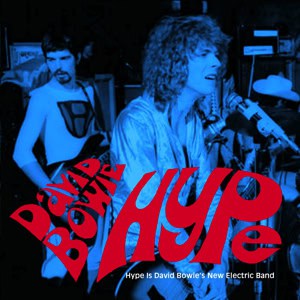
The session included Wild Eyed Boy from Freecloud, The Supermen, The Width of a Circle and a powerful interpretation of I’m Waiting for the Man, Lou Reed‘s classic composition by The Velvet Underground. Together, the recordings demonstrated how Bowie’s music was becoming increasingly ambitious, combining folk-influenced songwriting with heavier rock arrangements that anticipated the sound of The Man Who Sold the World.
Although BBC sessions were recorded primarily for radio broadcast rather than commercial release, they played an important role in documenting Bowie’s artistic development. Today, the surviving recordings provide one of the clearest contemporary records of The Hype‘s original line-up before the departure of drummer John Cambridge only a few days later.
The End of the Original Line-up
By the end of March 1970, the original line-up of The Hype had reached the end of its brief existence. On 30 March 1970, David Bowie, Mick Ronson, Tony Visconti and John Cambridge gave what is generally regarded as Cambridge’s final performance with the group. Although The Hype had existed for only a few months, the band had already played an important role in Bowie’s transition towards a heavier musical style and a more theatrical approach to live performance.
The precise circumstances surrounding John Cambridge‘s departure have been described differently in later interviews and recollections. While the surviving accounts vary in detail, it is clear that Bowie decided to continue with a different drummer as his musical direction continued to evolve. Shortly afterwards, Cambridge left the group and returned to pursue other musical projects.
Although his time with Bowie was relatively brief, Cambridge’s contribution proved significant. He had introduced Mick Ronson into Bowie’s circle, performed during the formative months of The Hype and played on the earliest stages of the musical partnership that would eventually lead to some of Bowie’s most important work of the early 1970s.
John Cambridge reflecting on his place in Bowie’s history
“I always say that I wasn’t in the Spiders, but I helped weave the web.”
That observation neatly summarises Cambridge’s place in Bowie’s career. Although he was no longer part of the group by the time the Spiders from Mars were formed, his introduction of Mick Ronson and his role during The Hype period helped lay the foundations for one of the most influential musical partnerships in Bowie’s career.
Woody Woodmansey Joins the Group
Following John Cambridge‘s departure at the end of March 1970, David Bowie needed a new drummer to continue developing the music that would soon become The Man Who Sold the World. The vacancy was filled by Mick “Woody” Woodmansey, another musician from Hull who had previously performed alongside Mick Ronson in the local music scene.
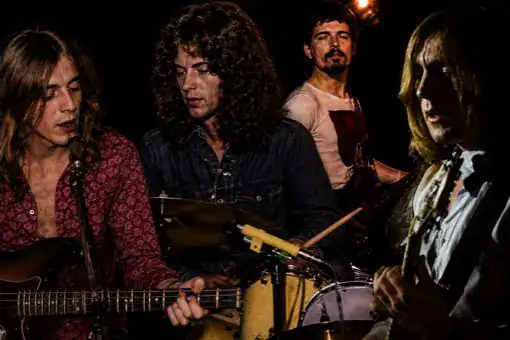
Woodmansey officially became part of Bowie’s group in early April 1970. On 3 April 1970, he signed a recording agreement as a member of The Hype, confirming his place in the evolving line-up. His arrival reunited Ronson and Woodmansey, whose long-standing musical partnership from Hull now became part of Bowie’s rapidly developing band.
Unlike John Cambridge‘s energetic and jazz-influenced playing, Woodmansey brought a more measured and disciplined style that complemented Ronson’s increasingly powerful guitar work. Together with Tony Visconti on bass, the revised rhythm section provided a solid musical foundation for Bowie’s newest material while allowing greater emphasis on arrangement and dynamics.
Although The Hype itself would soon disappear as a public name, the arrival of Woodmansey marked an important turning point. The new line-up of Bowie, Ronson, Visconti and Woodmansey became the group that entered the studio to record The Man Who Sold the World, an album that represented one of the most significant developments of Bowie’s early career.
Rehearsals at Haddon Hall
With Mick “Woody” Woodmansey now replacing John Cambridge, Bowie continued rehearsing with the band at Haddon Hall, his Victorian residence in Beckenham, Kent. The large house became both a home and a creative workshop, providing a convenient location where the musicians could rehearse regularly while Bowie’s latest material continued to develop.
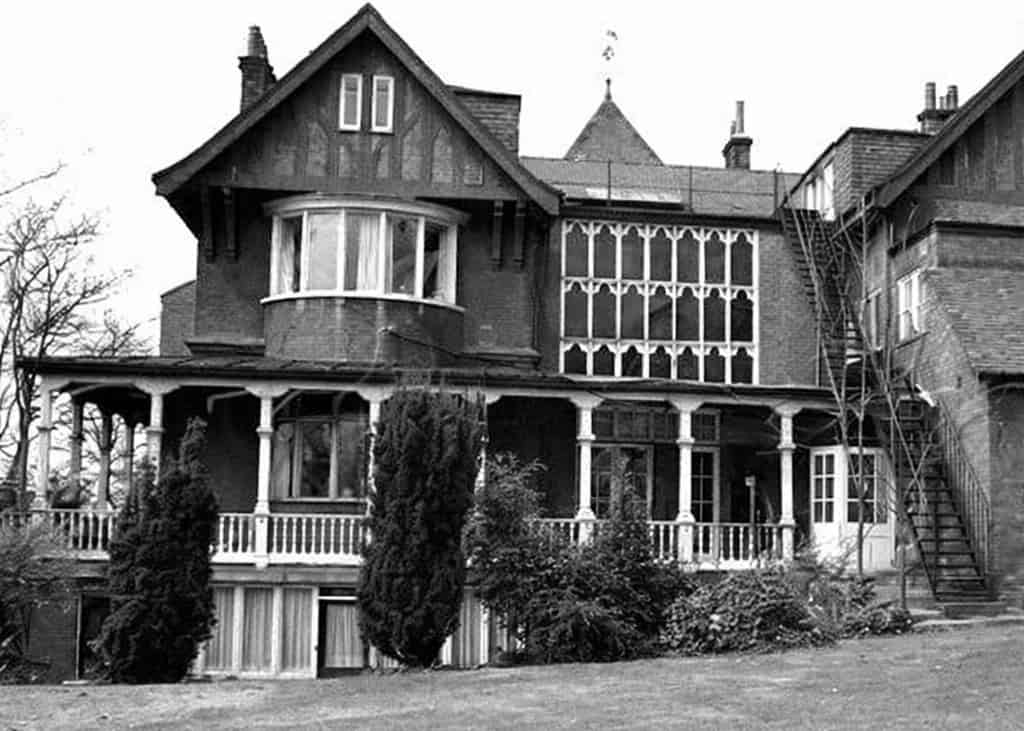
Much of the rehearsal work took place in the basement, where the band refined arrangements, experimented with dynamics and prepared for forthcoming recording sessions. According to later recollections by members of the group, rehearsals often lasted for hours as ideas were explored, altered and refined before entering the studio.
Haddon Hall became an important meeting place for Bowie’s expanding creative circle. Besides rehearsals, the house served as a centre for discussions about music, performances and future projects during a period in which Bowie was redefining both his musical direction and his artistic identity.
The atmosphere at Haddon Hall encouraged experimentation. Rather than simply reproducing existing songs, the musicians developed arrangements that were considerably heavier and more adventurous than Bowie’s previous recordings. Mick Ronson‘s guitar playing became increasingly prominent, while Tony Visconti and Woody Woodmansey worked together to create a solid rhythmic foundation for the new material.
Although Haddon Hall would later become closely associated with the creation of several important Bowie projects, its significance during 1970 lay in providing the environment in which this revised line-up established its musical identity. The rehearsals prepared the band for the recording sessions that would shortly produce The Man Who Sold the World, an album that marked a decisive step in Bowie’s artistic evolution.
Recording The Man Who Sold the World
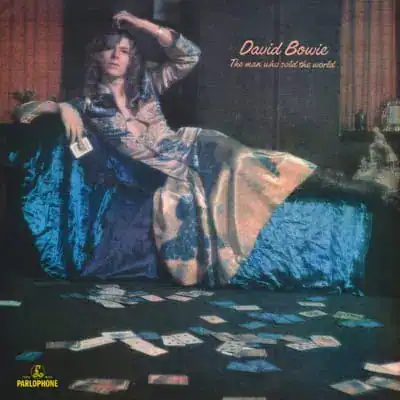
Following weeks of rehearsals at Haddon Hall, David Bowie and his musicians entered Trident Studios in London during the spring of 1970 to record what became The Man Who Sold the World. Produced by Tony Visconti, the sessions represented a decisive break from the predominantly acoustic sound of Bowie’s previous albums and introduced a far heavier musical approach.
The core line-up consisted of David Bowie (vocals and twelve-string guitar), Mick Ronson (lead guitar), Tony Visconti (bass guitar and production) and Mick “Woody” Woodmansey (drums). Classical musician Ralph Mace also contributed synthesiser to several tracks, adding an experimental texture that complemented the album’s heavy rock arrangements.
Although the musicians had developed from the line-up that had performed as The Hype, the recordings were made and released under David Bowie’s own name. By this stage, The Hype had become less important as a public identity, while the musical partnership between Bowie, Ronson, Visconti and Woodmansey continued to evolve in the recording studio.
Songs such as The Width of a Circle, All the Madmen, Black Country Rock and the title track demonstrated the band’s growing confidence and highlighted Ronson’s increasingly important role as Bowie’s principal guitarist. At the same time, Visconti’s production helped shape an album that differed significantly from anything Bowie had previously recorded.
Released on 4 November 1970, The Man Who Sold the World received only modest commercial attention at the time but was later recognised as one of the key transitional albums of Bowie’s career. It established the heavier musical foundation upon which many of his subsequent recordings would be built and marked the beginning of one of the most productive creative partnerships in British rock music.
The End of The Hype
By the middle of 1970, the name The Hype was gradually disappearing from public use. Although the musicians continued to work together, Bowie increasingly presented himself simply under his own name rather than as the leader of a separate band. There was no formal announcement marking the end of The Hype; instead, the concept quietly faded as Bowie’s career entered a new phase.
Several factors contributed to this transition. The departure of John Cambridge, the arrival of Woody Woodmansey and the recording of The Man Who Sold the World had already altered the group’s identity. At the same time, Bowie was becoming increasingly focused on establishing himself as a distinctive solo artist, with the accompanying musicians supporting his evolving artistic vision rather than forming an independently recognised group.
The theatrical experimentation introduced by The Hype was not abandoned. Instead, many of its ideas continued to develop as Bowie refined his stage presentation, visual identity and musical direction during the following year. What disappeared was the name itself, not the creative ambition that had inspired it.
Although The Hype existed for only a relatively short period, it fulfilled the purpose for which it had been created. It provided Bowie with the opportunity to experiment with a heavier sound, assemble an exceptional group of musicians and explore the relationship between music, costume and performance. Those experiences became the foundation for the next stage of his artistic development.
By the time Bowie began recording Hunky Dory in 1971, The Hype had become part of his history. Its influence, however, continued through the musicians who remained alongside him and through the theatrical ideas that would soon evolve into one of the most recognisable stage concepts in rock history.
From The Hype to the Spiders from Mars
Although The Hype disappeared as a public identity during 1970, the musical relationships formed within the band continued to develop. Rather than representing an end, The Hype proved to be a crucial transitional stage in David Bowie’s artistic evolution, bringing together musicians who would help define the next chapter of his career.
The first major change came with the arrival of Mick “Woody” Woodmansey, whose partnership with guitarist Mick Ronson had already been established through their years in the Hull music scene. Together they became an increasingly important part of Bowie’s evolving live and studio band, contributing significantly to the recording of The Man Who Sold the World.
Following the album’s release, the musicians temporarily pursued separate activities before reuniting during the sessions for Hunky Dory in 1971. During this period, bassist Trevor Bolder, another musician from Hull, joined Bowie’s group, completing the line-up that would soon become internationally recognised alongside Bowie.
Although the musicians who formed the Spiders from Mars developed directly from the period of The Hype, the two groups were not the same. The Hype had been created as an experimental live concept combining heavier rock music with theatrical presentation, whereas the Spiders from Mars emerged alongside Bowie’s fully realised Ziggy Stardust character and became one of the defining backing bands in rock history.
The importance of The Hype therefore lies not in commercial success, but in its role as the bridge between Bowie’s post-Space Oddity years and the creative breakthrough that followed. It was during this short-lived project that Bowie first assembled the musicians, developed the heavier musical direction and began exploring the theatrical ideas that would soon transform his career.
Legacy
Although The Hype existed for only a few months during 1970, the group’s historical importance far exceeded its brief lifespan. It marked the period in which David Bowie brought together a heavier musical approach, an increasingly theatrical stage presentation and a group of musicians who would play an important role in his artistic development during the early 1970s.
The band also represented the beginning of Bowie’s long creative partnership with guitarist Mick Ronson. Introduced through drummer John Cambridge, Ronson became one of Bowie’s closest musical collaborators, while the later addition of Mick “Woody” Woodmansey helped establish the line-up that recorded The Man Who Sold the World. These musical relationships continued to develop during the recording of Hunky Dory before evolving into the band that would become known as the Spiders from Mars.
Equally significant was Bowie’s willingness to experiment with visual presentation. Through costumes, stage characters and theatrical performance, The Hype became the first practical expression of ideas that Bowie would continue to refine throughout the following decade. While these early experiments were still relatively modest compared with later productions, they demonstrated his growing belief that music, fashion and performance could form a single artistic statement.
Although The Hype never achieved commercial success and existed for only a short period, it occupies an important place in Bowie’s history as a transitional project. It connected the folk-influenced songwriter of the Space Oddity era with the artist who would soon redefine his musical identity through The Man Who Sold the World, Hunky Dory and ultimately The Rise and Fall of Ziggy Stardust and the Spiders from Mars.
Today, The Hype is remembered not because of chart success or longevity, but because it captured David Bowie at one of the most important turning points of his career. Within a remarkably short period, the band laid the musical and theatrical foundations upon which many of Bowie’s greatest achievements would be built.
Official Website & Further Information
As a short-lived working band created specifically for David Bowie’s live performances during 1970, The Hype has no official website.
DavidBowieWorld.com is dedicated to documenting the careers of David Bowie’s collaborators through carefully researched historical information and, where available, first-hand contributions from the artists themselves. This page will continue to be updated as new verified information becomes available.
Article Origin
This article has been researched and written by DavidBowieWorld.com using contemporary newspaper and magazine interviews, BBC session documentation, official David Bowie releases, surviving concert records, historical publications, archival photographs and verified research relating to David Bowie’s career during 1970. Particular care has been taken to distinguish documented historical facts from later recollections and commonly repeated myths surrounding The Hype, ensuring that the band’s role in Bowie’s artistic development is presented as accurately as possible.
← Back to David Bowie Collaborators
The Hype Chronology
🏛️ Johnston Hall, University of Aberdeen
🎤 Artist: David Bowie (Trio)
🗒️ Notes: Following his TV appearance on ‘Cairngorm Ski Night’, David performs with Tony Visconti and Tex Johnson. This rare Scottish gig was organized to cover travel costs for the trip north.
🏛️ Marquee Club / Haddon Hall
🎸 Event: First meeting with Mick Ronson
🗒️ Notes: John Cambridge brings guitarist Mick Ronson from Hull to meet David at the Marquee. They retreat to Haddon Hall later that day to rehearse. The chemistry is instant.
🏛️ BBC Paris Cinema
📻 Session: The Sunday Show (John Peel)
🎤 Artist: The Hype
🗒️ Notes: First major performance with the new electric line-up.
Setlist: ‘Amsterdam’, ‘God Knows I’m Good’, ‘Buzz The Fuzz’, ‘Karma Man’, ‘London Bye Ta-Ta’, ‘An Occasional Dream’, ‘The Width Of A Circle‘, ‘Janine’, ‘Wild Eyed Boy From Freecloud’, ‘Unwashed and Somewhat Slightly Dazed’, ‘Fill Your Heart’, ‘The Prettiest Star’, ‘Cygnet Committee’.
🏛️ The Roundhouse (Implosion Club)
🎤 Artist: The Hype (Live Debut)
🗒️ Notes: David (Rainbowman), Mick (Gangsterman), Tony (Hypeman) and John (Cowboyman) perform in superhero costumes. The audience is baffled, but Glam Rock is born.
🏛️ Streatham Arms
🎤 David Bowie
🗒️ Harry The Butcher
🏛️ Basildon Arts Centre
🎤 Artist: The Hype
🗒️ Notes: An early gig where the band’s heavy, guitar-driven sound continues to evolve.
🏛️ The Three Tuns Public House
🎤 David Bowie
🗒️ The Arts Lab (Final Sunday Session)
🏛️ The White Bear
🎤 Artist: The Hype
🗒️ Notes: One of the earliest club dates for the new electric line-up.
🏛️ Mercury Records
💿 Release: ‘The Prettiest Star’ / ‘Conversation Piece‘
🗒️ Notes: Official release of the single. Featuring Marc Bolan on guitar.
🏛️ Hull University
🎤 Artist: The Hype
🗒️ Notes: Mick Ronson‘s homecoming gig. The band travels to Hull on the day of the single release.
🏛️ Advision Studios
🎧 Recording: Album Rehearsals
🎤 Artist: The Hype
🗒️ Notes: The band works on heavy arrangements for the upcoming album during daytime rehearsals.
🏛️ The Roundhouse, Atomic Sunrise Festival
🎤 Artist: The Hype
🗒️ Notes: Evening performance at the ‘Atomic Sunrise’ festival.
🏛️ Bromley Register Office
💍 Event: Wedding Day
🗒️ Notes: David marries Angela Barnett. The ceremony is low-key, followed by a small gathering. This partnership would define much of his 70s image.
🏛️ Playhouse Theatre (BBC)
📻 Session: Sounds of the 70s
🎤 Artist: The Hype
🗒️ Notes: The final recording session featuring John Cambridge on drums.
🏛️ The Star Hotel, Broad Green
🎤 Artist: The Hype
🗒️ Notes: A chaotic gig where the band’s new “superhero” costumes continue to polarize the audience.
🏛️ Office of Kenneth Pitt
⚖️ Event: Termination of Management
🗒️ Notes: David informs Kenneth Pitt that he no longer requires his services. A pivotal move that shifts his career towards a more aggressive, commercial direction.
🏛️ The Penthouse
🎤 David Bowie
🗒️ Cancelled
🏛️ Poco-A-Poco Club
🎤 David Bowie
🗒️ Cancelled
🏛️ Harrogate Theatre
🎤 Artist: David Bowie (Solo)
🗒️ Notes: Optreden met 12-snarige gitaar en Revox-bandrecorder. The Hype speelt niet mee omdat er op dit moment geen drummer is.
🏛️ Poco-A-Poco Club
🎤 Artist: David Bowie (Solo)
🗒️ Notes: Tweede nood-optreden zonder band. Het publiek reageert koel op de solo-set met tapes; de roep om een volledige rockband (The Hype) wordt groot.
🏛️ Haddon Hall
🎸 Event: Woody Woodmansey joins the band
🎤 Artist: The Hype
🗒️ Notes: Met de komst van drummer Woody Woodmansey uit Hull is de klassieke bezetting van The Hype weer compleet. Repetities voor het nieuwe album beginnen direct.
🏛️ LWT Studios
📺 TV: The Cilla Black Show (Recording)
🗒️ Notes: David records a performance of ‘The Prettiest Star’. However, the performance is never broadcast and the tape is later wiped, making it a “lost” piece of history.
🏛️ Trident Studios
🎧 Recording: The Man Who Sold The World (Sessions)
🎤 Artist: The Hype
🗒️ Notes: Voortzetting van de albumsessies. De ritmesectie van Visconti en Woodmansey begint hier de strakke, zware basis te leggen voor nummers als ‘The Width of a Circle’.
🏛️ Trident Studios
🎧 Recording: The Man Who Sold The World (Sessions)
🎤 Artist: The Hype
🗒️ Notes: David werkt aan zanglijnen terwijl de band experimenteert met de arrangementen. De sfeer is gefocust nu de nieuwe line-up op elkaar ingespeeld raakt.
🏛️ Talk of the Town
🎤 Artist: David Bowie (Solo)
🗒️ Notes: David receives an Ivor Novello Award for ‘Space Oddity‘. He performs the song accompanied by the Les Reed Orchestra. The event is broadcast live via satellite to several countries.
🏛️ The Penthouse
🎤 Artist: The Hype
🗒️ Notes: Originally scheduled for April 2, this rescheduled gig marks the first live performance with Woody Woodmansey on drums. The band’s heavy, electric sound is now fully formed.
🏛️ Advision Studios
🎧 Recording: The Man Who Sold The World (Final Sessions)
🎤 Artist: The Hype
🗒️ Notes: Completion of the album’s core tracks. The chemistry between Ronson, Visconti, and Woodmansey during these sessions creates the definitive ‘heavy’ sound of the record.
🏛️ Mercury Records
💿 Release: ‘Memory of a Free Festival’ (Single)
🎤 Artist: The Hype
🗒️ Notes: Release of the re-recorded, more electric version of the song. This marks the studio debut of Mick Woodmansey on a Bowie record. Despite its anthemic quality, it fails to chart.
🏛️ BBC Studios (Manchester)
📻 Session: The Dave Lee Travis Show
🎤 Artist: The Hype
🗒️ Notes: Recording session for the BBC. The band performs ‘The Width of a Circle’ and ‘Waiting for the Man’, showcasing their increasingly heavy live sound.
🏛️ Queens Mead Recreation Grounds
🎤 Artist: The Hype
🗒️ Notes: Beckenham Summer Festival. A year after the original festival, David and the band perform a heavy set. This is often cited as one of the last true Arts Lab events.
🏛️ The Roundhouse (Implosion)
🎤 Artist: The Hype
🗒️ Notes: The band performs alongside Kevin Ayers and Bridget St John. Their electric, proto-metal sound continues to baffle yet intrigue the underground audience.
🏛️ Fickle-Pickle Club (The Cricketers Inn)
🎤 Artist: The Hype
🗒️ Notes: A standard club date where the band further refines the material for the upcoming album.
🏛️ The White Hart
🎤 Artist: The Hype
🗒️ Notes: Performance at a popular local rock venue. The chemistry between Ronson and Bowie is now the focal point of the live show.
🏛️ Gem Projects Offices
⚖️ Event: Partnership with Tony Defries
🗒️ Notes: David officially signs with Tony Defries and his firm, Gem Projects. Defries begins the process of ‘re-packaging’ Bowie, leading to the eventual creation of Mainman and the global success of the 70s.
🏛️ Haverstock Arms
🎤 Artist: The Hype
🗒️ Notes: A performance at this popular Hampstead pub. The band’s heavy, electrified set continues to showcase the evolving chemistry between Bowie and Ronson.
🏛️ The White Hart
🎤 Artist: The Hype
🗒️ Notes: One of the final performances of the original Hype line-up. Shortly after this period, Tony Visconti would depart to focus on production.
🏛️ Seymour Hall
🎤 Artist: David Bowie (Solo)
🗒️ Notes: A solo acoustic performance for a Gay Liberation Front (GLF) benefit. This rare appearance occurs while The Hype is effectively in hiatus following internal disagreements.
🏛️ Mercury Records
💿 Album Release: The Man Who Sold The World (USA)
🗒️ Notes: The album is released in the US nearly six months before the UK. It features the “cartoon” cover art. Critics are impressed by the heavy, guitar-driven sound of The Hype, but initial sales are slow.
🏛️ Haddon Hall
🎧 Event: Writing Sessions
🗒️ Notes: David spends the month in his flat at Haddon Hall, composing on his new Chappell grand piano. Many songs for ‘Hunky Dory‘, including ‘Changes’, begin to take shape during these weeks.
🏛️ Gem Projects
⚖️ Event: End of the Transition Year
🗒️ Notes: David ends 1970 having fully transitioned from a folk-singer to a heavy rock frontman with The Hype. Under Tony Defries‘ guidance, plans are finalized for David’s first promotional trip to the USA in early 1971.
1971
🏛️ Departure for USA
✈️ Event: First Trip to America
🗒️ Notes: David leaves for his first promotional tour of the US. Famously, he wears a Liberty-print ‘man-dress’ designed by Michael Fish, causing a stir at customs and during his stay.
🏛️ Mercury Records Promotion
📸 Event: US Press Tour Begins
🗒️ Notes: David begins a series of interviews to promote ‘The Man Who Sold The World’. This trip is purely for promotion; due to visa restrictions, he is not allowed to perform live.
🏛️ Radio & Press Interviews
🎤 Artist: David Bowie (Promo)
🗒️ Notes: Bowie conducts a marathon of interviews wearing his Michael Fish dress. He famously tells journalists: “The skirt is the next big thing for men.”
🏛️ Max’s Kansas City
🤝 Event: Meeting the Warhol Crowd
🗒️ Notes: David meets members of **The Factory**. He also meets **Lou Reed** for the first time, although he later famously admitted he initially mistook Doug Yule for Lou.
🏛️ Haddon Hall
🎸 Event: Trevor Bolder joins the band
🗒️ Notes: Mick Ronson recruits bassist Trevor Bolder from Hull to replace Tony Visconti. The classic line-up of the future Spiders from Mars is now fully assembled for the first time.
🏛️ Radio & Press
💿 Event: UK Release of ‘The Man Who Sold The World’
🗒️ Notes: The album is finally released in the UK by Mercury Records. It features the iconic **Michael Fish dress** cover (the ‘drag’ cover), which causes significant controversy in the British press.
🏛️ The Greyhound
🎤 Artist: David Bowie
🗒️ Notes: A low-key gig where David reportedly performed a mix of older material and new songs on acoustic guitar, testing the waters before the full band return at the Roundhouse.
🏛️ The Roundhouse
🎤 Artist: David Bowie & Friends
🗒️ Notes: First live appearance of the new line-up featuring Mick Ronson, Trevor Bolder, and Woody Woodmansey. This rhythm section would soon become famous as The Spiders from Mars.
🏛️ Studio Maslow (AVRO TopPop)
🎤 Artist: David Bowie (Solo)
🗒️ Notes: David records a legendary promotional clip for the single ‘Holy Holy’. He famously performs wearing the blue Michael Fish ‘man-dress’.
🏛️ Amerikaans Theater (BRT)
🎤 Artist: David Bowie (Solo)
🗒️ Notes: Performance for the program ‘Tienerklanken’. David appears in the Michael Fish dress and is interviewed about his unconventional outfit, showcasing his provocative new image to the Belgian public.
🏛️ Studio de l’ORTF
🎤 Artist: David Bowie (Solo)
🗒️ Notes: Arrival in Paris for a three-day promotional visit (May 5–7) for the French release of ‘The Man Who Sold The World’. David conducts various TV and press interviews.
🏛️ Trident Studios
🎧 Recording: Hunky Dory (Start of Sessions)
🎤 Artist: David Bowie & The Band
🗒️ Notes: Official start of the album sessions. While focusing on piano tracks with Rick Wakeman, this date also marks the first time the Ronson/Bolder/Woodmansey trio works together in the studio. These are the very first ‘sparks’ of what will become The Spiders from Mars.
🏛️ Press Interviews
📸 Event: Promotion of ‘Holy Holy’
🗒️ Notes: Despite the focus on new album material, David continues to promote his recent single in the UK press, often discussing his ‘bisexual’ image and the ‘man-dress’ concept.
🏛️ Trident Studios
🎧 Recording: ‘Life On Mars?’
🎤 Artist: David Bowie & The Band
🗒️ Notes: Work begins on one of David’s most enduring masterpieces. The sessions are fast-paced, with the band recording much of the core material in just a few takes.
🏛️ BBC Paris Cinema (In Concert)
📻 Session: The John Peel Show
🎤 Artist: David Bowie & Friends
🗒️ Notes: A 60-minute special featuring the live debut of many ‘Hunky Dory‘ songs. Setlist: ‘Queen Bitch’, ‘Bombers’, ‘The Supermen’, ‘Looking For A Friend’, ‘Almost Grown’, ‘Oh! You Pretty Things’, ‘Kooks’, ‘Song For Bob Dylan‘, ‘Andy Warhol‘, ‘It Ain’t Easy’.
🏛️ Worthy Farm (Glastonbury Fayre)
🎤 Artist: David Bowie (Solo)
🗒️ Notes: David performs a legendary solo set at dawn (approx. 5:00 AM). Accompanied by his 12-string guitar and piano, he debuts new songs like ‘Changes’ and ‘Life On Mars?’. He famously refuses to be paid for the performance.
🏛️ Country Club, Haverstock Hill
🎤 Artist: David Bowie & Friends
🗒️ Notes: A warm-up gig featuring the Hunky Dory line-up (Ronson, Bolder, Woodmansey). This performance in a small club setting is crucial for the band’s development before recording the Ziggy Stardust material.
🏛️ Gem Projects / RCA Records
💿 Event: The ‘BOWPROMO’ Pressing
🗒️ Notes: 500 white-label promo LPs are pressed to secure a new record deal. It features early mixes of ‘Hunky Dory‘ tracks. This strategic move by Tony Defries directly leads to David signing with RCA Records.
🏛️ Marquee Club
🎸 Event: Mick Ronson Guest Appearance
🗒️ Notes: David watches from the audience as Mick Ronson performs as a guest guitarist with Michael Chapman. This shows the growing stature of Ronson as a guitar hero in the London scene.
🏛️ Country Club, Haverstock Hill
🎤 Artist: David Bowie & Friends
🗒️ Notes: Another club date with the future ‘Spiders’ line-up. The band is incredibly tight, having just finished the bulk of the Hunky Dory recordings.
🏛️ Trident Studios
🎧 Recording: The Rise and Fall of Ziggy Stardust
🗒️ Notes: Official start of the recording sessions for the next album. Tracks like ‘Hang On To Yourself’ and ‘It Ain’t Easy’ are worked on. The transition to the Ziggy persona begins here.
🏛️ Friars Club
🎤 Artist: David Bowie & Band
🗒️ Notes: Cancelled. The performance is rescheduled to September 25, allowing the band more time to rehearse the new ‘Ziggy Stardust’ material.
🏛️ Borough Assembly Hall (Friars)
🎤 Artist: David Bowie
🗒️ Notes: A legendary performance. David debuts his new look with red plastic boots and performs songs from ‘Hunky Dory‘ and the upcoming ‘Ziggy Stardust’. The crowd’s ecstatic reaction convinces David he is on the right path to stardom.
🏛️ Press & Media Appearances
📸 Event: First Meeting with Mick Rock
🗒️ Notes: David meets photographer Mick Rock for the first time. This marks the beginning of a legendary collaboration that would document the entire Ziggy Stardust era and create some of the most iconic images in rock history.
🏛️ Trident Studios
🎧 Recording: Ziggy Stardust Sessions
🎤 Artist: David Bowie & The Band
🗒️ Notes: Intensive recording sessions for the ‘Ziggy Stardust’ album. The band (Ronson, Bolder, Woodmansey) records the definitive versions of ‘Star’, ‘Hang On To Yourself’, and ‘Rock ‘n’ Roll Suicide’.
🏛️ Trident Studios
🎧 Recording: Album Track Perfection
🎤 Artist: David Bowie & The Band
🗒️ Notes: Recording and overdubbing sessions for ‘Velvet Goldmine’ and ‘Sweet Head’. Although these tracks were ultimately left off the original Ziggy album, they showcase the high energy and productivity of the band during this month.
🏛️ Underhill Studios
🎤 Artist: David Bowie & The Band
🗒️ Notes: Start of intensive rehearsals for the upcoming Ziggy Stardust studio sessions. Working in this converted warehouse, the line-up of Ronson, Bolder, and Woodmansey (the future Spiders from Mars) finalizes the arrangements for ‘Suffragette City’ and ‘Moonage Daydream’.
🏛️ BBC Television Centre
📺 TV: The Old Grey Whistle Test
🎤 Artist: David Bowie
🗒️ Notes: David performs ‘Queen Bitch’ and ‘Changes’ live. It is a landmark television appearance that showcases his new, sharper style to a national audience just before the album release.
🏛️ RCA Records
💿 Album Release: Hunky Dory
🗒️ Notes: The official UK release of the album. Though critics at Melody Maker and NME give it rave reviews, the album is not an immediate commercial hit. It will take the success of Ziggy Stardust in 1972 to pull this masterpiece into the charts.
🏛️ Haddon Hall
🥂 Event: New Year’s Eve 1971
🗒️ Notes: David ends the year with his family and inner circle at Haddon Hall. With the Ziggy Stardust album nearly finished in the vaults, the stage is set for 1972 to be the year of his global breakthrough.
