
David Bowie & John Lennon – “Fame” (1975)
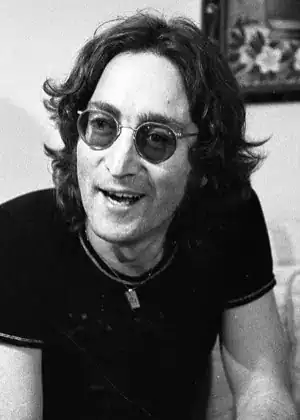
Photo: Unknown photographer / Wikimedia Commons / CC BY-SA 4.0 — Wikimedia Commons
The collaboration between David Bowie and John Lennon during the final recording sessions for Young Americans ranks among the most significant artistic partnerships of the 1970s. Although the two musicians officially released only two studio recordings together — Across the Universe and Fame — their work permanently changed Bowie’s career and produced one of the defining songs of the decade.
The resulting single, Fame, became David Bowie’s first number-one hit in the United States. Its creation reflected Bowie’s changing musical direction, his long-standing admiration for Lennon, Carlos Alomar‘s central guitar riff and an informal studio collaboration that developed into one of Bowie’s most enduring recordings.
Both musicians arrived at the sessions from very different circumstances. Bowie was completing his transformation from the theatrical rock of Ziggy Stardust and Diamond Dogs towards the soul-influenced sound of Young Americans. Lennon, meanwhile, was living through the period later known as his “Lost Weekend”, temporarily separated from Yoko Ono and remaining musically active during an unsettled chapter of his life.
Bowie had admired Lennon since the 1960s, while Lennon recognised Bowie’s determination to challenge expectations and continually reinvent himself. Their work at Electric Lady Studios developed into an unusually open exchange of musical ideas, producing two recordings that remain among the most historically significant collaborations in either artist’s catalogue.
- Collaboration: David Bowie and John Lennon
- Officially released recordings together: Across the Universe and Fame
- Recording date of Fame: 30 January 1975
- Recording studio: Electric Lady Studios, New York City
- Album: Young Americans (1975)
- Songwriters of Fame: David Bowie, Carlos Alomar and John Lennon
- John Lennon‘s contributions: vocals, guitar and co-writing
- Producers: David Bowie and Harry Maslin
- Original UK single release: 18 July 1975
- US chart achievement: Bowie’s first number-one single on the Billboard Hot 100
- Date Fame first reached US number one: 20 September 1975
- UK chart peak: number 17
Before Bowie met Lennon
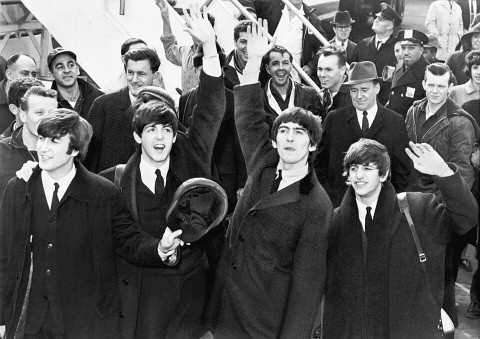
Long before David Bowie met John Lennon in person, Lennon and The Beatles had become important points of reference within Bowie’s musical development. Bowie belonged to the generation of young British performers whose ambitions were transformed by the emergence of self-contained groups that wrote their own material and continually expanded the creative possibilities of popular music.
During the 1960s, Bowie was still searching for a distinctive artistic identity through groups including The King Bees, The Manish Boys, The Lower Third and David Bowie and the Buzz. Over the same period, Lennon and The Beatles moved rapidly beyond their original beat-group sound, incorporating increasingly adventurous songwriting, studio experimentation and influences drawn from literature, visual art and the musical avant-garde.
What particularly impressed Bowie was Lennon’s ability to introduce unconventional ideas into music intended for a mass audience. Lennon could draw upon experimental art and unusual cultural influences without losing the directness that allowed a song to communicate with millions of listeners. Bowie would later follow a comparable principle throughout his own career, combining popular forms with ideas drawn from theatre, film, fashion, mime and contemporary art.
Bowie made an explicit reference to Lennon before the two musicians had met. In Life on Mars?, recorded in 1971 and released on Hunky Dory, he included the line “Lennon’s on sale again.” The reference placed Lennon within Bowie’s wider observation of popular culture, commercial entertainment and the way major cultural figures were presented to the public.
In later years, Bowie described Lennon as one of the major influences on his understanding of popular music. He admired Lennon’s directness, intellectual curiosity, humour and ability to bring experimental ideas into songs that remained accessible to a wide audience. This admiration existed before any personal friendship or studio collaboration developed between them. By the time Bowie finally met Lennon in 1974, he was meeting an artist whose work had already helped shape his ideas about songwriting, experimentation and the possibilities of popular culture.
John Lennon in 1975
When John Lennon joined David Bowie at Electric Lady Studios in January 1975, he was living through a remarkable period in both his personal and professional life. Since the summer of 1973 he had been separated from Yoko Ono and was living primarily in Los Angeles and New York with May Pang, a period later known as his “Lost Weekend.”
Although the expression suggested years of excess, Lennon himself later rejected the idea that the entire period had been chaotic. Alongside well-publicised episodes of heavy drinking, he remained creatively active and returned to regular recording following the breakup of The Beatles. During this period he continued writing, recording and collaborating with other musicians while reassessing both his personal life and musical direction.
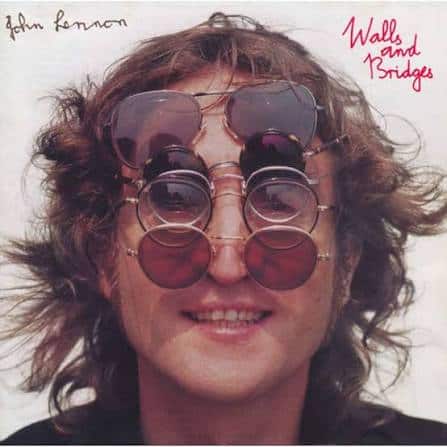
In 1974 Lennon completed the album Walls and Bridges, which produced the successful single Whatever Gets You thru the Night, his first solo number-one hit in the United States. The album demonstrated that he remained one of the most distinctive songwriters of his generation, combining deeply personal material with the wit, honesty and directness that had characterised his work since the 1960s.
By the beginning of 1975 Lennon had returned to working regularly in recording studios. Unlike the intense media attention that had surrounded him during the final years of The Beatles, he approached sessions with a noticeably relaxed attitude. Friends and fellow musicians consistently remembered his humour, openness and willingness to experiment without allowing his reputation to dominate the atmosphere.
That approach became immediately apparent when Bowie invited him to Electric Lady Studios. Rather than arriving as an international superstar expecting special treatment, Lennon entered the sessions simply as another musician interested in making records. His instinctive musical responses, quick sense of humour and openness to spontaneous collaboration became central to the creation of Fame. Although Bowie had admired Lennon for many years, their meeting quickly developed into a genuine creative partnership between two artists who shared a fascination with experimentation, improvisation and pushing beyond the expectations of commercial popular music.
David Bowie enters a new musical world
By the second half of 1974, David Bowie had reached another decisive turning point in his career. The theatrical presentation of the Diamond Dogs Tour was gradually giving way to a very different musical direction, inspired not by glam rock or dystopian theatre but by contemporary American soul, rhythm and blues and funk.
The transformation did not happen overnight. During the North American leg of the Diamond Dogs Tour, Bowie steadily altered both his stage production and his band. Large theatrical sets were reduced, while the music itself became increasingly important. New arrangements introduced prominent saxophone, richer vocal harmonies and rhythm guitar that reflected Bowie’s growing fascination with American soul music.
One of the most significant developments was his meeting with guitarist Carlos Alomar. Alomar brought years of experience performing rhythm and blues, funk and soul, providing Bowie with a musical partner whose understanding of groove and rhythm would fundamentally influence the direction of Young Americans. Their collaboration quickly became one of the longest and most productive creative partnerships of Bowie’s career.
Bowie decided that the album should be recorded in Philadelphia, the city then recognised as the centre of the sophisticated “Philly Soul” sound developed by Kenny Gamble, Leon Huff and Thom Bell. Rather than attempting to imitate soul music from a distance, Bowie wanted to work directly with musicians who understood the style from within.
The sessions brought together an exceptional group of performers, including Carlos Alomar, David Sanborn, Mike Garson, Willie Weeks, Andy Newmark, Pablo Rosario and a remarkable vocal team led by Luther Vandross, Ava Cherry, Robin Clark, Anthony Hinton and Diane Sumler. Their combined experience helped create the distinctive musical identity that separated Young Americans from every previous Bowie album.
Instead of approaching the recordings as a conventional rock project, Bowie encouraged the musicians to contribute ideas freely. Extended rehearsals, improvisation and collaborative arranging became essential parts of the recording process. This relaxed working atmosphere would later prove equally important when John Lennon joined the sessions in New York during January 1975.
By the time Bowie entered Electric Lady Studios with Lennon, the musical foundations of Young Americans had already been established. What remained was the unexpected collaboration that would produce Across the Universe and, ultimately, Fame.
Why this collaboration mattered
When David Bowie and John Lennon worked together at Electric Lady Studios in New York during January 1975, they met at important transitional moments in their respective careers. Bowie was completing the album that established his new soul-influenced direction, while Lennon was approaching the end of the period later known as his “Lost Weekend.”
The collaboration was significant because Lennon was not invited merely to make a prestigious guest appearance. He became directly involved in the creative process, contributing guitar to Bowie’s interpretation of Across the Universe and helping transform a developing studio groove into Fame.
Bowie had admired Lennon long before they worked together, but their studio relationship did not remain that of an admirer meeting one of his influences. Lennon participated as a fellow musician, responding spontaneously to Carlos Alomar‘s guitar ideas and to the relaxed working atmosphere Bowie and producer Harry Maslin had created at Electric Lady Studios.
Their partnership also brought together different musical experiences. Bowie was exploring American soul and funk while attempting to move beyond the artistic identity established during his glam-rock period. Lennon brought the perspective of a songwriter who had experienced international fame on an unprecedented scale and who understood both its creative opportunities and its personal consequences.
Those shared experiences became central to Fame. The song did not celebrate celebrity or commercial success. Instead, it examined the isolation, manipulation and loss of control that could accompany public recognition. That subject carried particular weight because both Bowie and Lennon had experienced the pressures created when an artist’s public identity became larger than the individual behind it.
The sessions produced only two officially released recordings involving both musicians, but their importance was lasting. Across the Universe documented Bowie’s interpretation of a Lennon composition, while Fame became a genuinely new collaboration between David Bowie, John Lennon and Carlos Alomar.
The success of Fame subsequently gave Bowie his first number-one single in the United States. More importantly, the recording captured a brief but genuine exchange between two artists who shared a determination to resist repetition, question the music industry and continue changing their creative identities.
The Young Americans sessions at Sigma Sound Studios

On 11 August 1974, during a break in the Diamond Dogs Tour, David Bowie began recording at Sigma Sound Studios in Philadelphia. He entered the studio with the title song already written and started work on Young Americans on the first day of the sessions.
Sigma Sound had been founded by engineer Joe Tarsia in 1968 and had become closely associated with the polished Philadelphia soul recordings created by producers Kenny Gamble, Leon Huff and Thom Bell. Bowie’s decision to work there placed him inside the musical environment that had inspired his developing interest in contemporary American soul.
The initial recording period brought together Bowie’s newly assembled American band and vocal group. Carlos Alomar‘s rhythm guitar, David Sanborn‘s saxophone, Willie Weeks’s bass, Andy Newmark’s drums, Mike Garson‘s keyboards and the layered backing voices helped establish a sound that differed substantially from the rock arrangements of Bowie’s previous albums.
Tony Visconti joined the sessions several days after they began and produced the principal Philadelphia recordings. Bowie frequently sang live in the studio alongside the musicians, which presented a technical problem because his vocal microphone could also capture the surrounding instruments.
Visconti addressed this by placing two identical microphones near Bowie and reversing the phase of one of them. The arrangement reduced much of the sound spilling from the band into the vocal channel while preserving Bowie’s voice. As a result, several of the vocals retained on the finished recordings originated from live performances made with the musicians in the room.
The sessions were highly collaborative. Arrangements developed through rehearsal, musical suggestions and repeated performances rather than being completely fixed before recording began. Luther Vandross, who had been brought into Bowie’s circle through Carlos Alomar, became particularly important to the vocal sound and contributed both as a backing singer and arranger.
The principal Sigma recordings included Young Americans, Win, Right, Somebody Up There Likes Me and Can You Hear Me. Material connected with Luther Vandross‘s composition Funky Music (Is a Part of Me) also contributed to the development of Fascination, for which Vandross received a co-writing credit.
Outside the studio, a group of dedicated Bowie followers gathered each day after learning that he was recording in Philadelphia. They became known as the Sigma Kids. Near the end of the initial sessions, Bowie invited some of them inside to hear the work in progress, providing an early audience for music that had not yet been released.
Further work on the Philadelphia recordings continued later in 1974, including overdubs, refinements and mixing. By late November, the soul-based album Bowie had originally envisaged was largely complete and would later become known through the working concept The Gouster.
The project nevertheless changed again after the Diamond Dogs and Soul Tour ended. Bowie continued recording in New York, where his meeting with John Lennon led to Across the Universe and Fame. Those additions altered both the final track selection and the identity of the album eventually released as Young Americans.
Carlos Alomar becomes Bowie’s musical partner
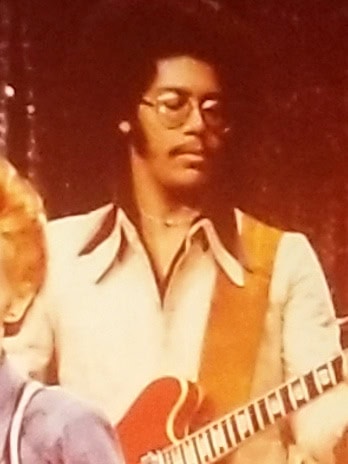
Among all the musicians David Bowie met during the Young Americans period, none would prove more important than guitarist Carlos Alomar. Born in Puerto Rico and raised in New York City, Alomar had built an impressive reputation as a rhythm guitarist through years of professional work in soul, rhythm and blues and theatre productions. His disciplined playing, rooted in groove rather than virtuoso soloing, perfectly complemented the musical direction Bowie was beginning to explore.
Bowie first met Alomar during rehearsals for the second leg of the Diamond Dogs Tour in 1974. The two musicians immediately recognised a shared approach to music. Bowie encouraged experimentation and welcomed ideas from the musicians around him, while Alomar possessed an exceptional instinct for rhythm, arrangement and musical structure. Their professional relationship developed rapidly into one of mutual trust.
Unlike many guitarists associated with rock music during the mid-1970s, Alomar rarely sought attention through extended solos. Instead, he concentrated on precision, timing and the subtle interaction between guitar, bass and drums. That approach became one of the defining characteristics of Young Americans and would remain central to Bowie’s music for decades.
Alomar later emphasised that Bowie welcomed ideas from the musicians around him. That openness allowed Alomar to contribute not only as a guitarist but also as an arranger, bandleader and songwriter.
The partnership established during the Diamond Dogs Tour continued into the Philadelphia sessions for Young Americans, where Alomar became far more than Bowie’s guitarist. He contributed musical ideas, helped shape arrangements and emerged as one of Bowie’s closest creative collaborators. Over the following three decades he would perform on numerous Bowie albums, serve as musical director on several major tours and co-write some of Bowie’s best-known recordings.
Their collaboration reached an historic turning point during the final New York sessions for Young Americans. A rhythm guitar figure that Alomar had been playing for several years would become the musical foundation of a new composition that David Bowie and John Lennon would transform into Fame.
John Lennon arrives at Electric Lady Studios
By January 1975, David Bowie had completed the principal recording sessions for Young Americans in Philadelphia and had moved the project to Electric Lady Studios in New York for its final stage. The album was close to completion, but Bowie wanted to record one additional song that had fascinated him for years: John Lennon‘s Beatles composition Across the Universe.
Rather than recording the song alone, Bowie invited Lennon to join the session. The invitation reflected years of admiration that Bowie had openly expressed since the 1960s. Lennon accepted and arrived at Electric Lady Studios not as a ceremonial guest but as a fellow musician prepared to participate in the recording.
The atmosphere inside the studio was relaxed and collaborative. Bowie encouraged ideas from everyone present, and Lennon immediately settled into the session without the formality that might have been expected from one of the world’s most famous musicians. Musicians later recalled that Lennon quickly became part of the working environment, contributing naturally to conversations, rehearsals and musical experimentation.
The visit produced more than Bowie’s new recording of Across the Universe. During the same period of work, a studio jam developed into the new composition Fame, which later became David Bowie’s first number-one single in the United States.
Recording Across the Universe
During John Lennon‘s visit to Electric Lady Studios, David Bowie recorded his interpretation of Across the Universe before the work that produced Fame. The song had first been released by The Beatles in 1970 and provided the immediate reason for Bowie to invite Lennon into the studio.
Rather than attempting to reproduce the original arrangement, Bowie approached the song through the musical language that had developed during the Young Americans sessions. The delicate atmosphere of the Beatles recording was replaced by a fuller rhythm section, layered backing vocals and a distinctly soul-influenced performance that reflected the direction Bowie had been exploring throughout 1974.
Lennon actively participated in the recording by contributing guitar to Bowie’s interpretation of his composition. His presence made the performance a direct studio encounter between the song’s principal writer and the artist creating the new version, while Bowie retained responsibility for the arrangement and lead vocal.
Bowie later described working with Lennon as an important privilege, while Lennon allowed him considerable freedom to reinterpret the Beatles composition in the musical language of Young Americans.
The recording was completed before attention shifted towards new musical ideas. With Across the Universe safely recorded for the album, the musicians remained in the studio, continuing to play together without any expectation that another composition would emerge. What followed became one of the most remarkable moments in David Bowie’s recording career.
From Footstompin’ to Fame

Following the completion of Across the Universe, the musicians remained at Electric Lady Studios and continued playing together. The recording that eventually became Fame did not begin as an attempt to write a commercial single. Instead, it developed naturally through improvisation, with each musician responding to ideas as they emerged.
Carlos Alomar introduced a syncopated rhythm-guitar figure that had formed part of his own musical vocabulary for several years. Its tight, repetitive groove immediately established the musical direction of the session. Dennis Davis responded with a restrained drum pattern, while bassist Emir Kassan added a fluid bass line that gave the performance movement without overcrowding the arrangement.
David Bowie instinctively began improvising vocal melodies over the groove, while John Lennon joined the performance with guitar, vocal responses and spontaneous lyrical ideas. Rather than discussing a finished composition, the musicians allowed the performance to develop collectively as the groove gathered momentum.
Later accounts associated the developing piece with the name Footstompin’, reflecting the working title remembered by several participants during the session. At this stage, however, it was neither regarded as a completed song nor intended as the closing track for Young Americans. It remained an open-ended studio improvisation built around Alomar’s guitar figure.
As the session continued, Bowie’s vocal ideas, Lennon’s spontaneous contributions and Alomar’s rhythm guitar gradually transformed the groove into a structured composition. Only afterwards did those present recognise the significance of what had taken place. The spontaneous performance recorded at Electric Lady Studios became Fame, David Bowie’s first number-one single in the United States and the only original composition officially credited to David Bowie, Carlos Alomar and John Lennon.
John Lennon hears something different
Lennon’s greatest contribution to the session was not technical but instinctive. Listening to the relentless groove created by Alomar and the rhythm section, he began singing short, sharply accented phrases over the music. Rather than celebrating celebrity, his vocal ideas carried a distinctly sarcastic tone, reflecting both his own experiences with worldwide fame and his scepticism towards the music industry.
At one point Lennon repeatedly emphasised a single word:
John Lennon and the title of Fame
During the Electric Lady Studios session, Lennon repeatedly vocalised the word “Fame”, providing the developing groove with its title and central idea.
— Based on documented recollections of the recording session
That simple exclamation immediately altered the direction of the composition. Instead of remaining an unnamed funk instrumental, the jam suddenly acquired a clear thematic focus. Bowie recognised the dramatic potential of Lennon’s vocal idea and immediately began developing lyrics around it.
Rather than portraying fame as success, both musicians explored its darker consequences. Their shared experiences had taught them that international recognition brought pressure, commercial expectations and a gradual loss of personal privacy. The irony was unmistakable: two internationally famous artists were creating a song that questioned the very system that had made them famous.
Writing the lyrics
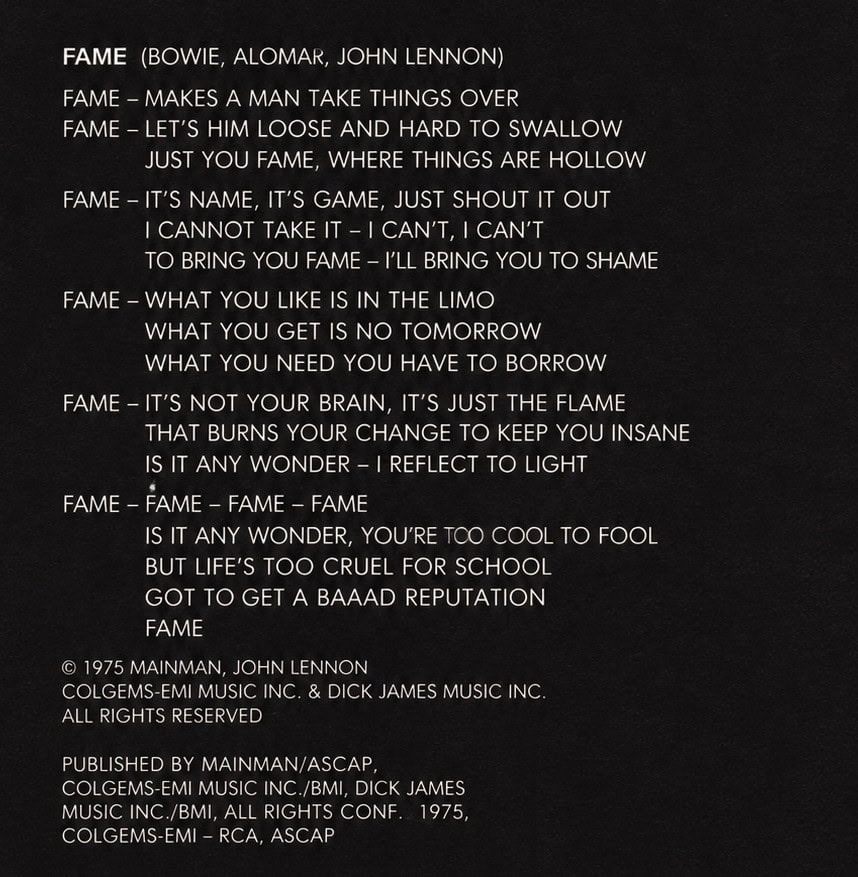
Although the songwriting credits for Fame were ultimately shared by David Bowie, Carlos Alomar and John Lennon, each writer contributed in a distinct way. Rather than emerging from a conventional songwriting session, the composition developed through interaction, with individual ideas gradually combining into a finished work.
Carlos Alomar provided the musical foundation through the distinctive rhythm-guitar riff that drove the entire performance. John Lennon supplied the decisive conceptual spark when his repeated vocalisation of the word “Fame” transformed an open-ended studio groove into a song with a clear identity. His vocal phrasing and spontaneous lyrical suggestions shaped both the mood and direction of the composition, earning him a full co-writing credit alongside Bowie and Alomar.
David Bowie then developed the principal lyric, drawing upon his own experiences of celebrity, the music industry and the pressures that accompanied commercial success. Rather than celebrating fame, he explored its darker consequences, presenting it as a force capable of manipulation, emotional isolation and the loss of artistic independence.
The central idea of Fame
The finished lyric presents fame as hollow, manipulative and capable of damaging personal relationships and artistic independence.
— Summary of the song’s documented lyrical theme
The result reflected the combined strengths of all three writers. Alomar supplied the groove, Lennon redirected the improvisation with its defining concept, and Bowie transformed those ideas into the finished lyric. Together they created one of the most distinctive and enduring songs of Bowie’s career.
The completed recording
As the session continued, the musicians gradually refined the arrangement without losing the spontaneity that had produced it. Unlike many studio recordings that were assembled from numerous carefully planned overdubs, Fame retained the feel of musicians responding directly to one another.
The finished track relied upon remarkable restraint. Rather than filling every available space, the arrangement allowed individual elements to stand out. Alomar’s guitar riff remained constant throughout the performance, while the rhythm section created a hypnotic pulse over which Bowie and Lennon exchanged vocal phrases.
Lennon’s backing vocals became an essential part of the recording. Instead of traditional harmony singing, he responded to Bowie’s lead vocal with sharp interjections, echoes and rhythmic accents that intensified the increasingly confrontational atmosphere.
The result sounded unlike contemporary rock records. Equally distant from Philadelphia soul and conventional glam rock, the recording occupied its own distinctive musical space, combining funk rhythms with fragmented vocals, minimalist harmony and an underlying sense of psychological tension.
A remarkably modern production
Even decades later, Fame continues to sound strikingly contemporary. Its uncluttered production, repetitive rhythmic structure and economical use of instrumentation anticipated approaches that later became common in funk, new wave, post-punk and even certain forms of electronic music.
Producer Harry Maslin and engineer Carl Parulis preserved the raw energy of the original performance, avoiding unnecessary embellishment. Instead of polishing away the spontaneity, they allowed listeners to hear the interaction between musicians discovering a composition in real time.
That sense of immediacy remains one of the recording’s greatest strengths. Although meticulously mixed, the performance still conveys the excitement of a studio filled with exceptional musicians responding instinctively to one another, capturing a creative moment that could never have been planned in advance.
The completion of Young Americans
The recording of Fame and Bowie’s interpretation of Across the Universe took place during the final stage of the making of Young Americans. By then, the main body of the album had already been recorded at Sigma Sound Studios in Philadelphia during 1974.
Those earlier sessions had produced the soul-based material that established the album’s central identity, including Young Americans, Win, Fascination, Right, Somebody Up There Likes Me and Can You Hear Me. Bowie had worked with a group that included Carlos Alomar, David Sanborn, Mike Garson, Willie Weeks, Andy Newmark, Pablo Rosario and backing vocalists Luther Vandross, Robin Clark, Ava Cherry, Diane Sumler and Anthony Hinton.
The subsequent sessions with John Lennon did not take place at Sigma Sound Studios. Lennon joined Bowie at Electric Lady Studios in New York, where Across the Universe and Fame were recorded during the closing stage of the project.
These New York recordings substantially changed the final form of the album. Earlier tracks that had been considered for inclusion were removed to make space for the two Lennon collaborations. The resulting record therefore combined the carefully developed Philadelphia sessions with two later recordings created in a much more spontaneous New York environment.
The contrast was important. Much of the Philadelphia material had emerged from sustained rehearsals, detailed vocal arrangements and Bowie’s immersion in contemporary American soul. Fame, by comparison, grew rapidly from Carlos Alomar‘s guitar riff, Lennon’s instinctive vocal intervention and Bowie’s developing lyrical response.
Although the two sets of sessions had different origins, they belonged to the same artistic transition. Together they documented Bowie’s movement away from the theatrical rock associated with Ziggy Stardust, Aladdin Sane and Halloween Jack towards a rhythm-driven style shaped by soul, funk and contemporary American studio music.
The release of Young Americans

Young Americans was released by RCA Records on 7 March 1975. It represented one of the most dramatic stylistic changes Bowie had yet presented to his audience.
Only a relatively short time earlier, Bowie had been identified with the extravagant visual world of glam rock and with the elaborate dystopian production of the Diamond Dogs Tour. On Young Americans, the dense guitars and theatrical narratives of his previous records were replaced by saxophone-led arrangements, layered backing vocals, syncopated rhythm guitar and an emphasis on groove.
The album was not a straightforward imitation of Philadelphia soul. Bowie approached the style as a British songwriter and performer whose musical background remained rooted in rock, theatre, rhythm and blues and European popular culture. He later used the description “plastic soul” for this period, acknowledging the deliberately constructed nature of his interpretation.
That description has sometimes been misunderstood as dismissive. Bowie was not suggesting that the musicians or their performances were artificial. The album involved highly accomplished American players and singers whose contributions were fundamental to its sound. Rather, the phrase reflected Bowie’s awareness that he was interpreting a musical tradition from outside the culture that had created it.
The album’s opening title track introduced its new direction immediately. The combination of Bowie’s lead vocal, David Sanborn‘s saxophone, Carlos Alomar‘s rhythm guitar and the carefully arranged backing voices established a sound unlike any previous Bowie album.
Elsewhere, Win and Can You Hear Me demonstrated the quieter and more emotionally restrained side of the sessions, while Fascination placed the rhythm section and vocal arrangements at the centre of the performance. The later sequence of the album brought John Lennon‘s presence into its final stages: Across the Universe appeared as track six, followed by Can You Hear Me, while Fame closed the album.
The inclusion of a Lennon composition and, two tracks later, a new song co-written with Lennon gave the album a distinctive final section. Across the Universe looked back towards one of Bowie’s most important musical influences, while Fame pointed towards the increasingly fragmented, rhythmically spare and psychologically unsettled music he would pursue after Young Americans.
The album’s commercial importance
Young Americans significantly expanded Bowie’s position in the United States. He had already built a substantial American following through touring and through albums such as The Rise and Fall of Ziggy Stardust and the Spiders from Mars, Aladdin Sane and Diamond Dogs, but he had not yet achieved the level of mainstream singles success that would follow in 1975.
The title track became Bowie’s most successful American single up to that point. Its performance demonstrated that his new musical direction could reach listeners beyond the rock audience that had supported his earlier work.
The album also proved that Bowie could abandon an internationally recognisable image without losing his ability to attract a large audience. Rather than extending the Ziggy Stardust period or repeating the arrangements of Diamond Dogs, he presented a record built around a substantially different group of musicians and musical priorities.
This willingness to change direction became central to the way Bowie’s career was understood. The transition was not merely visual. He had replaced much of his established working environment, altered his vocal approach and allowed rhythm, backing vocals and saxophone to occupy roles previously held by guitar-heavy rock arrangements.
The original single release of Fame
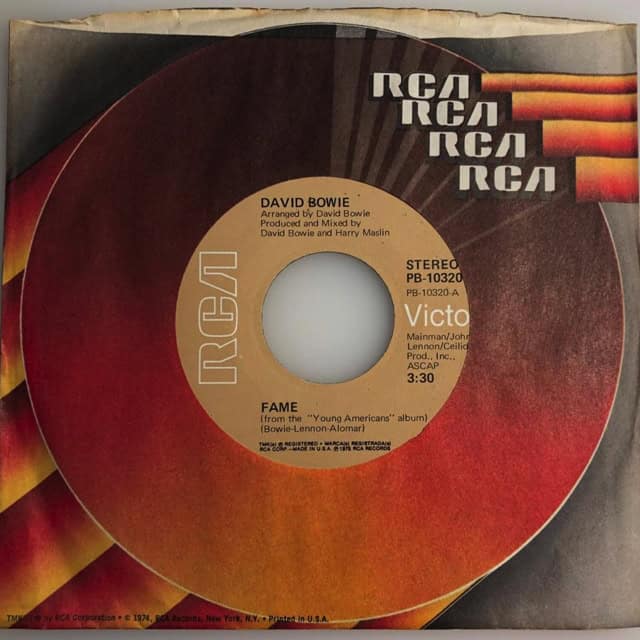
Following the release of the album, RCA selected Fame as a single. It was issued in the United States in June 1975 and in the United Kingdom on 18 July 1975.
The original single paired Fame with Right, another track from Young Americans. The songwriting credit for the A-side was shared by David Bowie, John Lennon and Carlos Alomar, while the record was produced by Bowie and Harry Maslin.
The single placed Lennon’s name prominently alongside Bowie’s at a time when collaborations between artists of their stature attracted considerable attention. However, the recording was not simply marketed around the participation of a former Beatle. Its musical identity was strong enough to stand independently of that association.
Carlos Alomar‘s recurring guitar figure provided the structural foundation. Dennis Davis and bassist Emir Kassan established the economical rhythm underneath it, while Ralph MacDonald added percussion. Bowie carried the lead vocal, with Lennon contributing guitar and repeated vocal responses.
Rather than using a large arrangement, the recording depended upon space and repetition. Its power came from the interaction between the guitar riff, bass, drums, percussion and voices. Very little was added merely for decoration.
This economy distinguished Fame from many of the more densely arranged recordings on Young Americans. The Philadelphia tracks frequently used elaborate backing-vocal structures and prominent saxophone, whereas Fame reduced the music to a hard, insistent groove.
The meaning of the song
The lyrics presented fame as a force that could reshape personal relationships, isolate the individual and allow other people to exercise control. The song did not offer a complete narrative. Instead, Bowie used short statements, repeated words and fragmented observations that reflected distrust and emotional distance.
This fragmented form suited the subject. Fame was not described as a single event or reward, but as a condition that affected the artist’s sense of self and the behaviour of those surrounding him.
By 1975, Bowie had substantial personal experience of the pressures created by rapid success. His rise during the Ziggy Stardust period had transformed his professional life, but it had also increased his dependence on managers, record companies, touring organisations, promoters and numerous other business relationships.
The song’s criticism of celebrity was therefore connected to Bowie’s growing dissatisfaction with the commercial structure around his work. It addressed not only public attention, but also the financial and contractual interests that could accumulate around a successful performer.
Lennon’s presence gave the subject additional weight. Few musicians had experienced fame on the scale created by The Beatles. He understood the loss of privacy, the pressure of public expectation and the difficulty of separating the individual from the image projected by the media.
The collaboration did not require Lennon and Bowie to have identical experiences or opinions. Their shared understanding of celebrity supplied the song with an authenticity that a purely abstract treatment of the subject would not have possessed.
A different kind of Bowie single
Fame differed from Bowie’s earlier hit singles in both subject and construction. Recordings such as Starman, The Jean Genie, Drive-In Saturday and Rebel Rebel had been driven by distinctive rock arrangements and immediately recognisable characters or imagery.
Fame contained no theatrical protagonist and no elaborate science-fiction setting. Bowie addressed the machinery of celebrity directly, using a performance that was rhythmically controlled but emotionally uneasy.
His vocal moved between detached commentary, sharp accusation and repeated emphasis on the title word. Lennon’s responses intensified that effect. They did not function as conventional backing harmonies; instead, they became part of the track’s rhythmic design.
The repeated alteration of the title word across the recording added to its unsettling character. The voice appears to rise and fall in pitch, turning a familiar word into something unstable and increasingly detached from ordinary speech.
This treatment reinforced the central idea. Fame was presented as something recognisable but distorted: attractive from a distance, yet capable of changing shape once experienced from within.
Number one in the United States

On 20 September 1975, Fame reached number one on the American Billboard Hot 100. It became David Bowie’s first number-one single in the United States.
The achievement represented a major commercial breakthrough. Bowie had spent several years developing his American audience, but none of his previous singles had reached the top of the chart.
The success was especially striking because Fame did not follow an obvious pop formula. Its arrangement was sparse, its lyric was distrustful and its central theme challenged the desirability of the success it was simultaneously achieving.
The record’s commercial triumph therefore created an unavoidable irony. A song warning about the consequences of fame made Bowie more famous than he had previously been in the United States.
It also confirmed the effectiveness of Bowie’s musical transition. The artist who had reached American audiences through glam rock and theatrical stage productions now achieved his first American number one with a funk-based recording created alongside Carlos Alomar and John Lennon.
The single later returned to the top position, giving it two non-consecutive weeks at number one. Its chart performance established it as one of the most important commercial recordings of Bowie’s career.
The British chart performance
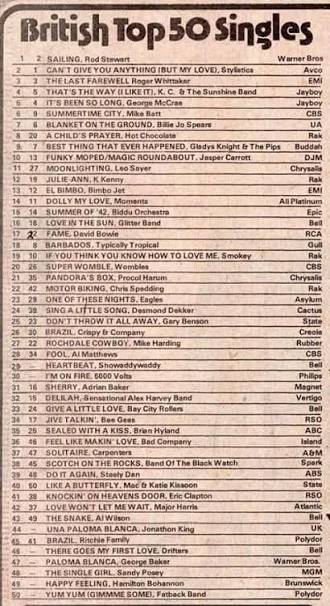
In the United Kingdom, Fame did not match its American success. The single entered the British chart in August 1975 and reached a peak position of number seventeen.
The difference between its American and British performance reflected the unusual position Bowie occupied during this period. In Britain, his reputation remained closely associated with the glam-rock era and with the sequence of major hits he had released since 1972.
American listeners encountered Fame within a different musical environment. Its funk rhythm and restrained production connected readily with contemporary American radio, while Bowie’s growing visibility in the United States helped the single reach listeners beyond his established audience.
Although a number-seventeen single was respectable, the British result was modest compared with many of Bowie’s earlier UK releases. Internationally, however, the American number-one position transformed the historical importance of the recording.
The contribution of John Lennon
Lennon’s participation in Fame was relatively compact but decisive. He did not take a separate lead-vocal verse or turn the track into a duet in the conventional sense. His role was integrated into the rhythm and atmosphere of the recording.
His repeated vocalisation of the title helped provide the conceptual and melodic spark from which Bowie developed the song. He also played guitar and contributed the vocal responses heard throughout the finished record.
The full co-writing credit recognised more than the number of words Lennon may have supplied. His presence, instinctive reactions and understanding of the subject helped determine what the song became.
The official credit is therefore important. Fame was written by Bowie, Lennon and Alomar, with each contributing a different element: Alomar supplied the central guitar riff, Lennon contributed the title hook and creative stimulus, and Bowie developed the principal lyric and overall song.
Their roles should not be reduced to a competition over who contributed the most. The recording emerged from interaction. Removing any one of the three writers would have changed its identity fundamentally.
The contribution of Carlos Alomar
Carlos Alomar‘s contribution was equally fundamental. His guitar riff was not a decorative part added after the song had been written. It was the musical foundation around which the composition developed.
Alomar’s understanding of funk rhythm had already become central to Bowie’s new direction. His guitar playing emphasised timing, repetition and the spaces between notes rather than conventional rock lead guitar.
On Fame, that approach reached one of its clearest expressions. The riff established the character of the recording immediately and remained recognisable throughout, even as the voices and rhythm section created variations around it.
The co-writing credit acknowledged that the composition began with this musical idea. It also marked the start of Alomar’s importance as a songwriter within Bowie’s work, in addition to his roles as guitarist, arranger, bandleader and musical director.
Alomar would continue to work with Bowie across numerous albums and tours, but Fame became the most commercially successful song they wrote together.
Production by David Bowie and Harry Maslin
The final recording was produced by David Bowie and Harry Maslin. Tony Visconti had worked on the principal Philadelphia sessions, but he was not present for the New York recording of Fame and Across the Universe.
The production retained the directness of the original musical idea. Rather than surrounding the riff with orchestration, the finished track concentrated on rhythm, voices and carefully controlled studio effects.
The separation between the instruments allowed the groove to remain clear. Guitar, bass, drums and percussion each occupied a distinct place, while the vocal exchanges added tension without overwhelming the arrangement.
The production also preserved the informal energy of the collaboration. Although the finished master was carefully constructed, it did not sound overworked. The listener could still hear the sense of musicians responding to a newly discovered idea.
The two officially released Bowie–Lennon recordings
David Bowie performing Across the Universe.
The sessions produced two officially released recordings involving David Bowie and John Lennon: Across the Universe and Fame.
Their relationship to Lennon was different. Across the Universe was Bowie’s reinterpretation of a song Lennon had written during The Beatles’ career. Lennon participated in the new version by playing guitar.
Fame, by contrast, was a new composition created through the interaction between Bowie, Lennon, Alomar and the other musicians in the studio. Lennon was therefore credited as both performer and co-writer.
The two tracks appeared near the end of Young Americans, although they were not consecutive. Across the Universe appeared as track six, followed by Can You Hear Me, while Fame closed the original album as track eight, giving Lennon’s involvement a substantial presence within its final sequence.
Bowie and Lennon did not release another original studio composition together. Their recorded collaboration was brief, but the success of Fame ensured that it occupied an important position in both artists’ histories.
Critical reception
Upon its release, Fame attracted considerable attention from both music critics and radio programmers. Although some reviewers initially regarded the song as an unusual choice for a commercial single, many recognised that Bowie had succeeded in creating something distinctly different from the mainstream rock and pop recordings of the period.
Rather than relying on a conventional verse-and-chorus structure, Fame built its identity around Carlos Alomar‘s hypnotic guitar riff, a tightly controlled rhythm section and the interplay between Bowie’s lead vocal and John Lennon‘s responses. The minimalist arrangement contrasted sharply with the elaborate productions then dominating the American charts.
Critics also noted the irony of the song’s subject matter. Instead of celebrating celebrity, Bowie and Lennon presented fame as a force capable of creating emotional distance, commercial pressure and personal isolation. The recording therefore challenged listeners while simultaneously becoming one of Bowie’s most commercially successful releases.
As the years passed, critical appreciation continued to grow. Later assessments have regularly treated Fame as a defining recording of Bowie’s American period and as one of the central songs on Young Americans. Its Bowie–Lennon–Alomar authorship has also ensured that it remains one of the most discussed major-artist collaborations of the 1970s.
The beginning of a new musical direction
Although Young Americans is often described as Bowie’s “plastic soul” album, its importance extends beyond that single musical label. Several ideas introduced during the sessions would continue to shape his work throughout the remainder of the decade.
The rhythmic discipline established by Carlos Alomar, the economical arrangements, the increasing use of repetition and Bowie’s growing preference for fragmented lyrical ideas all anticipated developments heard on Station to Station and later during the celebrated Berlin period.
The collaboration with Lennon therefore represented more than a successful guest appearance. It occurred during one of the most significant transitional moments in Bowie’s artistic development, when he was moving away from theatrical glam rock towards a more sophisticated and experimental musical language.
Many of the musicians who participated in the Young Americans sessions remained closely associated with Bowie in later years. Carlos Alomar became his longest-serving musical collaborator, while David Sanborn, Dennis Davis and other members of the extended group continued to influence Bowie’s recordings and live performances throughout the late 1970s.
David Bowie after Fame
The success of Fame altered Bowie’s position within the international music industry. No longer regarded primarily as an innovative British rock artist, he had become a genuine American chart success while retaining complete artistic independence.
Rather than encouraging him to repeat the formula, however, Bowie immediately moved in another direction. During the following year he recorded Station to Station, introducing the Thin White Duke persona and creating one of the most ambitious albums of his career.
This refusal to repeat earlier successes became one of Bowie’s defining characteristics. Even after achieving his first American number-one single, he resisted commercial expectations and continued searching for new artistic challenges.
Viewed in retrospect, Fame therefore represents both an ending and a beginning. It marked the culmination of Bowie’s fascination with American soul while simultaneously opening the path towards the increasingly experimental recordings that would define the second half of the 1970s.
Performing Fame live
Although Fame was recorded during the final Young Americans sessions in early 1975, Bowie introduced it into his regular concert repertoire during the 1976 Isolar Tour. From that point onward, the song evolved alongside his changing musical direction, with successive tours presenting different interpretations.
Following its success as Bowie’s first American number-one single, Fame became closely associated with his growing international profile. Rather than attempting to recreate the original studio recording, Bowie continually rearranged the song to reflect the musicians performing with him and the artistic direction he was pursuing at the time.
The Isolar Tour (1976)
David Bowie performing Fame during the Isolar Tour, 1976.
The first live performances of Fame took place during the 1976 Isolar Tour, which promoted the album Station to Station. By then, Bowie had already moved beyond the soul-influenced atmosphere of Young Americans and introduced the elegant yet emotionally distant persona of the Thin White Duke.
Consequently, Fame acquired a noticeably harder musical edge. Carlos Alomar‘s distinctive guitar remained central to the arrangement, but the performance became tighter, more aggressive and less rooted in Philadelphia soul. The rhythm section emphasised precision rather than swing, reflecting Bowie’s rapidly changing artistic priorities.
Within the context of the Isolar Tour, the song sat naturally beside compositions such as Station to Station, TVC 15 and Stay. Together they illustrated Bowie’s movement away from conventional soul towards the increasingly experimental work that would soon lead to the Berlin Trilogy.
The Isolar II World Tour (1978)
David Bowie performing Fame during the Isolar II World Tour, 1978.
By the time Bowie embarked upon the Isolar II World Tour in 1978, his music had changed dramatically once again. The albums Low and “Heroes“ had introduced electronic textures, fragmented song structures and a new interest in European art music.
Despite these developments, Fame remained an important part of the concert programme. The arrangement reflected the disciplined musical approach of Bowie’s exceptional touring band, which included Carlos Alomar, Adrian Belew, Dennis Davis, George Murray, Roger Powell, Sean Mayes and Simon House.
The performances combined the familiar funk rhythm with the sharper guitar textures and electronic atmosphere characteristic of Bowie’s late-1970s work. Rather than sounding nostalgic, Fame demonstrated its remarkable flexibility, adapting naturally to Bowie’s continually evolving musical language.
The Serious Moonlight Tour (1983)
The enormous commercial success of Let’s Dance brought Fame to a far larger concert audience than ever before. During the Serious Moonlight Tour of 1983, the song appeared within stadium performances attended by hundreds of thousands of spectators around the world.
Although the arrangements were larger and more polished than those of the 1970s, Bowie resisted turning Fame into a straightforward pop anthem. Earl Slick and Carlos Alomar preserved the rhythmic tension of the original recording, while the expanded backing vocals gave the performance additional power without altering its essential character.
For many concertgoers, this tour provided their first opportunity to experience Fame live. The song therefore became associated not only with Bowie’s artistic development but also with the period during which he reached the widest audience of his career.
Imagine in Hong Kong, 1983
David Bowie performing John Lennon‘s Imagine in Hong Kong on 8 December 1983.
On 8 December 1983, David Bowie concluded the Serious Moonlight Tour at the Hong Kong Coliseum with a special performance of John Lennon‘s Imagine. The date marked exactly three years since Lennon had been murdered outside the Dakota Building in New York.
Bowie introduced the song as a tribute to his friend and former collaborator. Rather than presenting Imagine as a routine addition to the concert set, he delivered an emotional performance that acknowledged Lennon’s continuing importance to him both personally and artistically.
The choice of song carried particular significance because Bowie and Lennon had worked together during the final recording sessions for Young Americans, producing Bowie’s version of Across the Universe and the jointly written Fame. By performing one of Lennon’s best-known compositions on the anniversary of his death, Bowie publicly honoured the musician whose work had influenced him long before they met.
The Hong Kong performance became the climax of the Serious Moonlight World Tour and remains one of Bowie’s most widely remembered tributes to Lennon. Film footage shows a visibly emotional Bowie singing to the audience at the sold-out Hong Kong Coliseum. :contentReference[oaicite:0]{index=0}
Sound + Vision and later tours
Fame continued to appear regularly during Bowie’s later concert tours, including the Sound + Vision Tour in 1990, selected performances during the Outside and Earthling years, and finally the A Reality Tour of 2003–2004.
Each version reflected Bowie’s continuing refusal to treat his catalogue as a museum piece. Tempos changed, instrumental textures evolved and different musicians brought new ideas to the arrangement, yet the central identity of the composition remained unmistakable.
Few songs from the Young Americans period proved as adaptable. Whether performed by the funk-oriented band of 1976, the experimental ensemble of 1978 or the arena-sized production of the 1980s, Fame consistently retained its distinctive rhythmic foundation.
The friendship beyond Fame
Although David Bowie and John Lennon never recorded another original studio composition together after the Young Americans sessions, their relationship did not end when the recording was finished. They remained on friendly terms and occasionally met in New York during the second half of the 1970s.
Unlike many collaborations that developed into long-term professional partnerships, Bowie and Lennon maintained a relationship based more upon mutual respect than frequent musical cooperation. Both artists were entering new phases of their careers. Bowie was moving towards the experimental recordings that would become Station to Station, Low, “Heroes“ and Lodger, while Lennon gradually withdrew from public life following the birth of his son Sean in October 1975.
Despite following different artistic paths, Bowie continued to speak warmly about Lennon whenever discussing the Young Americans sessions. He consistently described Lennon as generous, humorous and remarkably quick to recognise promising musical ideas.
In later interviews, Bowie repeatedly remembered the recording of Fame as a relaxed and creatively productive studio encounter. Rather than focusing on Lennon’s international reputation, he remembered the relaxed atmosphere inside Electric Lady Studios, where ideas developed naturally without pressure or commercial expectations.
John Lennon‘s influence on David Bowie
John Lennon‘s influence upon David Bowie extended beyond the recording of Fame. Bowie had admired Lennon since the earliest days of The Beatles and often cited him as one of the musicians who demonstrated that popular music could combine artistic ambition with commercial success.
Their conversations during the mid-1970s also touched upon the practical realities of life within the music industry. Bowie later recalled that Lennon encouraged him to think independently and to question the traditional relationship between artists, management and the commercial structures surrounding popular music.
Those discussions coincided with a period during which Bowie was reassessing many aspects of his professional career. Although numerous factors contributed to his later business decisions, Lennon’s straightforward attitude towards artistic independence reinforced Bowie’s own desire to exercise greater control over his creative work.
The influence should not be overstated, but it formed part of a broader exchange between two artists who understood both the rewards and the pressures associated with international fame.
John Lennon‘s death
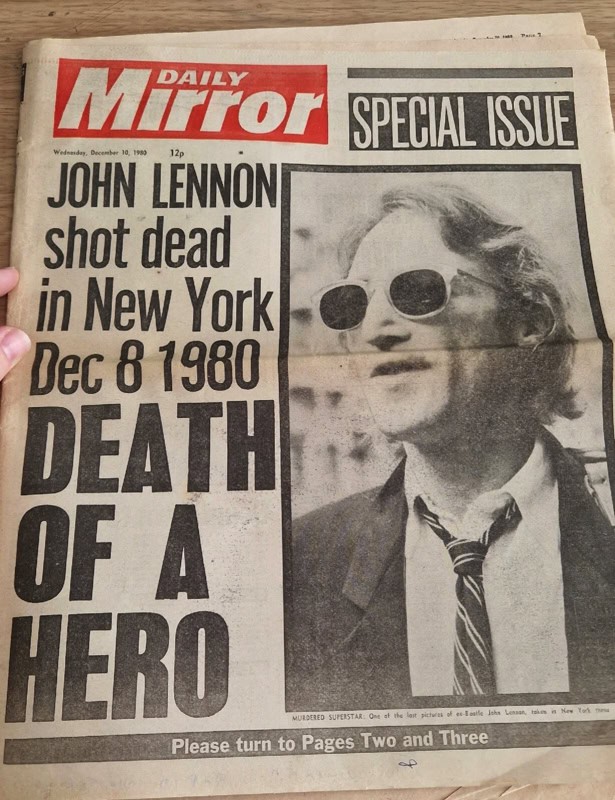
On 8 December 1980, John Lennon was murdered outside his home, the Dakota Building in New York City. His death shocked the international music community and profoundly affected countless artists who had admired or worked alongside him.
For David Bowie, Lennon’s death was the loss of a musician he had admired profoundly and with whom he had shared a brief but important creative relationship. Although their direct studio collaboration had been brief, Bowie always regarded Lennon as one of the defining creative figures of modern popular music. Their work together during the Young Americans sessions remained one of the most rewarding experiences of his career.
Throughout the following decades, Bowie continued to speak with admiration about Lennon’s intelligence, humour and extraordinary musical instincts. Whenever discussing the recording of Fame, he consistently emphasised the relaxed atmosphere inside the studio and the spontaneity with which the composition had emerged.
The historical importance and enduring legacy of Fame
The collaboration between David Bowie and John Lennon was brief, but its importance cannot be measured by duration alone. Their two officially released recordings captured Bowie at a decisive point in his artistic development and Lennon during the final phase of the period commonly called his “Lost Weekend.”
Fame became Bowie’s first number-one single in the United States, but its historical importance extends beyond chart success. The recording emerged from three distinct contributions: Carlos Alomar supplied the central guitar figure, Lennon provided the title, vocal stimulus and creative energy, and Bowie developed the principal lyric, melody and finished performance.
The song also documented Bowie’s movement away from the theatrical rock of Ziggy Stardust and Diamond Dogs. Its disciplined rhythm, repeated figures, fragmented vocal ideas and emotional detachment pointed towards elements that would become more prominent on Station to Station and during the second half of the 1970s.
For Lennon, the session became one of the most memorable collaborations of his post-Beatles career. He did not dominate the recording or turn it into a conventional duet. His contribution was integrated into the rhythm and concept of the track, demonstrating how quickly his instincts could alter the direction of a developing piece of music.
Carlos Alomar‘s role is equally central. The riff was not decoration added after the song had been written; it was the foundation from which the composition grew. The continuing recognition of his contribution has helped correct the tendency to describe Fame only as a meeting between Bowie and Lennon.
Across later decades, the recording remained adaptable. Bowie repeatedly rearranged it for different bands and tours, while the original studio version continued to sound spare, tense and rhythmically modern. Its durability came from restraint rather than excess: a limited number of musical elements were given room to interact.
Among Bowie’s many collaborations, the partnership with Lennon therefore occupies a distinctive place. It joined a formative influence, a long-term musical partner and Bowie himself in a recording that none of the three could have created in precisely the same form alone.
Half a century after the session, Fame remains both a landmark in Bowie’s American career and a lasting example of collaborative songwriting. Its subject also retains its force: the record that made Bowie more famous in the United States was itself a warning about celebrity, control, exploitation and the instability of public identity.
Recording personnel
The following musicians and production personnel are officially credited with the recording of Fame, completed at Electric Lady Studios in New York on 30 January 1975.
- David Bowie: lead vocals and guitar
- John Lennon: backing vocals, guitar and studio contributions
- Carlos Alomar: guitar
- Emir Kassan: bass guitar
- Dennis Davis: drums
- Ralph MacDonald: percussion
- Written by: David Bowie, Carlos Alomar and John Lennon
- Produced by: David Bowie and Harry Maslin
- Recorded at: Electric Lady Studios, New York
- Recording date: 30 January 1975
- Originally released on: Young Americans
Credits for individual studio elements have sometimes varied between later accounts. The central personnel listed above are supported by the official John Lennon archive. Bowie later explained that Lennon played acoustic guitar, while Bowie and Alomar supplied the principal electric-guitar elements.
The production also incorporated reversed and manipulated studio sounds. Harry Maslin later recalled recording a piano chord played by Lennon and reversing the tape so that the chord swelled into the opening of the song.
John Lennon on meeting David Bowie
Lennon later recalled that Mick Jagger helped bring him and Bowie into the same social circle. After an earlier meeting, Bowie contacted Lennon while preparing his version of Across the Universe and invited him to join the recording session.
John Lennon on Bowie’s invitation
“Hello John, I’m doing ‘Across The Universe’, do you wanna come on down?”
— John Lennon, recalling David Bowie’s invitation
The invitation led first to Bowie’s interpretation of Lennon’s Beatles composition. Once that recording had been completed, the musicians continued working together and developed the riff that became Fame.
David Bowie on John Lennon‘s creative contribution
Bowie consistently described Lennon as the source of energy that transformed the studio groove into a song. Although Carlos Alomar supplied the central guitar riff and Bowie developed most of the lyric and melody, Lennon’s spontaneous repetition of the title word gave the recording its identity and subject.
David Bowie on John Lennon‘s role in Fame
“He was the energy, and that’s why he’s got a credit for writing it; he was the inspiration.”
— David Bowie
This distinction is important to the history of the song. Bowie did not claim that Lennon wrote the majority of the finished lyric. He credited Lennon because the former Beatle’s presence, vocal idea and creative energy made the composition possible.
Carlos Alomar on creating the recording
While Bowie and Lennon went out to eat during the session, Carlos Alomar remained at Electric Lady Studios and continued developing the guitar arrangement. He recorded additional parts around the central rhythm, helping transform the basic groove into the layered guitar track heard on the finished recording.
Alomar later remembered that Bowie immediately recognised the arrangement as complete when he returned. The session also marked an important development in the professional relationship between Bowie and Alomar. Alomar became Bowie’s bandleader and remained one of his most important musical collaborators over the following decades.
Carlos Alomar on co-writing Fame
“I co-wrote ‘Fame’ — my first song ever written, with John Lennon and David Bowie.”
Harry Maslin and the opening sound
Producer Harry Maslin played an important role in converting the spontaneous performance into the finished studio recording. One of the track’s most unusual details is the swelling sound heard immediately before the rhythm begins.
Maslin created the effect by reversing the multitrack tape and asking Lennon to play and hold a piano chord at a precisely indicated moment. When the tape was returned to its normal direction, the decay of the chord became a reversed swell that ended at the beginning of the performance.
The effect contributed to the song’s disorienting atmosphere. Before the listener hears the recognisable guitar riff, the recording begins with a sound moving in an apparently unnatural direction, foreshadowing the vocal and studio manipulation used later in the track.
Related official recordings
The Bowie–Lennon studio collaboration produced two recordings that appeared on Young Americans:
- Across the Universe — written by John Lennon and Paul McCartney; performed by David Bowie with Lennon contributing guitar.
- Fame — written by David Bowie, Carlos Alomar and John Lennon; performed by Bowie with Lennon contributing vocals and guitar.
The two tracks were placed near the end of the original album. Across the Universe appeared as the sixth track, followed by Can You Hear Me, with Fame closing the album.
Fame was subsequently released as a single with Right on the B-side. The original American single appeared in June 1975, followed by the British release on 18 July 1975. It reached number one in the United States and number seventeen in the United Kingdom.
Official Website & Further Information
The official John Lennon website maintains an extensive archive devoted to Lennon’s recordings, collaborations, writings, artwork and wider creative legacy. Its page devoted to Fame includes recording credits, historical recollections and first-hand accounts from David Bowie, Carlos Alomar, Ava Cherry and Harry Maslin.
For official information about John Lennon‘s life, music and legacy, please visit:
www.johnlennon.com
The official David Bowie website continues to document Bowie’s catalogue through archival articles, anniversary features, release information and material connected with Young Americans and Fame.
For official information about David Bowie’s music and continuing legacy, please visit:
www.davidbowie.com
DavidBowieWorld.com is dedicated to documenting David Bowie’s collaborators through carefully researched historical information. This page will continue to be updated when additional verified documentation, recordings or first-hand information becomes available.
Article Origin
This article has been researched and written for DavidBowieWorld.com as part of the site’s ongoing project documenting the musicians, artists, producers, engineers and creative figures who helped shape David Bowie’s extraordinary career.
Particular attention has been given to the documented collaboration between David Bowie and John Lennon during the final recording stage of Young Americans, including their work on Across the Universe and the Bowie–Lennon–Alomar composition Fame.
The article draws upon official recording credits, archival material and documented first-hand recollections from people directly involved in the sessions. Where different memories of the recording process exist, no uncertain account has been presented as established fact.
© DavidBowieWorld.com — David Bowie Collaborations & Creative Circle Archive.
