
John Peel and David Bowie – The BBC Radio Sessions, 1968–1972
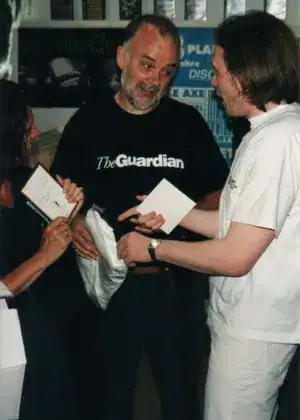
John Peel in a record shop in Bochum, Germany. Photograph by Zetkin, licensed under CC BY-SA 3.0, via Wikimedia Commons.
>John Peel was a British radio broadcaster and journalist whose programmes provided an important national platform for new and developing music. Between 1968 and 1972, he introduced several significant BBC radio performances by David Bowie.
These broadcasts began before Bowie achieved sustained commercial success. They included appearances on Top Gear, The Sunday Show, In Concert and Sounds of the 70s, giving listeners access to unreleased songs, alternative arrangements, cover versions and performances that sometimes differed substantially from Bowie’s commercial recordings.
The surviving recordings document several important stages in Bowie’s musical development: the studio-orchestra arrangements of 1968, the emergence of a heavier electric group in 1970, the expanded ensemble heard in 1971 and the increasingly established Ziggy Stardust-era band of 1972.
Peel presented these programmes, but he did not personally produce every recording or arrange every booking. BBC producers and production staff organised and recorded the sessions, while Bowie and his musicians created and performed the music.
- Birth name: John Robert Parker Ravenscroft
- Professional name: John Peel
- Born: 30 August 1939, Heswall, England
- Died: 25 October 2004, Cusco, Peru
- Profession: Radio broadcaster and journalist
- Principal station: BBC Radio 1
- Bowie connection: Presenter of important BBC Bowie broadcasts between 1968 and 1972
- Programmes: Top Gear, The Sunday Show, In Concert and Sounds of the 70s
- First documented Peel-presented Bowie session: 13 May 1968
- Final Peel-presented Bowie session: 16 May 1972
Early Life and the Birth of John Peel
John Peel was born John Robert Parker Ravenscroft on 30 August 1939 in Heswall, then part of Cheshire, on the Wirral Peninsula near Liverpool. He was the eldest of three sons born to Joan Mary Ravenscroft and Robert Leslie Ravenscroft, a cotton merchant. The family lived in the nearby village of Burton.
Ravenscroft developed an interest in radio and recorded music while he was still young. At a time when British broadcasting offered relatively limited access to popular music, stations transmitting from outside the country became important sources of discovery. He listened to the American Forces Network and Radio Luxembourg, which exposed British audiences to records that received little airtime on domestic radio.
He was educated as a boarder at Shrewsbury School. His enthusiasm for collecting records and sharing unfamiliar music was already evident during his school years. One of his school reports humorously suggested that he might somehow create a career from his interest in unusual records and his enjoyment of writing.
The observation anticipated two qualities that would later distinguish his broadcasting: an enduring curiosity about music and a conversational presentation style that allowed personal observations to sit naturally alongside the records he played.
After leaving school, Ravenscroft completed his National Service in the Royal Artillery, where he worked as a radar operator. He subsequently spent a short period working at a cotton mill in Rochdale. He did not yet have an established broadcasting career, but his interest in radio and record collecting continued.
In 1960, at the age of twenty-one, Ravenscroft travelled to the United States. His original purpose was to work for a cotton business connected with his father’s commercial interests. The move instead placed him close to a rapidly changing American music and broadcasting culture and ultimately provided the opportunity from which his radio career developed.
During these early years he continued to use the name John Ravenscroft. The professional name John Peel would be adopted only after his return to Britain later in the decade.
The American Years and the Beginning of a Radio Career
After arriving in the United States in 1960, John Ravenscroft initially worked in the cotton industry. He later held several other jobs, including employment as an insurance salesman. His work took him to Dallas, Texas, where he began looking for opportunities in local radio.
His first broadcasting experience came at Dallas station WRR. Working without pay, he presented part of Kat’s Karavan, a programme otherwise hosted by singer and broadcaster Jim Lowe. The programme concentrated largely on rhythm and blues, giving Ravenscroft practical experience of selecting records and speaking to a radio audience.
Ravenscroft was living in Dallas during a period of major political and cultural change. Following the assassination of President John F. Kennedy on 22 November 1963, he gained access to the Dallas Police Department by presenting himself as a reporter for the Liverpool Echo. He attended the late-night press appearance at which Lee Harvey Oswald was shown to journalists and subsequently telephoned a report to the newspaper.
His British accent and connection with the Liverpool area became professionally useful when the Beatles achieved enormous popularity in the United States. Dallas radio station KLIF employed him as a Beatles correspondent, presenting him to listeners as someone with direct knowledge of the city from which the group had emerged.
The opportunity helped turn his occasional broadcasting work into a developing radio career. Ravenscroft later joined KOMA in Oklahoma City, where he presented programmes during the mid-1960s. He subsequently moved to California and worked at KMEN in San Bernardino, continuing to broadcast under his birth name.
During his years in the United States, Ravenscroft encountered blues, rhythm and blues, rock and roll, folk music and the developing sounds of the American West Coast. He also became familiar with a style of radio presentation that was less formal than traditional British broadcasting. These experiences helped shape the personal and exploratory approach he later brought to British radio.
By the time he returned to Britain in early 1967, Ravenscroft had several years of broadcasting experience. He was not yet a nationally recognised presenter, but he had developed the confidence, musical curiosity and informal delivery that would soon distinguish him from many of his British contemporaries.
From Pirate Radio to BBC Radio 1
John Ravenscroft returned to Britain in early 1967. British popular radio was then being transformed by offshore stations broadcasting from ships outside territorial waters. These stations supplied continuous popular music that was still largely absent from the BBC’s domestic schedules.
Ravenscroft joined the offshore station Radio London, commonly known as Big L. He initially presented a late-night programme between midnight and two in the morning. During this period, he began broadcasting under the professional name John Peel.
His programme developed into The Perfumed Garden, which offered an alternative to the station’s more commercially focused daytime output. Peel played blues, folk, psychedelic and underground music, including records connected with the developing scenes in London and on the American West Coast.
The programme also established the intimate presentation style that became one of Peel’s most recognisable characteristics. He spoke directly to listeners, read correspondence on air and discussed music and contemporary culture without adopting the polished manner then associated with many professional radio announcers.
Radio London closed on 14 August 1967, shortly before the Marine Broadcasting Offences Act came into force. The legislation made it illegal for British citizens and companies to supply, advertise on or work for offshore pirate stations. Peel’s period at Radio London had been brief, but it established his reputation as a broadcaster willing to play music outside the commercial mainstream.
The BBC launched Radio 1 on 30 September 1967 as a new national popular-music station. Peel became one of its original presenters and joined the programme Top Gear. Presentation duties were initially shared with other broadcasters, including Pete Drummond, before Peel became the programme’s principal presenter.
Unlike programmes based almost entirely on commercially released records, Top Gear featured performances specially recorded in BBC studios. These sessions allowed musicians to present new material, alternative arrangements and songs that might otherwise receive little national exposure.
By early 1968, Peel had become closely associated with Top Gear. Bowie’s appearance that May was arranged within the BBC production system, with producer Bernie Andrews playing an important role in securing Bowie’s early bookings. Peel introduced the performances to the programme’s national audience, but he was not solely responsible for arranging or producing the session.
John Peel’s Approach to New Music
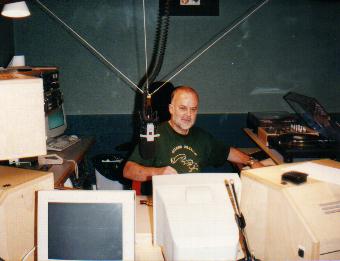
John Peel did not limit his programmes to records that were already commercially successful. He regularly listened to unfamiliar releases, demonstration recordings and music sent directly by artists and small independent labels. His programmes consequently gave airtime to performers who received little or no exposure elsewhere on national radio.
Peel’s musical choices changed repeatedly throughout his career. During the late 1960s he broadcast blues, folk, progressive and psychedelic music. In later decades he supported reggae, punk, post-punk, independent rock, electronic music, hip-hop and numerous styles that could not easily be accommodated within conventional radio formats.
This willingness to move beyond established trends was central to his work. Peel did not claim that every record he played would become important or successful. Instead, his programmes allowed listeners to encounter music and decide for themselves, often before the artists had attracted wider press or industry attention.
Specially recorded BBC performances were an essential part of this approach. Restrictions on the amount of commercially released music the BBC could broadcast encouraged the corporation to commission original studio sessions. These recordings supplied programmes with material that counted as live or specially produced BBC content rather than ordinary record airplay.
The sessions were organised and recorded by BBC producers, engineers and studio staff. Peel’s role was principally that of presenter and broadcaster: he introduced the artists and performances to his audience. It would therefore be misleading to describe every session carrying his name as a recording personally produced by John Peel.
For musicians, the sessions offered more than simple promotion. Limited studio time often required songs to be recorded quickly, while the absence of elaborate commercial production could produce performances that differed substantially from the corresponding singles or albums. Artists sometimes introduced unreleased compositions, rearranged existing material or performed cover versions that were not part of their official studio catalogue.
These qualities make the surviving recordings particularly valuable as historical documents. In David Bowie’s case, the Peel-presented broadcasts capture several distinct line-ups and musical directions between 1968 and 1972. Heard chronologically, they document changes in Bowie’s repertoire, arrangements and manner of performance during the years preceding and immediately surrounding his breakthrough.
David Bowie Before John Peel
When John Peel joined BBC Radio 1 in 1967, David Bowie was still attempting to establish a sustainable recording career. Bowie had already worked with several groups, including the King Bees, the Manish Boys, the Lower Third, the Buzz and, briefly, the Riot Squad. None of these associations had produced a lasting commercial breakthrough.
Bowie had also encountered the BBC before Peel became one of its presenters. In 1965, Bowie and his group auditioned for the corporation but were not accepted for a broadcast appearance. These auditions belong to his early BBC history, although they did not produce the surviving radio sessions documented later in the decade.
By 1966, Bowie had adopted the professional name David Bowie and had begun working with manager Kenneth Pitt. His recordings increasingly moved away from the rhythm-and-blues sound of his earlier groups towards theatrical pop, character-based songwriting and material influenced by British music hall.
Early Support from Radio London
Before John Peel joined Radio London in 1967, the offshore station had already provided valuable exposure for Bowie’s early recordings. Can’t Help Thinking About Me, credited to David Bowie with the Lower Third, entered the station’s playlist in January 1966 and remained there for seven weeks.
The single reached number fourteen in Radio London’s Fab Forty on 20 February 1966. The Fab Forty reflected the station’s own programming rather than national record sales, but the result demonstrated that Bowie’s music was receiving sustained offshore-radio exposure even though he had not entered the official British charts.
Radio London also supported Bowie’s live promotion. The station sponsored a series of Sunday-afternoon performances known as The Bowie Showboat at the Marquee Club in London during 1966. Bowie and the Buzz additionally appeared at other events connected with the station.
Later recordings, including I Dig Everything, The Laughing Gnome and Love You Till Tuesday, also received attention from Radio London. This support belonged to the station and its wider group of presenters and promoters; it should not be attributed solely to John Peel.
By the time Peel joined Radio London in early 1967, Bowie therefore already had an established connection with the station. Peel’s later place in Bowie’s history developed principally through the BBC programmes he presented after becoming part of Radio 1.
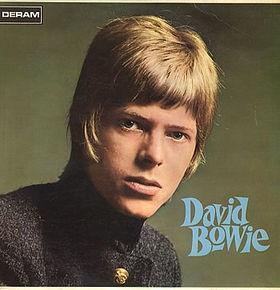
Bowie’s first album, David Bowie, was released by Deram Records on 1 June 1967. The album included narrative songs, orchestral arrangements and stylistic experiments that differed markedly from the beat-group recordings with which he had begun his career. It did not enter the British album chart.
His first known BBC radio session was recorded on 18 December 1967 for Top Gear. Bowie performed Love You Till Tuesday, In the Heat of the Morning, Silly Boy Blue, When I Live My Dream and Little Bombardier. The session was broadcast on 24 December 1967.
The performances used an orchestral ensemble and reflected Bowie’s Deram-period material. They are important to the chronology of his BBC work, but they should not be confused with the later Top Gear session introduced by John Peel in May 1968.
Bowie’s contract with Deram did not produce a successful single. Recordings such as Love You Till Tuesday, The Laughing Gnome and Rubber Band attracted limited commercial attention, leaving him without the breakthrough that his management and record company had hoped to achieve.
At the beginning of 1968, Bowie therefore occupied an uncertain position. He had a manager, a recording contract, an album and some BBC experience, but no chart success and no permanent backing group. His next documented BBC session was recorded for an edition of Top Gear presented by John Peel, providing another opportunity for his developing repertoire to reach a national audience.
The First Documented Peel Session – Top Gear, 1968
David Bowie’s first documented BBC session specifically associated with John Peel was recorded on 13 May 1968 for Top Gear. The session took place at the BBC’s Piccadilly 1 studio, located at 201 Piccadilly in London, and was broadcast on 26 May 1968.
The session was produced by Bernie Andrews, with Pete Ritzema and Alan Harris credited as engineers. Peel introduced the performances as part of his programme, but he was not the session’s record producer. That distinction is important when describing the working relationship between Bowie and Peel.
Bowie performed with an ensemble identified in later release documentation as the Tony Visconti Orchestra. This was not a permanent touring group. It was an assembled studio ensemble created to provide the instrumental arrangements required for the BBC recording.
The session involved fourteen musicians. Documented participants included Herbie Flowers on bass, Barry Morgan on drums, John McLaughlin on guitar and Alan Hawkshaw on keyboards. Tony Visconti and Steve Peregrin Took contributed backing vocals.
Five Bowie compositions were recorded:
- London Bye Ta-Ta
- In the Heat of the Morning
- Karma Man
- When I’m Five
- Silly Boy Blue

London Bye, Ta-Ta

In the Heat Of The Morning

Karma Man

When I'm Five

Silly Boy Blue
-
London Bye, Ta-Ta
-
In the Heat Of The Morning
-
Karma Man
-
When I'm Five
The version used for Kenneth Pitt’s film, Love You Till Tuesday, had been recorded for a BBC session in May 1968. The song is sung from a child's perspective, with all the requisite desperation to grow up and echoes 'There Is A Happy Land' from his debut album. With references to his parents and 'Grandfather Jones', as well as a dog called 'Bonzo', When I'm Five has all the hallmarks of 60s Bowie, quirky, childlike and never less than interesting and he ensures all of his then-recent training as a mime is to the fore in the film. -
Silly Boy Blue
The repertoire combined recent compositions with a song already familiar from Bowie’s 1967 debut album. Silly Boy Blue had appeared on David Bowie, while the other selections represented material Bowie was developing during the period following that album.
Not every recorded performance was necessarily included in the original transmission. Silly Boy Blue is documented as having been recorded during the session but not broadcast as part of the programme on 26 May 1968.
The broadcast presented Bowie with a larger and more musically varied accompaniment than a conventional group performance. Orchestral and studio instrumentation allowed the arrangements to move beyond the sound of his earlier rhythm-and-blues bands while retaining the narrative qualities of his Deram-period songwriting.
The session did not immediately transform Bowie’s commercial position, but it established the first clearly documented point in a sequence of BBC programmes introduced by John Peel. Further Peel-presented performances in 1970, 1971 and 1972 would capture Bowie with very different musicians and at markedly different stages of his career.
The Songs Recorded for Top Gear
The five songs recorded on 13 May 1968 represented different parts of David Bowie’s developing repertoire. One had already appeared on his debut album, while the others were unavailable on record when the session was broadcast. The programme therefore allowed listeners to hear Bowie material that could not yet be purchased commercially.
London Bye Ta-Ta
London Bye Ta-Ta was one of several compositions Bowie developed after the release of his first album. The song describes a departure from London and contains observations about the city and its changing population.
Bowie recorded a studio version in 1968, but it was not released at the time. The Top Gear performance consequently provided one of the earliest opportunities for a national audience to hear the composition.
Bowie returned to London Bye Ta-Ta in 1970 and recorded a substantially different studio version as a possible follow-up to Space Oddity. That recording was also withheld from contemporary release. The 1968 BBC performance must therefore be distinguished from Bowie’s later 1970 studio version.
In the Heat of the Morning
Bowie first performed In the Heat of the Morning for the BBC during his Top Gear session recorded on 18 December 1967. A studio version produced by Tony Visconti was subsequently recorded at Decca Studios in London on 12 March 1968.
The studio recording was not issued as a contemporary single. It first became commercially available on the Decca compilation The World of David Bowie in 1970.
The performance recorded for John Peel’s programme on 13 May 1968 used the larger ensemble identified as the Tony Visconti Orchestra. When broadcast later that month, it presented listeners with a Bowie composition that was still unavailable on record. Material from the session was heard again in a later Top Gear transmission on 26 June 1968.
Karma Man
Karma Man reflected Bowie’s continuing interest in Buddhism and Tibetan imagery. A studio version was recorded in 1967, but it was not released at the time. Like In the Heat of the Morning, it eventually appeared on The World of David Bowie in 1970.
The song’s inclusion in the May 1968 BBC session demonstrates that Bowie was continuing to perform material that Deram had not selected for his original album or contemporary singles. The broadcast allowed the composition to reach listeners before its studio version received an official commercial release.
When I’m Five
When I’m Five is written from the perspective of a young child imagining the freedoms and responsibilities that might accompany growing older. Bowie recorded a home demo, while the version made for Top Gear on 13 May 1968 received a full studio arrangement.
The BBC recording was later used in the promotional film Love You Till Tuesday, which was filmed in 1969 but remained commercially unreleased for many years. The film and its accompanying soundtrack were eventually issued in 1984.
Unlike four other surviving performances from the May 1968 session, When I’m Five was omitted from the original 2000 edition of Bowie at the Beeb. Its absence from that compilation does not mean that the recording was lost.
Silly Boy Blue
Silly Boy Blue was the only song from the session that had already appeared on Bowie’s debut album. First released on David Bowie in June 1967, the composition reflected his early interest in Tibetan Buddhism and presented the story of a young monk.
The 1968 BBC recording revisited the song with the larger studio ensemble assembled under Tony Visconti’s musical direction. Although the performance was recorded during the session, it was not included in the original transmission on 26 May 1968.
Official Release of the Session
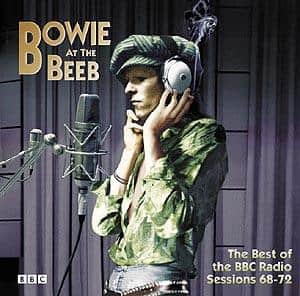
Four performances from the session—In the Heat of the Morning, London Bye Ta-Ta, Karma Man and Silly Boy Blue—were included on the official compilation Bowie at the Beeb, released in 2000. The May 1968 recordings form the chronological starting point of that collection’s survey of Bowie’s surviving BBC performances.
The fifth recording, When I’m Five, had already been officially issued in connection with Love You Till Tuesday. All five songs recorded during the May 1968 session therefore survive, although they were not collected together on the original edition of Bowie at the Beeb.
The session documents Bowie working with Tony Visconti and an ensemble of accomplished studio musicians at a time when his commercial future remained uncertain. John Peel supplied the programme’s presenting voice, while producer Bernie Andrews and the BBC production team were responsible for organising and recording the session.
Bowie’s 1969 Letter to John Peel
The connection between David Bowie and John Peel was not limited to arrangements made through managers, record companies or BBC production staff. A surviving letter shows that Bowie also contacted Peel personally in 1969 to ask about the possibility of another radio appearance.
At the time, Bowie was living outside central London and still lacked dependable commercial success. His Deram contract had ended, and although he continued writing and recording, regular professional opportunities remained uncertain. A BBC appearance could place his new material before a national audience at a particularly important stage of his career.
In the letter, Bowie referred to remaining in the Bromley area for much of the summer and travelling into central London for performances and to meet friends. He asked whether he might soon appear at the location he described as Peel’s “Strand place”, a reference to the BBC facilities near the Strand and Charing Cross.
David Bowie to John Peel, 1969
“It would be nice to work so close to Charring Cross as my last train leaves at 12.15.”
— David Bowie, in a letter to John Peel, quoted in Margrave of the Marshes
Bowie’s spelling of “Charring Cross” has been retained in the quotation. The apparently practical concern about catching his last train also reveals the ordinary circumstances surrounding his career at the time. Before international success provided extensive professional support and private transport, a late BBC recording could be shaped by the railway timetable back to south-east London.
The letter is particularly valuable because it demonstrates that Bowie actively sought another opportunity to work through Peel’s programme. It would be inaccurate, however, to claim that the letter alone secured the lengthy Sunday Show appearance recorded in February 1970. The surviving evidence establishes the request and the later broadcast, but not a direct sequence of booking decisions between them.
Correspondence from Bowie remained in John Peel’s personal archive. Material from that archive, including a handwritten Bowie letter dating from around 1969, was later offered at auction. Together with the account reproduced in Peel’s posthumously completed autobiography, it provides surviving first-hand evidence of Bowie’s contact with the broadcaster during this uncertain period.
The Sunday Show – 5 February 1970
David Bowie – The Sunday Show, recorded for BBC Radio 1 on 5 February 1970
David Bowie returned to a John Peel-presented programme on 5 February 1970, when he recorded an extended performance for BBC Radio 1’s The Sunday Show. The session took place at the BBC Paris Studio in Lower Regent Street, London, close to the central London railway connections Bowie had mentioned in his 1969 letter.
The programme was produced by Jeff Griffin. Tony Wilson was responsible for sound balance, with Chris Lycett credited as engineer. Rehearsal and recording occupied much of the day, beginning during the afternoon and continuing until around midnight.
Unlike the orchestrated Top Gear session of May 1968, this performance placed Bowie in front of a compact electric group. He was accompanied by Tony Visconti on bass, Mick Ronson on guitar and John Cambridge on drums. Bowie sang and played guitar, and is also credited with keyboards.
Official release documentation identifies the accompanying musicians as the Tony Visconti Trio, adding that the group was also known as The Hype. The terminology requires some care: the February broadcast captures the musicians during the period in which Bowie and Visconti were developing a heavier band presentation, but the name and visual concept of The Hype continued to evolve around the performances that followed.
The presence of Mick Ronson makes the session especially important in Bowie’s musical chronology. Ronson would become one of Bowie’s principal collaborators during the recording of The Man Who Sold the World, Hunky Dory, The Rise and Fall of Ziggy Stardust and the Spiders from Mars and Aladdin Sane. The BBC recording preserves one of the earliest documented performances from the beginning of that partnership.
The session was unusually extensive. Bowie and the musicians recorded fifteen songs, drawing upon material from different stages of his career. The repertoire included compositions from his Deram period, songs from his 1969 album, unreleased material, cover versions and an early performance of The Width of a Circle, which had not yet appeared on a studio album.
This breadth distinguished the appearance from a standard BBC session built around three or four songs. The Sunday Show gave Bowie sufficient space to present an extended survey of his work while also introducing listeners to the more forceful sound of his new musicians.
The programme was transmitted on 8 February 1970 between 4:00 and 5:00 in the afternoon. John Peel introduced the performances and provided the spoken links heard during the broadcast. Although the recording was made in advance, it was presented as an extended concert-style radio programme rather than a conventional sequence of commercially released records.
Not everything recorded on 5 February could be included in the available broadcast time. One performance was omitted, while the closing number was shortened for transmission. The fate of the BBC master tape also later affected which parts of the session could be issued in high quality.
The broadcast did not mark Bowie’s transformation into an immediate commercial success. Nevertheless, it documented an important musical reorganisation: the orchestrated and largely acoustic settings heard in earlier BBC appearances were now joined by an electric group whose members would play central roles in Bowie’s next phase.
The Sunday Show Repertoire and Surviving Recordings
Fifteen performances were recorded during the Sunday Show session on 5 February 1970. The repertoire brought together Bowie compositions from different stages of his career with songs written by Jacques Brel, Biff Rose and Lou Reed. It functioned both as a survey of his recent work and as a presentation of material that had not yet appeared on record.
- Amsterdam
- God Knows I’m Good
- Buzz the Fuzz
- Karma Man
- London Bye Ta-Ta
- An Occasional Dream
- The Width of a Circle
- Janine
- Wild Eyed Boy from Freecloud
- Unwashed and Somewhat Slightly Dazed
- Fill Your Heart
- I’m Waiting for the Man
- The Prettiest Star
- Cygnet Committee
- Memory of a Free Festival
Songs from Bowie’s 1969 Album
Seven selections had appeared on Bowie’s second album, released in Britain in November 1969: God Knows I’m Good, An Occasional Dream, Janine, Wild Eyed Boy from Freecloud, Unwashed and Somewhat Slightly Dazed, Cygnet Committee and Memory of a Free Festival.
Performed with Tony Visconti, Mick Ronson and John Cambridge, these songs were presented without all the instrumentation and overdubbing heard on the album. The smaller electric group gave several compositions a noticeably different balance from their commercial studio versions.
Earlier and Unreleased Bowie Material
Bowie returned to Karma Man and London Bye Ta-Ta, two compositions associated with the years following his first album. Neither corresponding studio recording had received a contemporary commercial release when the programme was recorded.
The session also featured The Prettiest Star. Bowie had recorded the studio single with guitarist Marc Bolan in January 1970, but it was not released in Britain until 6 March 1970. The radio broadcast therefore allowed listeners to hear the composition almost a month before the single became commercially available.
The Width of a Circle
The performance of The Width of a Circle predates the studio version released on The Man Who Sold the World. The February 1970 recording presents the composition in an earlier and shorter form before it developed into the extended album arrangement recorded later that year.
Mick Ronson’s guitar was already central to the performance. The recording provides early evidence of the heavier musical direction being explored by Bowie, Ronson and Visconti, but it should not be described as a finished version of the later album recording.
The Cover Versions
Amsterdam was written by Belgian songwriter Jacques Brel. Bowie performed the English-language adaptation associated with Mort Shuman and continued to include the song in his repertoire during the early 1970s.
Two selections came from American songwriter Biff Rose: Buzz the Fuzz and Fill Your Heart. Bowie later recorded Fill Your Heart for Hunky Dory, released in 1971. The Sunday Show performance predates Bowie’s studio recording.
The remaining cover was I’m Waiting for the Man, written by Lou Reed and originally recorded by the Velvet Underground. Bowie had already attempted the song with the Riot Squad in 1967 and continued to perform it during later stages of his career.
The Unbroadcast and Edited Performances
Although I’m Waiting for the Man was recorded on 5 February 1970, it was removed from the final programme because of the available transmission time. No recording of this particular performance is known to survive. It must therefore be listed as documented but lost and should not be confused with Bowie’s surviving BBC performance recorded for a different programme in March 1970.
Memory of a Free Festival was recorded as a performance lasting approximately six minutes and forty seconds. The version transmitted by the BBC was faded early to fit the one-hour programme. The complete studio ending is not known to survive; official releases contain the shortened broadcast version.
The Lost BBC Master
The BBC did not permanently retain the original master tape of the programme. As happened with many broadcasts during this period, the tape was later erased or prepared for reuse. The loss of the master did not mean that the entire programme disappeared.
A personal recording retained in David Bowie’s collection preserved the transmitted programme. Because this recording was made from the broadcast rather than copied from the original studio master, it could not contain the unbroadcast performance of I’m Waiting for the Man or the complete ending of Memory of a Free Festival.
Six performances were officially released on Bowie at the Beeb in 2000:
- Amsterdam
- God Knows I’m Good
- The Width of a Circle
- Unwashed and Somewhat Slightly Dazed
- Cygnet Committee
- Memory of a Free Festival
A more complete official presentation followed on The Width of a Circle, released on 28 May 2021. Its first disc contained all fourteen surviving performances from the transmitted programme, arranged in broadcast order and accompanied by surviving parts of John Peel’s presentation.
The survival history must therefore be described precisely. Fourteen broadcast performances remain available, but the original BBC master is lost. The unbroadcast version of I’m Waiting for the Man and the complete studio ending of Memory of a Free Festival also remain unavailable.
Mick Ronson’s Early Appearance with David Bowie
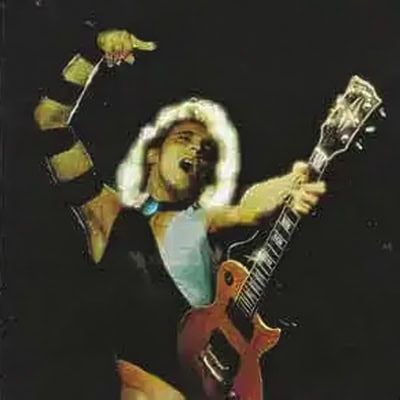
The 5 February 1970 Sunday Show session occupies an important place in the history of David Bowie and Mick Ronson. It is the earliest firmly documented broadcast performance in which Ronson appeared as the guitarist in Bowie’s group.
Ronson came from Hull and had played with local groups including the Mariners, the Crestas, the Voice and the Rats. Drummer John Cambridge, who had also worked with the Rats, helped connect Ronson with Bowie’s developing group in London.
Several later accounts place the beginning of Bowie and Ronson’s regular working relationship shortly before the BBC recording. Other recollections have suggested that the musicians may have encountered one another or participated in recording work earlier. The available evidence does not establish every detail of this chronology with equal certainty.
For that reason, the February 1970 broadcast should not be presented as the unquestionable date of Bowie and Ronson’s first meeting. Its historical importance is more precise: it provides the first securely documented surviving broadcast of Ronson performing as Bowie’s guitarist.
Ronson’s guitar was particularly prominent during performances such as The Width of a Circle and Unwashed and Somewhat Slightly Dazed. Together with Tony Visconti’s bass and John Cambridge’s drums, his playing helped the small ensemble create a heavier electric sound than the studio-orchestra arrangements heard in Bowie’s 1968 BBC session.
At this stage, the partnership had not yet developed the arrangements and stage presentation associated with the later Ziggy Stardust period. The broadcast captures Bowie and Ronson near the beginning of their documented work together, before the recording of The Man Who Sold the World and before Trevor Bolder and Mick Woodmansey completed the best-known Spiders from Mars line-up.
Ronson subsequently contributed guitar, piano, arrangements and backing vocals to several Bowie albums. His work became central to The Man Who Sold the World, Hunky Dory, The Rise and Fall of Ziggy Stardust and the Spiders from Mars, Aladdin Sane and Pin Ups.
The John Peel-presented broadcast did not create the Bowie–Ronson partnership. It did, however, preserve an early and securely documented stage in their collaboration and brought the sound of Bowie’s newly assembled electric group to a national radio audience.
From the Tony Visconti Trio to The Hype
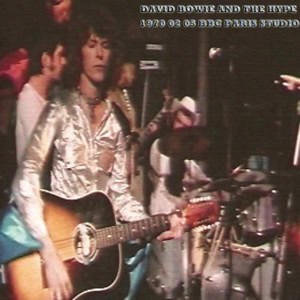
The musicians accompanying Bowie during the 5 February 1970 Sunday Show were identified in BBC and later official release documentation as the Tony Visconti Trio. The line-up consisted of Tony Visconti on bass, Mick Ronson on guitar and John Cambridge on drums, with Bowie providing lead vocals, guitar and keyboards.
The same four musicians soon performed publicly under the name The Hype. Rather than presenting Bowie as a solo singer supported by anonymous session musicians, the group identity allowed each performer to become part of the musical and visual presentation.
On 22 February 1970, Bowie and The Hype appeared at the Roundhouse in London during one of the venue’s Sunday Implosion events. For this performance, the four musicians adopted individual stage identities and wore stylised costumes.
- David Bowie: Rainbowman
- Tony Visconti: Hypeman
- Mick Ronson: Gangsterman
- John Cambridge: Cowboyman
The costumes have sometimes been described retrospectively as an early beginning of glam rock or as a direct predecessor of Ziggy Stardust. The presentation is historically significant, but it should not be treated as a fully developed version of Bowie’s later stage character. The Hype’s costumed identity was brief and did not immediately provide Bowie with a successful new public image.
Bowie and The Hype returned to the Roundhouse during the Atomic Sunrise festival in March 1970. Surviving film footage from that event provides a visual record of the group during this transitional period. The February Implosion appearance and the March festival performance were separate events and should not be combined into a single date.
Musically, the group allowed Bowie to explore heavier electric arrangements. Visconti and Ronson supplied a forceful bass-and-guitar foundation, while Cambridge connected the group with the Hull music scene from which Ronson had emerged. Their repertoire combined Bowie compositions with material associated with the Velvet Underground.
The original line-up did not remain together for long. Cambridge left during preparations for The Man Who Sold the World and was replaced by another Hull musician, Mick “Woody” Woodmansey. Ronson and Woodmansey subsequently became central members of Bowie’s recording and touring group and were later joined by bassist Trevor Bolder.
The name The Hype also gradually disappeared. Bowie continued to be presented principally as a solo artist, while the musicians around him changed according to the requirements of his recordings and performances. The better-known name the Spiders from Mars belonged to a later stage of this development.
The February 1970 BBC session therefore captures the musicians at a precise transitional point. Official documentation can reasonably identify the accompanying group as the Tony Visconti Trio or associate the line-up with The Hype, but it should not describe them retrospectively as the Spiders from Mars.
In Concert – 3 June 1971
David Bowie – In Concert, recorded for BBC Radio 1 on 3 June 1971
David Bowie returned to the BBC Paris Studio on 3 June 1971 to record another extended performance introduced by John Peel. The programme formed part of the BBC Radio 1 In Concert series and was first broadcast on 20 June 1971.
The recording date has sometimes been incorrectly listed as 5 June. Surviving BBC documentation and the official release information for Bowie at the Beeb identify 3 June 1971 as the correct date.
The programme was produced by Jeff Griffin. Chris Lycett was responsible for sound, assisted by John Etchells. Rehearsal and recording began during the afternoon and continued until around midnight.
Bowie’s professional position had changed since the February 1970 Sunday Show, although he had still not achieved consistent commercial success. The Man Who Sold the World had been released in the United States in November 1970 and in Britain in April 1971, but it had not become a major chart success.
The musical setting had also changed. Tony Visconti and John Cambridge were no longer part of Bowie’s performing line-up. Mick Ronson remained, now joined by bassist Trevor Bolder and drummer Mick “Woody” Woodmansey. These three musicians would later become closely identified with the Spiders from Mars.
The core band was supplemented by rhythm guitarist Mark Carr-Pritchett and guest vocalists George Underwood, Dana Gillespie and Geoff MacCormack, who was introduced under the name Geoffrey Alexander.
Rather than functioning solely as backing singers, the guests were given featured vocal roles. George Underwood sang lead on Song for Bob Dylan, Dana Gillespie performed Andy Warhol, and Geoffrey Alexander sang Almost Grown. Bowie, Alexander and Underwood divided the verses of It Ain’t Easy.
This structure made the programme more than a straightforward David Bowie concert. It presented Bowie at the centre of a wider group of friends and collaborators, with several performers introducing material that had not yet appeared on a Bowie album.
Ten songs were recorded. One performance, Oh! You Pretty Things, was removed from the final programme because of time restrictions and is not known to survive. The remaining nine songs were broadcast on 20 June, and the programme was repeated on 23 June 1971.
The session was recorded shortly before the main studio work on Hunky Dory. Several of its songs would subsequently appear on that album, while others remained unreleased, were assigned to different singers or emerged in substantially different studio arrangements.
As with the 1970 Sunday Show, the original BBC master tape was not permanently preserved. Surviving recordings nevertheless retain most of the transmitted programme and document Bowie assembling the musicians, songs and collaborative relationships that shaped his work during 1971.
Bowie’s Expanded 1971 Ensemble and Guest Vocalists
The group assembled for the 3 June 1971 broadcast combined Bowie’s emerging electric band with friends and vocal collaborators from different periods of his life. The resulting line-up was larger and less conventional than the quartet heard during the 1970 Sunday Show.
The programme should not be interpreted as a performance by one permanent band. Mick Ronson, Trevor Bolder and Woody Woodmansey formed Bowie’s developing core group, while Mark Carr-Pritchett, George Underwood, Dana Gillespie and Geoff MacCormack appeared as additional musicians or featured vocalists.
David Bowie
Bowie provided vocals, guitar and keyboards and remained the central organiser of the performance. He did not sing every lead vocal. Several compositions were deliberately assigned to other performers, making the programme a presentation of a wider creative circle rather than an uninterrupted solo showcase.
Mick Ronson
Mick Ronson contributed guitar and backing vocals. By June 1971, his role had expanded considerably from the recently recruited guitarist heard during the February 1970 session. He was becoming an important instrumental partner and arranger as Bowie developed the material that would appear on Hunky Dory.
Trevor Bolder and Woody Woodmansey
Hull-born bassist Trevor Bolder had recently joined Bowie’s group. His arrival created a new rhythm section with drummer Mick “Woody” Woodmansey, who had replaced John Cambridge during the making of The Man Who Sold the World.
The combination of Ronson, Bolder and Woodmansey would become Bowie’s best-known early-1970s backing line-up. At the time of the June 1971 broadcast, however, the musicians had not yet been publicly established under the name the Spiders from Mars.
Mark Carr-Pritchett
Mark Carr-Pritchett contributed rhythm guitar and sang the lead vocal on Looking for a Friend. The Bowie composition was later recorded in a different version by Arnold Corns.
Carr-Pritchett did not become a permanent member of Bowie’s recording or touring group. The surviving BBC performance therefore documents his brief participation in Bowie’s early-1970s musical circle.
George Underwood
George Underwood had known Bowie since childhood and had performed with him in the Konrads and the King Bees. He later pursued a career as an artist and designer while remaining one of Bowie’s longstanding friends.
During the In Concert programme, Underwood sang lead on Song for Bob Dylan. He also performed one of the featured vocal sections in It Ain’t Easy.
Dana Gillespie
Singer and actress Dana Gillespie had known Bowie since the 1960s. She sang lead on Bowie’s composition Andy Warhol during the BBC performance, several months before Bowie’s own studio version appeared on Hunky Dory.
Gillespie subsequently recorded a studio version of Andy Warhol during sessions connected with Bowie and Mick Ronson. Her association with the composition therefore extended beyond this BBC appearance.
Geoffrey Alexander
Bowie’s longtime friend Geoff MacCormack appeared under the performing name Geoffrey Alexander. He sang lead on the Chuck Berry composition Almost Grown and performed another of the featured sections in It Ain’t Easy.
MacCormack later worked more extensively with Bowie under the name Warren Peace, contributing backing vocals and percussion and accompanying Bowie during tours and travels in the 1970s.
A Collaborative Broadcast
The guest performances did not reduce Bowie’s central role. The compositions, arrangements and selection of singers were part of his presentation of a broader group of collaborators shortly before the main recording sessions for Hunky Dory.
John Peel introduced the programme, but he did not select the guest singers or determine their musical roles. Bowie and the participating musicians created the collaborative structure, while Jeff Griffin and the BBC production team recorded and prepared the performance for broadcast.
The programme is historically valuable because it preserves both Bowie’s developing core band and the wider network of friends and performers surrounding him in 1971. Several of these featured vocal arrangements were unique to the BBC broadcast and were not reproduced on Bowie’s later studio albums.
The 1971 In Concert Repertoire
Ten songs were recorded for the In Concert programme on 3 June 1971. Nine were included in the original broadcast, while Oh! You Pretty Things was removed before transmission. The repertoire combined newly written Bowie material, a composition from The Man Who Sold the World, songs assigned to guest vocalists and two cover versions.
- Queen Bitch
- Bombers
- The Supermen
- Oh! You Pretty Things — not broadcast and believed lost
- Looking for a Friend — lead vocal by Mark Carr-Pritchett
- Almost Grown — lead vocal by Geoffrey Alexander
- Kooks
- Song for Bob Dylan — lead vocal by George Underwood
- Andy Warhol — lead vocal by Dana Gillespie
- It Ain’t Easy — featured vocals by Bowie, Geoffrey Alexander and George Underwood
Material for Hunky Dory
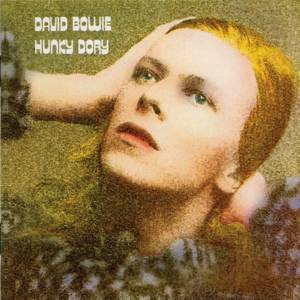
Several compositions recorded during the programme were subsequently included on Hunky Dory: Queen Bitch, Oh! You Pretty Things, Kooks, Song for Bob Dylan and Andy Warhol. The album had not yet been recorded in its finished form when the BBC performance took place.
Queen Bitch reflected Bowie’s interest in the Velvet Underground, while Song for Bob Dylan and Andy Warhol addressed two artists who had influenced his developing ideas about music, identity and public image.
Bowie wrote Kooks for his newborn son, Duncan Zowie Haywood Jones, who had been born on 30 May 1971. The BBC performance took place only four days later and is one of the earliest documented performances of the composition.
Bombers and The Supermen
Bombers was a new Bowie composition that was later recorded during the Hunky Dory sessions but omitted from the original album. Its survival in the BBC programme preserves an early performance of a song that remained unavailable on a contemporary Bowie release.
The Supermen had already appeared on The Man Who Sold the World. The June 1971 performance presented the composition with Bowie’s newer group, including Ronson, Bolder and Woodmansey.
The Guest Performances
Three Bowie compositions were given featured performances by guest vocalists. Mark Carr-Pritchett sang Looking for a Friend, George Underwood performed Song for Bob Dylan, and Dana Gillespie sang Andy Warhol.
Geoffrey Alexander, the performing name used by Geoff MacCormack, sang Chuck Berry’s Almost Grown. The guest appearances made the programme a collaborative presentation rather than a conventional concert in which Bowie performed every lead vocal.
It Ain’t Easy
It Ain’t Easy was written by American songwriter Ron Davies. During the BBC performance, the vocal sections were divided between Bowie, Geoffrey Alexander and George Underwood.
Bowie later recorded the song for possible inclusion on Hunky Dory. It was ultimately released on The Rise and Fall of Ziggy Stardust and the Spiders from Mars in 1972, where it became the only composition on the album not written by Bowie.
The Missing Performance
Oh! You Pretty Things was recorded during the session but removed from the final programme because of the available transmission time. No recording of this particular performance is known to survive.
The missing June 1971 performance must not be confused with other surviving BBC versions of the song. Written production records can establish that it was performed, but later recordings cannot be substituted for the lost In Concert version.
The nine transmitted performances survive and preserve an unusually collaborative stage in Bowie’s development. They document the emerging core band associated with his early-1970s work while also giving several friends and guest performers prominent roles within the broadcast.
Sounds of the 70s – 11 January 1972
David Bowie recorded another session for a John Peel programme on 11 January 1972. The performance was made for BBC Radio 1’s Sounds of the 70s at Studio T1, Kensington House, in Shepherd’s Bush, London.
The session was produced by John F. Muir, with Nick Gomm credited as engineer. It was broadcast on 28 January 1972.
Bowie was accompanied by Mick Ronson on guitar, piano and backing vocals, Trevor Bolder on bass and Mick “Woody” Woodmansey on drums. This was the core group that would become internationally known through Bowie’s Ziggy Stardust concerts.
Bowie’s circumstances had changed since the June 1971 In Concert broadcast. Hunky Dory had been released in Britain on 17 December 1971, although it had not yet achieved the commercial standing it later acquired. Work on the Ziggy Stardust album was already underway.
The Four Confirmed Performances
David Bowie performing Ziggy Stardust for John Peel’s Sounds of the 70s, recorded on 11 January 1972
Four songs are securely documented as having been recorded:
- Ziggy Stardust
- Queen Bitch
- I’m Waiting for the Man
- Lady Stardust
The repertoire connected Bowie’s recent and forthcoming work. Queen Bitch had appeared on Hunky Dory, while Ziggy Stardust and Lady Stardust had not yet been released. The cover of the Velvet Underground’s I’m Waiting for the Man continued Bowie’s longstanding engagement with the group’s music.
The session is sometimes said to have included Hang On to Yourself. Surviving recordings attributed to that date have been found to duplicate the version recorded for a different BBC programme on 18 January 1972. Without reliable BBC documentation or a distinct surviving performance, Hang On to Yourself should not be added to the confirmed 11 January repertoire.
The original BBC master of the session is no longer held in the archive. The four documented performances survive through off-air recordings, but their sound quality is lower than that of sessions preserved from professional BBC sources.
Despite these technical limitations, the recording has major chronological value. It captures Bowie, Ronson, Bolder and Woodmansey performing two central Ziggy Stardust compositions several months before the album was released on 16 June 1972.
John Peel’s programme again provided a national platform at a moment when Bowie was moving into a new phase but had not yet completed his commercial breakthrough. Within weeks, the same musicians would begin the concert schedule through which the Ziggy Stardust presentation reached a rapidly expanding audience.
The January 1972 Performances
The four performances recorded on 11 January 1972 provide a compact view of Bowie’s repertoire immediately before the beginning of the Ziggy Stardust concert period. One song came from the recently released Hunky Dory, two came from the forthcoming Ziggy Stardust album, and one revisited an important musical influence.
Ziggy Stardust
The studio version of Ziggy Stardust had already been recorded, but neither the song nor the album had been released when Bowie performed it for the BBC.
Listeners hearing the broadcast on 28 January encountered the name Ziggy Stardust before the character became widely familiar through the album, concerts, photographs and press coverage that followed later in 1972.
The BBC performance featured the same core musicians heard on the studio recording: Bowie, Mick Ronson, Trevor Bolder and Woody Woodmansey. It documents the song during the period in which the forthcoming album and Bowie’s developing live presentation were beginning to converge.
Queen Bitch
Queen Bitch was the only Bowie composition in the session that had already been commercially released. It appeared on Hunky Dory, issued in Britain on 17 December 1971.
The song’s acknowledged musical debt to the Velvet Underground made it a natural companion to I’m Waiting for the Man. Together, the two performances connected Bowie’s current songwriting with a group whose music had influenced him since the 1960s.
I’m Waiting for the Man
Bowie had recorded I’m Waiting for the Man with the Riot Squad in 1967. He performed it again during the February 1970 Sunday Show, although that particular version was not broadcast and is now lost.
The January 1972 session preserves another stage in Bowie’s interpretation of Lou Reed’s composition. By this time, the song was being performed by Ronson, Bolder and Woodmansey, giving it the same basic group sound as Bowie’s Ziggy-era material.
Lady Stardust
Lady Stardust describes an androgynous performer observed by an audience. The song belongs to the world of Bowie’s forthcoming album but is not presented as a direct account of a single documented individual.
The composition had not been released when the session was broadcast. Like Ziggy Stardust, it gave Peel’s listeners an early opportunity to hear material from The Rise and Fall of Ziggy Stardust and the Spiders from Mars.
The four surviving performances document Bowie, Ronson, Bolder and Woodmansey immediately before the start of the Ziggy Stardust tour. Their historical importance lies in preserving central new material before the album and its characters became widely known.
Sounds of the 70s – 16 May 1972
Bowie recorded his final BBC session for a John Peel programme on 16 May 1972. The performance was made for Sounds of the 70s at the BBC’s Maida Vale Studio 4 in London and was broadcast one week later, on 23 May 1972.
The session was produced by Pete Ritzema, with Nick Gomm credited as engineer. Bowie was again accompanied by Mick Ronson, Trevor Bolder and Woody Woodmansey. Pianist Nicky Graham joined the group for the recording.
Five songs were performed:
- White Light/White Heat
- Moonage Daydream
- Hang On to Yourself
- Suffragette City
- Ziggy Stardust
The session took place during a period of rapid change in Bowie’s public career. The first concert of the Ziggy Stardust tour had been performed at the Toby Jug in Tolworth on 10 February 1972. By May, Bowie and the band had spent several months developing the material in front of live audiences.
The single Starman had been released in Britain on 28 April 1972, although the television appearance that accelerated its success had not yet taken place. The album The Rise and Fall of Ziggy Stardust and the Spiders from Mars remained unreleased when the Peel session was recorded and broadcast.
Four selections came from the forthcoming album. Moonage Daydream, Hang On to Yourself, Suffragette City and Ziggy Stardust were therefore introduced to the national radio audience before listeners could purchase the complete album.
The remaining song, White Light/White Heat, was written by Lou Reed and originally recorded by the Velvet Underground. Its inclusion continued the pattern established in Bowie’s earlier BBC appearances, where Velvet Underground material appeared alongside his own compositions.
Compared with the January session, the May recording presents a group with more live experience. Bowie, Ronson, Bolder and Woodmansey had now performed the Ziggy material repeatedly on stage, and the repertoire was concentrated almost entirely on the developing rock presentation associated with the tour.
All five performances survive and were later included on Bowie at the Beeb. Their preservation makes the session the most complete of Bowie’s 1972 BBC appearances introduced by John Peel.
The transmission on 23 May brought Peel’s principal sequence of early Bowie broadcasts to a fitting close. In 1968 he had introduced an artist accompanied by a specially assembled orchestra; four years later, he presented Bowie with the stable electric group that was about to achieve national and international recognition.
David Bowie, Ziggy Stardust 40 Years On
David Bowie, Ziggy Stardust 40 Years On — produced by Eye Film for The Space and the John Peel Archive
The short documentary David Bowie, Ziggy Stardust 40 Years On was produced by Eye Film for The Space as part of the John Peel Archive project. Created to mark the fortieth anniversary of Ziggy Stardust, it includes recollections from bassist Trevor Bolder about Bowie and the band during this decisive period.
The film provides retrospective context for the group heard during the May 1972 Peel session. It is not a surviving film recording of the BBC performance itself and should therefore be viewed as a later historical documentary rather than footage from Maida Vale Studio 4.
The May 1972 Performances
The repertoire recorded on 16 May 1972 concentrated on the electric group sound Bowie and his musicians had developed during the opening months of the Ziggy Stardust tour. Four songs were connected with the forthcoming album, while one came from the Velvet Underground.
White Light/White Heat
White Light/White Heat was written by Lou Reed and released by the Velvet Underground in 1968. Its inclusion continued Bowie’s documented engagement with the group’s music, which had already included several performances of I’m Waiting for the Man.
Bowie and the band incorporated White Light/White Heat into their live repertoire during the Ziggy Stardust period. The May 1972 BBC recording predates the release of Lou Reed’s Transformer, the album later produced by Bowie and Mick Ronson.
Moonage Daydream
Moonage Daydream had first been released in a different form under the name Arnold Corns in 1971. Bowie subsequently reconstructed the composition with Ronson, Bolder and Woodmansey for the Ziggy Stardust album.
The arrangement performed for the BBC reflected this newer album and concert version rather than simply reproducing the Arnold Corns recording. Ronson’s guitar and the established rhythm section had transformed the song into a central part of Bowie’s 1972 stage repertoire.
Hang On to Yourself
Like Moonage Daydream, Hang On to Yourself had first appeared as an Arnold Corns recording in 1971. Bowie re-recorded it with Ronson, Bolder and Woodmansey for the Ziggy Stardust album.
The surviving May performance must not be confused with recordings sometimes incorrectly assigned to the Peel session of 11 January 1972. The version recorded on 16 May is securely documented and was broadcast on 23 May 1972.
Suffragette City
Suffragette City had already received a limited commercial appearance when the BBC session was recorded. It was issued as the B-side of Starman in Britain on 28 April 1972, although the complete Ziggy Stardust album remained unavailable until June.
The BBC performance presented the composition as a direct band piece built around Bowie, Ronson, Bolder and Woodmansey. The song remained part of Bowie’s concert repertoire after the original Ziggy Stardust period and was later issued as a British single in 1976.
Ziggy Stardust
Bowie returned to Ziggy Stardust, which had also been recorded for Peel’s programme in January. The two surviving BBC versions allow the performance to be compared across the opening months of the Ziggy Stardust tour.
By May, Bowie had begun appearing with the hairstyle, clothing and stage presentation associated with the character. The song was no longer merely an unreleased studio composition but part of an active concert production.
When the programme was broadcast on 23 May 1972, fewer than four weeks remained before the British release of The Rise and Fall of Ziggy Stardust and the Spiders from Mars.
A Band Approaching Its Breakthrough
The May session did not represent the creation of Ziggy Stardust. The character, album recordings and tour were already in development. Its importance lies in documenting the established core band shortly before a much larger audience became aware of Bowie and the Ziggy Stardust presentation.
The five surviving performances preserve Bowie’s final BBC session made specifically for a John Peel programme. They capture the point at which the experimental and changing groups heard in the earlier broadcasts had developed into an experienced touring band.
From Emerging Artist to Ziggy Stardust
Taken together, the five BBC sessions introduced by John Peel document distinct stages in Bowie’s musical development between 1968 and 1972. They do not present a simple or uninterrupted progression, but they preserve changes in his repertoire, collaborators and approach to performance during the years surrounding his breakthrough.
- May 1968: Bowie performed with the specially assembled Tony Visconti Orchestra while several of his compositions remained commercially unavailable.
- February 1970: Tony Visconti, Mick Ronson and John Cambridge supplied a smaller and heavier electric-group sound.
- June 1971: Ronson, Trevor Bolder and Woody Woodmansey formed the emerging core band, while friends and guest vocalists created an unusually collaborative broadcast.
- January 1972: Bowie introduced central Ziggy Stardust material before the album and its characters became widely known.
- May 1972: the same core musicians returned as an experienced touring group shortly before the release of the Ziggy Stardust album.
The broadcasts do not prove that John Peel determined Bowie’s artistic direction. Bowie and his collaborators developed the songs, arrangements, musicians and visual concepts. BBC producers and engineers organised and recorded the sessions, while Peel introduced the performances to his national radio audience.
The surviving recordings nevertheless provide an unusual continuity. Bowie can be heard moving from a specially assembled studio orchestra to a compact electric quartet, then to an expanded circle of collaborators and finally to the stable band associated with Ziggy Stardust.
By the time the final Peel-presented session was transmitted in May 1972, Bowie had not yet reached the height of his fame. However, the songs, musicians, concert experience and public identity required for his breakthrough were already in place.
John Peel and David Bowie After 1972
The session recorded on 16 May 1972 was Bowie’s final documented BBC recording made specifically for a John Peel programme. There is no evidence of another sustained sequence of Peel-presented Bowie sessions after the Ziggy Stardust breakthrough.
This change was understandable. Bowie’s commercial position developed rapidly during the second half of 1972, while Peel’s programmes continued to concentrate on newer and less-established performers. Bowie no longer depended upon occasional BBC radio appearances to introduce his work to a national audience.
Bowie continued to appear on BBC radio and television through other programmes and presenters. These later appearances belong to his wider BBC history and should not automatically be classified as John Peel sessions simply because Peel remained one of Radio 1’s principal broadcasters.
Peel nevertheless discussed Bowie when reflecting on artists whose work had appeared on his programmes. In the 1987 BBC Radio 1 series Peeling Back the Years, he described his appreciation of Bowie’s ability to remain ahead of expectations.
John Peel on David Bowie
“I just liked the idea that he was always a step or two ahead of the game.”
— John Peel, Peeling Back the Years, BBC Radio 1, 1987
The comment expresses Peel’s admiration for Bowie’s changing artistic direction without claiming that Peel was responsible for those developments. It is also consistent with the understated way in which Peel later discussed his own place in Bowie’s early BBC history.
Bernie Andrews and the Early BBC Bookings
Peel supplied a more precise account of Bowie’s early appearances in the 1993 radio documentary Bowie at the Beeb. He explained that BBC producer Bernie Andrews had been the principal advocate behind Bowie’s early Top Gear bookings.
Peel acknowledged that he had not initially shared Andrews’ enthusiasm for every aspect of Bowie’s Deram-period material. This first-hand clarification makes it inaccurate to claim that Peel personally discovered Bowie, arranged all his BBC appearances or immediately supported every stage of his music.
Peel’s documented contribution was different but still important. He introduced Bowie’s performances, presented them repeatedly to his Radio 1 audience and gave them a place within programmes associated with new and developing music.
Bowie’s Televised Message to John Peel
David Bowie’s filmed message to John Peel for This Is Your Life, broadcast on 24 January 1996
A later public acknowledgement came when Peel became the subject of the television programme This Is Your Life. The edition was recorded at Teddington Studios on 13 December 1995 and broadcast on BBC One on 24 January 1996.
Bowie did not appear in the studio but contributed a filmed message. He humorously recalled his unsuccessful early BBC auditions and credited Peel with helping him receive another opportunity. The message was affectionate, but it should not be treated as a literal account of the 1965 audition chronology.
Peel was still working in the United States during 1965 and did not join BBC Radio 1 until 1967. He therefore could not personally have arranged Bowie’s second BBC audition at that earlier date.
Bowie’s televised message should be understood as a warm public tribute rather than a detailed historical statement. It demonstrates that Bowie remembered Peel as part of his early BBC story, while Peel’s own recollections confirm the important role played by producers such as Bernie Andrews.
Bowie’s Support for BBC Radio 6 Music
Bowie referred publicly to Peel’s broadcasting legacy again in 2010, when he supported the campaign opposing the proposed closure of BBC Radio 6 Music. The digital station had become an important outlet for new, alternative and archival music.
In his statement, Bowie argued that Radio 6 Music continued the spirit of broadcasters such as John Peel and warned that closing the station would be a serious loss for new artists. The comment demonstrated that Bowie continued to associate Peel’s name with opportunities for developing music decades after their principal BBC work together.
The BBC Trust ultimately rejected the proposed closure. Bowie’s intervention did not concern his own early sessions directly, but it provides a later example of him invoking Peel’s broadcasting values in support of a national platform for unfamiliar and emerging artists.
Their later relationship is therefore best described as one of remembered professional support and mutual respect, not as a continuous working partnership. The principal body of their documented broadcasting connection remains the sequence of BBC performances recorded between 1968 and 1972.
Official Releases of Bowie’s BBC Sessions
Many of Bowie’s surviving BBC performances were officially collected on Bowie at the Beeb: The Best of the BBC Radio Sessions 68–72, released on 25 September 2000. The compilation brought together recordings made for several BBC presenters and programmes, including important broadcasts introduced by John Peel.
The original release contained two principal archive discs arranged broadly in chronological order. A limited three-CD edition added a concert recorded at the BBC Radio Theatre in London on 27 June 2000. That later concert was not connected with John Peel and should be distinguished from the archival radio sessions.
The Peel-Presented Recordings on Bowie at the Beeb
The collection opened with four performances from the Top Gear session recorded on 13 May 1968: In the Heat of the Morning, London Bye Ta-Ta, Karma Man and Silly Boy Blue. The fifth recorded song, When I’m Five, was not included.
Six selections represented the February 1970 Sunday Show: Amsterdam, God Knows I’m Good, The Width of a Circle, Unwashed and Somewhat Slightly Dazed, Cygnet Committee and Memory of a Free Festival.
Five performances from the 3 June 1971 In Concert programme were included: Bombers, Looking for a Friend, Almost Grown, Kooks and It Ain’t Easy. These selections preserved part of the programme’s collaborative character, including featured vocals by Mark Carr-Pritchett and Geoffrey Alexander.
The complete five-song Peel session recorded on 16 May 1972 was also included. The January 1972 Peel session was omitted because its surviving off-air recordings did not offer the same sound quality as the professionally preserved sources selected for the compilation.
The surviving spoken links by John Peel retained part of the original broadcasting context. They demonstrate that these performances were created for BBC programmes rather than being conventional studio outtakes or commercial concert recordings.
A four-LP edition of Bowie at the Beeb followed on 26 February 2016. The collection remained a substantial but incomplete history: missing master tapes, unbroadcast performances, edited songs and differences in source quality prevented it from including everything Bowie had recorded for the BBC.
The Width of a Circle
A more complete official presentation of Bowie’s 1970 BBC work appeared on The Width of a Circle, released on 28 May 2021. The two-CD set was issued as a companion to The Man Who Sold the World and brought together radio recordings, television performances, singles and later mixes associated with Bowie’s work during 1970.
The first disc contained the fourteen surviving performances transmitted as part of the Sunday Show introduced by John Peel. Six had previously appeared on Bowie at the Beeb; the 2021 release added the surviving remainder and presented the programme in its most complete officially available form.
The unbroadcast performance of I’m Waiting for the Man could not be included because it was absent from the surviving off-air source. The complete ending of Memory of a Free Festival also remained unavailable because the surviving recording contained the shortened fade used for the original transmission.
The Separate March 1970 BBC Session
The second disc of The Width of a Circle included a separate BBC Sounds of the 70s session recorded on 25 March 1970. This programme was presented by Andy Ferris, not John Peel.
Bowie performed with Tony Visconti, Mick Ronson and John Cambridge, recording I’m Waiting for the Man, The Width of a Circle, Wild Eyed Boy from Freecloud and The Supermen.
The surviving March performance of I’m Waiting for the Man must not be presented as the missing performance from the February Sunday Show. They were separate recordings made for different BBC programmes.
For the history of Bowie and John Peel, Bowie at the Beeb made a substantial selection of the broadcasts widely available, while The Width of a Circle later provided the most complete official reconstruction of the surviving 1970 Sunday Show.
What Survives and What Is Lost
The Peel-presented broadcasts do not form a complete professional archive of everything Bowie performed for the BBC. Some sessions survive from high-quality sources, while others are preserved only through recordings made from radio transmissions. In several cases, written BBC documentation confirms that a song was recorded even though no surviving audio is known.
| Recording date | Programme | Recorded | What survives | What is lost or unavailable |
|---|---|---|---|---|
| 13 May 1968 | Top Gear | Five songs | All five performances survive; four were included on Bowie at the Beeb | No confirmed performance loss |
| 5 February 1970 | The Sunday Show | Fifteen songs | Fourteen transmitted performances survive from a non-master source | I’m Waiting for the Man; the complete ending of Memory of a Free Festival; the original BBC master |
| 3 June 1971 | In Concert | Ten songs | The nine transmitted performances survive | Oh! You Pretty Things; the original BBC master |
| 11 January 1972 | Sounds of the 70s | Four confirmed songs | All four confirmed performances survive as off-air recordings | The original BBC master; no additional missing performance is securely documented |
| 16 May 1972 | Sounds of the 70s | Five songs | All five performances survive and have been officially released | No confirmed performance loss |
A lost master tape does not necessarily mean that an entire programme is lost. A broadcast may survive through a private or off-air recording even when the original BBC studio tape has disappeared. Conversely, production records may confirm that a song was performed even when no audio survives.
The surviving archive therefore contains three distinct categories: professionally preserved recordings, off-air recordings made from radio transmissions, and documented performances for which the audio is lost. Keeping these categories separate prevents later recordings or incorrectly labelled unofficial tapes from being presented as the missing originals.
John Peel’s Wider Broadcasting Legacy
John Peel’s work with David Bowie formed only one part of a broadcasting career that continued from the 1960s until Peel’s death in 2004. He remained one of the original and longest-serving presenters associated with BBC Radio 1, adapting his programmes repeatedly as popular music changed.
During the late 1960s, Peel became closely connected with underground, psychedelic, folk and progressive music. He later gave extensive airtime to reggae, punk, post-punk, independent rock, electronic music, dance music, hip-hop, experimental music and numerous artists whose work did not fit established radio categories.
His importance did not rest on predicting which performers would become commercially successful. Peel frequently played records that remained obscure and sometimes openly changed his opinion about artists. His programmes were shaped by continued listening rather than loyalty to a single period, genre or established group of stars.
The BBC Sessions
Specially recorded sessions became the most enduring feature of Peel’s Radio 1 work. Between 1967 and 2004, more than two thousand artists recorded approximately four thousand sessions associated with his programmes.
For developing performers, a BBC session could provide national exposure before a major record contract or chart appearance. Established artists also used the format to present alternative arrangements, new songs and performances that differed from their commercial recordings.
The sessions were collaborative BBC productions rather than recordings made by Peel alone. Producers, engineers, studio managers and technical staff were responsible for booking, recording and preparing the music, while Peel introduced it to listeners and established the programming environment in which unusual material could be broadcast.
The Festive Fifty
Another long-running feature was the Festive Fifty, an annual selection based principally on votes submitted by Peel’s listeners. The resulting programmes reflected the tastes of his audience and created a recurring record of music associated with the show.
The Festive Fifty was not a conventional sales chart. Its results could include independent releases, older favourites and recordings that had received little mainstream exposure. It strengthened the sense that Peel’s audience participated directly in the musical culture surrounding his programme.
Supporting Independent Releases
Peel’s interest in music outside the major record companies also extended beyond broadcasting. He was involved with Dandelion Records, founded in 1969, which released recordings by artists including Bridget St John, Medicine Head and Kevin Coyne’s group Siren.
During the 1980s, Peel was also involved in the establishment of Strange Fruit Records. The label officially released selected BBC session recordings, making performances that had previously existed only as broadcasts available to record buyers.
Beyond Radio 1
Although music remained central to his career, Peel also worked across other forms of broadcasting. He presented programmes for the BBC World Service and the British Forces Broadcasting Service and appeared periodically on television, including Top of the Pops and coverage of music festivals.
From 1998, he reached a different audience through the BBC Radio 4 programme Home Truths. The programme concentrated on stories from everyday family life rather than music or celebrity interviews and demonstrated that his conversational broadcasting style could function outside Radio 1.
Recognition and Death
Peel was appointed an Officer of the Order of the British Empire in 1998 for services to British music. He also received broadcasting awards and honorary academic recognition during the later years of his career.
John Peel died after suffering a heart attack in Cusco, Peru, on 25 October 2004. He was sixty-five. His death brought an immediate series of tributes from listeners, broadcasters and musicians whose work had appeared on his programmes.
A double-album tribute released in 2005 included Bowie’s Life on Mars?. The selection connected Bowie with a much wider range of performers associated with Peel’s listening and broadcasting history.
Peel’s legacy rests on the breadth and continuity of his work rather than on a claim that he personally discovered every artist he played. In Bowie’s case, the surviving evidence shows the same division of responsibilities visible throughout Peel’s career: BBC producers arranged and recorded the sessions, Bowie and his collaborators created the music, and Peel supplied the recognisable broadcasting voice through which the performances reached listeners.
A Legacy Reassessed
A complete modern account of John Peel must acknowledge that his broadcasting achievements are now considered alongside troubling documented information about his personal relationships with teenage girls. These matters do not alter the dates or contents of Bowie’s BBC sessions, but they have affected the way Peel’s wider public legacy is discussed.
In 1965, while living in Texas, Peel married Shirley Anne Milburn. Peel was twenty-five and Milburn was fifteen. The marriage was legally permitted in Texas under the applicable laws and circumstances at the time.
Peel later stated that he had not initially been told her correct age. That explanation forms part of his own account, but it does not change the documented ages of the two people when the marriage took place.
Peel also made comments in published interviews about sexual encounters with teenage girls, including girls below the age of consent. Because these statements came from Peel himself, they have become an unavoidable part of later assessments of his life. They should be reported carefully and without turning unverified allegations or later speculation into established fact.
The resulting reassessment has led some listeners, journalists and cultural commentators to question tributes that concentrated almost exclusively on Peel’s support for new music. Others have argued that his broadcasting history should remain documented while the troubling aspects of his personal conduct are acknowledged rather than concealed.
A performance area at Glastonbury Festival carried the name John Peel Stage for many years. In 2023, it was renamed Woodsies. Festival organiser Emily Eavis stated that the new name reflected the physical area of the festival and that the change was not made in response to the renewed public discussion of Peel’s personal history.
Historical accuracy requires both parts of this account to be recognised. Peel’s programmes provided valuable opportunities for musicians and preserved thousands of important performances. His own documented statements and personal history must also be included when evaluating his wider legacy.
No connection has been established between these personal matters and the David Bowie BBC broadcasts discussed on this page. They are included because this article presents Peel as a historical figure and should not offer an incomplete or exclusively celebratory biography.
John Peel’s Place in David Bowie’s History
John Peel occupies a specific and important place in David Bowie’s broadcasting history. He was not Bowie’s manager, record producer or musical director, and he did not personally arrange every BBC booking. His principal documented role was that of the presenter who introduced several important Bowie performances to a national radio audience.
BBC producer Bernie Andrews was particularly important in securing Bowie’s early Top Gear appearances. Peel later acknowledged that Andrews had supported Bowie’s work before Peel himself became enthusiastic about every aspect of the Deram-period material. The relationship should therefore not be reduced to an inaccurate story in which Peel single-handedly discovered Bowie.
Peel’s programmes nevertheless provided valuable continuity during a period when Bowie’s career, repertoire and group line-ups were changing repeatedly. The broadcasts preserved unreleased songs, alternative arrangements, guest vocals, cover versions and compositions heard on national radio before their commercial release.
They also document early stages of several important musical relationships. Mick Ronson’s first firmly documented broadcast as Bowie’s guitarist survives from the 1970 Sunday Show, while Trevor Bolder and Woody Woodmansey appeared with Bowie during the 1971 and 1972 programmes.
The surviving music was the result of a much larger network. Bowie wrote or selected the material, the participating musicians created the performances, and BBC producers, engineers and technical staff organised and recorded the programmes. Peel supplied the recognisable broadcasting voice through which the performances reached listeners.
By May 1972, the function of this radio exposure had changed. Bowie had a stable band, an active concert schedule, a developing visual identity and a single beginning to attract a wider audience. The final Peel-presented session captured him shortly before the Ziggy Stardust album completed his commercial breakthrough.
John Peel’s importance to Bowie therefore lies neither in mythology nor in a claim of sole discovery. It lies in the documented broadcasts themselves. Between 1968 and 1972, programmes presented by Peel repeatedly captured Bowie while his music, collaborators and public identity were still developing.
Official Archives & Further Information
John Peel died in 2004 and does not have a current personal official website. Reliable information about his broadcasting career and his work with David Bowie is preserved through BBC documentation, Bowie’s official archive, authorised releases and material retained from Peel’s personal collection.
David Bowie Official Website
David Bowie’s official website contains contemporary and archival information about the BBC sessions, John Peel and the official releases on which the performances later appeared.
- Bowie at the Beeb – session dates, programmes, credits and track information
- The Width of a Circle – official 2021 release announcement and track listing
- John Peel Day and Bowie’s BBC history
- Remembering John Peel – Tony Visconti’s tribute
The John Peel Archive
Material from Peel’s extensive record collection was made publicly accessible through a digital archive commissioned by The Space and developed with the John Peel Centre for Creative Arts. The project includes record-box selections, collection information and material relating to Peel’s broadcasting life.
Explore John Peel’s Record Boxes at The Space
Principal Official Bowie Releases
- Bowie at the Beeb: The Best of the BBC Radio Sessions 68–72 — first released in 2000
- Bowie at the Beeb four-LP edition — released in 2016 with additional archive material
- The Width of a Circle — released in 2021 with fourteen surviving performances from the February 1970 Sunday Show
- A Divine Symmetry — released in 2022 with additional material from Bowie’s 1971 period, including BBC performances
Published First-Hand Material
John Peel’s posthumously completed autobiography, Margrave of the Marshes, was published in 2005. Peel began writing the book, which was completed after his death by his wife, Sheila Ravenscroft. It contains personal recollections and information drawn from his correspondence, diaries and archive.
The book includes material connected with David Bowie, including reference to Bowie’s 1969 letter asking about another opportunity to perform for Peel’s programme. As with all memoir-based sources, personal recollections should be compared with surviving BBC production records and contemporary documentation.
These sources make it possible to distinguish between Peel’s role as presenter, the booking work undertaken by BBC producers and the musical decisions made by Bowie and his collaborators.
Article Origin
This article was independently researched and written for DavidBowieWorld.com. It brings together documented information about John Peel’s life and broadcasting career with the surviving production history of David Bowie’s BBC radio performances between 1968 and 1972.
The chronology was checked against official David Bowie release information, surviving BBC session documentation, authorised archive releases and published first-hand recollections. Recording dates, broadcast dates, officially released performances, off-air recordings and documented lost material have been kept separate.
Particular care has been taken to distinguish John Peel’s work as a presenter from the responsibilities of BBC producers, engineers and technical staff. The article does not claim that Peel personally produced the sessions, arranged every booking or determined Bowie’s musical development.
This page has not been presented as an authorised statement by John Peel’s family, estate or the BBC. It may be updated if further verified documentation, recordings or reliable first-hand information becomes available.
© DavidBowieWorld.com — Original research and editorial compilation.
