
The Making Of Lodger (1979)
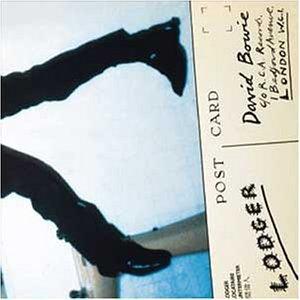
Image: David Bowie World collection / editorial use
Released on 25 May 1979, Lodger completed the series of albums now widely known as David Bowie’s Berlin Trilogy. Unlike Low and “Heroes“, however, Lodger was not recorded in Berlin. Its sessions took place in Switzerland and New York City.
The album kept Bowie’s collaboration with Tony Visconti and Brian Eno alive, but moved away from the divided-city atmosphere of “Heroes“. Instead, Lodger became a restless, international album about travel, displacement, cultural fragments and planned accidents.
- Album: Lodger
- Released: 25 May 1979
- Album sessions began: September 1978
- Recorded: September 1978 and March 1979
- Main studios: Mountain Studios, Montreux, Switzerland; Record Plant, New York City
- Producers: David Bowie and Tony Visconti
- Key collaborator: Brian Eno
- Label: RCA Records
- Previous studio album: “Heroes”
- Next studio album: Scary Monsters… And Super Creeps
- Berlin Trilogy position: Third and final part
- Main singles: Boys Keep Swinging, DJ, Yassassin, Look Back In Anger
- Cover photographer: Brian Duffy
- Design collaborator: Derek Boshier
- Cover concept: Accident victim / falling body
Introduction
Lodger is one of David Bowie’s most unusual albums. It is often described as the final chapter of the Berlin Trilogy, yet it is very different from both Low and “Heroes“.
There are no extended ambient instrumentals, no single dominant city atmosphere and no dramatic centrepiece like “Heroes“. Instead, the album is built from short, sharp songs full of movement, fractured viewpoints and unexpected musical ideas.
Its sound is deliberately unsettled. Bowie, Tony Visconti and Brian Eno used studio experiments, unusual instructions, instrument-swapping, backwards song construction and improvised guitar parts to create an album that feels restless from beginning to end.
The result was not always understood when it first appeared, but Lodger has grown in stature as one of Bowie’s most inventive late-1970s records.
Making Of The Album
The making of Lodger began after the European leg of Bowie’s Isolar II 1978 World Tour.
In September 1978, during a break in the tour, Bowie gathered members of his band at Mountain Studios in Montreux, Switzerland. Bowie lived nearby in Vevey, while the musicians stayed close to the studio.
The album continued Bowie’s working relationship with Tony Visconti and Brian Eno. The rhythm section of Carlos Alomar, George Murray and Dennis Davis returned, joined by Sean Mayes, Roger Powell, Simon House and Adrian Belew.
Rather than repeating the mood of Low or “Heroes“, Bowie pushed the music outward. The album’s songs suggest travel, geography, foreign languages, political anxiety and cultural displacement.
Working titles included Planned Accidents and Despite Straight Lines. Both titles reveal the spirit of the sessions: the music was carefully made, but it was also designed to invite mistakes, surprises and unexpected results.
Planned Accidents
The phrase Planned Accidents perfectly describes the working method behind much of Lodger.
Bowie, Visconti and Eno did not simply write conventional songs and record them in ordinary arrangements. They used restrictions, reversals and chance methods to force the musicians into new responses.
This approach was connected to Eno’s Oblique Strategies cards, which had already influenced earlier Bowie sessions. On Lodger, however, these methods were applied more directly to band tracks rather than to instrumental soundscapes.
The idea was not randomness for its own sake. Bowie was looking for fresh musical behaviour: performances that sounded alive, imperfect, surprising and slightly unstable.
Recording Sessions
The first major sessions for Lodger took place at Mountain Studios in Montreux, Switzerland, in September 1978.
The setting was very different from Hansa Studio in Berlin. Mountain Studios was located near Lake Geneva, but the actual working space used for the sessions was small, dry-sounding and physically uncomfortable for the expanded band.
The backing tracks were created quickly. Bowie, Visconti and Eno worked with the musicians to build pieces from rhythm ideas, chord patterns and experimental instructions.
After the September 1978 sessions, Bowie returned to touring. The album was completed and mixed in March 1979 at the Record Plant in New York City.
Mountain Studios, Montreux
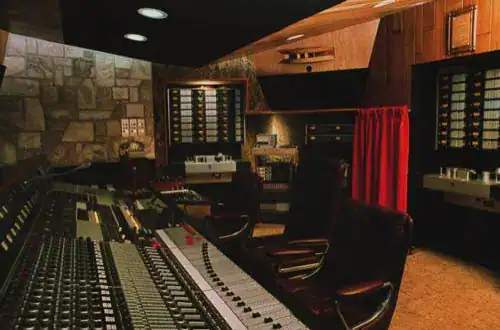
Image: Mountain Studios, Montreux. Photo by W. Bulach, via Wikimedia Commons. Licensed under CC BY-SA 4.0.
Mountain Studios gave Lodger a very different atmosphere from the rooms used for Low and “Heroes“.
The studio was technically professional, but the specific room used for the sessions was cramped and not ideal for a large live band. This affected both the sound and the mood of the recordings.
Tony Visconti later felt that the album had not been presented to the world with the sonic power it deserved. That dissatisfaction eventually became one of the reasons he remixed the album decades later.
Even so, the limitations of the studio helped shape the character of Lodger. The album sounds tight, dry, restless and at times deliberately awkward, qualities that have become part of its unique appeal.
Record Plant, New York City
Work on Lodger resumed in March 1979 at Record Plant in New York City.
These sessions were mainly for vocals, overdubs and mixing, although some additional recording also took place. Bowie, Visconti and Adrian Belew continued shaping the tracks after the main band work had already been completed in Switzerland.
The New York mixing sessions were not ideal. Visconti later felt that the available studio conditions and limited time prevented the original album from sounding as strong as it could have.
That judgment became important later, because Lodger was eventually given a major Tony Visconti remix for the 2017 box set A New Career In A New Town (1977–1982).
Key Musicians
The musicians on Lodger combined Bowie’s trusted late-1970s rhythm section with new voices from the Isolar II touring band.
- David Bowie: vocals, guitar, piano, synthesizer and Chamberlin
- Carlos Alomar: guitar and drums
- George Murray: bass guitar
- Dennis Davis: drums, percussion and bass guitar
- Sean Mayes: piano
- Simon House: violin and mandolin
- Adrian Belew: guitar and mandolin
- Tony Visconti: production, backing vocals, guitar, bass guitar and mandolin
- Brian Eno: synthesizer, prepared piano, treatments, backing vocals and studio concepts
- Roger Powell: synthesizer
- Stan Harrison: saxophone
Carlos Alomar, George Murray And Dennis Davis
Carlos Alomar, George Murray and Dennis Davis were central to the sound of Bowie’s late-1970s work.
On Lodger, their role was different from Low and “Heroes“. Instead of creating long atmospheric structures, they were often asked to respond quickly to unusual instructions and experimental frameworks.
Their tightness gave the album stability, even when the material became fragmented or unpredictable.
The most famous experiment involving the rhythm section came on Boys Keep Swinging, where the musicians swapped instruments to create a deliberately rougher sound.
Brian Eno And The Oblique Strategies
Brian Eno’s role on Lodger was highly influential.
He encouraged methods that disrupted normal studio behaviour, including chance instructions, unexpected chord systems and unusual performance rules.
This sometimes created tension with the musicians, who were skilled players being asked to abandon familiar methods. Yet the process also helped produce some of the album’s most distinctive results.
Unlike Low and “Heroes“, Lodger contains no full side of instrumentals. Eno’s influence was instead folded into the songs themselves.
Adrian Belew And Accidental Guitar
Adrian Belew was one of the most important new contributors to Lodger.
Bowie and Visconti asked him to record guitar parts without fully hearing the songs in advance. The intention was to capture his instinctive, accidental responses.
Belew’s guitar parts were then edited and shaped into the finished tracks. This gave songs such as DJ, Red Sails and Boys Keep Swinging a strange, nervous energy.
His work on Lodger is very different from Robert Fripp’s contribution to “Heroes“, but it is just as important to the album’s identity.
Lyrics And Vocals
As with much of Bowie’s 1970s work, many of the lyrics were completed after the backing tracks had already been created.
This gave Lodger a sketchbook quality. Bowie used travel, cultural impressions, political unease and personal observation as lyrical material.
The songs often feel like reports from different locations or states of mind. Rather than presenting one clear narrative, the album moves from place to place, mood to mood and voice to voice.
That restless lyrical approach is one of the reasons Lodger feels so different from the more dramatic, focused atmosphere of “Heroes“.
Important Songs
Lodger contains ten songs, each contributing to the album’s restless sense of movement.
There are no instrumentals in the same sense as Low or “Heroes“. Instead, Bowie placed the experimentation inside the songs themselves.
Important Song: Fantastic Voyage
Fantastic Voyage opens the album with a calm but uneasy tone.
The song shares the same basic chord structure as Boys Keep Swinging, but the difference in arrangement, tempo and mood makes the two recordings feel completely separate.
Lyrically, Fantastic Voyage carries a sense of political anxiety and human fragility. It is not a dramatic rock opener, but a reflective beginning to an album about movement and instability.
Its restrained arrangement gives Bowie’s vocal performance space and dignity, making it one of the album’s most emotionally direct tracks.
Important Song: African Night Flight
African Night Flight is one of the album’s most experimental songs.
Its rapid vocal delivery, rhythmic urgency and African-inspired imagery create a feeling of movement under pressure.
The track reflects Bowie’s interest in travel and cultural fragments, although it should not be understood as an attempt to represent African music directly.
Instead, it is Bowie filtering impressions, rhythms and ideas through his own restless late-1970s writing style.
Important Song: Move On
Move On is built around one of the album’s most famous studio experiments.
The song was inspired by playing All The Young Dudes backwards and then developing new material from that reversed structure.
This method perfectly suits the album’s theme of movement. Bowie was not simply revisiting his past; he was turning it around and transforming it into something new.
The result is one of the album’s clearest travel songs, with a strong sense of forward motion and emotional restlessness.
Important Song: Yassassin
Yassassin is one of the clearest examples of Lodger’s international sound.
The title is derived from Turkish, and the song combines reggae elements with a Middle Eastern-flavoured violin part from Simon House.
The track reflects Bowie’s fascination with cultural mixture, migration and displacement.
It is also one of the album’s most distinctive singles, released in selected European territories.
Important Song: Red Sails
Red Sails is one of the album’s strongest links to German experimental rock.
The song’s driving rhythm and sense of movement recall the influence of bands such as Neu!, while the arrangement remains unmistakably Bowie.
The lyric suggests travel, escape and uncertain horizons, fitting perfectly with the album’s rootless atmosphere.
Adrian Belew’s guitar work adds tension and colour, helping the track become one of the album’s most energetic recordings.
Important Song: DJ
DJ is one of Bowie’s sharpest songs about performance, media identity and public image.
The song turns the disc jockey into a figure of control and emptiness, someone surrounded by sound but disconnected from real emotional life.
Musically, the track is nervous and angular, with Adrian Belew’s guitar giving it a jagged edge.
Released as a single in 1979, DJ became one of the album’s most recognisable tracks and was supported by a memorable promotional film directed by David Mallet.
Important Song: Look Back In Anger
Look Back In Anger is one of the album’s most forceful rock tracks.
Its title echoes John Osborne’s famous play, although the song itself moves in Bowie’s own direction, full of tension, urgency and spiritual unease.
The track was later issued as a single in North America and received a striking promotional video directed by David Mallet.
Its aggressive energy helped show that Lodger was not simply an art-pop experiment; it also contained some of Bowie’s strongest rock performances of the period.
Important Song: Boys Keep Swinging
Boys Keep Swinging became the album’s most successful single.
The track used the same chord structure as Fantastic Voyage, but with a completely different mood and tempo.
The recording is famous for its instrument-swapping experiment. Carlos Alomar played drums, Bowie played guitar, and the rhythm section was deliberately disrupted to create a looser, more unstable sound.
The song reached the UK Top 10 and was promoted with one of Bowie’s most memorable videos, in which he appeared in drag as a series of female characters.
Important Song: Repetition
Repetition is one of the darkest songs on Lodger.
Its subject matter concerns domestic violence, presented in a cold, observational style rather than melodrama.
The flatness of Bowie’s vocal performance makes the song especially disturbing. It refuses glamour and instead presents cruelty as something ordinary and repeated.
This makes Repetition one of the most serious and unsettling recordings on the album.
Important Song: Red Money
Red Money closes the album by returning to earlier Bowie and Iggy Pop material.
The track is based on the backing track of Iggy Pop’s Sister Midnight, which Bowie had co-written and produced during the sessions that led to The Idiot.
By transforming that earlier piece into a new song, Bowie connected Lodger back to the beginning of his late-1970s European period.
As the closing track, Red Money feels like a final loop in the Berlin Trilogy: a return, a transformation and an ending at the same time.
Track Listing
The final album sequence presents ten compact songs, each shaped by travel, displacement, studio experimentation and Bowie’s restless late-1970s creativity.

Image: David Bowie World collection / editorial use
- Fantastic Voyage
- African Night Flight
- Move On
- Yassassin
- Red Sails
- DJ
- Look Back In Anger
- Boys Keep Swinging
- Repetition
- Red Money
The track listing shows how far Bowie had moved from the side-one/side-two division of Low and “Heroes“. On Lodger, the experiments are spread across the whole album.
Singles From The Album
Boys Keep Swinging

Boys Keep Swinging was released as the first single from Lodger in April 1979, before the album appeared.
Backed with Fantastic Voyage, it became the album’s biggest hit and reached the UK Top 10.
The song’s loose, swaggering sound came partly from the unusual instrument-swapping experiment used during the recording.
Its promotional video, directed by David Mallet, became one of Bowie’s most memorable late-1970s visual statements.
DJ
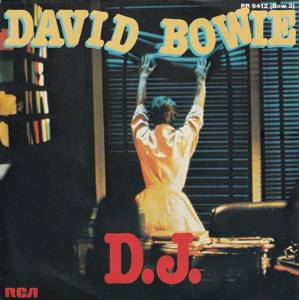
DJ was released as a single in June 1979.
Backed with Repetition, the single represented the album’s more nervous, media-conscious side.
The song’s jagged guitar textures and detached vocal performance made it one of the most distinctive tracks on Lodger.
The promotional video included footage of Bowie on Earls Court Road, surrounded by fans, turning the song’s media themes into a public performance.
Yassassin
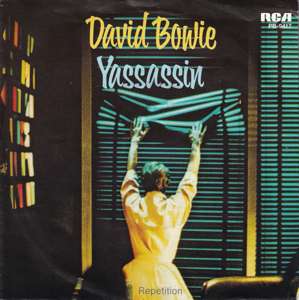
Yassassin was issued as a single in selected European territories.
The song’s mixture of reggae rhythm and Turkish-influenced atmosphere made it one of the clearest examples of Lodger’s international character.
Although it was not a major hit, it remains an important single because it shows the album moving beyond conventional rock and pop expectations.
Look Back In Anger
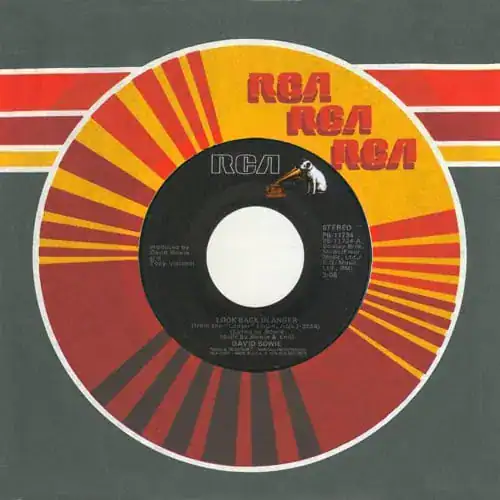
Look Back In Anger was released as a single in North America.
Backed with Repetition, it represented the harder rock side of the album.
The song was also promoted with a David Mallet video in which Bowie appeared as an artist confronted by a strange and decaying portrait.
Although it did not become a major commercial success, it remains one of the album’s most powerful recordings.
No Later Single Releases Needed
Lodger does not require a separate later single releases section. The historically important single activity belongs to the original 1979 album campaign.
Television And Promotion
Bowie promoted Lodger through press, radio, television and promotional films.
Director David Mallet created videos for Boys Keep Swinging, DJ and Look Back In Anger. These clips helped give the album a strong visual identity despite the absence of a major world tour dedicated to Lodger.
The Boys Keep Swinging video was especially important. Bowie appeared as several female characters, continuing his long-standing interest in performance, identity and gender presentation.
The promotional campaign helped the album reach a strong chart position in the United Kingdom, even though reviews at the time were more divided than they had been for some earlier Bowie albums.
Boys Keep Swinging

Boys Keep Swinging (Official Video)
-
Boys Keep Swinging (Official Video)
The official music video for David Bowie - Boys Keep Swinging from Bowie's 13th studio album 'Lodger' released in 1979, which featured the singles 'Boys Keep Swinging, DJ, Yassassin and Look Back In Anger'.
Directed by David Mallet, the promotional video for Boys Keep Swinging became one of David Bowie’s most celebrated visual statements of the late 1970s.
Bowie appeared in a series of female personas, each revealed as part of a theatrical performance. The video’s exploration of identity, appearance and gender reflected themes that had long been present throughout his career.
Although controversial in some countries upon its release, the film is now regarded as one of the defining music videos of the Lodger era.
DJ

D.J. (Official Video)
-
D.J. (Official Video)
The official music video for David Bowie - D.J. from Bowie's 13th studio album 'Lodger' released in 1979, which featured the singles 'Boys Keep Swinging', 'DJ', 'Yassassin' and 'Look Back In Anger'.
David Mallet also directed the promotional video for DJ, translating the song’s themes of celebrity and public attention into a memorable visual performance.
Filmed on London’s Earls Court Road, Bowie walks through the streets while gradually attracting an ever-growing crowd of curious onlookers and fans, blurring the line between performer and public spectacle.
The result perfectly complements the song’s ironic look at fame and the uneasy relationship between artists, audiences and the media.
Look Back In Anger

Look Back In Anger (Official Video)
-
Look Back In Anger (Official Video)
The official music video for David Bowie - Look Back In Anger from Bowie's 13th studio album 'Lodger' released in 1979, which featured the singles 'Boys Keep Swinging', 'DJ', 'Yassassin' and 'Look Back In Anger'.
The promotional film for Look Back In Anger, again directed by David Mallet, presented one of the darkest visual interpretations from the Lodger period.
Bowie plays an artist confronted by a mysterious, ageing figure emerging from one of his own paintings. The surreal storyline echoes the song’s themes of mortality, memory and artistic reflection.
Together with the videos for Boys Keep Swinging and DJ, it completed one of the strongest promotional campaigns of Bowie’s late-1970s career.
Making Of The Album Covers / Cover Story
The cover of Lodger is one of the strangest and most unsettling images in David Bowie’s catalogue.
The sleeve was created through a collaboration between Bowie, photographer Brian Duffy and artist Derek Boshier.
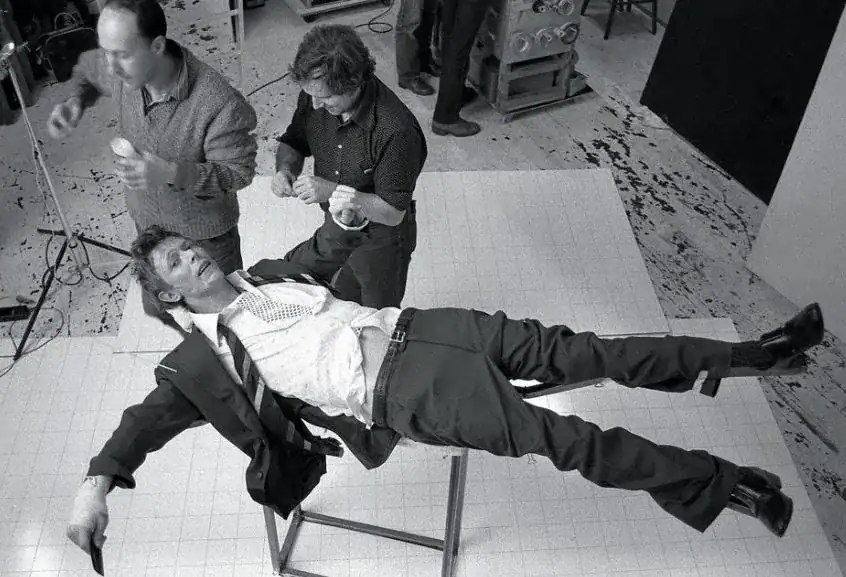
Image: David Bowie World collection / editorial use
Instead of presenting Bowie as glamorous or heroic, the cover shows him as a battered figure apparently caught in mid-fall.
The effect was created with careful staging. Bowie lay on a specially constructed support while Duffy photographed him from above. Make-up, facial distortion and the visible bandaged hand strengthened the accident-victim concept.
Derek Boshier’s design added the postcard and travel associations that connect directly with the album’s title and themes of movement, instability and displacement.
The cover perfectly matches the music: strange, restless, uncomfortable and deliberately different from ordinary rock-star imagery.
Want to discover the full story behind the unsettling Lodger album cover? Explore Brian Duffy’s photography, Derek Boshier’s design, the accident-victim concept, the Polaroid SX-70 image and the full gatefold artwork.
Back Cover / Gatefold Artwork

Image: David Bowie World collection / editorial use
The original gatefold sleeve expanded the accident-victim concept and made the image feel even more unsettling.
The inner artwork included a life-and-death collage, with imagery connected to bodies, time, mortality and visual disorientation.
The packaging helped make Lodger one of Bowie’s most conceptually ambitious late-1970s album designs.
Release And Reception
Lodger was released by RCA Records on 25 May 1979.
The album reached number four in the United Kingdom and also performed well in several other countries, including New Zealand and the Netherlands.
In the United States, it reached the Top 20 on the Billboard album chart.
Critical reaction was mixed. Some reviewers admired the album’s invention and range, while others found it less unified than Low and “Heroes“.
Over time, however, Lodger has gained a stronger reputation as one of Bowie’s most adventurous and underrated albums.
Reissues, Remasters And Remixes
Lodger was first released on compact disc by RCA in 1984.
In 1991, Rykodisc/EMI reissued the album with bonus tracks, including I Pray, Olé and a later version of Look Back In Anger.
A 1999 EMI remaster appeared without bonus material.
In 2017, Lodger was included in the box set A New Career In A New Town (1977–1982). This release included both a remastered version of the original album and a new Tony Visconti remix.
The remix was especially important because Bowie and Visconti had discussed revisiting Lodger for many years. Visconti felt that the original mix had never fully captured the power of the recordings.
The 2017 Tony Visconti Remix
The 2017 remix gave Lodger a fuller and clearer sound.
Visconti paid particular attention to Dennis Davis’s drums, Bowie’s vocals and the overall depth of the arrangements.
Bowie heard and approved the early work on the remix before his death, but he did not live to hear the completed release.
The 2017 version encouraged many listeners to reconsider Lodger, revealing details that had been less clear in the original 1979 mix.
Legacy
Today Lodger is recognised as a vital part of Bowie’s late-1970s transformation.
It may not have the immediate dramatic identity of Low or “Heroes“, but its restless invention has become increasingly admired.
The album points toward later forms of art pop, post-punk and world-influenced rock, while still sounding unmistakably like Bowie.
Its themes of travel, displacement, media identity and cultural fragmentation feel increasingly modern.
The End Of The Berlin Trilogy
Lodger completed the sequence that began with Low and continued with “Heroes“.
Although only “Heroes“ was recorded entirely in Berlin, all three albums belong to Bowie’s European reinvention after the pressures of Los Angeles.
Lodger ends that period not with a grand statement, but with movement: songs about travel, translation, reversal, migration and unstable identity.
That makes it a fitting conclusion to one of the most important creative phases of Bowie’s career.
Why Lodger Still Matters
Lodger still matters because it shows Bowie refusing to settle.
After the success and acclaim of Low and “Heroes“, he could have repeated the formula. Instead, he made a shorter, sharper and stranger album built around disruption and movement.
Its experiments are less obvious than the instrumentals on the earlier albums, but they are everywhere: in the writing, the recording, the performances, the videos and the cover art.
For that reason, Lodger remains one of the most rewarding albums in Bowie’s catalogue.
Article Origin
This article was created using documented information relating to the writing, recording, production, release, artwork, singles and later reissue history of David Bowie’s Lodger.
It incorporates historical album-session information, musician and producer recollections, RCA release history, chart information, details of the 2017 Tony Visconti remix and material preserved in the David Bowie World archive.
The cover story section also draws on the David Bowie World article Lodger (1979) – The Story Behind the Album Cover, including the collaboration with Brian Duffy and Derek Boshier, the accident-victim concept, the Polaroid SX-70 image and the original gatefold design.
