
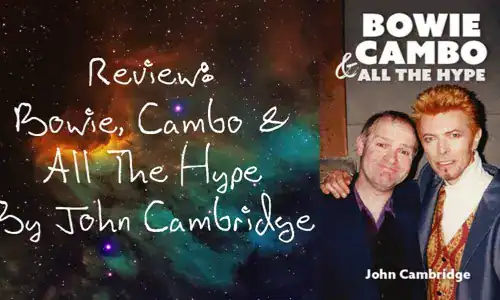
John Cambridge – David Bowie Drummer and Original Member of The Hype
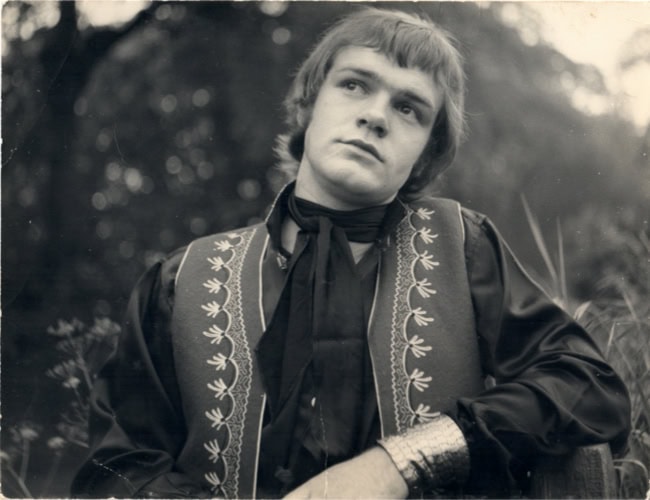
Photo credits: McNidder & Grace Ltd
John “Cambo” Cambridge is an English drummer whose work with David Bowie covered an important transitional period between the success of Space Oddity in 1969 and the development of Bowie’s heavier electric music in early 1970.
Cambridge first worked with Bowie as a member of Junior’s Eyes, the independent London group that supported Bowie during recordings, BBC radio sessions and live appearances in 1969. After Junior’s Eyes came to an end, Cambridge became the original drummer in the four-man electric line-up completed by Bowie, guitarist Mick Ronson and producer and bassist Tony Visconti.
That group became known as The Hype. During its brief existence, Cambridge performed with Bowie and participated in the costumed stage presentation that preceded Bowie’s later and more fully developed use of theatrical rock characters.
Cambridge also played a decisive part in bringing Mick Ronson into Bowie’s musical circle. Having previously worked with Ronson in the Hull group The Rats, Cambridge repeatedly recommended the guitarist to Bowie and Visconti. In February 1970, he returned to Hull and persuaded Ronson to travel to London.
Cambridge did not remain in Bowie’s group for the principal recording sessions of The Man Who Sold the World. His documented work with Bowie nevertheless places him at the point where Junior’s Eyes gave way to The Hype and where Bowie’s major creative partnership with Ronson began.
- Name: John Cambridge
- Known as: John “Cambo” Cambridge
- Nationality: English
- Primary instrument: Drums
- Early musical base: Hull, East Yorkshire, England
- Documented groups: The Hullaballoos, The Rats, Treacle, Junior’s Eyes and The Hype
- Worked with David Bowie: 1969–1970
- First Bowie connection: Drummer in the Junior’s Eyes line-up that worked with Bowie in 1969
- Recorded work with Bowie: Studio and BBC radio recordings during 1969 and 1970
- Live work with Bowie: Junior’s Eyes and The Hype
- The Hype role: Original drummer
- The Hype character: Cowboyman
- Historical contribution: Recommended Mick Ronson to Bowie and persuaded him to travel from Hull to London in February 1970
- Published memoir: Bowie, Cambo & All the Hype (2021)
John Cambridge and David Bowie’s transformation in 1969 and 1970
David Bowie performing Space Oddity in 1969.
By the time John Cambridge entered David Bowie’s musical circle in 1969, Bowie had already spent several years searching for a consistent artistic direction. He had performed with a succession of groups, released singles for different record companies and experimented with styles ranging from rhythm and blues and mod-influenced pop to music hall, folk and theatrical songwriting.
The commercial success of Space Oddity in July 1969 finally brought Bowie widespread public recognition, reaching the UK Top Five later that year. Although the single established his name with a much larger audience, it did not immediately provide him with a permanent touring band or a settled musical identity. Bowie continued working with different musicians in both the recording studio and on stage while searching for a stronger live sound.
John Cambridge became part of that important transitional period through Junior’s Eyes. The group remained an independent band in its own right, but its members also worked with Bowie on recordings, BBC radio sessions and concert performances while producer Tony Visconti was closely involved with both artists.
Cambridge was therefore not originally recruited as the drummer of a permanent David Bowie band. Instead, his collaboration developed naturally through Junior’s Eyes and the network of musicians surrounding Bowie and Visconti during the second half of 1969. That relationship placed Cambridge alongside Bowie at a time when the singer was moving away from the predominantly acoustic presentation associated with Space Oddity and towards a heavier electric sound.
As Bowie’s musical ambitions evolved, Tony Visconti and Cambridge recognised that the new material required a guitarist capable of bringing greater weight and intensity to the arrangements. Cambridge immediately thought of his former Rats bandmate Mick Ronson, whose playing he had known for several years in Hull.
Cambridge repeatedly recommended Ronson to Bowie and Visconti before eventually returning to Hull to persuade the guitarist to travel to London. That introduction became one of the defining moments in Bowie’s early career. Ronson would soon establish himself as Bowie’s principal guitarist and one of his closest musical collaborators during the first half of the 1970s.
Cambridge’s own period in Bowie’s group was comparatively brief. He performed with the original line-up of The Hype, appeared on important BBC recordings and helped establish Bowie’s first dedicated electric band before being replaced by Mick “Woody” Woodmansey shortly before the principal recording sessions for The Man Who Sold the World.
For that reason, Cambridge occupies a distinctive place within Bowie’s history. He was neither a member of the later Spiders from Mars nor a participant in Bowie’s years of international stardom. Instead, he belonged to the crucial transitional period that connected the success of Space Oddity with the emergence of the heavier musical style that would define Bowie’s work at the beginning of the 1970s.
Early life and the limits of the historical record
Compared with many of David Bowie’s better-known collaborators, relatively little has been published about John Cambridge‘s early life. Reliable contemporary sources focus almost entirely on his professional career as a musician rather than on his childhood, education or family background.
As a result, important biographical details—including his exact date of birth, early schooling and family history—have not been consistently documented in the principal books covering David Bowie’s career or in the available contemporary press. Rather than filling those gaps with speculation, it is more accurate to acknowledge that the surviving public record is limited.
What is firmly established is that Cambridge grew up in the city of Hull, East Yorkshire, where he became part of the area’s active live music scene during the 1960s. Hull supported a surprisingly vibrant network of clubs, dance halls and local groups, producing several musicians who would later become associated with David Bowie, most notably Mick Ronson and Mick Woodmansey.
During this period, Cambridge developed a reputation as a reliable drummer and became acquainted with many of the musicians who were shaping Hull’s rhythm and blues and rock scene. Those friendships proved far more significant than anyone could have imagined at the time, eventually connecting Hull directly with David Bowie’s rapidly developing career in London.
Unlike London, Hull was not a major centre of the British recording industry. Local musicians therefore built their reputations primarily through regular live performances rather than national recording opportunities. Bands frequently changed personnel, adopted new names and experimented with different musical styles as they searched for wider recognition.
Cambridge’s early career developed within that environment. Before becoming associated with Bowie, he had already gained valuable practical experience performing with several Hull-based groups and had established professional relationships with musicians who would later play important roles in Bowie’s story.
Those early years are significant not because they reveal a future Bowie collaborator in waiting, but because they explain how Cambridge became closely connected with the network of Hull musicians that eventually included Mick Ronson, Mick Woodmansey and others whose careers would later intersect with David Bowie.
The Hull music scene
During the 1960s, Hull maintained an active live music scene despite its distance from London’s recording industry. Dance halls, clubs and local venues provided regular employment for musicians, while the city’s geographical isolation encouraged the development of a close-knit musical community in which performers frequently moved between different groups.
Although relatively few Hull bands achieved national commercial success, the city produced a remarkable number of talented musicians. Guitarist Mick Ronson, drummer Mick “Woody” Woodmansey and John Cambridge all developed their professional experience there before their careers became linked with David Bowie.
Like many young musicians of the period, Cambridge gained experience by performing regularly before live audiences rather than through major recording contracts. Local groups often changed personnel as opportunities arose, and musicians built reputations through reliability, musicianship and word of mouth within the regional circuit.
It was within this environment that Cambridge established lasting professional relationships with Mick Ronson and other Hull musicians. Years before either man met David Bowie, they had already worked together extensively in local groups, developing a musical understanding that would later prove important when Cambridge recommended Ronson to Bowie and Tony Visconti.
Hull’s importance in Bowie’s story therefore extends beyond geography. The city’s musicians formed an interconnected network whose influence reached London through Cambridge’s move to Junior’s Eyes and, shortly afterwards, through Ronson’s arrival in Bowie’s newly formed electric band.
Looking back, it is remarkable that several key members of Bowie’s early 1970s musical development emerged from the same regional music scene. At the time, however, Cambridge and his fellow Hull musicians were simply pursuing professional opportunities wherever they could be found, with no indication that their careers would soon become associated with one of Britain’s most innovative recording artists.
The Hullaballoos and Cambridge’s early professional experience
Before becoming associated with David Bowie, John Cambridge had already established himself within Hull’s local music community. Like many professional musicians of the period, he performed with several regional groups as opportunities arose, gradually building a reputation as a dependable drummer.
One of the earliest documented groups connected with Cambridge was The Hullaballoos, a Hull-based band led by guitarist and songwriter Mick Wayne. This group should not be confused with the better-known British pop group of the same name that achieved commercial success in the United States during the mid-1960s. Cambridge’s association was with the separate Hull group centred around Wayne.
Although relatively little detailed documentation survives concerning the band’s performances and repertoire, Cambridge’s time with Wayne proved historically significant. The professional relationship they established in Hull continued after Wayne relocated to London, where he later formed Junior’s Eyes.
When Wayne required an experienced drummer during 1969, he turned to Cambridge. That invitation would ultimately bring Cambridge into Tony Visconti‘s circle and, shortly afterwards, into David Bowie’s developing live band.
Like many musicians working in regional Britain during the late 1960s, Cambridge also performed with other local groups before moving to London. The surviving documentation, however, is incomplete and does not always allow every short-lived line-up or personnel change to be reconstructed with certainty.
Rather than attempting to fill those gaps through speculation, it is sufficient to recognise that Cambridge had already accumulated considerable practical experience before joining Junior’s Eyes. By the end of the decade he was regarded as a capable professional drummer, ready to take advantage of the opportunities that were beginning to emerge in London’s rapidly changing music scene.
Joining The Rats
The Rats during the late 1960s, the Hull band in which John Cambridge and Mick Ronson first established their musical partnership.
The best documented chapter of Cambridge’s early career began when he joined The Rats, one of Hull’s most respected live rock bands. It was within this group that he developed the close musical partnership with guitarist Mick Ronson that would later have lasting consequences for David Bowie’s career.
The best documented period of John Cambridge‘s early career began when he joined The Rats, one of the most respected rock bands to emerge from Hull during the second half of the 1960s. Although the group never achieved major commercial success, it earned a strong regional reputation through regular live performances and became an important stepping stone for several musicians who would later become associated with David Bowie.
During Cambridge’s period with the band, the line-up included guitarist Mick Ronson, whose exceptional musicianship had already attracted attention within Hull’s music scene. Cambridge and Ronson quickly developed a close professional relationship through extensive live work, laying the foundations for a friendship that would later prove historically significant.
The Rats performed regularly throughout Yorkshire and neighbouring counties, building their reputation through a demanding schedule of club and ballroom engagements. Like many British bands of the period, their repertoire evolved continuously, reflecting developments in rhythm and blues, blues-rock and contemporary British rock music.
Although The Rats remained primarily a live band, their ambitions extended beyond the local circuit. The musicians hoped to establish themselves nationally and made repeated efforts to attract the attention of record companies and management based in London.
For Cambridge, The Rats provided invaluable professional experience. The band’s demanding performance schedule strengthened his musicianship while allowing him to work closely with Ronson over an extended period. That familiarity gave Cambridge complete confidence in Ronson’s abilities long before either musician became connected with David Bowie.
Years later, when Bowie and Tony Visconti were searching for a guitarist capable of strengthening Bowie’s increasingly heavy musical direction, Cambridge did not recommend Ronson simply because they were friends. He recommended him because he had already spent years performing beside him and knew exactly what he could contribute to a professional band.
The Rats in the recording studio
Although The Rats were best known as a live band, they also made several recordings during the late 1960s. Most of these sessions took place at Fairview Studios in Willerby, near Hull, one of the region’s most important independent recording facilities.
Founded by recording engineer Keith Herd, Fairview Studios became closely associated with the Hull music scene and provided local musicians with opportunities that would otherwise have required travelling to London. The studio documented many of the area’s leading groups, including The Rats.
The recordings made by The Rats were intended primarily as demonstration material for management companies and record labels rather than as commercially released albums. Like many ambitious regional bands of the period, they hoped professionally produced recordings would help secure a national recording contract.
Among the best-known recordings associated with The Rats are performances later issued under the title The Rise and Fall of Bernie Gripplestone. Although this title has become familiar to Bowie historians, it should not be regarded as an album released during the band’s lifetime. Instead, it represents surviving studio recordings that remained unreleased until many years later.
Those recordings are historically important because they preserve some of the earliest professionally recorded performances by Mick Ronson and John Cambridge before either musician became associated with David Bowie. They also demonstrate the increasingly confident musicianship that attracted attention within Hull’s live music scene.
For Cambridge, the Fairview sessions provided valuable studio experience. Recording required a different discipline from live performance, demanding precision, consistency and the ability to produce reliable performances under controlled conditions. Those skills would later prove valuable during his work with Junior’s Eyes and David Bowie.
Although The Rats never secured the national breakthrough they hoped for, their surviving recordings remain an important document of one of Britain’s finest regional rock bands during the late 1960s. They also capture the musical partnership between Cambridge and Ronson before their careers took very different directions.
From The Rats to Treacle
The Treacle performing Stop and Get A Hold Of Myself, documenting the short-lived period when The Rats briefly performed under the name Treacle.
During 1968, The Rats briefly adopted the name Treacle. The change did not represent the formation of a completely new band, but rather a temporary change of identity while the musicians continued performing together and searching for wider professional opportunities within the British music industry.
John Cambridge remained the group’s drummer, with Mick Ronson continuing as lead guitarist. The line-up itself changed very little during this period. Like many ambitious British bands of the late 1960s, they experimented not only with their repertoire but also with their public image, hoping that a fresh presentation might attract greater interest from promoters, management companies and record labels.
Although the name Treacle appeared for only a short period, the musicians continued working with the same determination that had characterised The Rats. They rehearsed extensively, performed throughout the Yorkshire circuit and returned to Fairview Studios, where further recordings documented the continuing development of the band.
The Treacle period did not produce the commercial breakthrough the musicians had hoped for. After a relatively short time, the group reverted to the better-known name The Rats, under which they continued performing before the individual members gradually began following different professional paths.
For Cambridge, the significance of this period lay not in the temporary change of name itself, but in the continued musical partnership he shared with Mick Ronson. Years of performing together had given Cambridge complete confidence in Ronson’s exceptional ability as a guitarist. That confidence would soon have lasting consequences when David Bowie and Tony Visconti began searching for a musician capable of strengthening Bowie’s increasingly ambitious electric sound.
The end of the Treacle chapter also marked the beginning of a new direction in Cambridge’s own career. In June 1969, he accepted Mick Wayne‘s invitation to leave Hull and join Junior’s Eyes in London. That decision brought his years with The Rats to a close and ultimately led him into David Bowie’s musical circle, where he would become one of the key figures in the formation of Bowie’s first fully realised electric band.
Leaving The Rats for Junior’s Eyes
Junior’s Eyes, the London band John Cambridge joined after leaving The Rats in June 1969.
In June 1969, John Cambridge left The Rats after receiving an invitation from guitarist and songwriter Mick Wayne to join Junior’s Eyes in London. Cambridge and Wayne already knew one another from their earlier association in Hull, making the invitation the continuation of an established professional relationship rather than a chance approach.
Cambridge’s departure created an opening behind the drums in The Rats. He was replaced by Mick “Woody” Woodmansey, another musician from the Hull area. Woodmansey would later replace Cambridge for a second time when he joined David Bowie’s group during the preparations for The Man Who Sold the World.
The move to Junior’s Eyes represented a significant change in Cambridge’s professional circumstances. The Rats had developed a strong reputation within Hull and the surrounding regional circuit, but Junior’s Eyes operated within London’s recording industry and had direct connections with producer Tony Visconti.
Junior’s Eyes were an independent group with their own recordings and live career. Their personnel changed during the band’s short existence, and Cambridge joined a later working line-up built around Mick Wayne, with guitarist Tim Renwick and bassist John “Honk” Lodge. The group would subsequently work as David Bowie’s backing band during recordings, BBC radio sessions and live appearances in 1969. :contentReference[oaicite:2]{index=2}
Moving to London also placed Cambridge closer to the centre of the British music industry. He was now working with musicians who combined their own group activities with studio and concert engagements for other artists. Through Junior’s Eyes and Tony Visconti, Cambridge entered the professional network surrounding David Bowie during the months immediately following the release of Space Oddity.
Mick Wayne was already contributing guitar to Bowie’s second album, released in Britain in November 1969 under the title David Bowie and later reissued as Space Oddity. Cambridge, Renwick and Lodge also became connected with Bowie through the later Junior’s Eyes line-up.
Cambridge’s decision to leave The Rats therefore began a new phase of his career. Within months, he would record and perform with Bowie, appear with Junior’s Eyes on BBC Radio 1 and become closely involved in the musical developments that led to the formation of The Hype.
Junior’s Eyes and the move into London’s recording world
When John Cambridge joined Junior’s Eyes during the summer of 1969, he entered a very different musical environment from the one he had known in Hull. Formed by guitarist and songwriter Mick Wayne, the band was based in London and operated within the capital’s rapidly changing recording scene, where musicians frequently moved between their own groups, studio sessions and live engagements.
Junior’s Eyes remained an independent band with its own identity, repertoire and recording career. The group should not be regarded simply as David Bowie’s backing band. Instead, its members became associated with Bowie through their professional relationship with producer Tony Visconti, who was simultaneously producing recordings for both Bowie and Junior’s Eyes.
Like many London groups of the period, Junior’s Eyes underwent several personnel changes. Cambridge joined a later line-up centred on Mick Wayne and worked alongside guitarist Tim Renwick and bassist John “Honk” Lodge. This was the formation that became involved with David Bowie during the second half of 1969.
For Cambridge, the move represented an important professional step. After years of building a reputation on the northern club circuit, he was now working in London’s recording industry alongside experienced musicians who combined performances with recording sessions for a variety of artists. The flexibility demanded by this environment differed considerably from the more stable structure of a regional touring band.
Through Tony Visconti, Junior’s Eyes became increasingly involved with Bowie’s activities following the success of Space Oddity. Cambridge therefore entered Bowie’s musical circle as a member of an already established group rather than as the drummer of a newly assembled Bowie band. This distinction is historically important because it explains how Cambridge’s collaboration with Bowie developed naturally through existing professional relationships instead of a formal recruitment process.
The association proved beneficial for both sides. Bowie gained the support of an experienced electric group capable of presenting his increasingly ambitious material, while Cambridge found himself participating in recordings, BBC radio sessions and concerts that would soon lead directly to the formation of The Hype. His arrival in Junior’s Eyes therefore marked the beginning of the most historically significant period of his professional career.
Battersea Power Station
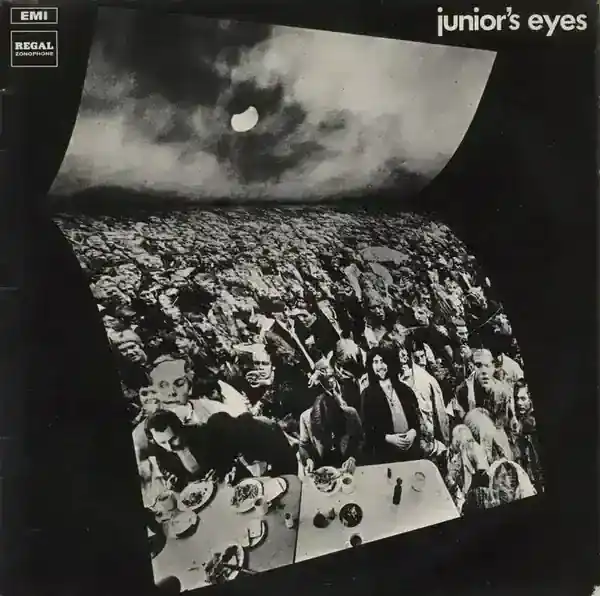
Junior’s Eyes released their only studio album, Battersea Power Station, in 1969 through Regal Zonophone. Written largely by guitarist and songwriter Mick Wayne, the record reflected the changing direction of British rock during the closing years of the 1960s, combining psychedelic influences with progressively heavier arrangements and extended instrumental passages.
The album takes its title from the famous power station on the south bank of the River Thames, one of London’s best-known industrial landmarks. Although the title has sometimes suggested a concept album, the record was not built around the building itself. Instead, it presented a collection of original compositions that reflected the band’s own musical development.
It is important to distinguish between the recording of Battersea Power Station and the later Junior’s Eyes line-up that worked with David Bowie. Junior’s Eyes underwent several personnel changes during its short existence, and not every musician associated with the group performed throughout the album’s recording sessions. John Cambridge joined the band during 1969 and became part of the later working line-up that subsequently collaborated with Bowie through Tony Visconti.
For that reason, Cambridge should not be described as the drummer responsible for the entire album. The surviving documentation shows that Junior’s Eyes evolved through different personnel before becoming involved in Bowie’s live performances, BBC broadcasts and recording activities later in 1969.
Despite its limited commercial success, Battersea Power Station has since become recognised as an important example of late-1960s British psychedelic and progressive rock. For Bowie historians, the album also documents the musical background from which several future Bowie collaborators emerged before joining his professional circle.
For Cambridge personally, Junior’s Eyes provided far more than another band. The move to London introduced him to Tony Visconti‘s professional network and ultimately led to his first work with David Bowie. Although his own contribution belongs primarily to the band’s later performing line-up rather than every stage of the album’s production, Battersea Power Station remains an essential part of the story that brought Cambridge into Bowie’s world.
David Bowie in the aftermath of Space Oddity
When John Cambridge entered David Bowie’s professional circle during the second half of 1969, Bowie was experiencing the first genuine commercial success of his career. Space Oddity, released shortly before the Apollo 11 Moon landing, had attracted considerable public attention and established Bowie as a recording artist of national importance. Even so, his long-term future remained uncertain, and a single hit was not yet enough to guarantee a lasting career.
Although Space Oddity had introduced Bowie to a much wider audience, it did not immediately provide him with a permanent touring band or a settled musical identity. His performances still varied between intimate acoustic presentations and increasingly ambitious electric arrangements, reflecting an artist who continued to experiment with different musical directions.
Bowie’s recent recordings already suggested that he wanted to move beyond the predominantly acoustic style associated with Space Oddity. Songs such as Unwashed and Somewhat Slightly Dazed pointed towards a heavier, more forceful approach that required a cohesive electric band capable of translating those ideas to the concert stage.
At this point, Junior’s Eyes provided an ideal solution. The group already functioned as an experienced working band, and through Tony Visconti they became closely involved with Bowie’s recording and performance activities. Rather than assembling an entirely new line-up from individual session musicians, Bowie was able to draw upon an existing group whose members already knew one another and could adapt quickly to his developing repertoire.
For John Cambridge, this represented the beginning of his direct collaboration with Bowie. His role developed naturally through Junior’s Eyes rather than through a formal audition, placing him at the centre of Bowie’s transition from the acoustic world of Space Oddity towards the heavier electric sound that would soon define The Man Who Sold the World.
The collaboration also introduced Cambridge to a period of rapid artistic change. Within only a few months, Bowie would move from working with Junior’s Eyes to forming The Hype, bringing together Cambridge, Tony Visconti and the guitarist whom Cambridge himself would soon recommend—Mick Ronson.
Junior’s Eyes on Bowie’s 1969 album
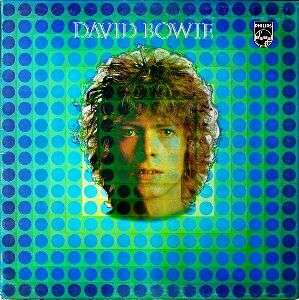
The relationship between Junior’s Eyes and David Bowie extended beyond live performances. Members of the group also became involved in the recording of Bowie’s second studio album, released in the United Kingdom on 14 November 1969 under the title David Bowie. Following the success of the single Space Oddity, the album was later reissued under the same title as the hit single, while its original American release appeared as Man of Words/Man of Music.
Among the members of Junior’s Eyes, guitarist Mick Wayne made the most substantial contribution to the album. His electric guitar can be heard on several recordings, reflecting the increasingly prominent role he played within Tony Visconti‘s productions during this period. Wayne’s work helped Bowie move beyond the predominantly acoustic character of earlier recordings towards a broader and more adventurous musical palette.
John Cambridge‘s documented studio contribution was considerably more limited than his later involvement in Bowie’s live performances and BBC broadcasts. His confirmed appearance is on Unwashed and Somewhat Slightly Dazed, one of the album’s most energetic and rhythmically forceful recordings. The track represented an important step in Bowie’s artistic development, combining blues, folk and hard rock influences within a single composition.
The recording demonstrated a markedly different musical direction from Space Oddity. Instead of orchestral arrangements and spacious production, Unwashed and Somewhat Slightly Dazed relied upon a driving rhythm section, aggressive electric guitar and a vocal performance that shifted between restraint and emotional intensity. Cambridge’s drumming formed part of that heavier musical framework.
It is important, however, not to overstate Cambridge’s role in the album sessions. Bowie’s 1969 album employed several different musicians, and no single drummer performed throughout the entire record. Cambridge should therefore be recognised for his documented contribution rather than presented as the principal drummer for the album as a whole.
Although his studio work with Bowie during 1969 was relatively limited, Cambridge’s importance increased significantly once Junior’s Eyes began supporting Bowie in concert and on BBC radio. Those performances allowed him to develop the new material in a live setting and ultimately led to the formation of The Hype, where his contribution became considerably more substantial than his role on the studio album alone.
The BBC session of 20 October 1969
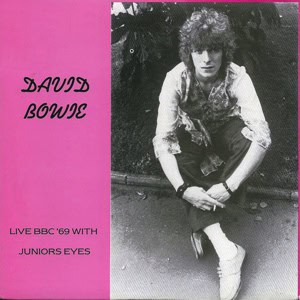
One of the best documented examples of John Cambridge‘s work with David Bowie took place on 20 October 1969, when Bowie and members of Junior’s Eyes recorded a session for BBC Radio 1. The recordings were made for the Dave Lee Travis Show and were first broadcast on 26 October 1969.
The line-up consisted of David Bowie on vocals and guitar, Mick Wayne and Tim Renwick on guitars, John “Honk” Lodge on bass and John Cambridge on drums. The session included performances of Unwashed and Somewhat Slightly Dazed, Let Me Sleep Beside You and Janine.
The BBC recordings are historically significant because they document the period during which Junior’s Eyes functioned as Bowie’s electric backing group following the success of Space Oddity. They capture an important transitional stage between Bowie’s earlier acoustic performances and the harder electric sound that would emerge during the first months of 1970.
Let Me Sleep Beside You had originally been recorded during Bowie’s Deram period in 1967 but remained unreleased at the time. The BBC performance presented the composition in a more forceful arrangement, supported by the experienced musicians of Junior’s Eyes and reflecting Bowie’s increasingly confident live presentation.
Janine, meanwhile, had recently appeared on Bowie’s 1969 album. Performed with a regular working band rather than a collection of studio musicians, the song demonstrated how Bowie’s newer material was evolving on stage through repeated live performance.
For John Cambridge, the session held particular importance because it also included Unwashed and Somewhat Slightly Dazed, the composition on which he had already contributed during the studio recordings for Bowie’s 1969 album. His participation in both the studio and BBC versions makes the song one of the clearest documented examples of his collaboration with Bowie.
Two performances from the session, Let Me Sleep Beside You and Janine, were later officially released on Bowie at the Beeb. The surviving recordings remain among the most important audio documents of Cambridge’s period with Bowie and Junior’s Eyes, preserving a line-up that existed only briefly before Bowie’s musical direction changed once again.
Touring Britain with Bowie
During November 1969, David Bowie and members of Junior’s Eyes undertook a short series of live performances across Britain to promote Bowie’s recently released album David Bowie, later reissued as Space Oddity. At this stage of his career, Bowie was still building a live audience despite the success of the Space Oddity single.
The concerts featured Bowie supported by the Junior’s Eyes line-up that included John Cambridge on drums. Rather than presenting a fully established touring band with a fixed repertoire, the performances reflected an artist whose music was still evolving. Acoustic material was combined with increasingly powerful electric arrangements, demonstrating Bowie’s growing desire to move beyond the folk-oriented style that had characterised much of his earlier work.
Although complete set lists have not survived for every engagement, contemporary documentation confirms that the performances drew heavily upon Bowie’s current repertoire while allowing Junior’s Eyes to develop the songs into stronger live arrangements. These concerts provided valuable experience for both Bowie and the musicians as they refined the material before live audiences.
Documented appearances included the Salutation Hotel in Perth on 7 November 1969, the Electric Garden in Glasgow on 10 November 1969 and the Purcell Room at London’s South Bank on 20 November 1969. Each venue attracted different audiences, reflecting the varied opportunities available to emerging artists at the time.
The Purcell Room performance was especially significant. Unlike clubs and dance halls where many young rock bands regularly appeared, the South Bank venue formed part of one of Britain’s leading cultural centres. Bowie’s appearance there demonstrated that his ambitions extended beyond conventional pop performance and reflected his continuing interest in presenting his music within a broader artistic context.
For John Cambridge, the tour represented an important stage in his collaboration with Bowie. Regular live performances strengthened the musical relationship between Bowie and Junior’s Eyes while giving Cambridge the opportunity to develop the increasingly forceful drumming style that would soon become part of Bowie’s transition towards a heavier electric sound.
Cambridge later recalled this period as the beginning of a genuine friendship with Bowie rather than simply a professional engagement. Touring together, rehearsing and spending time away from the stage allowed the musicians to know one another personally, a relationship that would continue during their time at Haddon Hall and throughout the formation of The Hype.
Life at Haddon Hall
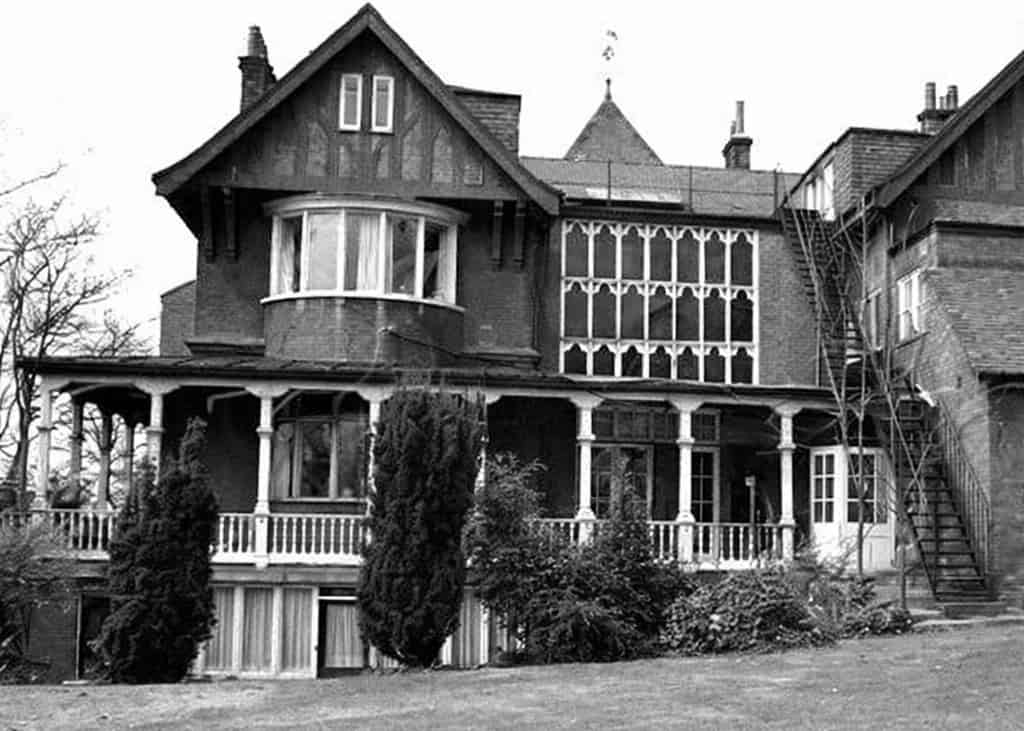
During his period with David Bowie, John Cambridge lived for a time at Haddon Hall, the large Victorian house at 42 Southend Road in Beckenham that Bowie rented during 1969 and 1970. More than simply a family home, Haddon Hall became the centre of Bowie’s personal and creative life during one of the most important transitional periods of his career.
The house functioned as far more than a place to sleep. Musicians rehearsed there, new songs were discussed, arrangements were developed and friends came and went throughout the day. Bowie, Angie Bowie and the musicians surrounding them created an informal environment in which music, conversation and experimentation became part of everyday life.
For Cambridge, living at Haddon Hall meant that his relationship with Bowie extended well beyond rehearsals and concerts. Instead of arriving for recording sessions and returning home afterwards, he experienced Bowie’s daily routine from within his immediate circle. That perspective later enabled Cambridge to write one of the most detailed first-hand accounts of Bowie’s life immediately before international fame transformed it.
“Haddon Hall wasn’t just where David lived – it became home for many of us. Music, rehearsals and everyday life all seemed to happen under the same roof.”
— John Cambridge, Bowie, Cambo & All the Hype
Cambridge was also present during one of the most difficult periods in Bowie’s personal life. Following the death of Bowie’s father, Haywood Stenton Jones, on 5 August 1969, Haddon Hall became a place where Bowie attempted to balance personal grief with an increasingly demanding professional career. Cambridge’s memoir offers valuable observations from someone who witnessed those months at close range rather than through later recollection.
His memories extend beyond music. Cambridge recalled everyday moments, conversations and ordinary domestic life that rarely appear in official biographies. These recollections include Bowie’s determination to pass his driving test, rehearsals with visiting musicians and the relaxed atmosphere that existed between performances. Such details provide historians with an unusually human portrait of Bowie before the pressures of international fame fundamentally altered his lifestyle.
Today, Haddon Hall occupies an important place in David Bowie history because it witnessed the transition from the success of Space Oddity to the formation of The Hype and the musical ideas that would eventually lead to The Man Who Sold the World. Few collaborators experienced that remarkable period as closely as John Cambridge, making his recollections an essential primary source for understanding Bowie’s formative years.
The end of Junior’s Eyes
By the beginning of 1970, Junior’s Eyes had effectively reached the end of its short career. Although the band had released Battersea Power Station and established a respected reputation within London’s progressive music scene, it failed to achieve the commercial success necessary to continue as a long-term recording group.
As the members gradually followed different professional paths, the musical partnership between David Bowie and several musicians from Junior’s Eyes also began to change. Rather than continuing to use an existing independent band, Bowie and producer Tony Visconti started assembling a dedicated electric line-up that could fully support Bowie’s increasingly ambitious musical direction.
For John Cambridge, the end of Junior’s Eyes did not mean the end of his collaboration with Bowie. Instead, it marked the transition from working with Bowie through an established band to becoming part of a newly developing group created specifically around Bowie’s own artistic ambitions.
Cambridge already knew Bowie’s repertoire through months of rehearsals, BBC recordings and live performances, making him a natural choice to remain involved during this transitional period. His experience within Junior’s Eyes provided continuity while Bowie searched for the musicians who would shape the next phase of his career.
Tony Visconti also remained central to these developments. In addition to producing Bowie’s recordings, he continued to perform as bassist, helping organise rehearsals and contributing to the increasingly powerful musical direction Bowie wished to pursue during 1970.
One important position, however, had not yet been filled. Bowie and Visconti were looking for a guitarist capable of giving the new band a heavier and more distinctive sound. John Cambridge believed he already knew exactly the musician they needed.
That guitarist was his former Rats bandmate from Hull — Mick Ronson.
Cambridge recommends Mick Ronson
By the beginning of 1970, David Bowie and Tony Visconti were looking for a guitarist who could strengthen Bowie’s increasingly powerful musical direction. John Cambridge believed he already knew exactly the musician they needed. Having spent several years performing alongside Mick Ronson in The Rats, Cambridge had complete confidence in his former bandmate’s exceptional musical ability.
Cambridge repeatedly spoke to both Bowie and Visconti about Ronson, describing him as one of the finest guitarists to emerge from Hull. Ronson had already attempted to establish himself in London but had returned home after those efforts failed to develop into permanent work. By early 1970 he was employed by Hull City Council, carrying out maintenance work while continuing to hope for another opportunity in music.
John Cambridge on recruiting Mick Ronson
“The story of me asking Mick to join David while Ronson was creosoting lines on a rugby pitch is true. I had pestered Bowie and Tony Visconti, telling them that I knew a great guitarist in Hull.”
— John Cambridge, Bowie, Cambo & All the Hype
Determined to persuade Ronson to return to London, Cambridge travelled back to Hull and found him working on a school rugby pitch. Ronson was wearing the heavy outdoor clothing required for his council work and initially showed little enthusiasm for another uncertain attempt to build a career in the music industry. His earlier experiences in London had left him cautious about abandoning secure employment.
Cambridge did not promise Ronson immediate success or a permanent place in Bowie’s band. Instead, he simply asked him to travel to London and meet Bowie and Tony Visconti, believing that Ronson’s talent would speak for itself once they heard him play.
Ronson eventually agreed. Cambridge brought him to Haddon Hall, where he introduced him to Bowie and Visconti. That introduction proved to be one of the most significant moments in David Bowie’s early career. Although nobody involved could have predicted the extraordinary partnership that would follow, Cambridge’s determination to recommend his former Rats colleague directly led to the first meeting between Bowie and the guitarist who would become one of his most important collaborators.
Without Cambridge’s persistence, the musical history of David Bowie might have developed very differently. While it is impossible to know what alternative path Bowie’s career may have taken, the historical record clearly shows that Cambridge was the person who introduced Mick Ronson into Bowie’s professional circle, making this one of the most important contributions of his entire collaboration with Bowie.
The first meeting between Bowie and Ronson
At the beginning of February 1970, John Cambridge brought Mick Ronson from Hull to London to meet David Bowie and Tony Visconti. The meeting took place at a crucial moment in Bowie’s career, as he was preparing a new electric line-up that would take his music in a significantly heavier direction than the material associated with Space Oddity.
Although later recollections differ in minor details, the overall chronology is well established. Cambridge had repeatedly recommended Ronson to both Bowie and Visconti and was responsible for arranging their introduction. Ronson arrived in London only a short time before Bowie’s important BBC recording session of 5 February 1970.
For Ronson, the circumstances were challenging. He joined a group whose members already knew one another through months of rehearsals and performances. Cambridge and Visconti were familiar with Bowie’s current repertoire, while Ronson had to learn the material quickly and adapt to a musical environment that was still evolving.
Cambridge occupied a unique position during this first meeting. He had spent several years performing with Ronson in The Rats and had also worked closely with Bowie through Junior’s Eyes. As a result, he became the vital link between two musicians who had never previously collaborated but whose partnership would soon become one of the most influential in rock history.
Both Bowie and Visconti immediately recognised Ronson’s exceptional musical ability. His confident guitar playing and instinctive understanding of heavier rock arrangements matched the direction Bowie wanted to pursue during 1970. The introduction arranged by Cambridge therefore achieved exactly the result he had hoped for.
Within only a few days, Ronson joined Bowie, Cambridge and Visconti in the BBC studios for what became the first documented recordings by this new electric line-up. Those performances marked the beginning of a partnership that would soon develop into The Hype and ultimately contribute to the creation of The Man Who Sold the World.
The BBC session of 5 February 1970
David Bowie performing The Width of a Circle during the BBC Sunday Show, recorded on 5 February 1970 with John Cambridge, Mick Ronson and Tony Visconti.
On 5 February 1970, David Bowie entered the BBC studios to record one of the most historically significant sessions of his early career. Recorded for The Sunday Show, presented by John Peel, the session documented the first known recordings by Bowie’s newly assembled electric line-up following the gradual transition from Junior’s Eyes.
The musicians consisted of David Bowie on vocals and twelve-string guitar, Mick Ronson on lead guitar, Tony Visconti on bass and John Cambridge on drums. Although Ronson had only recently arrived in London, the recordings already demonstrated the stronger electric sound that Bowie and Visconti had been working towards since the success of Space Oddity.
Cambridge occupied a particularly important position within the group. Unlike Ronson, he had already spent several months performing with Bowie through Junior’s Eyes and was thoroughly familiar with the existing repertoire. At the same time, his years with Ronson in The Rats enabled him to help integrate the guitarist into Bowie’s developing band with remarkable speed.
The BBC session therefore represented far more than a routine radio recording. It captured the moment at which Bowie’s live sound began to change decisively. Folk-inspired arrangements increasingly gave way to heavier guitars, a firmer rhythm section and a more powerful stage presentation that would soon define the next phase of Bowie’s career.
Historically, the recordings are especially valuable because they preserve the only documented BBC performances by the line-up of Bowie, Ronson, Visconti and Cambridge before later personnel changes took place. Within only a few months, Mick Woodmansey would replace Cambridge behind the drums, making this session a unique record of a short-lived but highly significant chapter in Bowie’s musical development.
Although the musicians had only recently begun working together, the confidence displayed throughout the session demonstrated how quickly the group had developed. The recordings provided an early indication of the creative partnership that Bowie, Ronson and Visconti would continue to explore during the preparation of The Man Who Sold the World, while preserving John Cambridge‘s important contribution to that formative period.
Fifteen recordings in a single day
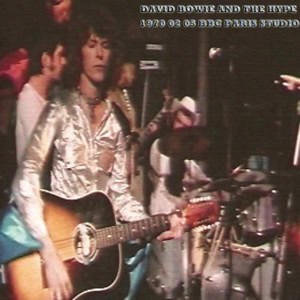
The BBC session of 5 February 1970 demonstrated the remarkable breadth of David Bowie’s repertoire at the beginning of a new decade. During the recordings for The Sunday Show, Bowie and the newly assembled electric line-up worked through an extensive selection of material that reflected both his recent songwriting and the musical direction he intended to pursue in the months ahead.
Among the songs recorded were Buzz the Fuzz, Karma Man, The Width of a Circle, Wild Eyed Boy from Freecloud, Amsterdam, God Knows I’m Good, The Supermen, Memory of a Free Festival, Cygnet Committee, Janine, An Occasional Dream, Space Oddity, Unwashed and Somewhat Slightly Dazed, Waiting for the Man and The Prettiest Star.
The range of material illustrates how difficult it is to define Bowie’s music during this period within a single style. Folk-inspired compositions, theatrical storytelling, rock arrangements, cover versions and newly written songs all appeared alongside one another. Rather than abandoning earlier material, Bowie was experimenting with different musical approaches while gradually moving towards a more powerful electric sound.
For John Cambridge, the session demanded considerable versatility. His drumming had to adapt constantly to changing musical styles, from restrained accompaniment on quieter compositions to the heavier rhythmic approach required by songs such as The Width of a Circle and The Supermen. The recordings demonstrate his ability to support Bowie’s rapidly expanding musical ambitions during a period of continual artistic experimentation.
Several of the performances remained unavailable for many years before eventually receiving official release through BBC archive collections. Today they are regarded as some of the most valuable surviving documents of Bowie’s musical development immediately before the recording sessions for The Man Who Sold the World, preserving a unique snapshot of the short-lived line-up featuring Bowie, Mick Ronson, Tony Visconti and John Cambridge.
The arrival of Mick Ronson
The BBC session of 5 February 1970 also marked the first documented recordings of Mick Ronson performing alongside David Bowie. Only a short time earlier, John Cambridge had travelled to Hull to persuade his former Rats bandmate to return to London and meet Bowie and Tony Visconti.
Ronson arrived with very little time to prepare. He entered a group in which Cambridge and Tony Visconti were already familiar with Bowie’s repertoire through months of rehearsals, concerts and BBC recordings. Despite those circumstances, Ronson adapted quickly and immediately demonstrated the qualities Cambridge had been describing ever since recommending him to Bowie.
His guitar playing introduced a noticeably heavier musical character. Combining powerful rhythm work with expressive lead lines, Ronson provided exactly the type of guitarist Bowie and Visconti had been seeking as they developed a more ambitious electric sound. His style complemented Bowie’s increasingly dramatic songwriting while strengthening the overall impact of the live band.
For Cambridge, Ronson’s arrival represented the successful conclusion of months of persuasion. Having worked beside him for several years in The Rats, Cambridge never doubted Ronson’s ability to succeed at a higher level. The BBC session confirmed that Bowie and Visconti shared that confidence after hearing him perform within the new line-up.
Although nobody involved could yet foresee the extraordinary partnership that would later develop between Bowie and Ronson, the recordings of February 1970 captured the beginning of one of rock music’s most influential collaborations. They also demonstrate the important role played by John Cambridge, whose recommendation and determination brought the two musicians together at precisely the right moment.
The beginnings of a heavier sound
The BBC recordings of February 1970 clearly illustrate the musical direction David Bowie was beginning to pursue at the start of a new decade. While his earlier work had often combined folk influences with orchestral arrangements, the performances by the new electric line-up introduced a more forceful approach built around electric guitar, bass and drums.
This change did not occur overnight. Bowie’s 1969 recordings had already hinted at a heavier style through compositions such as Unwashed and Somewhat Slightly Dazed. The arrival of Mick Ronson, together with the established partnership between Tony Visconti and John Cambridge, allowed those ideas to develop further in a live environment.
Cambridge’s drumming formed an important part of that transition. Drawing upon his years of experience with The Rats and Junior’s Eyes, he provided a disciplined yet energetic rhythmic foundation that supported Bowie’s increasingly ambitious arrangements. Rather than dominating the performances, his playing gave the new line-up the stability required as the musicians adapted to rapidly evolving material.
The contrast can be heard particularly in performances such as The Width of a Circle and The Supermen. Although both compositions would continue to develop before their definitive studio recordings for The Man Who Sold the World, the BBC versions already reveal the greater emphasis on electric instrumentation, dynamic arrangements and a heavier overall sound.
For Bowie, these performances represented another important stage in an ongoing artistic evolution rather than the arrival of a finished musical identity. For Cambridge, they marked the culmination of several months of collaboration that had begun with Junior’s Eyes and now placed him within the first fully electric band assembled around Bowie’s developing vision.
Tony Visconti‘s growing influence
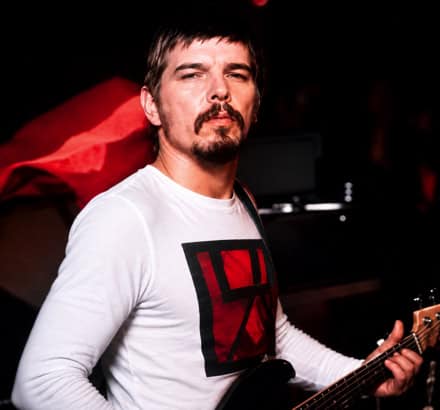
Throughout the early months of 1970, Tony Visconti occupied a unique position within David Bowie’s career. He was simultaneously Bowie’s producer, bassist in the live band and one of the principal figures shaping the musical direction of the material that would eventually become The Man Who Sold the World.
Visconti’s responsibilities extended far beyond the recording studio. During rehearsals he helped organise arrangements, advised on instrumentation and worked closely with Bowie as the group searched for a stronger and more contemporary rock sound. His experience as both musician and producer enabled him to bridge the creative and practical aspects of Bowie’s rapidly developing projects.
John Cambridge had already established a productive working relationship with Visconti through Junior’s Eyes and remained part of that collaboration as Bowie assembled a dedicated electric line-up. The continuity provided by Cambridge’s experience proved valuable while the new group evolved through rehearsals, BBC recordings and live performances.
One of Cambridge’s most significant contributions during this period was introducing Mick Ronson to Bowie and Visconti. Having performed with Ronson for several years in The Rats, Cambridge repeatedly recommended him as the guitarist capable of strengthening Bowie’s increasingly ambitious musical direction. Visconti quickly recognised Ronson’s exceptional ability once the introduction had taken place.
Visconti’s influence on Bowie’s career during this period cannot be overstated. As producer, bassist and musical collaborator, he played a central role in guiding the transition from the success of Space Oddity towards the heavier sound that emerged during 1970. Cambridge formed part of that important transitional period, contributing both as drummer and as the musician who brought Ronson into Bowie’s professional circle.
From BBC musicians to a working band
Following the BBC recordings of February 1970, David Bowie, Mick Ronson, Tony Visconti and John Cambridge continued rehearsing and performing together as Bowie’s principal electric line-up. Although the group had only recently been assembled, the musicians quickly developed a stronger musical understanding through regular rehearsals and live appearances.
Unlike the earlier collaboration with Junior’s Eyes, this was no longer an established independent band supporting Bowie. Instead, the musicians were gradually forming a line-up built specifically around Bowie’s own artistic ambitions. Each rehearsal allowed the arrangements to evolve while the group became increasingly confident performing Bowie’s expanding repertoire.
At the same time, Bowie was thinking beyond the music itself. Ever since his mime studies with Lindsay Kemp, he had been fascinated by theatre, visual presentation and the creation of memorable stage characters. During rehearsals, discussions increasingly extended beyond songs and arrangements to include costumes, appearance and the overall identity of the group.
John Cambridge embraced these ideas alongside Ronson and Visconti. Rather than viewing costumes as a distraction from the music, the musicians accepted Bowie’s wish to create a stage presentation that distinguished them from the many blues and progressive rock bands then appearing on the British concert circuit.
The combination of rehearsals, BBC recordings and live performances gradually transformed the musicians from a collection of experienced professionals into a recognisable performing unit centred on Bowie’s vision. Although the line-up would remain together for only a relatively short period, it represented an important stage in Bowie’s continuing search for a distinctive artistic identity.
As those ideas developed, Bowie concluded that the new group should no longer appear simply as David Bowie supported by anonymous musicians. Instead, the band would receive its own collective identity — a name that reflected both the excitement surrounding Bowie’s career and the theatrical direction in which the performances were beginning to evolve.
That name became The Hype.
The formation and naming of The Hype
By February 1970, David Bowie had transformed the musicians around him into a distinct electric performing group. The line-up of Bowie, Mick Ronson, Tony Visconti and John Cambridge became known as The Hype, a name associated with one of the most experimental and important transitional periods of Bowie’s early career.
Unlike Bowie’s previous collaborations with supporting musicians, The Hype was conceived as a recognisable group with its own visual identity. Although David Bowie remained the central figure, the intention was that every member should contribute to a presentation that combined music, theatre and striking stage imagery.
The precise origin of the name The Hype has been discussed by participants and historians. Bowie’s manager Kenneth Pitt has frequently been associated with the suggestion, although contemporary documentation does not conclusively establish the exact circumstances in which the name was adopted. What is clear is that the title reflected Bowie’s willingness to experiment with publicity, image and audience expectations at a time when his commercial future remained far from secure.
During this short period, the musicians also appeared under alternative names, including Harry the Butcher, illustrating how fluid Bowie’s ideas about the band’s identity still were. Rather than representing separate groups, these names reflected different stages in the search for a presentation that matched Bowie’s rapidly evolving artistic ambitions.
It is important not to confuse The Hype with the later Spiders from Mars. Although Mick Ronson would become a central member of both line-ups, The Hype was a separate group that existed during the opening months of 1970, before the recording of The Man Who Sold the World had been completed and more than two years before the emergence of Ziggy Stardust.
For John Cambridge, membership of The Hype represented the culmination of a remarkable journey that had begun in Hull with The Rats, continued through Junior’s Eyes and ultimately brought him into the centre of Bowie’s most important musical transition. Although the group’s existence proved brief, its influence upon Bowie’s artistic development would extend far beyond its few months together.
A band presented as characters
David Bowie did not want his new electric group to appear on stage as an anonymous backing band. Inspired by his long-standing interest in theatre, mime and visual presentation, he developed individual identities for each musician. Rather than simply performing the songs, every member of the group would become a recognisable character, transforming a conventional rock concert into a theatrical event.
Bowie appeared as Rainbowman—although some contemporary and later sources also refer to the character as Space Star. Mick Ronson became Gangsterman, Tony Visconti appeared as Hypeman, and John Cambridge took the role of Cowboyman. Each costume was deliberately different, allowing audiences to distinguish every member of the band immediately.
Cambridge’s Cowboyman costume reflected the familiar imagery of the American West. Wearing a cowboy hat and matching clothing, he provided a visual contrast to Ronson’s gangster appearance, Visconti’s comic-book-inspired costume and Bowie’s brightly coloured Rainbowman outfit. Cambridge later noted the personal coincidence that one of his childhood studio portraits had already shown him dressed as a cowboy many years before joining The Hype.
Unlike the elaborate mythology Bowie later created around Ziggy Stardust, these characters were not supported by an extensive fictional narrative. They functioned primarily as visual identities designed to reinforce the theatrical atmosphere of the performance. Nevertheless, the concept demonstrated Bowie’s growing conviction that image, costume and music could work together as equal elements of artistic expression.
David Bowie on The Hype
“We had superhero costumes made, and I wore makeup and glitter for the first time.”
— David Bowie, recalling The Hype, Vanity Fair, 2002
The idea proved remarkably ambitious for early 1970. At a time when most British rock bands appeared on stage in relatively informal clothing, The Hype deliberately embraced costume, colour and characterisation. Although the experiment lasted only a short time, it marked one of the earliest occasions on which Bowie attempted to unite rock music with theatrical performance on such a visible scale.
For John Cambridge, participating as Cowboyman demonstrated that every member of the group shared Bowie’s willingness to experiment. He was not merely the drummer behind the singer but an active participant in a collective stage presentation that foreshadowed many of the visual ideas Bowie would later develop far more fully during the Ziggy Stardust era.
The Roundhouse performance of 22 February 1970
On 22 February 1970, The Hype made its first documented public appearance at the Roundhouse in Chalk Farm, London. The concert formed part of a multi-act programme that also featured Caravan, The Groundhogs and Bachdenkel. For David Bowie, the evening represented the first opportunity to present both his newly assembled electric band and his latest theatrical ideas before a live audience.
The performance brought together David Bowie, Mick Ronson, Tony Visconti and John Cambridge, each appearing in an individual stage costume. Rather than presenting themselves as a conventional rock group, the musicians deliberately challenged audience expectations by combining powerful electric music with theatrical visual identities. Cambridge appeared as Cowboyman, while Bowie performed as Rainbowman, Ronson as Gangsterman and Visconti as Hypeman.
Musically, the concert demonstrated how far Bowie’s sound had developed since the success of Space Oddity. Supported by Ronson’s increasingly confident guitar playing, Visconti’s bass and Cambridge’s disciplined drumming, the performances reflected the heavier direction that would soon culminate in The Man Who Sold the World.
The audience reaction, however, was mixed. Contemporary recollections describe surprise, uncertainty and, in some cases, amusement at the costumes. While the precise response naturally differed from person to person, the evening was not remembered by those involved as an immediate triumph. Bowie himself later acknowledged that the experiment had failed to win over much of the audience.
Despite that reception, the Roundhouse concert remains one of the most important performances of Bowie’s early career. It demonstrated his willingness to experiment publicly with image, theatre and characterisation at a time when few rock musicians were attempting anything comparable. Although many of these ideas would later be refined during the Ziggy Stardust period, their first substantial public expression can be traced directly to The Hype.
For John Cambridge, the concert marked the culmination of a remarkable journey that had begun in Hull with The Rats before continuing through Junior’s Eyes and finally into Bowie’s newly formed electric band. His participation at the Roundhouse secured his place in one of the defining transitional moments of Bowie’s artistic development.
Cambridge as Cowboyman
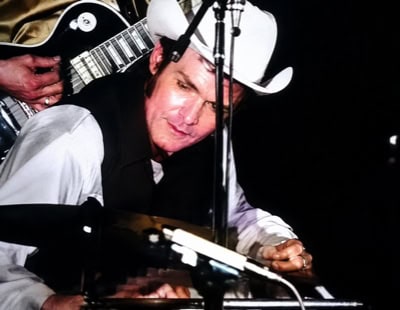
John Cambridge‘s stage identity in The Hype was Cowboyman. Although some later publications incorrectly identified him as Pirateman, Cambridge’s own memoir and the best contemporary documentation confirm that his character was always Cowboyman. The confusion appears to have developed many years after the band’s brief existence and has since been repeated by a number of secondary sources.
The choice of a cowboy reflected Bowie’s intention that every member of The Hype should have an immediately recognisable visual identity. Cambridge wore a cowboy hat and Western-style clothing, creating a deliberate contrast with Mick Ronson‘s Gangsterman, Tony Visconti‘s Hypeman and Bowie’s Rainbowman. Together, the four characters transformed an ordinary rock group into a theatrical ensemble.
John Cambridge on Cowboyman
“I was Cowboyman, not Pirateman. I don’t know where that story started, but it certainly wasn’t me.”
— John Cambridge, Bowie, Cambo & All the Hype
For Cambridge, the costume was never intended to create a separate stage career or fictional alter ego. Cowboyman existed solely within the context of The Hype and disappeared when Bowie abandoned the original costume concept. Unlike Ziggy Stardust, the character was not supported by an elaborate narrative or mythology but functioned simply as one part of Bowie’s experimental visual presentation.
The distinction nevertheless remains historically important. Correctly identifying Cambridge as Cowboyman helps preserve the original concept of The Hype and prevents later misconceptions from becoming accepted as fact. It also illustrates the value of Cambridge’s memoir, which has corrected several inaccuracies that entered Bowie’s early history through repeated retellings.
Today, Cowboyman remains one of the most recognisable visual symbols of John Cambridge‘s brief but historically significant period with David Bowie. Although the costume was worn for only a short time, it formed part of the first public expression of Bowie’s ambition to combine rock music with theatrical characterisation—a creative approach that would later become one of the defining features of his career.
Harry the Butcher at the Streatham Arms
David Bowie’s original 1970 recording of The Prettiest Star, released during the brief period in which his electric band also appeared as Harry the Butcher.
On 23 February 1970, only one day after The Hype‘s experimental Roundhouse debut, Bowie and the same group of musicians appeared at the Streatham Arms in London under the temporary name Harry the Butcher.
The different name did not indicate the formation of a new band or a change of personnel. David Bowie, Mick Ronson, Tony Visconti and John Cambridge remained the musicians involved. Like The Hype, Harry the Butcher formed part of Bowie’s continuing search for the most effective way to present his new electric group during the opening months of 1970.
Very little contemporary documentation survives concerning the performance itself. No complete set list has been preserved, and the available historical evidence does not allow a reliable reconstruction of the audience response, stage presentation or the exact running order of the evening. For that reason, historians should avoid expanding the event beyond what the surviving sources actually confirm.
Its historical importance lies primarily in its place within Bowie’s chronology. The performance demonstrates that Bowie did not abandon the project after the uncertain reception at the Roundhouse. Instead, he immediately continued performing with the same musicians while experimenting with different ways of presenting the group to audiences.
For John Cambridge, the Streatham Arms appearance formed another step in the brief but significant existence of Bowie’s first dedicated electric band. Although the name Harry the Butcher disappeared almost as quickly as it had appeared, the concert illustrates the remarkable speed with which Bowie continued refining both the musical and visual identity of the group during the spring of 1970.
David Bowie’s New Electric Band in Basildon
On 28 February 1970, David Bowie and his musicians appeared at the Basildon Arts Centre in Essex. Contemporary publicity described the group as David Bowie’s New Electric Band, emphasising the musical direction Bowie had been developing since the success of Space Oddity.
The description accurately reflected the purpose of the line-up. During the previous year Bowie had alternated between solo performances, acoustic presentations and appearances with Junior’s Eyes. By early 1970 he was establishing a dedicated electric group built around Mick Ronson‘s guitar, Tony Visconti‘s bass and John Cambridge‘s drums.
The Basildon Arts Centre provided an appropriate setting for this period of experimentation. Like Bowie’s involvement with the Beckenham Arts Lab, the venue encouraged performances that combined music with broader artistic ideas rather than presenting conventional pop concerts alone. Such environments suited Bowie’s continuing interest in theatre, visual presentation and artistic innovation.
It is important, however, not to assume that every aspect of The Hype‘s earlier stage presentation was repeated unchanged. While the Basildon performance is well documented, the surviving evidence does not conclusively establish that the complete Roundhouse costume concept was used in exactly the same form. Distinguishing confirmed facts from later assumptions remains essential when reconstructing Bowie’s early performance history.
For John Cambridge, the concert formed another stage in the rapid evolution of Bowie’s first electric band. Together with Bowie, Ronson and Visconti, he continued refining the heavier musical approach that had already become evident during the BBC sessions and the Roundhouse performances. Each appearance strengthened the group’s confidence while preparing the ground for the recordings that would soon lead towards The Man Who Sold the World.
Early March performances
During the opening weeks of March 1970, The Hype continued performing at a variety of venues while David Bowie refined both the band’s repertoire and its stage presentation. Surviving documentation confirms engagements connected with Beckenham, Hounslow, Hull, London, Sunderland and Croydon, although the amount of surviving information varies considerably from one performance to another.
Unlike Bowie’s later major tours, these concerts formed part of a period of musical development rather than commercial success. The group was still building an audience, experimenting with arrangements and adapting performances from one venue to the next. Many appearances took place in arts centres, colleges and smaller concert halls rather than the large theatres and arenas that would later become associated with Bowie’s career.
One particularly significant engagement took place at Hull University on 6 March 1970. For John Cambridge and Mick Ronson, the concert represented a return to the city where they had first performed together as members of The Rats. They now returned not as local musicians but as members of David Bowie’s new electric band, accompanied by Tony Visconti.
The Hull performance highlighted the remarkable path both musicians had travelled within a relatively short period. Cambridge had introduced Ronson to Bowie only weeks earlier, and together they now appeared before an audience in the city where their musical partnership had originally been established. The concert therefore linked Bowie’s developing career with the Hull music scene that had produced two of his important early collaborators.
Although these March performances did not immediately establish The Hype as a commercially successful touring act, they proved invaluable in developing the band’s musical confidence. Songs were refined through repeated live performance, while Bowie continued exploring the combination of powerful electric arrangements and theatrical presentation that would influence the next stage of his career.
For Cambridge, the concerts represented the final weeks of an important collaboration. Before the month was over, changes within the rhythm section would bring his period as Bowie’s drummer to an end, but these performances remain an essential part of the story that bridged the gap between Space Oddity and The Man Who Sold the World.
The Atomic Sunrise festival
Rare footage of David Bowie and The Hype during the Atomic Sunrise Festival period at the Roundhouse, March 1970.
On 11 March 1970, David Bowie and The Hype returned to the Roundhouse in London for the event generally remembered as the Atomic Sunrise Festival. The programme combined contemporary rock music with experimental theatre and multimedia performances, reflecting the creative atmosphere that surrounded London’s underground arts scene at the beginning of the 1970s.
The event brought together a diverse range of performers and demonstrated the growing overlap between music, theatre and visual art that particularly interested Bowie during this period. Rather than presenting a conventional rock concert, the organisers created a broader artistic programme in which live music formed one element of a much larger cultural event.
For John Cambridge, the festival represented another important appearance by The Hype only a few weeks after the band’s public debut. Together with Bowie, Mick Ronson and Tony Visconti, he continued developing the heavier electric sound that had first become evident during the BBC sessions and the Roundhouse performances of February 1970.
The festival is especially significant because moving images of Bowie’s early electric band are known to survive from this period. Although only limited footage has been preserved, it provides one of the very few visual records of Cambridge performing with Bowie. Together with contemporary photographs and BBC recordings, these images offer valuable documentation of a line-up that existed for only a short time.

Memory of a Free Festival – David Bowie and The Hype during the Atomic Sunrise Festival period, 1970.
The Atomic Sunrise appearance also demonstrates that Bowie remained committed to The Hype despite the mixed reaction to its first performances. Rather than abandoning the experiment, he continued refining both the music and the visual presentation while searching for the artistic direction that would soon lead towards The Man Who Sold the World.
The festival is especially significant because moving images of Bowie’s early electric band are known to survive from this period. Although only limited footage has been preserved, it provides one of the very few visual records of Cambridge performing with Bowie. Together with contemporary photographs and BBC recordings, these images offer valuable documentation of a line-up that existed for only a short time.
The Atomic Sunrise appearance also demonstrates that Bowie remained committed to The Hype despite the mixed reaction to its first performances. Rather than abandoning the experiment, he continued refining both the music and the visual presentation while searching for the artistic direction that would soon lead towards The Man Who Sold the World.
The BBC session of 25 March 1970
David Bowie performing The Supermen during the BBC Sounds of the 70s period, March 1970.
On 25 March 1970, David Bowie and The Hype returned to the BBC to record another radio session, this time for Sounds of the 70s, presented by Andy Ferris. The programme was first broadcast on 6 April 1970 and documents one of the final recorded performances by the original Hype line-up featuring John Cambridge.
The session included performances of Wild Eyed Boy from Freecloud and The Supermen. Both recordings remained unavailable for many years before eventually being released officially on Bowie at the Beeb, allowing listeners to hear how Bowie’s live sound had developed during the opening months of 1970.
The Supermen is particularly significant within Cambridge’s Bowie history. Although the song would later be re-recorded for The Man Who Sold the World with Mick Woodmansey on drums, the BBC version preserves Cambridge performing one of Bowie’s most ambitious new compositions while it was still evolving through rehearsals and concert performances.
Compared with the BBC recordings made only seven weeks earlier, the group already sounded noticeably more confident. Mick Ronson‘s guitar had become increasingly integrated into Bowie’s arrangements, Tony Visconti continued to provide a solid musical foundation on bass, and Cambridge’s disciplined drumming supported the heavier direction Bowie was now pursuing.
Historically, the session represents one of the final surviving audio documents of Cambridge’s collaboration with Bowie. Within only a few weeks, personnel changes would reshape the rhythm section before the principal recording sessions for The Man Who Sold the World. The BBC recordings therefore preserve an important transitional moment that might otherwise have been lost.
Today, these performances remain essential listening for anyone studying Bowie’s musical development during early 1970. They capture the original Hype line-up at a point when the heavier sound that would define Bowie’s next studio album had already become clearly established, while also preserving John Cambridge‘s final documented contribution to that remarkable period.
Preparing for The Man Who Sold the World
By the spring of 1970, David Bowie and Tony Visconti were preparing the material that would eventually become The Man Who Sold the World. Rather than continuing the predominantly acoustic direction associated with Space Oddity, Bowie wanted his next album to embrace a much heavier and more contemporary rock sound.
The live performances by The Hype had already demonstrated the musical direction in which Bowie wished to move. Songs such as The Width of a Circle and The Supermen were developing through rehearsals, BBC recordings and concerts, gradually becoming more powerful than their earliest versions.
During this period, rehearsals formed an essential part of Bowie’s creative process. Arrangements continued to evolve, new ideas were tested and the musicians worked together to establish the sound that would define the forthcoming album. Mick Ronson‘s increasingly confident guitar playing became an important element of that development, while Tony Visconti coordinated much of the musical direction as both producer and bassist.
John Cambridge remained actively involved throughout these rehearsals. Having already worked alongside Bowie through Junior’s Eyes and later The Hype, he understood the developing repertoire and contributed to the performances through which many of the new arrangements were refined before the principal studio sessions began.
It is important, however, to distinguish these rehearsals and live performances from the later recording sessions themselves. Although Cambridge participated in the period during which the new material was being developed, the principal studio recordings for The Man Who Sold the World would ultimately be completed after changes had taken place within Bowie’s rhythm section.
For that reason, Cambridge occupies an important place in the album’s history even though he did not become its principal studio drummer. His contribution belongs to the creative transition that shaped the music before the final recordings were made, making him an important participant in one of the most significant periods of Bowie’s artistic development.
A changing rhythm section
By the spring of 1970, David Bowie and Tony Visconti were continuing to refine both the personnel and the musical direction of the group. Although The Hype had developed into a capable live band, neither Bowie nor Visconti regarded the line-up as permanently fixed. Like many artists at the beginning of a career, Bowie continued evaluating which combination of musicians best suited his evolving musical ambitions.
This process was not unusual within the British music industry of the period. Recording artists frequently experimented with different musicians before settling upon a line-up capable of realising a particular artistic vision. Personnel changes therefore reflected the continuing development of the music rather than personal criticism of the musicians involved.
John Cambridge found himself in exactly that situation. During the previous months he had contributed to Junior’s Eyes, The Hype, two important BBC sessions and numerous rehearsals and concerts. He had also introduced Mick Ronson to Bowie, an event that fundamentally influenced the future direction of the band. None of those achievements, however, guaranteed a permanent place once preparations for a new studio album became more focused.
As rehearsals continued, Bowie and Visconti increasingly concentrated on the sound they wanted for The Man Who Sold the World. Their attention turned particularly towards the rhythm section, where they believed further changes could strengthen the heavier musical direction they were now pursuing.
The result was not an abrupt break with Cambridge but part of an ongoing process through which Bowie continued shaping his band. The next decision would bring another familiar Hull musician into the story and complete a line-up that would become closely associated with Bowie’s third studio album.
Mick Woodmansey enters the story again
The musician who eventually succeeded John Cambridge was another drummer from Hull: Mick “Woody” Woodmansey. His arrival created one of the more remarkable connections within Bowie’s early career, as Woodmansey had already replaced Cambridge once before.
When Cambridge accepted Mick Wayne‘s invitation to leave The Rats for Junior’s Eyes during 1969, Woodmansey became his successor in the Hull band. Less than a year later, history repeated itself when Woodmansey again took over Cambridge’s position, this time within David Bowie’s evolving electric line-up.
The coincidence reflected the close musical ties that existed between the Hull musicians. Cambridge, Ronson and Woodmansey had all developed within the same local music scene before their careers gradually converged around Bowie. Cambridge introduced Ronson to Bowie, while Woodmansey would later join Ronson in the rhythm section that developed during the preparations for The Man Who Sold the World.
Woodmansey’s arrival also demonstrated how important the Hull music scene proved to Bowie’s early development. Within only a few months, three musicians who had previously worked together in The Rats had each contributed to Bowie’s search for a stronger electric sound, although not all remained with him for the same length of time.
For Cambridge, the change did not diminish his earlier contribution. By the time Woodmansey entered the group, Cambridge had already helped establish The Hype, participated in important BBC recordings, lived at Haddon Hall and, perhaps most significantly, introduced Mick Ronson to Bowie. Those achievements remained an essential part of the story regardless of the later change in personnel.
Woodmansey’s arrival therefore marked not the beginning of Bowie’s association with Hull musicians, but the continuation of a relationship that Cambridge himself had helped to establish during the previous year.
Why was Cambridge replaced?
Tony Visconti reflects on the making of The Man Who Sold the World and the heavier musical direction David Bowie was pursuing in 1970.
The reasons behind John Cambridge‘s departure from David Bowie’s band have been discussed for many years. Unlike some episodes in Bowie’s career, however, the available evidence does not point towards a dramatic confrontation, personal disagreement or a single defining incident. Instead, the surviving recollections suggest that the change resulted from Bowie’s continuing search for the rhythm section best suited to his evolving musical direction.
During the preparations for The Man Who Sold the World, Bowie and producer Tony Visconti were moving towards a considerably heavier style than that heard on Space Oddity. As rehearsals progressed, they continued evaluating every aspect of the band’s sound, including the rhythm section. Personnel changes of this kind were common within the British music industry, particularly for artists who were still developing their musical identity.
Tony Visconti on the change of drummer
“Mick Woodmansey had the heavier style of drumming that David’s new songs required.”
— Tony Visconti, Bowie, Bolan and the Brooklyn Boy
Cambridge himself never attempted to portray the decision as unfair or to diminish Woodmansey’s abilities. In interviews and in his memoir, he accepted that Bowie and Visconti believed another drummer better suited the increasingly powerful musical direction of the new material. His recollections remain notably free from bitterness, concentrating instead upon the friendships and experiences that characterised his time with Bowie.
For historians, that balanced perspective is important. Later accounts have occasionally attempted to simplify Cambridge’s departure into a single dramatic explanation, yet the contemporary evidence does not support such a conclusion. Rather than resulting from personal conflict, the change reflected Bowie’s continuing efforts to assemble the combination of musicians he believed would best realise his artistic ambitions.
Personnel changes were a normal part of the British music scene in 1970. Cambridge’s departure should therefore be understood within that wider professional context. Although his period with Bowie came to an end, his contribution to the formation of The Hype, his work during the BBC sessions and his introduction of Mick Ronson had already secured his place within one of the most important transitional chapters of Bowie’s early career.
Cambridge’s own recollections
John Cambridge discussing his memoir Bowie, Cambo & All the Hype and his time with David Bowie.
John Cambridge looked back on his time with David Bowie in his memoir Bowie, Cambo & All the Hype, published in 2021. Rather than presenting a conventional celebrity autobiography, the book combines Cambridge’s personal memories with surviving diaries, photographs and contemporary documents, creating one of the most valuable first-hand accounts of Bowie’s formative years between 1969 and 1970.
Unlike many retrospective publications written decades after the events they describe, Cambridge repeatedly distinguishes between memories supported by contemporary records and details that cannot be verified. That careful approach has made the memoir an important primary source for historians researching Bowie’s early career, particularly the periods involving Junior’s Eyes, The Hype and life at Haddon Hall.
John Cambridge on writing his memoir
“I wanted to tell the story as it really happened.”
— John Cambridge, Bowie, Cambo & All the Hype
One of the strengths of Cambridge’s account is its balanced tone. Rather than portraying himself as a forgotten hero or as someone unfairly treated, he writes with humour and perspective about the friendships, rehearsals, concerts and everyday experiences that surrounded Bowie’s early career. His recollections consistently place the emphasis on the people involved rather than on personal grievances.
That approach is particularly valuable because the events described took place before David Bowie became an international superstar. Cambridge was documenting a period in which none of the musicians involved could have predicted the extraordinary careers that lay ahead. His memories therefore preserve the atmosphere of uncertainty, creativity and experimentation that characterised Bowie’s world during those formative months.
For historians, Cambridge’s memoir represents far more than a personal autobiography. Read alongside contemporary documents and the recollections of Bowie, Tony Visconti, Mick Woodmansey, Kenneth Pitt and other participants, it provides an essential first-hand perspective on one of the most important transitional periods in David Bowie’s career.
The recording of The Man Who Sold the World
David Bowie performing The Man Who Sold the World, the album that emerged from the musical transition in which John Cambridge had played an important early role.
Following the changes within Bowie’s rhythm section during the spring of 1970, the principal recording sessions for The Man Who Sold the World continued with Mick Woodmansey as the band’s principal drummer. Together with David Bowie, Mick Ronson and Tony Visconti, he helped create the powerful sound that would distinguish Bowie’s third studio album from his earlier work.
John Cambridge did not participate in the completed studio recordings that introduced compositions such as The Width of a Circle, The Supermen, Black Country Rock and the title track. By the time the album reached its final recording stage, Bowie’s working band had already undergone important personnel changes.
That fact should not obscure Cambridge’s earlier contribution. During the months preceding the principal sessions, he had taken part in rehearsals, BBC recordings and live performances that documented Bowie’s gradual transition towards a heavier electric sound. Those performances formed an important part of the creative development that preceded the album itself.
Cambridge also played a decisive role in bringing Mick Ronson into Bowie’s professional circle. Having worked with Ronson for several years in The Rats, Cambridge repeatedly recommended him to Bowie and Tony Visconti before arranging the introduction that ultimately brought the guitarist to London.
Ronson would become one of the defining musical voices on The Man Who Sold the World, contributing not only his distinctive guitar playing but also helping shape the musical character that came to define Bowie’s early-1970s recordings. Cambridge therefore occupies an important place in the album’s history, not because he appeared on the finished record, but because his earlier contribution helped establish the circumstances in which that landmark album could be created.
A friendship that continued
John Cambridge‘s departure from David Bowie’s band did not bring an end to the friendship that had developed during 1969 and early 1970. Although their professional careers followed very different paths, Cambridge continued to speak warmly about Bowie in later interviews and in his memoir, consistently describing him with affection and respect rather than resentment.
Their friendship had been built during an unusually significant period of Bowie’s life. Cambridge had lived at Haddon Hall, travelled with Bowie, supported him through the difficult months following the death of his father and served as best man at his wedding to Angie Barnett. Those shared experiences created a personal relationship that extended well beyond rehearsals, recordings and concerts.
John Cambridge on David Bowie
“David was a great friend.”
— John Cambridge, Bowie, Cambo & All the Hype
Cambridge’s recollections are particularly valuable because they describe Bowie before the international success of Ziggy Stardust transformed his public life. Rather than portraying an untouchable rock star, he remembered an ambitious young musician who was constantly writing, rehearsing and searching for new artistic ideas while maintaining close friendships with the people around him.
For historians, these memories provide an important counterbalance to the mythology that later surrounded Bowie. Cambridge knew him during a period when commercial success was still uncertain and everyday life at Haddon Hall formed an essential part of Bowie’s creative world. His observations therefore contribute not only to the history of Bowie’s music but also to a deeper understanding of the person behind it.
The lasting respect between the two men demonstrates that Cambridge’s departure from Bowie’s band did not erase the friendship they had formed. Although their musical collaboration proved relatively brief, their personal connection remained one of the enduring legacies of that remarkable period in Bowie’s early career.
The importance of John Cambridge‘s Bowie years
Measured only by the number of official recording credits, John Cambridge‘s collaboration with David Bowie appears relatively brief. Judged by its historical significance, however, his contribution was considerably greater than the surviving discography alone might suggest.
Between 1969 and the spring of 1970, Cambridge participated in one of the most important transitional periods of Bowie’s career. He performed with Bowie through Junior’s Eyes, became the original drummer of The Hype, took part in important BBC radio sessions, lived at Haddon Hall and witnessed Bowie’s artistic development at close quarters during the months immediately following the success of Space Oddity.
His most enduring contribution was introducing Mick Ronson to David Bowie and Tony Visconti. Having worked with Ronson for several years in The Rats, Cambridge repeatedly recommended him before arranging the meeting that ultimately brought the guitarist into Bowie’s professional circle. That introduction became one of the defining moments in Bowie’s early musical history.
Cambridge also occupies a unique place among Bowie’s early collaborators because his relationship extended beyond the recording studio and concert stage. He became part of Bowie’s personal circle, lived at Haddon Hall, supported him during a difficult period following the death of his father and later served as best man at Bowie’s wedding to Angie Barnett.
Although Cambridge left the group before the principal recording sessions for The Man Who Sold the World were completed, his influence can still be traced through the events that preceded the album. His work with Junior’s Eyes and The Hype helped bridge the gap between the success of Space Oddity and the heavier electric sound that defined Bowie’s next creative phase.
Today, John Cambridge is recognised not simply as an early Bowie drummer, but as an important witness to and participant in one of the most significant transitions in David Bowie’s artistic development. His memoir, contemporary documentation and the recollections of fellow musicians continue to confirm the lasting historical importance of his contribution.
Best man at David and Angie Bowie‘s wedding
One of the clearest indications of the close friendship between John Cambridge and David Bowie came on 19 March 1970, when Cambridge served as best man at the wedding of David Bowie and Angela Barnett at Bromley Register Office in Kent.
The role of best man reflected a relationship that extended far beyond rehearsals and concerts. During the previous year Cambridge had become part of Bowie’s inner circle through their work with Junior’s Eyes and The Hype, while also sharing daily life at Haddon Hall. Their friendship developed during a period of major personal and professional change in Bowie’s life, making Cambridge one of the people Bowie trusted most.
The wedding itself was a relatively modest ceremony attended by close family members and friends rather than a major public event. At the time, Bowie was still several years away from becoming an international superstar, and the marriage took place before the commercial breakthrough that would follow with Ziggy Stardust.
Cambridge’s presence as best man therefore provides valuable insight into Bowie’s personal life during this formative period. While many musicians collaborated briefly with Bowie, very few became sufficiently close to play such an important role on one of the most significant days of his private life.
For historians, this moment illustrates that Cambridge’s importance within Bowie’s story cannot be measured solely through recording credits or concert appearances. His contribution also belonged to Bowie’s personal world, offering a rare glimpse of the friendships that surrounded the future rock star before international fame transformed his everyday life.
The wedding remains one of the defining moments linking Cambridge permanently to Bowie’s biography. Together with his introduction of Mick Ronson, his time at Haddon Hall and his work with The Hype, serving as Bowie’s best man stands among the most significant and best documented aspects of their friendship.
The final concert with The Hype
John Cambridge‘s final documented performance as a member of The Hype took place at the Star Hotel in West Croydon on 30 March 1970. Although the group had existed for only a short period, it had already played an important role in David Bowie’s transition from the success of Space Oddity towards the heavier musical direction that would soon define The Man Who Sold the World.
Only two days earlier, Melody Maker had published an interview by Raymond Telford in which Bowie openly discussed his current band. The interview is historically significant because it provides a contemporary snapshot of The Hype while Cambridge was still a member, rather than a recollection written many years later.
David Bowie on The Hype
“I’m very happy with the band. I have Tony Visconti who has played bass on nearly all my records, John Cambridge, who used to be with Juniors Eyes and Mick Ronson on guitar and I play 12-string guitar.”
— David Bowie, interviewed by Raymond Telford, Melody Maker, 28 March 1970
Bowie’s statement is particularly valuable because it confirms that he publicly identified John Cambridge as a member of his current band immediately before their final documented performance together. It also demonstrates that, at that moment, Bowie regarded the line-up as an effective working group during an important stage of his musical development.
In the same interview, however, Bowie also suggested that the group’s future remained open. Rather than presenting The Hype as a permanent organisation, he indicated that his musical direction was still evolving. That uncertainty would soon be reflected in further changes to the line-up.
The Croydon concert therefore marked the end of Cambridge’s documented period with The Hype. Although his membership lasted only a matter of weeks, those weeks included the formation of Bowie’s first dedicated electric band, the arrival of Mick Ronson, major BBC recordings and several historically significant live performances. Cambridge’s contribution to Bowie’s early development had already been firmly established before the personnel changes that followed.
Different accounts of Cambridge’s departure
The circumstances surrounding John Cambridge‘s departure from David Bowie’s band have been described in different ways over the years. Contemporary evidence confirms that personnel changes took place during the spring of 1970, but later recollections differ in how the decision came about and which factors proved most important.
Some published accounts suggest that producer Tony Visconti believed Bowie required a drummer whose style better suited the increasingly heavy material being prepared for The Man Who Sold the World. Other writers have referred to a rehearsal during which Cambridge reportedly struggled with a particular rhythmic passage. While both accounts appear in the historical literature, neither should be treated as the sole explanation without qualification.
Tony Visconti on replacing Cambridge
“Mick Woodmansey had the heavier style of drumming that David’s new songs required.”
— Tony Visconti, Bowie, Bolan and the Brooklyn Boy
What the surviving evidence does show is that Cambridge had already demonstrated his abilities in the recording studio, during BBC sessions and in concert. His departure should therefore not be interpreted as evidence that he was incapable of performing Bowie’s music. Rather, Bowie and Visconti continued refining the line-up as Bowie’s musical direction evolved towards a more powerful hard rock sound.
Mick Woodmansey‘s arrival undoubtedly influenced the character of the rhythm section, particularly in combination with Mick Ronson‘s guitar and Tony Visconti‘s bass. At the same time, recognising Woodmansey’s contribution should not diminish Cambridge’s earlier achievements. Before leaving the group, Cambridge had already helped establish The Hype, introduced Ronson to Bowie and participated in the live and BBC performances that bridged the period between Space Oddity and The Man Who Sold the World.
Perhaps the strongest argument against dramatic interpretations of Cambridge’s departure is the relationship that continued afterwards. Cambridge remained on friendly terms with Bowie for many years, and his memoir contains no suggestion of lasting hostility. The available historical evidence therefore supports the view that the change was a professional decision made during a period of rapid musical development rather than the result of personal conflict.
Returning to life beyond Bowie’s band
Following his departure from David Bowie’s band in the spring of 1970, John Cambridge resumed his professional career at a time when neither Bowie nor the remaining members of The Hype had yet achieved international fame. Looking back, it is easy to regard this personnel change as historically significant, but at the time it represented one of many transitions within the British music scene.
Although Bowie was attracting increasing critical attention following Space Oddity, he had not yet become the internationally recognised artist he would soon become through Hunky Dory, The Rise and Fall of Ziggy Stardust and the Spiders from Mars and the albums that followed. Cambridge therefore left a developing musical project rather than an established superstar’s band.
Cambridge continued working as a professional musician after his Bowie years. Published biographical sources associated with his memoir record later collaborations with artists including Mick Ronson, Robert Palmer and Marc Bolan. While those associations are documented, the surviving historical record does not always provide the same level of detail available for his work with Bowie, and individual engagements should therefore be considered on the basis of the available evidence.
His career demonstrates that Bowie’s band represented an important chapter rather than the entirety of his professional life. Before joining Bowie, Cambridge had already established himself through The Rats and Junior’s Eyes. After leaving The Hype, he remained active within the music industry, continuing to apply the experience he had gained during those formative years.
Viewed within the wider context of British rock history, Cambridge’s career reflects the path followed by many accomplished musicians of his generation. Professional drummers frequently moved between bands, recording sessions and touring commitments, contributing significantly to the careers of others even when they themselves remained outside the spotlight.
The enduring friendship with Bowie
Although John Cambridge‘s professional collaboration with David Bowie ended in the spring of 1970, their friendship did not. The two men followed very different paths during the decades that followed, yet they remained in contact at intervals and continued to hold one another in genuine affection and respect.
The strength of that friendship is significant because it demonstrates that Cambridge’s departure from Bowie’s band did not result in lasting personal hostility. Their relationship had been built during one of the most formative periods of Bowie’s life, when they lived, rehearsed and travelled together long before international fame transformed Bowie’s career.
The official David Bowie website has confirmed that Bowie and Cambridge met again on several later occasions. One well-known photograph shows the two men together backstage at London’s Hammersmith Apollo on 2 October 2002, more than thirty years after Cambridge’s final performance with The Hype.
That reunion illustrates the remarkable continuity behind Bowie’s changing musical history. By 2002 Bowie had become one of the world’s most celebrated recording artists, while Cambridge had long since returned to his own professional career. Despite the enormous differences in their public lives, the friendship formed during 1969 and 1970 had endured.
Cambridge later explained in his memoir that their lives frequently moved in different directions and that long periods passed without regular contact. Nevertheless, the mutual respect established during Bowie’s early years remained intact until Bowie’s death in January 2016.
For historians, the continuing friendship provides valuable context. It reinforces the impression that Cambridge’s role in Bowie’s story extended well beyond a brief professional engagement. He remained one of the relatively small group of people who had known Bowie personally before worldwide fame, preserving memories of a period that would later become one of the most closely studied chapters of Bowie’s career.
Remembering Mick Ronson
John Cambridge‘s story within David Bowie’s history cannot be separated from his lifelong friendship with Mick Ronson. The two musicians first met in Hull, where they performed together in The Rats long before either became associated with David Bowie. Cambridge recognised Ronson’s exceptional ability from the beginning and remained convinced that he possessed the qualities Bowie was searching for as his music moved in a heavier direction.
That conviction led Cambridge to recommend Ronson repeatedly to David Bowie and Tony Visconti during the opening months of 1970. He eventually travelled to Hull, persuaded Ronson to return to London and personally introduced him to Bowie. The meeting proved to be one of the defining moments in Bowie’s early career, establishing a musical partnership that would shape some of the most influential recordings of the following decade.
Ronson’s death from liver cancer on 29 April 1993, at the age of forty-six, brought an untimely end to a remarkable career. Beyond his celebrated work with Bowie, Ronson achieved distinction as a guitarist, arranger, producer and solo artist, collaborating with a wide range of internationally respected musicians.
Cambridge’s recollections preserve a perspective unavailable to many later writers. He knew Ronson before international recognition arrived, remembering him not as a celebrated guitarist but as a dedicated young musician from Hull whose extraordinary talent was already evident to those who performed alongside him.
From a historical perspective, Cambridge deserves lasting recognition for introducing Ronson into Bowie’s professional circle. That fact is supported by multiple contemporary and later sources. At the same time, it is important not to speculate about how Bowie’s career might otherwise have developed. History records what happened: Cambridge recognised Ronson’s talent, arranged the introduction and thereby helped create one of the most important musical partnerships in David Bowie’s career.
Bowie, Cambo & All the Hype
On 23 September 2021, John Cambridge published his memoir Bowie, Cambo & All the Hype through McNidder & Grace. Featuring a foreword by respected Bowie historian Kevin Cann, the book documents Cambridge’s life as a musician while placing particular emphasis on his friendship and collaboration with David Bowie during the crucial years of 1969 and 1970.
Rather than focusing exclusively on the brief existence of The Hype, Cambridge traces his musical journey from Hull through The Rats and Junior’s Eyes to life at Haddon Hall, the formation of The Hype, the introduction of Mick Ronson to Bowie and his later encounters with Bowie over subsequent decades. The result is a much broader historical narrative than its title alone might suggest.
One of the memoir’s greatest strengths lies in Cambridge’s meticulous documentation. Throughout his career he preserved diaries, photographs, concert notes and other contemporary records, allowing many events to be supported by material created at the time rather than relying solely upon memories recorded decades later.
The book also corrects several inaccuracies that had entered Bowie’s published history through repeated retellings. Among the most notable examples is Cambridge’s confirmation that his Hype character was Cowboyman, not the frequently repeated but incorrect identification as Pirateman. Similar clarifications throughout the memoir have helped historians refine the chronology surrounding The Hype and Bowie’s early live performances.
Like every historical memoir, Bowie, Cambo & All the Hype should be read alongside contemporary documents and the recollections of other participants. Used in that way, it has become one of the most valuable primary sources for understanding David Bowie’s formative years and the remarkable group of musicians who surrounded him before international fame transformed his career.
A witness to Bowie before worldwide fame
John Cambridge knew David Bowie during one of the most uncertain yet creative periods of his career. The success of Space Oddity had brought Bowie public recognition, but it had not yet established him as a consistently successful recording artist or concert attraction. The years of international fame still lay ahead.
Living at Haddon Hall and working alongside Bowie on rehearsals, BBC sessions and live performances gave Cambridge a perspective shared by very few of Bowie’s later collaborators. He witnessed an artist who was still refining his musical identity, assembling a permanent electric band and searching for the creative direction that would ultimately transform his career.
Cambridge’s recollections are valuable precisely because they describe Bowie before the mythology of Ziggy Stardust, world tours and global celebrity came to define his public image. They present Bowie as a hardworking and ambitious young musician whose days were filled with songwriting, rehearsals, discussions about music and constant experimentation.
His memoir also preserves details of Bowie’s personal life that are rarely documented elsewhere. Daily life at Haddon Hall, the period following the death of Bowie’s father, the preparations for his marriage to Angie Barnett and the friendships that surrounded those events all contribute to a fuller understanding of Bowie as a person as well as an artist.
For historians, Cambridge’s testimony therefore represents far more than the memories of a former drummer. It provides a rare first-hand account of the months during which Bowie was laying the foundations for the musical and artistic developments that would soon lead to The Man Who Sold the World and, ultimately, to his international breakthrough. His recollections remain an important primary source for understanding David Bowie’s formative years.
John Cambridge‘s later musical career
Leaving David Bowie’s band in 1970 did not mark the end of John Cambridge‘s professional career. Like many British musicians of his generation, he continued working within the music industry, taking on a variety of projects rather than remaining permanently associated with a single artist or group.
By the time he left Bowie, Cambridge had already built considerable experience through The Rats, Junior’s Eyes and The Hype. Those years had established his reputation as a dependable professional drummer capable of working across different musical styles while adapting to the changing demands of the British rock scene.
Published biographical sources confirm that Cambridge remained professionally active after his Bowie years. However, unlike the well-documented period surrounding The Hype, the surviving historical record for much of his later career is comparatively limited. While individual collaborations and performances are known, a complete chronological account of every engagement is not supported by the available evidence.
This distinction is important when documenting Cambridge’s career. Rather than combining isolated references into an uninterrupted narrative, it is more accurate to distinguish clearly between documented performances and periods for which fewer contemporary sources survive. That approach reflects the same historical standards applied throughout DavidBowieWorld.com.
Although his later work never attracted the same level of public attention as his brief period with David Bowie, Cambridge continued contributing to the professional music world. His career therefore extended far beyond the few months for which he is best remembered, illustrating the working life of an experienced British musician whose achievements reached well beyond a single collaboration.
Continuing professional work
Following his departure from David Bowie’s band, John Cambridge remained active as a professional drummer within the British music industry. Like many experienced session and touring musicians of his generation, he continued accepting a variety of musical engagements rather than becoming permanently associated with a single artist.
Published biographical sources record that Cambridge later worked with musicians including Mick Ronson, Marc Bolan and Robert Palmer. These documented associations demonstrate that he continued to be respected within professional circles after his period with Bowie had ended.
The surviving historical record, however, does not always provide the detailed documentation available for Cambridge’s Bowie years. While these collaborations are acknowledged in published sources, information concerning specific recording sessions, concert dates or touring commitments is not consistently preserved. It is therefore important to distinguish between confirmed professional associations and details that cannot be verified with certainty.
Cambridge himself never attempted to exaggerate this stage of his career. His memoir remains firmly centred on the extraordinary period during which his life intersected with David Bowie, Mick Ronson and the formation of The Hype, while treating his later professional work with the same balanced and factual approach that characterises the rest of the book.
Although his later career received less public attention than his brief collaboration with Bowie, it reflects the reality of many accomplished British musicians whose contributions continued behind the scenes through recording sessions, touring work and professional collaborations across several decades.
The importance of memory and documentation
One of the reasons John Cambridge‘s account has become so valuable to Bowie historians is the exceptional care with which he preserved material throughout his musical career. Rather than relying solely on memories recorded decades after the events, he retained diaries, photographs, programmes and personal documents dating back to the 1960s.
Those contemporary records enabled Cambridge to verify concert dates, personnel changes, rehearsals and many of the everyday events surrounding David Bowie’s early career. For historians, such documentation is especially valuable because it was created at the time the events occurred rather than reconstructed years later from memory alone.
Cambridge’s archive therefore represents far more than a personal collection of memorabilia. It provides an important body of primary source material that can be compared with BBC records, contemporary newspaper reports, official documentation and the recollections of other participants. That combination allows researchers to establish a more accurate chronology of Bowie’s formative years.
The value of this documentation is demonstrated throughout Bowie, Cambo & All the Hype. Cambridge uses surviving records not simply to illustrate his story, but to support it with contemporary evidence wherever possible. This careful approach distinguishes his memoir from many retrospective accounts that depend almost entirely upon recollection.
For David Bowie researchers, Cambridge’s archive has therefore become an important historical resource. It helps confirm documented events, clarify uncertain chronology and preserve details that might otherwise have been lost, making it one of the most valuable first-hand records of Bowie’s early professional career.
Correcting the historical record
During the decades following David Bowie’s international success, numerous books, magazine articles and online publications attempted to reconstruct the short history of The Hype. Because the band existed for only a few months and contemporary documentation was relatively limited, inaccuracies gradually entered the published record through repeated retellings.
John Cambridge‘s memoir has helped clarify several aspects of that early history. Drawing upon diaries, photographs and other contemporary records, he revisited events that had often been simplified or inaccurately reported in later publications. His account has therefore become an important primary source for historians studying Bowie’s formative years.
Among the details clarified by Cambridge are the identity of his stage character as Cowboyman, the chronology surrounding Mick Ronson‘s arrival in London and various aspects of The Hype‘s rehearsals, performances and personnel. While some of these corrections may appear relatively minor, they contribute significantly to establishing a more accurate historical record.
At the same time, Cambridge’s recollections should be considered alongside other contemporary evidence, including BBC documentation, newspaper reports, official Bowie sources and the published recollections of fellow participants such as Tony Visconti, Mick Woodmansey and Kenneth Pitt. Comparing multiple independent sources remains the most reliable method of reconstructing Bowie’s early career.
Historical accuracy often depends upon precisely these kinds of details. Correct dates, confirmed personnel, documented performances and reliable first-hand testimony help distinguish established fact from stories that have developed through repetition. In that respect, Cambridge’s contribution extends beyond his work as a musician: he has also helped preserve and refine the documentary history of one of the most significant periods in David Bowie’s artistic development.
John Cambridge‘s place in Bowie’s history
John Cambridge occupies a distinctive place in David Bowie’s history because his contribution extended well beyond the role of drummer. Although his professional collaboration with Bowie lasted for only a relatively short period, he was directly involved in several defining moments during one of the most important transitions in Bowie’s early career.
He performed with Bowie as a member of Junior’s Eyes and later The Hype, participated in BBC radio sessions, lived at Haddon Hall, served as best man at Bowie’s wedding to Angela Barnett and introduced Mick Ronson to Bowie and Tony Visconti. Few early collaborators were present during so many significant events within such a concentrated period of time.
Cambridge’s historical importance also lies in the perspective he provides. Through his memoir, personal archive and contemporary documentation, he preserved first-hand evidence of Bowie’s life before international fame transformed both his career and his daily routine. His recollections offer historians valuable insight into a period that was only partially documented elsewhere.
It is therefore misleading to describe Cambridge simply as “an early Bowie drummer.” While factually correct, that description overlooks his wider contribution as a trusted friend, musical collaborator, eyewitness and the man who introduced Mick Ronson into Bowie’s professional circle. Together, those achievements ensure that Cambridge occupies a unique position within the history of David Bowie’s formative years.
How historians view Cambridge today
Modern Bowie scholarship has increasingly recognised John Cambridge as an important figure in David Bowie’s early development. Earlier publications often concentrated on musicians such as Mick Ronson, Mick Woodmansey and Tony Visconti because of their prominent roles on The Man Who Sold the World and the landmark albums that followed. More recent research has devoted greater attention to the transitional months immediately before those recordings, placing Cambridge firmly within that story.
This reassessment has been encouraged by the publication of Bowie, Cambo & All the Hype, together with the continued study of BBC recordings, contemporary press reports, concert documentation and official Bowie archives. These sources have provided historians with a more complete picture of Cambridge’s contribution to Junior’s Eyes, The Hype and the recruitment of Mick Ronson.
Modern researchers generally regard Cambridge not simply as an early drummer, but as an important first-hand witness to Bowie’s formative years. His memoir complements, rather than replaces, the recollections of Tony Visconti, Mick Woodmansey, Kenneth Pitt, Kevin Cann, Nicholas Pegg and other respected Bowie historians. Together, these independent sources help produce a more balanced and accurate reconstruction of Bowie’s development during 1969 and 1970.
As a result, Cambridge’s place within Bowie’s history is now understood more clearly than in earlier decades. His musical contribution, his friendship with Bowie, his introduction of Mick Ronson and the documentary value of his personal archive together establish him as one of the key participants in the story of Bowie’s transition from Space Oddity to The Man Who Sold the World.
A lasting legacy
John Cambridge‘s contribution to David Bowie’s history extends far beyond the relatively short period during which they performed together. His importance lies not in the number of recordings on which he appeared, but in the lasting influence of the events in which he participated during one of the most formative periods of Bowie’s career.
As a member of Junior’s Eyes and later The Hype, Cambridge helped shape Bowie’s transition from the acoustic success of Space Oddity towards the heavier electric sound that culminated in The Man Who Sold the World. His participation in rehearsals, BBC sessions and live performances documents an important creative phase that is now recognised as a turning point in Bowie’s artistic development.
Perhaps his most enduring contribution was introducing Mick Ronson to David Bowie and Tony Visconti. That recommendation brought together two musicians whose creative partnership would become one of the defining collaborations in the history of rock music. Cambridge never claimed credit for Bowie’s later achievements, yet his role in making that introduction remains an established part of the historical record.
His memoir and carefully preserved archive have further strengthened that legacy. By combining first-hand recollections with diaries, photographs and contemporary documentation, Cambridge has helped historians reconstruct Bowie’s formative years with greater accuracy than was previously possible. His contribution therefore extends beyond performance into the preservation of Bowie’s early history itself.
Today, John Cambridge is recognised not simply as an early Bowie drummer, but as an important collaborator, trusted friend, eyewitness and historical source whose influence continues to shape our understanding of David Bowie’s journey towards international recognition.
Preserving an important chapter of Bowie’s history
For many years, John Cambridge‘s contribution to David Bowie’s early career received relatively little attention compared with musicians who remained alongside Bowie during his years of international success. The publication of Bowie, Cambo & All the Hype helped redress that imbalance by documenting the formative years of 1969 and 1970 from the perspective of someone who experienced them first-hand.
The memoir is particularly valuable because it is supported by diaries, photographs, concert records and personal documents that Cambridge preserved throughout his career. These contemporary sources allow historians to compare personal recollections with BBC archives, newspaper reports, official Bowie documentation and other independent evidence, creating a more reliable reconstruction of events.
Cambridge’s work has also helped clarify aspects of Bowie’s early chronology that had gradually become confused through repeated retellings. Details concerning The Hype, the recruitment of Mick Ronson, life at Haddon Hall and the sequence of rehearsals and performances can now be understood with greater accuracy by combining Cambridge’s testimony with other contemporary sources.
As a result, Bowie, Cambo & All the Hype has become more than a personal memoir. It represents an important historical resource that preserves one of the least documented yet most significant transitional periods in David Bowie’s career, ensuring that the experiences of the musicians who helped shape those formative months are not lost to history.
An essential witness to Bowie’s formative years
Beyond his contribution as a musician, John Cambridge occupies a unique place in David Bowie’s history as one of the few surviving first-hand witnesses to the artist’s formative years. He experienced Bowie’s world before international fame, when rehearsals, small concert venues, BBC sessions and shared daily life at Haddon Hall shaped the creative foundations of a remarkable career.
Cambridge’s recollections reveal a Bowie who was still searching for his artistic identity rather than the global icon he would later become. They document a period marked by constant experimentation, changing musical line-ups and the determination to develop a distinctive sound and stage presentation. These observations provide historians with valuable context that cannot be reconstructed from recording sessions and concert dates alone.
His memoir, supported by diaries, photographs and other contemporary documents, preserves details that might otherwise have disappeared from the historical record. When considered alongside official archives, BBC material, contemporary journalism and the recollections of fellow collaborators, Cambridge’s testimony contributes significantly to a fuller understanding of Bowie’s transition from Space Oddity to The Man Who Sold the World.
John Cambridge‘s legacy therefore extends beyond his performances with Junior’s Eyes and The Hype. As a musician, trusted friend, eyewitness and careful chronicler of Bowie’s early career, he has helped preserve an important chapter in the history of one of the twentieth century’s most influential artists.
Official Website & Further Information
Readers interested in learning more about John Cambridge, David Bowie’s early career, The Hype and the musicians who helped shape Bowie’s formative years may wish to consult the following carefully selected resources.
-
John Cambridge Official Website
The official website of John Cambridge features news, photographs, appearances, archive material and information about his memoir Bowie, Cambo & All the Hype. -
John Cambridge – Bowie, Cambo & All the Hype
Cambridge’s own memoir remains the most important first-hand account of his friendship with David Bowie, his years with The Rats, Junior’s Eyes and The Hype, together with his recollections of introducing Mick Ronson to Bowie. -
David Bowie Official Website
The official David Bowie archive regularly publishes historical articles, photographs and anniversary features covering Bowie’s early career, including The Hype period and the recruitment of Mick Ronson. -
Kevin Cann – David Bowie: Any Day Now
One of the most respected chronological studies of David Bowie’s career, documenting the events of the late 1960s and early 1970s in exceptional detail. -
Nicholas Pegg – The Complete David Bowie
An essential reference work containing detailed recording information, BBC sessions, concert history and biographies of Bowie’s collaborators. -
Tony Visconti – Bowie, Bolan and the Brooklyn Boy
Producer Tony Visconti‘s autobiography provides valuable first-hand observations about Bowie’s recordings, The Hype and the musicians involved during this important transitional period. -
DavidBowieWorld.com
Additional pages covering Mick Ronson, Mick Woodmansey, Tony Visconti, Junior’s Eyes and many other David Bowie collaborators can also be found throughout this website.
Article Origin
This article has been researched and written exclusively for DavidBowieWorld.com. It combines information from contemporary documentation, published books, historical archives, BBC material, interviews, official David Bowie sources and John Cambridge‘s own published memoir.
Every effort has been made to ensure historical accuracy by comparing multiple reliable sources wherever possible. Where different published accounts exist, the information has been evaluated carefully before inclusion. No unsupported speculation has been presented as historical fact.
If additional verified historical material relating to John Cambridge becomes available in the future, this article will be updated accordingly as part of DavidBowieWorld.com’s continuing commitment to documenting David Bowie’s career as accurately and comprehensively as possible.
© DavidBowieWorld.com — David Bowie Collaborations & Creative Circle Archive.
