
The Making Of Low (1977)
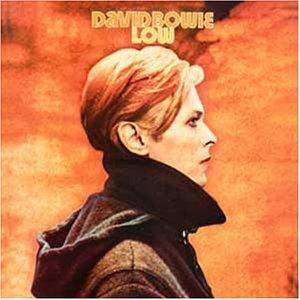
Image: David Bowie World collection / editorial use
Released on 14 January 1977, Low became one of the most radical albums in David Bowie’s career. It marked a dramatic break from the soul-influenced sound of Young Americans and the dark elegance of Station to Station, replacing conventional rock structures with fragments, instrumentals, electronic textures and a new sense of emotional space.
Although often described as the beginning of Bowie’s Berlin period, Low was not recorded entirely in Berlin. Much of the album was created at Château d’Hérouville in France, with further work completed at Hansa in Berlin. That mixture of locations helped shape an album that felt both European and deeply personal.
- Album: Low
- Released: 14 January 1977
- Main recording location: Château d’Hérouville, France
- Additional recording: Hansa Studio, Berlin
- Working title: New Music: Night And Day
- Producers: David Bowie and Tony Visconti
- Key collaborator: Brian Eno
- Label: RCA Records
- Previous album: Station to Station
- Next album: “Heroes“
- Part of: The Berlin Trilogy
From Los Angeles To Europe
The story of Low begins with Bowie’s need to escape the destructive atmosphere surrounding him in Los Angeles.
During the mid-1970s, Bowie had achieved major success in America, but his personal life had become increasingly unstable. The cocaine-heavy Los Angeles period, the pressures of fame and the intense Thin White Duke persona left him physically and mentally exhausted.
Rather than continue in that environment, Bowie began looking toward Europe. He wanted distance, anonymity and a different artistic language.
The End Of The Thin White Duke
Station to Station had introduced the Thin White Duke, one of Bowie’s most elegant but troubling characters.
By the time Bowie began moving toward Low, that persona had reached its limit. The new album would not present another theatrical character in the same way as Ziggy Stardust, Aladdin Sane or the Thin White Duke.
Instead, Low sounded like the aftermath of those identities: broken pieces, brief lyrics, sudden endings, long instrumental passages and a mood of recovery rather than performance.
Iggy Pop And The Road To Renewal
One of the most important steps toward Low was Bowie’s work with Iggy Pop.
In 1976, Bowie helped Iggy record The Idiot, an album that became a crucial bridge between Station to Station and Low. The project allowed Bowie to experiment with darker textures, electronic sounds and more European musical ideas before applying them fully to his own work.
Working with Iggy also gave Bowie a sense of purpose. Helping another artist rebuild his career became part of Bowie’s own recovery and creative redirection.
Château d’Hérouville
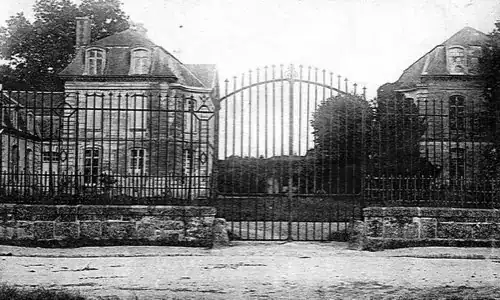
The main recording sessions for Low took place at Château d’Hérouville, a residential studio north of Paris.
Bowie had already worked there during the Pin Ups period, so the location was familiar. The château offered privacy, isolation and the freedom to work without the distractions of London or Los Angeles.
This setting was essential to the album’s atmosphere. The musicians lived and recorded in the same environment, allowing ideas to develop quickly and unpredictably.
Brian Eno Enters The Picture
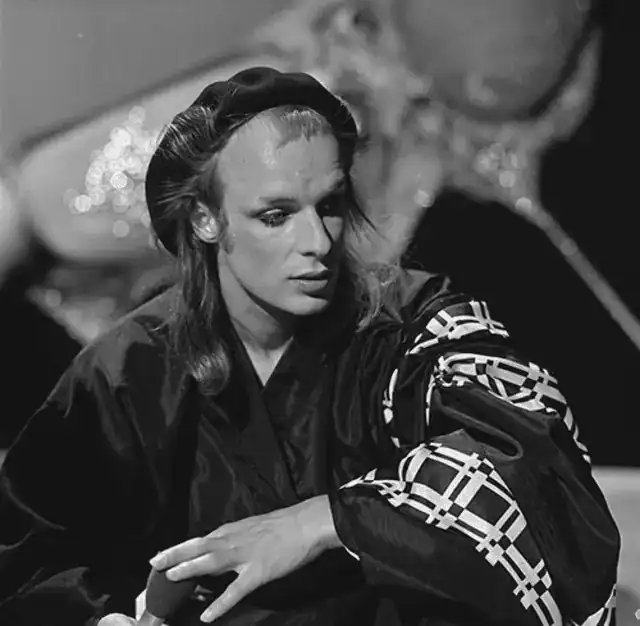
Brian Eno became one of the key creative figures in the making of Low.
Bowie admired Eno’s work with Roxy Music and his solo albums, especially the way Eno combined song structures with ambient and experimental textures.
Eno did not simply act as a keyboard player. His role was conceptual, encouraging unusual working methods, unexpected sounds and new ways of thinking about structure.
Tony Visconti And The Sound Of Low
Producer Tony Visconti was equally crucial to the album.
Visconti helped give Low its distinctive sonic character, especially through the treatment of Dennis Davis’s drums.
One of the most important studio tools was the Eventide Harmonizer, which Visconti used to transform the drum sound into something sharp, unnatural and futuristic.
That processed drum sound became one of the defining features of the album and helped separate Low from Bowie’s earlier records.
The Musicians Behind Low
Although Low sounded radically new, Bowie did not abandon all of his previous collaborators.
The rhythm section of Carlos Alomar, George Murray and Dennis Davis remained central. Their playing gave the album its physical energy, even when the arrangements became fragmented or experimental.
Guitarist Ricky Gardiner brought a fresh melodic voice to the sessions, most famously on Always Crashing In The Same Car. Pianist Roy Young also contributed, adding another layer to the record’s unusual mixture of rock, funk, electronics and atmosphere.
A New Working Method
The recording process for Low was built around uncertainty and experiment.
Bowie often worked from fragments rather than fully finished songs. Lyrics were brief, images were incomplete, and many tracks developed from mood, rhythm or texture rather than traditional songwriting structures.
This method suited the emotional state of the album. Low does not always explain itself. It suggests, withdraws, interrupts and leaves space.
The Sound Bowie Wanted
Bowie was deeply interested in European music during this period, especially the work of artists such as Kraftwerk, Neu!, Harmonia and Brian Eno.
Instead of copying those influences directly, he filtered them through his own sense of melody, rhythm and emotional drama.
The result was an album that still sounded like David Bowie, but one that had moved far beyond conventional rock expectations.
Track Listing
The track listing of Low shows the album’s unusual structure: a first side made of short, fragmented songs and a second side dominated by instrumental and atmospheric pieces.
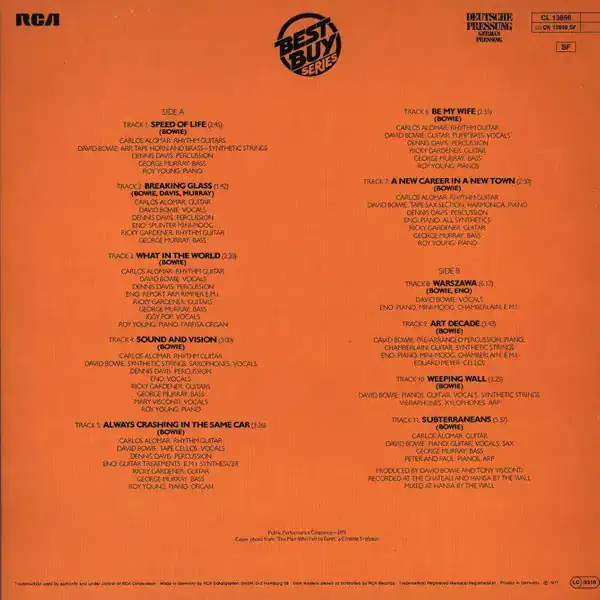
Image: David Bowie World collection / editorial use
- Speed Of Life
- Breaking Glass
- What In The World
- Sound And Vision
- Always Crashing In The Same Car
- Be My Wife
- A New Career In A New Town
- Warszawa
- Art Decade
- Weeping Wall
- Subterraneans
This division between concise songs and expansive instrumentals became one of the defining features of the album and helped establish the format that would shape Bowie’s next great creative period.
Side One: Songs Of Isolation
The first side of Low contains some of the shortest and most fragmented songs Bowie had ever released.
Tracks such as Breaking Glass, What In The World and Be My Wife often feel unfinished on first listen, but that was part of Bowie’s intention. Rather than telling complete stories, the songs function as snapshots of thoughts, emotions and memories.
The lyrics are often brief, interrupted and elusive. Bowie was less interested in traditional narrative songwriting and more interested in capturing emotional states.
The result was an album that felt remarkably modern. Many later post-punk and alternative artists would adopt similar approaches during the late 1970s and early 1980s.
Sound And Vision

The most accessible song on the album was Sound And Vision.
Built around a bright melody and an uplifting arrangement, the song created a striking contrast between sound and subject matter. While the music feels optimistic and energetic, the lyrics suggest isolation, recovery and creative rebuilding.
The song became one of the album’s biggest successes, reaching number three on the UK Singles Chart and helping introduce the new Bowie sound to a wider audience.
Today, Sound And Vision remains one of the defining recordings of Bowie’s Berlin period and one of the most influential singles of his career.
Be My Wife
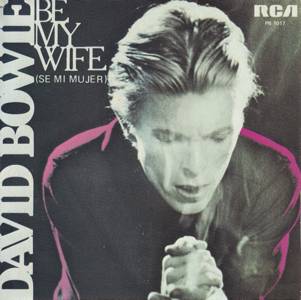
Be My Wife was released as the second single from Low in 1977.
Unlike the brighter and more immediately accessible Sound And Vision, the song has a raw, almost cabaret-like quality, driven by piano, guitar and Bowie’s urgent vocal performance.
The lyric can be heard as a plea for companionship during a period when Bowie was moving away from Los Angeles, reassessing his personal life and beginning a new creative chapter in Europe.
Although the single did not achieve the same commercial success as Sound And Vision, it remains one of the most direct and emotionally revealing songs on Low.
The Instrumental Landscape
The second side of Low surprised many listeners in 1977.
Instead of continuing with conventional songs, Bowie and Eno presented a sequence of atmospheric instrumentals that explored mood, location and memory.
This was highly unusual for a major rock artist at the time. Bowie effectively devoted half an album to music that relied on texture and atmosphere rather than traditional songwriting.
Although initially controversial, these recordings would become some of the most influential pieces in his catalogue.
Warszawa
One of the most celebrated pieces on the album is Warszawa.
Inspired by Bowie’s experience of travelling through Warsaw during the mid-1970s, the composition evokes a sense of distance, melancholy and emotional stillness.
The track combines Brian Eno’s minimalist musical ideas with Bowie’s haunting vocal performance, creating one of the most powerful moments on the entire album.
Many listeners regard Warszawa as the emotional centre of Low.
Art Decade, Weeping Wall And Subterraneans
The remaining instrumentals continued the album’s exploration of atmosphere and place.
Art Decade reflected Bowie’s impressions of West Berlin, while Weeping Wall drew inspiration from the Berlin Wall itself.
The closing track Subterraneans originated from ideas developed during Bowie’s involvement with The Man Who Fell To Earth. Over time it evolved into one of the most moving pieces on the album.
Its mournful saxophone lines and distant vocal textures bring Low to a haunting and unresolved conclusion.
The Low Profile Cover
The album’s artwork perfectly reflected the music inside.
Rather than commissioning a completely new image, Bowie selected a still from Nicolas Roeg’s film The Man Who Fell To Earth, in which he portrayed Thomas Jerome Newton.
The image shows Bowie in profile, creating a visual pun on the album title: a “low profile”.
The heavily manipulated orange and black colour scheme reinforced the album’s themes of isolation, transformation and emotional distance.
The artwork marked a dramatic departure from the theatrical covers of the Ziggy Stardust and Aladdin Sane years, presenting a more introspective and minimalist visual identity.
Want to discover the full story behind the Low album cover? Explore the photography, its connection with The Man Who Fell to Earth and the design of one of Bowie’s most influential album sleeves.
Berlin And The Final Stages
Although much of the recording had already taken place in France, Berlin became increasingly important during the completion of the project.
The city offered Bowie a fresh perspective and a degree of anonymity that had become impossible elsewhere.
Its divided landscape, political tension and thriving artistic culture all contributed to the atmosphere surrounding Low.
The move also laid the foundations for “Heroes“ later in 1977 and Lodger in 1979.
RCA’s Confusion
When Bowie delivered Low to RCA Records, the reaction was mixed.
The company had expected a more straightforward follow-up to Station to Station. Instead, they received an album filled with instrumentals, fragmented lyrics and experimental production techniques.
Executives questioned its commercial potential and were uncertain how to market it.
Despite those concerns, Bowie refused to compromise. The album was eventually released in January 1977 and quickly demonstrated that audiences were willing to follow him into unfamiliar territory.
Initial Reception
Critical reaction was divided upon release.
Some reviewers considered the album too experimental and inaccessible, while others immediately recognised its originality and ambition.
Over time, the reputation of Low grew enormously. What initially seemed difficult or unconventional came to be viewed as visionary.
Today, the album is regularly cited as one of the greatest and most influential records ever made.
Legacy
The influence of Low extends far beyond David Bowie’s own catalogue.
Its combination of electronic textures, ambient experimentation, fragmented songwriting and emotional honesty helped shape post-punk, new wave, synth-pop, alternative rock and ambient music.
Artists as diverse as Joy Division, The Cure, Nine Inch Nails, Radiohead and countless others have acknowledged the album’s importance.
More than four decades after its release, Low remains one of Bowie’s most daring artistic statements and one of the defining achievements of twentieth-century popular music.
Article Origin
This page was created using historically verified information about the recording of Low, including documented interviews with David Bowie, Brian Eno, Tony Visconti and members of the recording sessions.
Additional research was drawn from contemporary studio accounts, Berlin-period documentation, RCA Records history, published Bowie biographies and archival material relating to Château d’Hérouville, Hansa Studio and the development of the Berlin Trilogy.
