
The Berlin Trilogy

The Berlin Trilogy refers to three interconnected David Bowie albums — Low (1977), “Heroes” (1977) and Lodger (1979) — that together represent one of the most radical reinventions in popular music history.
Created during a period of personal recovery and artistic renewal, these records reshaped Bowie’s sound by embracing electronic textures, fragmentation and emotional restraint. It is important to note, however, that the term “Berlin Trilogy” is retrospective and refers to Bowie’s creative period rather than strictly to recording locations.
- Period: 1977–1979
- Albums: Low, “Heroes”, Lodger
- Main collaborators: Brian Eno, Tony Visconti
- Recorded in: Berlin, France, Switzerland
Escape to Berlin
In the mid-1970s, David Bowie’s life had become increasingly unstable, dominated by cocaine addiction, paranoia, and a growing sense of creative exhaustion. The relentless pace of fame, combined with the pressures of maintaining his larger-than-life persona, had begun to take a serious toll on both his mental and physical health. Bowie found himself trapped in a cycle of excess and isolation, surrounded by the glitter of Los Angeles yet feeling profoundly disconnected from reality. The city that once symbolized success and opportunity had turned into a suffocating environment that fueled his worst habits.
Desperate for change, Bowie made the bold decision to leave behind the chaos of Los Angeles and relocate to Europe. Before settling in Berlin, he spent time in Switzerland in 1976, beginning the process of recovery and artistic transition that would define this period. Berlin, however, became the emotional and creative centre of this transformation.
Berlin in the 1970s was a place unlike any other—physically and ideologically split by the Berlin Wall, shaped by Cold War anxieties, and yet thriving as a hub of underground art, music, and counterculture. It was precisely this contrast—the mixture of darkness and creative energy—that drew Bowie in.
Seeking anonymity and recovery, Bowie settled in West Berlin, far removed from the intrusive spotlight of international fame. Unlike the celebrity-saturated environments he was used to, Berlin allowed him to blend in. He could walk the streets, visit cafés, and explore the city without constant attention. This newfound sense of normalcy became essential to his healing process.
Berlin offered Bowie more than just distance from his former life; it provided fertile ground for artistic reinvention. The city’s raw, unpolished atmosphere deeply influenced his creative direction.
The city itself became a source of inspiration. The ever-present Berlin Wall stood as a stark reminder of division—not only political, but also personal and emotional. This theme of fragmentation would later echo throughout his work.
Equally important was the sense of community Bowie discovered, particularly through his close collaboration with Iggy Pop, whose own artistic revival ran parallel to Bowie’s transformation during this period.
Low (1977)
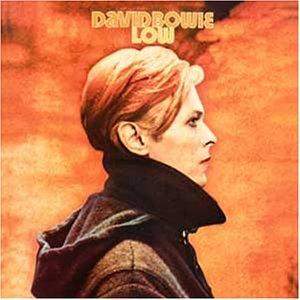
Low, the groundbreaking 1977 album by David Bowie, marked a radical departure from the conventional rock structures that had defined much of his earlier work. Rather than relying on fully developed narratives and traditional song formats, Bowie embraced a more fragmented, introspective, and experimental approach.
One of the most distinctive aspects of Low is its split structure. The first half consists of short, fragmented songs, while the second half moves into ambient and instrumental territory developed with Brian Eno.
It is important to note that much of Low was recorded in France before being completed and mixed in Berlin, reinforcing the idea that the “Berlin Trilogy” reflects a creative phase rather than a single location.
“Heroes” (1977)

“Heroes” stands as one of the defining works of his Berlin period. Recorded largely at Hansa Studios near the Berlin Wall, it captures the unique atmosphere of a divided city.
The album builds on the innovations of Low while reintroducing more conventional song structures. The title track remains one of Bowie’s most iconic works.
Hansa Studios itself, located close to the Berlin Wall, became the symbolic centre of this period, contributing to the album’s emotional and sonic identity.
Lodger (1979)

Lodger is often regarded as the most unconventional entry in the trilogy. Unlike the previous albums, it was largely recorded in Switzerland and later completed in New York.
Rather than continuing the ambient soundscapes, Lodger returns to song-based structures while incorporating global musical influences.
The album reflects Bowie’s growing interest in themes of travel, identity and cultural fragmentation.
Artistic philosophy
During the creation of the Berlin Trilogy, Bowie consciously rejected spectacle and commercial expectations. Working with Brian Eno, whose role was not that of a traditional producer but a conceptual and sonic collaborator, he embraced experimentation and unpredictability.
Sound, texture and atmosphere became central, redefining what a rock album could be.
Influence and legacy
The impact of the Berlin Trilogy extends far beyond its original release, shaping post-punk, new wave and electronic music.
More than just a stylistic phase, it represents Bowie’s belief in reinvention and artistic evolution.
