
Donny McCaslin & David Bowie – Blackstar Saxophonist and Final Collaborator
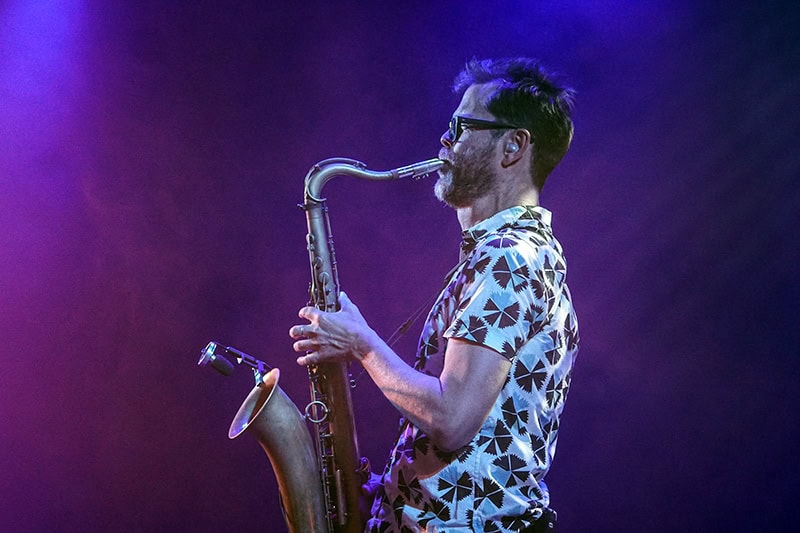
Photo: G. Barta / Wikimedia Commons / CC BY-SA 4.0 (editorial use)
Donny McCaslin is an American jazz saxophonist, composer and bandleader whose working band became the musical core of David Bowie’s final studio album, Blackstar.
Bowie did not choose McCaslin by accident. He was drawn to the intensity, openness and modern language of McCaslin’s group, a band that combined jazz improvisation with electronic texture, rock energy and fearless rhythmic movement.
McCaslin’s saxophone became one of the defining voices of Bowie’s final artistic statement. On Blackstar, his playing does not merely decorate the songs; it often moves beside Bowie’s voice like a second emotional narrator.
- Name: Donny McCaslin
- Born: 11 August 1966, Santa Cruz, California, USA
- Instrument: Tenor saxophone
- Role: Saxophonist, composer, bandleader
- Bowie connection: Sue (Or In A Season Of Crime) and Blackstar
- Key Bowie album: Blackstar (2016)
- Blackstar band: Donny McCaslin, Jason Lindner, Tim Lefebvre, Mark Guiliana and Ben Monder
- Producer: Tony Visconti
- Historical importance: Helped shape Bowie’s final studio sound
Who is Donny McCaslin?
Donny McCaslin is one of the most important saxophonists in contemporary jazz. Long before his work with David Bowie brought him to a wider rock audience, he had already built a respected career as a bandleader, improviser and composer.
His music draws on modern jazz, fusion, electronics, rock, drum-and-bass, ambient texture and experimental improvisation. That openness made him an ideal collaborator for Bowie at the end of his life, when Bowie was still searching for new musical possibilities rather than returning to familiar formulas.
McCaslin’s playing is powerful but not predictable. He can be lyrical, fierce, abstract, melodic or explosive, often moving through several emotional states inside a single solo.
Early life and musical background
Donny McCaslin was born on 11 August 1966 in Santa Cruz, California. He grew up in a musical environment and began playing tenor saxophone at the age of twelve.
His father was a pianist and vibraphonist, and McCaslin was exposed early to a wide range of musical styles. During his teenage years, he played in school jazz bands and local groups, gaining experience in jazz, Latin music, funk, reggae and other forms that would later feed into his own genre-crossing language.
This broad musical upbringing is important. McCaslin did not become the type of jazz musician who works inside one narrow tradition. From the beginning, his musical identity was shaped by movement between styles.
Berklee and the professional jazz world
McCaslin attended the Berklee College of Music in Boston, one of the most important jazz and contemporary music schools in the United States.
After Berklee, he joined vibraphonist Gary Burton’s quintet, touring with Burton for several years. This was an important early professional step, placing McCaslin in a demanding musical environment with a major jazz figure.
He later moved to New York, where he became part of the city’s contemporary jazz scene. He worked with musicians including Eddie Gomez, Steps Ahead, Maria Schneider, Dave Douglas and others.
Maria Schneider and the first Bowie connection
The path from Donny McCaslin to David Bowie ran through composer and bandleader Maria Schneider.
Schneider worked with Bowie on the original version of Sue (Or In A Season Of Crime). During that period, she played Bowie McCaslin’s album Casting for Gravity and suggested that he should work with McCaslin.
This recommendation was decisive. Bowie was not simply looking for a saxophonist to add a solo. He was listening for a musical world: a band sound, an improvisational language and a level of risk that could open a new direction.
The 55 Bar in New York
After Maria Schneider’s recommendation, Bowie went to see Donny McCaslin and his band perform at the 55 Bar in Greenwich Village, New York.
The 55 Bar was a small venue, not a grand rock stage. That detail matters. Bowie, already a global artist, was still curious enough to enter a small New York club and listen closely to musicians working at the edge of jazz, electronics and rock energy.
Bowie did not introduce himself to the band that night, but the visit helped confirm his interest. Soon afterward, McCaslin and members of his group were drawn into Bowie’s final recording world.
Donny McCaslin on Bowie visiting the 55 Bar
“I was definitely nervous. I glanced up and saw where he was sitting.”
— Donny McCaslin, The Guardian interview, October 2016
A band, not just a saxophonist
One of the most important facts about Bowie’s collaboration with Donny McCaslin is that Bowie did not merely hire McCaslin as an isolated session player.
Bowie was drawn to McCaslin’s working band: musicians who already had their own chemistry, their own vocabulary and their own way of reacting to each other in real time.
Donny McCaslin on Bowie joining the band’s musical dynamic
“We had this group where we were playing together a lot, and David just stepped into that dynamic.”
— Donny McCaslin, Maggiore on Bowie interview
This decision was central to the sound of Blackstar. Instead of building the album around standard rock session players, Bowie placed his final songs inside a living contemporary jazz group.
Sue (Or In A Season Of Crime)
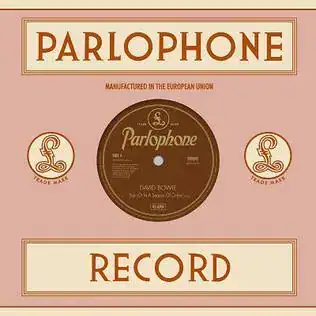
Before the recording of Blackstar, Bowie had already begun exploring this new musical direction through the single Sue (Or In A Season Of Crime).
The original 2014 version was arranged by Maria Schneider and recorded with a large jazz orchestra. The song immediately revealed Bowie’s renewed interest in contemporary jazz language, unusual harmonic structures and dramatic musical storytelling.
During the development of Blackstar, Bowie revisited the song and re-recorded it with Donny McCaslin’s group. The darker and more aggressive version became a direct bridge between the Schneider collaboration and the sessions that would produce Bowie’s final album.
Looking back, Sue can be seen as the first step toward the world of Blackstar.
The Blackstar Band
Although Donny McCaslin became the public face of Bowie’s jazz-influenced final work, the sound of Blackstar was created by an entire group of musicians who had already been working together.
The core Blackstar musicians were:
David Bowie – vocals, songwriting
Donny McCaslin – tenor saxophone
Jason Lindner – keyboards
Tim Lefebvre – bass
Mark Guiliana – drums
Ben Monder – guitar
Tony Visconti – producer
Together they created one of the most distinctive and adventurous albums of Bowie’s career.
The Blackstar sessions
Recording for Blackstar took place at The Magic Shop and Human Worldwide Studios in New York during 2015. The principal band sessions with Donny McCaslin and his fellow musicians were held at The Magic Shop.
Bowie deliberately avoided creating a conventional rock album. Instead, he encouraged the musicians to think freely, improvise and respond instinctively to the material.
Producer Tony Visconti later described the atmosphere as highly creative and remarkably open. Bowie arrived with ideas, sketches, lyrics and references, but he allowed the musicians significant freedom to shape the final sound.
Donny McCaslin on Bowie giving the band creative freedom
“He gave us the green light to do what we do, and it was wonderful.”
— Donny McCaslin, The Times interview
This approach made the sessions feel closer to contemporary jazz recording than traditional rock production.
Bowie and improvisation
One of the reasons Bowie admired Donny McCaslin’s group was their ability to react spontaneously to changing musical situations.
Throughout his career Bowie had often sought collaborators who could surprise him. He was rarely interested in musicians who simply executed instructions. Instead, he wanted players who could bring new ideas into the room.
McCaslin later recalled that Bowie encouraged experimentation and often preferred unexpected solutions over predictable ones.
This openness helped make Blackstar feel alive, fluid and difficult to categorize.
The sound of Blackstar

Released on 8 January 2016, Bowie’s sixty-ninth birthday, Blackstar fused jazz, art rock, electronics, ambient music and experimental composition.
Donny McCaslin’s saxophone became one of the album’s most recognizable voices. Rather than functioning as a traditional jazz soloist, he often acted as a second narrator inside the music, answering Bowie’s vocal lines, intensifying emotional moments and helping create the album’s unique atmosphere.
His contributions can be heard throughout the record, but they are particularly striking on the title track Blackstar, where the saxophone moves between mystery, tension and release.
The instrument becomes almost another character in the story.
Lazarus
McCaslin’s playing is equally important on Lazarus, one of Bowie’s most emotionally powerful late-career recordings.
The song balances vulnerability and strength, and the saxophone helps reinforce that tension. Rather than dominating the arrangement, McCaslin carefully weaves around Bowie’s voice, adding emotional depth without distracting from the lyric.
Following Bowie’s death on 10 January 2016, Lazarus took on additional meaning for listeners around the world.
McCaslin’s performance remains one of the defining elements of the recording.
How Bowie viewed the band
Bowie did not approach Donny McCaslin and his colleagues as hired jazz musicians.
He treated them as creative equals and valued their individual voices. This respect helped create an atmosphere where ideas could develop naturally rather than being forced into a predetermined structure.
Several members of the group later spoke about how engaged, curious and enthusiastic Bowie remained throughout the sessions.
Despite decades of success behind him, he continued to behave like an artist searching for the next discovery.
Donny McCaslin has often spoken about the profound impact Bowie had on him both personally and professionally.
In interviews after Bowie’s death, McCaslin described the experience of recording Blackstar as one of the most important moments of his career.
The collaboration demonstrated how Bowie could still reinvent himself by embracing younger musicians and new musical languages.
The final masterpiece
Today, many critics consider Blackstar one of Bowie’s greatest achievements.
The album’s success is inseparable from the musicians who helped create it. Among them, Donny McCaslin occupies a special place because his saxophone became one of the defining sounds of Bowie’s final chapter.
For many listeners, it is impossible to imagine Blackstar without McCaslin’s presence.
Life after Blackstar
Following the release of Blackstar and Bowie’s death in January 2016, Donny McCaslin found himself associated with one of the most celebrated albums of the twenty-first century.
Donny McCaslin on losing David Bowie
“We had this amazing connection, and then he was gone.”
— Donny McCaslin, The Guardian interview, October 2016
While he had already established a significant reputation within jazz circles, his work with Bowie introduced him to a much broader international audience. Fans who had never previously followed contemporary jazz suddenly discovered McCaslin through Blackstar.
Rather than attempting to repeat the album’s formula, McCaslin continued to develop his own musical identity, carrying forward some of the creative lessons he learned from Bowie while remaining committed to his own artistic path.
Beyond Now
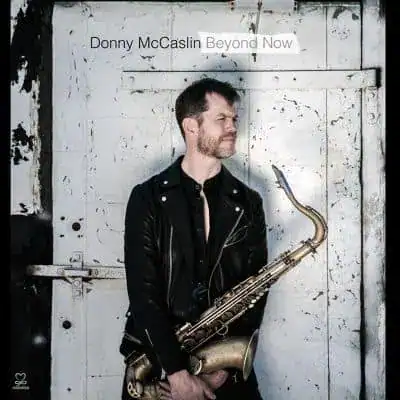
One of the first major projects to emerge after Bowie’s death was McCaslin’s 2016 album Beyond Now.
The record was deeply influenced by the experience of making Blackstar. While remaining rooted in jazz improvisation, it expanded into electronic textures, rock-inspired production and a broader sonic palette.
The album included an interpretation of Bowie’s A Small Plot Of Land, demonstrating both McCaslin’s admiration for Bowie and his desire to continue exploring the creative territory opened by their collaboration.
For many listeners, Beyond Now became the first chapter in McCaslin’s post-Blackstar artistic journey.
BLOW.
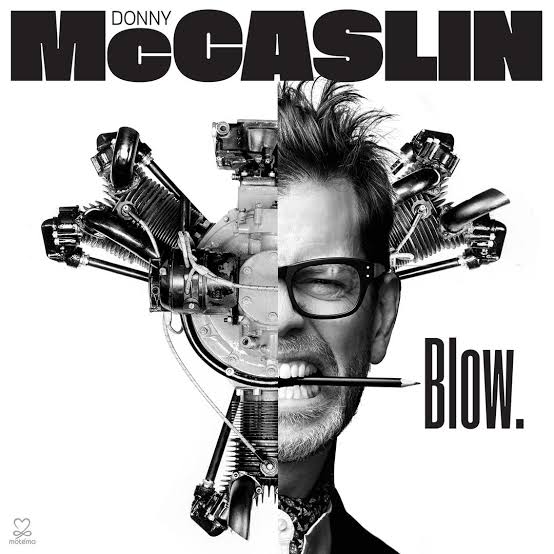
Released in 2018, after Beyond Now, BLOW. marked a new step in Donny McCaslin’s post-Blackstar journey. The album was an exploration of songwriting and collaboration, taking McCaslin further beyond conventional jazz structures and into a world shaped by songs, electronics, rock textures and improvisation.
The album was produced and mixed by Steve Wall and brought together several musicians closely connected with McCaslin’s work around the Blackstar period, including Tim Lefebvre, Jason Lindner, Mark Guiliana and Ben Monder. They were joined by Zach Danziger, Nate Wood and Jonathan Maron.
BLOW. also expanded McCaslin’s work with singers and songwriting collaborators. Guest vocalists and collaborators included longtime Bowie collaborator Gail Ann Dorsey, as well as Ryan Dahle, Jeff Taylor and Mark Kozelek of Sun Kil Moon.
McCaslin later explained that the album developed while he was touring in the period after Blackstar and searching for a new creative direction. The process came gradually and required him to move outside his comfort zone, entering unfamiliar musical territory without knowing exactly where it would lead, but trusting that the journey would take him somewhere interesting.
Donny McCaslin on finding a new direction after Blackstar
“Trying to find my way w/o a map, but trusting I’d arrive somewhere interesting.”
— Donny McCaslin, correspondence with DavidBowieWorld.com, August 2026
Further reading: Rolling Stone – Donny McCaslin: BLOW. Album Review
I Want More
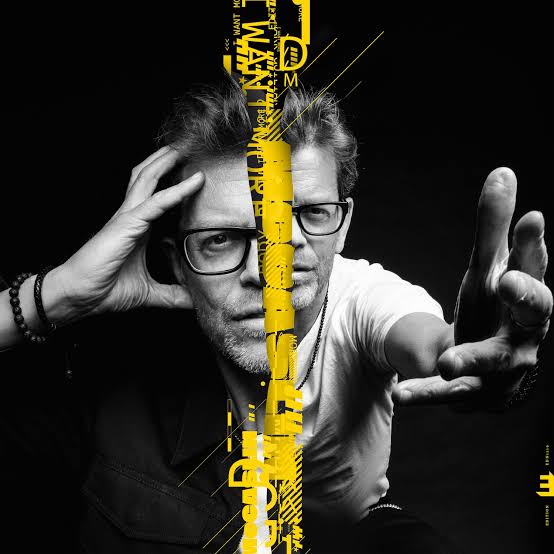
Released in 2023, I Want More continued McCaslin’s exploration of genre-defying music.
Produced by David Fridmann and primarily mixed by Fridmann, with Steve Wall mixing one track, the album combined jazz improvisation with elements of electronica, post-rock and experimental composition, with a strong emphasis on atmosphere and sonic texture.
Critics praised the record for refusing to fit neatly into any single category, a quality that many listeners recognised as being spiritually aligned with Bowie’s own approach to artistic reinvention.
Rather than looking backward, McCaslin continued moving forward, exactly the kind of creative restlessness that Bowie himself valued.
Lullaby For The Lost

In 2025, McCaslin released Lullaby For The Lost, an album that further expanded his increasingly rock-oriented musical language.
Drawing inspiration from artists as diverse as Neil Young, Nine Inch Nails and Rage Against The Machine, the album demonstrated how far McCaslin had travelled from conventional jazz categories.
Longtime collaborators including Tim Lefebvre (who produced the album), Jason Lindner, Ben Monder, Jonathan Maron, Nate Wood, Zach Danziger and Mark Guiliana, as well as mixers Steve Wall, David Fridmann and Aaron Nevezie, contributed to the project, maintaining many of the musical relationships that had also helped define the Blackstar era.
Critics praised the album’s emotional depth, adventurous production and ability to balance vulnerability with power.
MXD

Released in 2026, MXD is a joint project by Donny McCaslin and Canadian singer, songwriter, guitarist and producer Ryan Dahle. The album continued McCaslin’s exploration of songwriting, improvisation and the meeting of different musical languages.
Alongside McCaslin and Dahle, the project features longtime collaborators Tim Lefebvre, Jason Lindner, Mark Guiliana, Zach Danziger and Jonathan Maron, with additional contributions from Steve Wall and Jeff Taylor.
MXD was produced by Ryan Dahle and mixed by David Fridmann. Donny McCaslin also noted that Jon Fridmann handled the mix of Amos.
For McCaslin, the project consciously connects with ideas that had been central to his work with David Bowie. He described MXD as an embrace of the blueprint of Blackstar: creative songwriting combined with improvisation, musical interaction and the use of different musical languages within the same work.
Donny McCaslin on the connection between MXD and Blackstar
“An embrace of the blueprint of Blackstar.”
— Donny McCaslin, correspondence with DavidBowieWorld.com, August 2026
Further reading: The Big Takeover – MXD Review
Blackstar Symphony
McCaslin has also played an important role in keeping the musical legacy of Blackstar alive through special performances and concert projects.
One of the most notable examples has been Blackstar Symphony, which reimagines Bowie’s final album in an orchestral setting while preserving the spirit of experimentation that defined the original recordings.
These performances, which include longtime Bowie collaborator Gail Ann Dorsey, as well as David Poe and John Cameron Mitchell, demonstrate how the music continues to evolve long after Bowie’s death, reaching new audiences and new generations of listeners.
What Bowie meant to Donny McCaslin
In interviews, McCaslin has consistently spoken about Bowie with admiration and gratitude.
He has described Bowie as a deeply curious artist who never stopped searching for new ideas, new collaborators and new creative possibilities.
What impressed McCaslin most was not Bowie’s fame, but his openness. Even after decades as one of the world’s most celebrated musicians, Bowie remained eager to learn, experiment and take artistic risks.
Donny McCaslin on his lasting connection with David Bowie
“For me to be associated with him is really special.”
— Donny McCaslin, The Guardian interview, October 2016
For McCaslin, that example continues to serve as an inspiration.
Legacy within Bowie’s universe
Within David Bowie’s vast network of collaborators, Donny McCaslin occupies a unique position.
Unlike musicians associated with a particular tour or brief recording project, McCaslin helped shape Bowie’s final artistic statement. His saxophone is woven into the fabric of Blackstar, an album that many regard as one of the greatest farewell works in modern music.
His contribution was not limited to technical performance. He brought an entire musical philosophy into Bowie’s world: improvisation, openness, risk-taking and the willingness to embrace uncertainty.
In return, Bowie challenged McCaslin and his band to think beyond stylistic boundaries and to trust their instincts.
The result was one of the most remarkable collaborations of Bowie’s final decade and one of the defining musical partnerships of his final years.
Today, Donny McCaslin remains one of the most important living custodians of the Blackstar legacy — not by preserving it unchanged, but by continuing to embody the spirit of artistic curiosity that Bowie championed throughout his life.
Official Website & Further Information
More information about Donny McCaslin, his recordings, current projects and live performances can be found through his official website.
Donny McCaslin Official Website:
donnymccaslin.com
Further information about David Bowie’s final studio album Blackstar, including its release history and place within Bowie’s official catalogue, can be found through David Bowie’s official website.
David Bowie Official Website:
davidbowie.com
Article Origin
This article was created for DavidBowieWorld.com as part of the website’s continuing documentation of the musicians, producers, artists and other collaborators who contributed to David Bowie’s life and work.
Donny McCaslin is included because of his direct and documented collaboration with David Bowie, beginning with Sue (Or In A Season Of Crime) and culminating in Bowie’s final studio album, Blackstar.
The wider biographical material is included to place that collaboration in context: McCaslin was already an established jazz saxophonist, composer and bandleader before Bowie entered his musical world, and his career has continued to develop independently since their work together.
Particular care has been taken to distinguish McCaslin’s documented work with Bowie from his wider career. The purpose of this page is not simply to describe Blackstar, but to document the musician behind one of the album’s defining instrumental voices and the creative path that brought Donny McCaslin and David Bowie together.
Artist Review: This article was personally reviewed by Donny McCaslin in August 2026. McCaslin provided corrections, additional credits and first-hand information about his post-Blackstar work, including BLOW., I Want More, Lullaby For The Lost, MXD and Blackstar Symphony. His contributions and corrections have been incorporated into this page.
© DavidBowieWorld.com — David Bowie Collaborations & Creative Circle Archive.
