
Gail Ann Dorsey – Bassist, Vocalist & One of David Bowie’s Longest-Serving Musical Collaborators
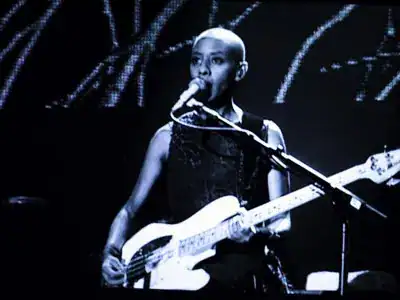
Photo: Mark Vandivert / Wikimedia Commons / CC BY-SA 2.0 (editorial use)
Gail Ann Dorsey is an American bassist, singer, songwriter and multi-instrumentalist whose collaboration with David Bowie became one of the defining musical partnerships of Bowie’s later career. Between 1995 and 2004 she was a permanent member of Bowie’s touring band, performing on five major world tours while also contributing to several studio recordings that documented Bowie’s remarkable artistic renaissance during his final decades as a recording artist.
Equally respected for her melodic bass playing and her expressive, soulful voice, Dorsey occupied a unique position within Bowie’s band. Unlike many backing musicians, she combined instrumental virtuosity with the ability to share lead vocal responsibilities whenever required. Her performances of Under Pressure, singing Freddie Mercury‘s original vocal lines opposite Bowie, became one of the most celebrated moments of Bowie’s live concerts throughout the late 1990s and early 2000s.
What began as a six-week commitment during the 1995 Outside Tour ultimately developed into almost a decade of collaboration. During those years Bowie repeatedly returned to Dorsey, valuing not only her musicianship but also her creativity, reliability and calm personality. Their professional relationship extended far beyond the concert stage, encompassing studio recordings, television appearances, rehearsals and countless performances around the world.
- Full name: Gail Ann Dorsey
- Born: November 20, 1962, Philadelphia, Pennsylvania, USA
- Profession: Bassist, vocalist, songwriter and multi-instrumentalist
- With David Bowie: 1995–2004
- First Bowie tour: Outside Tour (1995)
- Major tours: Outside, Earthling, Hours, Heathen and A Reality Tour
- Studio albums with Bowie: Earthling, Heathen, Reality, The Next Day and the posthumously released Toy
- Best known for: Singing Freddie Mercury‘s vocal parts on Under Pressure during Bowie’s concerts
Early Life in Philadelphia
Born in Philadelphia on 20 November 1962, Gail Ann Dorsey developed an intense fascination with music from an early age. Growing up in a household where records played constantly, she absorbed an unusually wide range of musical styles, from soul and rhythm and blues to singer-songwriters, rock and popular music of the 1960s and 1970s. Artists such as Carole King, Roberta Flack, Joan Armatrading and the great Philadelphia soul recordings left a lasting impression on her developing musical identity.
Dorsey first taught herself to play guitar before discovering the instrument that would eventually define her career. At the age of fourteen she switched to bass guitar after joining a local Top 40 cover band, quickly demonstrating an instinctive ability to combine melodic bass lines with a highly developed rhythmic sense. Unlike many bass players, she also continued singing while performing, a combination that would later become one of her greatest professional strengths.
Although music soon became her primary focus, Dorsey also possessed a deep interest in visual storytelling. After creating several Super 8 films during her teenage years she received a scholarship to the California Institute of the Arts, initially intending to pursue film-making and screenwriting. Before completing her studies, however, music proved impossible to resist. She left college, moved first to New York City and later settled in London, where her professional career began to accelerate rapidly.
Building a Career Before David Bowie
London during the 1980s offered Dorsey opportunities that would have been difficult to find elsewhere. Her exceptional bass playing, distinctive singing voice and ability to move comfortably between soul, rock, jazz and pop soon attracted the attention of established musicians. She performed with jazz ensembles, appeared with the Charlie Watts Big Band and gradually established herself as one of the most respected session musicians working in Britain.
At the same time she continued developing her own songwriting. Warner Bros. released her debut solo album, The Corporate World, in 1988, followed by Rude Blue in 1992. Both albums demonstrated that Dorsey was far more than a gifted bassist. She wrote sophisticated songs that blended soul, rock, pop and socially conscious lyrics, revealing the same adventurous musical curiosity that would later make her such a natural collaborator for David Bowie.
Tears for Fears and International Recognition
By the early 1990s Gail Ann Dorsey had become one of the most sought-after musicians working in Britain. Her combination of expressive bass playing, exceptional harmony singing and musical versatility made her an ideal collaborator for artists looking for far more than a conventional session player. Among the most significant of these collaborations was her work with Tears for Fears, whose sophisticated songwriting and ambitious studio productions provided an ideal environment in which Dorsey continued to develop as both a performer and arranger.

VIDEO: With Tears For Fears
-
VIDEO: With Tears For Fears
Tears For Fears & Gail Ann Dorsey- Elemental - Roland Orzabal
She joined Tears for Fears during the period surrounding the 1993 album Elemental, touring extensively as bassist and vocalist before contributing bass to the follow-up album Raoul and the Kings of Spain (1995). Working closely with Roland Orzabal proved particularly valuable. Dorsey has often described the experience as one of the first occasions on which she became deeply involved in collaborative songwriting at the highest professional level, broadening both her musical confidence and her understanding of studio production.
Those years also established her reputation throughout the international music industry. Producers, artists and musical directors increasingly recognised her rare ability to combine technical precision with emotional sensitivity, while her calm professionalism made her a favourite among touring musicians. Unknown to Dorsey, those same qualities had also attracted the attention of David Bowie.
An Unexpected Telephone Call
In 1995 Dorsey was working at Roland Orzabal’s home studio in England when her career took an unexpected turn. Without warning she received a telephone call from David Bowie himself. Bowie explained that he was preparing to embark on a new tour and wanted her to join his band as bassist and vocalist.
The invitation came as a complete surprise. Dorsey had never worked with Bowie before and had not expected to hear from him. Even more remarkable was the fact that there would be no formal audition. Bowie had already decided she was the musician he wanted. Years later Dorsey recalled that she was told she needed to begin almost immediately, leaving little time to consider what would become one of the defining decisions of her career.
Initially the commitment was presented as a relatively short engagement of approximately six weeks, covering Bowie’s forthcoming tour. Looking back, Dorsey has suggested that Bowie may have regarded those concerts as an opportunity for both sides to discover whether they worked well together. If that was indeed his intention, the experiment proved remarkably successful. Six weeks gradually became almost a decade.
Joining David Bowie’s Band
Dorsey entered Bowie’s musical world at a particularly adventurous moment. Bowie had recently completed Outside, his ambitious reunion with Brian Eno, and was once again exploring experimental music, industrial textures and multimedia performance. Rather than assembling a conventional backing band, Bowie deliberately chose musicians capable of improvisation, stylistic flexibility and creative risk-taking.
Dorsey fitted those requirements perfectly. Her background in soul, jazz, rock and singer-songwriter traditions allowed her to move naturally between Bowie’s older classics and his increasingly experimental new material. Just as importantly, Bowie recognised qualities that extended beyond her technical ability. He valued musicians who listened carefully, adapted instinctively and contributed ideas without overwhelming the music. Dorsey possessed all of those characteristics.
From the very beginning she discovered that Bowie’s rehearsals differed from those of most major touring artists. Rather than demanding rigid repetition, Bowie encouraged experimentation. Songs frequently evolved during rehearsals, arrangements changed without warning and musicians were expected to contribute creatively rather than simply reproduce existing recordings. For Dorsey, the experience proved both demanding and enormously rewarding.
The Outside Tour (1995)
Gail Ann Dorsey‘s first appearances with David Bowie took place during the 1995 Outside Tour, which opened in support of the critically acclaimed album 1. Outside. During much of the North American leg Bowie shared the bill with Nine Inch Nails, creating one of the most unusual touring partnerships of the decade. Instead of presenting two completely separate concerts, the performances were deliberately designed so that members of Bowie’s band and Nine Inch Nails overlapped during parts of the evening, creating a seamless transition between the two artists.
The arrangement exposed Dorsey to audiences who were often encountering Bowie’s music for the first time through the industrial rock audience surrounding Nine Inch Nails. Her powerful stage presence, melodic bass playing and confident vocals quickly established her as one of the standout members of Bowie’s new band. Although she had originally expected only a brief collaboration, it soon became apparent that she had become an indispensable part of Bowie’s live performances.
Becoming Bowie’s Musical Anchor
As the Outside Tour progressed, Gail Ann Dorsey quickly became far more than the band’s bassist. Bowie recognised that she possessed a rare combination of musical qualities that few performers could match. She was equally comfortable providing rock-solid bass lines, intricate vocal harmonies and occasional lead vocals, while maintaining an instinctive awareness of the overall musical picture. That versatility made her one of the most valuable members of Bowie’s touring ensemble.
Unlike many artists who expected musicians simply to reproduce the original recordings, Bowie encouraged creativity. He believed that every member of the band should contribute ideas and bring their own personality to the music. Dorsey flourished in that environment. Rather than treating concerts as identical reproductions from night to night, Bowie allowed arrangements to evolve naturally, trusting his musicians to respond instinctively on stage.
Dorsey would later describe Bowie as both a mentor and an extraordinary source of artistic inspiration. Watching him work taught her that technical ability alone was never enough. Curiosity, imagination and the willingness to take creative risks mattered just as much. Bowie constantly encouraged those around him to move beyond their comfort zones, often discovering abilities in his musicians before they recognised them themselves.
That mutual trust gradually transformed Dorsey into one of Bowie’s closest musical collaborators. Throughout rehearsals, recording sessions and international tours, she became one of the dependable figures at the centre of his band. Her calm professionalism and consistently high standards helped provide continuity during a period in which Bowie’s music continued to evolve from tour to tour.
Taking on Under Pressure
Perhaps no moment better illustrates Bowie’s confidence in Gail Ann Dorsey than his decision to ask her to perform Freddie Mercury‘s vocal parts in Under Pressure. The song had become one of the most celebrated recordings of Bowie’s entire career, and Mercury’s extraordinary vocal performance made it one of the most demanding duets in rock music.
Dorsey has often admitted that her first reaction was disbelief. She regarded Freddie Mercury as one of the greatest singers in popular music and could scarcely imagine attempting to perform his vocal lines in front of thousands of Bowie fans every night. Bowie, however, never doubted her ability. After informing her that she would be singing the part, he simply smiled and told her she had two weeks to learn it before walking away, leaving little opportunity for discussion.
For Dorsey the challenge extended beyond the vocals themselves. She would be required to sing Mercury’s demanding melodies while simultaneously performing the song’s bass line before large audiences around the world. The combination demanded exceptional concentration, technical control and confidence. Yet Bowie believed she possessed exactly the qualities needed to succeed.
His judgement proved entirely correct. Once introduced into the live set, Under Pressure rapidly became one of the defining highlights of Bowie’s concerts throughout the late 1990s and early 2000s. Rather than attempting to imitate Freddie Mercury, Dorsey brought warmth, soulfulness and emotional honesty to the performance, allowing the duet to develop its own distinctive identity while remaining respectful to the original recording.
A Signature Moment of Bowie’s Concerts
Night after night audiences witnessed one of the most memorable performances of Bowie’s later touring career. Standing beside Bowie, Gail Ann Dorsey delivered Mercury’s vocal lines with remarkable assurance while continuing to anchor the rhythm section on bass guitar. The performance demonstrated not only her extraordinary musicianship but also the exceptional level of trust Bowie placed in her.
Over time, Dorsey’s interpretation of Under Pressure became inseparable from Bowie’s live performances. Many fans who attended concerts between 1995 and 2004 now regard her version as one of the defining moments of Bowie’s final decade as a touring artist. It remains one of the finest examples of how Bowie continually reimagined his own catalogue, allowing trusted collaborators to contribute something new while preserving the emotional power of the original songs.
From Earthling to Reality
Following the success of the Outside Tour, David Bowie invited Gail Ann Dorsey to remain a permanent member of his musical organisation. What had begun as a six-week engagement evolved into one of the longest continuous collaborations of Bowie’s later career. As his confidence in her continued to grow, Dorsey became involved not only in live performances but also in the recording of new studio material.

Her first major studio contribution came with Earthling (1997), an album that embraced drum and bass rhythms, electronic textures and an energetic contemporary sound. Although radically different from much of Bowie’s earlier work, Dorsey’s musical adaptability allowed her to move naturally into the new material. Her bass playing provided both rhythmic stability and melodic movement while her backing vocals added warmth to an otherwise highly electronic production.
The accompanying Earthling Tour demonstrated once again how valuable Dorsey had become within Bowie’s live band. Songs from every period of Bowie’s career sat comfortably alongside the new material, with Dorsey moving effortlessly between aggressive rock numbers, atmospheric ballads and electronically driven arrangements. By this point audiences increasingly recognised her as one of the most familiar faces on stage beside Bowie.
The ‘hours…’ Period
Although Gail Ann Dorsey did not perform on the studio recordings for ‘hours…’ (1999), she remained an essential member of Bowie’s touring band during the promotional period that followed the album’s release. The more reflective mood of the new material demonstrated another aspect of her musicianship, as she adapted naturally from the intensity of Earthling to the quieter emotional atmosphere of songs such as Thursday’s Child, Survive and Something in the Air.
Rather than approaching each new album with an entirely different group of musicians, Bowie increasingly relied upon a stable core of trusted collaborators. Dorsey’s consistency, professionalism and musical intelligence made her one of the central figures within that group, helping to maintain continuity while Bowie’s songwriting continued to evolve.
Recording Heathen
Dorsey returned as a studio musician for Heathen (2002), an album that marked one of the most acclaimed periods of Bowie’s later career. Produced by Tony Visconti, the record combined reflective songwriting with richly layered arrangements, allowing Dorsey’s bass playing and vocal contributions to blend naturally into Bowie’s increasingly mature musical vision.

Unlike the aggressive experimentation of Earthling, Heathen explored themes of memory, mortality, spirituality and resilience. Dorsey’s understated musicianship proved perfectly suited to that atmosphere. Rather than drawing attention to herself, she strengthened the emotional depth of the recordings through carefully judged performances that served the songs above all else.
The subsequent Heathen Tour further confirmed the extraordinary chemistry that had developed between Bowie and his band. By now Dorsey understood Bowie’s musical instincts almost intuitively, allowing performances to flow with a natural ease that reflected years of shared experience on stage.
Reality and Bowie’s Final Tour
The collaboration continued with Reality (2003), the fourth Bowie studio album on which Dorsey contributed as both bassist and vocalist. Once again she became part of a carefully assembled group of musicians that included Earl Slick, Mike Garson, Sterling Campbell, Gerry Leonard and Tony Visconti, all working under Bowie’s direction.

To support the album Bowie launched the ambitious A Reality Tour, his longest world tour in almost two decades. Beginning in late 2003, the tour travelled across Europe, North America, Australia, New Zealand and Asia, presenting one of the strongest live bands of Bowie’s entire career. Dorsey occupied her now familiar position beside Bowie throughout the performances, continuing to provide outstanding bass playing, rich vocal harmonies and the unforgettable duet on Under Pressure.
Although the tour ended prematurely in 2004 after Bowie underwent emergency heart surgery, Dorsey’s final performances with him brought to a close nearly ten years of continuous touring. Few musicians remained such a constant presence throughout Bowie’s final period as an active live performer, making Gail Ann Dorsey one of the defining musical figures of his later career.
More Than a Band Member
Although Gail Ann Dorsey always described David Bowie first and foremost as her employer, their professional relationship gradually developed into a genuine friendship built upon mutual respect. Bowie admired her musicianship, but he also appreciated her curiosity, intelligence and willingness to explore new artistic ideas. Unlike many internationally famous performers who maintained a clear distance from their touring musicians, Bowie regularly invited Dorsey to share conversations about music, books, films and art.
Away from the concert stage Bowie frequently recommended novels, introduced her to unfamiliar recordings and encouraged her to continue broadening her artistic horizons. Dorsey has often recalled spending afternoons with Bowie listening to rare records from his vast personal collection while discussing music history, songwriting and the creative process. Those conversations became an education that extended far beyond rehearsals and recording sessions.
Bowie also encouraged independent thinking. Rather than expecting his musicians simply to follow instructions, he valued individual personalities and wanted every member of the band to contribute creatively. Dorsey later described the experience as being “paid to go to school”, explaining that every rehearsal, recording session and concert offered another opportunity to learn from Bowie’s remarkable imagination and artistic discipline.
Learning From David Bowie
One of the qualities Dorsey admired most was Bowie’s generosity towards the musicians around him. He believed that a successful band depended upon trust rather than control. Instead of surrounding himself with anonymous session players, Bowie deliberately chose individuals whose personalities complemented one another, often explaining that assembling a band resembled casting actors for a film. Once he had selected the right people, he encouraged them to perform with confidence and originality.
That philosophy profoundly influenced Dorsey’s own understanding of collaboration. She has spoken frequently about Bowie’s ability to recognise qualities in people that they did not yet see in themselves. Whether assigning her Freddie Mercury‘s demanding vocal lines on Under Pressure or encouraging her to contribute ideas during rehearsals, Bowie consistently challenged her to exceed her own expectations.
The atmosphere within Bowie’s band reflected that confidence. Rehearsals were disciplined but rarely intimidating, humour remained an important part of everyday life on tour, and practical jokes often accompanied the final concerts of each tour. Dorsey remembered Bowie laughing enthusiastically at backstage mischief, believing that rock and roll should never lose its sense of fun. Behind the professionalism remained an artist who approached creativity with the curiosity of someone still discovering music for the first time.
Toy and Bowie’s Love for His Band
In 2000 Bowie entered the studio with the musicians who had accompanied him throughout much of the previous decade to record Toy, a project built around newly recorded versions of songs from the very beginning of his career. The sessions were completed quickly and captured an unusually relaxed atmosphere, reflecting the remarkable chemistry that had developed between Bowie and his long-established touring band.

Although Toy remained officially unreleased for more than twenty years, Dorsey’s performances became part of Bowie’s posthumous musical legacy when the album finally appeared in 2021 as part of the Brilliant Adventure (1992–2001) box set. The recordings provide a fascinating snapshot of a mature Bowie revisiting his earliest compositions alongside musicians who understood his artistic language instinctively.
Dorsey has often suggested that Bowie simply enjoyed making music with that particular group of musicians. The relaxed atmosphere surrounding the Toy sessions reflected a band that had grown together through years of touring, recording and shared creative experiences. Rather than functioning as hired players, they had become trusted collaborators capable of anticipating Bowie’s musical instincts almost without discussion.
The Next Day
After Bowie’s withdrawal from touring in 2004, Dorsey continued with her own career while remaining in contact with him. When Bowie unexpectedly returned to recording a decade later, she was once again invited to contribute, appearing on The Next Day (2013). Although Bowie deliberately kept the project secret until its announcement, the invitation demonstrated the enduring confidence he continued to place in one of his most trusted musical collaborators.
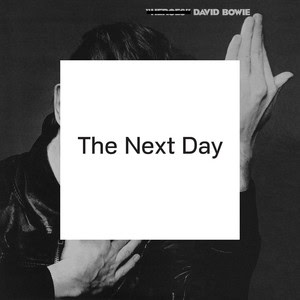
Her contribution to The Next Day completed a remarkable professional journey that had begun with a supposedly temporary six-week tour in 1995. Over the course of nearly two decades Dorsey had become one of the defining musical voices of Bowie’s later career, appearing on major studio recordings while helping shape the sound of his final years as a live performer.
Life After David Bowie
Following the end of A Reality Tour in 2004, Gail Ann Dorsey remained one of the music industry’s most respected bassists and vocalists. Rather than limiting herself to a single musical style, she continued collaborating with an exceptionally diverse range of artists, reflecting the versatility that had always defined her career. Her performances have ranged from rock and pop to soul, alternative music and singer-songwriter projects, demonstrating an ability to adapt naturally to very different musical environments.
Among the artists with whom Dorsey has recorded or toured are Lenny Kravitz, Bryan Ferry, Seal, Gwen Stefani, Joan Osborne, Thomas Dolby, Gang of Four, Indigo Girls, The National, Olivia Newton-John and many others. Each collaboration highlights a musician equally comfortable supporting internationally established artists or contributing creatively to ambitious studio recordings.
In recent years she has also become a featured vocalist with Blackstar Symphony, the concert production celebrating David Bowie’s final masterpiece, Blackstar. Performing music closely associated with Bowie’s last creative chapter has provided audiences with another opportunity to experience the distinctive voice that became so closely linked with Bowie’s own live performances.
Solo Career
Alongside her extensive collaborative work, Gail Ann Dorsey has maintained a parallel career as a songwriter and solo recording artist. Her solo recordings reveal a musician whose artistic vision extends far beyond her work as a bassist, combining thoughtful songwriting with influences from soul, rock, folk and classic singer-songwriters.
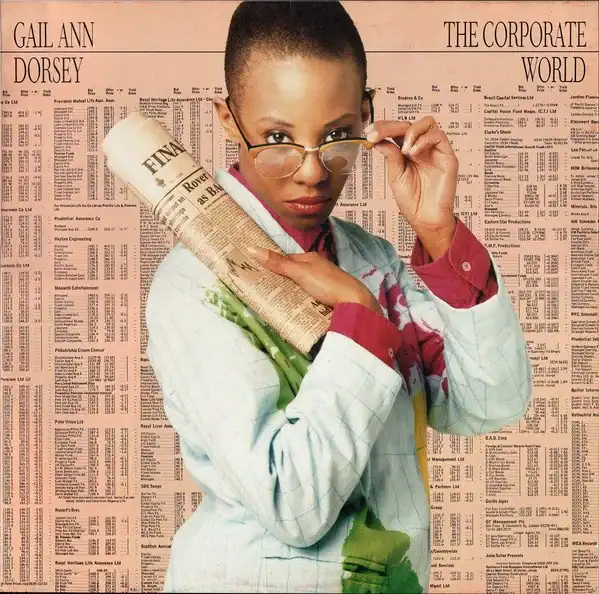
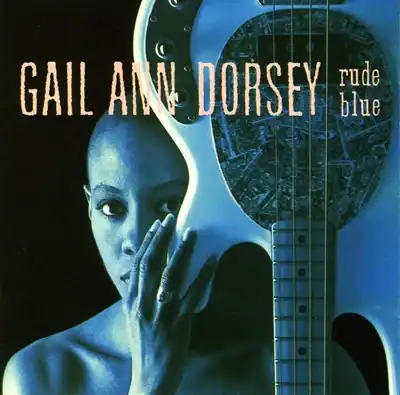
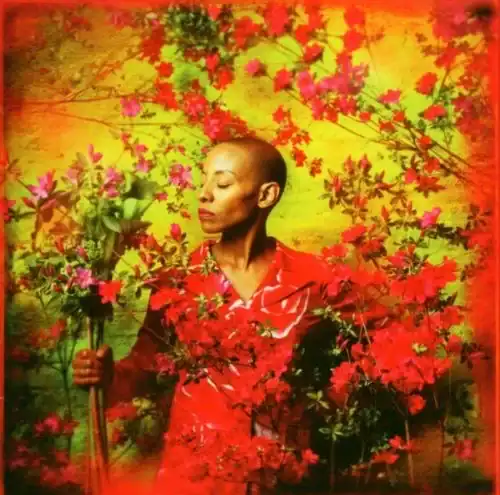
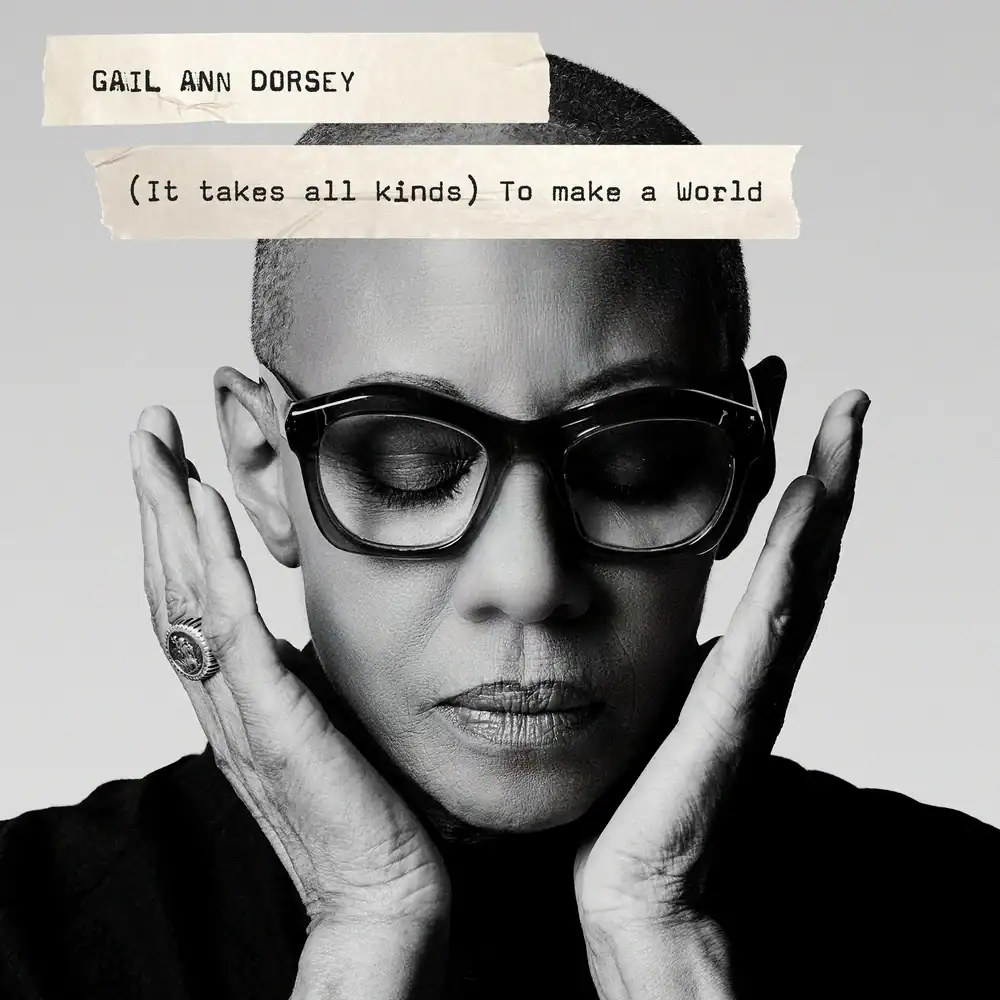
Dorsey’s debut album, The Corporate World (1988), introduced a distinctive blend of soul, rock and socially conscious songwriting. It was followed by Rude Blue (1992), which further demonstrated her gift for combining sophisticated musical arrangements with intelligent, deeply personal lyrics. Her third album, I Used to Be… (2004), explored increasingly intimate themes while expanding her musical palette and confirming her reputation as a compelling solo artist.
After more than two decades without a new solo album, Dorsey returned with the acclaimed 2025 single (It Takes All Kinds) To Make a World, followed by Maybellene. Both releases introduced material from her forthcoming album The Appearance of Life, inspired by many of the singer-songwriters who first shaped her musical imagination. Rather than following contemporary trends, the new recordings embrace warm analogue instrumentation, expressive performances and reflective songwriting centred on compassion, humanity and modern life.
Together these releases demonstrate the remarkable consistency of Dorsey’s artistic voice. Whether performing with David Bowie or pursuing her own work, she has remained committed to creating thoughtful, emotionally honest music that reflects both her extraordinary musicianship and her independent creative vision.
Legacy
Within David Bowie’s extraordinary catalogue of collaborators, Gail Ann Dorsey occupies a unique position. She became one of the defining musical voices of Bowie’s final touring years, contributing not only exceptional bass playing but also harmony vocals, lead vocals and an instinctive understanding of Bowie’s constantly evolving musical vision. Few musicians remained such a consistent presence throughout the final decade of Bowie’s life as an active touring performer.
Her performances of Under Pressure have become part of Bowie history in their own right. Rather than attempting to imitate Freddie Mercury, Dorsey created a deeply personal interpretation that honoured the original while allowing the song to evolve naturally within Bowie’s live concerts. Those performances remain among the most celebrated moments of Bowie’s tours between 1995 and 2004 and continue to be admired by audiences around the world.
Perhaps even more importantly, Dorsey represents the type of musician David Bowie most valued: technically accomplished, endlessly curious, creatively fearless and always committed to serving the music rather than seeking personal attention. Through her artistry she helped shape one of the strongest live bands of Bowie’s entire career while contributing to several of his finest later studio recordings.
Today Gail Ann Dorsey continues to enjoy an international reputation as one of the most accomplished bassists and vocalists of her generation. Her work with David Bowie remains a central chapter in an already remarkable career, but it forms only part of a much broader musical journey that continues to inspire musicians and audiences alike.
Article Origin
This article has been researched using interviews with Gail Ann Dorsey, official David Bowie and Gail Ann Dorsey sources, contemporary tour documentation, album credits, recognised Bowie reference works and other historically reliable publications. Every effort has been made to present an accurate and balanced account of her long and important collaboration with David Bowie.
