
Page Hamilton – Guitar on David Bowie’s Hours Tour
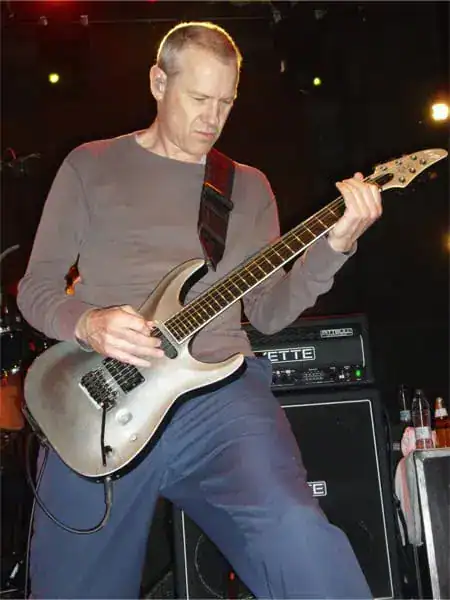
Page Hamilton performing with Helmet at Sala Caracol, Madrid, 8 March 2012. Photo: Mario (mariovzq) / Wikimedia Commons / CC BY 2.0.
Page Hamilton is an American guitarist, singer, composer and producer, best known as the founder and frontman of Helmet. In 1999, he joined David Bowie’s live band for the promotional performances surrounding Hours. The engagement placed a musician associated with tightly organised heavy guitar music inside a repertoire spanning several decades of Bowie’s songwriting.
Hamilton’s contribution belongs to the live presentation of the album. Reeves Gabrels had been Bowie’s guitar collaborator and co-producer during its recording. Hamilton subsequently took the lead-guitar position for appearances that ranged from NetAid at Wembley Stadium to comparatively intimate concerts in Paris, New York and Europe.
Official releases of the Elysée Montmartre and Kit Kat Klub performances now preserve this chapter in detail. They reveal Hamilton working alongside Mark Plati, Gail Ann Dorsey, Mike Garson, Sterling Campbell, Emm Gryner and Holly Palmer. His recollections also describe an encounter with a musical hero that involved close listening, demanding preparation and renewed confidence at an important point in his own life.
- Name: Page Hamilton
- Born: 18 May 1960, Portland, Oregon, United States
- Roles: Guitarist, vocalist, songwriter, composer and producer
- Best known for: Founding and fronting Helmet
- Earlier musical associations: Band of Susans; Glenn Branca’s guitar ensemble
- Bowie connection: Lead guitar during the 1999 Hours promotional period
- Studio distinction: Hamilton was a touring guitarist, not the guitarist credited with recording the Hours album
- Documented appearances: NetAid, Wembley, 9 October 1999; Elysée Montmartre, Paris, 14 October; Kit Kat Klub, New York, 19 November; Astoria, London, 2 December; Vega, Copenhagen, 7 December
- Bowie live releases: Something in the Air (Live Paris 99); At the Kit Kat Klub (Live New York 99)
- Other work: Film-score performance, production, teaching and collaborations beyond Helmet
Oregon beginnings and a wider musical education
Page Hamilton was born in Portland, Oregon, on 18 May 1960. His later professional identity would become inseparable from New York’s guitar underground, but his education began in Oregon. The University of Oregon identifies him as a 1983 music-performance graduate; he subsequently completed a master’s degree in jazz guitar at the Manhattan School of Music in 1987.
That background complicates the familiar description of Hamilton as simply a heavy-metal guitarist. Jazz study involves harmony, melodic construction, rhythmic awareness and the practical task of responding to other players. None of those concerns dictates that the resulting music must sound like conventional jazz. They supply resources that can be used in a loud rock band, a film-score session or a singer’s touring ensemble.
The important point is the breadth of preparation rather than an academic explanation for every subsequent riff. Musical education can sharpen a player’s choices without becoming the visible subject of the music. In Hamilton’s case, the distance between formal study and Helmet’s forceful public sound is part of the interest: considerable knowledge can support an apparently direct musical gesture.
New York: Band of Susans and the electric-guitar ensemble
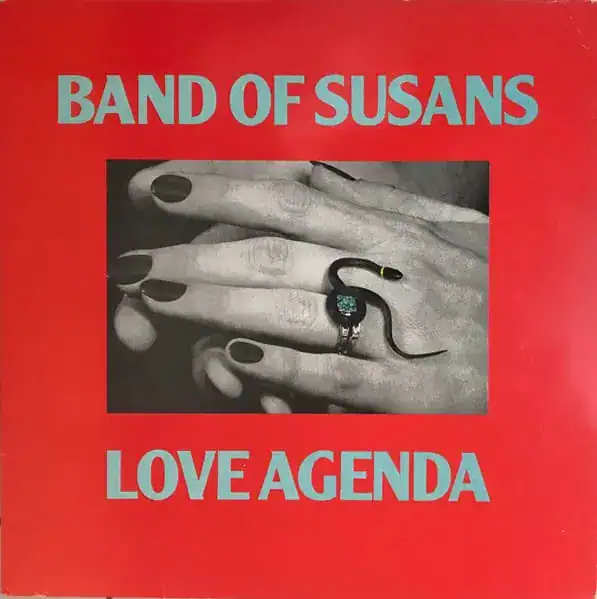
In New York, Hamilton joined Band of Susans and played on Love Agenda, released in 1989. His early work also included Glenn Branca’s guitar orchestra and the recording of Symphony No. 6: Devil Choirs at the Gates of Heaven. These associations placed him in music that explored the electric guitar as part of a larger field of sound.
An amplified guitar can operate as more than a solo voice above a rhythm section. Several guitars can build sustained layers, create beating overtones or organise a composition through the interaction of repeated figures. Within such music, an individual player needs to understand how a sound behaves in combination with other sounds. Precision and collective awareness matter even when the surface is noisy or abrasive.
Helmet: building a distinctive musical identity
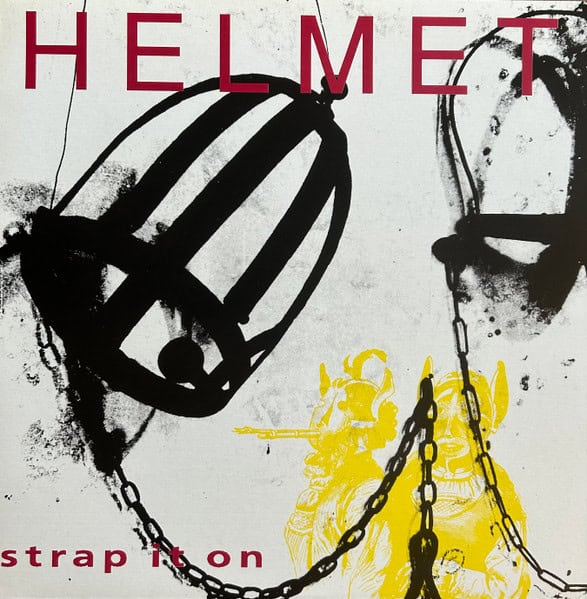
Hamilton formed Helmet in New York in 1989. The band’s early lineup included guitarist Peter Mengede, bassist Henry Bogdan and drummer John Stanier. Their debut album, Strap It On, appeared through Amphetamine Reptile in 1990, before the group’s move to Interscope and a much larger audience.
Helmet’s music made the relationship between attack and silence unusually prominent. A guitar figure could gain force from where it stopped as much as from the notes it contained. Repetition established identity, but shifts in accent or the length of a phrase prevented the result from becoming merely mechanical. The weight came from organisation as well as amplification.
Hamilton combined guitar playing with singing and songwriting. Leading that kind of group is a different responsibility from joining a touring band under another artist’s name. In Helmet he helped determine the musical frame itself. With Bowie, he would be asked to work inside existing songs, inherited arrangements and a collective sound whose centre was another performer’s voice.
Meantime, Betty and Aftertaste
Helmet – Unsung, from Meantime (1992).
The Interscope years produced Meantime in 1992, Betty in 1994 and Aftertaste in 1997. Meantime, including Unsung, became a central release in Helmet’s reputation. The sequence established Hamilton as an identifiable guitarist and writer well before he appeared beside Bowie.
Those records provide a better introduction to his musical character than a genre label alone. The recurring features include strong rhythmic shapes, concentrated guitar textures and a concern with how repeated material can sustain tension. They also show why his association with Bowie attracted attention. The appointment brought together artists whose public images seemed different, while leaving room for less obvious musical connections.
Work beyond Helmet: film scores and other artists
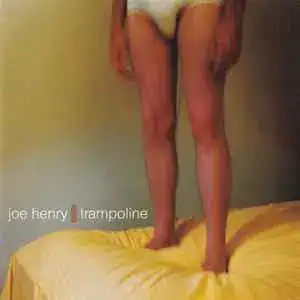
Hamilton’s work outside his own band included guitar on Joe Henry’s Trampoline and performances for composer Elliot Goldenthal, including the score for Michael Mann’s Heat. His official biography also identifies further Goldenthal film work and original composition for screen projects. The guitar had uses in his career beyond the conventional rock-album format.
Film music asks different questions from a concert set. A sound may need to support a scene’s atmosphere, function within an orchestral texture or appear for only a brief passage. Its effectiveness depends on context, and a striking performance is not necessarily the most suitable performance. The musician’s task includes judging scale and recognising when a small contribution serves the larger work.
1997: meeting Bowie before becoming his guitarist
Hamilton has repeatedly recalled meeting Bowie at a festival in Germany in 1997. In his September 2000 BowieNet chat, he identified Reeves Gabrels, a friend, as the connection. A later interview with Classic Rock added his memory of bringing a copy of Hunky Dory to be signed and discovering that Bowie knew Helmet.
The encounter placed the two musicians in contact before an employment opportunity existed. Hamilton was meeting an artist whose records had mattered to him, while Bowie was recognising a musician with a substantial career of his own. Those positions could coexist. Admiration did not require Hamilton to be unknown to the person he admired.
1999: an invitation during a period of change
By 1999, Helmet’s first period of activity had ended. Hamilton was working outside the band when Bowie contacted him about playing guitar. In later interviews he described this as a personally difficult period and remembered the invitation as an opportunity that gave him direction. That emotional significance belongs to Hamilton’s own account of the experience.
It was also a practical job offer. Admiration for Bowie would not remove the need to learn the repertoire, prepare sounds and fit into an established professional environment. A short promotional engagement can demand concentrated preparation precisely because it offers little time for gradual adjustment. The player must arrive ready to support material that other members of the band may already know intimately.
Hamilton’s recollections retain both dimensions: the excitement of being asked and the work required after accepting. The collaboration is more interesting when neither is lost. The personal importance explains why he remembered it so vividly; the subsequent performances demonstrate that the invitation became sustained musical work rather than remaining an anecdote about meeting a hero.
Page Hamilton on being invited
“First of all, it was an honor to have him ask me.”
— Page Hamilton, BowieNet live chat, 28 September 2000; transcript preserved by Bowie Wonderworld.
Hours: separating the studio album from the live band
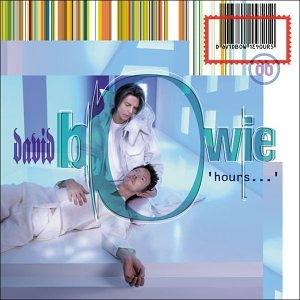
Hours was released by Virgin in October 1999, with David Bowie and Reeves Gabrels credited as producers. Gabrels’s guitar work and creative partnership belong to the making of the record. Hamilton’s role followed in its live promotion, when the songs had to be presented alongside material from earlier stages of Bowie’s career.
That distinction matters whenever a touring musician becomes strongly associated with an album title. A photograph from a promotional appearance, or a later live-album credit, does not establish participation in the original studio sessions. Hamilton helped audiences encounter the Hours material onstage; he should not receive Gabrels’s recording or songwriting credits as a consequence.
The live work nevertheless has its own significance. Recorded arrangements must be translated into the available band, and a song can change character when heard in a mixed programme. The touring guitarist participates in that translation. His contribution is a performance of the material within a new setting, with different acoustics, audience expectations and immediate musical relationships.
A promotional schedule rather than a conventional world tour
The Hours Tour name is a convenient description for a small group of concerts and numerous promotional appearances in late 1999. It should not suggest a lengthy stadium itinerary comparable with Bowie’s major touring productions. Contemporary announcements described radio and television engagements, while subsequent official accounts refer to a mini tour.
That format allowed considerable variation in scale. A television appearance might involve a tightly limited selection; a club show could provide space for less familiar catalogue material; a benefit concert demanded a programme suited to a large mixed audience. The same musicians needed to remain adaptable across those different conditions.
Hamilton’s place in the period is therefore best followed through identifiable performances. NetAid, Paris, New York and the December European concerts provide specific reference points. The limited schedule did not mean an unimportant assignment. It concentrated several forms of public presentation into a short interval, making flexibility as important as consistency.
Rehearsal: learning songs, structures and sounds
In the BowieNet chat, Hamilton recalled an intensive preparation period: approximately sixteen hours of work a day, initially learning fifteen songs in ten days and then adding more. These are his retrospective figures rather than a surviving rehearsal log. They convey the pressure of preparing a broad repertoire on a restricted timetable.
Learning a song in this situation involves more than remembering its chord sequence. The guitarist needs to recognise introductions, transitions, endings and the places where a part interacts with a vocal phrase. Tone and dynamics can be structural information too. A sustained sound might connect two sections; a sudden change of attack might help announce a new one.
Bowie’s catalogue added the challenge of stylistic distance between songs. A player might move from a relatively open ballad to an emphatic rock arrangement or an electronically inflected piece. The work involved preparing those differences so that changing style would feel purposeful, without requiring the rest of the band to wait while an unfamiliar song was solved onstage.
The 1999 band: two guitarists within a wider ensemble
The lineup documented in official accounts included Hamilton on lead guitar and Mark Plati on guitar and bass, with Gail Ann Dorsey, Mike Garson and Sterling Campbell supplying bass, keyboards and drums. Emm Gryner and Holly Palmer provided backing vocals. Bowie sang and also played acoustic guitar where required.
Two guitarists create choices about register, texture and responsibility. One can maintain a rhythmic foundation while the other supplies a line, or both can occupy different parts of a chord. They can also leave space for keyboards, voices and bass. The most effective division is not necessarily a fixed separation between one player doing all rhythm and another doing all melody.
Hamilton’s lead-guitar credit identifies his position without explaining every moment of the arrangements. The ensemble recordings make the collective result available. Listening to the guitars in relation to Garson’s keyboards, Dorsey’s bass and Campbell’s drums gives a fuller account than treating each solo as an isolated event detached from the song around it.
9 October 1999: NetAid at Wembley Stadium
David Bowie – The Pretty Things Are Going to Hell, NetAid, Wembley Stadium, 9 October 1999.
At NetAid on 9 October 1999, Hamilton played with Bowie at Wembley Stadium. The event formed part of an international anti-poverty initiative with concerts in several cities. Bowie’s official retrospective identifies a six-song set that placed two Hours songs alongside established material.
Bowie and Garson opened as a duo with Life on Mars?. Hamilton and the other instrumentalists joined for the following material, including Survive, China Girl, The Pretty Things Are Going to Hell, Drive-In Saturday and Rebel Rebel. Gryner and Palmer entered from China Girl onwards, according to the official account.
The sequence is important to Hamilton’s credit. Membership of the band does not mean that he played throughout an opening piano-and-vocal performance. The set itself illustrates changing combinations of musicians: intimacy at the beginning, followed by the fuller band and expanded vocal texture. Within a brief appearance, the arrangement could establish contrasting levels of scale.
14 October 1999: the Elysée Montmartre in Paris
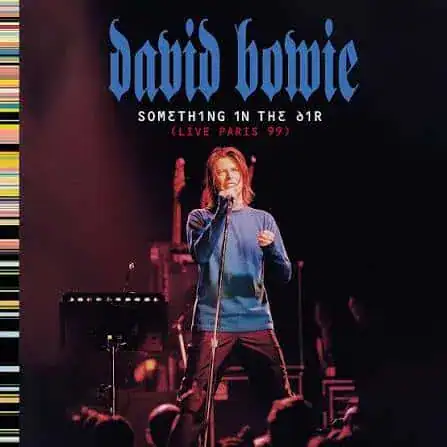
Five days after Wembley, Bowie performed at the Elysée Montmartre in Paris on 14 October 1999. The concert later became Something in the Air (Live Paris 99). Unlike the short NetAid programme, the Paris recording offers an extended encounter with the band across fifteen tracks.
A club concert changes the relationship between a performance and its audience. Detail that has to project across a stadium can be encountered at closer range, while the repertoire has more time to establish its own connections. A programme can move beyond immediate recognition and ask listeners to follow a less predictable route through an artist’s work.
For Hamilton’s Bowie history, Paris is a substantial document because it preserves more than a guest appearance or a fragment of television. The listener can hear successive changes in texture and repertoire within the same ensemble. That continuity makes it possible to understand how the guitarist’s role belongs to an entire concert rather than only to its most forceful passages.
A setlist reaching beyond the newest album
The Paris programme included Word on a Wing, Drive-In Saturday and Can’t Help Thinking About Me, alongside newer songs. These selections brought together material from markedly different points in Bowie’s career. The show was an occasion for revisiting the catalogue as well as promoting a recent release.
That balance changes the guitarist’s assignment. He is not simply recreating the sound of one album. Each composition arrives with a history, but the band must make the pieces function together in the present. A performance can acknowledge a familiar figure without reproducing every feature of the original recording, and a less familiar song can acquire fresh immediacy through a convincing arrangement.
The approach also makes musical contrast part of the concert’s identity. A reflective song and a hard-driving one can sharpen each other when placed within the same programme. Hamilton’s task was to participate in those transitions while retaining enough consistency of touch and sound for the set to feel like the work of one band.
Reviving Can’t Help Thinking About Me
David Bowie – Can’t Help Thinking About Me, Elysée Montmartre, Paris, 14 October 1999.
Can’t Help Thinking About Me originated as a 1966 single. Bowie had already revived it for VH1 Storytellers in August 1999, before Hamilton’s later appearances. The song remained in the promotional repertoire and appears on the Paris and Kit Kat Klub releases.
Its return connects the late-1990s band with Bowie’s pre-fame songwriting. The historical distance is considerable, but the live setting allows an early composition to be heard without treating it solely as a collector’s object. It becomes material for contemporary players, with the singer’s mature voice changing the relationship between present performance and youthful composition.
The distinction between the August revival and the subsequent performances keeps the chronology clear. Hamilton participated in the song’s continuing live life during the Hours period. The later studio re-recording associated with Toy belongs to a separate project and should not automatically be added to his credits because the same song appears in both places.
New songs: restraint, melody and a harder edge
The Hours repertoire included Thursday’s Child, Survive, Seven, Something in the Air and The Pretty Things Are Going to Hell. These songs did not all ask for the same type of guitar contribution. Their inclusion created room for both melodic restraint and a more aggressive attack.
A ballad can depend on the distinction between filling a gap and obscuring a phrase. A short answering line may have more effect than continuous activity. Conversely, a more forceful arrangement can benefit from an assertive guitar texture, provided that its rhythm and frequency range remain compatible with the rest of the band. Volume alone does not determine intensity.
This range provides a useful way of approaching Hamilton’s work with Bowie. The point is not that he abandoned his musical character, but that he applied it selectively. A recognisable player can remain identifiable through timing, articulation and the handling of a note even when the density of the part changes dramatically from one song to the next.
Rhythmic space: Stay and I’m Afraid of Americans
David Bowie – Stay, Kit Kat Klub, New York, 19 November 1999.
The officially released Kit Kat Klub programme includes both Stay and I’m Afraid of Americans. Their presence places Hamilton within Bowie’s rhythmically insistent live repertoire, alongside the quieter Hours material. The contrast is particularly revealing for a guitarist whose own band had made tightly controlled rhythmic figures central to its sound.
A recurring figure can anchor a performance while still allowing variation around it. The bass and drums establish relationships against which a guitar accent becomes meaningful. The lead player has to judge whether to reinforce the repeated pattern, answer it or move into a different register. Too much simultaneous emphasis can flatten the groove instead of strengthening it.
The interest here lies in the shared musical problem rather than an assertion that Bowie’s songs became Helmet songs. Rhythm offers Hamilton a point of connection, but the composition, vocal delivery and surrounding arrangement remain distinct. His contribution belongs to a band interpreting Bowie’s music, with its own balance between drive, atmosphere and melodic detail.
October 1999: Vienna and the online audience
The European promotional activity also included a concert in Vienna. A contemporary notice on Bowie’s official website reported that BowieNet Europe had made the show available in RealVideo. The same report described an online conversation with European fans before the concert, linking the performance with the developing international life of BowieNet.
These details locate Hamilton’s engagement within a particular moment in the circulation of live music. A show no longer needed to be encountered only by people in the room or through a later television schedule. Internet delivery offered another route, although the technology and viewing conditions differed considerably from the streaming platforms familiar to later audiences.
For the band, the essential performance still happened between musicians sharing a stage. The wider distribution changed who could encounter that work and how long it might remain accessible. A lead-guitar contribution could become part of a listener’s experience far from the venue, even when the concert itself belonged to a deliberately limited promotional itinerary.
Vienna therefore adds something different to the story told by the later Paris and New York albums. It records the contemporary intention to connect a live event with an online community. Hamilton’s playing belonged to this changing public setting as well as to the musical arrangements: the same short engagement linked conventional concerts, broadcast appearances and early web-based access to performance.
Radio and television: the performance as a short encounter
The promotional campaign also involved broadcast appearances. Bowie’s official archive announced the MuchMusic Video Awards in Toronto on 23 September 1999, and later release information documents a BBC Radio 1 session at Maida Vale on 25 October. Such dates show how the period extended beyond conventional evening concerts.
Broadcast work brings its own kind of concentration. A band may have only a few songs in which to establish its sound, and the performance takes place within another programme’s production schedule. There is less room for a concert’s gradual accumulation of energy. The opening notes need to work immediately, while the musicians remain responsive to one another inside the arranged format.
For a touring guitarist, the continuity between those appearances matters. The same preparation supports a stadium benefit, a studio performance and a club show, yet the presentation changes with the setting. Hamilton’s engagement is better understood as that varied promotional work than as a series of interchangeable nights on an otherwise conventional tour.
19 November 1999: the Kit Kat Klub in New York
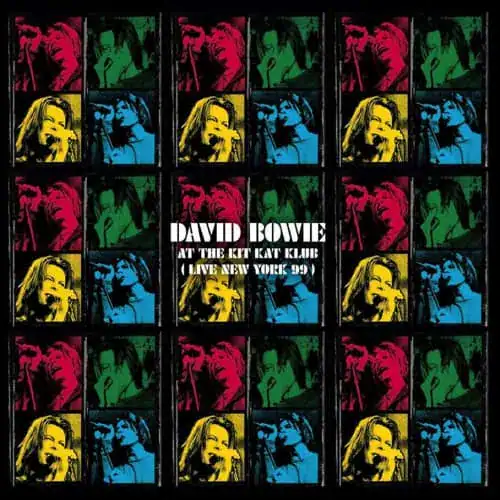
Bowie’s Kit Kat Klub concert in New York on 19 November 1999 was performed for an invited audience of fans and competition winners. The show was recorded and filmed for a webcast the following month. Its later official release gives Hamilton another substantial live-album credit from the period.
The twelve-track released programme includes Life on Mars?, China Girl, Changes and five songs from Hours. It also retains Can’t Help Thinking About Me, Always Crashing in the Same Car, Stay and I’m Afraid of Americans. This is the published album sequence, rather than a claim that twelve tracks necessarily account for everything performed in the room.
The webcast adds another context for the musicians’ work. A small audience in the venue could coexist with a geographically dispersed audience encountering the event later through a screen. The performance was local in its immediate circumstances and wider in its intended circulation, an example of how Bowie’s live presentation intersected with his interest in online communication.
2 December 1999: the Astoria in London
The Astoria concert on 2 December 1999 was Bowie’s final London concert of 1999. His official website records an eighteen-song programme, beginning with Bowie and Garson performing Life on Mars?. The fuller band subsequently moved through a set mixing recent songs with catalogue selections.
The encore included Repetition, The Pretty Things Are Going to Hell, Cracked Actor and I’m Afraid of Americans. The choices underline the breadth of the assignment. Hamilton’s guitar belonged in music with different histories, dramatic attitudes and degrees of density, all presented within the same evening.
A longer set also makes pacing a collective responsibility. A guitarist cannot remain at the same level of emphasis throughout without reducing the impact of the climaxes. Changes in register, the length of a sustained note and the decision to leave room for another instrument help give the programme shape. The Astoria setlist provides a clear framework for hearing those contrasts.
7 December 1999: Copenhagen closes the year’s concert sequence
Bowie’s official retrospective places Hamilton beside him at the Vega in Copenhagen on 7 December 1999. It followed the London appearance by only a few days and brought this late-year run of full concerts to its close. Bowie returned to concert stages in 2000, so Copenhagen should be described as the end of his 1999 concert sequence.
The date documents the same short-lived partnership at the end of its 1999 concert sequence. Hamilton’s engagement had connected very different venues without developing into a long, conventional touring cycle.
That brevity makes the surviving documents valuable. A band can acquire a distinctive character over a small number of appearances, especially when its repertoire is unusually broad. Its place in an artist’s history need not be measured only by the number of tickets sold or months spent travelling. The Copenhagen date marks the end of a concentrated period of shared performance.
Guitar equipment: adapting the available palette
Premier Guitar – Page Hamilton Rig Rundown (2024), including the ESP Vintage Plus used during his work with David Bowie.
A 2024 Premier Guitar Rig Rundown revisited an ESP Vintage Plus guitar that Hamilton had used during his Bowie work. The account identifies a customised pickup configuration and places the instrument within the guitarist’s wider collection. It is a tangible link between his own equipment history and the 1999 engagement.
Different pickup positions, amplification and effects give a guitarist ways to alter attack, sustain and tonal weight. In a varied repertoire, those changes can help establish the character of a song before a solo or a conspicuous lead phrase occurs. A thinner, more transparent sound may sit beneath voices; a denser one can become a defining element of a louder section.
Equipment therefore belongs to the musical story, but it is not an explanation on its own. A list of pedals cannot describe phrasing, dynamics or ensemble judgement. The instrument is a means of making decisions audible. Hamilton’s ability to prepare a suitable range of sounds mattered because the songs required different responses, not because owning a particular guitar automatically produced them.
2000: speaking directly with BowieNet listeners
Hamilton joined a BowieNet live chat in September 2000, answering questions about the previous year, his musical background and work in progress. Bowie’s official news archive acknowledged the session, while a fuller transcript survives at Bowie Wonderworld. The exchange provides a record of his perspective relatively close to the events.
Asked to compare playing with Bowie and playing in Helmet, he gave a brief, humorous answer before explaining the difference. The response recognises that a musician’s role changes with the project. Leading an ensemble built around his own writing and entering a band interpreting another writer’s catalogue involved different demands.
Page Hamilton on Bowie and Helmet
“Two completely different animals.”
— Page Hamilton, comparing the playing situations in his BowieNet live chat, 28 September 2000.
The format matters as well. This was a conversation with listeners, not an album credit or a retrospective biography. Questions directed attention towards aspects of the job that official release information rarely explains: preparation, nervousness, admiration and the practical experience of changing musical contexts. It complements the recordings by showing how Hamilton described the work himself.
Helmet returns: keeping the Bowie chapter in proportion

Hamilton re-established Helmet in 2004, with Size Matters opening a new period of recording. Later albums included Monochrome, Seeing Eye Dog and Dead to the World. His own band remained central to his professional identity after the Bowie engagement.
This continuity prevents the 1999 story from becoming a narrative in which another artist’s invitation replaces everything before and after it. Hamilton valued the experience, but his subsequent work did not become an extended Bowie project. The collaboration entered a career that retained its own musical priorities, audience and evolving body of recordings.
Listening to Bowie: confidence and the songwriter’s example
In a 2011 interview with Rei Nishimoto for Noisecreep, Hamilton described the engagement as a major encouragement. He remembered listening closely to Bowie, particularly when the conversation turned to songwriting. The value of the job extended beyond the public performances to the opportunity to hear an experienced writer discuss musical ideas.
Page Hamilton on working with a musical hero
“It was a huge confidence boost to play with one of my idols.”
— Page Hamilton, interviewed by Rei Nishimoto, Noisecreep, 5 May 2011.
That recollection helps explain why a relatively short engagement remained prominent in his interviews. Recognition from an admired artist can change a musician’s confidence without changing the identity of the music he subsequently makes. The experience can confirm that existing skills are useful in a wider field, while exposing gaps that require further work. Hamilton’s account contains encouragement and challenge together.
2014: Linkin Park and The Hunting Party
Hamilton’s later collaborations included Linkin Park’s The Hunting Party, released in 2014. He appears as the featured artist on All for Nothing, with guitar and vocal contributions. The track is identified with his name in Linkin Park’s own album listing, making it a clear recording credit beyond both Helmet and the Bowie concerts.
This was a different form of collaboration from joining a touring ensemble. A featured appearance concentrates an artist’s contribution within a particular recording, rather than requiring the sustained preparation of another band’s entire live repertoire. Hamilton’s name is attached to one song in the album programme, and the credit should be understood at that scale.
The recording also gives listeners another point of comparison. His recorded voice can be encountered alongside his guitar identity, whereas the Bowie engagement chiefly placed him in an instrumental supporting role. The difference is useful for a biography: a musician’s responsibilities can vary substantially between projects even when the same name appears in each set of credits.
2020 and 2021: the live recordings reach new audiences
Something in the Air (Live Paris 99) became available for streaming in August 2020. Its later physical release formed part of Brilliant Live Adventures, the series documenting Bowie’s 1990s performances. The Paris concert therefore gained a new public life more than twenty years after it took place.
At the Kit Kat Klub (Live New York 99) followed on CD and double vinyl on 2 April 2021 as the series’ final instalment. Official release information credits Hamilton on guitar and Plati as mixer, preserving the personnel as well as the performance. The two releases offer distinct settings rather than duplicate editions of one show.
Later work, teaching and the continuing Helmet identity

In a 2022 interview with Full Metal Jackie, published by Loudwire, Hamilton discussed teaching and the importance of remaining connected with the musical excitement that first motivates a player. He also reflected on the special place Helmet retained for him, while acknowledging the value of his Bowie experience.
Page Hamilton on his own band
“nothing replaces Helmet for me.”
— Page Hamilton, short excerpt from his Full Metal Jackie interview, published by Loudwire, 11 January 2022.
Helmet released Left in November 2023 through earMUSIC. The label’s announcement names Hamilton alongside drummer Kyle Stevenson, guitarist Dan Beeman and bassist Dave Case. This later recording provides a dated continuation of his bandleading work, while his interviews and instrumental demonstrations keep the breadth of his musical interests in view.
Teaching adds a different form of continuity. A musician can pass on habits of attention, rhythmic understanding and compositional curiosity as well as a technique for producing a particular sound. The lesson suggested by Hamilton’s varied career is that an individual style need not close off other forms of musicianship. It can coexist with continued study and the willingness to work in unfamiliar settings.
2026: recognition from the University of Oregon
The University of Oregon School of Music and Dance named Hamilton its 2026 music Distinguished Alumnus Award recipient. Its published profile connects his formal education with the range of work that followed: Helmet, experimental guitar ensembles, recording sessions, film music, performance and teaching. The recognition supplies a documented later milestone in a career that extends well beyond the 1999 Bowie engagement.
The institutional account also identifies clinics and educational work in several countries. It places the sharing of musical knowledge alongside commercial recording and touring, giving those activities a place in the same professional history. Hamilton’s earlier jazz education and later teaching are therefore linked by more than a convenient biographical theme; both are identified in the university’s account of his work.
For this archive, the award provides an appropriate point at which to look back across the career without suggesting it has ended. The Bowie dates remain one identifiable chapter within that longer record. Recognition by his former university acknowledges the musician across several kinds of activity, allowing the touring guitarist familiar to Bowie listeners to be seen within a broader professional life.
Legacy: an individual guitarist inside Bowie’s changing live history
Page Hamilton’s place in Bowie’s history is a specific, documented live collaboration. In the final months of 1999 he helped present the Hours material alongside songs drawn from much earlier periods. His name appears in official concert accounts and release credits, while the Paris and New York albums preserve extended examples of the band in which he worked.
The engagement demonstrates the distance between a musician’s public reputation and the full range of skills behind it. Helmet made Hamilton recognisable through a concentrated heavy-guitar identity. Bowie’s repertoire called on melodic judgement, sound preparation, rhythmic discipline and the ability to support a singer through contrasting arrangements. Those demands did not invalidate the earlier identity; they revealed another application of the musicianship beneath it.
His role also belongs to an ensemble history. Plati, Dorsey, Campbell, Garson, Gryner and Palmer were active musical partners, and the resulting sound cannot be assigned to one new arrival. Hamilton’s contribution is most clearly understood through those relationships: guitar against bass and drums, guitar beside keyboards, and instrumental detail around lead and supporting voices. That perspective gives an individual credit substance without overstating its independence.
The later recollections add a personal dimension to the recorded evidence. Hamilton remembered the encouragement of being invited and the opportunity to learn from an admired songwriter. Those memories explain the collaboration’s importance to him, while the surviving performances allow listeners to form their own response to the musical result. Testimony and recording illuminate different parts of the same history.
Within Bowie’s creative circle, Hamilton represents a brief partnership with a lasting recorded presence. The value of the chapter is not that it lasted as long as some other guitar associations, but that it captures an identifiable musician participating in a particular moment of repertoire, presentation and change. His broader career continues to give that moment context, linking the Hours band with jazz education, experimental ensembles, Helmet and work beyond the rock stage.
Official Website & Further Information
Page Hamilton’s official website provides information about his work as a guitarist, composer and producer. Its biography offers a useful introduction to the projects surrounding Helmet and Bowie, including his education, experimental ensemble work and film-score performances. The separate official Helmet website is the appropriate starting point for the band’s own releases and announcements.
For the Bowie engagement, the official retrospective accounts of NetAid and the Astoria concert establish dates, programmes and personnel. Rhino’s Paris album entry and the Kit Kat Klub release announcement provide further recording and publication details.
Hamilton’s own perspective can be explored through the preserved BowieNet chat and his 2011 Noisecreep interview. They are valuable complements to discographical information because they address preparation and the experience of working with Bowie. Later interviews and Premier Guitar’s 2024 equipment feature show how the engagement remained part of his wider musical story.
The University of Oregon alumni profile documents his education and 2026 award. For a listening introduction, the Paris and Kit Kat Klub albums can be heard alongside Helmet’s Meantime or Betty. The contrast offers a direct way to explore the difference between leading his own group and contributing to Bowie’s live ensemble. These are separate bodies of work with different aims, and the comparison is most useful when each is allowed to retain its own musical character.
Article Origin
This article has been researched and written for DavidBowieWorld.com as part of its archive of David Bowie’s collaborators and creative circle. It draws on artist and record-label information, official Bowie concert retrospectives, identified live releases and published first-person interviews. The account follows Hamilton’s background into the 1999 engagement, the later availability of its recordings and selected subsequent work, including his university recognition in 2026.
The chronology distinguishes the original Hours studio album from the promotional performances that followed. It also separates the dates of the Paris and New York concerts from the much later dates of their archival releases. A live association with an album or song is not used to transfer songwriting, production or studio-performance credits from another musician to Hamilton.
The four short quotation boxes reproduce published words attributed to Hamilton, with the source identified beneath each. His recollections are presented as personal testimony. Discussion of guitar roles, arrangements and musical contrast supplies listening context; it does not claim access to private rehearsals or a complete transcription of either guitarist’s part. No direct interview with Hamilton has been conducted for this page.
The hero photograph shows Hamilton performing with Helmet in Madrid in 2012, rather than during Bowie’s 1999 promotional dates. Its photographer, source and Creative Commons licence are acknowledged beneath the image, together with the conversion to WebP. Further accurately identified photographs, recordings or first-hand corrections can be incorporated as the archive develops, with the aim of preserving both the Bowie collaboration and the independent musical life surrounding it.
© DavidBowieWorld.com — David Bowie Collaborations & Creative Circle Archive.
