
David Sanborn & David Bowie – The Saxophone Voice of Bowie’s Soul Years
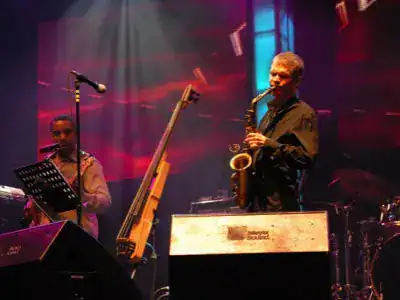
Photo: Dave Alvin / Wikimedia Commons / CC BY 2.0 (editorial use)
David Sanborn (30 July 1945 – 12 May 2024) was an American alto saxophonist whose powerful, vocal-like sound bridged rhythm and blues, jazz, funk, soul and pop. Within the David Bowie story, Sanborn is most important for his work during Bowie’s mid-1970s soul period.
Sanborn played in Bowie’s live band in 1974 and was part of the musical world captured on David Live. He also contributed saxophone to Young Americans, the 1975 album on which Bowie moved decisively toward Philadelphia soul, rhythm and blues and what he famously described as “plastic soul”.
- Name: David William Sanborn
- Born: 30 July 1945, Tampa, Florida, USA
- Raised: Kirkwood, Missouri, USA
- Died: 12 May 2024
- Main instrument: Alto saxophone
- Bowie link: Saxophonist in Bowie’s 1974 live band and on Young Americans
- Key Bowie releases: David Live (1974), Young Americans (1975)
- Important correction: Sanborn is strongly linked to Bowie’s soul period, but he is not part of the standard credited horn line-up for the Let’s Dance album
- Legacy: One of the most recognisable saxophone voices in modern pop, soul and jazz-related music
Who was David Sanborn?
David Sanborn was one of the most distinctive saxophonists to move between jazz, rhythm and blues, rock, pop and television music. Although he is often associated with smooth jazz because of the later shape of the market around him, Sanborn’s own musical roots were much deeper in blues, gospel, soul and R&B.
He was born in Tampa, Florida, and grew up in the St. Louis area. As a child he suffered from polio, and playing the saxophone became part of the process of strengthening his body and breath. That early connection between physical effort and sound helps explain why Sanborn’s mature playing often felt so direct: his tone could cut through a recording, but it also carried a human, almost vocal urgency.
Sanborn’s musical imagination was shaped by players such as Hank Crawford and David “Fathead” Newman, and by the wider language of Ray Charles, blues, gospel and American rhythm and blues. He was not simply a jazz soloist placed into pop records; he was a musician whose phrasing made pop records feel more emotionally charged.
Before Bowie: blues, soul and jazz-rock
Before he became widely known as a solo artist, Sanborn built a reputation as a working musician with a remarkably flexible musical range. He played with blues musicians as a teenager and became associated with the Paul Butterfield Blues Band in the late 1960s.
His work with Butterfield connected him to the American blues-rock and festival circuit of the period, including the era around Woodstock. He later moved through jazz-rock, soul and session work, appearing in contexts where a saxophonist needed to be both technically strong and emotionally immediate.
Sanborn also became connected with musicians from the Brecker Brothers and Gil Evans circles. That ability to move between R&B directness, horn-section discipline and jazz vocabulary made him an ideal player for Bowie when Bowie began searching for a more American, soul-inflected language in 1974.
David Bowie before Young Americans
By 1974, David Bowie had already moved beyond the Ziggy Stardust period and the Diamond Dogs world. His live performances were becoming increasingly theatrical, but musically he was also listening closely to American soul, funk and R&B. The transition was not sudden: it developed during the 1974 tour period and then crystallised in the sessions that produced Young Americans.
Bowie needed musicians who could help him escape the sound of British glam rock without simply copying another style. Sanborn was important because he brought a tone that was unmistakably rooted in American soul and blues, yet flexible enough to sit inside Bowie’s more stylised, art-conscious world.
David Sanborn in Bowie’s 1974 live band
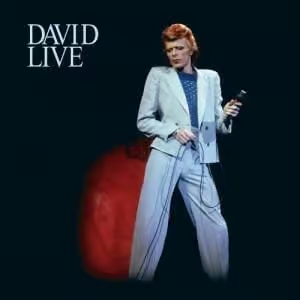
Sanborn’s Bowie connection began before Young Americans reached the public. He was part of Bowie’s 1974 live band during the period documented on David Live, recorded at the Tower Theater in Upper Darby, Pennsylvania.
David Live is often discussed as a transitional Bowie document. It captures Bowie in the process of moving from the dense theatricality of the Diamond Dogs tour toward the soul-based direction that would soon dominate Young Americans. Sanborn’s saxophone helped give that live band a sharper and more American colour.
The importance of this period is sometimes overlooked because Bowie’s studio albums tend to dominate the narrative. However, the 1974 concerts were a musical laboratory. Bowie was already reshaping older songs through new arrangements, and Sanborn’s horn work was part of the changing sound around him.
Young Americans and the Philadelphia soul direction
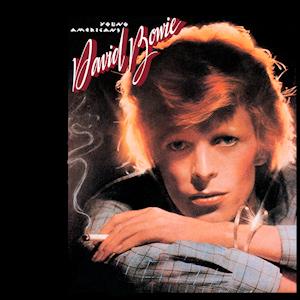
Bowie recorded much of Young Americans at Sigma Sound Studios in Philadelphia, drawing on the atmosphere of American soul music while filtering it through his own songwriting and performance style. The album was released in 1975 and marked one of the most important stylistic turns of his career.
Sanborn’s saxophone is a crucial part of that record’s identity. On the title track Young Americans, his playing gives the song momentum, bite and emotional lift. Across the album, his sound helps connect Bowie’s voice to the soul and R&B world Bowie was trying to enter.
The album also involved musicians and singers who became essential to Bowie’s American soul period, including Carlos Alomar, Luther Vandross, Willie Weeks, Andy Newmark, Mike Garson and others. Sanborn’s role sits naturally within that group: he did not decorate the music from the outside, but became one of the voices through which the album speaks.
The saxophone as lead voice
One of the most revealing ideas associated with Sanborn’s Bowie work is that the saxophone could function almost like the lead guitar. In the Young Americans setting, Bowie did not rely on a conventional rock lead-guitar language in the way he had done in earlier periods. The saxophone often carried a melodic, answering and emotional role.
This is one reason Sanborn’s contribution should not be treated as a small session detail. His alto saxophone helped define the surface of the record: bright, urgent, soulful and slightly restless. Bowie’s voice and Sanborn’s saxophone often seem to push against and answer each other.
That approach was especially effective because Sanborn’s sound was instantly identifiable. He could play with force without sounding merely loud, and he could add feeling without turning the music sentimental.
Young Americans as a Bowie turning point
Young Americans was not just another Bowie album. It produced Fame, Bowie’s first number-one single in the United States, and it changed how Bowie was heard by many American listeners. The album also moved him away from the guitar-centred glam rock image that had defined the early 1970s.
Sanborn’s playing is part of that transformation. The saxophone does not make the album “jazz”; rather, it strengthens the record’s soul and R&B atmosphere. It gives Bowie’s songs a street-level urgency and a human grain that contrast with the more theatrical surfaces of his previous work.
The result is one of Bowie’s most important transitional sounds: still artificial in the best Bowie sense, still highly constructed, but also warmer, looser and more physically grounded than much of what had come before.
What about Let’s Dance?
The original version of this page described Sanborn mainly through Bowie’s Let’s Dance era. That connection needs careful correction. Let’s Dance, released in 1983 and produced by Bowie and Nile Rodgers, certainly used horns and dance-oriented arrangements, but Sanborn is not part of the standard credited horn line-up for the album.
The credited saxophone and horn players on Let’s Dance include musicians such as Stan Harrison, Robert Aaron and Steve Elson, along with other players in the album’s horn section. For that reason, it is historically safer and more accurate to place Sanborn’s major Bowie importance in the David Live and Young Americans period rather than presenting him as a defining Let’s Dance musician.
There is still a broader musical relationship between Sanborn’s style and the kind of pop-soul-funk language Bowie would continue to explore in different ways. But as a Bowie collaborator, Sanborn belongs above all to the mid-1970s soul chapter.
Sanborn as a session musician
Sanborn’s Bowie work was one part of a much larger career as a session and guest musician. Over the decades he appeared with a wide range of artists across popular music, soul, rock and jazz-related fields. His name is frequently linked with recordings or performances involving Stevie Wonder, James Brown, Bruce Springsteen, the Rolling Stones, Paul Simon, James Taylor, Elton John, Bryan Ferry and many others.
What made Sanborn valuable in so many settings was not only that he could play well, but that he could create a strong identity within a song very quickly. A Sanborn part could become part of the emotional memory of a track.
This is exactly what happened with Bowie. Sanborn did not need to dominate the music in order to be remembered. His sound became part of the atmosphere of Bowie’s soul period.
Solo career and public profile
Sanborn also had a major solo career. He released many albums under his own name, won multiple Grammy Awards and became one of the best-known saxophonists of his generation. His solo work often sat at the intersection of jazz, R&B, funk and adult pop, reaching listeners who might not normally follow instrumental music.
His public profile grew further through television. He became closely associated with the late-1980s music television programme Night Music, a show remembered for unusual artist pairings and serious live performance. That programme reflected Sanborn’s own musical values: open-minded, genre-crossing and based on listening rather than category.
Style: why his sound mattered
Sanborn’s saxophone tone was often described as piercing, crying, vocal and blues-based. Those words are useful, but they do not fully explain the effect. His sound could sit above a band like a lead vocal, while still carrying the grain of horn-section R&B.
He was capable of technical playing, but the emotional point usually came first. His phrases often sounded sung rather than merely executed. That quality made him especially effective for Bowie in 1974 and 1975, when Bowie was trying to create a new kind of soul language for himself.
Sanborn’s playing helped Bowie sound less like a visitor to soul music and more like an artist actively transforming himself through it.
Final years and death
David Sanborn continued performing late into his life. He had been dealing with prostate cancer from 2018, but remained active for several years after that diagnosis. His death on 12 May 2024 was widely reported as the result of complications connected to that illness.
Tributes after his death often emphasised both his individuality and his reach. He was admired by musicians who understood the depth of his R&B roots, and by listeners who knew his sound from radio, albums, television and countless collaborations.
Video
David Sanborn — selected performance
This video is included as a general performance example of David Sanborn’s playing and presence. For the Bowie story, the most historically important listening remains David Live and Young Americans, where his saxophone forms part of Bowie’s transition into soul, funk and R&B-influenced material.
Why the collaboration matters
David Sanborn matters in Bowie’s universe because he helped Bowie make one of his most important musical transitions believable. Bowie’s move toward American soul could have sounded like costume or surface. With musicians such as Sanborn, Carlos Alomar, Luther Vandross, Willie Weeks and Andy Newmark around him, it became a living musical environment.
Sanborn’s alto saxophone gave Bowie’s 1974–1975 work a sound that was sharp, emotional and unmistakably American. It linked Bowie’s art-rock intelligence with the physical force of R&B and soul.
His contribution is therefore not a footnote. It is part of the musical architecture of Bowie’s soul period, especially on Young Americans, one of the albums that proved Bowie could change direction completely and still remain recognisably himself.
Legacy within Bowie’s world
Within David Bowie’s wider creative story, David Sanborn represents the moment when Bowie’s music opened itself to a new American vocabulary. His saxophone helped carry Bowie from the stylised theatre of the early 1970s into a sound shaped by soul, rhythm, breath and groove.
Sanborn’s Bowie legacy rests above all on David Live and Young Americans. Those recordings preserve the sound of a musician who did not merely accompany Bowie, but helped give one of Bowie’s major transformations its emotional edge.
