
Herbie Flowers – Bassist for David Bowie’s Space Oddity and Diamond Dogs Era
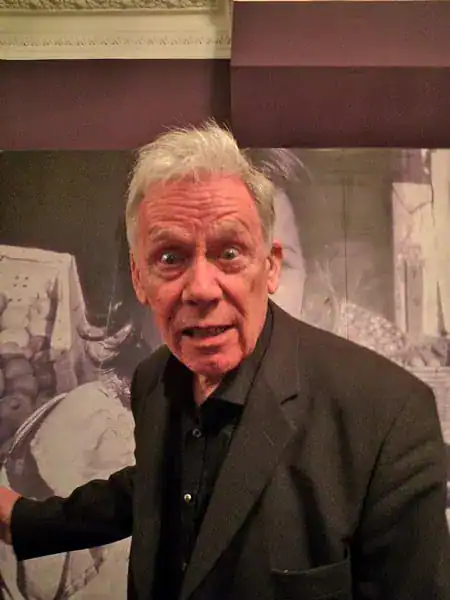
Herbie Flowers in 2013.
Herbie Flowers was an English musician whose work on bass guitar, double bass and tuba placed him among the most frequently employed British session players of the 1960s and 1970s. His long recording career connected him with an exceptionally wide range of artists, including David Bowie, Lou Reed, Elton John, Harry Nilsson, David Essex, George Harrison, Ringo Starr, Paul McCartney, Cat Stevens and Bryan Ferry.
Flowers made several important contributions to David Bowie’s career. He played bass guitar on the 1969 recording of Space Oddity, later contributed to the Diamond Dogs recording sessions and joined Bowie’s band for the first North American stage of the Diamond Dogs Tour in 1974. His playing was also preserved on David Live, recorded during Bowie’s concerts at the Tower Theater near Philadelphia in July 1974.
Although his work with Bowie belonged to two very different periods, it demonstrated the adaptability that defined Flowers’ career. On Space Oddity, he contributed to an atmospheric studio recording built around Bowie’s Major Tom narrative. Five years later, he became part of the large ensemble required to perform the theatrical and musically demanding Diamond Dogs production on stage.
Flowers died on 5 September 2024 at the age of 86. His recorded legacy extends far beyond any single artist, but his performances with Bowie remain an important part of both his career and the history of Bowie’s studio and live music.
- Full name: Brian Keith Flowers
- Known professionally as: Herbie Flowers
- Born: 19 May 1938, Isleworth, Middlesex, England
- Died: 5 September 2024, aged 86
- Profession: Musician, session player and composer
- Instruments: Bass guitar, double bass and tuba
- Bowie connection: Bass guitarist on Space Oddity; contributor to the Diamond Dogs sessions; member of Bowie’s first 1974 North American touring band
- Bowie live recording: Bassist on David Live
- Notable groups: Blue Mink, T. Rex and Sky
- Other notable recording work: Lou Reed, Elton John, Harry Nilsson, David Essex, Cat Stevens, George Harrison, Ringo Starr, Paul McCartney and Bryan Ferry
Early Life
Brian Keith Flowers was born on 19 May 1938 in Isleworth, Middlesex, England. His professional musical life began not in a rock group or recording studio, but during his service in the Royal Air Force.
Flowers entered the RAF in 1956 and spent nine years serving as a bandsman. He initially learned to play the tuba, an instrument that gave him formal experience in ensemble playing and in providing the low-register foundation of an arrangement.
He subsequently took up the double bass as a second instrument. The move expanded his musical possibilities and allowed him to work beyond the military-band repertoire in which he had first trained. His experience on tuba and double bass established the low-register musical background that would later inform his distinctive approach to electric bass guitar.
From Military Bands to Jazz
After completing his RAF service, Flowers worked with several traditional jazz and Dixieland groups during the early 1960s. His developing interest in modern jazz encouraged him to concentrate increasingly on the double bass.
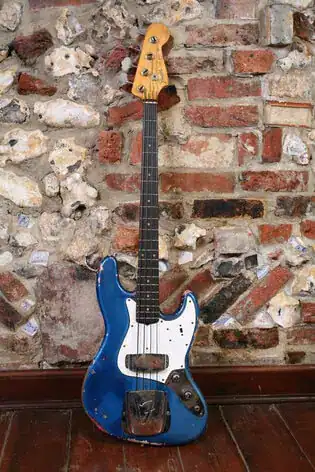
In 1965 he worked as a musician aboard the ocean liner Queen Elizabeth. During a visit to New York, he heard electric bass being used in a jazz setting and decided to acquire an electric instrument of his own. He bought a Fender Jazz Bass from Manny’s music store in New York, beginning a professional relationship with the instrument that continued throughout his recording career.
Flowers did not abandon his earlier instruments after moving to electric bass. He continued to use bass guitar, double bass and tuba according to the requirements of individual sessions, arrangements and live performances. That versatility became one of the practical strengths of his later career.
Becoming a Session Musician
During the second half of the 1960s, Flowers became increasingly active in London’s recording studios. The British session scene required musicians who could read arrangements, respond quickly to producers and adapt their playing to very different styles within a limited amount of studio time.
Flowers developed a reputation as a reliable and adaptable player. His work brought him into sessions overseen by producers including Shel Talmy, Mickie Most, Gus Dudgeon and Tony Visconti. These professional connections placed him within the network of musicians, arrangers and producers responsible for a large part of British popular recording during the period.
His background gave him a broader musical vocabulary than that of a conventional rock bassist. He could provide restrained accompaniment when an arrangement required simplicity, but he was equally capable of melodic movement, jazz-influenced phrasing and unusual changes of register.
That combination of discipline and individuality would become particularly important in 1969, when Flowers was engaged to play on a recording by David Bowie built around the story of an astronaut named Major Tom.
Recording Space Oddity
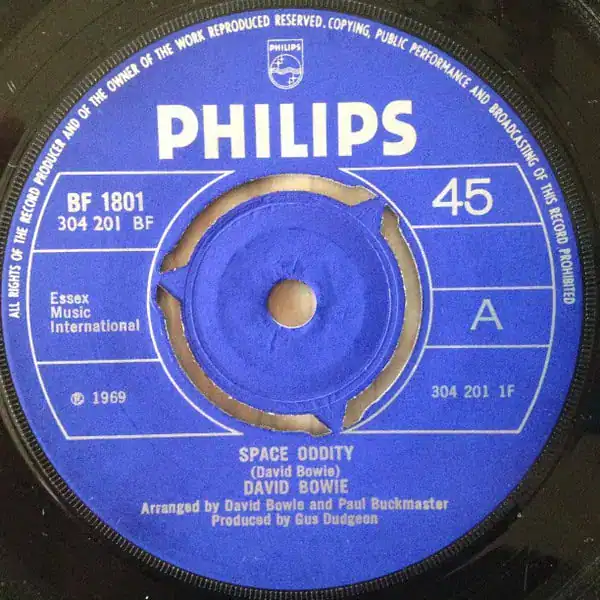
Herbie Flowers‘ first documented collaboration with David Bowie came in 1969 during the recording sessions for Space Oddity. The song was recorded at Trident Studios in London under the direction of producer Gus Dudgeon, who assembled a group of experienced session musicians to realise Bowie’s increasingly ambitious composition.
At the time Bowie was still establishing himself as a recording artist. Although he had released several singles and his self-titled debut album, commercial success had remained elusive. Space Oddity, inspired in part by the excitement surrounding the Apollo 11 mission, represented a significant artistic step forward and demanded a far more sophisticated musical arrangement than his earlier recordings.
Flowers joined an accomplished group of musicians that included guitarist Mick Wayne, drummer Terry Cox, keyboard player Rick Wakeman and arranger Paul Buckmaster, whose orchestral score became one of the defining features of the finished recording. Together they created the musical setting for Bowie’s story of Major Tom, combining folk, orchestral music, rock and jazz influences into a recording unlike anything else in the British charts at the time.
The Bass Performance
Flowers approached the recording from a musical background rooted in tuba, double bass and modern jazz rather than contemporary rock music. Playing a Fender Jazz Bass with a plectrum, he produced a warm, rounded tone that blended naturally with the orchestral arrangement while remaining clearly audible throughout the recording.
Rather than simply reinforcing the root notes, his bass part develops as the song progresses. During the opening sections it provides a restrained harmonic foundation, but later becomes increasingly melodic and exploratory, moving into higher registers that complement the growing tension within the arrangement.
The result was a performance that differed noticeably from many British pop recordings of the period. Flowers’ bass line combined technical precision with musical freedom, contributing to the distinctive atmosphere that helped make Space Oddity one of David Bowie’s defining early recordings.
Released as a single in July 1969, Space Oddity became David Bowie’s first major commercial success, reaching number five in the UK Singles Chart. The recording introduced audiences to Major Tom, a character who would reappear at various points throughout Bowie’s career and become one of the most recognisable figures in his songwriting.
For Herbie Flowers, the session marked the beginning of a professional association with Bowie that would continue several years later during the Diamond Dogs era. Between those two periods, however, Flowers established himself as one of Britain’s busiest and most respected session bassists, contributing to hundreds of recordings across an extraordinary range of musical styles.
One of Britain’s Most In-Demand Session Bassists
Following the success of Space Oddity, Flowers’ reputation within the recording industry continued to grow rapidly. Producers valued his ability to read complex arrangements, adapt quickly to different musical styles and create distinctive bass parts without dominating the recordings.
Throughout the early 1970s he became a familiar presence in London’s leading recording studios, working with artists including Elton John, Harry Nilsson, David Essex, Cat Stevens, George Harrison, Paul McCartney, Bryan Ferry, Serge Gainsbourg, Al Kooper and many others. His versatility allowed him to move effortlessly between rock, pop, folk, orchestral projects and film music, making him one of the most sought-after session musicians of his generation.
His growing reputation would soon lead to one of the most famous recording sessions of his entire career: Lou Reed‘s Transformer, produced by David Bowie and Mick Ronson.
Transformer and Lou Reed
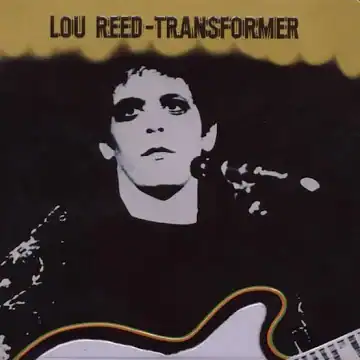
By the early 1970s Herbie Flowers had become one of the most respected session bassists in Britain. His reputation for reliability, versatility and musical imagination brought him into recording sessions with an extraordinary range of artists and producers. Among the most significant was Lou Reed‘s landmark 1972 album Transformer, produced by David Bowie and Mick Ronson.
Recorded at Trident Studios in London, Transformer marked an important turning point in Reed’s career following the dissolution of The Velvet Underground. Bowie and Ronson recognised the strength of Reed’s songwriting and assembled an experienced group of British session musicians to help realise the album. Flowers was selected to provide the bass parts for several of the recordings.
Although Bowie produced the album and Ronson was deeply involved in the arrangements, Flowers worked as an independent session musician, contributing the distinctive bass performances for which he had already become widely respected throughout the London recording scene.
Walk on the Wild Side
Among Flowers’ many recording credits, none became more instantly recognisable than his performance on Walk on the Wild Side. Released in 1972 as the opening single from Transformer, the song would become Lou Reed‘s signature recording and one of the defining popular music releases of the decade.
The recording is built around an unforgettable bass figure devised by Flowers during the session. Rather than relying on a single instrument, he performed the part using both double bass and electric bass, combining the warm resonance of the upright instrument with the clarity and definition of the electric bass to create a sound unlike anything heard on contemporary pop records.
The resulting bass line became inseparable from the song itself. Its relaxed, descending movement provided the perfect foundation for Reed’s understated vocal while helping establish the distinctive atmosphere that made Walk on the Wild Side an international success.
Although Flowers received only the standard session fees for his work, he never publicly expressed bitterness about the arrangement. Instead, he consistently regarded the recording as one memorable session among many during an exceptionally busy period of his career.
A Session Musician in Constant Demand
The success of Transformer further strengthened Flowers’ reputation throughout the recording industry. Producers increasingly sought him out not simply because he was an accomplished bass player, but because he possessed an unusual ability to understand the musical character of each recording and create bass parts that served the song rather than drawing attention to themselves.
During this period his recording credits expanded to include work with artists such as Harry Nilsson, David Essex, Al Kooper, Cat Stevens, George Harrison, Paul McCartney, Bryan Ferry, Serge Gainsbourg, Melanie and many others. Whether performing straightforward accompaniment or developing memorable melodic lines, Flowers approached every recording with the same professionalism that had made him one of Britain’s most trusted session musicians.
Alongside his extensive studio work, Flowers also became involved with several successful bands. The first of these was Blue Mink, a group that combined accomplished session musicians with original songwriting and quickly established itself as one of Britain’s most successful pop ensembles of the early 1970s.
Blue Mink
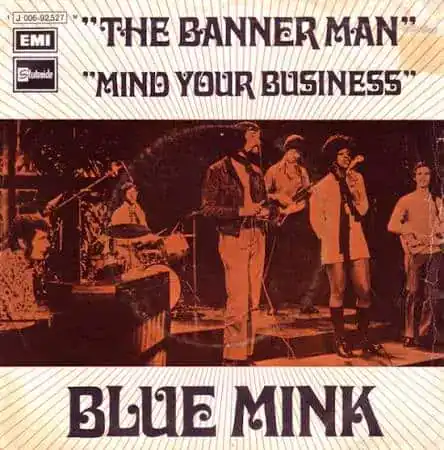
While continuing his increasingly busy career as a session musician, Herbie Flowers also became a founding member of Blue Mink, one of Britain’s most successful pop groups of the early 1970s. Formed in 1969 by producer Roger Cook and featuring vocalist Madeline Bell, guitarist Roger Cook, drummer Barry Morgan and Flowers on bass, the group brought together experienced professional musicians who were already well established within the British recording industry.
Blue Mink achieved immediate commercial success with Melting Pot, released in late 1969. The song reached number three on the UK Singles Chart and became one of the band’s defining recordings. Its message of racial harmony and cultural unity reflected the optimistic spirit of the period and remains one of the group’s best-known releases.
The band followed with further successful singles including The Banner Man, Good Morning Freedom and Randy, while continuing to perform extensively throughout Britain and Europe. Unlike many contemporary pop groups, Blue Mink was built around highly experienced studio musicians who were equally comfortable recording chart singles, television performances and commercial session work.
For Flowers, membership of Blue Mink complemented rather than replaced his studio career. He continued to accept recording sessions for numerous artists while balancing touring commitments with the band, demonstrating the remarkable workload that characterised much of his professional life during the 1970s.
One of Britain’s Most Recorded Bass Players
By the early 1970s Flowers had established himself as one of the busiest session bassists working in Britain. Recording sessions often took him between several London studios in a single day, where he might perform on projects spanning pop, rock, folk, orchestral music, television themes and film soundtracks.
His reputation rested not only on technical ability but also on professionalism. Producers knew that Flowers could quickly understand an arrangement, read complex charts and deliver performances that strengthened a recording without unnecessary embellishment. These qualities made him a trusted choice for producers including Tony Visconti, Gus Dudgeon, Richard Perry, Shel Talmy, Mickie Most and many others.
By the middle of the decade his bass playing could be heard on hundreds of commercially successful recordings. Although exact totals vary between published sources, Flowers himself regarded the sheer variety of the work as more important than the number of records on which he appeared. His career reflected the often unseen contribution of Britain’s elite session musicians, whose performances became part of the soundtrack of popular music during the 1960s and 1970s.
Returning to David Bowie
Five years after recording Space Oddity, Herbie Flowers‘ professional path crossed with David Bowie once again. During that period Bowie had undergone one of the most remarkable artistic transformations in popular music, moving through the Ziggy Stardust and Aladdin Sane years before creating the ambitious and theatrical world of Diamond Dogs.
When preparations began for the album and the subsequent stage production, Bowie once again turned to London’s pool of exceptional session musicians. Flowers’ versatility, musical discipline and previous experience working with Bowie made him a natural choice for the project, leading to the most extensive collaboration of their careers.
Recording Diamond Dogs
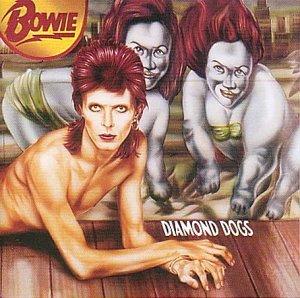
In 1974 Herbie Flowers reunited with David Bowie during one of the most ambitious periods of Bowie’s career. Following the commercial success of the Ziggy Stardust and Aladdin Sane years, Bowie had conceived Diamond Dogs, an album that combined elements of glam rock, soul, theatrical rock and George Orwell‘s dystopian vision of Nineteen Eighty-Four.
The recording sessions brought together an impressive group of musicians drawn from London’s thriving session scene. Flowers was invited to contribute bass during the making of the album, working once again with Bowie only five years after their collaboration on Space Oddity. By this stage Flowers had become one of Britain’s most respected studio musicians, equally comfortable interpreting detailed arrangements or adapting quickly to new musical ideas as recording sessions evolved.
Unlike many of Bowie’s earlier recordings, Diamond Dogs reflected an artist in transition. Bowie increasingly combined tightly structured compositions with more expansive arrangements, creating an album that bridged the theatrical world of glam rock and the soul-influenced direction he would pursue later in 1974. Flowers’ experience as both a session bassist and an accomplished double bassist made him well suited to the varied musical demands of the project.
Released in May 1974, Diamond Dogs reached the top of the UK Albums Chart and became another major international success. Its songs introduced audiences to the dark, post-apocalyptic world of Hunger City while at the same time signalling the beginning of Bowie’s move towards American rhythm and blues.
Joining the Diamond Dogs Tour
Following completion of the album, Flowers joined David Bowie’s touring band for the opening North American leg of the Diamond Dogs Tour. The production, which opened in Montreal in June 1974, was unlike anything rock audiences had previously experienced. Designed around elaborate moving scenery, hydraulic bridges, projected cityscapes and large theatrical sets, it transformed the concert stage into Bowie’s vision of the decaying metropolis portrayed on the album.
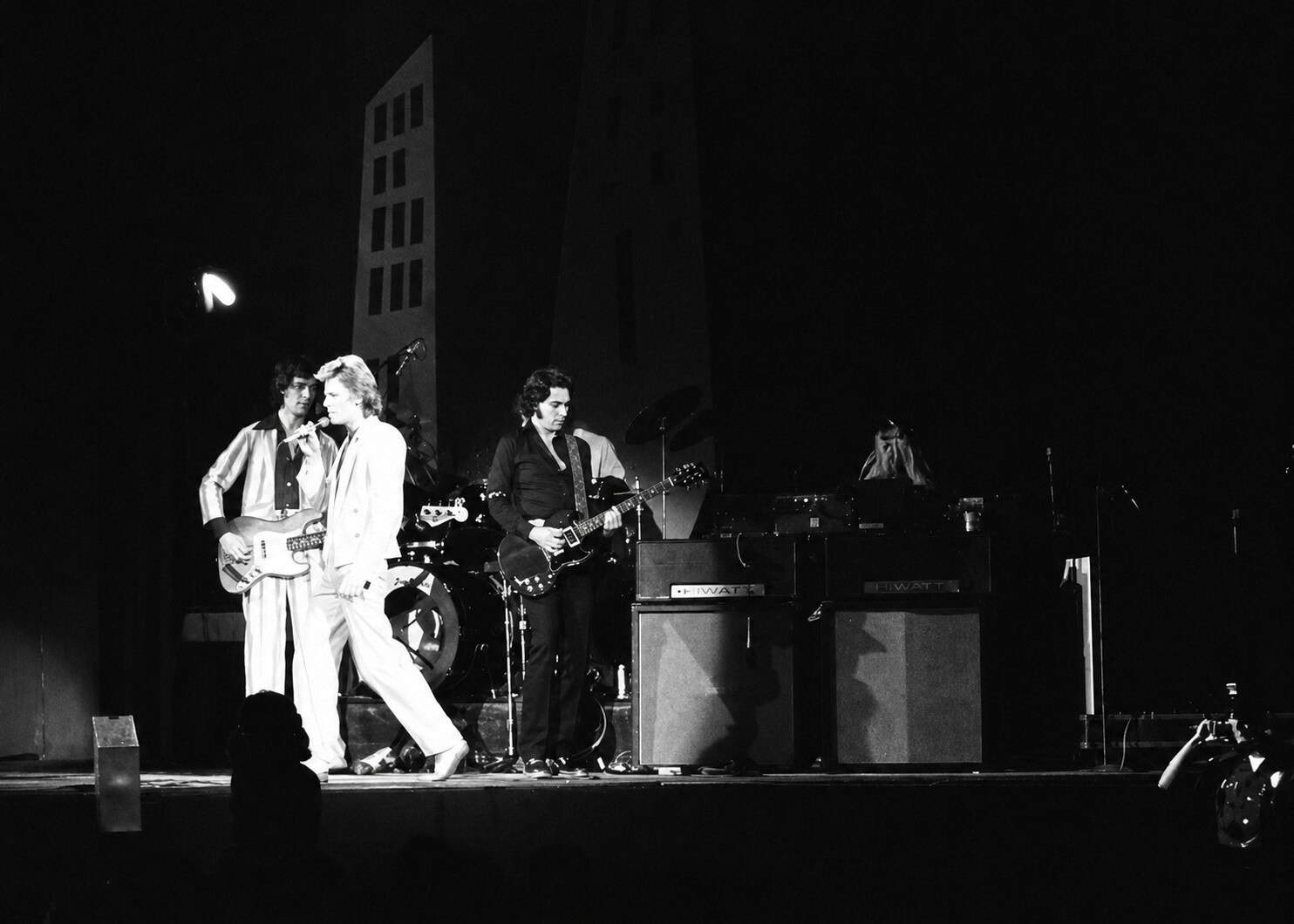
David Bowie performing during the original Diamond Dogs Tour at Charlotte Park Center, Charlotte, North Carolina, 5 July 1974. Herbie Flowers was a member of Bowie’s touring band during this stage of the tour.
Source:
Wikimedia Commons.
Flowers became part of an outstanding ensemble assembled for the production. The band included guitarist Earl Slick, pianist Mike Garson, drummer Tony Newman, percussionist Pablo Rosario, saxophonist David Sanborn, multi-instrumentalist Richard Grando and musical director Michael Kamen, whose arrangements helped unify the ambitious stage production.
The theatrical nature of the concerts demanded far more than simply reproducing the studio recordings. The musicians had to synchronise their performances with constantly changing scenery, dramatic lighting cues and carefully choreographed stage movements while maintaining the musical precision expected of one of the world’s biggest touring productions.
For Flowers, whose career had already encompassed military bands, jazz ensembles, television orchestras, recording studios and pop groups, the production represented another very different musical challenge. His versatility and extensive professional experience enabled him to adapt quickly to the scale and complexity of Bowie’s most ambitious live production to date.
The First North American Leg
Flowers remained with Bowie’s touring band during the first North American section of the Diamond Dogs Tour, performing throughout the initial series of concerts during the summer of 1974. This period included the performances at the Tower Theater in Upper Darby, Pennsylvania, where Bowie decided to record material for what would become his first official live album.
Although later stages of the tour featured significant musical changes as Bowie moved towards the soul-oriented sound that would soon culminate in Young Americans, Flowers’ contribution belongs specifically to the original theatrical production. His performances therefore document an important moment in Bowie’s artistic development, capturing the final chapter of the elaborate Diamond Dogs concept before the music evolved in a markedly different direction.
Those concerts at the Tower Theater would preserve Flowers’ work with Bowie on one of the most significant live recordings of Bowie’s career.
David Live
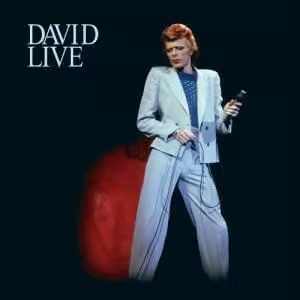
During July 1974, David Bowie brought the Diamond Dogs Tour to the Tower Theater in Upper Darby, just outside Philadelphia. The concerts were recorded for what would become David Live, Bowie’s first official live album and one of the most important concert recordings of his career.
Herbie Flowers was the bassist throughout these performances, forming part of the original Diamond Dogs touring ensemble. Recorded over several nights, the concerts captured Bowie at a pivotal moment in his artistic development. While the elaborate theatrical production of the tour remained intact, his growing fascination with American soul music was already becoming evident in both the repertoire and the performances.
Released later in 1974, David Live documented not only Bowie’s ambitious stage production but also the musicians who helped bring it to life. For Flowers, the album became the lasting record of his most extensive collaboration with Bowie, preserving his performances for future generations of listeners.
The Recording Agreement
The decision to record the Philadelphia concerts for commercial release created an important contractual issue for the musicians. Under the agreements governing professional recording sessions and live recordings, performers were entitled to additional payment when concerts were recorded for release as a commercial album.
According to later accounts, Flowers realised that the concerts were being recorded for an official live release and raised the matter on behalf of the musicians. The issue was discussed before one of the performances, and an agreement was subsequently reached that ensured the players received the appropriate additional recording payment.
The episode reflected Flowers’ thorough understanding of the professional responsibilities and contractual rights associated with session and touring work. Having spent many years in recording studios before joining Bowie’s touring band, he was familiar with the practical realities of the music industry as well as its creative demands.
Although the discussions took place behind the scenes, the concerts proceeded as planned and the recordings were successfully completed. The resulting performances became David Live, an album that has remained an important document of Bowie’s mid-1970s career.
Leaving Bowie’s Touring Band
Following the completion of the initial North American leg of the Diamond Dogs Tour, Flowers did not continue with the later stages of the tour. During the months that followed, Bowie substantially revised both the musical direction and personnel of the production as he moved towards the soul-inspired style that would culminate in the recording of Young Americans.
The revised touring ensemble reflected that changing musical direction. While Flowers’ period with Bowie had been relatively brief, it coincided with one of the most ambitious productions of Bowie’s career and resulted in performances preserved on David Live, ensuring his place within Bowie’s live history.
By the time Bowie resumed touring after the summer of 1974, the original theatrical presentation had begun to evolve into a markedly different concert experience. Flowers, meanwhile, returned to the session work and recording projects that had already established him as one of Britain’s most respected bass players.
A Lasting Contribution to David Bowie’s Career
Although Herbie Flowers‘ collaborations with David Bowie were concentrated in two distinct periods, they illustrate the remarkable breadth of his musicianship. His first contribution came on Space Oddity, one of the recordings that launched Bowie’s international career. Five years later he returned for Diamond Dogs, joined the original touring band and performed on the concerts that produced David Live.
Together these recordings document two very different chapters in Bowie’s artistic development. From the imaginative studio experimentation of 1969 to the theatrical scale of the Diamond Dogs production, Flowers’ work forms part of the musical legacy of one of Britain’s most innovative recording artists.
Beyond David Bowie
After his work with Bowie, Flowers continued the exceptionally varied career that had already made him one of Britain’s most sought-after session musicians. His recording work, touring commitments, composing and later educational activities would occupy him for decades, demonstrating the versatility that had characterised his professional life from the very beginning.
Joining T. Rex
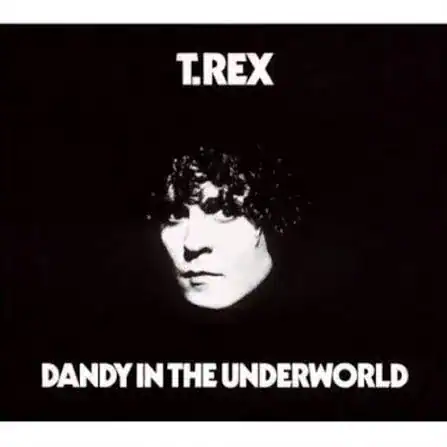
Following his period with David Bowie during 1974, Herbie Flowers continued to divide his time between recording sessions and touring work. His reputation as one of Britain’s leading bass players remained firmly established, leading to further collaborations with many of the country’s best-known artists.
During the latter half of the 1970s, Flowers became a member of the final touring and recording line-up of T. Rex, working with Marc Bolan during the closing years of the band’s career. Although T. Rex had already achieved international fame through classics such as Get It On, Telegram Sam and Children of the Revolution, Bolan continued recording and performing until his death in September 1977.
For Flowers, joining T. Rex represented another opportunity to work alongside one of Britain’s most influential rock musicians. His role reflected the confidence that leading artists placed in his musicianship and reliability, qualities that had already made him one of the country’s most respected session players.
Sky
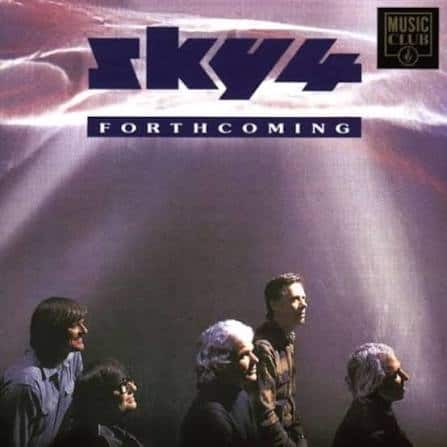
In 1979 Flowers became one of the founding members of Sky, an instrumental group that combined elements of classical music, rock and jazz. Alongside classical guitarist John Williams, keyboard player Francis Monkman, guitarist Kevin Peek and drummer Tristan Fry, Flowers helped create a distinctive musical style that appealed to audiences well beyond the traditional progressive rock scene.
Sky achieved considerable commercial success in both the United Kingdom and Australia, releasing a series of successful albums and undertaking extensive concert tours. Unlike many instrumental groups of the period, the band reached a broad audience by combining technical excellence with accessible compositions and imaginative arrangements.
Flowers’ bass playing formed an essential part of Sky’s sound. Drawing upon his experience in jazz, orchestral music, rock and studio recording, he provided performances that balanced technical precision with melodic sensitivity. His versatility allowed him to move comfortably between the band’s more classically inspired material and its contemporary rock compositions.
Sky remained an important part of Flowers’ musical life for many years and introduced his playing to a new generation of listeners who may have been unaware of his extensive session career.
Jeff Wayne’s Musical Version of The War of the Worlds
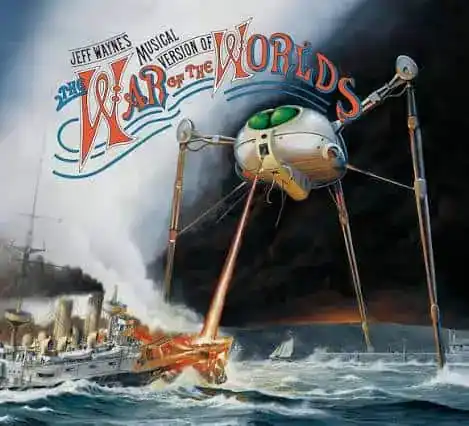
Among the many landmark recordings on which Flowers appeared was Jeff Wayne’s Musical Version of The War of the Worlds, first released in 1978. The ambitious concept album combined narration, orchestral music, progressive rock and dramatic storytelling, becoming one of the most successful musical adaptations of H. G. Wells’ classic science-fiction novel.
Flowers contributed bass to the original recording and later reunited with the production when the work was adapted for the concert stage. He performed during several live tours in the twenty-first century, introducing the music to new audiences while revisiting one of the most celebrated recordings of his career.
The enduring popularity of The War of the Worlds demonstrated the remarkable longevity of Flowers’ career. Decades after first recording the music, he remained closely associated with one of Britain’s most successful concept albums.
Composer, Educator and Community Musician
Alongside his work as a performer, Flowers also composed music. One of his best-known songwriting successes was Grandad, recorded by actor Clive Dunn, which reached number one in the UK Singles Chart in 1971. The song demonstrated another aspect of Flowers’ musical ability, showing that his talents extended beyond performance into composition.
Away from the recording studio, Flowers devoted considerable time to music education and community projects. He taught bass guitar, led workshops for young musicians and encouraged children to write and perform their own music. Later he founded the community choir Shoreham Singers by Sea, an organisation that grew into one of the largest community choirs in southern England.
These activities reflected Flowers’ lifelong belief that music should be shared as widely as possible. Whether working with internationally recognised artists or encouraging amateur musicians, he approached every project with the same enthusiasm and generosity that had characterised his professional career for more than half a century.
An Extraordinary Recording Legacy
Across more than six decades, Herbie Flowers built one of the most remarkable careers of any British session musician. His bass playing can be heard on recordings spanning rock, pop, folk, jazz, orchestral music, television productions and film soundtracks. Rather than becoming identified with a single musical style, he earned lasting respect through his ability to adapt to almost any recording situation while retaining a distinctive musical voice.
From David Bowie’s Space Oddity and David Live to Lou Reed‘s Transformer, Harry Nilsson’s Nilsson Schmilsson, Jeff Wayne’s The War of the Worlds and the recordings of countless other artists, Flowers helped shape the sound of popular music during one of its most creative periods.
Legacy
Herbie Flowers occupies a unique place in the history of British popular music. Although his name was rarely as widely recognised as the artists with whom he worked, his musicianship became part of hundreds of recordings that helped define popular music from the late 1960s onwards.
His career reflected the remarkable contribution made by Britain’s leading session musicians during an era when versatility, professionalism and musical imagination were essential qualities. Whether performing on intimate singer-songwriter recordings, ambitious orchestral productions, international rock albums or major concert tours, Flowers consistently placed the music ahead of personal recognition.
For David Bowie, Flowers contributed to two important chapters separated by five transformative years. He performed on Space Oddity, the recording that introduced Major Tom to the world, before returning for the Diamond Dogs sessions, the original 1974 North American tour and the concerts preserved on David Live. Together these recordings document both the beginning of Bowie’s breakthrough as a recording artist and one of the most ambitious theatrical productions of his career.
Beyond Bowie, Flowers’ remarkable body of work extended across virtually every corner of popular music. His performances with Lou Reed, Elton John, Harry Nilsson, George Harrison, Paul McCartney, David Essex, Cat Stevens, Jeff Wayne and countless other artists ensured that his playing reached millions of listeners around the world. His bass lines, musical sensitivity and professionalism continue to influence musicians and recording engineers today.
Following his death on 5 September 2024, tributes from fellow musicians, journalists and recording professionals recognised not only his extraordinary musical achievements but also his generosity, humour and lifelong commitment to making music. His legacy lives on through the recordings he helped create and through the generations of musicians inspired by his work.
Herbie Flowers in Bowie’s Collaborative Universe
Although Herbie Flowers worked with David Bowie during only two distinct periods, his contribution occupies an important place within Bowie’s collaborative history. He participated in the recording of Space Oddity, one of the defining recordings of Bowie’s early career, before returning five years later to contribute to the Diamond Dogs project and the original stage production that culminated in David Live.
His career also illustrates the importance of Britain’s elite session musicians, whose work often extended far beyond a single artist or musical style. Flowers brought the same professionalism, creativity and musical intelligence to every recording, qualities that made him one of the most respected bass players of his generation and an important member of David Bowie’s wider creative world.
Official Website & Further Information
Throughout his career, Herbie Flowers remained active as a performer, composer, educator and community musician. His work extended far beyond his collaborations with David Bowie and included thousands of recording sessions, concert performances, educational projects and community initiatives that reflected his lifelong dedication to music.
For many years further information about Herbie Flowers, his recordings and musical activities was available through his official website.
DavidBowieWorld.com is dedicated to documenting the careers of David Bowie’s collaborators through carefully researched historical information and, where available, first-hand contributions from the artists themselves. This page will continue to be updated as new verified information becomes available.
Article Origin
This article has been researched and written for DavidBowieWorld.com as part of the site’s ongoing series documenting the musicians, producers, engineers, arrangers and creative collaborators who helped shape David Bowie’s extraordinary career. Particular attention has been given to Herbie Flowers‘ documented contributions to Space Oddity, Diamond Dogs, the original 1974 Diamond Dogs Tour and David Live, placing those collaborations within the wider context of one of Britain’s most distinguished session careers.
