
Andy Warhol – Pop Art Icon in David Bowie’s Creative Universe
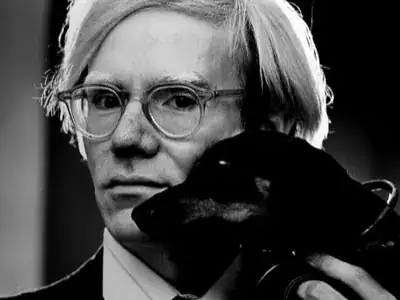
Photo: Jack Mitchell / Wikimedia Commons / CC BY-SA 4.0 (editorial use)
Andy Warhol (6 August 1928 – 22 February 1987) was the defining Pop Art figure of the 1960s and 1970s — an artist who transformed celebrity, repetition, advertising and mass media into the language of modern art.
For David Bowie, Warhol was more than a famous name. He represented a cultural model: the artist as brand, the studio as factory, and public identity as a deliberately constructed artwork.
- Name: Andy Warhol (born Andrew Warhola)
- Born: 6 August 1928, Pittsburgh
- Died: 22 February 1987, New York
- Role: Artist, filmmaker, publisher
- Bowie link: “Andy Warhol”, The Factory meeting, Basquiat
- Core idea: Art, media and fame as one system
Why Warhol mattered to Bowie
Bowie was drawn to artists who understood identity as something one could design and perform. Warhol’s world made that idea tangible: the cool surface, the controlled image, and the blur between reality and show.
In Bowie’s early development, Warhol became an important cultural reference point — proof that modern art and pop stardom could inhabit the same territory.
Andy Warhol’s Pork and the London Connection
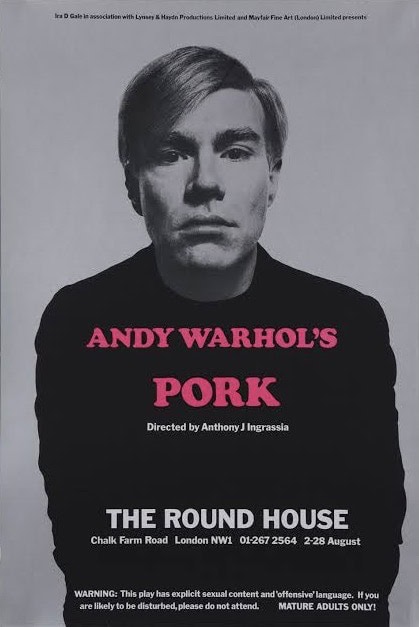
In August 1971, Andy Warhol’s Pork arrived at the Roundhouse in Camden, London. Directed by Anthony Ingrassia and based on material drawn from Warhol’s circle, the provocative production brought a group of New York underground performers directly into Bowie’s world at a crucial moment in his career.
Bowie attended the London production with members of his own circle. Among those connected with Pork were Tony Zanetta, Cherry Vanilla and Leee Black Childers. Bowie had already been fascinated by Warhol and the Velvet Underground, but Pork gave him direct contact with people who had emerged from the New York underground culture he admired.
The encounter had lasting consequences. Zanetta, Vanilla and Childers would subsequently become associated with Bowie’s expanding MainMan organisation, bringing their experience of New York theatre, photography, publicity and underground culture into the professional circle developing around him.
Warhol himself was not part of the London encounter. Bowie’s first meeting with Andy Warhol took place later, during Bowie’s visit to New York in September 1971. Tony Zanetta helped arrange the meeting at Warhol’s Factory, making the London Pork connection an important bridge between Bowie’s fascination with Warhol from afar and their eventual face-to-face meeting.
Meeting at The Factory (1971)
In 1971, Bowie visited The Factory in New York. The encounter has become part of Bowie lore: a young Bowie meeting one of the defining artistic myths of the age.
Accounts suggest Warhol responded in his characteristically reserved manner. Whatever Warhol made of the encounter, Bowie left with a first-hand meeting with an artist who had already helped shape his imagination.
The song “Andy Warhol” on Hunky Dory
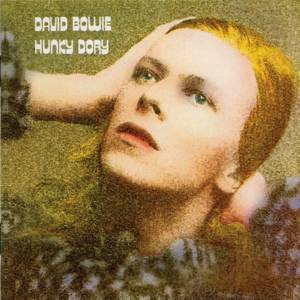
Bowie’s tribute appeared on Hunky Dory in 1971. The song is not simply fan homage — it is a portrait of Warhol as a modern figure: distant, iconic and strangely human in his remoteness.
The track sits among the album’s gallery of cultural references — Dylan, Warhol and the idea of America — showing Bowie’s habit of building pop from art history, literature and media imagery.
Warhol in Bowie’s lyrics
In Andy Warhol, Bowie portrays Warhol as elusive, detached and mythic — less a conventional portrait than a meditation on celebrity as art.
Lines about Warhol’s “silver screen” aura and strange distance already hint at ideas Bowie himself would later explore in his own work.
Warhol’s influence on Bowie’s aesthetics
Warhol’s impact on Bowie is felt less in direct collaboration than in method: how images are manufactured, how fame alters meaning, and how the public self can become a medium.
From Ziggy’s constructed stardom to later media self-awareness, much in Bowie makes richer sense through a Warhol lens.
Pop Art, celebrity and Bowie’s universe
Warhol turned celebrity into a canvas; Bowie turned stage identity into living artwork. Both understood modern culture as image-driven, and image itself as artistic material.
In Bowie’s extended creative universe, Andy Warhol stands as a symbolic creative influence — not a studio collaborator, but a conceptual force who helped define what “modern” could look like.
Bowie as Warhol
Bowie’s fascination came full circle in 1996 when he portrayed Andy Warhol in Basquiat, Julian Schnabel’s film about Jean-Michel Basquiat.
It was more than casting. It was Bowie embodying one of the figures who had influenced him for decades.
Legacy
Andy Warhol’s importance to Bowie lies not in conventional collaboration but in shared ideas about image, performance and cultural invention.
If some figures shaped Bowie musically, Warhol helped shape how Bowie thought about fame itself. That may be an even deeper form of influence.
