
Pablo Rosario – Percussion on David Bowie’s Diamond Dogs Tour

Pablo Rosario, also known as Pablito Rosario and “El Indio”, is a New York-born percussionist of Puerto Rican heritage whose career connects salsa, Afro-Cuban music, Latin jazz, soul and rock. Within David Bowie’s history, his name belongs to the remarkable group of musicians who accompanied the singer through the changing musical landscape of 1974.
Rosario played percussion during the Diamond Dogs tour and its later soul-oriented performances. His contribution is preserved on David Live, the September concert released as Cracked Actor (Live Los Angeles ’74), and the autumn recordings issued as I’m Only Dancing (The Soul Tour 74). He is also named among the percussionists in the original credits of Young Americans.
These Bowie recordings represent one part of a much wider professional life. Before joining the tour, Rosario had already worked within the musical worlds of Willie Colón, Mongo Santamaría and Larry Harlow. His subsequent activities included further recording, work with Batacumbele, teaching and performances under his own leadership. Understanding that wider history helps explain the depth of experience behind a credit that can look deceptively brief on an album sleeve.
- Name: Pablo Rosario
- Also known as: Pablito Rosario; “El Indio”
- Born: 9 October 1948, Brooklyn, New York
- Heritage: Puerto Rican
- Role with Bowie: Percussionist during the 1974 Diamond Dogs and Soul tour period
- Instruments across his career: Bongos, congas, timbales, bells, güiro and other percussion
- Contemporary Bowie release: David Live (1974)
- Studio album credit: Percussion on Young Americans (1975)
- Later archival releases: Cracked Actor (Live Los Angeles ’74) (2017); I’m Only Dancing (The Soul Tour 74) (2020)
- Other important associations: Willie Colón, Héctor Lavoe, Mongo Santamaría, Larry Harlow, Luther Vandross and Batacumbele
- Other activities: Teaching, musical mentorship and leading Latin jazz groups
Brooklyn beginnings and a musical family
Pablo Rosario was born in Brooklyn on 9 October 1948. In his published interview with percussionist and writer Les Moncada, he traced his earliest musical memories to family rehearsals. His father, Pablo Rosario Ruiz, sang and played guitar, and music was something the young Rosario encountered through people close to him rather than solely through commercial recordings.
That setting matters in a career built around ensemble playing. A child listening to a family group hears instruments as interacting parts: a voice supported by guitar, a rhythmic pattern answered by another player, a change in energy when someone enters or stops. Rosario’s recollections place him inside that social experience of music from an early age.
His family connections also crossed the water between New York and Puerto Rico. Rosario recalled growing up in Brooklyn before the family moved to Puerto Rico in 1966. His biography therefore belongs to the movement of musicians and musical knowledge between those places. It should not be reduced to a simple contrast between an American rock career and a separate Latin background; both became parts of the same professional life.
Learning percussion through people
An important figure in Rosario’s early development was his uncle, Justito Rosario. The practical instruction he remembered receiving was direct and personal. The conga was an instrument someone in his family could demonstrate, explain and place within the sound of a group. The lesson was therefore connected with actual music-making, not just with the repetition of isolated exercises.
Pablo Rosario on his first teacher
“Uncle Justito showed me how to play the conga.”
— Pablo Rosario, interviewed by Les Moncada; English translation published by World Music Central, 27 November 2015.
The different percussion instruments he went on to play demand different physical techniques. Congas and bongos are hand drums; timbales introduce sticks, metal shells and a different distribution of sounds. A bell or güiro may have fewer apparent resources than a drum, but its placement can be decisive within a rhythmic arrangement. Versatility involves understanding those relationships as well as acquiring the ability to produce the sounds.
Rosario’s later credits reveal that breadth. They name particular instruments in some settings and use the broader term percussion in others. His musical identity developed across those roles. For a listener approaching him through Bowie, this is a useful starting point: he arrived with experience of a substantial rhythmic vocabulary, rather than simply adding miscellaneous effects around a rock drummer.
Early performance and the discipline of accompaniment
Published accounts of Rosario’s early career place him in professional musical surroundings while still very young. A family-archive photograph accompanying the Moncada interview identifies an early engagement with Ricardo Ray and Raymond Maldonado in March 1959. This offers a much earlier starting point than his later appearance in Bowie’s touring band.
His experience also included singing. In the same interview, Rosario remembered performing with a doo-wop group called The Mellow Tones. That detail broadens the picture of his training. Singing within a group calls for attention to pitch, phrasing, breathing and the balance between individual expression and the shared arrangement. Those concerns are relevant to accompaniment even when the performer is playing a percussion instrument.
Willie Colón, Héctor Lavoe and The Hustler
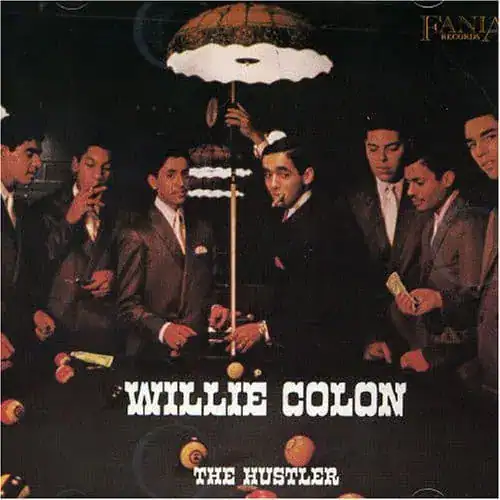
A particularly clear early recording credit appears on Willie Colón’s The Hustler, released in 1968. The Fania Records catalogue names Pablo Rosario on bongos, alongside conga player Héctor “Bucky” Andrade and timbalero Nicky Marrero. Héctor Lavoe supplies the lead vocals, while the ensemble also includes pianist Markolino Dimond.
The separation of those percussion credits is instructive. Bongos, congas and timbales are not three interchangeable names for the same function. Each contributes a different range of tones and rhythmic possibilities. Within an arrangement, the players must coordinate so that activity in one part supports the others. The overall momentum is a collective achievement, even when one instrument briefly becomes more prominent.
For Rosario’s later Bowie work, the significance is professional rather than stylistically literal. A credit on The Hustler does not mean he subsequently imposed the same patterns on every rock song. It establishes experience in a demanding ensemble where percussion was structurally important. Fania’s own album notes and personnel listing provide a firm reference for this early chapter of his career.
Mongo Santamaría and the wider language of rhythm
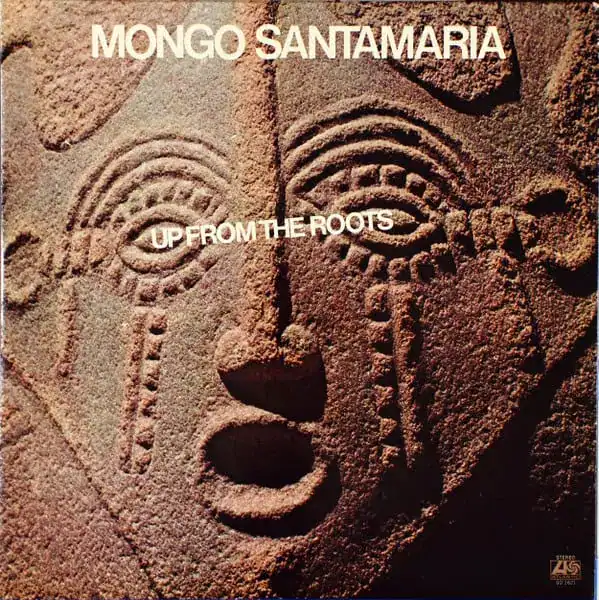
Another major association was with Cuban-born percussionist and bandleader Mongo Santamaría. Rosario’s work with him extended across different periods, and the relationship became one of the recurring threads in his professional life. On Up from the Roots, released by Atlantic in 1972, Rosario is credited with bongos and bells.
The album brought together hand percussion, horns, keyboards and bass in music exploring Afro-Cuban rhythmic resources. Its personnel included players operating across jazz and Latin music, illustrating the permeability of categories that record-shop labels can make appear separate. Rosario’s role belongs to that ensemble tradition: rhythmic detail is integrated with arranged material and instrumental interaction.
The contrast with Bowie’s later stage presentation is striking, but it should not conceal the practical similarities. Both situations require responsiveness to other musicians, control of dynamics and awareness of the arrangement. A player can carry those skills between settings without making the settings sound identical. Santamaría’s recordings are consequently important to Rosario’s biography as substantial work in their own right, as well as evidence of the experience he brought elsewhere.
Larry Harlow and Hommy: A Latin Opera
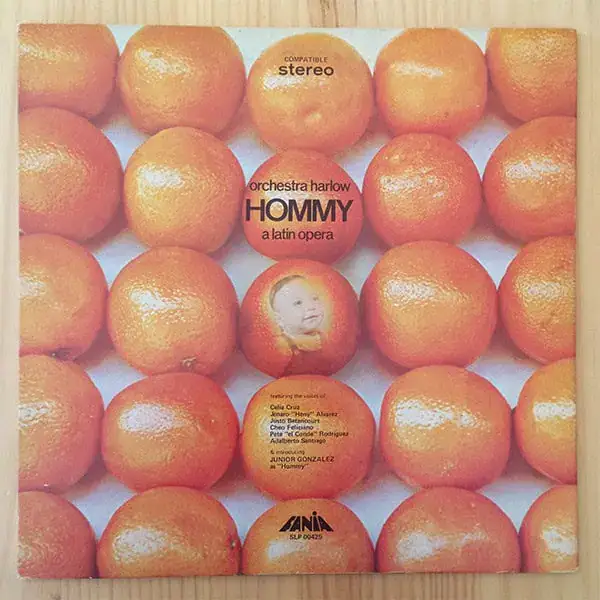
Rosario also worked within the orchestra of pianist, arranger and bandleader Larry Harlow. An important project in that history was Hommy: A Latin Opera, introduced in 1973. The work connected a dramatic narrative with Afro-Caribbean music and an extensive company of singers and instrumentalists, including Celia Cruz and Junior González.
Fania’s account traces Harlow’s inspiration to The Who’s Tommy, while identifying Heny Álvarez as the writer of the dramatic work. Rosario’s participation is documented in the personnel history of the project. Here, before the Diamond Dogs tour, his career already intersected with a production in which music served a larger theatrical conception.
That connection is worth preserving without overstating it. Hommy and Diamond Dogs were different works, with different musical languages and production methods. Their relevance to Rosario is that both placed an instrumentalist within something larger than a sequence of independent songs. A performer in such an environment must understand how a passage functions within an unfolding whole, while remaining alert to the immediate needs of the ensemble.
1974: Harlow’s Salsa and an established musical identity
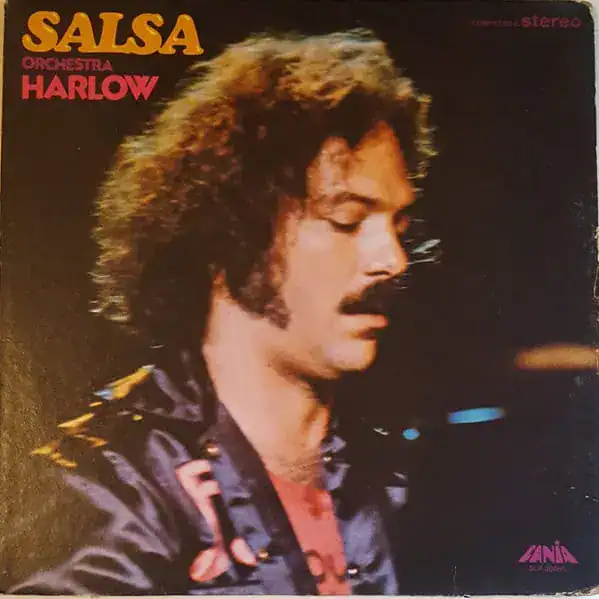
Harlow’s Salsa, released in 1974, offers another useful recording from Rosario’s wider musical world. Fania’s discussion of the album identifies him within a rhythm section that also includes Edwin Colón, Tony Jiménez and bassist Eddie “Guagua” Rivera. The music draws strongly on the legacy of Arsenio Rodríguez while presenting it through Harlow’s arrangements and orchestra.
The album includes La Cartera, one of the recordings closely associated with Harlow. For a reader discovering Rosario through a Bowie credit, this is a valuable alternative point of entry. It places his name within the history of a Latin ensemble whose rhythmic organisation is central to its character, rather than treating his early career as an anonymous apprenticeship for a later rock engagement.
Joining Bowie’s changing musical world
By the opening of the Diamond Dogs tour in June 1974, Rosario was part of Bowie’s live ensemble. A reliable account can establish that membership through tour documentation and recording credits. The available sources used here do not establish the precise circumstances of an initial introduction, audition or offer, so no private recruitment scene is reconstructed.
The engagement came at a decisive point for Bowie. The Spiders from Mars period had ended, and the new tour required a different instrumental organisation. The music of Diamond Dogs would be presented alongside earlier songs through an expanded ensemble, with keyboards, horns, percussion and backing voices contributing to the live sound.
Rosario’s place within that organisation was distinct from the drummer’s. The credits identify him as a percussionist, a role that could support rhythmic movement without duplicating the drum kit. His presence is one indication of the broader instrumental palette Bowie assembled for the tour. It also places an experienced Latin musician inside a production often remembered primarily through its spectacular scenery and the singer at its centre.
The first touring band: June and July 1974
The opening phase brought Rosario together with drummer Tony Newman and bassist Herbie Flowers. Earl Slick played guitar, while Mike Garson and musical director Michael Kamen supplied different keyboard resources. Kamen’s contribution also included oboe, adding an instrumental colour far removed from the standard guitar-band format.
The horn section included David Sanborn and Richard Grando, with Warren Peace and Gui Andrisano among the supporting vocal performers. This was an ensemble in which rhythmic information could come from many places: bass, guitar, piano, horn accents, voices and percussion. Maintaining clarity depended on how those parts related to one another.
Hunger City: music inside a theatrical production
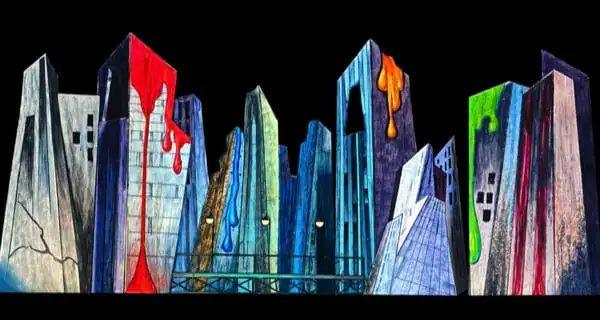
The first Diamond Dogs concerts were built around the theatrical environment generally known as Hunger City. The show opened in Montreal on 14 June 1974 and combined live music with a constructed urban landscape, choreographed movement and elaborate stage machinery. Bowie’s presentation asked the audience to encounter a sequence of dramatic images as well as a set of songs.
That environment placed particular demands on the musicians. A dramatic pause, an entrance or a transition could carry a purpose beyond its musical function. A touring band in a theatrical production must sustain the performance while supporting actions unfolding elsewhere on the stage. The audience may be looking at a prop, a dancer or the singer while the instrumentalists maintain the continuity underneath.
Rosario’s membership should be understood within that combined production. It is easy to tell the tour’s story through photographs of Bowie while leaving the supporting musicians as a list of names. The recordings restore another perspective: the scenery depended on a live ensemble capable of carrying the songs, with the percussion occupying its own place inside that coordinated musical work.
What percussion contributes beyond the drum kit
A drum kit and a separate percussion setup can divide rhythmic labour in several ways. The kit may establish the broad pulse and backbeat, while hand percussion works within the spaces between those accents. Different attacks and decays matter: a struck skin, a ringing bell and a scraped surface can register differently even when they occur at the same point in the bar.
This does not require every instrument to play constantly. A part can become more effective through contrast, or by leaving a singer’s phrase unobstructed. The percussionist also needs to hear changes in the bass line, piano or guitar. Rhythm is carried by the entire ensemble, and a contribution that ignores those relationships can make an arrangement feel crowded rather than energetic.
These are principles of ensemble playing, not a claim to identify every sound Rosario produced at every show. The distinction is useful because his Bowie credits vary in specificity. David Live uses a general percussion credit, while the official announcement for the Los Angeles concert names conga. The evidence supports his presence and, in that instance, a particular instrument; it does not justify inventing a complete equipment list for the whole tour.
July 1974: the Tower Theatre recordings
The performances recorded during Bowie’s July 1974 Tower Theatre engagement became the basis of David Live, released later that year. Located in Upper Darby, Pennsylvania, the venue is commonly associated with Philadelphia in the album’s title and publicity. Rosario is credited among the musicians on the recording.
This gave his Bowie work a contemporary public document. Listeners who had not attended the North American tour could encounter the band through a commercially released double album. The record preserved the early touring configuration, including Newman, Flowers and Kamen, rather than the different rhythm sections and expanded vocal arrangements used later in the year.
David Live: familiar songs in a larger ensemble
The repertoire preserved on David Live brings songs from different parts of Bowie’s catalogue into the same instrumental setting. Material associated with the Ziggy period sits beside the recent Diamond Dogs songs. A performance of Moonage Daydream or Suffragette City in this context is consequently more than a reproduction of its original recording arrangement.
The expanded band creates possibilities for redistribution. A line associated with one instrument on a studio recording may be supported, answered or surrounded by other sounds onstage. Keyboards and horns can change the density of a passage, while the rhythm section determines whether that additional material feels anchored or cumbersome. Percussion operates within that balance rather than outside it.
Rosario’s credit places him inside the ensemble responsible for this live transformation. It does not provide a separate part-by-part explanation of his playing. The most reliable way to approach the album is therefore to keep the collective arrangement in view while recognising the individual musicians involved. His contribution is part of what distinguishes the touring band from both the earlier Spiders and the studio personnel on Diamond Dogs.
1984, Sweet Thing and contrasting forms of momentum
David Bowie – Sweet Thing, live during the Diamond Dogs tour.
The expanded David Live programme begins with 1984 and includes the linked Sweet Thing / Candidate / Sweet Thing sequence. These pieces illustrate different demands within the same concert. One establishes a tightly directed rhythmic opening; the other unfolds through connected sections whose changing dramatic character forms part of the composition.
Such contrasts matter to an accompanying percussionist. A repeating rhythmic figure can reinforce continuity, but the same level of activity may not suit a quieter or more suspended passage. The player must respond to the form of the piece, including where the vocal line needs room and where the ensemble is moving towards a transition.
This provides a practical way to understand the value of Rosario’s background. His career had already involved arranged ensembles in which rhythmic parts interacted with horns, singers and contrasting sections. The Bowie repertoire presented a different musical setting, but it still demanded that kind of attention. The point is not to rename the songs as salsa; it is to recognise transferable musicianship within a specific live band.
Soul repertoire before the Soul Tour
Bowie’s interest in soul music did not begin only when the later 1974 tour acquired the Soul Tour name. The Tower Theatre programme already included Knock on Wood, the song associated with Eddie Floyd. The expanded album also contains Here Today, Gone Tomorrow, another indication that the live repertoire extended beyond Bowie’s own compositions.
A cover can reveal how a band approaches a musical language as well as which records the singer admires. The rhythmic feel, supporting voices and handling of instrumental accents all affect the result. Within a mixed programme, a song from another repertoire can also change the way surrounding material is heard, drawing attention to connections that are less obvious when the studio albums are considered separately.
For Rosario’s page, these songs locate him within a developing musical conversation rather than a sudden stylistic conversion. The tour’s movement towards soul was a process. His presence in the early ensemble and the later documented bands makes him one of the musicians whose work crosses the stages of that process.
August 1974 and the move towards Philadelphia soul
During the break between the summer and September performances, Bowie began recording in Philadelphia for the project that became Young Americans. The sessions brought new musical relationships into focus, notably with guitarist Carlos Alomar and vocalist and arranger Luther Vandross. Music developed during this period subsequently entered the live programme.
This movement between studio and stage gives the 1974 story its unusual shape. The tour did not simply promote a completed album and preserve the same repertoire from beginning to end. It became a setting in which material from the next project appeared while the singer was still publicly associated with Diamond Dogs.
Rosario’s credits connect him with both sides of that broader period. However, a studio album’s general personnel list does not provide a daily session diary. His participation should not be used to place him at an undocumented rehearsal, conversation or particular take. The securely established point is that he remained part of the touring work and was also acknowledged in the album credits that emerged from Bowie’s soul period.
September: a new rhythm section in Los Angeles
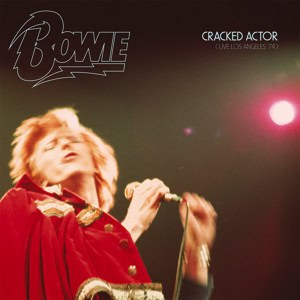
The concert recorded at the Universal Amphitheatre in Los Angeles on 5 September 1974 documents a changed band. Greg Errico was on drums and Doug Rauch on bass. Carlos Alomar joined Earl Slick on guitar, and a larger vocal group included Luther Vandross, Ava Cherry and Robin Clark.
The official release announcement identifies Pablo Rosario on conga. That specific wording is valuable: it confirms his continued involvement and supplies a more precise instrumental credit for this recording. Garson and Sanborn remained part of the ensemble, but the balance between rhythm instruments and voices differed from the band preserved on David Live.
New songs within the September programme
The Los Angeles recording includes It’s Gonna Be Me and John, I’m Only Dancing (Again), material connected with Bowie’s recent studio work. Their presence alongside older songs makes the concert an especially revealing document of the transition. The new direction was audible within the programme before the release of Young Americans.
The vocal expansion is important to that setting. Additional singers do not merely increase volume; they create possibilities for response, harmony and rhythmic interplay. A percussion part must fit around those phrases, just as it fits around a guitar or piano figure. The ensemble’s rhythmic activity becomes distributed across voices as well as instruments.
The filmed tour and Cracked Actor
Cracked Actor — Alan Yentob’s BBC documentary, first broadcast in 1975.
Alan Yentob’s BBC documentary Cracked Actor brought images of Bowie’s American life and touring work to television audiences in 1975. Footage associated with the September performances became part of the enduring visual record of the period. The documentary and the later concert album share a title but are different works.
Film can help explain the relationship between the spectacle and the band. It shows the performer moving through a theatrical environment, while the music continues as live work behind that presentation. Yet a documentary is selective: it edits moments into a film rather than offering an uninterrupted account of every musician’s activity at a complete concert.
October: the Soul Tour and the Mike Garson Band
Bowie resumed live performances on 5 October 1974 with a production increasingly focused on the music and vocal ensemble. Official retrospective accounts describe the reduction of the elaborate Hunger City stage presentation and the development of what became known as the Soul Tour or Philly Dogs Tour.
The lineup credited on the later autumn live release includes Dennis Davis on drums and Emir Ksasan on bass, with Rosario on percussion. Alomar and Slick supplied guitars, Garson keyboards and Sanborn saxophone and flute. The supporting singers included Warren Peace, Anthony Hinton, Vandross, Cherry, Clark and Diane Sumler. The musicians were presented as The Mike Garson Band.
These changes gave Rosario another rhythmic partnership within the same touring year. Newman, Errico and Davis were different drummers, and the bass chair had changed as well. His continued credit across the documented summer, September and autumn ensembles is an important part of his Bowie history, showing his involvement across the tour’s developing musical character.
Detroit and Nashville: the autumn repertoire expands
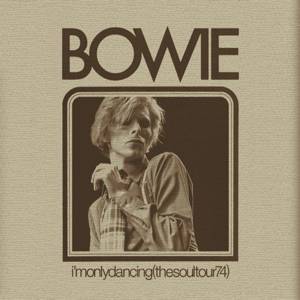
The autumn recordings later released officially draw principally on Detroit’s Michigan Palace on 20 October 1974, supplemented by encores from Nashville’s Municipal Auditorium on 30 November. The programme includes Young Americans, Can You Hear Me and Somebody Up There Likes Me, placing the forthcoming album’s music firmly inside the live show.
The Nashville material also preserves a Foot Stomping medley and a return to Knock on Wood. Such combinations reveal an ensemble working across Bowie compositions and the wider rhythm-and-blues repertoire. The show’s identity was being created through the order, arrangement and interaction of the material, rather than through a single genre label alone.
Rosario’s percussion forms part of the credited band on these recordings. The changing programme gives his work a broader historical setting than the phrase Diamond Dogs tour may initially suggest. He accompanied Bowie while unreleased songs were entering public performance and while the singer’s next recorded identity was taking shape in front of audiences.
1975: the Young Americans album credit
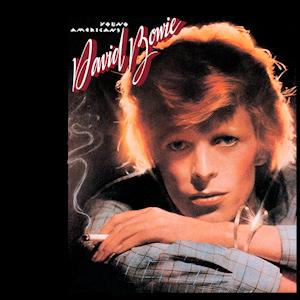
Young Americans appeared in March 1975. Its original LP personnel list names Pablo Rosario, Ralph MacDonald and Larry Washington under percussion. That is an important studio-album connection and deserves inclusion alongside the better-known live credit. Rosario’s Bowie work was not confined to a single concert record.
The original listing does not assign individual tracks to Rosario’s name. This article therefore retains the album-level credit rather than presenting an unverified division of labour between the percussionists. The distinction is especially relevant because the album combines Philadelphia recordings with the later New York work associated with Across the Universe and Fame.
The record also connects several people who had been part of the evolving 1974 musical environment. Alomar, Vandross, Sanborn and members of the vocal ensemble belong to that wider story. Rosario’s name on the sleeve is a concise but significant acknowledgement within it. The safest conclusion is also substantial: he contributed to the body of work through which Bowie’s engagement with American soul became a major studio statement.
1976: another connection through Luther Vandross
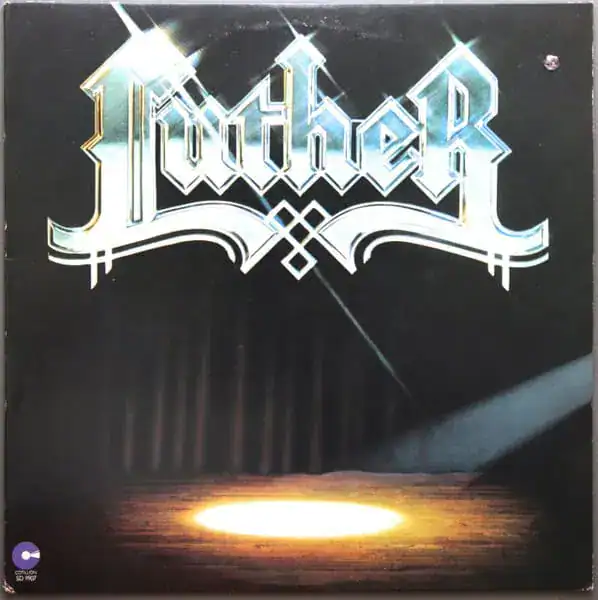
The connections formed around Bowie did not exist in isolation from the musicians’ other careers. Rosario’s percussion credits include Luther, the 1976 album by the group led by Luther Vandross. Vandross’s early group work belongs to the period before his breakthrough as a solo recording artist in the following decade.
One of the album’s songs, Funky Music (Is a Part of Me), has a direct relationship with Bowie’s catalogue: it was reworked with Bowie as Fascination for Young Americans. That compositional connection should be distinguished from the instrumental credits, but it illustrates how material and professional relationships crossed between the artists’ projects.
Musical mentorship: Giovanni Hidalgo’s recollection
Rosario’s work as an educator is supported by testimony from another major percussionist, Giovanni Hidalgo. In a 2021 interview for Reinhard Flatischler’s Power of Rhythm podcast, Hidalgo recalled Rosario taking an interest in his music reading and asking him to demonstrate it from percussion study books.
Hidalgo described being invited to attend regular sessions at the conservatory in Puerto Rico, locating that memory in 1979. The recollection is valuable because it concerns an encounter he personally experienced. It presents Rosario as someone who could recognise a young player’s ability and direct that player towards further study, rather than merely offering general praise from a distance.
The account also brings practical musicianship and formal learning together. Reading, rudiments and the ability to listen within a group need not compete with one another. In Hidalgo’s memory, Rosario helped connect those forms of knowledge. The published interview transcript provides a useful first-hand perspective on an aspect of Rosario’s career that album personnel lists cannot convey.
Batacumbele and Con un Poco de Songo
In the following decade, Rosario’s work included Batacumbele, the Puerto Rican group closely associated with percussionist Ángel “Cachete” Maldonado. The ensemble’s Con un Poco de Songo, released in 1981, places him within another important chapter of Afro-Caribbean ensemble music, beyond both the New York salsa recordings and the Bowie engagements.
Batacumbele brought rhythmic exploration into close contact with arranged instrumental and vocal material. Rosario’s participation belongs to a group identity in which percussion was a central resource. That setting offered a different balance from a rock concert: the rhythmic relationships themselves could occupy much more of the listener’s attention, even while remaining part of composed and arranged music.
Continuing work with Mongo Santamaría
Rosario’s association with Mongo Santamaría continued beyond the early-1970s recordings. On Soy Yo, released through Concord Picante in 1987, he is credited with bongos, cowbell, güiro and percussion. The range of instruments named on the album gives another concrete example of the versatility behind his general professional description.
The combination of instruments is significant because their roles are complementary. Bongos supply a range of hand-produced tones; a cowbell introduces a more penetrating metal sound; güiro contributes a sustained scraped texture. A player moving between them must consider how a change of sound affects the ensemble, not simply whether a pattern can be executed correctly.
Santamaría’s recordings also place Rosario within a durable working relationship. The history is not a single guest appearance attached retrospectively to a famous name. It extends across records and performances in different periods, making the bandleader one of the central figures in Rosario’s musical biography. That longer association deserves to stand beside, rather than behind, the more concentrated Bowie chapter.
Orinoco and working under his own leadership
Published career accounts also identify a jazz and Latin jazz group called Orinoco among Rosario’s projects. His later interview with Moncada confirms that he performed with a group of that name. The distinction from session work is important: leading a group brings decisions about repertoire, personnel and musical direction into the foreground.
A leader who is also a percussionist can organise a performance from a different position than a singer or pianist. Rhythm may be the most immediate point of connection, but the group still depends on melodic shape, harmonic movement and the handling of solos. The practical challenge is to make those elements function together, rather than to turn the entire performance into an extended percussion feature.
The public documentation available for Orinoco is less extensive than that surrounding Bowie’s commercial releases. It nevertheless establishes a meaningful activity within Rosario’s career: he was not only a musician hired to serve other leaders. He also developed settings in which his own choices could shape the programme and the interaction between players.
2005: a broader view of David Live
The 2005 reissue of David Live returned attention to the Tower Theatre band. New mixes by Tony Visconti and an expanded programme changed the way listeners could encounter those performances. The official announcement highlighted additional material and a return towards the original concert running order, rather than treating the first LP sequence as the only possible document.
The expanded listing includes Space Oddity, previously unreleased in that live version, and restores a wider view of the show around the original album’s selections. These additions matter because the role of an accompanying musician is shaped by the complete repertoire. A short sequence of favourites may reveal different aspects of the band from a longer presentation containing more contrasting pieces.
For Rosario, this was renewed access to an existing performance rather than a new Bowie session. Keeping those categories separate avoids inflating a discography with the impression of repeated new collaborations. Reissues can be historically important in their own right, however: they make earlier work available in forms that allow a later audience to hear more of the musical setting.
2015: Rosario reflects on a lifetime in music
Les Moncada’s interview, published by World Music Central on 27 November 2015, gives Rosario an opportunity to speak beyond the brevity of a record credit. The conversation covers childhood, colleagues, instruments, teaching and the relationship between professional achievement and personal belief. Moncada states that he translated the interview from Spanish into English.
Rosario included Bowie’s Tower Theatre performances among the engagements he particularly remembered, alongside work with Harlow, Santamaría and Batacumbele. That placement is revealing. The Bowie connection was meaningful to him, but he situated it within a career whose reference points included several different musical communities and kinds of performance.
Pablo Rosario on his achievements
“I consider myself blessed by God, Amen.”
— Pablo Rosario, interviewed by Les Moncada; English translation published by World Music Central, 27 November 2015.
The statement identifies gratitude and faith as part of his own explanation of his life. It should be read as his personal reflection, not converted into a claim that any one collaboration defined his worth. His account consistently places musical experience within relationships: family, colleagues, students and the wider communities in which the music was made.
Advice to students: learning with other musicians
The same interview closes with advice for developing players. Rosario emphasised mastering a principal instrument while broadening musical knowledge. His recommendations extended beyond percussion to other instruments, singing, arrangement and composition. The advice presents musicianship as a connected field rather than a collection of isolated technical accomplishments.
Pablo Rosario on ensemble experience
“You have to play with other musicians”
— Pablo Rosario, short excerpt from his advice to students; English translation by Les Moncada, World Music Central, 27 November 2015.
The lesson also connects the two sides of his work preserved here: accompaniment and teaching. Knowledge acquired through playing can be passed on through specific musical encounters, as Hidalgo’s recollection suggests. The resulting influence is not always documented by a headline or an award. Sometimes it appears in the methods and opportunities another musician carries forward.
2017 and 2020: the 1974 tour returns to the archive
The official release of Cracked Actor (Live Los Angeles ’74) in 2017 gave the September ensemble a dedicated commercial document. I’m Only Dancing (The Soul Tour 74) followed in 2020, extending the official record into the autumn phase. Together with David Live, the releases allow three different stages of the touring year to be considered side by side.
They are not interchangeable versions of one concert. They preserve different dates, personnel and programmes. The changing bass and drum partnerships are particularly relevant to Rosario’s position, while the larger vocal ensemble and the arrival of new songs reveal how the musical environment around him developed. His recurring credit supplies a thread of continuity through those differences.
2025: the Latin Jazz Messengers
Rosario’s later activity is documented in 2025 event programmes presenting Pablo Rosario and his Latin Jazz Messengers in New York. The Jazz Foundation of America and Columbia University’s Arts Initiative both published information about the group in connection with the Charlie Parker Jazz Festival’s wider programme.
The organisations also describe his work as an educator and mentor. These dated programmes document a scheduled appearance in 2025; they do not, by themselves, confirm that the advertised performance took place.
The accompanying descriptions connect his small-group repertoire with the legacies of Mongo Santamaría, Willie Colón and Cal Tjader, alongside music associated with Charlie Parker. These are useful indications of the musical setting in which he was being presented decades after the Bowie tour: a bandleader drawing on several strands of jazz and Latin music.
Legacy: a percussionist within Bowie’s transformation
Pablo Rosario’s place in Bowie’s history is secured by performances and credits. He was part of the early Diamond Dogs band, remained present in the September Los Angeles ensemble and is credited again on the autumn Soul Tour recordings. These documents place him across one of the most concentrated periods of musical change in Bowie’s live career.
His role is especially valuable for understanding how that change was realised. A new direction does not become audible through intention alone. It requires musicians who can organise sound together, absorb unfamiliar repertoire and establish productive relationships with colleagues. A separate percussion voice contributes to that process through timing, tonal contrast and the ability to work inside an arrangement.
Rosario’s experience with Colón, Santamaría and Harlow gives the collaboration a wider historical depth. He brought a professional identity that existed before the tour and continued afterwards. The connection therefore belongs to a two-way history: Bowie’s work drew on the experience of musicians from different traditions, while those musicians incorporated the engagement into careers with their own centres of gravity.
The later teaching record adds another dimension. His importance is not limited to sounds captured on commercial albums. Hidalgo’s testimony and Rosario’s own advice describe a musician concerned with developing other players, connecting technique with ensemble awareness and encouraging knowledge beyond a single instrument. That kind of contribution can reach performances on which the teacher’s name never appears.
Within this archive, Rosario deserves to be remembered as more than a percussion entry beneath a famous album title. His story links family music-making, major Latin orchestras, Bowie’s theatrical and soul-oriented bands, subsequent recording and musical mentorship. The range is substantial precisely because its parts can be identified, rather than inflated into an unsupported claim that one musician alone created the sound of an era.
Official Website & Further Information
A dedicated official artist website for Pablo Rosario has not been verified for this article. Further information can be found through published interviews, record-label resources and established music organisations. These sources provide different kinds of detail, from instrument credits to first-hand recollections and dated performance announcements.
The Les Moncada interview at World Music Central is a useful starting point for Rosario’s own account of his background and musical values. Fania Records’ catalogue documents part of his earlier recording history, including the bongos credit on The Hustler.
For the Bowie years, Bowie’s official announcement for Cracked Actor and the release information for I’m Only Dancing supply recording details and musician lists. The original Young Americans personnel credits establish his studio-album acknowledgement without requiring an assumed track allocation.
The Jazz Foundation of America’s programme entry offers a later view of his work as a leader. For readers interested in his mentorship, Giovanni Hidalgo’s Power of Rhythm interview adds a personal recollection from another percussionist.
Article Origin
This article has been researched and written for DavidBowieWorld.com as part of its archive of David Bowie’s collaborators and creative circle. It brings together Rosario’s published recollections, identifiable recording credits, official Bowie release information, record-label documentation and later institutional performance notices.
The account distinguishes the successive 1974 bands rather than treating the entire touring year as one unchanged lineup. It also separates recording dates from the dates of later archival releases. Rosario’s Young Americans credit is presented at album level because the original personnel list used here does not assign tracks to his name.
The three short quotations from Rosario follow Les Moncada’s published English translation of their Spanish-language interview. Discussion of ensemble roles and rhythmic interaction provides musical context; it is not presented as a transcription of Rosario’s individual part on a particular recording. Hidalgo’s educational recollection is identified as his own testimony.
No direct participation by Pablo Rosario in the preparation of this particular page is claimed. Further first-hand information, accurately identified photographs or original documentary material could deepen the account in future. The purpose is to preserve his contribution within Bowie’s history while recognising the much broader career to which that contribution belongs.
© DavidBowieWorld.com — David Bowie Collaborations & Creative Circle Archive.
