
Kenneth Pitt – David Bowie’s Manager During His Formative Years
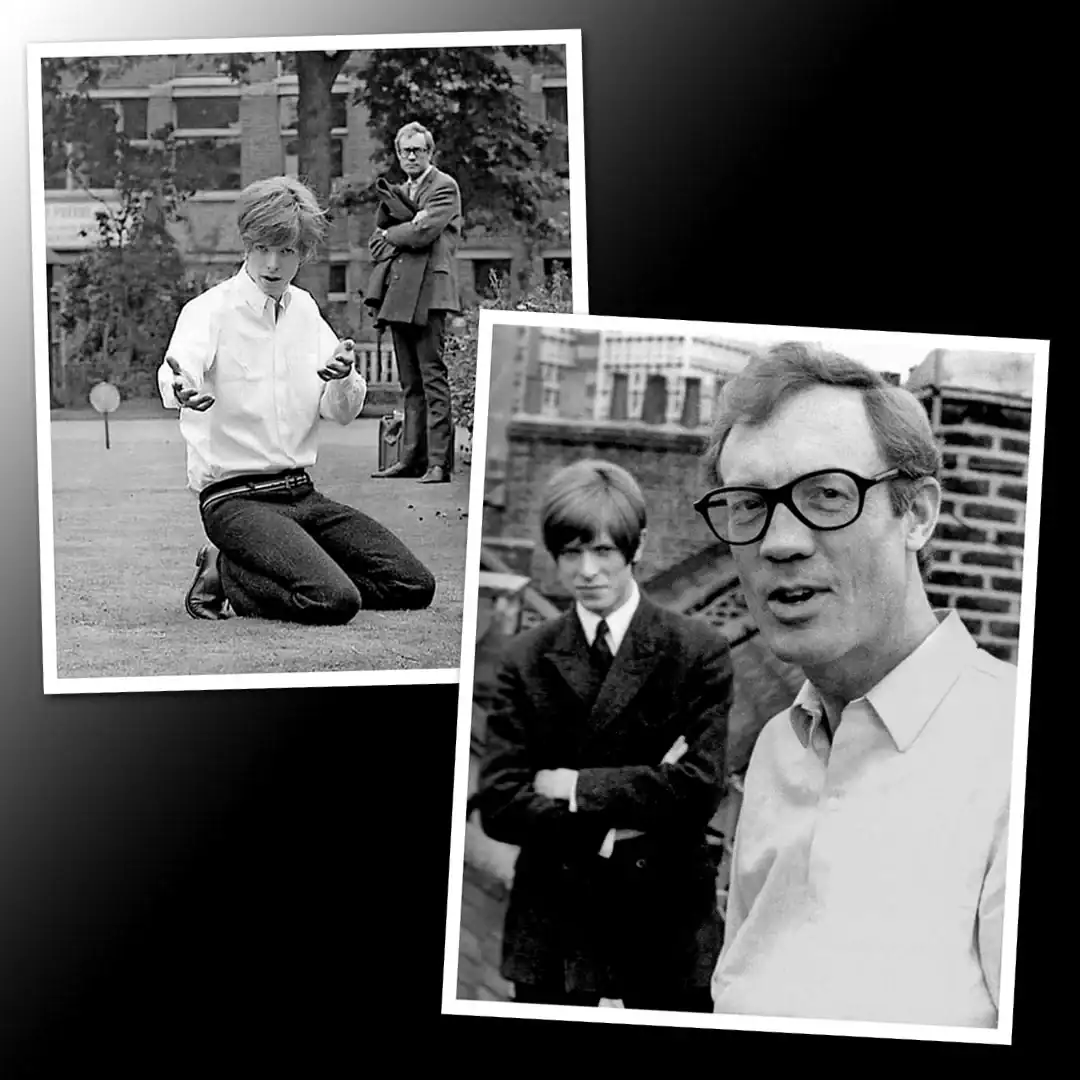
Kenneth Pitt. Image published by DavidBowie.com.
Kenneth Cooper Pitt (10 November 1922 – 25 February 2019) was a British publicist and talent manager who managed David Bowie from 1966 until 1970, during one of the most formative periods of Bowie’s early career.
Pitt entered Bowie’s professional life after the young singer had already worked with earlier managers, including Ralph Horton, and had recorded with several bands. Their association developed as Bowie was moving away from conventional beat-group ambitions and exploring songwriting, theatre, mime, film and increasingly individual forms of presentation.
During Pitt’s management, Bowie signed to Deram, released his first album, began his long working relationship with Tony Visconti, participated in the promotional film Love You till Tuesday and achieved his first major British hit with Space Oddity. Pitt’s management ended in 1970 as Bowie entered another phase of his career.
- Full name: Kenneth Cooper Pitt
- Born: 10 November 1922, England
- Died: 25 February 2019, Hertfordshire, England
- Profession: Publicist and talent manager
- Bowie connection: David Bowie’s manager from 1966 to 1970
- Important projects: Deram recordings, David Bowie (1967), Love You till Tuesday, Space Oddity
- Memoir: Bowie: The Pitt Report
Before David Bowie
Kenneth Pitt was already an experienced figure in British entertainment before his association with David Bowie. His professional background included publicity and artist management, and he had worked with established performers before becoming involved with the young Bowie.
By the time Pitt entered Bowie’s career, Bowie had already passed through several groups, record labels and management arrangements. Singles recorded with the King Bees, the Manish Boys and the Lower Third had failed to provide the sustained breakthrough he wanted.
Pitt therefore did not take charge of an established star. He became involved with an ambitious young performer who had accumulated professional experience but had yet to establish either a consistent musical identity or lasting commercial success.
From Ralph Horton to Kenneth Pitt
Before Pitt became Bowie’s manager, Bowie had been working with Ralph Horton. Horton was involved in bringing Pitt into contact with the young performer, and discussions about Pitt taking over management responsibilities were already taking place in 1965.
This chronology is important because Pitt is sometimes described as Bowie’s first manager. Bowie had already experienced earlier management relationships, and describing Pitt that way obscures part of his professional history.
Pitt’s real historical importance is greater than such a simplified description suggests: he managed Bowie for several formative years during which the singer moved from repeated commercial failure towards his first major breakthrough.
The David Bowie name
The transition from David Jones to David Bowie also belongs to the period in which Pitt was entering Bowie’s professional life.
The precise date on which David Jones finally settled upon the Bowie name has been reported differently over the years. Kenneth Pitt‘s own account records that the need for a change was discussed during the transition from Ralph Horton to Pitt, at a time when similarly named entertainers — most obviously Davy Jones of the Monkees — created an obvious problem.
By 1966, David Bowie was using the professional name under which his career would develop.
Taking over Bowie’s management
Pitt’s involvement developed during a difficult period in Bowie’s recording career. Despite considerable ambition and a succession of releases, commercial success remained elusive.
Bowie’s musical direction was also changing quickly. The rhythm-and-blues and mod influences of his earlier groups were increasingly being joined by theatrical songwriting, character studies and other ideas that did not fit neatly into the established image of a beat-group singer.
Pitt’s task was therefore not simply to promote existing success. He needed to find new opportunities for an artist who was still searching for the form his career might take.
The road to Deram

After Bowie’s association with Pye Records ended in 1966, Pitt helped create the opportunity that led to a new recording contract.
On 18 October 1966, Bowie and the Buzz recorded new material at RG Jones Recording Studios in London. The session included Rubber Band, The London Boys and Please Mr. Gravedigger.
Pitt financed the session and subsequently used the recordings in his efforts to secure Bowie another record deal.
The material helped lead to Bowie’s signing with Deram, the Decca subsidiary on which the next phase of his recording career would unfold.
The 1967 debut album
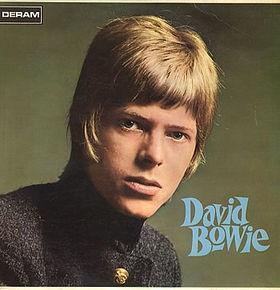
Bowie’s first full-length album, David Bowie, was released by Deram on 1 June 1967.
The record sounds markedly different from the rock music with which Bowie would later become internationally associated. Its songs draw upon British music hall, theatrical pop, character sketches and narrative songwriting.
Songs including Uncle Arthur, Sell Me a Coat, There Is a Happy Land, Little Bombardier, Silly Boy Blue and Please Mr. Gravedigger reveal an artist experimenting with characters, voices and unusual subjects.
The album did not provide Bowie with a commercial breakthrough. The associated Deram singles likewise failed to establish him as a major recording artist.
For Pitt, the lack of chart success meant continuing to seek opportunities beyond conventional record promotion.
Theatre, mime and experimentation
One of the defining characteristics of Bowie’s late-1960s career was the breadth of his artistic interests.
During this period he became increasingly involved with theatrical performance and mime. His work with dancer and mime artist Lindsay Kemp was particularly significant, exposing Bowie to forms of performance in which movement, costume, gesture and character could be integrated with music.
It would be inaccurate to credit Pitt with creating Bowie’s theatrical imagination. Bowie actively pursued these interests himself and drew inspiration from numerous artists and disciplines.
Pitt’s role was that of the manager working with Bowie while these interests were developing, during a period when Bowie’s professional identity was becoming much broader than that of a conventional pop singer.
Living with Kenneth Pitt
The relationship between Pitt and Bowie extended beyond offices, contracts and recording sessions.
Pitt later recalled that Bowie had difficulty rehearsing late at night at his family home because his father was unwell. Pitt invited him to stay at his own home.
According to Pitt, Bowie remained there for approximately two years. The arrangement illustrates how closely their personal and professional lives overlapped during this formative period.
Kenneth Pitt on David Bowie
“He lived at my place for about two years.”
— Kenneth Pitt, recalling his years with David Bowie, 2013
Pitt’s later recollections are particularly valuable because they describe Bowie before international fame, when commercial disappointment remained a recurring part of his career.
They also reveal that the relationship between artist and manager was unusually personal, something that would become important when their professional association eventually came to an end.
A changing musical world
Bowie’s musical interests expanded rapidly during the second half of the 1960s. Rock, folk, psychedelia, experimental music, theatre and performance culture were all changing around him, and he absorbed ideas from a wide range of sources.
Pitt was one of many people in Bowie’s professional and personal environment who exposed him to new material and opportunities. The importance of any individual influence should not be exaggerated: Bowie was an active listener and observer whose developing work drew upon many different sources.
What can be established is that Pitt managed him during a period of unusually rapid artistic change and continued looking for ways to turn that development into a sustainable career.
Tony Visconti enters Bowie’s career
Another development with consequences far beyond the Pitt years was Bowie’s first work with Tony Visconti.
After the commercial failure of Bowie’s 1967 album and Deram singles, Pitt sought a change of producer. Denny Cordell declined the opportunity but suggested his American assistant Tony Visconti.
Visconti subsequently agreed to work with Bowie. On 1 September 1967, Bowie recorded Let Me Sleep Beside You and Karma Man at Advision Studios in London, with Visconti producing and arranging the session.
Those recordings marked the beginning of one of the most important working relationships in Bowie’s career. Visconti would return during several major periods of Bowie’s recording life and, decades later, would co-produce Bowie’s final album, Blackstar.
The historical significance of the 1967 connection could not have been known at the time, but its consequences would extend far beyond Pitt’s own management period.
Television, theatre and promotion
With Bowie’s records still struggling commercially, other forms of presentation became increasingly important.
Bowie continued developing his interests in mime, theatre and visual performance while also seeking opportunities in television and film. These activities allowed him to explore the relationship between music and image at a time when conventional record promotion had produced limited results.
The most ambitious surviving example of this approach from the Pitt years would be the film project Love You till Tuesday.
Love You till Tuesday
David Bowie – material relating to the Love You till Tuesday period
One of Kenneth Pitt‘s most ambitious attempts to present Bowie to a wider audience was Love You till Tuesday, a film project conceived as a showcase for the young artist. Rather than relying upon a single performance clip, the production presented Bowie through a series of songs and visual sequences.
Filmed in early 1969, the project drew upon material from Bowie’s existing career while documenting the direction in which his songwriting and visual presentation were moving. It represented another attempt to find an audience at a time when his recordings had still not produced sustained commercial success.
The film did not achieve the intended breakthrough at the time. Historically, however, it became important because the project included an early version of a new composition: Space Oddity.
The first filmed Space Oddity
On 2 February 1969, Bowie entered Morgan Studios in London to record the soundtrack version of Space Oddity for the proposed Love You till Tuesday television project.
Four days later, on 6 February, the sequence for the song was filmed.
Pitt later remembered the filming as an important landmark in Bowie’s career and recalled recognising that the song possessed unusual potential.
The film therefore preserved an early version of Space Oddity several months before the commercially released recording brought Bowie his first major British chart success.
From promotional film to breakthrough single
The Love You till Tuesday version was not the recording that subsequently became Bowie’s hit.
A new version of Space Oddity was recorded in June 1969 with Gus Dudgeon producing. The commercially released single appeared on 11 July 1969, only days before the Apollo 11 mission carried the first humans to the Moon.
Pitt was still Bowie’s manager during this crucial transition. After years of singles, an album and promotional projects that had failed to produce sustained commercial success, Bowie finally possessed a record capable of reaching a mass audience.
Bowie reaches the UK Top Five
Space Oddity reached number five on the UK singles chart in 1969, becoming Bowie’s first major British hit.
Its success significantly changed his public position. The performer Pitt had managed through years of experimentation and commercial disappointment now had a song recognised by a national audience.
Yet one successful single did not settle the question of Bowie’s long-term direction. The challenge remained to establish what kind of artist would follow the success of Major Tom.
The 1969 album
The album that followed Space Oddity demonstrated how far Bowie’s songwriting had moved from the theatrical music-hall character of his 1967 debut.
Originally released in Britain as David Bowie, and later widely known as Space Oddity, the album explored folk-influenced songwriting, longer compositions and increasingly ambitious lyrical themes.
Tony Visconti produced most of the album, while Gus Dudgeon produced Space Oddity.
Pitt remained Bowie’s manager as this new phase developed, but their professional relationship was approaching its final months.
The World of David Bowie
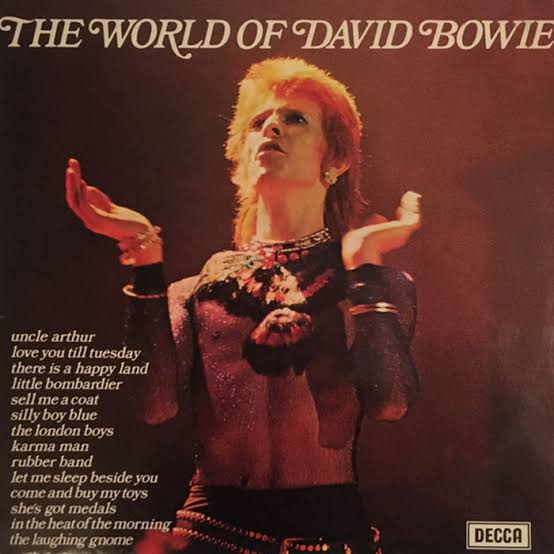
On 6 March 1970, Decca released the compilation The World of David Bowie, drawing primarily upon material from Bowie’s Deram period.
With Bowie’s approval, the compilation assembled ten songs from his 1967 debut together with The London Boys and three previously unreleased recordings: Karma Man, Let Me Sleep Beside You and In the Heat of the Morning.
The album preserved material from the years in which Pitt had managed Bowie just as Bowie’s music and professional ambitions were moving rapidly beyond the Deram period.
Changing ambitions
By 1970, Bowie’s circumstances were very different from those Pitt had encountered several years earlier.
He had achieved his first substantial chart success, his music was changing again, and he was becoming increasingly concerned with the business structures surrounding his career.
It would be misleading to reduce the coming management change to a simple conflict between a cautious manager and a fearless artist. Pitt had supported numerous unconventional projects during Bowie’s commercially difficult years.
What changed was Bowie’s professional direction and his decision that another management structure should take him into the next stage of his career.
Tony Defries and the end of Pitt’s management
In 1970, Bowie became professionally involved with lawyer Tony Defries, who would soon become a central figure in the business organisation surrounding his rise during the early 1970s.
Bowie and Angie Bowie eventually informed Pitt that his services as manager were no longer required.
Pitt’s later recollection makes clear that this was not an emotionally insignificant business transaction. Artist and manager had shared several difficult and formative years, and their professional separation carried a personal dimension.
Kenneth Pitt on the end of his management
“He sat looking at the wall and again there were tears in his eyes.”
— Kenneth Pitt, recalling the meeting at which David and Angie Bowie ended his management, 2013
Bowie’s career subsequently entered a different managerial and commercial phase under Defries, eventually encompassing the international success associated with Ziggy Stardust.
Pitt’s role as Bowie’s manager had ended, but the four years they spent working together contained several developments whose significance would only become fully apparent later.
After Bowie
Pitt retained detailed records and memories of his years with Bowie. Those materials became increasingly valuable as Bowie’s pre-fame career was reassessed by writers, researchers and fans.
Recordings and projects once treated merely as unsuccessful early work gradually became important evidence of Bowie’s artistic development before international fame.
Pitt was particularly well placed to document that transformation because he had witnessed both the repeated disappointments and the eventual breakthrough of Space Oddity.
Bowie: The Pitt Report

Pitt documented his experiences in Bowie: The Pitt Report, originally published in 1983 and subsequently issued in later editions.
The book concentrates on the years 1966 to 1970 and remains an important first-hand account of Bowie’s career during the period in which Pitt managed him.
Its particular value lies in documenting events from the perspective of someone who knew Bowie before international fame, when his future success was far from guaranteed.
Pitt’s Bowie was already ambitious and creatively restless, but he was also a young artist experiencing repeated commercial setbacks and searching for ways to turn a broad range of interests into a sustainable career.
Ken Pitt interviewed by Paul Morley, 1985
Ken Pitt interviewed by Paul Morley, 1985
In this 1985 interview with writer and music journalist Paul Morley, Kenneth Pitt discusses David Bowie from the perspective of someone who had managed him during the crucial years before international fame.
Recorded only two years after the original publication of Bowie: The Pitt Report, the interview captures Pitt speaking relatively close to the period in which he first committed his detailed recollections of Bowie to print.
Together, Pitt’s book and this filmed interview provide valuable first-hand testimony about Bowie’s formative years, offering the perspective of a manager who witnessed both the repeated commercial setbacks of the late 1960s and the eventual breakthrough of Space Oddity.
A later reunion
The end of the management relationship did not erase the personal history between Pitt and Bowie.
In 2013, Pitt recalled that Bowie had unexpectedly visited his home several years earlier, after the two had not seen one another for a long time.
According to Pitt, they talked for more than an hour. He remembered the unexpected visit warmly, providing a small but revealing postscript to a relationship that had begun before Bowie’s fame.
Kenneth Pitt‘s death
Kenneth Pitt died at his home in Hertfordshire on 25 February 2019 following a short illness. He was 96.
DavidBowie.com marked his death and acknowledged the importance of his place in Bowie’s early history.
By then, the years Pitt had documented had become an established part of Bowie scholarship. The Deram recordings, Bowie’s early work with Tony Visconti, Love You till Tuesday and the emergence of Space Oddity were recognised as significant stages in Bowie’s development rather than merely a prelude to the more famous 1970s story.
Legacy
Kenneth Pitt‘s significance in David Bowie’s career should neither be exaggerated nor underestimated.
He did not create Bowie’s talent or determine the direction of his later work. Bowie drew upon a wide network of musicians, performers, writers, artists and personal experiences while continually developing his own ideas.
Pitt’s documented importance lies in managing Bowie during four unusually formative years. He financed the 1966 session that helped lead to the Deram contract, supported Bowie’s career through commercially unsuccessful recordings, sought new production opportunities and remained his manager during the development of Love You till Tuesday and the breakthrough of Space Oddity.
The period also saw the beginning of Bowie’s working relationship with Tony Visconti, a partnership that would ultimately extend across almost half a century of Bowie’s recording history.
Kenneth Pitt in Bowie’s creative history
Looking backwards from Ziggy Stardust, the Berlin albums or Blackstar, it can be easy to regard David Bowie’s eventual success as inevitable.
The Kenneth Pitt years demonstrate that it was not.
For much of their association, Bowie was a talented but commercially unsuccessful young performer moving between musical styles, recording opportunities, theatre, mime and film while attempting to find a distinctive place within a rapidly changing cultural landscape.
Pitt’s importance lies not in having invented David Bowie, but in having supported, managed and documented part of that search.
Their professional relationship eventually ended as Bowie’s ambitions and business circumstances changed. By then, however, Pitt had accompanied him through the difficult years between his early singles and the first major breakthrough of Space Oddity.
That makes Kenneth Pitt an important witness to — and participant in — one of the most formative chapters of David Bowie’s career.
Article Origin
This article has been researched and written exclusively for DavidBowieWorld.com. It draws upon documented chronology from David Bowie’s early career, official David Bowie archival material and first-hand recollections by Kenneth Pitt concerning his years as Bowie’s manager.
Particular care has been taken to distinguish documented events from later interpretation. Pitt is not described as Bowie’s first manager because Bowie had earlier management relationships, including with Ralph Horton. His documented importance rests instead upon his management of Bowie from 1966 to 1970, encompassing the Deram years, Love You till Tuesday and Bowie’s breakthrough with Space Oddity.
© DavidBowieWorld.com — 2026

Leave a comment