Mark Carr-Pritchett – Guitarist and David Bowie Collaborator
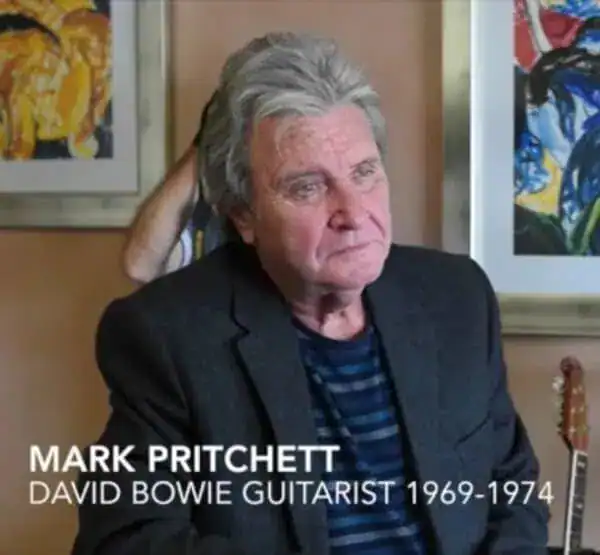
Mark Carr-Pritchett belonged to David Bowie’s musical world before Ziggy Stardust became an international image. A guitarist from Beckenham, he encountered Bowie through the local Arts Lab, played in the orbit of The Hype, took part in the Arnold Corns, appeared on a 1971 BBC concert recording and returned as a second guitarist for The 1980 Floor Show in 1973. His red Les Paul also accompanied Bowie into one of rock music’s best-known cover photographs.
Those connections span different bands, recordings and performances. They are most revealing when considered separately: an occasional extra guitarist was not necessarily a permanent member; a singer on one record was not automatically the singer on another; and ownership of an instrument does not establish who played on an album. The surviving credits and Carr-Pritchett’s own recollections allow a more precise portrait.
- Name: Mark Carr-Pritchett
- Born: 11 September 1953 (reported by Bowie Wonderworld; month and year corroborated by Companies House)
- Birthplace: Not reliably documented; he grew up in the Beckenham area
- Work: Guitarist and singer
- Bowie collaboration: Occasional Hype appearances, Arnold Corns, a 1971 BBC concert and The 1980 Floor Show
- Arnold Corns: Guitar on the 1971 recordings; lead vocal on the 1972 B-side “Man in the Middle”
- BBC appearance: Guitars and backing vocals; recorded 3 June 1971
- On stage: Second guitarist for The 1980 Floor Show in 1973
- Ziggy Stardust cover: Bowie borrowed Carr-Pritchett’s red Les Paul for the photograph
- Died: 12 June 2024
Beckenham: where the association began
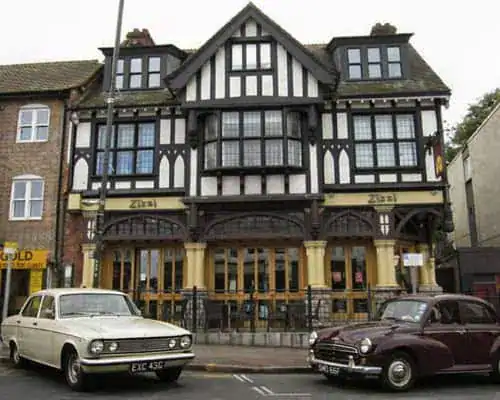
Carr-Pritchett’s story with Bowie began locally rather than in an established recording studio. In a recollection published by Bowie’s official website, he remembered seeing a notice inviting artists, musicians and others to a meeting at the Three Tuns in Beckenham around May 1969. He went along and met Bowie, who had recently moved into Haddon Hall. Carr-Pritchett was then on his way to rehearse with his school band, Rungk.
The Beckenham Arts Lab brought together people interested in music, visual art and performance. That setting helps explain how a young local guitarist could meet an artist who was still building a working circle. It does not imply that every Arts Lab participant joined Bowie’s band. In Carr-Pritchett’s case, the acquaintance became a musical and personal connection sustained through shared guitars, equipment and later performances.
“And over the next year we just got matey really”
— Mark Carr-Pritchett, recollection published by DavidBowie.com in 2024In this recollection, Bowie was a neighbour with whom Carr-Pritchett played music and shared equipment. Carr-Pritchett dated their first meeting to around May 1969, so the month should not be treated as an exact documented date.
Carr-Pritchett’s occasional appearances with the Hype
The Hype belonged to Bowie’s 1970 move towards a louder, electric group sound. Its better-documented core included Bowie, guitarist Mick Ronson and bassist Tony Visconti, with John Cambridge and then Mick “Woody” Woodmansey on drums. A detailed retrospective listing of Bowie’s live musicians includes Mark Pritchett on guitar at occasional Hype shows.
The Hype’s lineups changed during 1970, and the evidence for Carr-Pritchett concerns occasional appearances rather than a complete run of concerts. In 1971 he became involved in a separate project: the Arnold Corns.
Carr-Pritchett’s guitar work with Arnold Corns
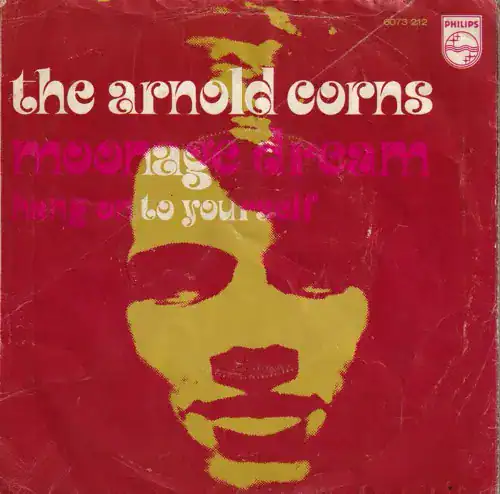
The Arnold Corns provided Bowie with another way to test songs and identities before the full Ziggy Stardust breakthrough. Bowie’s official account of the group’s first single names Carr-Pritchett on guitar, alongside bassist Peter De Somogyl and drummer Tim Broadbent, musicians associated with Rungk. Freddie Burretti was publicly connected with the project, but the official account identifies Bowie as the lead singer on the first single’s recordings.
Released in May 1971, the early versions of “Moonage Daydream” and “Hang On to Yourself” differ from the later, more familiar Ziggy Stardust recordings. Carr-Pritchett’s guitar credit belongs to the Arnold Corns versions; the later album arrangements have their own performers and production history. Hearing the two versions alongside each other shows how a song could change as Bowie reconsidered its setting.
Even the supporting voice on the first single calls for care. Bowie’s official account suggests Carr-Pritchett as a possible singer in a chorus but explicitly leaves the identification uncertain. The guitar credit is documented. An exact attribution for that additional chorus voice is not established by the same source, so it should not be stated as fact.
What the “Looking for a Friend” credits establish
“Looking for a Friend” appears in more than one account of Bowie’s 1971 work, and the versions need their own labels. The official Rock ’n’ Roll Star! track list includes an Arnold Corns rough mix, a later 2022 mix of the Arnold Corns version and a separate Ziggy session version. A songwriting demo and live performances appear in other archival releases. Sharing a title does not make those recordings the same performance.
The song also formed part of a BBC concert recorded in June 1971. The official Divine Symmetry credits identify Carr-Pritchett, there listed as Mark Pritchett, on guitars and backing vocals. Bowie is identified as lead vocalist except on songs for which another lead singer is specifically named; “Looking for a Friend” is not one of those exceptions. The correct description of Carr-Pritchett’s contribution to this BBC version is therefore guitar and backing vocals.
Carr-Pritchett at Bowie’s June 1971 BBC concert
The BBC concert was recorded on 3 June 1971 at the Paris Cinema Studio in London and broadcast on 20 June. The surviving official credits present it as a group performance. In addition to Bowie and Carr-Pritchett, the musicians included Mick Ronson on guitars, Trevor Bolder on bass and Woody Woodmansey on drums. George Underwood, Dana Gillespie and Geoff MacCormack contributed vocals, with lead appearances on particular songs identified in the release notes.
The later Divine Symmetry release includes mono and stereo material from the concert. Its personnel listing identifies Carr-Pritchett as a member of this particular ensemble; it does not assign him to every Bowie radio performance from the period.
Carr-Pritchett’s lead vocal on “Man in the Middle”
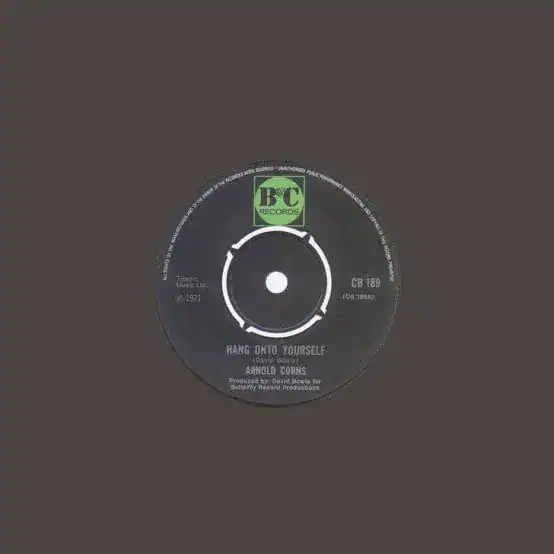
The next Arnold Corns single reverses an easy assumption about who sings. Released in August 1972, it put “Hang On to Yourself” on the A-side and the previously unreleased “Man in the Middle” on the B-side. Bowie’s official account identifies Carr-Pritchett as the lead vocalist on “Man in the Middle,” backed by the Spiders from Mars.
His lead vocal gives him a distinct place on the record. It does not change Bowie’s lead-vocal credit on the earlier Arnold Corns single or the 1971 BBC performance of “Looking for a Friend.” Who sang a recording and who wrote it are also different questions; the vocal credit alone does not settle the song’s authorship.
His red Les Paul on the Ziggy Stardust cover
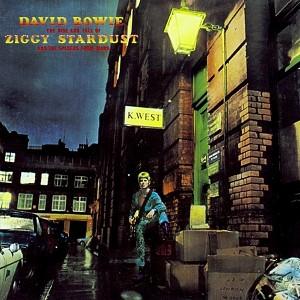
Carr-Pritchett made another contribution that listeners cannot hear. In his published recollection, he described Bowie arriving at his flat in January 1972 to borrow a red Les Paul for a photo session. He lent Bowie the instrument and recognised it months later when he saw the cover of The Rise and Fall of Ziggy Stardust and the Spiders from Mars.
“there was my Les Paul.”
— Mark Carr-Pritchett, recollection published by DavidBowie.com in 2024Carr-Pritchett remembered Bowie arriving in a hurry and asking, “Your red Les Paul, can I borrow it?” Carr-Pritchett agreed but warned that the guitar was not insured. Bowie returned it the following day with raindrops still on it. At the time, he told Carr-Pritchett only that he had taken photographs with it.
It is a vivid example of a personal connection entering the visual record of popular music. The story identifies the guitar pictured on the cover as Carr-Pritchett’s. It does not establish that he played on the Ziggy Stardust album or that the photographed instrument supplied its recorded guitar sound. The photograph and the studio masters are separate sources.
The loan occurred between neighbours and became part of a widely reproduced album sleeve. Carr-Pritchett’s account supplies the ownership history of the instrument; it remains a personal recollection of how the photograph came about.
Carr-Pritchett’s return for The 1980 Floor Show
Carr-Pritchett’s next major documented Bowie appearance came with The 1980 Floor Show. The production was filmed at the Marquee Club in London over three days in October 1973 for the American programme The Midnight Special. Bowie’s official website explicitly describes Carr-Pritchett as a second guitarist for the show.
The band had changed since the early Hype and Arnold Corns performances. Mick Ronson and Trevor Bolder were present, but Woody Woodmansey was no longer the drummer; Aynsley Dunbar occupied the drum chair. The Astronettes provided backing vocals, while Bowie staged a television spectacle with guests and arrangements tied to the period around Pin Ups. Carr-Pritchett’s role was part of this particular 1973 ensemble.
Despite its title, The 1980 Floor Show was filmed in 1973. Bowie had announced the end of Ziggy Stardust’s touring incarnation that July, but the television production returned to elements of its stage imagery. Bowie’s official remembrance describes Carr-Pritchett as the show’s second guitarist; it does not identify his part on each song.
The surviving evidence and its limits
His year and month of birth appear in a British Companies House officer record under the name Mark Carr Pritchett. Bowie Wonderworld’s calendar supplies 11 September as his birthday. Neither source documents a birthplace; Beckenham is established as the place where he lived near Bowie and took part in the Arts Lab. The available sources should not be stretched into a claim that he was born there.
Names also vary across the documentation. The official obituary uses Mark Carr Pritchett; other official release credits use Mark Pritchett and Carr-Pritchard. These spellings refer to the same musician in the sources cited here. They should be retained when quoting a specific release credit, rather than silently treating the differences as evidence of separate people.
Later recognition and remembrance
The later archival releases gave more room to the musicians around Bowie’s early recordings. The official announcement for Rock ’n’ Roll Star! in 2024 notes a new interview with Carr-Pritchett among the material accompanying the collection. Its track list includes Arnold Corns recordings and other versions of songs from Bowie’s period of rapid experimentation. The box does not turn all those tracks into Carr-Pritchett performances; it makes the wider period available for comparison.
After Carr-Pritchett died on 12 June 2024, Bowie’s official website published a remembrance the following day. It singled out the Arnold Corns, his return for The 1980 Floor Show and the guitar used in the Ziggy Stardust photograph. Together these references describe a series of specific contributions made over several years.
Historical legacy
Carr-Pritchett’s Bowie collaborations moved between local rehearsals, recorded songs, a BBC concert and a television stage. His role changed with the setting: guitarist on the early Arnold Corns single, guitarist and backing singer at the BBC, lead vocalist on “Man in the Middle,” and second guitarist at the Marquee in 1973. The borrowed Les Paul placed him in another part of the story: the creation of an album image.
The chronology also reveals the limits of a simple band-member label. Bowie returned to Carr-Pritchett at different moments for different reasons; they did not play together in one unbroken lineup. Carr-Pritchett’s recollections describe the friendship behind that work, while the credits identify the recordings on which his contribution survives.
His legacy within Bowie’s creative circle rests on those identifiable moments. They show how a musician from the Beckenham scene could participate in the first versions of songs later associated with Ziggy Stardust and reappear at a filmed performance after the original touring era had ended. Listening to the early recordings alongside the later versions, and looking at the cover whose guitar he supplied, gives his involvement its proper scale.
Official Website & Further Information
Bowie’s official remembrance of Mark Carr-Pritchett includes his first-hand account of meeting Bowie and lending the Les Paul. The official Arnold Corns history identifies the early single’s band and his lead vocal on “Man in the Middle.”
The Divine Symmetry credits give the personnel and dates for the 1971 BBC concert. Bowie’s official Floor Show account describes the television production; the Rock ’n’ Roll Star! announcement lists further Arnold Corns material and a later interview with Carr-Pritchett. For site context, see DavidBowieWorld.com’s pages on the Hype, Arnold Corns and The 1980 Floor Show.
Birth-date references: the Companies House officer record lists September 1953; Bowie Wonderworld’s September calendar lists his birthday on 11 September. Neither supplies a verified birthplace.
Article Origin
This article was prepared for DavidBowieWorld.com using published first-hand recollections, official Bowie release credits and official accounts of the recordings and television production. Where a source suggests a possibility rather than confirming a participant or a vocal part, the uncertainty is retained. No personal review or endorsement by Mark Carr-Pritchett’s family or another participant is claimed.
© DavidBowieWorld.com — David Bowie Collaborations & Creative Circle Archive.
