
Lou Reed – Velvet Underground Icon and David Bowie Collaborator
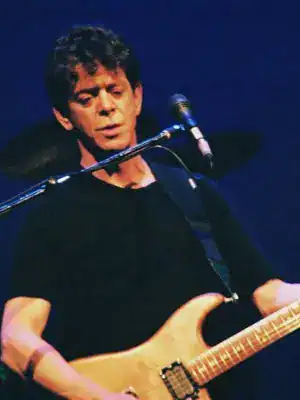
Photo: Unknown photographer / Wikimedia Commons / CC BY-SA 4.0 — Wikimedia file page
Lou Reed was one of the songwriters who helped change David Bowie’s understanding of what rock music could contain. As the principal songwriter of The Velvet Underground, Reed wrote about New York street life, sexuality, addiction, isolation, desire and human vulnerability with a directness that fascinated Bowie long before the two men actually worked together.
Their relationship eventually became one of the most important artistic connections in Bowie’s career. Bowie began as an admirer of Reed’s work, later became his producer on Transformer, shared stages with him in London and New York, contributed vocals to Reed’s recordings and remained connected to him for decades.
Yet Reed was never simply a Bowie protégé. By the time they collaborated, he had already written an extraordinary body of work with The Velvet Underground. What Bowie and Mick Ronson helped provide in 1972 was a new musical setting and a moment in which Reed’s songwriting could reach a much wider audience.
- Full name: Lewis Allan Reed
- Born: 2 March 1942, Brooklyn, New York, United States
- Died: 27 October 2013, aged 71
- Profession: Singer, songwriter, guitarist, musician and writer
- Major group: The Velvet Underground
- Bowie connection: Influence, friend, collaborator and recording artist produced by Bowie
- Major Bowie collaboration: Transformer (1972)
- Transformer producers: David Bowie and Mick Ronson
- Recorded: Trident Studios, London, 1972
- Historic joint performance: Royal Festival Hall, London, 8 July 1972
- Later major joint performance: Madison Square Garden, New York, 9 January 1997
- Later recording: Hop Frog from Reed’s The Raven (2003)
Lou Reed Before David Bowie
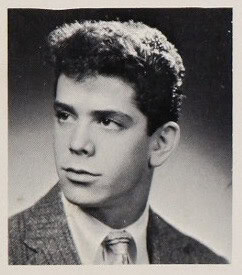
The relationship between Lou Reed and David Bowie cannot be understood by beginning with Transformer. Long before Bowie entered a recording studio with Reed, Reed had established a body of songwriting that would become fundamental to the development of alternative rock.
Lewis Allan Reed was born in Brooklyn, New York, on 2 March 1942 and grew up in Freeport on Long Island. His musical interests developed alongside an equally serious engagement with literature. That combination — popular music approached with the observational ambitions of fiction and poetry — would become central to his work.
Reed was fascinated by rhythm and blues, doo-wop and early rock and roll, but he did not approach songwriting merely as a vehicle for entertainment. His songs increasingly became places in which characters could speak, situations could unfold and experiences usually excluded from mainstream popular music could be described without apology.
This literary dimension later became one of the qualities that made Reed’s work so distinctive. He demonstrated that a rock song could operate almost like a short story: concise, character-driven and capable of describing a world beyond the conventional romantic themes of pop music.
Syracuse University and Delmore Schwartz
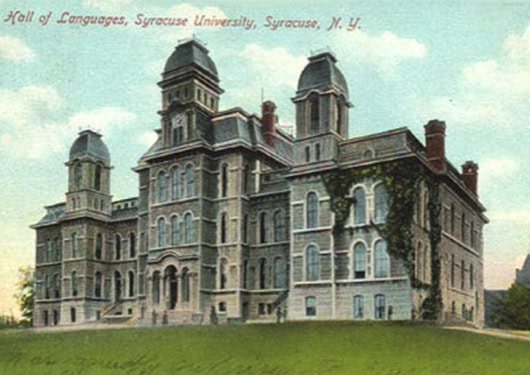
Reed studied at Syracuse University, where one of the most important intellectual influences on his development was the poet and writer Delmore Schwartz.
Schwartz had already established a formidable literary reputation, and Reed’s encounter with him reinforced the young songwriter’s belief that contemporary experience could be treated seriously in writing. Reed never abandoned that idea. Even when his chosen form became amplified rock music rather than conventional literature, his strongest songs continued to depend upon observation, character, dialogue and carefully selected detail.
Reed later dedicated the Velvet Underground track European Son to Schwartz. The connection helps explain why descriptions of Reed simply as a rock provocateur are inadequate. Behind the confrontational subject matter was a writer who had thought deeply about narrative voice and the possibilities of language.
Bowie’s own songwriting developed very differently, but this seriousness about writing provided an important point of connection. Both artists understood that popular music could absorb ideas from literature, theatre, film and visual art without ceasing to be rock music.
Pickwick Records and Professional Songwriting
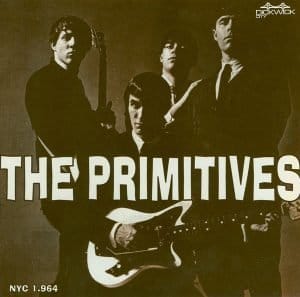
After university, Reed worked for Pickwick Records in New York, writing songs within a commercial record-making environment.
The experience was far removed from the artistic mythology that would later surround The Velvet Underground. Reed was working within an industry that required material to be produced quickly and efficiently.
Yet this period was important. Reed learned how songs were constructed, recorded and packaged, while continuing to develop ideas that increasingly exceeded the limitations of formulaic commercial pop.
One Pickwick project led him into contact with Welsh musician John Cale. Their musical backgrounds were dramatically different. Reed brought rock and roll, rhythm and blues and literary songwriting; Cale brought experience of the experimental avant-garde.
That collision became one of the foundations of The Velvet Underground.
The Velvet Underground
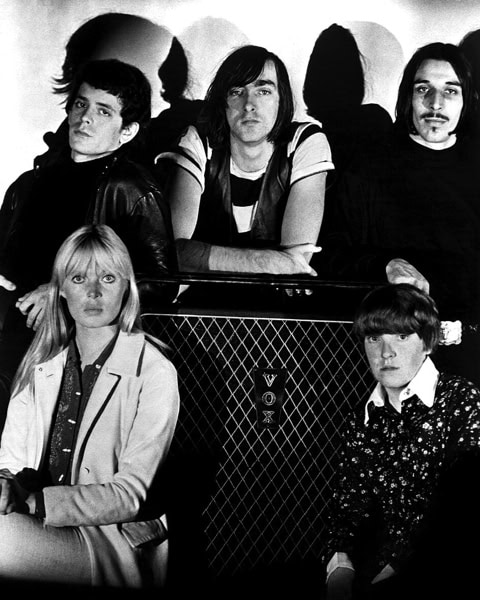
Reed and Cale were joined by guitarist Sterling Morrison and, eventually, drummer Maureen “Moe” Tucker. The group that emerged became The Velvet Underground.
Their music occupied territory that was unusual even within the rapidly changing culture of the mid-1960s. Reed’s songwriting could be tender and melodic, but it could also confront drug use, sexual relationships, psychological instability and people living beyond conventional social boundaries.
Cale’s drones and experimental instincts gave some of those songs an abrasive musical environment. Morrison supplied an essential guitar voice, while Tucker’s highly distinctive percussion avoided many of the conventions of contemporary rock drumming.
Together they created music whose eventual influence would be enormous even though the group never achieved mass commercial success during Reed’s original period with them.
Andy Warhol and The Factory

The Velvet Underground became closely associated with Andy Warhol and his New York Factory environment. Warhol managed the group and incorporated them into the multimedia performances associated with the Exploding Plastic Inevitable.
This placed Reed and his band inside a wider environment of visual art, film, performance, fashion, celebrity and experimentation. The Velvet Underground were therefore never simply four musicians playing songs in isolation.
Their association with Warhol also connected Reed’s songwriting with a cast of people whose lives and identities would later appear in his work. That Factory environment became particularly important when Reed recorded Transformer, because several of the characters celebrated in Walk on the Wild Side came from Warhol’s world.
Bowie was deeply interested in Warhol as well. By the early 1970s, Reed and Bowie therefore shared more than a musical connection: both were fascinated by the possibilities created when music, image, performance and contemporary art intersected.
The Velvet Underground & Nico
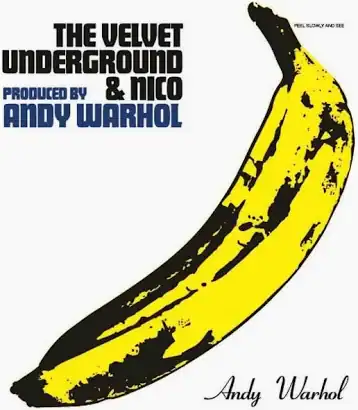
The Velvet Underground’s debut album, The Velvet Underground & Nico, was released in 1967. Its famous Andy Warhol banana sleeve became one of rock music’s most recognisable album covers.
German-born singer Nico appeared on several tracks, while Reed remained the principal songwriter. The album included material ranging from the tenderness of I’ll Be Your Mirror and Sunday Morning to the disturbing narratives of Heroin and Venus in Furs.
Commercially, the album was modest. Historically, its reputation became enormous. It offered later musicians evidence that rock could address subjects, textures and characters almost entirely absent from mainstream pop.
Bowie was among the British musicians who recognised the importance of The Velvet Underground early. His fascination with the band would become visible in his own repertoire well before he became Reed’s producer.
White Light/White Heat
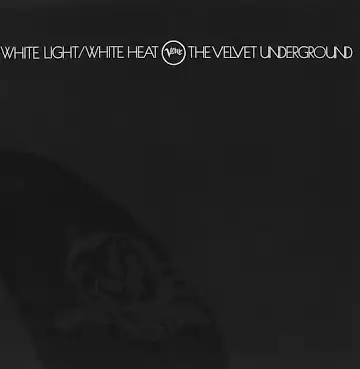
The Velvet Underground moved into even more abrasive territory with White Light/White Heat, released in 1968.
The album’s distorted sound and confrontational performances pushed against the boundaries of conventional rock production. Its title track would become especially important in the Bowie–Reed story because Bowie later incorporated White Light/White Heat into his own live repertoire.
Bowie’s attraction to this material is revealing. He was not merely interested in Reed as a songwriter of elegant melodies. He was also attracted to the noise, danger and uncompromising quality of the Velvet Underground.
Those elements would resurface repeatedly throughout Bowie’s career whenever he moved away from polished mainstream expectations and towards more experimental forms of rock.
Change Within The Velvet Underground
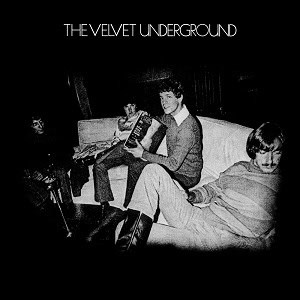
John Cale left The Velvet Underground in 1968 and was replaced by Doug Yule. The group’s third album, The Velvet Underground, revealed a quieter and more intimate side of Reed’s writing.
The contrast is important. Reed could write extreme, abrasive material, but he could also produce songs of remarkable vulnerability and melodic simplicity. That breadth would later be evident on Transformer.
Loaded, recorded during the final phase of Reed’s original involvement with the band, contained songs including Sweet Jane and Rock & Roll. Reed left the group in 1970.
His departure created an uncertain period. The Velvet Underground had acquired an extraordinary reputation among musicians and critics, but Reed himself had not yet established the commercially successful solo career that his songwriting reputation might have suggested.
David Bowie Discovers The Velvet Underground
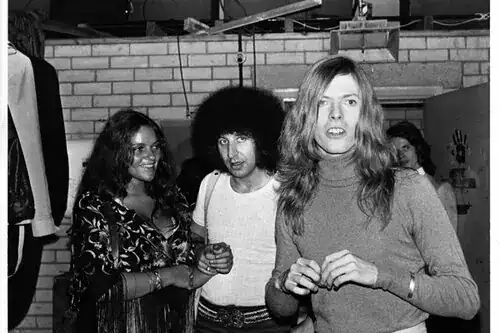
Bowie’s admiration for The Velvet Underground began before he became internationally famous. The group offered him an example of a different kind of rock culture from the dominant British pop scene.
Reed’s New York was populated by outsiders, hustlers, artists, addicts, lovers and people whose identities rarely appeared in conventional popular songwriting. Bowie, who was already interested in theatre, visual identity and unusual narrative perspectives, recognised the possibilities.
The influence was not a matter of simple imitation. Bowie did not become a British version of Lou Reed. Instead, The Velvet Underground became one element within a much larger collection of influences that Bowie transformed into something of his own.
Nevertheless, Bowie’s repeated performance of Reed’s songs demonstrates that the admiration was unusually deep.
I’m Waiting for the Man
One of the Velvet Underground songs most closely associated with Bowie was I’m Waiting for the Man.
Reed’s song describes a journey into Harlem to buy drugs, presented through a direct first-person narrative. Its unsentimental urban setting was radically different from most British pop songwriting of the period.
Bowie was performing the song publicly by 1971. A live recording survives from Friars, Aylesbury, on 25 September 1971, and I’m Waiting for the Man subsequently appeared in Bowie and the Spiders from Mars’ live and broadcast repertoire during the early 1970s.
Bowie continued returning to the song at different stages of his career. Decades later, when Bowie and Reed appeared together at Madison Square Garden, I’m Waiting for the Man again formed part of their shared repertoire.
Queen Bitch and Hunky Dory
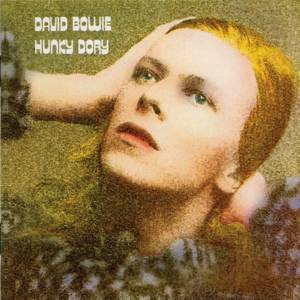
Bowie made his admiration particularly visible on Hunky Dory in 1971.
Queen Bitch carried an explicit acknowledgment of The Velvet Underground in its presentation and remains one of the clearest early examples of Bowie absorbing elements of Reed’s musical world.
The song did not simply copy a Velvet Underground recording. Bowie combined that influence with his own increasingly distinctive songwriting, Mick Ronson’s guitar work and the developing sound that would soon lead into the Ziggy Stardust period.
This makes Queen Bitch especially significant in the Reed–Bowie story. Bowie publicly acknowledged Reed as an influence before their major professional collaboration began.
When the two men performed Queen Bitch together in New York in 1997, the song effectively returned to the musician whose work had helped inspire it.
David Bowie Meets Lou Reed
Bowie’s admiration for Lou Reed preceded their friendship, but the two musicians did not actually meet until September 1971, when Bowie returned to New York in connection with his new recording agreement with RCA.
There had already been a curious false start. During an earlier American visit in 1971, Bowie went backstage after seeing The Velvet Underground and believed that he had finally met Reed. Only afterwards did he discover that the musician he had been talking to was Doug Yule, who had remained with the group after Reed’s departure.
The real introduction came later that year. During Bowie’s September visit to New York, a dinner was arranged at The Ginger Man. Bowie and Reed were among the guests, and it was there that the two men finally met face to face.
Reed later remembered Bowie playing him Hunky Dory. The encounter was significant because Reed was now hearing the work of a British musician who had already been openly acknowledging his influence. Reed was particularly impressed by Queen Bitch.
What began as Bowie’s admiration for an American songwriter was therefore becoming a personal relationship. Within the following year, that connection would develop into one of the most important collaborations of Reed’s early solo career.
Lou Reed Begins His Solo Career
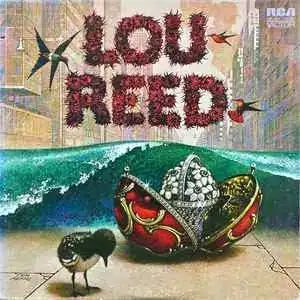
After leaving The Velvet Underground, Reed temporarily stepped away from the momentum of band life before beginning his solo career.
His first solo album, simply titled Lou Reed, was released in 1972. It contained new recordings of several compositions that had connections to his Velvet Underground period.
The album did not provide the major commercial breakthrough that might have been expected from the songwriter responsible for so much influential material.
Reed therefore entered the next stage of his career in an unusual position: enormously respected by musicians who knew The Velvet Underground, yet still far from being a mainstream solo star.
At almost exactly the same moment, Bowie’s career was accelerating dramatically in Britain.
Bowie and Reed Enter the Same World
By 1972, the balance between the two artists was fascinating.
Reed possessed the older catalogue and had already influenced Bowie. Bowie, however, was now becoming a major British star through The Rise and Fall of Ziggy Stardust and the Spiders from Mars.
Their professional relationship therefore did not follow the conventional pattern of an established producer discovering an unknown artist. Bowie was helping one of his own artistic heroes reach a new audience.
That distinction is essential to understanding Transformer. Reed brought the songs, voice, characters and literary identity. Bowie and Ronson brought their production ideas, musicianship and understanding of how Reed’s material might be presented within the rapidly changing musical environment of 1972.
Royal Festival Hall – 8 July 1972
David Bowie and Lou Reed at the Royal Festival Hall, London, 8 July 1972.
One of the most historically important moments in the Bowie–Reed relationship occurred at London’s Royal Festival Hall on 8 July 1972.
Bowie headlined a Friends of the Earth / Save the Whale benefit concert. His own rise was accelerating rapidly: Ziggy Stardust had recently been released and the performance came during the extraordinary period in which the Ziggy phenomenon was taking shape in Britain.
Reed appeared as an unadvertised guest and joined Bowie and the Spiders from Mars on stage.
Together they performed three Reed compositions associated with The Velvet Underground: White Light/White Heat, Sweet Jane and I’m Waiting for the Man.
The significance of the performance went beyond celebrity guesting. Bowie was sharing a British stage with one of the musicians whose work he had championed before achieving his own breakthrough.
The moment also visibly connected two musical worlds: Reed’s New York underground and Bowie’s rapidly emerging British glam-rock environment.
A Meeting of Influence and Opportunity
It is tempting to describe the events of 1972 as Bowie rescuing Reed’s career, but that simplifies the relationship.
Reed did not require Bowie to give him artistic credibility. The songs he had already written with The Velvet Underground were the reason Bowie admired him in the first place.
What Bowie could offer was different: enthusiasm, visibility, access to a musical environment in which Bowie himself was suddenly becoming highly influential, and a production partnership capable of presenting Reed’s songwriting in a new way.
Reed, meanwhile, offered Bowie something equally important — direct contact with an artist who had already demonstrated that rock songwriting could be literary, transgressive and emotionally complex without asking permission from mainstream culture.
Transformer – The Collaboration
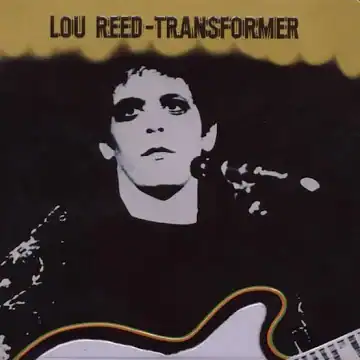
The central recorded document of the Bowie–Reed relationship is Transformer.
Reed’s second solo album was recorded in London in 1972 and produced by David Bowie and Mick Ronson. The sessions brought Reed into the same creative environment that was surrounding Bowie during the rise of Ziggy Stardust.
Yet Transformer remained unmistakably a Lou Reed album. Its characters, humour, sexuality, melancholy and urban perspective came from Reed’s writing.
Bowie and Ronson did not replace Reed’s identity. Their achievement was to help create arrangements and performances that allowed different qualities within Reed’s songs to emerge with unusual clarity.
David Bowie as Producer
Producing Reed carried particular emotional weight for Bowie because he was working with someone he had admired from a distance.
Bowie later recalled how intimidated he felt when Reed agreed to work with him as a producer.
David Bowie on producing Lou Reed
“I was petrified that he said yes he would like to work with me in a producer capacity.”
— David Bowie, recalling Transformer
The remark reveals something fundamental about their relationship. Bowie may have been the producer, but he did not approach Reed as an artist who needed to be instructed in how to write songs.
He approached him as someone whose earlier work had already helped reshape his own musical imagination.
That helps explain why the most successful aspects of Transformer do not erase Reed’s personality. Instead, the production frequently places his dry, conversational voice against arrangements that make the contrast even stronger.
Mick Ronson’s Essential Role
Mick Ronson – guitarist, arranger and co-producer of Lou Reed’s Transformer.
Any account of Transformer that treats the album simply as “Lou Reed produced by David Bowie” is incomplete.
Mick Ronson was central to the project. He shared the production credit with Bowie and contributed instrumental and arranging work that became fundamental to the album’s sound.
Ronson was already indispensable to Bowie’s early-1970s work, functioning as guitarist, arranger and musical partner within the Spiders from Mars period. On Transformer, those abilities could be applied to Reed’s very different songwriting.
His contribution is particularly evident on Perfect Day, where the arrangement gives Reed’s restrained vocal an expansive setting without overwhelming the song.
Reed later spoke warmly about Ronson’s musical contribution. The result demonstrates why the production credit should always be presented as David Bowie and Mick Ronson, rather than Bowie alone.
Trident Studios
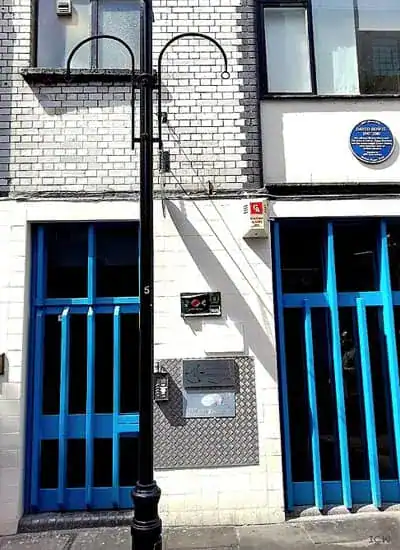
Transformer was recorded at Trident Studios in London, a location already deeply connected with Bowie’s recording history.
The studio became the meeting place between Reed’s New York songwriting and the British musicians and production team surrounding Bowie and Ronson.
Engineer Ken Scott, whose work was also important to Bowie’s early-1970s recordings, participated in the sessions.
The resulting album sounds neither like a Velvet Underground record nor like a David Bowie album. That distinction is one of its strengths.
Reed remained at the centre, while the production opened different spaces around his voice and guitar.
Vicious
Lou Reed – Vicious
Vicious opens Transformer with an immediate demonstration of Reed’s ability to combine aggression and humour.
The song’s compact construction and cutting language establish the tone without requiring elaborate explanation. Reed’s vocal remains detached and controlled, allowing the words to carry much of the character.
The recording demonstrates one of the successful principles of the album: the production adds shape and impact without attempting to make Reed sound like Bowie.
Perfect Day
Lou Reed – Perfect Day
Perfect Day revealed another side of Reed’s songwriting.
Its melody, restrained vocal and carefully constructed arrangement stand far from the abrasive reputation associated with some Velvet Underground recordings.
Mick Ronson’s arrangement is essential to the recording. The instrumentation expands the emotional scale while Reed’s voice remains remarkably contained.
The tension between those elements is part of the song’s enduring power. Rather than instructing the listener exactly how to interpret every emotion, Reed leaves space around the words.
Decades later, Perfect Day would again provide a point of connection between Reed and Bowie when both participated in the BBC’s all-star version of the song in 1997.
Walk on the Wild Side
Lou Reed – Walk on the Wild Side
The song that transformed Reed’s commercial position was Walk on the Wild Side.
Its characters were drawn from the world surrounding Andy Warhol and the Factory. Reed presents them sequentially, almost as a series of concise literary portraits.
The song’s calm musical surface contrasts with subject matter that was highly unusual for a successful pop single in 1972.
Herbie Flowers created the instantly recognisable bass part, while the saxophone heard near the end was played by Ronnie Ross.
Ross provides another Bowie connection. Years earlier, the young Bowie had received saxophone instruction from him. On Transformer, Ross’s baritone saxophone became part of Reed’s most commercially successful song.
Walk on the Wild Side became Reed’s breakthrough hit and helped move him from the cult reputation of The Velvet Underground into a much larger public arena.
Bowie and Ronson’s production was important to that transition, but the song’s enduring identity belongs to Reed’s writing and the extraordinary economy with which he introduces each character.
Satellite of Love
Lou Reed – Satellite of Love
Of all the recordings on Transformer, Satellite of Love contains one of Bowie’s most immediately recognisable direct performances.
Bowie contributed backing vocals that rise behind Reed as the song approaches its conclusion. The contrast between the two singers is striking: Reed remains comparatively grounded while Bowie’s voice moves upwards into a highly distinctive counterline.
Reed later explained that Bowie’s contribution was something he would not have devised himself.
Lou Reed on David Bowie’s voice
“It’s very, very beautiful. And he’s a great singer.”
— Lou Reed on Bowie’s contribution to Satellite of Love
The recording is therefore one of the clearest examples of genuine musical collaboration between them. Bowie is not merely credited as producer somewhere outside the sound of the record; his voice becomes part of the architecture of Reed’s song.
New York Telephone Conversation
Lou Reed – New York Telephone Conversation
Another revealing moment comes with New York Telephone Conversation.
The track’s light, almost theatrical quality allows Bowie’s voice to interact with Reed’s in a manner quite different from the dramatic climax of Satellite of Love.
The recording has even been described in the official Bowie archive as, in effect, a brief duet between Reed and Bowie.
These moments are important because they demonstrate that the Reed–Bowie connection on Transformer was not limited to decisions made behind a mixing desk. Bowie entered the performances themselves.
The Release of Transformer
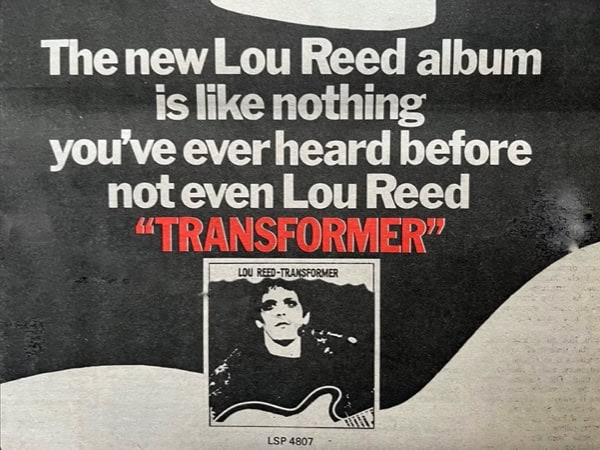
Transformer was released by RCA in late 1972 and fundamentally changed Reed’s visibility as a solo artist.
The album contained several songs that would become central to his catalogue, most notably Walk on the Wild Side, Perfect Day and Satellite of Love.
Its success also created a permanent association between Reed and the glam-rock period, even though his musical identity had been established years earlier and would continue changing long after glam’s commercial peak.
The album is best understood as a point of intersection rather than an act of artistic conversion. Reed did not become Bowie, and Bowie did not attempt to turn him into another Ziggy Stardust.
Instead, Reed’s songs entered a production environment in which Bowie and Ronson could emphasise melody, theatricality, contrast and arrangement while preserving the author’s unmistakable voice.
Mick Rock and the Transformer Image
The visual identity of Transformer also became iconic.
Photographer Mick Rock, whose work became inseparable from the visual history of Bowie’s Ziggy Stardust period, created the album’s famous cover image of Reed.
This adds another important connection between the two artists. The collaboration did not exist only in sound. Reed was temporarily surrounded by several people who were also helping define Bowie’s early-1970s visual and musical world.
Yet the resulting image is unmistakably Reed: stark, confrontational and removed from the colourful costumes associated with Ziggy.
Reed Was Never Bowie’s Creation
Because Transformer became Reed’s commercial breakthrough, histories of the period can sometimes give Bowie too much ownership over Reed’s success.
That interpretation reverses the chronology.
Reed had already written Heroin, Venus in Furs, Sweet Jane, Rock & Roll, I’m Waiting for the Man and many other major songs before Transformer.
Bowie was one of the people who understood their importance.
His contribution in 1972 was not to invent Lou Reed but to collaborate with him at precisely the moment when Bowie’s own cultural visibility could help bring Reed before a larger audience.
Reed himself later rejected the idea that Bowie had somehow taken control of his career.
After Transformer
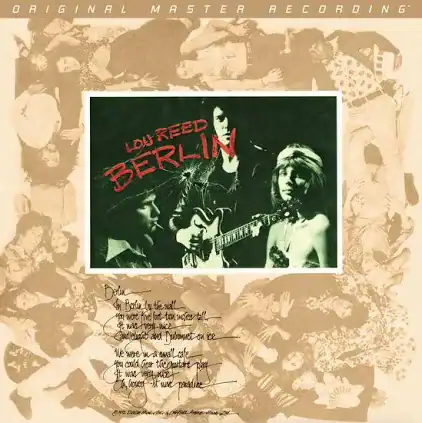
Reed did not continue making records under Bowie’s direction.
His next major studio project moved into a dramatically different environment. Berlin, released in 1973, was produced by Bob Ezrin and developed into one of Reed’s darkest and most ambitious works.
The change reinforces the fact that the Bowie collaboration was a specific episode rather than a permanent producer–artist arrangement.
Reed continued following his own often unpredictable path through the 1970s. His work could move from direct rock and roll to bleak narrative albums and extreme experimentation.
Bowie was doing much the same in a different way: abandoning Ziggy, moving through soul, electronic music and the Berlin period rather than remaining inside the style that had first made him famous.
Berlin and Artistic Independence
Reed’s Berlin deserves attention on a Bowie-related page precisely because Bowie did not produce it.
The album demonstrates why Reed cannot be reduced to the sound of Transformer. Working with Bob Ezrin, Reed constructed a tragic song cycle around a destructive relationship.
Its emotional and narrative darkness differed sharply from the accessibility of Walk on the Wild Side.
Reed’s decision to move immediately into such difficult territory demonstrated the independence that had defined him since The Velvet Underground.
Bowie and Reed shared this refusal to remain permanently inside whatever form had most recently brought success.
Parallel Careers
Through the remainder of the 1970s, Bowie and Reed increasingly followed separate paths.
Bowie moved through Diamond Dogs, Young Americans, Station to Station and the Berlin recordings made with collaborators including Tony Visconti and Brian Eno.
Reed continued producing his own sequence of records, sometimes confronting his audience with work that appeared determined to resist easy expectations.
The fact that they did not continually record together is important. Their historical relationship was never based on constant collaboration. Instead, their careers separated and intersected again at significant moments.
Two Artists Who Refused a Fixed Identity
One reason the Bowie–Reed relationship remains compelling is that neither artist accepted a single permanent identity.
Reed could be the confrontational voice of The Velvet Underground, the sharply dressed figure on Transformer, the narrator of Berlin, a direct rock songwriter or an experimental musician.
Bowie’s transformations were more visibly theatrical, but the underlying refusal was comparable. Ziggy Stardust did not become a lifelong costume; the Thin White Duke did not become a permanent character; the Berlin period did not become a formula.
Both musicians understood that previous success could become a trap if it hardened into expectation.
New York as an Artistic Idea
Reed’s relationship with New York remained fundamental to his work.
The city was not simply a location mentioned in songs. It provided characters, rhythms, language, social tensions and a way of observing people.
Bowie’s relationship with New York was different, but he was repeatedly attracted to the city and eventually made it his home.
By the time the two men appeared together at Madison Square Garden in 1997, their relationship could be viewed against decades of New York cultural history.
The Velvet Underground Reunion
The original Velvet Underground story did not simply disappear after the 1970s.
Reed and John Cale reunited creatively for Songs for Drella, their work responding to the death of Andy Warhol. Reed, Cale, Sterling Morrison and Moe Tucker subsequently reunited as The Velvet Underground.
The reunion placed the band before European audiences at a time when its historical importance was far more widely understood than during the 1960s.
By then generations of punk, post-punk and alternative musicians had drawn from ideas the Velvets had explored years earlier.
The Velvet Underground and the Rock and Roll Hall of Fame
In 1996, The Velvet Underground were inducted into the Rock and Roll Hall of Fame.
By this stage the group’s influence was no longer a specialist claim made by a small group of admirers. The Velvet Underground had become widely recognised as one of the foundational groups in alternative rock history.
For the Bowie story, the recognition reinforces how early his fascination had been. Bowie had been covering and referencing Reed’s work long before the Velvet Underground received this level of institutional recognition.
Madison Square Garden – 9 January 1997
David Bowie and Lou Reed – Madison Square Garden, New York, 9 January 1997.
One of the great later chapters in the Bowie–Reed relationship occurred on 9 January 1997.
Bowie celebrated his fiftieth birthday with a major concert at Madison Square Garden in New York. The evening brought together musicians from different generations who had some connection to Bowie’s artistic world.
Guests included Lou Reed, Foo Fighters, Sonic Youth, Robert Smith, Billy Corgan and Frank Black.
Reed’s presence had particular historical significance. Twenty-five years after Bowie had shared the Royal Festival Hall stage with one of his heroes, they were together again — this time in Reed’s New York.
“The King of New York”
Bowie introduced Reed to the Madison Square Garden audience with a description that immediately communicated both affection and status.
David Bowie introduces Lou Reed
“The King of New York.”
— David Bowie, Madison Square Garden, 9 January 1997
The introduction was brief, but the musical sequence that followed effectively traced their shared history.
Queen Bitch – The Influence Comes Full Circle
Bowie and Reed performed Queen Bitch together.
The choice was particularly meaningful because the song had carried Bowie’s acknowledgment of the Velvet Underground influence back in 1971.
Now Reed himself was sharing the stage for it.
The performance created a remarkable historical circle: a Bowie song shaped in part by his admiration for Reed was being performed decades later by both men.
I’m Waiting for the Man and White Light/White Heat
David Bowie and Lou Reed – I’m Waiting for the Man, Madison Square Garden, New York, 9 January 1997.
Their Madison Square Garden sequence continued with Velvet Underground material.
Bowie and Reed performed I’m Waiting for the Man and White Light/White Heat, songs that had been part of Bowie’s fascination with Reed since his early career.
The selections also echoed their Royal Festival Hall performance of 1972. Songs that had once represented Bowie introducing Reed’s work to British audiences were now being performed before a major New York audience as recognised classics.
Dirty Boulevard
David Bowie and Lou Reed – Dirty Boulevard, Madison Square Garden, New York, 9 January 1997.
Importantly, the Madison Square Garden collaboration did not consist only of nostalgia for The Velvet Underground.
Bowie and Reed also performed Dirty Boulevard, from Reed’s 1989 album New York.
Its inclusion acknowledged Reed as a continuing songwriter rather than simply a historical influence from Bowie’s youth.
That distinction suited the entire philosophy of Bowie’s fiftieth-birthday concert, which brought past and present together without treating either as museum material.
Perfect Day – BBC 1997
Perfect Day – BBC all-star recording, 1997.
Reed and Bowie were connected again in 1997 through the BBC’s all-star recording of Perfect Day.
The project brought together a large number of performers, with Reed’s composition serving as the common material.
Bowie contributed vocals to the recording, placing him once again inside a song that had originally appeared on the album he and Ronson had produced twenty-five years earlier.
The new recording became a major UK success and also demonstrated how far Perfect Day had travelled from its original 1972 context.
Friendship Beyond Transformer
The public record can sometimes make the Bowie–Reed relationship appear to consist of a handful of famous events: Transformer, the Royal Festival Hall and Madison Square Garden.
Reed himself made clear that the personal relationship lasted much longer.
Lou Reed on his friendship with Bowie
“People don’t realise we’ve been friends for a very long time.”
— Lou Reed
This is an important corrective to the idea that their relationship ended when the Transformer sessions were completed.
Lou Reed on David Bowie
Reed could be famously direct in interviews, which makes his later comments about Bowie particularly valuable.
Speaking about their relationship decades after Transformer, he expressed unmistakable personal affection.
The remark is valuable because it shows that the historical connection surrounding Transformer had developed into a personal relationship that survived the changes in both men’s careers.
The Raven
Lou Reed feat. David Bowie – Hop Frog, from The Raven (2003).
Their recorded relationship acquired another chapter three decades after Transformer.
Reed developed a large-scale work inspired by Edgar Allan Poe. The project eventually became the album The Raven, released in 2003.
The work combined songs, spoken text and performances by a wide range of collaborators.
Bowie appeared with Reed on Hop Frog.
Reed later recalled that he played Bowie some of the material and that Bowie selected Hop Frog as the piece he wanted to perform.
The collaboration was striking precisely because it arrived so long after the period with which the two men were most commonly associated.
Bowie was no longer Ziggy Stardust and Reed was no longer the newly solo former leader of The Velvet Underground. Both were established artists with decades of work behind them, yet they could still enter a new recording project together.
Hop Frog
Hop Frog should not be treated as an attempt to recreate Transformer.
Its importance lies partly in the fact that Reed and Bowie were still willing to collaborate within a completely different artistic context.
Reed’s Poe project belonged to his continuing interest in literature, theatre and narrative — interests that can be traced back through his career to his university years and his admiration for writers such as Delmore Schwartz.
Bowie’s participation therefore reconnected the two men not through nostalgia, but through a new work rooted in Reed’s literary interests.
Influence Without Imitation
The influence of Lou Reed on Bowie is sometimes reduced to a handful of musical references, but its deeper significance lies in possibility.
The Velvet Underground demonstrated that rock music could describe people and experiences ignored by mainstream culture. Reed could write in a voice that was observational rather than judgmental, allowing characters to exist inside songs without turning every narrative into a moral lesson.
Bowie took lessons from that work into a very different artistic world. His characters were often more theatrical and deliberately constructed, but he shared Reed’s interest in outsiders and unstable identities.
Both artists also understood that ambiguity could be productive. A song did not always need to explain itself completely.
Sexuality, Identity and the Early 1970s
Reed and Bowie were both important to the changing representation of sexuality and identity in early-1970s rock, although their approaches were not identical.
Reed’s songs had already described gay, bisexual and transgender figures and relationships within the social world he knew in New York.
Bowie’s public presentation during the Ziggy period used ambiguity, costume and theatrical performance in a different manner.
When the two men became professionally connected in 1972, those histories met within a cultural moment in which glam rock was making previously marginal forms of presentation newly visible to mainstream audiences.
Transformer belongs to that moment, but Reed’s engagement with these subjects preceded glam and should not be credited to Bowie.
What Lou Reed Meant to Bowie
Bowie’s admiration for Reed tells us something important about Bowie’s own creative development.
Throughout his career, Bowie was attracted to artists whose work already possessed a strong and individual identity. Reed belonged firmly within that category.
Reed represented an artistic world Bowie could admire and learn from but could not simply reproduce. Reed’s songwriting emerged from a specific New York literary, musical and social environment, while Bowie transformed those influences within a very different artistic language of his own.
The creative value lay precisely in the difference between them.
What Bowie and Ronson Brought to Reed
The relationship also worked in the opposite direction.
By 1972 Bowie had developed a powerful understanding of presentation. He knew how records, clothing, photography, performance and publicity could work together to create cultural momentum.
Reed did not require those things to validate his songwriting, but the Bowie and Ronson collaboration placed that songwriting inside a record whose production and presentation could communicate immediately with the early-1970s audience.
Transformer therefore benefited from an unusual balance: Reed’s established artistic identity meeting Bowie and Ronson at a moment when their own creative confidence was extraordinarily high.
Lou Reed’s Later Work
Reed continued recording, writing and performing throughout the decades after Transformer.
Albums such as New York, Magic and Loss and other later projects demonstrated that his songwriting remained engaged with contemporary life rather than functioning solely as an extension of his Velvet Underground reputation.
His work could remain confrontational, but it also became increasingly reflective about mortality, relationships and memory.
Bowie likewise continued moving forward, and the later Reed–Bowie encounters are more meaningful because neither man had spent the intervening decades simply repeating his early work.
Lou Reed’s Death
Lou Reed died on 27 October 2013 at the age of 71.
His death prompted tributes from musicians, writers and artists around the world. By then, the historical importance of The Velvet Underground had become almost impossible to overstate.
For Bowie, however, Reed was not simply a canonical figure in rock history. He was someone whose music Bowie had admired before his own rise to fame, someone he had produced, performed with and known across decades.
Bowie’s public response was extraordinarily brief.
Four words were enough.
They recognised Reed first and foremost as an artist. There was no attempt to make the tribute about Bowie’s own role in Transformer or about their shared history.
Bowie simply acknowledged the stature of the man whose work had impressed him so profoundly decades earlier.
Reed’s Influence After His Death
Reed’s death did not end the influence of his work.
The Velvet Underground catalogue continued to provide a reference point for musicians interested in noise, minimalism, alternative rock, punk, literary songwriting and music outside conventional commercial expectations.
Reed’s solo catalogue likewise continued to be rediscovered by new generations.
His influence on Bowie forms only one part of that much larger history, but it is a particularly revealing one because Bowie himself became one of the most influential musicians of the following generation.
Lou Reed in David Bowie’s Creative Circle
Lou Reed occupies a unique position within David Bowie’s creative circle.
He was not primarily a sideman, arranger or member of Bowie’s touring band. He was not discovered by Bowie, and his artistic identity did not depend upon Bowie’s approval.
Reed belongs to a rarer category: an artist Bowie admired before becoming his collaborator.
Their relationship therefore reverses the usual direction of influence found in many creative partnerships. Bowie did not first encounter Reed as someone who could help realise a Bowie project.
He encountered Reed’s work as a listener and admirer. Only later did admiration become personal contact, production, performance and friendship.
The Bowie–Reed Connection in Four Songs
Four songs provide a particularly useful way of tracing their relationship.
I’m Waiting for the Man represents Bowie the admirer, performing Reed’s Velvet Underground material before their major collaboration.
Queen Bitch represents Bowie transforming that influence into his own songwriting.
Satellite of Love represents direct studio collaboration, with Reed’s song and voice joined by Bowie’s unmistakable backing vocal.
Hop Frog represents the survival of the relationship into a completely different century and artistic context.
Why Transformer Still Matters
More than half a century after its creation, Transformer remains the central document of the Reed–Bowie collaboration.
Its importance does not depend solely on its famous songs. The album captures a specific historical moment when several creative worlds overlapped.
Reed brought the experience of The Velvet Underground and the Factory. Bowie brought the momentum of his own rapidly expanding career. Ronson brought exceptional musical and arranging ability. Mick Rock contributed the visual image.
The resulting album could only have emerged from that particular combination at that particular moment.
Yet its strongest songs survived the moment. Walk on the Wild Side, Perfect Day and Satellite of Love continued to live independently of the glam-rock context in which the album first appeared.
Beyond Glam Rock
Reed’s association with Bowie inevitably linked Transformer with glam rock, but neither artist can be contained by that label.
Reed’s Velvet Underground work predated glam, while his later career moved far beyond it.
Bowie himself abandoned the Ziggy Stardust character within a year of Transformer and continued changing musical direction.
Their collaboration therefore belongs to glam history without being limited to it. What survived was not a fashion but the songs.
Legacy
Lou Reed’s place in David Bowie’s history begins with influence but extends far beyond it.
Reed and The Velvet Underground helped demonstrate to the young Bowie that rock music could contain literary ambition, difficult subject matter, experimental sound and characters drawn from outside mainstream culture.
Bowie carried those lessons into his own developing work, but never simply copied Reed’s identity.
When their paths finally converged professionally, the result was Transformer — an album written and performed by Reed, produced by Bowie and Mick Ronson, and enriched by musicians and collaborators whose contributions created one of the defining records of the early 1970s.
Its success helped bring Reed’s songwriting to an audience far larger than the one The Velvet Underground had reached during their original existence.
Yet perhaps the most revealing part of the story is what happened afterwards. Reed did not become dependent upon Bowie. Bowie did not attempt to claim Reed’s career as his own creation. They followed independent paths and continued to respect one another.
Their later encounters demonstrated how durable that connection had become. At Madison Square Garden in 1997, the songs of The Velvet Underground, Queen Bitch and Reed’s later Dirty Boulevard could coexist in the same performance.
In 2003, Bowie could appear on Reed’s The Raven without either artist needing to recreate the sound or image of 1972.
And when Reed died in 2013, Bowie did not need a lengthy explanation of what his old friend had meant to him.
“He was a master.”
Within the David Bowie story, few descriptions could be more appropriate. Lou Reed was an influence before he was a collaborator, a collaborator before he became an old friend, and an independent artist throughout.
Their relationship remains one of the clearest examples of Bowie’s ability not merely to influence other artists, but to recognise greatness in someone else, learn from it, work alongside it and continue respecting it decades later.
Official Website & Further Information
Further information about Lou Reed, The Velvet Underground and David Bowie can be found through their official archive resources and historical material relating to their recordings and performances.
Lou Reed – Official Website
David Bowie – Official Website
Article Origin
This DavidBowieWorld archive article was researched and rewritten as an extended account of the artistic and personal relationship between Lou Reed and David Bowie.
Particular attention has been given to Reed’s work before his association with Bowie, Bowie’s documented admiration for The Velvet Underground, their 1972 Royal Festival Hall performance, the production of Transformer, Mick Ronson’s essential contribution, their later performances together, Reed’s The Raven and the friendship that continued across several decades.
The relationship is presented without treating Reed as an artist created or controlled by Bowie. Reed’s achievements with The Velvet Underground preceded their collaboration, while Bowie and Ronson’s work on Transformer represents one particularly important intersection between two independent artistic careers.
© DavidBowieWorld.com — David Bowie Collaborations & Creative Circle Archive.
