
Diane Sumler & David Bowie – Backing Vocals on the Diamond Dogs Tour
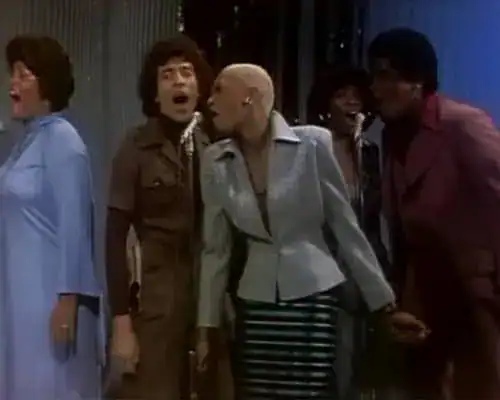
Image: David Bowie World collection / editorial use
Diane Sumler was one of the backing vocalists connected with David Bowie during the crucial 1974 Diamond Dogs Tour period, when Bowie’s music was moving away from dystopian glam rock and toward the soul, gospel and rhythm-and-blues language that would soon shape Young Americans.
Her Bowie role belongs to the live and studio environment around the second half of 1974: the period of the so-called Soul Tour, the recording sessions at Sigma Sound Studios in Philadelphia, and the televised appearances that showed Bowie surrounded by a powerful American vocal ensemble.
Sumler should be understood as part of the wider vocal world that included singers such as Ava Cherry, Anthony Hinton, Luther Vandross and Warren Peace. Together, these voices helped Bowie make one of the most important stylistic transitions of his career.
- Name: Diane Sumler
- Role: Backing vocals
- Bowie period: 1974 soul-era transition
- Tour connection: Diamond Dogs Tour / Soul Tour period
- Studio connection: Vocal circle around the Young Americans sessions
- Associated singers: Ava Cherry, Anthony Hinton, Luther Vandross, Warren Peace
- Important appearance: The Dick Cavett Show, 4 December 1974
- Historical importance: Part of the vocal ensemble that helped move Bowie toward American soul
Who was Diane Sumler?
Diane Sumler was an American backing vocalist associated with David Bowie’s 1974 soul-era work. Compared with more widely documented Bowie collaborators such as Carlos Alomar, Luther Vandross or Ava Cherry, detailed public information about Sumler’s wider life and career is limited.
For that reason, her page should focus carefully on what can be placed within Bowie’s documented 1974 context: her role as part of the vocal ensemble around the Diamond Dogs tour period, the transition toward Young Americans, and televised performances from late 1974.
Sumler’s contribution matters because Bowie’s move into soul was not created by Bowie alone. It depended on musicians and singers who brought American rhythm, gospel warmth and vocal arrangement discipline into his music.
The Diamond Dogs Tour context
The Diamond Dogs Tour began in 1974 as one of Bowie’s most ambitious theatrical productions. Its early form was connected to the dystopian world of Diamond Dogs, with elaborate staging, urban decay imagery and a large-scale concert design.
During the year, however, Bowie’s musical direction changed rapidly. As the tour continued, the arrangements became increasingly influenced by American soul, funk and rhythm and blues. This later phase is often called the Soul Tour.
Backing vocalists became essential to this transformation. They did not simply add harmony behind Bowie; they helped change the emotional and musical centre of the performances.
Backing vocals as transformation
In Bowie’s earlier glam-rock period, backing vocals were usually part of a different musical architecture. By 1974, Bowie was searching for a more American sound, one shaped by call-and-response, gospel intensity, soul phrasing and ensemble vocal power.
Diane Sumler’s place in this story is therefore significant. She belonged to the vocal environment that allowed Bowie to move from the colder, theatrical world of Diamond Dogs toward the warmer and more physically grounded sound of Young Americans.
This shift was not just stylistic decoration. The backing vocalists helped Bowie reframe older and newer songs, giving them a different rhythmic and emotional force on stage.
David Live and the 1974 touring band
Bowie’s 1974 live period was documented on David Live, recorded at the Tower Theater in Upper Darby, Pennsylvania. The album captures Bowie during a transitional moment, between the theatrical excess of Diamond Dogs and the soul direction that would soon dominate Young Americans.
The vocal section was a key part of that sound. The live arrangements depended on backing singers to give the material drive, depth and soul-oriented colour.
For listeners tracing Bowie’s development, this live period is essential because it shows the transformation happening in real time. Sumler belongs to that stage of the story: not as a front-line solo figure, but as part of the ensemble that changed the way Bowie’s music breathed.
From Diamond Dogs to Young Americans
The movement from Diamond Dogs to Young Americans was one of the sharpest changes in Bowie’s career. Within months, Bowie moved from a post-apocalyptic glam-rock concept toward a self-described form of soul music filtered through his own artificial and theatrical sensibility.
The change was driven by environment as much as by composition. Bowie was absorbing American nightlife, disco, rhythm and blues and Philadelphia soul. He also began surrounding himself with musicians and singers who could help him enter that world more convincingly.
Diane Sumler’s importance lies in this collective shift. She was part of the vocal world that helped make Bowie’s American soul experiment possible.
Sigma Sound Studios, Philadelphia
After the first part of the Diamond Dogs Tour, Bowie and his entourage travelled to Philadelphia, where sessions for the new album took place at Sigma Sound Studios in August 1974.
Sigma Sound was closely associated with the Philadelphia soul sound. Recording there placed Bowie in a different musical environment from the British rock and glam scenes that had shaped much of his earlier work.
The sessions brought together musicians and singers who would become crucial to this new direction. The circle included players such as Carlos Alomar, David Sanborn, Andy Newmark and Willie Weeks, alongside vocal contributors including Luther Vandross, Anthony Hinton, Ava Cherry and Diane Sumler.
The vocal circle around Young Americans
The vocal sound of Bowie’s 1974–1975 soul period depended on a group of singers rather than on one single background voice. This is why Diane Sumler should be placed within an ensemble context.
Luther Vandross, still early in his career, contributed significantly to the vocal atmosphere and arrangements around Young Americans. Ava Cherry, who was also personally close to Bowie during this period, became one of the most visible singers associated with the era.
Anthony Hinton, Warren Peace and Diane Sumler were also part of the vocal environment that surrounded Bowie as he transformed his sound. Their combined presence helped create the gospel and soul-influenced blend that made the period so different from what had come before.
Young Americans and careful crediting
Young Americans, released in 1975, grew directly out of the musical changes Bowie began during 1974. The album is often described as Bowie’s major soul statement, but it was not created by Bowie alone.
The album’s sound depended on a network of musicians and singers who helped Bowie absorb and reshape American soul, funk and gospel influences. Diane Sumler belongs to that broader environment.
For historical accuracy, Sumler should be described carefully. She was part of the 1974 vocal circle surrounding Bowie’s soul transition, but she should not be credited casually as the lead architect of the Young Americans vocal arrangements unless a specific source confirms that role.
Ava Cherry, Luther Vandross and Anthony Hinton
Bowie’s soul-era vocal ensemble included several important figures. Ava Cherry was one of the most visible singers of the period and had a close personal and musical connection with Bowie.
Luther Vandross was still at an early stage of his career, but his contribution to the Young Americans sound would later be recognised as an important step in his development as a singer and arranger.
Anthony Hinton, Warren Peace and Diane Sumler were part of the same vocal landscape. Together, these singers helped create the rich background sound that made Bowie’s 1974–1975 music so different from his earlier glam-rock work.
The Dick Cavett Show, 4 December 1974
One of the most useful visual documents of this period is Bowie’s appearance on The Dick Cavett Show, recorded during the late-1974 soul transition.
The performance shows Bowie surrounded by members of the vocal ensemble that had become central to his new sound. Diane Sumler is especially important here because this footage gives viewers a clearer sense of the kind of stage and television context in which she worked with Bowie.
David Bowie on The Dick Cavett Show, 4 December 1974 — with Diane Sumler visible in the soul-era vocal ensemble.
This performance belongs to the crucial period between the Diamond Dogs tour and the release of Young Americans. Bowie’s stage presentation had changed dramatically: the theatrical dystopia of early 1974 was giving way to a sharper, soul-based sound.
The backing singers were essential to that transformation. Their voices gave Bowie’s performances warmth, movement and a gospel-influenced lift that could not have been achieved by the rock-band format alone.
Why Diane Sumler matters
Diane Sumler matters because Bowie’s 1974 transformation was not only about songs, costumes or studio locations. It was also about voices.
The backing vocalists gave Bowie access to a different emotional vocabulary. Their sound helped him move from the alienated theatricality of Diamond Dogs toward the soul-inflected language of Young Americans.
Sumler’s individual biography may be less documented than those of some other Bowie collaborators, but her presence in the ensemble is part of the reason this period sounds and looks so different from what came before.
A brief but important Bowie connection
Sumler’s Bowie connection should not be overstated. She was not a long-term collaborator across multiple Bowie eras, and she did not become a public figure within the Bowie story in the way that Ava Cherry or Luther Vandross did.
But the brevity of the connection does not make it unimportant. Many of Bowie’s transitions depended on short-term collaborators who entered at exactly the right moment.
Diane Sumler was one of those voices. Her contribution belongs to the live and studio environment that helped Bowie transform in 1974.
Legacy within Bowie’s universe
Within David Bowie’s wider collaboration history, Diane Sumler should be remembered as part of the 1974 soul-era vocal ensemble: a backing vocalist connected with the Diamond Dogs Tour period, the Soul Tour transition and the musical environment that led into Young Americans.
Her role is best understood collectively, alongside singers such as Ava Cherry, Anthony Hinton, Luther Vandross and Warren Peace. Together, they helped Bowie reshape his music through harmony, call-and-response, gospel colour and soul phrasing.
Sumler’s presence reminds us that Bowie’s reinventions were never solo acts. They were built with musicians and singers whose contributions sometimes lasted only a short time, but whose sound became part of the transformation.
