
Adrian Belew – Guitar Innovator, David Bowie Collaborator and Musical Director
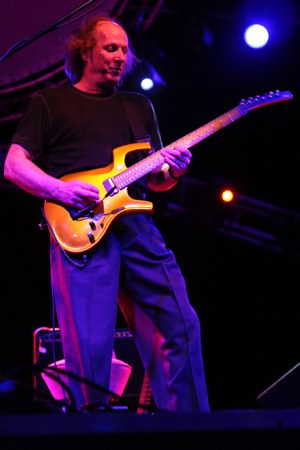
Photo: Unknown photographer / Wikimedia Commons / CC BY-SA 3.0 (editorial use)
Adrian Belew is one of the most original guitarists ever to work with David Bowie. First recruited for the groundbreaking Isolar II World Tour in 1978, Belew introduced an entirely new vocabulary of guitar sounds into Bowie’s live performances before contributing to the recording of Lodger, the final album of the celebrated Berlin Trilogy. More than a decade later Bowie invited him back as musical director for the ambitious Sound+Vision Tour, confirming the enormous trust he placed in Belew’s musical judgement.
Known for transforming the guitar into an instrument capable of producing animal calls, electronic textures, industrial noise and expressive soundscapes, Belew became one of the defining voices of experimental rock. His work with Bowie, Frank Zappa, Talking Heads, King Crimson, Tom Tom Club and countless other artists established him as one of the most inventive musicians of his generation.
- Full name: Robert Steven “Adrian” Belew
- Born: December 23, 1949 – Covington, Kentucky, USA
- Occupation: Guitarist, singer, songwriter, producer and composer
- Worked with David Bowie: 1978–1979 and 1990
- Bowie tours: Isolar II World Tour (1978) and Sound+Vision Tour (1990)
- Studio recordings with Bowie: Lodger (1979)
- Live album: Stage (1978)
- Also worked with: Frank Zappa, Talking Heads, Tom Tom Club, King Crimson, Nine Inch Nails, Paul Simon and many others
Early Life
Born on December 23, 1949, in Covington, Kentucky, Adrian Belew developed an interest in music from an early age. Although he would eventually become recognised as one of the world’s most innovative guitarists, his musical ambitions were initially far more modest. Like many young musicians of the 1960s, he began by playing popular songs in local bands while gradually developing his own distinctive musical personality.
Unlike many of his contemporaries, Belew was never content simply to copy the blues-based guitar traditions that dominated rock music. He became fascinated by unusual sounds, experimenting with sustain, feedback, harmonics and electronic effects. Rather than treating the guitar solely as an instrument for solos or rhythm playing, he viewed it as a source of completely new sonic possibilities. Bird calls, animal noises, electronic textures and abstract soundscapes would all become part of his growing musical vocabulary.
Throughout the early 1970s Belew played with several regional bands before eventually joining the Nashville-based cover band Sweetheart. Although the group mainly performed popular songs of the day, it provided him with an important opportunity to develop his remarkable stage presence and increasingly adventurous guitar style. Night after night he experimented with new sounds, unknowingly preparing himself for the opportunity that would completely change his career.
Discovered by Frank Zappa
That opportunity arrived in 1977. While performing with Sweetheart at Fanny’s nightclub in Nashville, Belew attracted the attention of Frank Zappa. According to Belew, Zappa had first heard about the guitarist through his chauffeur, who recommended that he visit the club to hear an unusually gifted young musician. Curious to discover whether the stories were true, Zappa attended a performance and was immediately impressed.
Discovered by Frank Zappa
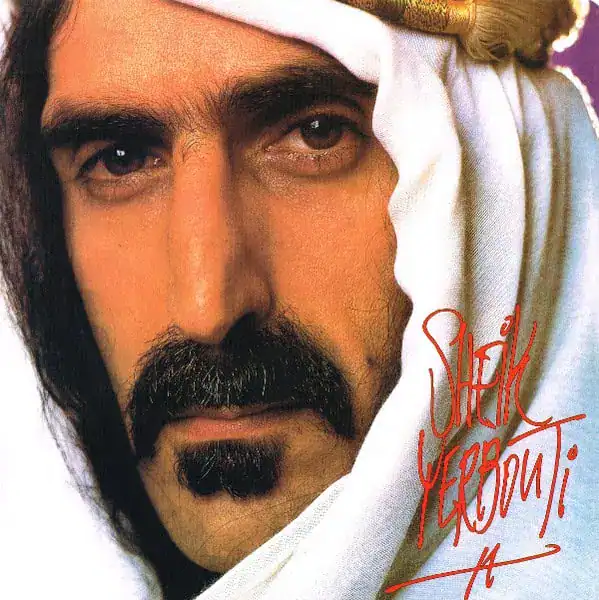
Soon afterwards, Belew was invited to audition for Zappa’s touring band. Joining one of the most demanding ensembles in rock music proved to be a life-changing experience. Zappa expected exceptional precision from every musician, requiring them to perform highly complex compositions with absolute consistency. For Belew, the experience provided an extraordinary musical education, teaching discipline, professionalism and technical control at the highest level.
Although Frank Zappa’s music allowed relatively little room for improvisation, the tour exposed Adrian Belew to musicians and producers from across the international music scene. Among those who noticed his extraordinary originality was producer Brian Eno, whose recommendation would soon bring Belew into David Bowie’s creative circle.
Brian Eno Recommends Adrian Belew
While touring Europe with Frank Zappa during 1977, Adrian Belew‘s extraordinary guitar playing attracted the attention of producer Brian Eno. Eno attended one of Zappa’s concerts in Cologne, Germany, and was immediately struck by the young guitarist’s originality. Belew’s ability to create unusual textures, electronic sounds and completely unexpected musical colours was unlike anything Eno had heard from a rock guitarist before.
At the time, Eno was working closely with David Bowie on what would become the celebrated Berlin Trilogy. Bowie was preparing his forthcoming Isolar II World Tour and was looking for a guitarist capable of moving beyond traditional rock playing. Eno strongly recommended Belew, believing his experimental approach would perfectly complement Bowie’s evolving musical direction.
Only a few days later Bowie attended another Frank Zappa concert in Berlin. Rather than arranging a formal audition, Bowie watched Belew perform from the audience before meeting him backstage after the show. By the end of the evening, Bowie had invited the surprised guitarist to join his forthcoming world tour.
For Belew, the invitation came completely unexpectedly. Only months earlier he had been playing in clubs with Sweetheart before joining Frank Zappa’s demanding touring band. Now, almost overnight, he found himself preparing to perform alongside one of the most adventurous artists in popular music. The opportunity would change the course of his career forever.
Adrian Belew on David Bowie’s approach
“He just wanted me to go wild on the guitar.”
— Adrian Belew, recalling David Bowie’s instructions before the 1978 tour.
Joining David Bowie
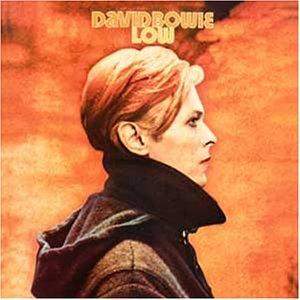
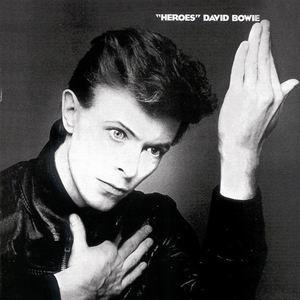
Bowie recruited Belew after seeing him perform with Frank Zappa. Struck by his unorthodox style, Bowie invited him to join the 1978 Isolar II World Tour, built largely around material from Low and “Heroes“.
For Belew, the invitation represented the beginning of one of the most important collaborations of his career. Bowie was not looking for a conventional lead guitarist. Instead, he wanted someone who could expand the emotional and sonic landscape of his music, encouraging experimentation rather than imitation.
The decision proved inspired. Belew’s fearless approach to sound complemented Bowie’s artistic ambitions perfectly and quickly became one of the defining characteristics of the 1978 tour.
The 1978 Isolar II World Tour
The Isolar II World Tour, which opened in March 1978, presented one of the most adventurous live bands of David Bowie’s career. Alongside Carlos Alomar, Simon House, George Murray, Dennis Davis, Roger Powell and Sean Mayes, Adrian Belew introduced a completely new guitar vocabulary that perfectly complemented Bowie’s increasingly experimental music.
Rather than concentrating on conventional solos, Belew used pitch-shifters, delay, feedback, sustain, harmonics and electronic effects to create an extraordinary range of sounds. His guitar could resemble birds, animals, sirens, machinery or abstract electronic textures, bringing an unpredictable quality to every performance while remaining fully integrated within the band’s disciplined arrangements.
Bowie actively encouraged this approach. Instead of asking Belew to reproduce existing guitar parts, he gave him the freedom to experiment, allowing each concert to develop its own character. Songs such as Station to Station, Stay, Fame, “Heroes“ and TVC 15 gained a fresh dimension through Belew’s imaginative playing, making the performances feel both familiar and entirely new.
For audiences, the tour demonstrated that Bowie had no interest in becoming a nostalgia act. The Isolar II concerts combined material from Low, “Heroes“, Station to Station and earlier albums into a powerful theatrical production that remains one of the most highly regarded tours of Bowie’s career.
Adrian Belew on touring with David Bowie
“David was quite the opposite. He wanted someone to throw lots of colour at the canvas… He told me that he just wanted me to go wild on the guitar.”
— Adrian Belew, reflecting on the creative freedom Bowie encouraged during the 1978 tour.
Recording Lodger
Following the conclusion of the Isolar II World Tour, Adrian Belew remained part of David Bowie’s creative circle as work continued on Lodger, the final album of the celebrated Berlin Trilogy. Recorded between September 1978 and March 1979, the album became one of the most unconventional recording projects of Bowie’s career, with producer Tony Visconti and Brian Eno constantly searching for new ways to challenge both themselves and the musicians.
Recording Lodger
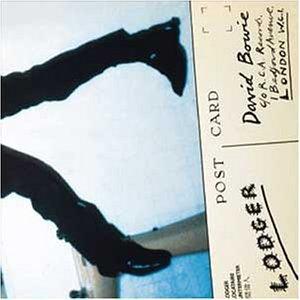
For Belew, the sessions proved unlike anything he had previously experienced. Rather than learning complete songs before recording, he was often asked to improvise without knowing what the finished composition would sound like. In some cases he was deliberately not told the song’s key or structure. Brian Eno encouraged him simply to react instinctively, creating spontaneous guitar performances that could later be edited, rearranged and woven into the final recordings.
The approach perfectly suited Belew’s imagination. Instead of traditional lead guitar, he supplied bursts of texture, unconventional melodies and dramatic sonic colours that became an important part of Lodger‘s unique character. His playing can be heard on songs including DJ, Boys Keep Swinging, Look Back in Anger and Red Money, while his experimental overdubs also contributed to several other recordings from the sessions.
Years later, Belew recalled that the experience completely changed the way he thought about the guitar. Rather than seeing mistakes as something to avoid, Bowie and Eno encouraged unexpected ideas and happy accidents, believing that spontaneity often produced the most memorable performances. The sessions helped establish the adventurous musical identity that would later become a hallmark of Belew’s work with Talking Heads, King Crimson and throughout his solo career.
Adrian Belew on the Lodger sessions
“They wouldn’t let me hear the song first. Brian Eno wanted me to react instinctively, without knowing what was coming.”
— Adrian Belew, describing the unconventional recording methods used during the Lodger sessions.
Stage – Capturing the Tour
Stage – Capturing the Tour
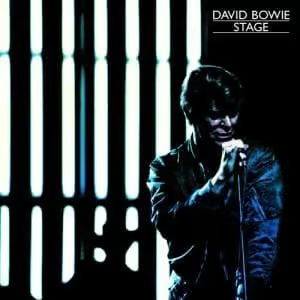
While Lodger demonstrated Belew’s creativity in the recording studio, the live album Stage, released in 1978, preserved the remarkable chemistry of Bowie’s touring band. Recorded during the Isolar II World Tour, the album captured Belew’s extraordinary guitar work alongside fellow musicians Carlos Alomar, Simon House, Roger Powell, Sean Mayes, George Murray and Dennis Davis.
Unlike many live albums of the period, Stage presented Bowie not as a greatest-hits performer but as an artist constantly reinventing his own catalogue. Belew’s innovative textures became an essential part of that reinvention, giving familiar songs an entirely new sonic identity while perfectly complementing Bowie’s increasingly adventurous musical direction.
Return for the Sound+Vision Tour
More than a decade after the Isolar II Tour and the Lodger sessions, David Bowie once again turned to Adrian Belew. In 1990 Bowie announced the ambitious Sound+Vision Tour, a world tour intended to celebrate many of his best-known songs before moving on to new musical directions. Rather than simply assembling another touring band, Bowie wanted a musician he trusted to help shape the entire production. He chose Adrian Belew as both guitarist and musical director.
Return for the Sound+Vision Tour

The responsibility extended far beyond performing on stage. Belew worked closely with keyboard player Rick Fox to prepare new arrangements for a vast catalogue spanning more than two decades of Bowie’s career. Songs originally recorded with large ensembles, orchestras, saxophone sections and multiple guitar parts had to be adapted for a compact four-piece touring band using samplers, keyboards and carefully designed arrangements.
Belew later described the preparation as one of the most demanding musical projects of his career. Months of work were required before rehearsals even began, ensuring that classics such as Space Oddity, “Heroes“, Life on Mars?, Station to Station and many other songs could be presented faithfully while still sounding fresh in a live setting.
Once rehearsals started, Bowie deliberately encouraged Belew to take control. Rather than dictating every musical detail, he trusted his guitarist’s judgement, occasionally suggesting changes to arrangements or keys while allowing Belew considerable freedom in organising the performances. It reflected the deep confidence Bowie had developed in his former guitarist since their first collaboration in the late 1970s.
Adrian Belew on David Bowie’s trust
“He let me have my way, which I think is what he wanted — someone trustworthy to make it happen.”
— Adrian Belew, recalling his role as musical director during the 1990 Sound+Vision Tour.
The Sound+Vision Tour eventually visited twenty-seven countries and comprised 108 concerts, becoming one of the largest tours of Bowie’s career. For Belew, however, its greatest significance lay beyond the music itself. Spending months travelling together allowed the two musicians to develop a genuine friendship, sharing long conversations, museum visits, films, meals and countless hours together between performances.
A Lasting Friendship
Although Adrian Belew‘s professional collaborations with David Bowie were separated by more than a decade, their friendship continued well beyond the recording studio and concert stage. During both the 1978 Isolar II Tour and the 1990 Sound+Vision Tour, the two musicians spent countless hours together travelling, rehearsing and discussing music, art, literature and film. Belew came to know Bowie not simply as an international superstar, but as an endlessly curious and remarkably generous individual.
One of the qualities that impressed Belew most was Bowie’s willingness to trust the musicians around him. Rather than controlling every detail, Bowie surrounded himself with creative people whose ideas he genuinely valued. He encouraged experimentation, welcomed unexpected suggestions and believed that the best performances often emerged when musicians were given complete freedom to express themselves.
Away from the stage, Bowie displayed the same curiosity that had defined his entire career. Museums, contemporary art, cinema, books and new technology were frequent subjects of conversation, and Belew has often recalled Bowie’s sharp sense of humour and remarkable ability to make everyone around him feel comfortable. Despite his worldwide fame, Bowie remained approachable, thoughtful and genuinely interested in the opinions of the people he worked with.
Adrian Belew on David Bowie
“David’s encouragement to try wild and unusual things really helped me to do the things that I did on the guitar.”
— Adrian Belew, reflecting on Bowie’s lasting influence on his musical development.
Looking back on his years with Bowie, Belew has repeatedly described those experiences as among the most important of his career. The creative freedom Bowie offered during the late 1970s shaped his later work with Talking Heads, King Crimson and his solo recordings, while their reunion for the Sound+Vision Tour confirmed that the mutual respect established during the Berlin era had never disappeared.
Life After Bowie
Following the Sound+Vision Tour, Adrian Belew returned to an exceptionally varied career that continued to place him among rock music’s most adventurous musicians. His long association with King Crimson entered a new phase during the 1990s, while his solo recordings explored progressive rock, experimental music, pop, electronic soundscapes and instrumental composition with equal enthusiasm.
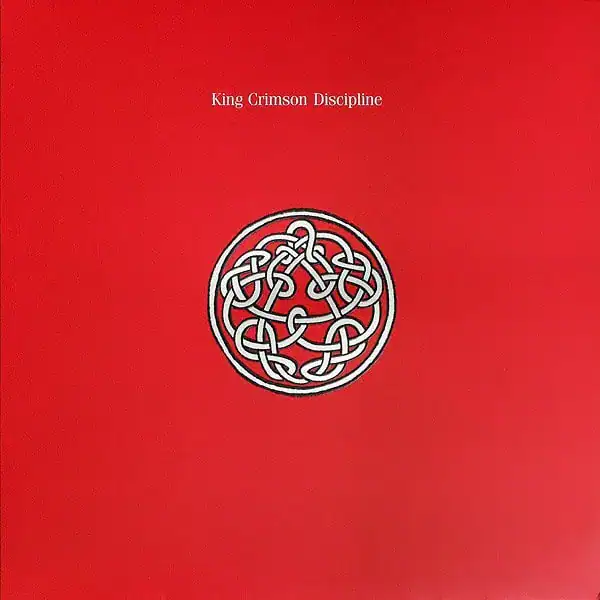
Beyond King Crimson, Belew continued to collaborate with an extraordinary range of artists including Talking Heads, Tom Tom Club, Nine Inch Nails, Paul Simon, Tori Amos, Porcupine Tree and many others. His distinctive guitar style—combining technical brilliance with imagination and sonic experimentation—made him one of the most sought-after session musicians of his generation.
Alongside his recording and touring work, Belew also established himself as a respected producer, songwriter and innovator in music technology. Never content to repeat past successes, he embraced digital recording, interactive music software and new methods of guitar performance, continuing the spirit of experimentation that had first attracted David Bowie and Brian Eno decades earlier.
Celebrating David Bowie
Celebrating David Bowie

Following David Bowie’s death in 2016, Adrian Belew became one of the leading musicians involved in Celebrating David Bowie, the internationally acclaimed concert series honouring Bowie’s extraordinary musical legacy. Drawing upon his unique first-hand experience of working with Bowie during both the Isolar II and Sound+Vision tours, Belew brought an authenticity to the performances that few other musicians could match.
Rather than attempting to imitate Bowie, the concerts celebrate his music through the artists who helped create it. Alongside fellow Bowie collaborators and a constantly evolving line-up of distinguished musicians, Belew has helped introduce Bowie’s catalogue to new audiences while reminding long-time fans of the remarkable creativity that defined every period of Bowie’s career.
For many concertgoers, Adrian Belew‘s presence provides a direct musical connection to two of Bowie’s most innovative eras. His performances continue to demonstrate the adventurous guitar style that first caught Brian Eno‘s attention nearly five decades ago and ultimately brought him into David Bowie’s creative world.
Adrian Belew on David Bowie
“I think David’s encouragement to try wild and unusual things really helped me become the player I am.”
— Adrian Belew, reflecting on the lasting influence David Bowie had on his musical career.
Legacy
Adrian Belew occupies a unique place in David Bowie’s history. Few musicians were invited back by Bowie after more than a decade to take on an even greater responsibility than before. From his revolutionary guitar work during the Isolar II World Tour and the experimental recording sessions for Lodger to his role as musical director of the Sound+Vision Tour, Belew helped shape two very different periods of Bowie’s remarkable career.
His influence extends far beyond his years with Bowie. Through his work with King Crimson, Talking Heads, Tom Tom Club, Frank Zappa, Nine Inch Nails and an extensive solo career, Belew has remained one of the most original and respected guitarists in modern music. His fearless approach to sound continues to inspire musicians across progressive rock, experimental music and contemporary guitar performance.
For David Bowie, Adrian Belew represented exactly the kind of musician he was always searching for: technically gifted, endlessly imaginative and completely unafraid to challenge conventional ideas about what rock music could become. Their collaboration remains one of the most adventurous partnerships of Bowie’s career and continues to influence musicians around the world.
Official Website & Further Information
Adrian Belew continues to record, perform and develop new creative projects through his official website, where visitors can explore his music, artwork, tours and latest releases.
Official website:
https://www.adrianbelew.net/
DavidBowieWorld.com is dedicated to documenting the careers of David Bowie’s collaborators through carefully researched historical information and, where available, first-hand contributions from the artists themselves. This page will continue to be updated as new verified information becomes available.
