
Nile Rodgers – The Producer Behind David Bowie’s Let’s Dance and Black Tie White Noise

Photo: Eddie Janssens / Wikimedia Commons / CC BY-SA 4.0
Nile Rodgers helped David Bowie make one of the defining records of his career. Their partnership on Let’s Dance (1983) brought together Bowie’s songwriting and voice with Rodgers’ experience as a guitarist, arranger and producer. The resulting album reached an audience far beyond Bowie’s existing following and remains his best-selling studio album.
That achievement can obscure the breadth of the relationship. Rodgers was already an important musical figure through Chic and his partnership with bassist Bernard Edwards. Bowie approached a musician whose understanding of rhythm, arrangement and performance had helped reshape popular music, rather than simply hiring someone to make an existing recording more fashionable.
They reunited for work released as Real Cool World (1992) and Black Tie White Noise (1993). This second period combined dance rhythms with jazz, electronic textures, personal reflections and musical reunions. It demonstrated that their partnership could serve a different purpose from the spectacular crossover success of 1983.
The story therefore reaches beyond three famous singles. It includes a chance encounter in New York, preparatory recordings in Switzerland, a carefully assembled studio ensemble, changing expectations and Rodgers’ later work preserving their shared recordings. Across those chapters, his contribution was both practical and creative: he helped determine how Bowie’s ideas would sound when musicians brought them to life.
- Full name: Nile Gregory Rodgers Jr.
- Born: 19 September 1952, New York City, United States
- Roles: Guitarist, songwriter, arranger and record producer
- Before Bowie: Co-founder of Chic with Bernard Edwards; co-writer and producer of recordings by Chic, Sister Sledge and Diana Ross
- Principal Bowie albums: Let’s Dance (1983) and Black Tie White Noise (1993), both co-produced with David Bowie
- Major 1983 singles: Let’s Dance, China Girl and Modern Love
- Additional collaboration: Real Cool World, released for the film Cool World in 1992
- Shared songwriting credit: Looking for Lester, credited to Bowie and Rodgers
- Later archive work: The officially released Let’s Dance demo and Rodgers’ orchestral interpretation, both issued in 2018
- Recognition: Songwriters Hall of Fame, 2016; Rock & Roll Hall of Fame, Musical Excellence, 2017
New York beginnings: learning music before the hit records
Born in New York City on 19 September 1952, Rodgers developed as a musician in a world where jazz, rhythm and blues, popular entertainment and rock could overlap. His later reputation as a dance-music producer should not conceal that wider education. Arranging, harmony and the ability to work with different kinds of performers were central to his development.
Before international recognition, he gained professional experience through work associated with Sesame Street and the house band at Harlem’s Apollo Theater. Such employment required musical flexibility. A supporting guitarist needed to understand an arrangement, follow a singer, respond to the other players and help make a performance convincing without assuming that the guitar should always dominate it.
Rodgers carried that practical education into the studio. His production work would depend on listening closely to individual players while understanding how their contributions could fit into a complete arrangement. Both skills became important when he began working with Bowie.
Bernard Edwards and the musical language of Chic
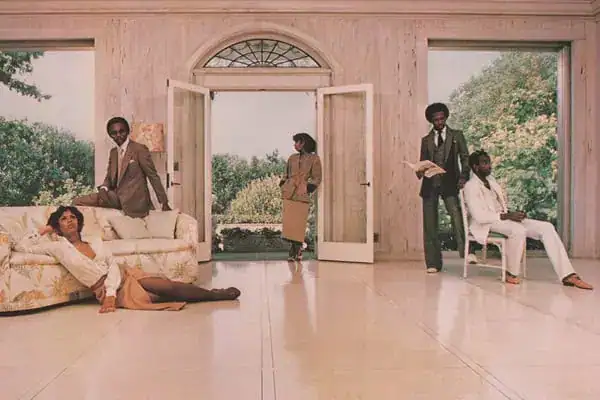
Rodgers’ partnership with Bernard Edwards developed through working bands before the emergence of Chic. Their shared history included The Boys and The Big Apple Band. The professional relationship placed guitar and bass in constant conversation, developing a musical identity in which individual parts became most effective when heard together.
Chic’s success during the later 1970s established that approach internationally. Records including Le Freak, I Want Your Love and Good Times balanced memorable songs with detailed rhythmic construction. Edwards’ bass could supply a melodic centre while Rodgers’ guitar marked out a complementary pattern, leaving room for drums, voices, keyboards and orchestration.
Their importance extended beyond their own group. Good Times became a fundamental reference point in the development of recorded hip-hop through The Sugarhill Gang’s Rapper’s Delight. Chic’s music demonstrated how a tightly organised groove could support new forms of performance and interpretation. By the time Bowie and Rodgers worked together, that influence was already established.
Sister Sledge, Diana Ross and producing for another voice
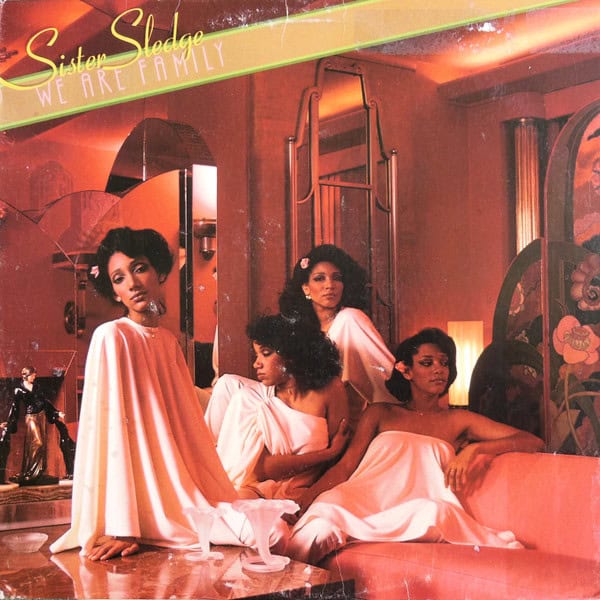

Working beyond Chic gave Rodgers and Edwards experience translating their musical approach into recordings centred on other artists. Their productions for Sister Sledge, including We Are Family and He’s the Greatest Dancer, joined a distinctive instrumental identity to the character of an existing vocal group.
With Diana Ross, their work on diana (1980) produced songs including Upside Down and I’m Coming Out. These records are an important part of Rodgers’ preparation for Bowie. They show that his production career did not begin with Let’s Dance, and that he had already worked at the intersection of an established artist’s identity and a new musical setting.
These outside productions also established the Chic Organization as a creative partnership capable of working beyond its own band. Bowie knew Rodgers as someone who had already helped established singers and vocal groups connect with large audiences.
The guitarist: precision, space and the Hitmaker

Rodgers’ familiar Fender Stratocaster, known as the Hitmaker, became closely associated with his recorded sound. Yet the instrument alone does not explain his playing. The important qualities include the placement of chord accents, control over how long notes sound and the spaces left between phrases.
His rhythm guitar often works as both harmony and percussion. A short chord can identify a harmonic change while also sharpening the movement of the beat. Played against a complementary bass line, a relatively economical guitar figure can create considerable momentum. This offers a useful way of listening to his Bowie work: follow the relationship between parts rather than searching only for a foreground solo.
In interviews about his technique, Rodgers has emphasised restraint. His playing gives other instruments room to move, even when the rhythm remains insistent. On Bowie’s recordings, that approach would prove particularly effective beside the more expansive lead guitar of Stevie Ray Vaughan.
Meeting Bowie at the Continental
Rodgers has repeatedly described his first substantial encounter with Bowie as a chance meeting at The Continental, an after-hours club in New York. He was with Billy Idol when they noticed Bowie. Rather than immediately negotiating a recording project, Rodgers and Bowie found themselves absorbed in conversation about music.
Jazz provided common ground. This detail is revealing because their eventual recording is often introduced simply as a meeting between rock and disco. Their curiosity was wider than those categories. Both men could discuss musical ideas beyond the styles with which the public most readily associated them.
Nile Rodgers on their first conversation
“We talked about jazz all night, like there was no one else in the room.”
Their conversation established a connection before there was a finished project to discuss. The subsequent decision to work together grew from this meeting between musicians who enjoyed exchanging ideas, rather than from an introduction arranged solely around a record company’s commercial brief.
A new brief: Bowie asks for an album of hits
When Bowie approached Rodgers about making an album, he wanted a record with broad popular reach. Rodgers later recalled being surprised by the clarity of that intention. Having admired Bowie as an adventurous artist, he had imagined that their partnership might move in a more obviously experimental direction.
Bowie’s request nevertheless gave the producer a practical brief. Strong hooks, rhythmic immediacy and arrangements capable of communicating quickly were priorities. This was a creative choice made by Bowie, rather than evidence that Rodgers imposed an unwanted commercial identity on him.
Bowie’s brief, as remembered by Rodgers
“Nile, I want an album of hits.”
— David Bowie, quoted by Nile Rodgers in a 2007 Guitar Techniques interview, republished by MusicRadar, 11 January 2016.
Rodgers also remembered Bowie using the image of Little Richard to communicate the desired spirit. The reference points reached into earlier rhythm and blues and rock and roll. The resulting album would sound contemporary, but its musical imagination was not confined to copying what happened to be successful on the radio in 1982.
Switzerland: hearing Let’s Dance before the finished arrangement
Nile Rodgers explains how David Bowie’s original idea for Let’s Dance developed into the finished arrangement. Interview by the Victoria and Albert Museum, published in 2025.
During preparations at Bowie’s home in Switzerland, Rodgers heard the title song played on acoustic guitar. In his accounts, its initial presentation sounded unexpectedly close to a folk song. The distance between that performance and the finished single became one of his most frequently told stories about working with Bowie.
The anecdote illustrates the difference between a composition and a record. Melody, lyrics and harmonic movement can exist before an arrangement establishes the listener’s experience of tempo, emphasis, texture and dramatic scale. Rodgers’ task was to develop a setting that could make Bowie’s song fulfil the ambitious purpose attached to its title.
His later V&A interview describes preparing an arrangement for a small rhythm section before hearing it performed. That stage matters: the familiar sound emerged through deliberate musical planning, then through the response of real players. It was not simply a finished acoustic recording with a dance beat added afterwards. The working arrangement changed how the composition moved and how its different sections related to one another.
Mountain Studios: the December 1982 demo
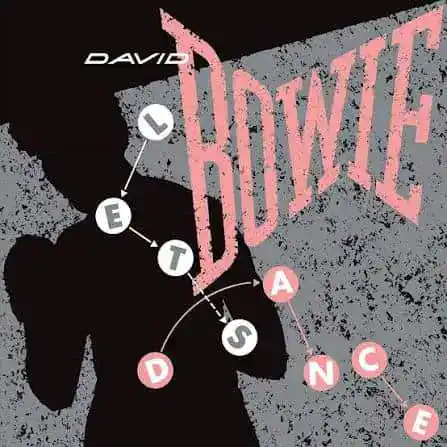
The official account of the surviving demo places the preparatory sessions at Mountain Studios in Montreux on 19 and 20 December 1982. David Richards engineered the recordings. With assistance from Montreux Jazz Festival organiser Claude Nobs, musicians were brought together to try the material.
Erdal Kızılçay played bass on the released Let’s Dance demo. Its additional guitarist and drummer were unidentified in the official 2018 announcement. This preparatory group was distinct from the musicians who subsequently made the finished album in New York.
The surviving demo captures the arrangement being played by a band, with its rhythmic identity already established. It therefore belongs to a later stage than the acoustic performance Rodgers recalled hearing at Bowie’s home. The official release preserves an intermediate step between that first presentation and the finished single.
The Power Station: building the album in New York

The main album was recorded at The Power Station in New York, with Bob Clearmountain engineering. Bowie and Rodgers share the production credit. Rodgers brought a clear approach to arrangements and personnel, while Bowie supplied the artistic brief, songs, vocal performances and his own judgement about the developing record.
In his contemporary interview with Nelson George, published in Musician in May 1983, Rodgers described an exceptionally concentrated process. Preparation reduced the need to discover every arrangement from the beginning once the main sessions started. Musicians could work with direction while retaining the responsiveness that makes a performance feel alive.
Rodgers on the musical understanding
“We heard the music the same way”
— Nile Rodgers, interviewed by Nelson George, Musician, May 1983; archived transcription.
Rodgers has often recalled completing the album in seventeen days. His contemporary account describes roughly three weeks of recording and mixing at the Power Station. The preparation in Switzerland preceded that concentrated studio period: speed came from having a working musical plan, rather than from dispensing with arrangements.
Musicians who made the arrangements work
Carmine Rojas and Omar Hakim were central to the album’s rhythmic character. Other contributors included keyboard player Robert Sabino, percussionist Sammy Figueroa and backing singers Frank Simms and George Simms. The horn players included Mac Gollehon, Robert Aaron, Stan Harrison and Steve Elson. Chic colleagues Bernard Edwards and Tony Thompson also contributed.
This was an ensemble assembled for the recording, rather than Bowie’s usual band reproducing its established sound. Different professional backgrounds allowed the music to combine rhythmic discipline with flexibility. A part could be direct enough to communicate immediately while still depending on subtle decisions about accents, tone and interaction.
Rojas later described playing his bass parts with a pick, despite a sound that listeners might not automatically associate with that technique. His recollection adds a practical detail to the history of these familiar recordings. The rhythmic foundation resulted from the players’ choices as well as the written arrangements.
Stevie Ray Vaughan: blues guitar inside a dance production
Nile Rodgers discusses his career at the Red Bull Music Academy, Madrid, 2011. During the audience questions, he recalls working with Stevie Ray Vaughan on David Bowie’s Let’s Dance.
Stevie Ray Vaughan supplied another essential element. Bowie had encountered the Texan guitarist at the 1982 Montreux Jazz Festival and wanted his playing on the album. Vaughan’s involvement brought a strongly individual blues vocabulary into music being organised around a different kind of rhythmic framework.
Rodgers and Vaughan performed different functions. Rodgers’ concise rhythm work helped establish the movement and harmonic shape of the tracks. Vaughan’s lead playing introduced sustained notes, bends, forceful attacks and phrases that could pull against that controlled setting. Their contrast is particularly apparent when the title track opens out into its instrumental passages.
Rodgers’ production allowed the blues guitar to remain recognisably Vaughan’s while still belonging to the song. For Bowie, the meeting offered an immediately accessible sound with a character distinct from either Chic or a conventional blues-rock band. The tension between rhythmic control and expressive lead playing became one of the record’s most distinctive features.
Let’s Dance: a song designed on two scales
The title track works both as a concise pop single and as an extended album performance. Its opening vocal ascent announces a record concerned with drama as well as movement. Guitar, bass, drums and horns then establish a tightly controlled rhythmic environment around Bowie’s lead voice.
The album version gives that environment time to develop. Instrumental exchanges and Vaughan’s guitar make the track feel larger than its central refrain. The shorter single concentrates its most immediately recognisable features, allowing the same recording to communicate in a different setting without requiring a different composition.
As a listening interpretation, the song’s power comes partly from the distance between its invitation to dance and the unease in Bowie’s performance. His vocal can sound commanding, intimate and vulnerable within the same arrangement. Rodgers’ rhythmic clarity does not remove that ambiguity. Instead, it gives it a setting with enough stability for changes in Bowie’s delivery to register clearly.
This balance is a substantial production achievement. A large sound can become crowded; an efficient pop arrangement can become emotionally flat. Here, repeated figures create continuity while the voices and lead instruments introduce change. The record offers immediate impact, but the longer version also gives listeners room to hear the ensemble rather than treating every musician as background to a hook.
China Girl: revisiting Bowie and Iggy Pop‘s song

China Girl had first appeared on Iggy Pop‘s The Idiot in 1977. Bowie and Pop share its writing credit. The 1983 recording therefore involved reconsidering an existing song, with a previous recorded identity, rather than producing an entirely new composition for its first release.
Rodgers has described being uncertain how Bowie would respond to his proposed opening guitar figure. Bowie’s acceptance allowed the arrangement to proceed. The anecdote is useful because it shows a producer making a specific suggestion and an artist recognising its potential. Creative authority did not need to be settled through confrontation.
Compared with Pop’s recording, Bowie’s version places the song in a more polished and immediately inviting musical frame. That change does not erase its disturbing imagery or the narrator’s instability. The contrast between the attractive surface and the darker content is part of the listening experience, rather than proof that the lyrics have become harmless romance.
The single became one of the album’s major successes, reaching number two in the United Kingdom. Its familiarity should not hide the scale of the reinterpretation. Rodgers helped a composition from Bowie’s earlier collaboration with Pop acquire a new recorded life, while its history continued to connect the 1983 album to the more unsettled world of the 1970s.
Modern Love: momentum, voices and uncertainty
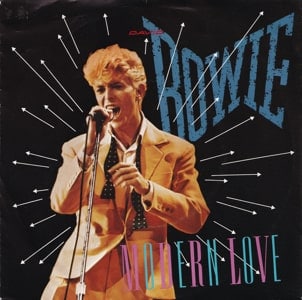
Opening the album, Modern Love establishes a different kind of energy. Its brisk movement, piano, horns and answering voices create the impression of a performance already in full motion. Bowie can enter that activity without needing a lengthy introduction to establish the record’s intentions.
The exuberant arrangement sits beside religious language and uncertainty about belief. Its momentum can be heard as an attempt to move through doubt, with the answering voices increasing the sense of urgency. That reading gives the performance an emotional dimension beyond its bright surface.
The backing vocals are particularly important to the sense of exchange. In a contemporary Rip It Up interview, the Simms brothers described considerable freedom in developing their contributions during the album sessions. Their recollections demonstrate that vocal arrangements could emerge through the musicians’ ideas as well as through instructions from the producers.
Released as a single later in 1983, Modern Love also reached number two in the UK. Alongside China Girl and the title track, it established the album’s public identity. Yet its musical excitement does not depend on understanding the song as uncomplicated optimism. The tension between propulsion and uncertainty helps distinguish it from a straightforward celebration.
Beyond the singles: Without You, Ricochet and Criminal World
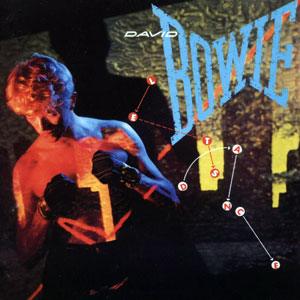
The album’s remaining tracks reveal differences within its apparently unified sound. Without You provides a more restrained setting, with the Chic connection particularly apparent through the presence of Edwards and Thompson. Its relative lightness offers a change of scale after the more imposing performances surrounding it.
Ricochet makes repetition feel less reassuring. Spoken material, answering voices and insistent rhythmic figures produce a more angular listening experience. It is an important counterweight to the idea that Bowie and Rodgers removed every awkward or unusual element in pursuit of commercial success. The album contains places where the groove carries unease rather than relaxation.
Criminal World, originally recorded by Metro, introduces another act of reinterpretation. The official track listing credits Peter Godwin, Duncan Browne and Sean Lyons as its writers. Its inclusion widens the record beyond Bowie’s newly written material and his own earlier collaborations.
Placed together, these songs vary the album’s pace. Their contrasting moods are held within a consistent instrumental sound, giving the record continuity without requiring every track to repeat the scale or structure of its major singles.
Cat People and Shake It: closing the album
Cat People (Putting Out Fire) had already been released in a recording made with Giorgio Moroder for the 1982 film Cat People. The version on Let’s Dance is a new recording. Confusing the two would obscure both the chronology and the different production choices involved.
The album interpretation places greater emphasis on the band and the force of the guitar. Comparing the recordings demonstrates how production can change a song’s dramatic behaviour without changing its authorship. Moroder’s version and the Bowie–Rodgers version offer different approaches to atmosphere, pacing and the relationship between the voice and accompaniment.
Shake It closes the album with a more direct return to dance-oriented movement. After the tension of Cat People, its comparatively open character changes the final impression. Whether a listener prefers that release of pressure or wants a less straightforward ending is a matter of judgement. Historically, both songs belong to the original eight-track sequence through which Bowie and Rodgers presented the finished record.
1983: a crossover success on an exceptional scale
The Let’s Dance single appeared in March 1983, followed by the album in April. The title song reached number one in the United Kingdom and topped the US Billboard Hot 100 on 21 May 1983. It became Bowie’s second American number-one single, after Fame in 1975.
The album also reached number one in the UK. Its success, followed by the major singles China Girl and Modern Love, made the collaboration a defining event in Bowie’s commercial history. Exact worldwide sales estimates vary between publications, so a single unqualified total is less useful than the firmly established conclusion: this became his best-selling studio album.
For many listeners, the record was their first sustained encounter with Bowie. A successful new release could also draw attention towards earlier albums with very different sounds. Rodgers’ work consequently belongs to the history of how Bowie’s audience expanded, as well as to the making of one successful album. Its reach helped make an extensive existing catalogue newly visible.
The films: Bowie’s visual ideas alongside Rodgers’ music
David Bowie – Let’s Dance (1983). Official music video directed by David Mallet and filmed in Australia.
The videos for Let’s Dance and China Girl, made with director David Mallet, extended the recordings into another creative medium. While Rodgers shaped the music, Bowie and Mallet developed the visual presentation through which many viewers first encountered these songs.
The Australian setting of Let’s Dance placed the song beside images concerned with inequality and the experiences of Indigenous people. Mallet later described Bowie’s interest in racism and social division there. The film complicates a purely celebratory reading of the music by directing attention towards power, aspiration and exclusion.
Together, sound and image gave the new Bowie a broad public presence without reducing every element to glamour. A rhythmically inviting record could carry a politically charged film. That relationship is important to understanding the period: commercial accessibility did not require every visual or lyrical choice to be comfortable. Bowie continued to use popular formats as places where a larger audience might encounter unsettling questions.
Serious Moonlight: the record moves onto the stage

The Serious Moonlight Tour opened in May 1983 and ended in Hong Kong on 8 December 1983. It brought the new songs into a programme that also drew on Bowie’s earlier career. The scale of the tour demonstrated how dramatically the audience for his music had expanded.
Rodgers was not a member of the regular touring band. The stage ensemble included musicians from the album sessions, among them Rojas and the Simms brothers, alongside established Bowie collaborators such as Carlos Alomar. Earl Slick handled lead guitar after Vaughan did not join the tour.
This distinction allows the different contributions to be credited properly. Rodgers helped create the studio arrangements and recorded sound that the live musicians then interpreted. The touring players had to make those songs work in changing venues, alongside older repertoire and within the demands of a complete concert. The album and tour were connected achievements, but they were not the work of an identical ensemble.
After Let’s Dance: success creates new expectations
The scale of the 1983 breakthrough became a reference point for Bowie’s subsequent work. Later reflections reveal his complicated relationship with that success and with the audience it brought. Such comments should not be projected backwards into an invented account of unhappy album sessions.
Rodgers’ contemporary description emphasised musical agreement. Bowie’s later dissatisfaction concerned broader questions about artistic direction and the expectations surrounding his career. Those are related subjects, but they are not interchangeable. A productive collaboration can produce consequences that an artist finds difficult to navigate afterwards.
Rodgers did not produce Tonight (1984) or Never Let Me Down (1987). Their reception therefore cannot fairly be treated as a continuation of his production work. His influence on the sound of Bowie’s commercial breakthrough was substantial; responsibility for every subsequent creative decision belongs to a different history.
For Rodgers, the period formed part of a wider expansion as a producer. His later work with Madonna and Duran Duran reinforced the breadth of that career. He continued developing projects with other artists rather than becoming a permanent member of Bowie’s organisation, leaving their partnership available to be renewed under different circumstances.
1992: Real Cool World reopens the collaboration

Real Cool World, released for the soundtrack of Ralph Bakshi’s Cool World in 1992, brought Bowie and Rodgers together again on a new recording. Coming after the Tin Machine period, it occupies an important position between Bowie’s band work and his renewed solo activity.
Rodgers produced the track, which used a contemporary electronic and dance-oriented setting. Its importance is not that it reproduced the exact sound of 1983. Instead, it established a new recorded point of contact between two musicians whose careers and immediate priorities had changed during the intervening years.
The song should also be kept separate from the original running order of Black Tie White Noise. It belongs to the soundtrack project, although subsequent editions and compilations have connected it with the surrounding period. Its later inclusion on Re:Call 5 in Brilliant Adventure (1992–2001) helps place it within the documented sequence of Bowie’s return to solo releases.
Black Tie White Noise: returning without repeating 1983
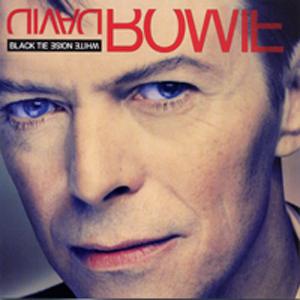
Released in the UK on 5 April 1993, Black Tie White Noise reunited Bowie and Rodgers as co-producers. Their names naturally raised expectations of another Let’s Dance, but the album’s musical priorities were different. Bowie was bringing personal material, an interest in contemporary dance production and a renewed emphasis on his own instrumental presence into the project.
Rodgers later explained that he had initially imagined competing with their previous success. Bowie did not want that kind of contest with his own past. The producer’s task therefore involved adjusting his expectations and helping realise the record Bowie intended to make.
Rodgers on the second album
“Black Tie White Noise was under totally different circumstances.”
Their reunion should consequently be assessed on its own terms. The record mixes instrumental passages, reinterpretations of other writers’ songs and new Bowie compositions. Rodgers remained an important collaborator, but the project demonstrates the limits of assuming that hiring the same producer must recreate the same album. A production credit identifies a working relationship, not a guarantee of identical intentions.
Iman and the music surrounding The Wedding
Bowie’s marriage to Iman in 1992 provided a personal centre for the album. He wrote The Wedding for their wedding ceremony and later added words to create The Wedding Song. The two pieces frame the album’s main sequence, connecting its beginning and ending.
That structure distinguishes Black Tie White Noise from a collection designed solely around potential singles. Instrumental music has a place in the album’s identity, and the closing vocal piece returns to an emotional subject introduced before the first conventional song. The listener encounters a personal frame around the intervening changes of mood.
Rodgers’ involvement placed him within a project shaped partly by Bowie’s private happiness. This does not mean that every musical decision can be explained through the marriage, or that every track is autobiographical. It means that the album’s own documented origins include material written for a significant personal occasion. That context belongs beside the political concerns and jazz interests heard elsewhere on the record.
The title track: a duet with Al B. Sure!
David Bowie featuring Al B. Sure! – Black Tie White Noise (1993). Official music video directed by Mark Romanek.
Black Tie White Noise features guest vocals from Al B. Sure!. The choice brought another musical identity into the record, linking Bowie’s singing to a performer associated with contemporary American R&B. The duet differs from the use of an anonymous backing ensemble: two identifiable voices share the song’s foreground.
The album’s official retrospective connects its creation with the 1992 Los Angeles unrest and the racial tensions surrounding it. The title track therefore belongs within a record concerned with relations between communities as well as the circumstances of Bowie’s own life. Its polished surface should not be treated as evidence that its subject is merely decorative.
The contrast between the singers gives the recording a conversational quality. Their different timbres remain audible within a shared rhythmic setting, allowing each voice to retain an individual presence. The duet becomes part of the song’s musical discussion of difference and connection.
Jump They Say: funk, grief and disorientation

Jump They Say introduced the album to the public and became a UK Top Ten single. Bowie’s official account connects it with his feelings about his half-brother Terry, who died in 1985, as well as a broader idea of stepping into the unknown.
The song’s rhythmic strength coexists with a sense of pressure and instability. Lester Bowie’s trumpet adds a voice that does not simply smooth out the arrangement. Its presence helps make the recording more unsettled, showing how a funk-based production can carry difficult material without turning it into an uncomplicated dance song.
Mark Romanek’s video developed that discomfort through a corporate setting and images of surveillance and coercion. As with the 1983 films, the visual authorship should be credited separately from Rodgers’ production. The recording and film nevertheless reinforce one another in presenting an artist who was using accessible formats to explore experiences far removed from ordinary pop reassurance.
Lester Bowie and the shared composition Looking for Lester
David Bowie – Looking for Lester (1993). Written by David Bowie and Nile Rodgers, featuring Lester Bowie on trumpet and Mike Garson on piano.
The presence of trumpeter Lester Bowie, known for his work with the Art Ensemble of Chicago, is central to the album’s jazz dimension. He and David Bowie were not related. Their meeting on record brought an independent musical personality into a project already balancing different kinds of performance.
Looking for Lester is particularly important to Rodgers’ place in this history. Bowie’s official album credits list it as a Bowie–Rodgers composition. The shared writing credit distinguishes it from the major 1983 singles, on which Rodgers’ contributions were as producer, arranger and guitarist. Mike Garson‘s piano adds another important voice to the instrumental.
With David Bowie’s saxophone and Lester Bowie’s trumpet, the track foregrounds instrumental exchange. It makes the album’s jazz interests particularly audible and places Rodgers within a composition whose purpose reaches beyond the conventional pop single. The players have room to shape individual phrases within the rhythmic structure.
Mick Ronson, Scott Walker and music carried forward
The album also includes Mick Ronson on Bowie’s version of Cream’s I Feel Free. The reunion linked the new project with an earlier, especially significant collaboration in Bowie’s career. Ronson died shortly after the album appeared, giving this late studio contribution particular historical weight.
Nite Flights, written by Scott Walker, introduced another established musical reference. Bowie’s choice of that song placed a distinctive outside composition among his new material. Alongside the new productions, the record therefore contains acts of return, recognition and reinterpretation.
The cover of I Know It’s Gonna Happen Someday, written by Morrissey and Mark E. Nevin, adds a further connection: Morrissey‘s original had appeared on Your Arsenal, produced by Ronson. These overlapping relationships give the album a richer historical setting than the simple idea of Bowie recalling a successful producer. Rodgers helped organise a record in which musicians and songs from different parts of Bowie’s listening history could coexist.
Pallas Athena and Miracle Goodnight: different uses of rhythm
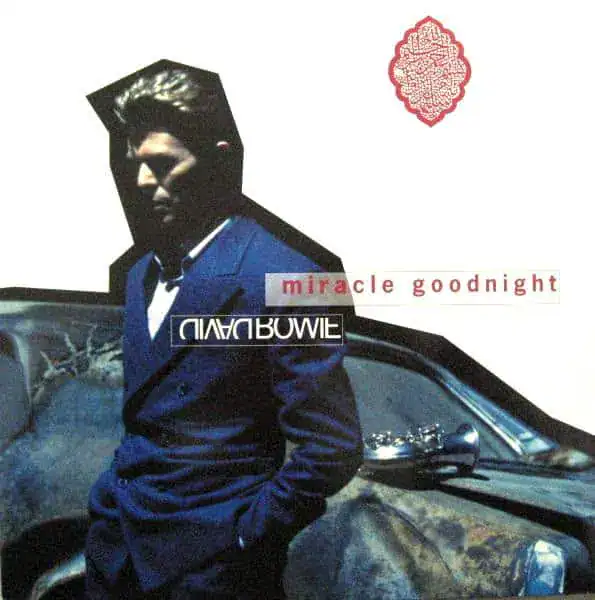
Two further tracks show the range within the 1993 project. Pallas Athena moves towards an electronic, club-oriented form, making repeated vocal material part of the texture rather than developing a conventional narrative song. Its place in the album broadens the meaning of dance music beyond the immediately recognisable pop structures of 1983.
Miracle Goodnight, also released as a single, offers a lighter and more compact experience. The contrast is useful: one track emphasises the possibilities of a repeated sonic environment, while the other brings the voice and song more directly to the foreground. Neither requires the album to abandon its interest in rhythm.
The original CD also included an alternate mix of Jump They Say and the additional song Lucy Can’t Dance after the main twelve-track sequence. The original vinyl edition, meanwhile, omitted The Wedding and Looking for Lester. These differences affect how listeners encounter the album’s instrumental and vocal balance.
Reception and the place of the 1993 album
Black Tie White Noise entered the UK album chart at number one. The result confirms that the reunion was not commercially invisible, even though it did not generate the worldwide impact of Let’s Dance. Its American release had a different distribution history through Savage Records.
Comparing the albums only by sales would miss the different work they were designed to do. In 1983 the brief centred on a sequence of hits. A decade later the record moved between personal celebration, social unease, instrumental exploration and covers. Its changes of direction are part of its character, whether a listener finds that variety compelling or uneven.
For Bowie’s wider career, it marked a return to releasing a new solo studio album after Tin Machine. Rodgers’ role belongs to that transition. He was present when Bowie reconsidered how his voice, instrumental interests and existing musical relationships could operate within contemporary production, before subsequent projects carried those questions into other collaborations.
Rodgers beyond Bowie: a career that kept expanding

Rodgers’ career continued well beyond these two Bowie albums. His work with Madonna, Duran Duran and later Daft Punk demonstrates the breadth of his collaborations across generations. These projects did not all use an identical production formula, even when his guitar remained immediately recognisable.
His association with the We Are Family Foundation, developed in the wake of the September 2001 attacks, also extended his work beyond recording and touring. The organisation describes a mission centred on cultural diversity and supporting young people working towards positive change. It is an important part of his public activity without needing to be presented as a Bowie project.
Institutional recognition followed his long-established influence. Rodgers and Edwards entered the Songwriters Hall of Fame in 2016; Rodgers received the Rock & Roll Hall of Fame’s Musical Excellence honour in 2017. These distinctions place his Bowie recordings within a much wider body of work. They acknowledge a musician whose impact includes songwriting and performance as well as the production credits that made him familiar to many Bowie listeners.
After Bowie’s death: remembering a creative partner
Following Bowie’s death in January 2016, Rodgers spoke publicly about their work and the importance of their relationship. His recollections are valuable because they address practical musical decisions as well as personal admiration. They help explain how a song changed between an initial performance, an arrangement and a finished recording.
Bowie’s own appreciation of Rodgers also survives. The V&A reproduced a statement praising his energy and his confidence in the title song’s potential. It offers a useful counterpart to the familiar stories about Bowie’s later uncertainty over commercial success.
David Bowie on Nile Rodgers
“His unbridled enthusiasm for a project was contagious, to say the least.”
— David Bowie, statement reproduced by the Victoria and Albert Museum, 9 September 2025.
Remembering their partnership requires both perspectives. Rodgers’ enthusiasm and Bowie’s ambitions were compatible forces in the making of the record. Later reassessments do not erase the original achievement, just as affection does not require every subsequent album to be described as an unqualified masterpiece.
2018: the demo becomes part of the official archive
On 8 January 2018, the surviving Let’s Dance demo received an official digital release. Rodgers and Russell Graham had mixed it at Le Crib Studios in Connecticut. The release gave listeners access to a stage of the collaboration that had previously been described mainly through interviews.
Its value lies partly in what it allows listeners to compare. The core rhythmic idea is already present, while the sound and scale differ from the finished album. It therefore supplies audible evidence of development, rather than leaving the entire transformation dependent on a colourful recollection about an acoustic guitar.
The same year, Loving the Alien (1983–1988) returned Let’s Dance to its chronological setting alongside live recordings, remixes and later albums. Rodgers contributed to the set’s accompanying historical material. The producer was consequently involved not only in making the music but also in helping later audiences understand the circumstances of its creation.
Orchestration, reissues and preserving the collaboration

Later in 2018, Rodgers produced an orchestral interpretation of Let’s Dance for 80s Symphonic. This was a new presentation of the existing recording, not a newly discovered Bowie vocal session. The distinction matters whenever later production work is placed beside original material.
Rodgers on revisiting Let’s Dance
“my only concern was to protect David’s artistic vision and integrity.”
— Nile Rodgers, official release announcement, 15 November 2018.
The history of Black Tie White Noise has also remained available through reissues. Its 2003 special edition combined the album with additional recordings and the contemporary film on DVD. Inclusion in Brilliant Adventure (1992–2001) in 2021 placed it at the beginning of a broader survey of Bowie’s 1990s and early 2000s work.
The surviving demo, the later orchestration and the chronological collections allow listeners to approach the partnership from different directions. Together they preserve both the original performances and evidence of how the music developed, while distinguishing work completed with Bowie from later reinterpretations of his recordings.
Legacy: what Nile Rodgers changed in Bowie’s music
Nile Rodgers occupies an exceptional place among Bowie’s collaborators because his work helped alter both the sound of a major album and the scale of its audience. Let’s Dance made Bowie’s songwriting communicate through a combination of disciplined rhythm, strong arrangements, vivid singing and sharply contrasting instrumental personalities. The record’s accessibility was constructed through musical choices, not through the disappearance of craft.
His importance also extends beyond the success of the title song. China Girl demonstrates how production can give an existing composition a different public life. Modern Love combines immediate excitement with a less settled emotional content. The less famous album tracks show how the same production environment could accommodate changes of mood, outside material and more angular writing.
The second album adds necessary depth to that assessment. On Black Tie White Noise, Rodgers worked within different expectations, helping Bowie combine personal material, contemporary rhythms and jazz. Their shared writing credit on Looking for Lester and the presence of Lester Bowie are reminders that this partnership was broader than the commercial image attached to 1983.
Neither man needs to be diminished for the other to receive proper recognition. Bowie chose the direction and remained the central singer and artist; Rodgers contributed the musical judgement, arrangements, playing and production that helped make that direction convincing. Their collaborators supplied performances that no production concept could replace. The lasting achievement belongs to that interaction, with Rodgers among its decisive creative forces.
Official Website & Further Information
Nile Rodgers‘ official website provides information about his career, recordings and work with Nile Rodgers & Chic. It is the appropriate starting point for current announcements and official activity, which can change after a historical article is published.
Official website:
nilerodgers.com
For his charitable work, the We Are Family Foundation maintains its own account of the organisation’s aims and programmes:
wearefamilyfoundation.org
Further background can be found in Rodgers’ autobiography, Le Freak: An Upside Down Story of Family, Disco, and Destiny (2011). For the Bowie collaboration specifically, the official Bowie release announcements, the contemporary Nelson George interview and Rodgers’ V&A interview offer complementary perspectives. The original albums remain essential listening alongside those accounts: they preserve the performances that interviews can describe but cannot reproduce.
Article Origin
This article was researched and written for DavidBowieWorld.com as part of its archive of David Bowie’s collaborators and creative relationships. It draws on publicly available interviews, contemporary reporting, official album information and documented release announcements. The quotations are taken from the named published sources; they are not presented as statements given directly to this website.
Where Rodgers recalls words spoken by Bowie, the attribution identifies him as the person recounting the conversation. Discussion of musical mood, structure and instrumental interaction represents critical interpretation alongside the documented history. Published first-hand testimony provides the foundation for accounts of the working relationship.
The research includes official album and release information from DavidBowie.com, historical material from the Victoria and Albert Museum, chart records and published interviews with Rodgers and participating musicians. Biographical details were checked against institutional accounts of his career. The page forms part of an ongoing effort to document the people whose individual contributions helped shape Bowie’s recorded music.
© DavidBowieWorld.com — David Bowie Collaborations & Creative Circle Archive.
