
Morrissey – Live Duet “Cosmic Dancer” (Inglewood, 1991)

On 2 June 1991, David Bowie joined Morrissey at the Great Western Forum in Inglewood, California, for a duet of “Cosmic Dancer”. Written by Marc Bolan and first released by T. Rex on Electric Warrior in 1971, the song brought two distinctive singers together around another artist’s composition.
The performance took place during Morrissey‘s Kill Uncle touring period. Its later history stretches across several decades: a filmed concert appearance, Morrissey‘s recollections, and an official audio release in 2020 followed by a vinyl single in 2021. Their wider musical connection also includes Bowie’s interpretation of a Morrissey song and their shared touring programme in 1995.
- Artists: Morrissey and David Bowie
- Date: 2 June 1991
- Venue: Great Western Forum, Inglewood, California, USA
- Context: Morrissey‘s Kill Uncle tour; Bowie appeared as a guest
- Songwriter: Marc Bolan
- Original recording: T. Rex, Electric Warrior (1971)
- Contribution: Bowie shared lead vocals with Morrissey
- Official digital release: 13 November 2020
- 7-inch release: 19 February 2021, paired with Morrissey‘s “That’s Entertainment”
A young admirer and the impact of Bowie
Morrissey‘s interest in Bowie began well before his own recording career. In Autobiography, published in 2013, he recalled approaching Bowie as a schoolboy outside the Hardrock Concert Theatre in Stretford in 1972. His account describes handing Bowie a note and briefly touching his hand. The recollection places a personal encounter alongside the influence of records and public performances.
His recollections of the early encounter and the later duet trace a striking change in circumstances: the young listener waiting outside a venue had become the artist whose audience would watch Bowie walk onto his stage. The distance between those experiences helps explain the emotional importance Morrissey later attached to the Forum performance.
From the Smiths to a separate musical identity
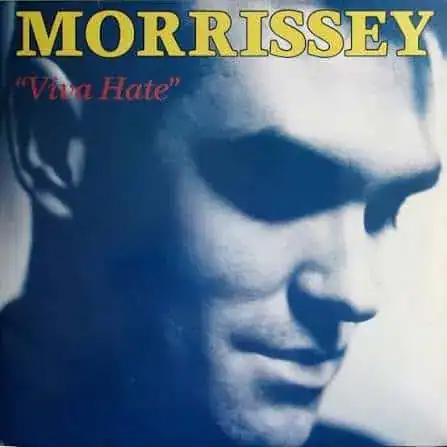
Morrissey‘s public identity had developed through the Smiths, where his words and singing worked in close relationship with Johnny Marr’s compositions and guitar playing. The group’s recordings gave him an audience of his own, but a solo career required new musical partnerships. Bowie could be an admired predecessor without becoming the template for everything Morrissey subsequently made.
Viva Hate, released in 1988, established the beginning of that solo album history. Morrissey worked with Stephen Street, who had produced the Smiths, while Vini Reilly of the Durutti Column supplied a different guitar presence. These partnerships helped give Morrissey‘s first solo album an instrumental character separate from his former band.
By the time Bowie appeared in Inglewood, Morrissey was several years into a recording career under his own name. The guest appearance reached an audience already invested in his voice, songs and stage presence. The younger admirer had become a successful performer with an independent musical world, making the encounter a meeting between established careers.
Morrissey‘s solo stage in 1991
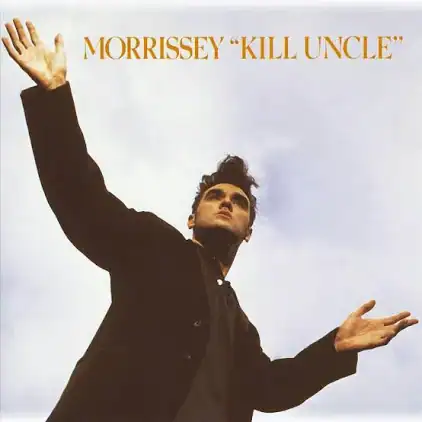
Morrissey‘s Kill Uncle was his current album in 1991. The tour placed his solo repertoire before a large American audience, and the Forum concert provided the setting for Bowie’s guest appearance. The live recording credits the singers together on “Cosmic Dancer”, with Marc Bolan retaining the songwriting credit.
A cover already associated with Morrissey‘s concerts gave the guest appearance a place within his own programme. Bowie entered a show built around another singer’s repertoire and musicians. The resulting performance therefore belongs both to Morrissey’s touring history and to the record of Bowie’s appearances alongside other artists.
The musicians around Morrissey
Morrissey‘s early-1990s touring band brought together Boz Boorer and Alain Whyte on guitars, Gary Day on bass and Spencer Cobrin on drums. Boorer and Whyte joined his band in 1991, becoming important contributors to the instrumental identity of his subsequent work.
Boorer has discussed the influence of rockabilly, punk and Marc Bolan on his guitar playing. Those interests help place the group’s musical vocabulary within a broader history of guitar music. They also make a T. Rex song a meaningful part of the surrounding repertoire, although they do not establish who suggested “Cosmic Dancer” for this particular duet.
“Cosmic Dancer”: Marc Bolan‘s song
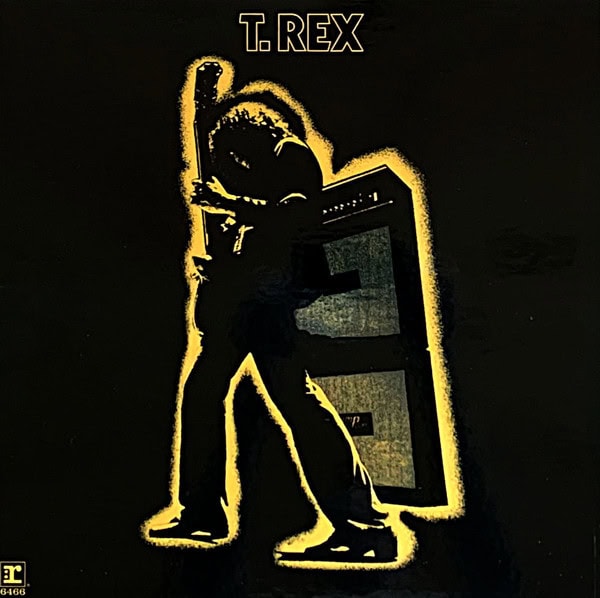
“Cosmic Dancer” appears on T. Rex’s Electric Warrior, released in 1971. Its authorship belongs to Marc Bolan. The original recording gives the song a gentler, more reflective character than the album’s most forceful rock tracks, with acoustic guitar and strings surrounding Bolan’s voice. Its measured movement leaves room for the singer’s phrasing to carry much of the expression.
The song had already entered Morrissey‘s live repertoire. A separate performance recorded in Utrecht on 1 May 1991 appeared on the 12-inch and CD editions of “Pregnant for the Last Time”. That recording preserves Morrissey‘s interpretation before the Forum appearance. The Utrecht version is a Morrissey performance and should be distinguished from the later Inglewood duet with Bowie.
Bowie and Bolan: an existing personal connection
David Bowie and Marc Bolan – closing jam on the television programme Marc (1977).
For Bowie, Marc Bolan was part of his own musical history. Their association is documented in photographs, recordings and television appearances. A particularly visible later meeting came through Marc, Bolan’s television programme in 1977. Their connection predates Morrissey‘s solo career, giving the choice of a Bolan composition another dimension within Bowie’s history.
Bowie performed “Heroes” for the programme and joined Bolan for a short closing jam. The accompanying video shows that shared performance, bringing their personal association into view through the practical act of playing music together.
Years later, “Cosmic Dancer” connected Morrissey‘s live repertoire with this earlier part of Bowie’s life. At the Forum, Bowie was singing a composition by someone he had known and performed with. That history adds context to the duet, without establishing that either singer chose the song specifically as a tribute to Bolan.
A moment of disbelief
In his autobiography, Morrissey described the duet through the perspective of the younger Bowie admirer still present within him. His recollection emphasises the emotional distance between listening to “Starman” before school and singing alongside its performer in front of an audience. He also contrasted Bowie’s composure with his own exhaustion.
“He is stately against my last-gasp exhaustion.”
Morrissey, Autobiography (2013), excerpt reproduced by Steve Pafford.
A telephone conversation before the concert
In a statement dated 30 June 2020, Morrissey recalled Bowie calling his hotel and attempting the duet with him by telephone. He also humorously recalled their difficulty remembering the words. The account adds a practical detail to an appearance usually remembered for its surprise and emotional impact.
“We hadn’t rehearsed the song.”
Morrissey, 30 June 2020, statement reproduced in Bowie Wonderworld’s July 2020 news archive.
His recollection distinguishes an informal attempt to prepare from a conventional joint rehearsal. It also qualifies the description of Bowie’s appearance as unexpected: the audience could experience a surprise while the singers had already discussed performing together. Morrissey‘s statement does not specify every backstage arrangement, the band’s preparation or exactly when the invitation was made.
The surviving concert performance
David Bowie and Morrissey – “Cosmic Dancer”, Great Western Forum, Inglewood, 2 June 1991.
The film allows the duet to be considered as a performance rather than only as an anecdote. Two recognisable voices work within the same live arrangement, sharing Bolan’s melody and the practical business of finding their place in the song. Their phrasing and vocal registers give the encounter its particular character.
Tim Broad received the credit for the Los Angeles video. The presentation accompanying the 2020 release was described as upgraded and edited. The film preserves the shared stage as well as the song, allowing viewers to see the singers’ interaction alongside the musical evidence of the released audio.
Two voices within one song
As a listening comparison, the duet is interesting because the singers do not have identical ways of shaping a melody. Bowie can give a phrase weight through the lower register of his voice; Morrissey‘s singing often emphasises an elastic movement through the line. Hearing them together makes the melodic outline familiar while bringing attention to the difference between their deliveries.
The performance also invites attention to timing. In a studio, separate takes can be selected, edited or combined. Onstage, the singers move through the same passage as it happens. An overlapping entry or a difference in the length of a note becomes part of the encounter. These are musical features a listener can assess without treating them as evidence of tension between the performers.
Bolan’s original remains a useful reference. Its measured pace and recurring phrases allow different singers to inhabit the melody without changing the identity of the song. The live version can be heard for its balance between individual phrasing and a shared direction, supported throughout by the ensemble. This comparison describes the listening experience; it does not claim to reproduce the singers’ explanation of their arrangement.
Bowie’s own musical position in 1991
The year of the duet also belonged to Bowie’s Tin Machine period. The group consisted of Bowie, guitarist Reeves Gabrels, bassist Tony Sales and drummer Hunt Sales. Their second studio album, Tin Machine II, followed in September 1991.
The Forum appearance therefore occurred during an active band phase in Bowie’s career. His guest role with Morrissey was a brief encounter within a different ensemble, rather than the launch of a new joint project. It sits alongside his current work with Tin Machine while drawing on a song from an earlier musical era.
Clarifying the date
2 June 1991 is the date identified on the official release. The location is the Inglewood Forum, commonly associated with Los Angeles. The use of “Los Angeles” in a release description refers to the wider area; the venue itself was in Inglewood.
Some circulating copies have been labelled 6 February 1991. The official identification specifies 2 June. This distinction matters because a date copied from an unofficial recording can acquire authority through repetition. A conflicting label alone does not establish a separate February performance.
The film returns to public attention in 2020
In July 2020, the concert footage returned to public attention at Morrissey‘s request, including backstage material. This renewed presentation preceded the commercial single announcement later that year. Morrissey’s accompanying recollection showed that the appearance remained part of his personal memory of Bowie.
“This clip is my 4th favorite memory of David.”
Morrissey, 30 June 2020, as transcribed in Bowie Wonderworld’s July 2020 archive.
From circulating recording to official digital release
The duet was known to listeners before it received an official commercial release. Its availability through circulating recordings and video belongs to a different history from the label’s authorised issue. Unofficial copies had preserved the real event, but their accompanying information was not always reliable.
The official digital release arrived on 13 November 2020, through Parlophone with distribution through Warner. It gave the 1991 performance an authorised place in the artists’ discographies. The release date records when the duet became commercially available, almost three decades after it was performed.
“Morrissey’s duet with David Bowie is released on Friday 13th November.”
Morrissey Central, “New Release”, 31 October 2020.
The 2021 single and its second song
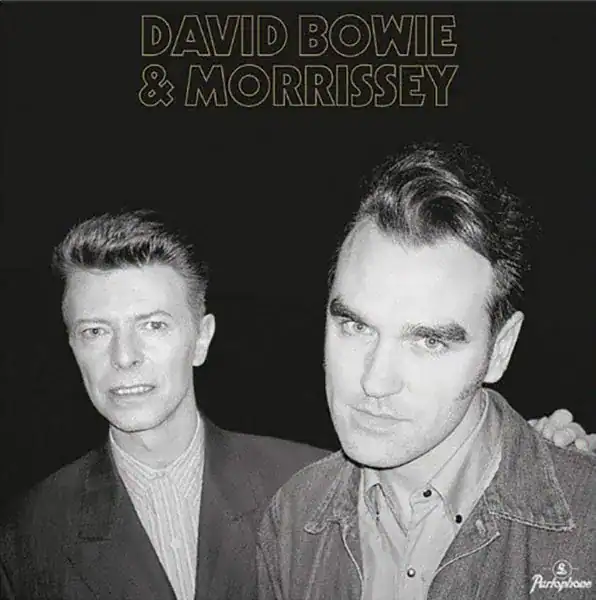
The physical release followed on 19 February 2021. The 7-inch double A-side paired the live duet with Morrissey‘s 2020 recording of “That’s Entertainment”, written by Paul Weller and originally recorded by the Jam. Bowie is credited on “Cosmic Dancer”; the second song is a Morrissey recording.
The two sides bring together different recording occasions. The year associated with Morrissey‘s cover does not date the Bowie duet. The 2020 “That’s Entertainment” was also identified as different from the version circulating from 1993. These details help distinguish the contents of the single from earlier recordings of the same songs.
Linder Sterling’s photographs and the sleeve
The single’s front and back photographs show Bowie with Morrissey and were taken in New York City by Linder Sterling. Darren Evans received the credit for preparing the artwork. Photography supplied the images, while the artwork shaped their presentation as part of the release.
The sleeve photographs show the artists together in a setting separate from the Forum performance. Their location matters when choosing an image to illustrate the concert: a photograph used on a live single’s sleeve does not necessarily depict the event heard on the recording. Here, the images accompany a performance made elsewhere and many years earlier.
Mick Ronson and Your Arsenal
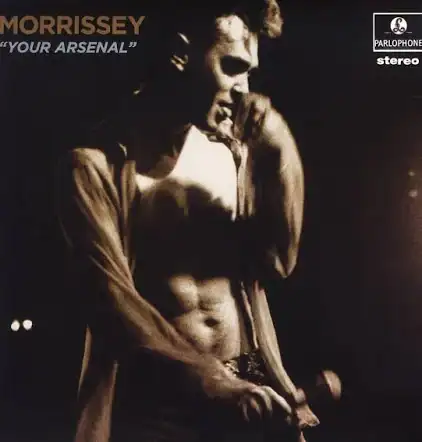
Your Arsenal, released in 1992, supplies another important connection between Morrissey and Bowie’s musical circle. Its producer was Mick Ronson, whose guitar, arrangements and musical partnership with Bowie had been central to the early-1970s recordings and tours. Morrissey‘s work with Ronson was a substantial collaboration in its own right.
Boz Boorer recalled Ronson’s practical approach to production. He described Ronson standing in front of Alain Whyte’s loud Marshall amplifier and adjusting its equalisation, shaping the sound directly in the room. The anecdote gives a concrete sense of a producer listening to musicians and altering what they hear as they play.
“It was a joy just to be around him.”
Boz Boorer, interviewed by David Von Bader, Premier Guitar, 30 March 2017.
The Ronson connection gives additional context to the later exchange around “I Know It’s Gonna Happen Someday”. A song on a Ronson-produced Morrissey album attracted Bowie, who heard something familiar in its musical character. The producer, composition and subsequent cover connect these careers through specific pieces of work.
Bowie records “I Know It’s Gonna Happen Someday”
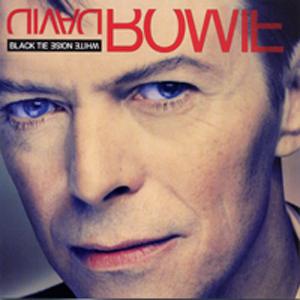
The musical connection continued after Inglewood. Bowie included “I Know It’s Gonna Happen Someday”, written by Morrissey and Mark Nevin, on Black Tie White Noise in 1993. Morrissey‘s recording had appeared on Your Arsenal the previous year. Bowie approached the song as an interpreter of another writing partnership’s composition.
Bowie discussed the choice in a 1993 interview. He heard an affectionate echo of his own earlier work in Morrissey‘s song and responded with his own treatment. His explanation gives direct evidence of musical interest beyond the earlier guest appearance, including an explicit appreciation of Morrissey’s writing.
“I do think he’s one of the best lyricists in England, and an excellent songwriter”
David Bowie, Record Collector, May 1993, reproduced in Bowie Wonderworld’s press archive. Excerpt from a longer answer.
Mark Nevin’s part in the songwriting connection
Mark Nevin’s contribution belongs to the composition Bowie interpreted, even though accounts centred on the singers can shorten the description to “a Morrissey song”. Retaining both writers’ names recognises the partnership behind the material. Bowie’s recording brought that composition into an album produced by Bowie and Nile Rodgers.
Nevin has discussed the song and Bowie’s cover in an interview. His involvement extends the story beyond a relationship between two vocalists: Morrissey‘s recording carried the work of a songwriting partnership, and Bowie subsequently gave that work another performance and production setting. Bolan’s authorship of the Forum song and the Morrissey–Nevin credit on the later cover belong to separate musical exchanges.
The sound of Bowie’s response
David Bowie – “I Know It’s Gonna Happen Someday”, from Black Tie White Noise (1993).
Bowie’s 1993 explanation described a deliberately expansive treatment of “I Know It’s Gonna Happen Someday”. He discussed a gospel-choir-and-horns approach, giving the song a scale different from a straightforward recreation of Morrissey‘s performance. The humour in his explanation sat alongside an explicitly affectionate response to the writing.
The result can be heard as a change of perspective. A singer takes words and melody already associated with another voice and gives them a new dramatic setting. For a listener comparing the recordings, the interest lies in the choices made around the same composition: how the vocal is framed, how the arrangement builds and how much grandeur the promise within the song can carry.
Morrissey was subsequently reported to have praised Bowie’s interpretation. That response adds another aspect to the exchange: the artist whose recording introduced the composition could hear it return through an influential predecessor’s voice. The cover remained part of Bowie’s album catalogue long after its original release.
A shared touring programme in 1995
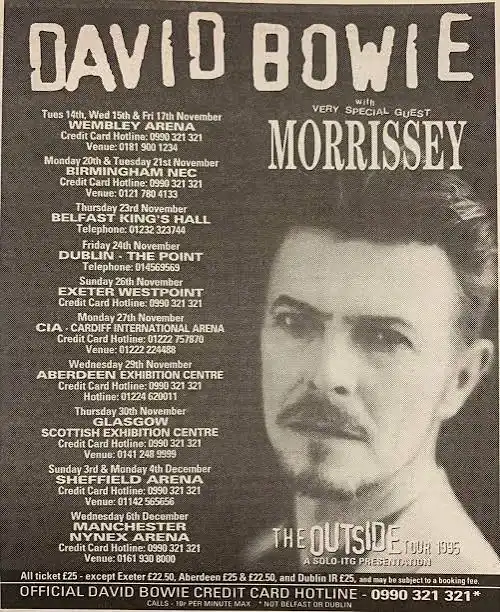
A British Bowie–Morrissey touring programme was announced in September 1995 under the heading “The Outsiders”. The pairing connected two artists presenting recent work: Morrissey‘s Southpaw Grammar and Bowie’s Outside. Their earlier duet and Bowie’s studio cover provided a musical history behind the shared bill.
Advance publicity left open whether the concerts would involve joint performances alongside separate sets. The announced pairing therefore created the possibility of further interaction without establishing that another duet would take place. Each artist brought a current repertoire and a separate performing ensemble.
Morrissey appeared on the tour before leaving early. This was another professional intersection, with a different outcome from the Forum appearance. The touring association belongs in the relationship’s history, but it should not be presented as a repeat performance of “Cosmic Dancer” or as a completed series of shared vocal performances.
Morrissey sings “Drive-In Saturday”
Morrissey – “Drive-In Saturday”, a cover of David Bowie’s song from Aladdin Sane (1973).
The exchange also moved in the opposite direction. In early 2000, Morrissey closed a concert at New York’s Beacon Theatre with “Drive-In Saturday”. His interpretation brought Bowie’s songwriting into a programme otherwise associated with Morrissey‘s own career.
The song comes from Aladdin Sane (1973), extending the musical references here beyond the frequently recalled “Starman”. Morrissey‘s choice shows an interest in a particular composition within Bowie’s catalogue. It was a Morrissey performance; Bowie is not documented as participating in that concert rendition.
In 2008, Morrissey also contributed to Uncut‘s survey of Bowie’s thirty greatest songs in connection with “Drive-In Saturday”. Alongside the live cover, this indicates an appreciation that continued to attach to individual songs, rather than existing only as a general memory of Bowie as a youthful influence.
A proposed second duet that did not become a release
In a January 2014 question-and-answer exchange, Morrissey recalled another proposed collaboration. He said that, during the making of Ringleader of the Tormentors, producer Tony Visconti had tried to bring him and Bowie together for “You’ve Lost That Lovin’ Feelin’”, associated with the Righteous Brothers.
Morrissey‘s account envisaged Bowie taking the lower Bill Medley role and Morrissey the higher Bobby Hatfield part. He said the proposal did not proceed because Bowie would not agree. This description records Morrissey‘s later account of the intended pairing.
The proposal adds a later chapter to Morrissey‘s recollection of their relationship. It also requires a clear distinction between an idea and a completed recording. The Inglewood duet survives as released music; the proposed Visconti project is not established here as an existing studio duet.
Reading the later relationship with care
Their later association has often been presented as a story of admiration turning into disagreement. The 1995 touring episode belongs in that history, but the public record contains commentary from different moments and different perspectives. A retrospective anecdote about a difficult tour cannot explain every earlier encounter, any more than a warm duet proves permanent agreement.
The differing tones of the recollections are worth retaining. Morrissey‘s memory of the Forum describes an emotional encounter with a formative figure. His later discussion of preparing the song is more humorous and practical. Bowie, when explaining his cover, speaks as a musician evaluating another writer’s work. Each perspective contributes something that a single label such as “friends” or “rivals” would flatten.
Later editions of Black Tie White Noise
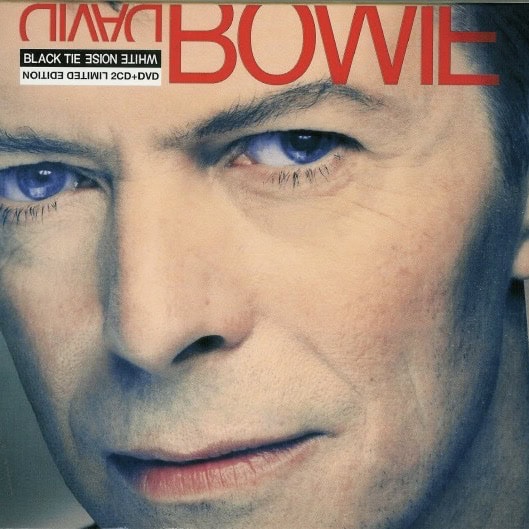
The album connection remained available through later editions. The 2003 special edition of Black Tie White Noise combined the original album with additional material and the accompanying home video on DVD. The three-disc presentation returned attention to the album and its recording period, including Bowie’s interpretation of the Morrissey–Nevin composition.
The album was subsequently included in Brilliant Adventure (1992–2001), released in 2021. Its place in that collection situates the cover within a wider survey of Bowie’s work. This album history runs separately from the 2020–2021 release of “Cosmic Dancer”, which made the earlier concert encounter available as an official single.
A guide to the connected recordings
A useful starting point is T. Rex’s original “Cosmic Dancer” on Electric Warrior. It establishes the melody, atmosphere and vocal treatment to which the Inglewood singers responded. The Morrissey and Bowie live recording can then be heard as a particular interpretation, with the film supplying the corresponding stage encounter. Morrissey‘s separate Utrecht recording offers another comparison from the same touring year.
A second listening route begins with Morrissey‘s “I Know It’s Gonna Happen Someday” on Your Arsenal and continues to Bowie’s version on Black Tie White Noise. This comparison follows the same composition through different voices and production settings. It also helps listeners assess the musical resemblance Bowie discussed when explaining his choice.
The 2021 “Cosmic Dancer” single supplies the later physical edition of the live recording, paired with Morrissey‘s “That’s Entertainment”. The second side introduces another musical source, the Jam, while “Drive-In Saturday” provides a separate example of Morrissey interpreting Bowie’s writing. Together these recordings offer several routes into the relationship, each with its own authorship and circumstances.
Morrissey‘s place in Bowie’s creative circle
Morrissey‘s documented connection to Bowie includes the live “Cosmic Dancer” duet, a composition Bowie chose to record, Morrissey’s interpretation of Bowie’s writing, and a later touring association. Each belongs to a different setting, with its own credits and chronology. Together they show more than a solitary meeting, while the Forum recording remains the most direct opportunity to hear their voices together.
Its significance rests in a specific musical encounter: Bowie entered Morrissey‘s concert and joined him in singing a Marc Bolan song. For Morrissey, the occasion carried the memory of a formative influence. For listeners, it preserves two distinctive performers sharing another songwriter’s work. The eventual official release gave that exchange a lasting place in their recorded histories.
Official Website & Further Information
Visit David Bowie’s official website and Morrissey Central for further information about their music, releases and related projects.
First-Hand Contributions
First-hand memories, contemporary photographs and documents relating to the Inglewood concert are welcome. Please contact DavidBowieWorld.com with the date, location and provenance of any material you would like to share. Contributions can help clarify the historical record and will be credited with the contributor’s permission.
Article Origin
This article was researched and compiled for DavidBowieWorld.com by Diedrich Streuper. It follows the recorded collaborations, performances and recollections connecting Morrissey with David Bowie. Quotations retain their original wording; descriptions of the music include editorial listening observations.
© DavidBowieWorld.com — David Bowie Collaborations & Creative Circle Archive.
