
Erdal Kızılçay – Multi-Instrumentalist, Composer and David Bowie Collaborator

Erdal Kızılçay is a Turkish-born multi-instrumentalist, composer, arranger and producer whose work with David Bowie stretched across more than a decade. While many Bowie collaborators became known for a single instrument, Kızılçay was remarkable because he could play almost anything Bowie required.
Bowie relied on him not only as a performer but also as a creative partner, co-writer and musical problem-solver. During periods when Bowie was reassessing his artistic direction, Kızılçay often became one of the key figures helping turn ideas into finished recordings.
- Born: 1950, Istanbul, Turkey
- Role: Multi-instrumentalist, composer, arranger
- Instruments: Bass, guitar, keyboards, violin, viola, trumpet, trombone, percussion and more
- Bowie connection: c. 1982–1995
- World tours: Glass Spider Tour (1987), Sound + Vision Tour (1990)
- Major Bowie albums: Never Let Me Down, The Buddha of Suburbia, Outside
- Co-written songs: Girls, Too Dizzy, When The Wind Blows and others
Early life and musical education
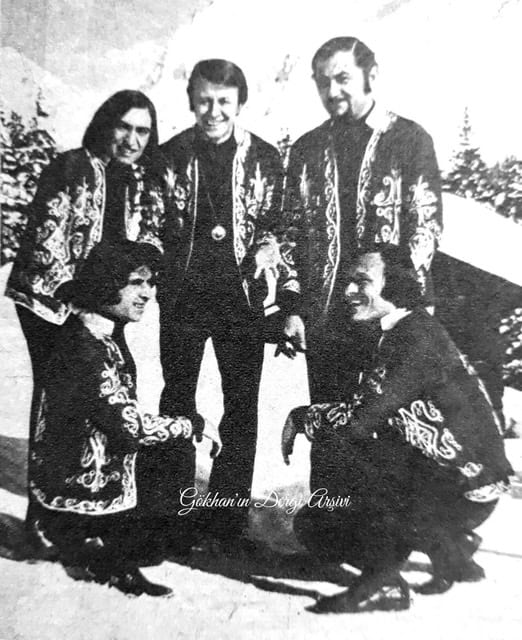
Erdal Kızılçay was born in Istanbul, Turkey, in 1950. Unlike many rock musicians, he received extensive formal musical training from an early age. He began studying viola as a child and later attended conservatory, where he also learned piano, trombone, harmony and orchestral arrangement.
This classical background would become one of his greatest strengths. Rather than identifying himself with a single instrument, Kızılçay developed into an unusually complete musician, comfortable moving between classical music, jazz, rock, electronic music and orchestral composition.
After moving to Europe he continued his studies and eventually graduated from the Swiss Jazz School. By the early 1980s he had established a reputation as a highly versatile performer, equally capable of playing bass guitar, keyboards, brass instruments, strings and percussion.
His ability to move effortlessly between instruments impressed musicians wherever he worked. It would soon attract the attention of David Bowie.
Meeting David Bowie
Kızılçay first became associated with Bowie during the early 1980s. According to Bowie, he encountered the Turkish musician while Kızılçay was performing in Switzerland. What immediately struck Bowie was his astonishing versatility.
Bowie later described him as a conservatory-trained musician capable of playing virtually every instrument in an orchestra. He recalled being amazed as Kızılçay moved from instrument to instrument during a performance and excelled on all of them.
The encounter led to a long working relationship that would become increasingly important throughout the following decade. Bowie eventually nicknamed him “My Invincible Turk”, a reflection of both his affection and his admiration for Kızılçay’s musical abilities.
Early collaborations
Although Kızılçay’s name is most strongly associated with Bowie’s late-1980s and early-1990s recordings, their collaboration began earlier than many fans realise.
He contributed to pre-production work connected with Bowie projects during the Let’s Dance era and became increasingly involved in studio sessions throughout the mid-1980s.
His role expanded because he could provide far more than instrumental performances. He understood arrangement, harmony and orchestration, allowing Bowie to discuss musical ideas with someone who could immediately translate them into practical solutions.
When The Wind Blows
One of the earliest major Bowie-Kızılçay collaborations emerged through When The Wind Blows, Bowie’s contribution to the 1986 animated film of the same name.
The song was co-written by Bowie and Kızılçay and demonstrated how naturally the pair could work together. It combined dramatic songwriting with cinematic atmosphere and helped establish Kızılçay as more than merely a session musician.
He had become a genuine creative partner.
Never Let Me Down

Kızılçay’s importance became unmistakable during the creation of Never Let Me Down (1987).
Bowie later stated that Kızılçay formed the nucleus of the album. Before many other musicians became involved, Bowie and Kızılçay worked extensively together building arrangements, structures and musical foundations.
Bowie explained in interviews that much of the backbone of the album was created by the two of them working side by side. In his own words, Kızılçay was far more formally musical than he was and possessed an understanding of harmony and composition that Bowie deeply respected.
The pair also co-wrote several songs during this period, strengthening a creative partnership that would continue for years.
Girls and other Bowie co-compositions
One of the clearest demonstrations of Kızılçay’s importance to Bowie was the song Girls, co-written by the two musicians during the Never Let Me Down sessions.
The song was first recorded by Tina Turner for her 1986 album Break Every Rule. Bowie later recorded his own version, which appeared as the B-side of the 1987 single Time Will Crawl.
Kızılçay’s contributions went far beyond writing credits. On Bowie’s recording he played multiple instruments, helping shape the song’s distinctive atmosphere and demonstrating why Bowie increasingly relied upon him during this period.
Another notable co-composition was Too Dizzy, written by Bowie and Kızılçay together during the same era. Although Bowie later removed the track from subsequent editions of Never Let Me Down, it remains an important example of their close creative relationship.
The Glass Spider Tour
In 1987 Kızılçay joined Bowie on the ambitious Glass Spider Tour, one of the largest productions of Bowie’s career.
The tour featured a huge stage design, theatrical elements, dancers, elaborate visual effects and a large band. Within this complex environment Kızılçay became one of the most versatile musicians on stage.
He switched between bass guitar, keyboards, guitar and additional instruments whenever required. His flexibility allowed Bowie’s increasingly complex arrangements to be reproduced in a live setting.
While critics often focused on the scale of the production itself, musicians inside the band understood how important Kızılçay’s role was. Few performers could handle such a variety of musical responsibilities at such a high level.
Working with Iggy Pop

Kızılçay’s Bowie connection also extended into projects involving Bowie’s longtime friend Iggy Pop.
He contributed to Iggy Pop’s 1986 album Blah-Blah-Blah, which Bowie co-wrote and co-produced.
This project further demonstrates how closely integrated Kızılçay had become within Bowie’s creative circle. He was no longer simply working for Bowie; he had become part of the wider network of musicians surrounding Bowie’s artistic world.
The Sound + Vision Tour (1990)
Kızılçay remained a central figure during Bowie’s Sound + Vision Tour in 1990.
This world tour was designed as a retrospective celebration of Bowie’s best-known songs. Bowie publicly announced that many classic hits would be retired from future concerts, making the tour a significant event for fans.
Once again Kızılçay’s ability to handle multiple instruments proved invaluable. The setlist moved across many different Bowie eras, requiring musicians capable of adapting rapidly to changing styles.
Kızılçay helped connect material from the Ziggy Stardust years, the Berlin era, the soul period and the contemporary catalogue into a coherent live performance.
The Buddha Of Suburbia
If one project best illustrates the depth of Bowie’s trust in Kızılçay, it is The Buddha Of Suburbia (1993).
Originally conceived as music for the BBC adaptation of Hanif Kureishi’s novel, the project quickly evolved into something far more personal and experimental.

Kızılçay became one of the dominant musical figures on the album. He played an extraordinary range of instruments and contributed heavily to arrangements, programming and overall sound design.
In later interviews he stated that much of what listeners hear on the album was performed by him, including bass, guitars, keyboards, percussion, brass parts, backing vocals and numerous sonic textures.
The result was one of the most adventurous records Bowie released during the 1990s. Many critics and fans now view it as a bridge between Black Tie White Noise and the more radical experimentation that followed.
Kızılçay himself later described The Buddha Of Suburbia as one of the finest projects he ever created with Bowie.
Outside and the next stage of experimentation
Kızılçay’s influence continued into 1. Outside (1995), Bowie’s reunion with Brian Eno.
The album explored identity, art, crime, technology and fragmentation through an ambitious narrative structure. Musically it blended industrial textures, electronic experimentation and art-rock.
Although many musicians contributed to the project, Kızılçay remained one of Bowie’s most trusted collaborators. His understanding of both traditional musicianship and modern studio technology made him uniquely suited to the album’s demands.
The sonic adventurousness heard on The Buddha Of Suburbia can be heard developing further on Outside, making the two albums closely linked chapters in Bowie’s artistic evolution.
Why Bowie valued Erdal Kızılçay
Many musicians who worked with Bowie excelled in one particular area. Some were exceptional guitarists, others arrangers, producers or vocalists.
Kızılçay was unusual because he combined all of those qualities. He could perform, compose, arrange, programme, orchestrate and solve technical problems while remaining completely focused on the music itself.
Bowie repeatedly praised his abilities in interviews, often describing him as one of the most naturally gifted musicians he had ever encountered.
The relationship worked because Bowie supplied ideas, concepts and direction while Kızılçay possessed the technical skill to help transform those ideas into finished music.
Legacy within Bowie’s universe
Within David Bowie’s vast network of collaborators, Erdal Kızılçay occupies a unique position.
He was not simply a touring musician, nor merely a session player. He was a trusted collaborator who participated in songwriting, arranging, production and performance across some of Bowie’s most transitional years.
From Never Let Me Down to The Buddha Of Suburbia and Outside, Kızılçay helped Bowie navigate a period of reinvention and artistic renewal.
His contribution is sometimes overlooked compared with more famous Bowie associates, but a closer examination reveals a musician whose influence can be heard across many of Bowie’s most interesting late-twentieth-century recordings.
