
Iggy Pop – David Bowie’s Friend, Collaborator and Creative Partner

Iggy Pop and David Bowie together during the second half of the 1970s, when their friendship and creative partnership produced some of the most influential recordings of their careers.
Iggy Pop (born James Newell Osterberg Jr.) is an American singer, songwriter and performer best known as the frontman of The Stooges, one of the most influential bands in the history of rock music. His uncompromising artistic vision helped lay the foundations for punk rock long before the genre had acquired its name.
His relationship with David Bowie developed into one of the most important creative partnerships of the 1970s. Bowie mixed Raw Power, later co-wrote and co-produced The Idiot and Lust for Life, toured extensively with Iggy during 1977 and became instrumental in rebuilding both his career and artistic confidence. Together they inspired one another during a period that fundamentally reshaped both of their careers.
Rather than a traditional artist-and-producer relationship, their collaboration was built upon mutual respect and artistic curiosity. Bowie admired Iggy’s fearless originality, while Iggy recognised Bowie’s extraordinary ability to transform musical ideas into innovative recordings. Their friendship became one of the most influential creative partnerships in modern rock history, leaving a lasting impact on both artists and on the development of alternative rock.
- Full name: James Newell Osterberg Jr.
- Born: 21 April 1947, Muskegon, Michigan, United States
- Profession: Singer, songwriter, musician and actor
- Best known for: Co-founder and lead singer of The Stooges
- Bowie connection: Friend, creative partner, touring musician, co-writer and collaborator
- Key collaborations: Bowie’s mix of Raw Power, the albums The Idiot and Lust for Life, and the 1977 European tour
- Legacy: One of the most influential figures in punk and alternative rock
Early Life
James Newell Osterberg Jr. was born on 21 April 1947 in Muskegon, Michigan. He grew up in the Ann Arbor Trailer Court in Ypsilanti Township, near Ann Arbor, where his parents actively encouraged his early interest in music.

Young James Newell Osterberg Jr. (later known as Iggy Pop) in his high school yearbook. Photo: Kolbe / Wikimedia Commons / CC BY-SA 3.0 Germany.
Initially performing as a drummer with local groups including The Iguanas and later The Prime Movers, Osterberg immersed himself in rhythm and blues, Chicago blues and early rock and roll. These experiences convinced him that he wanted to create something more direct, physical and uncompromising than the music then dominating popular radio.
While performing with The Prime Movers, Osterberg travelled regularly to Chicago to study the city’s blues musicians at first hand. Observing established performers in clubs helped shape his understanding of rhythm, stage presence and musical intensity, influences that would later become central to his own performing style.
By the late 1960s he had abandoned the drum stool in favour of becoming a frontman, adopting the stage name Iggy Pop. Together with Ron Asheton, Scott Asheton and Dave Alexander he formed The Psychedelic Stooges, soon shortened to The Stooges, a band whose aggressive sound and confrontational live performances would become one of the most influential forces in the development of punk rock, alternative rock and countless later underground music movements.
The Stooges
In 1967, Iggy Pop joined guitarist Ron Asheton, drummer Scott Asheton and bassist Dave Alexander to form The Psychedelic Stooges, soon renamed The Stooges. At a time when many rock bands were embracing increasingly complex arrangements, the group pursued a far more direct and uncompromising musical approach built around powerful riffs, repetitive rhythms and raw energy.
The Stooges performing live in Ohio in 1970.
After signing with Elektra Records, the band released its self-titled debut album on 5 August 1969, produced by John Cale of The Velvet Underground. Although the record achieved only modest commercial success, songs such as I Wanna Be Your Dog demonstrated a stripped-down sound that would later become highly influential within punk rock, alternative rock and garage rock.
Their second album, Fun House (1970), pushed that approach even further. Combining aggressive guitars, the free-form saxophone of Steve Mackay and Iggy Pop‘s increasingly intense performances, the album has since become recognised as one of the defining records of early American rock. Despite enthusiastic support from a growing underground audience, poor sales eventually led Elektra Records to drop the band.
The Stooges reunited in 1972 with guitarist James Williamson, replacing Ron Asheton on guitar while Ron moved to bass. Although Ron Asheton was unhappy about moving from guitar to bass, the new line-up proved heavier and more aggressive than ever before. It laid the foundation for what would become the band’s most celebrated studio album, Raw Power.
Despite repeated financial setbacks and disappointing record sales, The Stooges developed a growing reputation among fellow musicians for the intensity of their live performances. One of the artists who became increasingly fascinated by the band during this period was David Bowie, whose admiration would soon prove decisive for Iggy Pop‘s future.
Iggy Pop on The Stooges
“We weren’t trying to invent anything. We were just trying to play rock and roll the way we felt it.”
— Iggy Pop
David Bowie Discovers Iggy Pop
By the early 1970s, David Bowie had become one of The Stooges’ most enthusiastic supporters. Having followed the band’s work since the late 1960s, Bowie admired Iggy Pop‘s originality, stage presence and refusal to compromise artistically. As Bowie achieved international success following The Rise and Fall of Ziggy Stardust and the Spiders from Mars, he increasingly used his growing influence to champion artists whose work he believed deserved wider recognition.
The admiration was mutual. Although their careers had followed very different paths, both artists constantly challenged musical conventions and rejected the expectation that they should repeat earlier successes. That shared philosophy formed the basis of a friendship that would soon develop into one of the most important creative partnerships of the decade.
The two musicians first met in 1972, quickly discovering a shared determination to challenge musical conventions and continually reinvent themselves. Although their careers had taken different paths, they recognised a similar artistic ambition that would soon develop into a close personal friendship and one of rock music’s most significant creative partnerships.
Raw Power
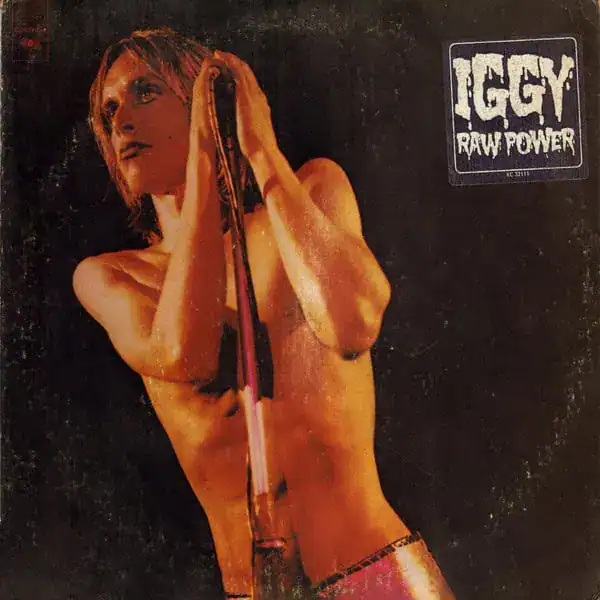
David Bowie and Iggy Pop during the Raw Power era in 1973.
In 1973, David Bowie became directly involved with The Stooges when he was asked to mix their third studio album, Raw Power. The album had already been recorded in London with guitarist James Williamson playing a central role in its sound. Working from the existing multitrack tapes, Bowie prepared the final mix that would accompany the album’s original release.
Working under considerable technical limitations, Bowie had only limited control over the balance of the recordings because many instruments had already been combined during the original recording process. Rather than creating a polished production, his mix preserved the album’s raw intensity and aggressive character. Although the original mix divided opinion, Raw Power gradually came to be recognised as one of the most influential rock albums ever recorded, inspiring generations of punk, hard rock and alternative musicians.
“I think Iggy is one of the most exciting performers in rock.”
Although Raw Power sold relatively few copies upon its original release, its reputation continued to grow throughout the following decades. Today it is widely regarded as a landmark recording and marked the beginning of a professional relationship that would develop into one of the most influential creative partnerships in rock music during the years that followed.
Although later remixes, including Iggy Pop‘s own 1997 remix, offered alternative interpretations of the album, David Bowie’s original 1973 mix remains the version with which Raw Power first entered rock history and introduced audiences to one of the defining collaborations of the Bowie–Iggy Pop story.
Personal and Professional Decline
Despite the growing critical recognition of Raw Power, neither the album nor the accompanying tour achieved the commercial breakthrough that The Stooges had hoped for. Financial problems, inconsistent management, an exhausting touring schedule and increasingly destructive drug use made it difficult for the band to maintain stability. Concerts became unpredictable, recording opportunities diminished and relationships within the group deteriorated rapidly.
Iggy Pop‘s heroin addiction became particularly serious during this period. His health declined and his behaviour grew increasingly erratic, making it difficult to sustain a professional career. In early 1974, The Stooges finally disbanded, bringing to an end one of the most influential yet commercially unsuccessful bands of its generation.
Determined to regain control of his life, Iggy voluntarily admitted himself to the UCLA Neuropsychiatric Institute in 1974 to receive treatment for heroin addiction. Although recovery proved difficult, the decision marked the beginning of a gradual return to professional activity.
Following the collapse of the group, Iggy struggled both personally and professionally. Without a recording contract and battling addiction, his future as a musician appeared uncertain. Although his influence continued to grow among fellow artists, there was little indication that his career could recover without outside support.
David Bowie Steps In
David Bowie had followed Iggy Pop‘s career with admiration for several years and recognised both his extraordinary talent and the difficulties threatening to end it. Rather than simply expressing support in public, Bowie decided to become personally involved in helping his friend rebuild both his life and his career.
During 1975 and 1976 Bowie invited Iggy to work closely with him, first in Los Angeles and later in Europe. The two musicians shared ideas, wrote new material together and discussed possible directions for Iggy’s return as a solo artist. Bowie also introduced Iggy to new professional opportunities, using his own influence within the music industry to help secure a fresh recording contract.
Bowie’s support extended beyond music. He invited Iggy to travel with him, introduced him to key figures within the recording industry and provided the stability that allowed his friend to concentrate on writing and recording again.
The partnership proved beneficial for both men. While Bowie was searching for a new artistic direction following the soul-influenced Young Americans period, Iggy was determined to begin again after the collapse of The Stooges. Their friendship became a source of mutual inspiration, with each encouraging the other to take creative risks that would shape some of the most celebrated recordings of the late 1970s.
Moving to Europe
Seeking distance from the pressures and excesses of Los Angeles, Bowie and Iggy relocated to Europe during 1976. Their travels took them through Switzerland and France before they eventually based themselves in West Berlin, where they hoped to work in a quieter environment away from the constant attention of the international music press.
Berlin offered both artists an opportunity to rebuild. The city’s divided political landscape, vibrant artistic community and comparatively anonymous atmosphere encouraged experimentation and renewal. It was here that Bowie and Iggy would begin one of the most productive periods of their careers, developing ideas that would soon lead to a remarkable series of recordings for both artists.
The Idiot
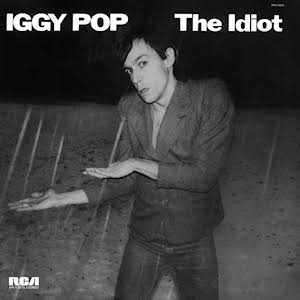
The first major result of David Bowie and Iggy Pop‘s renewed partnership was The Idiot, recorded during 1976 and released on 18 March 1977. Although officially presented as Iggy Pop‘s debut solo album, the project reflected one of the closest creative collaborations of either artist’s career, with Bowie playing a central role in shaping its musical direction while ensuring that Iggy remained the album’s unmistakable focal point. Bowie co-wrote much of the material, played keyboards and guitar, sang backing vocals and co-produced the album with Tony Visconti.
Recorded at Château d’Hérouville in France, completed at Musicland Studios in Munich and with additional work carried out at Hansa Studio 1 in West Berlin, The Idiot represented a dramatic departure from the raw aggression of The Stooges. Instead, the album explored darker, more atmospheric territory, combining minimalist arrangements with electronic textures and experimental production techniques. Songs such as Sister Midnight, Nightclubbing and Mass Production anticipated many of the musical ideas that Bowie would develop on his own Berlin Trilogy, beginning with Low, released later in 1977.
Rather than attempting to recreate the sound of The Stooges, Bowie encouraged Iggy to develop a new artistic identity. The result was an album that balanced Iggy’s distinctive vocal presence with Bowie’s growing fascination for European electronic music and unconventional song structures.
Today The Idiot is widely regarded as one of the defining albums of the post-punk era and as the recording that successfully launched Iggy Pop‘s solo career while simultaneously marking the beginning of David Bowie’s most experimental creative period.
David Bowie on The Idiot
“That was the beginning of what became the Berlin period.”
— David Bowie
Although The Idiot achieved only modest commercial success upon release, critics recognised that both artists had entered an entirely new creative phase. Today the album is widely regarded as one of the most influential recordings of the late 1970s.
Lust for Life

Only a few months after completing The Idiot, David Bowie and Iggy Pop returned to Hansa Studio 2 in West Berlin to record a second solo album. Recorded in just over a week and released on 9 September 1977, Lust for Life contrasted sharply with its predecessor, replacing much of its dark introspection with a more energetic, direct and accessible sound.
The songwriting partnership between Bowie and Iggy remained central to the album. Bowie frequently developed the musical foundations before Iggy added melodies and lyrics, creating a remarkably productive working relationship. Together they wrote many of the album’s best-known songs, including the title track Lust for Life, Success, Turn Blue and Some Weird Sin. Bowie also contributed keyboards, backing vocals and production ideas while deliberately ensuring that Iggy remained the unmistakable focal point throughout the record.
The album produced several songs that would become permanent fixtures within Iggy Pop‘s catalogue. In particular, The Passenger, written by Iggy Pop with music co-written by Ricky Gardiner, developed into one of the defining songs of his career and remains one of the most recognisable recordings associated with the Berlin period.
Iggy Pop performing Sixteen on Danish television, 19 September 1977.
Together, The Idiot and Lust for Life transformed Iggy Pop‘s career and firmly established him as a successful solo artist. More importantly, the two albums demonstrated how the creative partnership between Iggy Pop and David Bowie could produce music that was both commercially accessible and artistically adventurous. Today they are widely regarded as two of the defining albums of the late 1970s and remain among the most influential recordings in both artists’ catalogues.
The Idiot Tour
To promote The Idiot, Iggy Pop embarked on his first major international tour as a solo artist in March 1977. Rather than remaining behind the scenes as producer and collaborator, David Bowie joined the touring band as its keyboard player. It was a remarkable reversal of roles: one of the world’s biggest rock stars deliberately stepped away from the spotlight to help relaunch the career of a close friend whose future in music had only recently seemed uncertain.
Iggy Pop performing Nightclubbing with David Bowie on keyboards during the Seattle concert, April 1977.
The touring line-up featured Iggy Pop on vocals, Ricky Gardiner on guitar, Hunt Sales on drums, Tony Sales on bass and David Bowie on keyboards. The band toured extensively throughout Europe before continuing in North America, introducing audiences to Iggy’s new solo material alongside songs from his years with The Stooges. Although Bowie’s presence attracted considerable attention, he deliberately remained in the background, making it clear that this was Iggy Pop’s tour.
The concerts combined songs from The Idiot with material from The Stooges, allowing audiences to experience both Iggy Pop‘s groundbreaking earlier work and his newly developed artistic direction. The tour proved instrumental in re-establishing him as a credible solo artist and demonstrated the extraordinary commitment David Bowie had made to helping his friend rebuild his career.
The Berlin Years
Although the term Berlin Years is most commonly associated with David Bowie, it also represents one of the most significant periods in Iggy Pop‘s career. Between 1976 and 1978 the two musicians lived and worked in West Berlin for extended periods, using the city as a base from which they recorded, wrote and redefined the direction of their music.
Away from the constant attention of Los Angeles and the British music press, Bowie and Iggy developed a disciplined daily routine centred on writing, recording and exploring Berlin’s cultural life. Contrary to the myths that later surrounded this period, their time in the city was largely devoted to work rather than excess, allowing both artists to regain creative focus and personal stability.
The influence of Berlin can be heard throughout The Idiot, Lust for Life and Bowie’s own albums Low, “Heroes“ and Lodger. While each artist maintained a distinct musical identity, their continuous exchange of ideas profoundly influenced both catalogues and helped shape the sound of post-punk, new wave and alternative rock during the years that followed.
Continuing Friendship
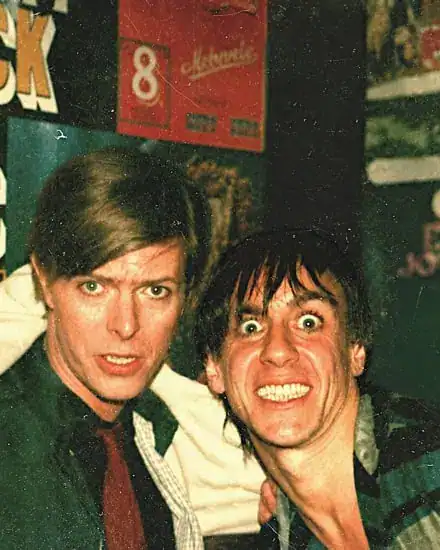
Ivan Kral, David Bowie and Iggy Pop. Photograph by Ivan Kral, licensed under CC BY-SA 4.0, via Wikimedia Commons.
Following the success of the 1977 recordings, Bowie and Iggy Pop continued to support one another professionally while increasingly pursuing their own artistic paths. Bowie remained one of Iggy’s strongest advocates, later producing the 1986 album Blah-Blah-Blah, while Iggy consistently acknowledged the crucial role Bowie had played in rebuilding both his confidence and his career.
Their friendship was never based on commercial success or professional convenience. Instead, it grew from a shared belief that artists should continually evolve rather than repeat past achievements. Even when they were no longer working together on a daily basis, they remained close friends who spoke of one another with genuine admiration and respect throughout the rest of David Bowie’s life.
Although both musicians increasingly pursued independent artistic paths during the 1980s and beyond, the recordings they created together during the mid-1970s remain among the most influential works in either catalogue. Their partnership demonstrated how friendship, trust and creative freedom could produce music that continues to inspire audiences around the world.
Later Career
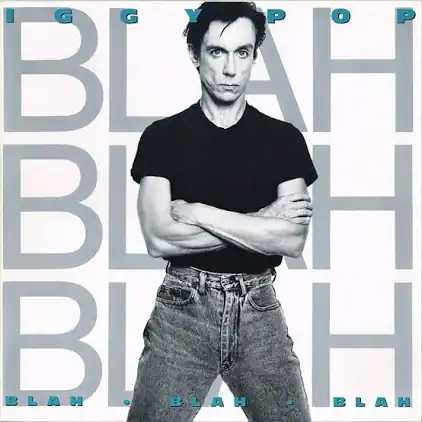
Following the extraordinary creative partnership of the Berlin years, Iggy Pop continued to develop as a solo artist throughout the late 1970s and 1980s. Although David Bowie increasingly concentrated on his own recording career, the two musicians remained close friends and continued to influence one another creatively. Iggy steadily established himself as one of rock music’s most distinctive and uncompromising performers, earning growing critical recognition even when commercial success proved inconsistent.
Albums including New Values (1979), Soldier (1980), Party (1981) and Zombie Birdhouse (1982) demonstrated his willingness to experiment with different musical styles. Although none matched the critical impact of The Idiot or Lust for Life, they confirmed Iggy Pop‘s determination to continue evolving rather than repeat earlier successes. Extensive international touring further strengthened his reputation as one of rock’s most compelling live performers.
A major commercial breakthrough arrived in 1986 with Blah-Blah-Blah, produced by David Bowie together with David Richards. The album became Iggy Pop‘s highest-charting release to date and introduced him to a wider international audience through the hit single Real Wild Child (Wild One). More than a decade after helping relaunch Iggy’s career, Bowie once again played a decisive role in one of his friend’s greatest commercial successes.
During the decades that followed, Iggy Pop continued to reinvent himself through albums such as Brick by Brick (1990), American Caesar (1993), Skull Ring (2003), Préliminaires (2009), Post Pop Depression (2016) and Every Loser (2023). His willingness to embrace new musical directions ensured that he remained creatively relevant well into the twenty-first century.
The Stooges Reunited
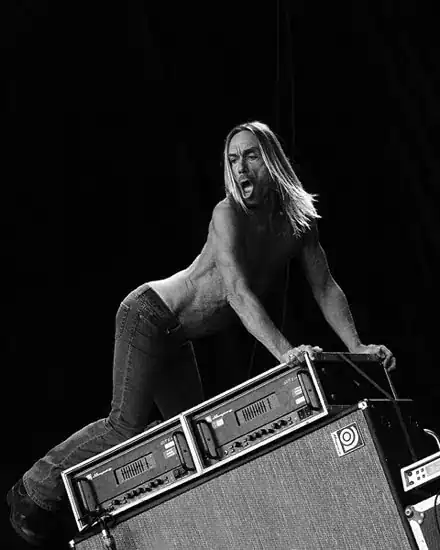
Iggy Pop. Photo by Masahiro Sumori, licensed under CC BY-SA 2.0, via Wikimedia Commons.
In 2003, Iggy Pop reunited with Ron Asheton, Scott Asheton and Mike Watt to revive The Stooges, bringing one of rock music’s most influential bands back to the stage after almost three decades. Guitarist Mike Watt took the place of the late Dave Alexander, whose death in 1975 had made a full reunion impossible. The reunion was enthusiastically welcomed by audiences around the world and introduced the band’s pioneering music to a new generation of listeners.
The reunited band toured extensively before releasing The Weirdness in 2007, their first studio album since Raw Power more than thirty years earlier. Following the death of Ron Asheton in 2009, guitarist James Williamson returned to the band for a final chapter that included further touring until the group came to an end after the death of Scott Asheton in 2014. The reunion confirmed The Stooges’ lasting importance within the history of rock music.
David Bowie’s Death
David Bowie’s death on 10 January 2016 deeply affected Iggy Pop, who lost not only one of his closest friends but also one of the most important creative partners of his life. Their friendship had endured for more than four decades and had transformed both men’s careers, leaving a lasting mark on the history of popular music.
In interviews following Bowie’s death, Iggy described him not only as an exceptional musician but also as an extraordinarily generous and compassionate individual. He frequently acknowledged that Bowie had recognised his potential at a time when few others believed his career could recover, and that his encouragement had fundamentally changed the course of his life.
Legacy
Few artistic partnerships have influenced modern rock music as profoundly as that of Iggy Pop and David Bowie. Together they produced a body of work that transformed both of their careers while helping shape the development of punk rock, post-punk, new wave and alternative music. Albums such as The Idiot, Lust for Life and Bowie’s Berlin Trilogy remain among the defining achievements of the era, their influence continuing to inspire generations of musicians.
Individually, Iggy Pop is recognised as one of rock’s most fearless and original performers. Alongside David Bowie, however, he also became part of one of the most remarkable creative friendships in twentieth-century popular music. Their collaboration demonstrated that artistic trust, mutual respect and a willingness to challenge convention could produce work whose significance extends far beyond commercial success.
Official Website & Further Information
Iggy Pop has remained one of rock music’s most enduring and influential artists for more than five decades. He continues to record, perform internationally and collaborate with musicians from a wide variety of musical backgrounds, while his work with The Stooges and his long creative partnership with David Bowie remain central chapters in the history of modern rock.
For the latest news, tour dates, music releases and official announcements, please visit Iggy Pop‘s official website:
Article Origin
This article has been researched and written exclusively for DavidBowieWorld.com. It is based on verified historical sources documenting the careers of David Bowie and Iggy Pop, their collaborations, recordings, live performances and professional relationship. Every effort has been made to ensure historical accuracy, and this page will continue to be updated as new verified information becomes available.
© DavidBowieWorld.com
