
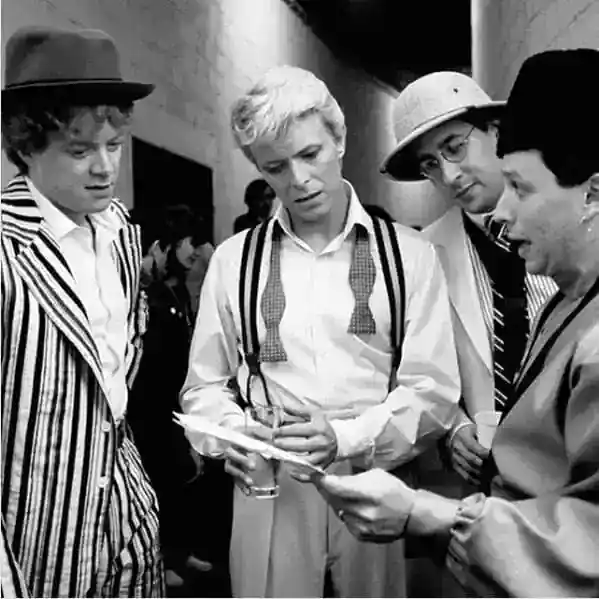
Steve Elson – Saxophonist and Woodwind Player for David Bowie
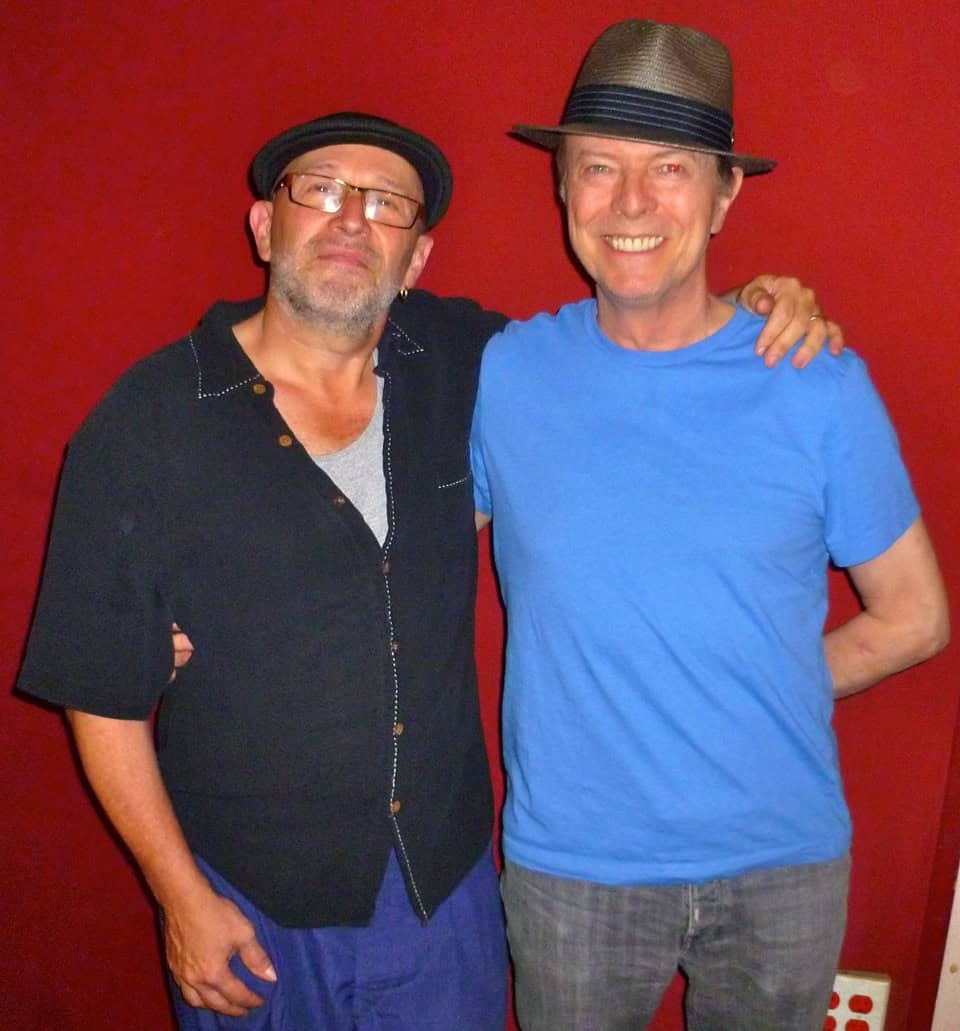
David Bowie and Steve Elson. Photograph by Tony Visconti. Reproduced with the kind permission of Steve Elson.
Steve Elson is an American saxophonist, woodwind player, arranger and composer whose long association with David Bowie began during the recording of Let’s Dance and continued across several major Bowie projects. Best known to Bowie fans for his powerful baritone saxophone work, Elson became one of the defining horn voices of Bowie’s 1980s sound.
His contribution was not limited to one album or one tour. Elson played on Let’s Dance, joined Bowie for the Serious Moonlight Tour, returned for later studio albums including Tonight, Never Let Me Down and Heathen, and appeared again on The Next Day. Across three decades, he became one of Bowie’s longest-serving saxophone collaborators.
Elson’s playing combined rhythm and blues power, jazz intelligence and a deep understanding of arrangement. His baritone saxophone could add drive, weight and swagger to a recording without overwhelming Bowie’s vocal. That balance made him especially valuable during the period when Bowie was reshaping his sound for a new decade.
Steve Elson‘s collaboration with David Bowie ultimately spanned more than three decades, from the Let’s Dance sessions in 1982 to Bowie’s final studio album, The Next Day (2013). In personal correspondence with DavidBowieWorld.com, Elson reflected with particular pride on this remarkable musical journey, noting that he believes he appeared on more David Bowie recordings than any other saxophonist. Given that Bowie himself began his musical life as a saxophonist, Elson regards this long association as one of the greatest honours of his career.
- Name: Steve Elson
- Profession: Saxophonist, woodwind player, arranger and composer
- Main instruments: Baritone saxophone, tenor saxophone, soprano saxophone, clarinet and other woodwinds
- Bowie connection: Musician on Let’s Dance, Tonight, Never Let Me Down, Heathen, The Next Day and the Serious Moonlight Tour
- Known Bowie highlights: Baritone saxophone on Let’s Dance, Modern Love, Dirty Boys and Boss Of Me
- Associated group: Co-founder of The Borneo Horns
- Other artists: Johnny Otis, Duran Duran, Radiohead, Talking Heads, Joe Jackson, Diana Ross, Natalie Merchant, Gov’t Mule, The Klezmatics, Peter Gabriel, David Byrne and many others
Early Musical Path
Steve Elson knew at a young age that he wanted to live as a working musician. By the time he was sixteen, he had already chosen the road over a conventional academic path, setting out with his saxophone and building his musical education through performance, travel and direct experience.
That early decision shaped the rest of his career. Rather than developing inside one narrow musical world, Elson absorbed rhythm and blues, jazz, rock, Latin music, klezmer, pop and the adventurous sounds of New York’s downtown scene. This wide musical background later made him the kind of player David Bowie valued: technically strong, stylistically flexible and able to bring character to a recording without losing discipline.
Elson’s playing has always carried the marks of a musician who learned from the inside of many traditions. He could deliver a strong rhythm and blues solo, support a tightly arranged horn section, play clarinet with warmth and subtlety, or contribute a darker baritone saxophone voice to a rock recording. That range would become central to his work with Bowie.
The Johnny Otis Years
One of the most important early chapters in Steve Elson‘s career was his work with the Johnny Otis Rhythm and Blues Revue, a group connected to some of the deepest traditions in American rhythm and blues. Performing with artists such as Eddie “Cleanhead” Vinson and Shuggie Otis gave Elson a powerful grounding in live performance.
This experience was crucial. Rhythm and blues requires more than technical knowledge. It demands timing, authority, tone and the ability to communicate directly with an audience. Elson developed those qualities on the road, performing night after night and learning how to make every solo count.
That background later became one of the reasons his baritone saxophone worked so effectively in Bowie’s music. On recordings such as Let’s Dance and Modern Love, Elson did not sound like a session musician merely adding decoration. He brought the weight and confidence of a player who understood how horn lines could drive a song from within.
New York, Session Work and Musical Range
After his early years on the road, Steve Elson became part of the highly demanding New York music scene. New York required musicians who could adapt quickly, read accurately, improvise convincingly and understand the needs of very different artists and producers. Elson proved ideally suited to that environment.
His career expanded across many genres. He performed or recorded with artists connected to blues, pop, rock, jazz, rhythm and blues, klezmer, theatre, television and film. This breadth of experience made him more than a saxophone specialist. He became a complete woodwind player and arranger, capable of shaping musical atmosphere as well as delivering memorable instrumental parts.
By the time he entered David Bowie’s world, Elson already had the qualities required for a major Bowie project: precision, originality, discipline and the ability to serve the song. Bowie often worked best with musicians who had strong identities of their own but understood when to step forward and when to leave space. Elson fitted that balance perfectly.
A Friendship Beyond the Studio
Steve Elson‘s relationship with David Bowie extended beyond recording sessions and concert stages. During the years Bowie lived in New York City, he spent part of his time only a few blocks from Elson’s loft on the Bowery. Their paths would occasionally cross in the most ordinary of places — the local supermarket.
Recalling those encounters in personal correspondence with DavidBowieWorld.com, Elson explained that unexpectedly “bumping into” David always made him happy. These chance meetings reflected the relaxed and genuine friendship that had developed over many years of working together, far removed from the spotlight of the music industry.
Stories such as these reveal another side of David Bowie: not only the internationally celebrated artist, but also a neighbour, a friend and someone who remained approachable to the musicians who shared his remarkable musical journey.
The Borneo Horns
One of Steve Elson‘s most important contributions to David Bowie’s music came through his work with the celebrated Borneo Horns, the powerhouse horn section that became an essential part of Bowie’s sound during the 1980s. Their playing added energy, sophistication and rhythmic precision to both the Let’s Dance album and the subsequent Serious Moonlight Tour.
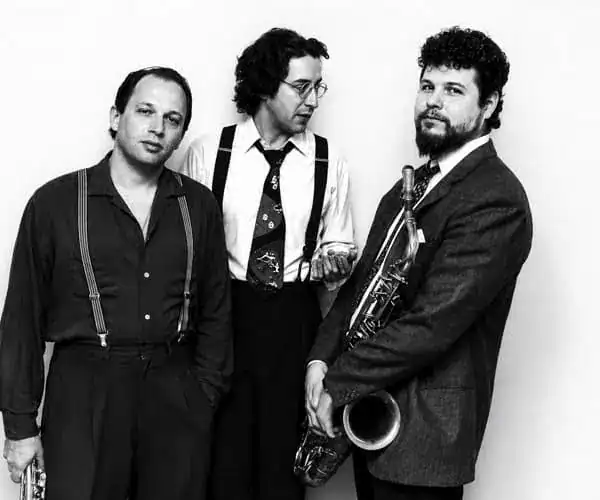
Photo by Keri Pickett. Reproduced with permission. Publication on DavidBowieWorld.com approved by Steve Elson.
The core of the Borneo Horns consisted of Steve Elson, Lenny Pickett and Stan Harrison. Each musician brought a distinctive musical voice, creating a horn section capable of moving effortlessly between powerful rhythm-and-blues lines, jazz-influenced improvisation and tightly arranged pop melodies.
In personal correspondence with DavidBowieWorld.com, Steve Elson noted that Lenny Pickett deserves particular recognition for his role within the Borneo Horns. The two musicians had known one another since childhood in Berkeley, California, and by Steve’s own account they have now been making music together for more than sixty years. Their long musical partnership helped shape the unique sound and chemistry of the horn section that accompanied Bowie throughout the Let’s Dance era.
Working closely with producer Nile Rodgers and David Bowie, the Borneo Horns became far more than a traditional brass section. Their arrangements helped define the modern, dance-oriented sound that introduced Bowie to an entirely new generation of listeners while retaining the musical sophistication that had always characterised his work.
Joining David Bowie
Steve Elson‘s long association with David Bowie began in late 1982 when producer Nile Rodgers invited him to participate in the recording sessions for what would become Let’s Dance. Rodgers wanted musicians who possessed not only technical excellence but also the ability to create memorable musical moments without overwhelming Bowie’s songs. Elson’s reputation as one of New York’s finest woodwind players made him an obvious choice.
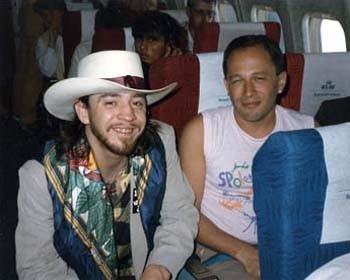
Steve Elson and Stevie Ray Vaughan. Unknown photographer. Reproduced with permission. Publication on DavidBowieWorld.com approved by Steve Elson.
The sessions brought together an exceptional collection of musicians, including Stevie Ray Vaughan, Carmine Rojas, Tony Thompson, Robert Sabino, Sammy Figueroa, Stan Harrison, Frank Simms, George Simms and many others. Within this remarkable group, Elson quickly established himself as an indispensable member of the horn section through his powerful baritone saxophone playing and his instinctive understanding of rhythm and arrangement.
The collaboration proved immediately successful. Bowie recognised that Elson brought something unique to the music: a combination of rhythm and blues authority, jazz sophistication and rock energy. That distinctive musical personality would become one of the defining sounds of Bowie’s early 1980s recordings.
Recording Let’s Dance
Released in April 1983, Let’s Dance transformed David Bowie into one of the biggest artists of the MTV era and became the best-selling studio album of his career. Steve Elson played a central role in creating its unmistakable sound, contributing the powerful baritone saxophone performances that became one of the album’s musical trademarks.
Unlike many rock recordings where horns are used only as occasional decoration, the horn arrangements on Let’s Dance formed an integral part of the album’s identity. Elson’s deep, resonant baritone saxophone added weight and rhythmic drive while blending perfectly with Nile Rodgers‘ guitar work and Bowie’s vocals.
His performances demonstrated remarkable restraint. Rather than filling every available space, Elson chose his moments carefully, allowing the arrangements to breathe while adding strength exactly where the songs required it. That musical discipline became one of the reasons Bowie continued working with him for decades.
The Iconic Baritone Saxophone
Steve Elson‘s baritone saxophone became one of the defining instrumental voices of the Let’s Dance album. The instrument’s rich lower register provided an ideal counterbalance to Bowie’s expressive vocals and Stevie Ray Vaughan‘s soaring guitar work.
Baritone saxophone had long been associated with rhythm and blues and soul music, but Elson brought a contemporary edge to the instrument. His tone was powerful without becoming aggressive, soulful without sounding nostalgic, and technically precise while always remaining emotionally expressive.
That distinctive sound helped Bowie achieve exactly what he and Nile Rodgers had envisioned: music that respected American rhythm and blues traditions while sounding completely modern.
Let’s Dance
The title track remains one of David Bowie’s signature recordings, and Steve Elson‘s baritone saxophone became one of its defining instrumental voices. Rather than dominating the arrangement, his playing reinforces the song’s hypnotic groove, adding depth to Nile Rodgers‘ rhythmic guitar, Tony Thompson‘s powerful drumming and Bowie’s commanding vocal performance.
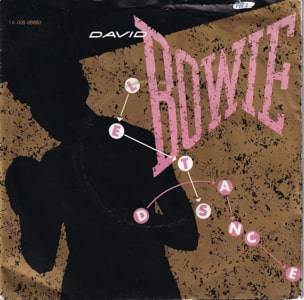
Elson’s contribution demonstrates one of his greatest strengths as a musician. His baritone saxophone provides authority, warmth and movement while always remaining part of the overall ensemble. The performance illustrates why Bowie and producer Nile Rodgers continued to rely on experienced musicians who understood that serving the song was always more important than displaying individual virtuosity.
More than forty years after its release, Let’s Dance remains a landmark recording in Bowie’s catalogue, and Steve Elson‘s baritone saxophone continues to be recognised as one of the album’s most memorable instrumental elements.
Modern Love
If Let’s Dance introduced Steve Elson‘s baritone saxophone to a worldwide audience, Modern Love confirmed just how important his playing had become to Bowie’s evolving sound. His energetic baritone saxophone lines helped drive one of Bowie’s most joyful and exuberant recordings.
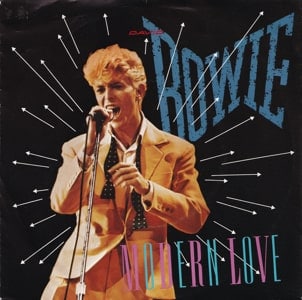
Music journalist Charles Shaar Murray famously described the combination of Steve Elson‘s joyous baritone saxophone and Stevie Ray Vaughan‘s guitar as helping to push Bowie to new vocal heights. It was a fitting observation. Rather than competing for attention, the musicians inspired one another, creating one of the most vibrant recordings of Bowie’s entire catalogue.
The song perfectly illustrates Elson’s greatest strength as a performer. He knew exactly when to step forward and when to support the ensemble, giving Modern Love much of its infectious energy without ever distracting from Bowie’s commanding vocal performance.
The Serious Moonlight Tour
The success of Let’s Dance naturally led to one of the largest tours of David Bowie’s career. The Serious Moonlight Tour opened in Brussels on 18 May 1983 and continued through Europe, North America, Asia, Australia and New Zealand before concluding in Auckland on 8 December 1983. Performing ninety-six concerts before audiences totalling more than two million people, the tour firmly established Bowie as one of the world’s biggest live attractions.
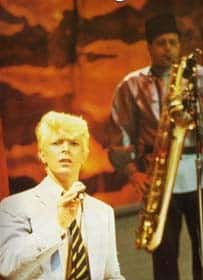
David Bowie performing with Steve Elson during the Serious Moonlight Tour, 1983. Photograph courtesy of Steve Elson.
For Steve Elson, the Serious Moonlight Tour became the most visible chapter of his collaboration with David Bowie. Every evening he recreated the distinctive horn arrangements from Let’s Dance while helping breathe new life into classic Bowie songs spanning more than a decade.
As one of the featured members of Bowie’s live band, Elson was far more than a touring sideman. His commanding baritone saxophone became an integral part of the powerful stage sound that audiences heard throughout the tour, while his energetic stage presence made him a familiar face to concertgoers around the world.
Live on Stage

VIDEO: Modern Love (live)
-
VIDEO: Modern Love (live)
The official music video for David Bowie - Modern Love from Bowie's 'Let's Dance' album released in 1983, which featured the singles Let's Dance, China Girl, Modern Love and Without You.
The video below captures Steve Elson in action during the Serious Moonlight Tour, illustrating how his baritone saxophone and stage presence became an essential part of Bowie’s live performances throughout 1983.
A Defining Stage Presence
Unlike many touring horn players who remain largely anonymous, Steve Elson quickly became a recognisable presence on Bowie’s stage. His commanding baritone saxophone, energetic performance style and unmistakable musical personality made him an integral part of the band’s visual as well as musical identity.
Throughout the concerts Elson alternated between baritone saxophone, tenor saxophone and additional woodwind instruments whenever the arrangements required them. His powerful tone added authority to the band’s sound while his experience as a rhythm and blues player ensured that every performance retained its sense of groove and excitement.
Although Bowie always remained the focal point of the performance, musicians such as Elson played a vital role in creating the atmosphere that audiences experienced each night. Their contributions transformed the studio recordings into energetic live performances capable of filling arenas and stadiums around the world.
The Horn Section
Working alongside Stan Harrison, Steve Elson formed the core of Bowie’s live horn section during the Serious Moonlight Tour. The two musicians complemented one another perfectly. Harrison contributed versatility on saxophone, flute and additional woodwinds, while Elson anchored the arrangements with the rich, resonant voice of his baritone saxophone.
Rather than functioning simply as accompaniment, the horn section became an important part of the band’s identity. Songs such as Modern Love, Let’s Dance, Star and Young Americans gained additional depth and energy through carefully crafted horn arrangements that reflected both rhythm and blues traditions and contemporary pop production.
The musical partnership between Elson and Harrison proved especially effective because both players understood that the success of a horn section depends upon precision, balance and ensemble playing rather than individual virtuosity.
Reimagining Bowie’s Catalogue
The Serious Moonlight Tour was not simply a presentation of the Let’s Dance album. Bowie used the opportunity to reinterpret songs from every stage of his career, giving many familiar classics fresh arrangements suited to his new band.
Steve Elson‘s saxophone became an important part of those new interpretations. Songs originally recorded without prominent horn arrangements were reshaped to suit the larger live ensemble, while material from the Young Americans period naturally benefited from Elson’s rhythm and blues background.
This willingness to reinterpret rather than simply reproduce older recordings reflected Bowie’s constant desire to move forward artistically. Elson embraced that philosophy, approaching every performance with the flexibility and creativity that had already made him one of New York’s most respected session musicians.
A Worldwide Audience
For Steve Elson, the Serious Moonlight Tour represented a major milestone. Millions of concertgoers experienced his playing live, while television broadcasts, concert films and extensive media coverage introduced his musicianship to audiences far beyond those attending the shows.
His baritone saxophone became inseparable from the sound of Bowie’s early 1980s concerts. Combined with the outstanding performances of Carlos Alomar, Earl Slick, Carmine Rojas, Tony Thompson, Dave Lebolt, Sammy Figueroa, Frank Simms, George Simms, Lani Groves and the rest of Bowie’s remarkable touring band, Elson helped create performances that remain among the most celebrated of Bowie’s live career.
Continuing the Collaboration: Tonight (1984)
Following the enormous success of Let’s Dance and the Serious Moonlight Tour, David Bowie invited Steve Elson to return for the recording of Tonight. Released in September 1984, the album continued Bowie’s exploration of contemporary pop, rhythm and blues and reggae influences while once again drawing upon an exceptional group of musicians.
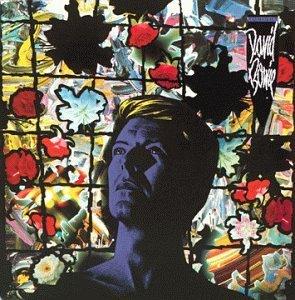
Elson’s return demonstrated that his contribution to Bowie’s music extended far beyond one successful album. Bowie had found a saxophonist whose musical instincts perfectly matched his own artistic ambitions. Elson understood how to strengthen an arrangement without dominating it, making him an invaluable member of Bowie’s recording team.
Although Tonight differed stylistically from Let’s Dance, Elson adapted naturally to its changing musical landscape. His experience across multiple genres allowed him to contribute subtle textures, rhythmic authority and carefully judged horn passages that complemented Bowie’s evolving sound.
Never Let Me Down (1987)
Steve Elson reunited with David Bowie once again during the recording of Never Let Me Down, released in April 1987. Although the album explored a more guitar-oriented direction than its predecessor, Bowie continued to rely on experienced musicians capable of adding depth and character to his increasingly sophisticated productions. Elson’s return demonstrated the confidence Bowie placed in his musicianship and his ability to adapt to changing musical styles.
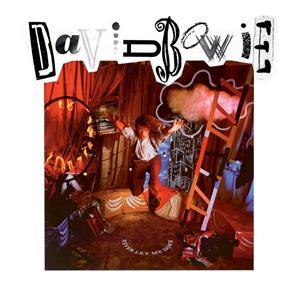
By this stage, Elson was far more than a session player occasionally invited to a recording. Since the Let’s Dance sessions he had become part of Bowie’s trusted circle of musicians, valued for his professionalism, versatility and instinctive understanding of how horn arrangements could strengthen a song without distracting from it.
His continued collaboration reflected Bowie’s long-standing habit of surrounding himself with musicians whose creativity and reliability he respected. Rather than searching for fashionable names on every project, Bowie frequently returned to players who consistently delivered exceptional performances.
Returning for Heathen (2002)
Fifteen years after Never Let Me Down, Steve Elson once again appeared on a David Bowie studio album when he contributed to Heathen, released in 2002. Produced by Tony Visconti, the album marked one of Bowie’s most acclaimed later works and reunited him with several trusted collaborators from different stages of his career.
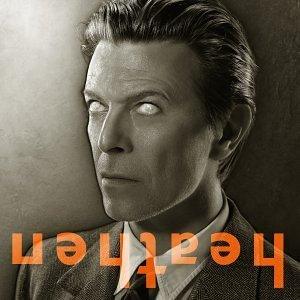
Elson’s return illustrates the remarkable longevity of his professional relationship with Bowie. Few musicians remained part of Bowie’s creative world across such a broad span of years, particularly through periods in which Bowie’s music evolved so dramatically.
Although Heathen presents a more reflective and atmospheric musical landscape than the exuberant sound of Let’s Dance, Elson’s contribution once again demonstrated his ability to adapt naturally to Bowie’s changing artistic direction.
The Next Day (2013)
Perhaps the most celebrated chapter of Steve Elson‘s collaboration with David Bowie came with The Next Day, released unexpectedly in 2013 after almost a decade without a new Bowie studio album. Recorded largely in secret at The Magic Shop in New York, the album reunited Bowie with producer Tony Visconti and several long-standing musical collaborators.
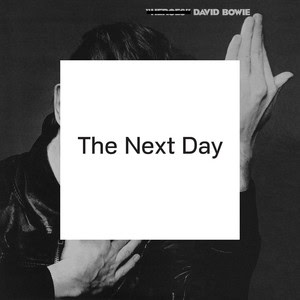
Steve Elson‘s baritone saxophone became one of the defining instrumental voices on The Next Day. His expressive playing, particularly on Dirty Boys and Boss of Me, reintroduced the rich, soulful sound that had characterised his earlier collaborations with Bowie while fitting naturally into the darker, more reflective atmosphere of the album.
In personal correspondence with DavidBowieWorld.com, Steve Elson also recommended K. Webster’s detailed CounterPunch article “Swerve: David Bowie and Musicianship”, describing it as an insightful account of his work with Bowie during the The Next Day sessions. Readers interested in a deeper perspective on this remarkable collaboration may find the article a valuable companion to the story presented here.
Read “Swerve: David Bowie and Musicianship” by K. Webster
“Dirty Boys”
The opening moments of Dirty Boys immediately announce Steve Elson‘s unmistakable baritone saxophone. Rather than functioning as background accompaniment, his instrument drives the song’s dark, swaggering atmosphere from the very beginning.

VIDEO: Dirty Boys (The Next Day)
-
VIDEO: Dirty Boys (The Next Day)
'Dirty Boys' is the second song on The Next Day, David Bowie's penultimate album. The song is notable for its prominent baritone sax, played by Steve Elson.
Tony Visconti deliberately allowed Elson’s saxophone to become one of the central voices of the arrangement. The result is a performance that feels both contemporary and deeply rooted in rhythm and blues traditions, perfectly complementing Bowie’s mysterious vocal delivery.
Many critics identified Dirty Boys as one of the highlights of The Next Day, with Elson’s saxophone frequently singled out for particular praise.
“Boss of Me”
Steve Elson also made an important contribution to Boss of Me, another track on which his baritone saxophone adds depth, movement and dramatic tension. Rather than relying on lengthy improvisation, Elson demonstrates the remarkable discipline that had characterised his work with Bowie since the Let’s Dance sessions.
His playing reinforces the emotional intensity of the song while leaving ample space for Bowie’s vocals and the surrounding instrumentation. It is a masterclass in musical restraint, proving once again that the most effective saxophone performances are often those that serve the composition rather than the performer.
Working with Tony Visconti
Steve Elson‘s later Bowie work also strengthened his long association with producer Tony Visconti. Visconti recognised the unique qualities of Elson’s playing, particularly his ability to create memorable musical statements through tone, phrasing and timing rather than technical excess.
The photograph taken by Tony Visconti during the The Next Day recording sessions at The Magic Shop in New York captures two musicians whose professional relationship had developed over three decades. It symbolises not only Elson’s importance to Bowie’s music but also the mutual respect that existed between the musicians who helped shape Bowie’s final masterpieces.
A Master of Baritone Saxophone
Although Steve Elson performs on tenor saxophone, soprano saxophone, clarinet and numerous other woodwind instruments, he is especially admired for his mastery of the baritone saxophone. Few players have demonstrated such an ability to combine rhythmic authority, melodic imagination and expressive warmth on an instrument often overlooked within rock music.
Whether performing on Let’s Dance, Modern Love, Dirty Boys or Boss of Me, Elson consistently proved that the baritone saxophone could be both powerful and elegant. His performances remain among the most distinctive instrumental moments in David Bowie’s catalogue.
Beyond David Bowie
Although David Bowie occupies a special place in Steve Elson‘s career, his work extends far beyond a single collaboration. For more than five decades he has established himself as one of New York City’s most respected saxophonists, woodwind players, arrangers and composers, performing across an extraordinary range of musical styles.
His résumé reflects remarkable versatility. Throughout his career Elson has worked with artists as diverse as Johnny Otis, Duran Duran, Radiohead, Peter Gabriel, David Byrne, Joe Jackson, Diana Ross, Natalie Merchant, Tito Puente, Stevie Ray Vaughan, Gov’t Mule, Klaus Nomi, Hall & Oates, The Temptations, The Four Tops, Laurie Anderson, They Might Be Giants, The Beach Boys, Joan Jett, Lenny Kravitz and many others. He has also appeared on countless film, television and theatre productions, illustrating the breadth of his musical experience.
Rather than specialising in a single genre, Elson built his career by embracing musical diversity. Rhythm and blues, jazz, Latin music, pop, rock, gospel, klezmer and contemporary classical influences all became part of his musical vocabulary, allowing him to move effortlessly between commercial recordings and highly creative artistic projects.
Composer and Arranger
Alongside his reputation as a performer, Steve Elson has earned widespread respect as a composer and arranger. His original works reveal an artist deeply interested in melody, harmony and musical storytelling, combining influences from around the world into a highly individual compositional voice.
Critics have frequently praised his ability to write music that is both intellectually engaging and emotionally direct. Rather than relying on stylistic imitation, Elson absorbs different traditions and reshapes them into compositions that remain unmistakably his own. This thoughtful approach to music-making is equally evident in his work as an arranger, where clarity, balance and expression always take precedence over unnecessary complexity.
These talents also benefited David Bowie. Elson understood not only how to perform a part, but why that part existed within the arrangement. That deeper musical awareness made him one of Bowie’s most valuable long-term collaborators.
Solo Recordings
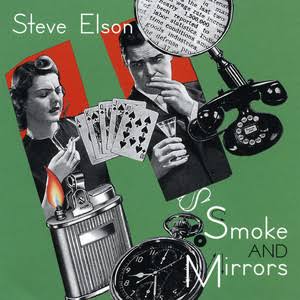
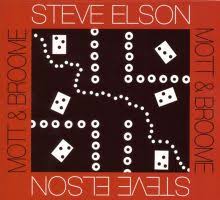
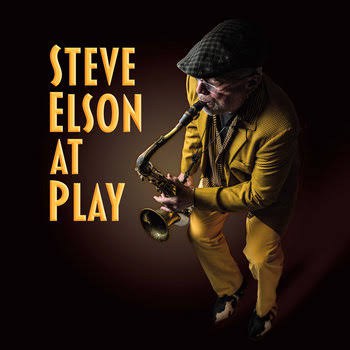
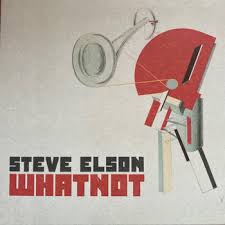
In addition to his extensive session work, Steve Elson has developed an impressive catalogue of solo recordings that showcase his abilities as both composer and bandleader. Albums including Open Minds, Smoke and Mirrors, Mott & Broome, Steve Elson at Play and Whatnot demonstrate the remarkable breadth of his musical imagination.
These recordings move comfortably between jazz, rhythm and blues, Latin influences, chamber music and contemporary improvisation. They reveal an artist who is equally interested in composition, ensemble playing and melodic storytelling, confirming that his creative identity extends far beyond his work as a sideman.
Critical Acclaim
Steve Elson‘s original music has received enthusiastic praise from critics over many years. Writers have highlighted his exceptional melodic sense, imaginative compositions and remarkable ability to blend diverse musical traditions into a coherent and highly personal style. His performances have been described as warm, expressive, inventive and technically accomplished without ever becoming self-indulgent.
Reviewers have also emphasised the emotional depth of his playing. Whether performing on baritone saxophone, tenor saxophone, soprano saxophone or clarinet, Elson consistently places communication above virtuosity, creating performances that are memorable because of their musical honesty rather than technical display.
The Borneo Horns Legacy
Steve Elson‘s work with The Borneo Horns remains one of the defining chapters of his career. Together with Lenny Pickett and Stan Harrison, he helped establish a modern horn section capable of moving effortlessly between funk, rhythm and blues, rock and contemporary pop.
The group’s influence extended far beyond David Bowie’s recordings. Their combination of precision, rhythmic power and imaginative arranging demonstrated how horn sections could become an essential creative element rather than simply decorative accompaniment. The Borneo Horns remain widely respected among musicians for their originality and exceptional ensemble playing.
Legacy
Steve Elson occupies a unique place within David Bowie’s musical history. From the revolutionary sound of Let’s Dance through the Serious Moonlight Tour and later studio albums including Tonight, Never Let Me Down, Heathen and The Next Day, his musicianship accompanied David Bowie across three decades of artistic evolution.
His powerful baritone saxophone became one of the defining instrumental voices of Bowie’s catalogue. Whether providing unforgettable solos on Modern Love and Let’s Dance or the haunting atmosphere of Dirty Boys, Elson consistently demonstrated that a great instrumental performance serves the music before serving the musician.
Beyond Bowie, Steve Elson has built one of the most varied and respected careers of any American woodwind player of his generation. His work as performer, arranger, composer and educator continues to inspire musicians who appreciate artistry grounded in curiosity, discipline and genuine musical expression.
Official Website & Further Information
Steve Elson continues to perform, compose, record and tour internationally. His official website features information about his current projects, recordings and performances.
For more information, please visit: www.steveelson.com
Following the publication of this page, Steve Elson kindly contacted DavidBowieWorld.com to offer additional historical information, permission to use photographs from his personal archive, and the opportunity to share further memories from his many years of working with David Bowie. As new material becomes available, this page will continue to be expanded to help preserve that history for future generations of Bowie fans.
Steve Elson in Bowie’s Collaborative Universe
Among David Bowie’s many collaborators, Steve Elson stands as one of the defining saxophonists of Bowie’s later career. Few musicians can claim to have contributed to both Bowie’s biggest commercial success and his acclaimed artistic renaissance three decades later.
His relationship with Bowie illustrates the importance of trust in musical collaboration. Bowie repeatedly returned to Elson because he recognised a musician capable of combining exceptional technique with imagination, humility and an instinctive understanding of the song itself. Those qualities made Steve Elson far more than a session player—they made him an essential part of David Bowie’s extended musical family.
