
Doug Rauch – Santana Bassist and David Bowie Collaborator
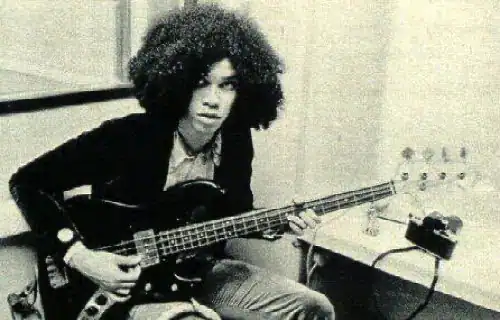
Photo: Timelessmastering / Wikimedia Commons / CC BY-SA 3.0 (editorial use)
Doug Rauch was one of the most inventive bass players of the early 1970s, combining funk, jazz, rock and Latin influences into a highly individual style that helped define the fusion era. Although he is best known for his work with Santana, he also became part of David Bowie’s 1974 touring band during the crucial period when Bowie was moving away from the theatrical world of Diamond Dogs toward the soul-inspired direction that would culminate in Young Americans.
Rauch’s association with Bowie was relatively brief, but it placed one of the most advanced bass players of the fusion movement inside Bowie’s increasingly sophisticated musical world. His rhythmic precision, melodic imagination and powerful groove made him a perfect fit for a band that was expanding beyond conventional rock music.
- Full name: Douglass Haywood Rauch
- Born: 14 September 1950, New York City, USA
- Died: 23 April 1979, San Francisco, California, USA
- Age: 28
- Instrument: Bass guitar
- Bowie connection: 1974 touring band
- Best known for: Santana’s fusion era (1972–1974)
- Speciality: Early double-thumb funk-fusion technique
Early life
Douglass Haywood Rauch was born in New York City on 14 September 1950. Growing up in the creative environment of Greenwich Village, he was exposed to a wide range of musical influences from an early age. His mother, Nadine Brewer, was a singer associated with the Metropolitan Opera, giving him exposure to music far beyond the world of rock and roll.
During the late 1960s, Rauch became active in the New York music scene, where he quickly developed a reputation as a bassist with unusual technical ability and a highly rhythmic approach. Unlike many bass players of his era, he treated the instrument not only as part of the rhythm section but also as a melodic and improvisational voice.
The New York years
Before achieving wider recognition, Rauch worked with a variety of artists including Buzzy Linhart, Carly Simon and Papa John Creach. These early sessions demonstrated his versatility and his ability to move comfortably between folk, rock, soul and jazz-oriented material.
Fellow musicians quickly noticed his extraordinary sense of groove. Even at this early stage, Rauch was experimenting with rhythmic ideas that would later become associated with modern funk bass playing. His use of thumb techniques and percussive accents anticipated approaches that would become common only years later.
Joining Santana
Rauch’s career changed dramatically in 1972 when he joined Santana, replacing founding bassist David Brown. The timing was significant. Carlos Santana was steering the band away from straightforward Latin rock and toward a more ambitious fusion of jazz, rock, spirituality and improvisation.
Rauch proved ideally suited to this direction. His combination of power, technical fluency and adventurous musical thinking helped drive Santana’s most experimental period. Alongside drummer Michael Shrieve and keyboardist Tom Coster, he became part of a rhythm section capable of handling complex arrangements while still maintaining a deep groove.
His bass playing became a defining feature of landmark recordings such as Caravanserai (1972), Welcome (1973), Love Devotion Surrender with John McLaughlin (1973), and the celebrated live album Lotus (1974).
Santana’s fusion revolution
The period between 1972 and 1974 is often regarded as one of the most adventurous chapters in Santana’s history. Albums such as Caravanserai, Welcome and Love Devotion Surrender moved far beyond conventional rock music, embracing jazz improvisation, spiritual themes and increasingly complex musical structures.
Doug Rauch was central to that transformation. His bass lines rarely functioned as simple accompaniment. Instead, they interacted constantly with the drums, keyboards and guitars, creating moving layers of rhythm and harmony. His playing was energetic and highly technical, yet always rooted in groove.
Fellow musicians frequently described Rauch as one of the most advanced bass players of his generation. His pioneering double-thumb technique, developed years before it became widely known through later bassists, helped create a distinctive style that was instantly recognizable.
The Lotus era
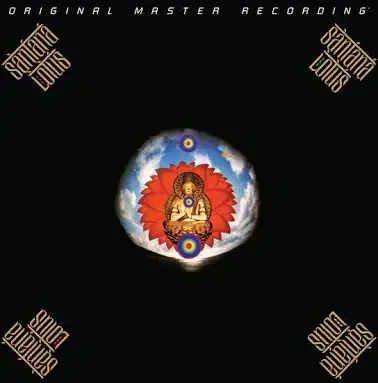
One of the finest documents of Rauch’s work with Santana remains Lotus, the expansive live album recorded during the band’s 1973 Japanese tour and released in 1974.
The performances captured a group operating at an extraordinary level. Rauch’s bass playing combines precision, spontaneity and raw energy, providing the foundation for extended improvisations while remaining deeply connected to the rhythmic pulse of the music.
Many Santana enthusiasts consider this period to represent the creative peak of the band’s fusion years, and Rauch’s contribution was an essential part of that achievement.
Leaving Santana
By 1974 Santana’s personnel changes continued and Rauch eventually left the group. Although his tenure lasted only around two years, he had left an enormous musical impact on some of the band’s most respected recordings.
Rather than settling into a single musical environment, Rauch continued working as a highly sought-after bassist across the expanding jazz-fusion scene. His reputation as an innovative player led to opportunities with many leading artists of the decade.
Joining David Bowie’s touring band
In September 1974, Doug Rauch became part of David Bowie’s touring band during the American leg of the tour that evolved out of the original Diamond Dogs Tour.
This was a fascinating moment in Bowie’s career. The elaborate dystopian stage production used earlier in the year was gradually being abandoned, while Bowie was becoming increasingly interested in soul, funk and rhythm and blues. The transition would eventually lead directly to the music of Young Americans.
To support this new direction Bowie assembled a larger, more musically sophisticated ensemble featuring musicians capable of handling complex arrangements and groove-oriented material. Doug Rauch’s fusion background made him a natural fit for this environment.
The 1974 Soul Tour
Although many fans still refer to all of Bowie’s 1974 performances as the Diamond Dogs Tour, historians often distinguish between the earlier theatrical shows and the later soul-oriented concerts.
Rauch belonged to this later phase. His bass playing helped support a set that increasingly featured material influenced by Philadelphia soul and American rhythm and blues. Songs were becoming more fluid, groove-based and musically expansive than the tightly scripted theatrical productions of earlier months.
His style brought additional rhythmic complexity to the band while maintaining the deep pocket required for Bowie’s emerging soul sound.
Cracked Actor
Doug Rauch’s Bowie period is closely associated with the performances documented during the famous 1974 tour, later seen in the documentary Cracked Actor.
The film captures Bowie during one of the most fascinating transitional moments of his career, standing between the glam-rock era and the soul explorations that would soon dominate his work.
While Rauch’s involvement with Bowie was relatively brief, it places him within one of the most historically important touring bands Bowie ever assembled — a group that effectively bridged Diamond Dogs and Young Americans.
Toward Young Americans
Bowie’s growing fascination with soul music eventually led him to Philadelphia’s Sigma Sound Studios, where much of Young Americans was recorded.
Although Rauch did not become a long-term member of Bowie’s inner circle, his participation during this transitional touring period connected him directly to the musical evolution that produced one of Bowie’s most important stylistic reinventions.
Beyond Bowie
After his period with David Bowie, Doug Rauch remained active within the rapidly developing jazz-fusion scene. His reputation as one of the most imaginative electric bass players of the decade ensured that leading musicians continued to seek out his talents.
Rauch worked with drummer Billy Cobham, one of fusion’s most influential figures, and appeared on projects that pushed the boundaries between jazz, rock and funk. His ability to combine technical brilliance with infectious groove made him an ideal collaborator in a genre built on musical risk-taking.
He also worked extensively with drummer Lenny White, contributing to White’s acclaimed fusion recordings during the mid-1970s. These projects showcased a different side of Rauch’s playing: melodic, fluid and deeply interactive, yet always rooted in rhythm.
Venusian Summer and Life & Times
Two of the most celebrated recordings from Rauch’s later career are Venusian Summer (1975) by Lenny White and Life & Times (1976) by Billy Cobham.
Both albums remain highly regarded within fusion circles and demonstrate why Rauch is often mentioned alongside the most innovative bassists of the era. His performances combine remarkable technical control with an almost relentless sense of forward motion.
Listening today, it is easy to hear why later generations of bass players would cite him as an influence. His lines are inventive without becoming self-indulgent and complex without sacrificing groove.
Ahead of his time
Doug Rauch is now widely recognised as one of the earliest pioneers of techniques that later became associated with modern slap and funk bass. Long before players such as Marcus Miller and Victor Wooten achieved international recognition, Rauch was experimenting with highly rhythmic thumb-driven approaches that expanded the role of the bass guitar.
What distinguished him from many technically gifted musicians was his ability to make complexity feel natural. Whether performing with Santana, Bowie, Billy Cobham or Lenny White, he never lost sight of the song or the groove.
Personal struggles
Despite his musical success, Rauch struggled with personal difficulties throughout the latter part of the 1970s. Friends and colleagues later spoke of periods of depression and increasing problems with drug use.
These challenges gradually affected both his personal life and his career. Although he continued to record and perform, the momentum of his early success became increasingly difficult to sustain.
Death
On 23 April 1979, Doug Rauch died in San Francisco, California, from a heroin overdose. He was only twenty-eight years old.
His death shocked many musicians who had witnessed his extraordinary abilities first-hand. At an age when many artists are only beginning to reach maturity, Rauch had already built a catalogue of performances that secured his place within the history of jazz fusion.
The tragedy of his early death has often led observers to wonder what he might have achieved had he lived longer. Given the speed of his musical development, many believe his greatest work may still have been ahead of him.
Legacy
Although Doug Rauch never became a household name, his influence remains significant among bass players and fusion enthusiasts. His work with Santana helped define one of the most creative periods in the band’s history, while his collaborations with artists such as Billy Cobham, Lenny White and David Bowie demonstrated remarkable versatility.
Within Bowie’s story, Rauch occupies a fascinating place. He arrived during a pivotal transition, helping support the transformation from the theatrical world of Diamond Dogs toward the soul-infused sound that would soon produce Young Americans.
His time with Bowie was brief, but it connected one of fusion’s most innovative bassists with one of rock music’s greatest musical shape-shifters.
Today, Doug Rauch is remembered not only as a virtuoso bassist, but as a musician whose energy, imagination and rhythmic brilliance continue to inspire players around the world.
