
Michael Kamen – Musical Director of David Bowie’s Diamond Dogs Tour
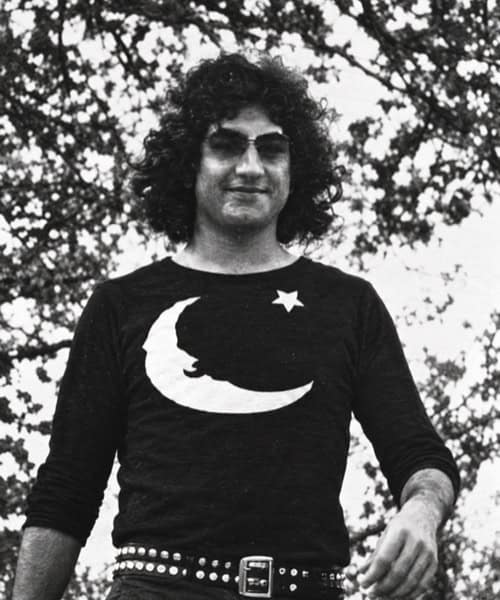
Michael Kamen helped turn David Bowie’s ambitious plans for the 1974 Diamond Dogs Tour into a working musical production. As musical director, he occupied a position between the singer’s artistic vision and the musicians who had to deliver it on stage. He also performed on electric piano, Moog synthesizer and oboe, bringing a distinctive combination of keyboard and woodwind experience to the band.
His collaboration with Bowie emerged from a career already spanning formal musical study, rock records and music for dance. The theatrical presentation of Diamond Dogs offered a setting in which those different experiences could meet. The resulting concerts demanded coordination between music, movement, lighting and elaborate scenery.
The official live album David Live preserves the early touring band’s performances in Philadelphia. It remains the central recording of Kamen’s work with Bowie. Beyond that collaboration, his story extends through orchestral rock projects, major film scores, concert music and a lasting commitment to music education. Understanding that wider career helps place his brief but substantial Bowie association within a life devoted to making different kinds of music work together.
- Name: Michael Arnold Kamen
- Born: 15 April 1948, Queens, New York City, United States
- Died: 18 November 2003, aged 55
- Occupation: Composer, arranger, orchestrator, conductor and musician
- Education: High School of Music and Art; oboe studies at the Juilliard School
- Early band: The New York Rock and Roll Ensemble
- Bowie collaboration: Musical director of the early 1974 Diamond Dogs touring production
- Tour instruments: Electric piano, Moog synthesizer and oboe
- Official Bowie recording: David Live, recorded in Philadelphia in July 1974
- Later work: Film scores, orchestral arrangements, concertos and large concert productions
Early life and musical education
Kamen grew up in a family with four sons. His parents were Helen and Saul Kamen, and music became an early part of his life. He attended New York’s High School of Music and Art before continuing his studies at Juilliard. The oboe was his principal subject there, placing him within a tradition that demanded close attention to sound, breath, phrasing and ensemble playing.
An oboist’s work involves both individual preparation and listening to other players. The instrument can carry a melody with great clarity, but it also has to fit within a larger group. That combination provides useful context for a musician who would later direct rock bands and conduct orchestras. Kamen’s eventual career drew on practical musicianship as well as his ability to write music.
Forming the New York Rock and Roll Ensemble
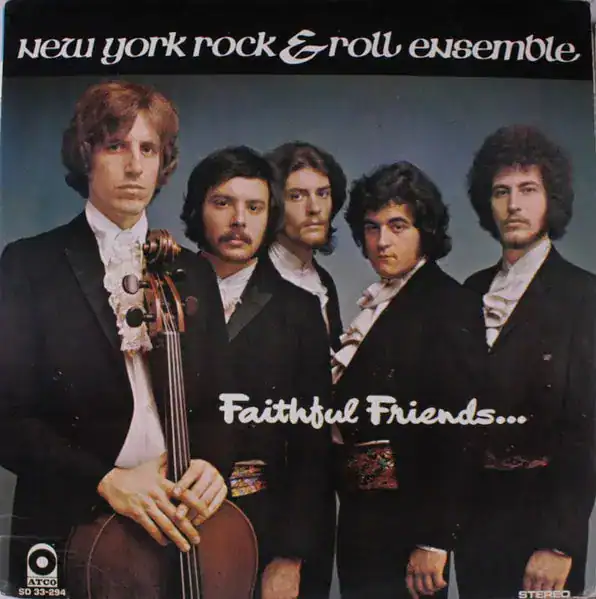
An early partnership with Marty Fulterman, later known as film and television composer Mark Snow, developed into a band called Emil and the Detectives. Kamen and Fulterman subsequently joined forces with cellist and bassist Dorian Rudnytsky and guitarists Clif Nivison and Brian Corrigan. Together they became the New York Rock and Roll Ensemble.
The line-up made the group’s approach possible. Keyboards and guitars could establish a rock sound, while oboes and cello brought instruments associated with concert music into the same performance. The musicians could change roles rather than relying on an orchestra added after a band had finished its work. Their combination of training and performing experience was built into the group itself.
The debut album and its mixed repertoire
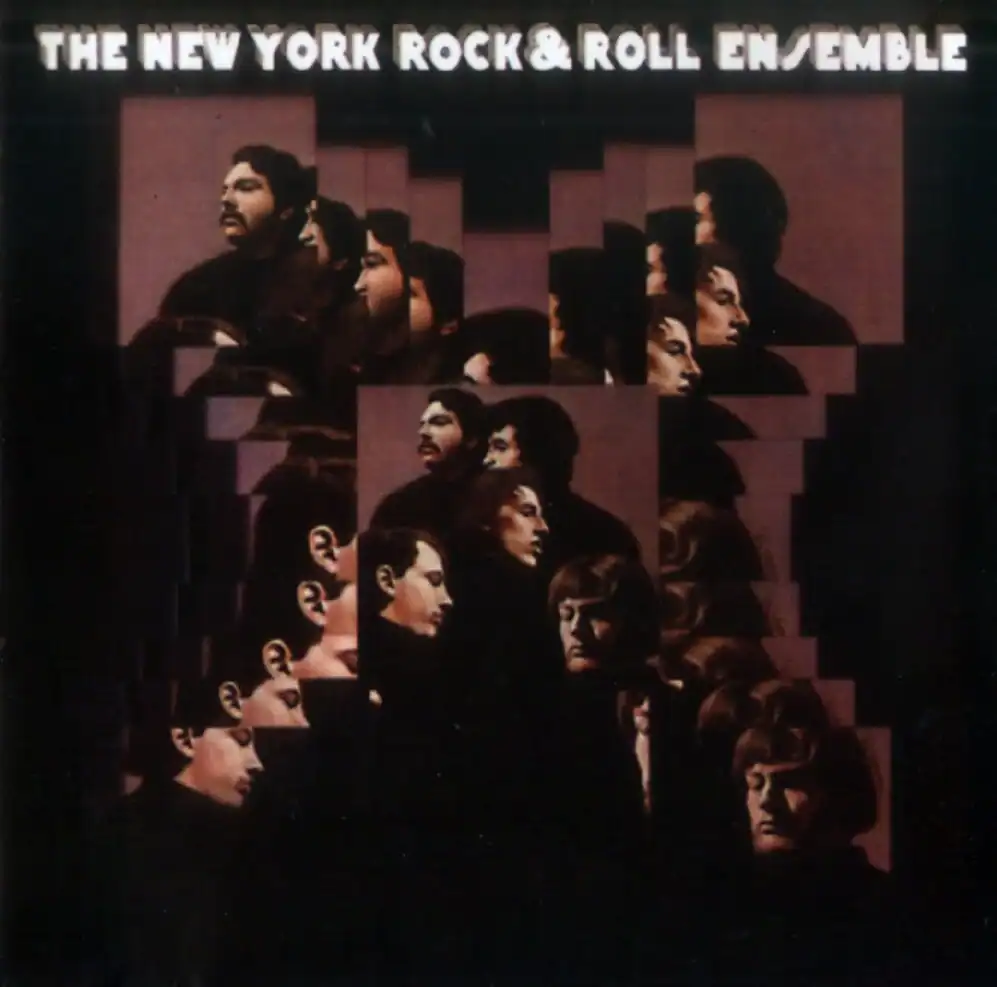
The ensemble’s self-titled debut, released in 1968, was produced by John Linde and Shadow Morton. Its programme combined songs with music identified through classical forms, including a movement from a trio sonata. Titles such as “Sounds of Time”, “She’s Gone” and “Mr. Tree” shared the record with material that made the musicians’ other background explicit.
That mixture matters because it shows the range of work Kamen was undertaking before he met Bowie. He was participating in a band that had to make changes of musical language intelligible within a single album. A listener could encounter a song, an instrumental passage and a different arrangement of familiar musical ideas without leaving the group’s recorded world.
Leonard Bernstein and Bach Transmogrified
The New York Rock and Roll Ensemble appeared in Leonard Bernstein’s televised Young People’s Concert entitled Bach Transmogrified, broadcast by CBS on 27 April 1969. The programme included the group’s treatment of the opening movement of Bach’s Brandenburg Concerto No. 5. The appearance gave their experiments a setting associated with orchestral music and an audience being introduced to musical ideas through television.
The occasion also placed Kamen beside a musician who made explaining and presenting music part of his public work. Bernstein’s introduction acknowledged the ensemble’s dual background in conservatory study and rock. The performance was a concrete meeting between those traditions, with the band appearing as itself rather than being absorbed into an anonymous backing ensemble.
Reflections and Roll Over
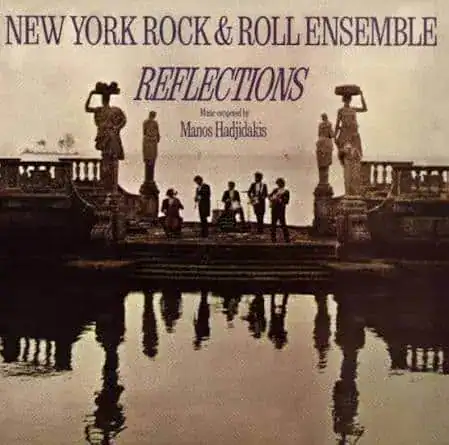
The ensemble collaborated with Greek composer Manos Hadjidakis on Reflections. The album’s credits identify Hadjidakis as composer, with arrangements by him and the group. Kamen performed on keyboards and oboe. This project gave the ensemble a different task: interpreting another composer’s material while contributing its own skills as an arranging and performing unit.
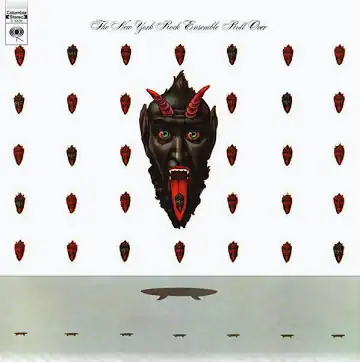
On Roll Over, released in 1971, Kamen’s credits include piano, organ and oboe. The album featured “Fields of Joy”, written with Hal Fredrick. Its personnel also included Rudnytsky on bass and cello, Fulterman on drums and oboe, and Nivison on guitar. The instrumental variety was still present as the group’s recordings developed.
Early work for dance
Kamen’s involvement in ballet preceded his appointment with Bowie. In 1971, the Boston Ballet presented Gamete Garden, choreographed by Louis Falco, with music composed and arranged by Kamen and performed by the ensemble. The project connected a rock group’s sound with movement designed for the stage.
Writing for dance introduces a particular relationship between time and action. A musical phrase may need to support an entrance, a sequence of movement or a change between performers. The composer and choreographer approach the same passage through different working methods, and the finished performance depends on those methods meeting successfully.
New York Rock in 1973
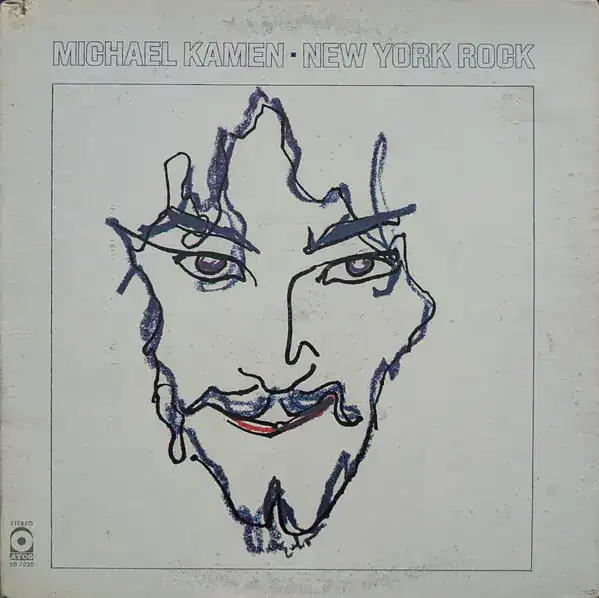
Kamen released New York Rock in 1973, working with Rudnytsky and a new group of musicians. The record provided room for more of his own songs. His listed instruments included keyboards, oboe, English horn, guitar, bass and ARP synthesizer, alongside his vocals. It presents a broad performing role at the point immediately before his Bowie association.
The album’s personnel included David Sanborn on alto saxophone. Their recorded connection therefore existed before the Diamond Dogs band brought them together on stage. Other contributors included Hank DeVito, Dennis Whitted and Larry Packer. The record was produced by Adrian Barber and Kamen, with sessions in Boston and remixing at Atlantic’s New York studios.
One song was titled “1984”. It belongs to Kamen’s own album and should be kept distinct from Bowie’s composition of the same name. The coincidence is useful to recognise when exploring the two musicians’ discographies, especially because Kamen later discussed his contribution to Bowie’s live version.
Rodin and the introduction to Bowie
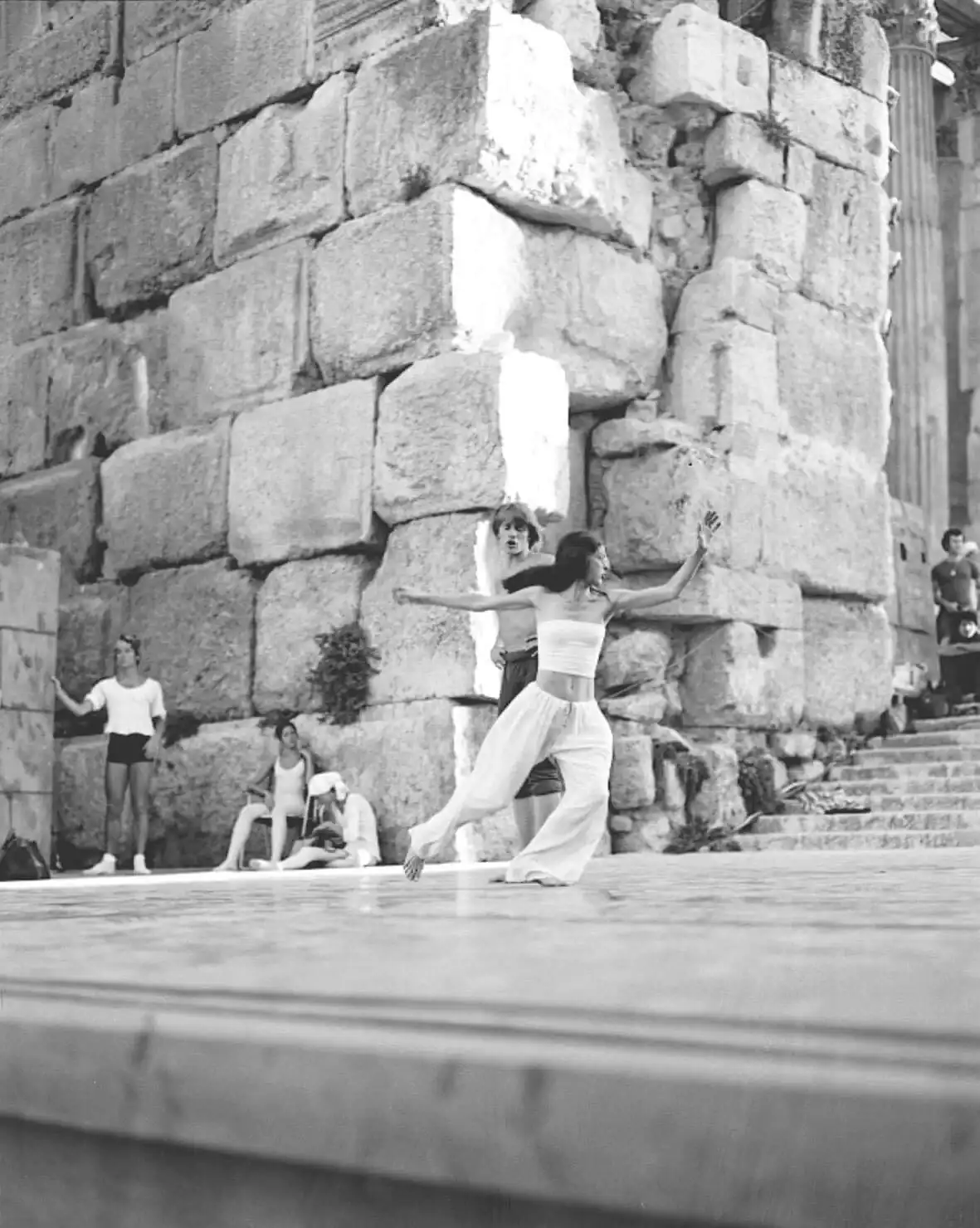
Rodin Mis En Vie, choreographed by Margo Sappington for the Harkness Ballet, premiered at New York’s Harkness Theater on 17 April 1974. Kamen composed, arranged, orchestrated and conducted the music. The ballet took its inspiration from Auguste Rodin’s sculpture, translating the figures and emotional character of the artworks into dance.
According to the account maintained by Kamen’s family, Bowie and Tony Defries attended the premiere and met him backstage afterwards. The encounter led to his involvement with Diamond Dogs. The connection arose through a completed theatrical work in which Bowie could see and hear how Kamen approached music in relation to movement.
The programme included sections associated with sculptures such as The Kiss, The Burghers of Calais and The Gates of Hell. Kamen was already working with large dramatic subjects and a performance structure extending beyond individual songs. Bowie was preparing a production that required a comparable awareness of the whole stage event.
Building the Diamond Dogs production
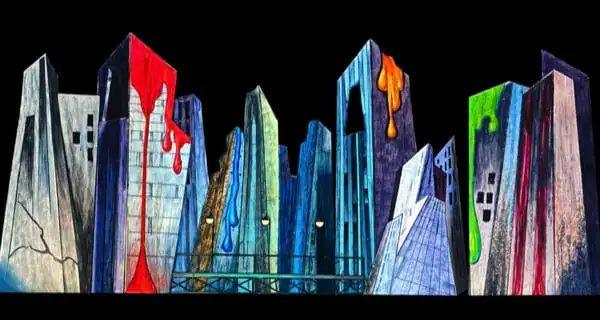
The early Diamond Dogs show was conceived as a large theatrical production built around an imagined urban environment. Defries’s account of its planning describes work on characters, designs, set lists, lighting and moving structures. Stage specialists Jules Fisher and Mark Ravitz participated in developing the physical presentation, while Toni Basil worked on choreography.
Kamen joined a production that involved several areas of expertise. The singer’s ideas had to become scenery that could travel, movement that could be rehearsed, and music that a band could play consistently. Each department contributed to a shared event whose ambition was visible to an audience but whose operation depended on substantial preparation.
A musical director occupied an important place in that process. The title carried responsibility for making the musical element function within the larger show. Defries later remembered Kamen’s confidence and the extent of the responsibility given to him. His recollection recognises a young musician capable of handling a demanding assignment involving more than his individual instrumental performance.
“Michael was enormously helpful in making that work.”
Tony Defries, recollection published on Michael Kamen‘s official website.
The early touring band
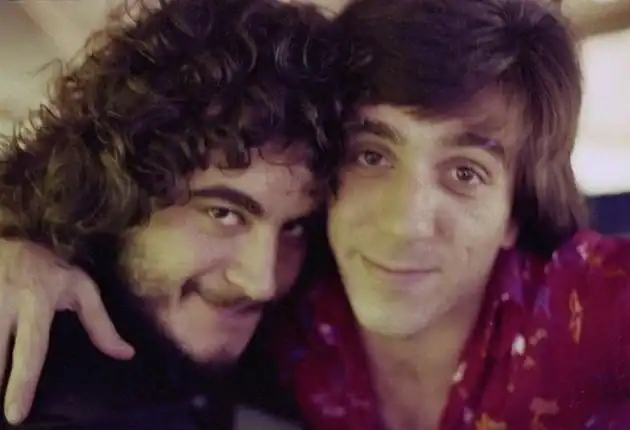
The North American tour opened in Montreal on 14 June 1974. Its early ensemble included guitarist Earl Slick, pianist Mike Garson, saxophonists David Sanborn and Richard Grando, bassist Herbie Flowers and drummer Tony Newman. Additional performers contributed percussion, backing vocals and movement within the production.
This combination created a larger instrumental palette than a basic guitar, bass and drums line-up. Two keyboard players could cover different functions, while saxophones and oboe introduced further melodic colours. The rhythm section supplied the foundation on which the other parts could sit. Each player arrived with experience that helped determine what the band could achieve together.
Electric piano, Moog and oboe
Kamen’s instrument credits describe three different resources within the early show. An electric piano could contribute to harmony and rhythm while occupying a different sound space from Garson’s piano. A synthesizer offered electronically produced tones, and the oboe provided a strongly individual acoustic voice. These resources broadened the available texture without requiring each instrument to appear in every song.
The oboe was especially unusual in a touring rock ensemble. Its double reed produces a sound with a clear edge and expressive possibilities shaped by breath. Placed among amplified instruments, it could draw attention through its character rather than through the weight of a large string or brass section. Kamen’s classical studies supplied the practical playing experience needed to bring it into that environment.
Musical direction within a theatrical show
The band’s work had to coexist with a production involving scenic changes and planned movement. In a conventional concert, a performer can often vary the length of an introduction or pause according to the atmosphere in the room. A show with choreography and moving machinery introduces additional points of coordination. Musical preparation has to account for the event as a whole.
This provides context for Kamen’s background in dance. Rehearsing music in relation to movement had already formed part of his professional life. With Diamond Dogs, the same broad relationship appeared inside a touring rock production, where a full evening also needed to retain the energy and flexibility expected from a live band.
Garson’s later interview supplies direct testimony about that working relationship. He remembered performing under Kamen’s musical direction with pleasure. His comment places Kamen within the musicians’ own experience of the tour, adding a performer’s perspective to Defries’s account of the production’s organisation.
Mike Garson on working with Michael Kamen
“Doing the ‘Diamond Dogs’ tour when Michael Kamen was the musical director was a joy.”
Mike Garson, interview with All About Jazz.
Bringing different periods into one set
The repertoire brought recent material together with songs from earlier phases of Bowie’s career. The programme preserved on the expanded version of David Live includes “Rebel Rebel”, “Moonage Daydream”, “Changes”, “Aladdin Sane” and the “Sweet Thing / Candidate / Sweet Thing” sequence. Each had its own recorded history before entering the shared environment of the new concert.
Arranging such a set involves choices about continuity. A band has to find ways for contrasting songs to belong to the same evening, while preserving the qualities that make each recognisable. Instrumental introductions, endings, transitions and the placement of a vocal within the ensemble all help create that relationship.
The programme also included songs Bowie had made his own through performance, such as “All the Young Dudes” and “Knock on Wood”. Their inclusion widened the range of writing represented on stage. Kamen’s assignment took place within this varied repertoire, with a single touring ensemble carrying material that had originally emerged from several different groups and studio circumstances.
David Live at the Tower Theatre
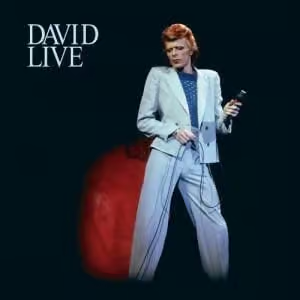
The July performances at the Tower Theatre in Upper Darby, in the Philadelphia area, supplied the material for David Live. The record became Bowie’s first officially released live album. It gave listeners who had not attended the North American concerts access to the sound of the early touring ensemble and its treatment of the repertoire.
For Kamen’s discography, the album is a substantial document. It preserves his collaboration inside a commercially released Bowie record rather than solely through photographs, recollections or a touring credit. The combination of credited personnel and recorded music allows his contribution to be placed in a defined event within Bowie’s live history.
Recording dates and later editions
Different dates appeared on early and later pressings of David Live. Tony Visconti addressed the question when discussing his work on the tapes for a subsequent edition. In the interview published by Bowie’s official website, he identified the last two nights of the Tower Theatre run as the recorded shows: 11 and 12 July 1974.
The release history also changed what listeners could hear. Later editions expanded the programme, and the 2005 mix brought previously omitted performances into a more complete presentation. The official track listings distinguish this version from the original album. Identifying the edition is useful when discussing a song that was absent from the first release.
Visconti also described technical work and overdubs associated with the tapes, including augmented backing vocals and re-recorded instrumental material. That account explains why a released live album represents both a concert and subsequent production work. The history of its creation belongs alongside the performance credits when examining the record in detail.
“1984” and a memorable oboe contribution
David Bowie – “1984”.
Kamen identified one particular moment on the album in a 1998 interview. He recalled meeting Edward Shearmur, who described an oboe passage on a Bowie record as an important early discovery. Shearmur had heard a place for classical instrumental experience within popular music. Kamen recognised the performance as his own contribution to “1984” on David Live.
The recollection connects a recorded detail with a later professional relationship. Shearmur went on to work for Kamen, initially helping organise papers and manuscripts and subsequently contributing more directly to musical work. Kamen spoke warmly about the younger composer’s progress, describing both practical assistance and a developing friendship.
That story gives the oboe passage a specific afterlife. A sound made during a touring production reached a listener who later entered film music himself. It also shows how a musician’s influence can travel through a small element in a recording, rather than through a headline credit or a widely promoted solo performance.
Michael Kamen on his Bowie recording
“And it was my playing oboe solo in ‘1984’”
Michael Kamen, excerpt from a 1998 interview by Jonathan Broxton and James Southall, reproduced by Movie Music UK.
The changing tour and Kamen’s departure
The later 1974 concerts developed away from the original presentation. Bowie recorded soul-oriented material during the summer break, and the subsequent touring band introduced new players and singers. The more elaborate scenery was eventually removed, creating a different relationship between the stage presentation and the music.
Tony Visconti‘s recollection of the Los Angeles performance later released as Cracked Actor states that Kamen had left and Garson was handling the keyboard parts. Garson also remembered a change of ensemble between earlier and later stages of the year’s touring. Their accounts establish a transition rather than an unchanged band continuing through every concert.
Some retrospective personnel lists conflict about Kamen’s presence later in the year. An exact final performance is therefore left unspecified here. His securely documented Bowie work centres on the early theatrical production and the July recordings. No published first-hand account cited for this article establishes a dramatic personal dispute as the cause of his departure.
MainMan work and The Next Man
Kamen’s professional relationship with Defries continued beyond the Bowie tour. MainMan’s account records his arrangements and keyboard work for John Mellencamp’s Chestnut Street Incident, recorded in 1975. It also describes Kamen introducing other musicians to the organisation. His role in that network extended through practical collaborations after the touring assignment ended.
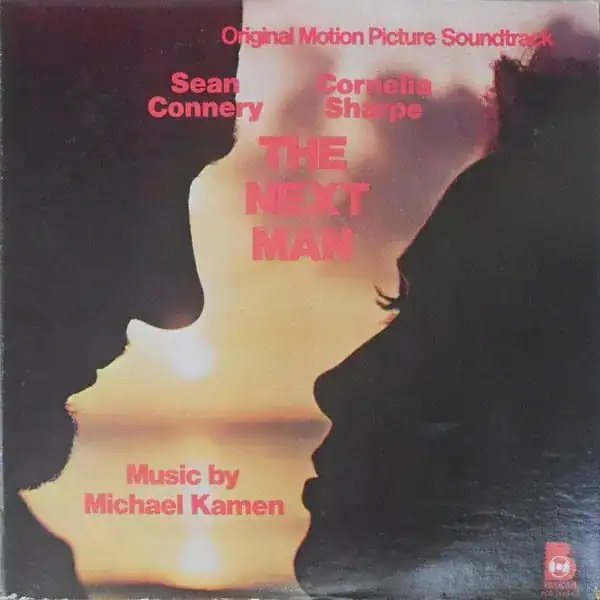
In 1976, he composed music for The Next Man. The soundtrack credits cover composition, arrangement and conducting, with recording at the Hit Factory in New York. Its programme included instrumental music and vocal tracks, among them a performance by Kamen himself. Film work was becoming a further field in which his different abilities could be used together.
Pink Floyd and orchestral rock
Kamen’s work with Pink Floyd became another important chapter. His official biography records orchestration for The Wall album, and the catalogue credits him with orchestration and conducting for its 1982 film version. The latter involved the National Philharmonic Orchestra, giving the music an orchestral performing force within the film’s dramatic construction.
On The Final Cut in 1983, his responsibilities widened. The official entry identifies him as co-producer with Roger Waters and James Guthrie, arranger, conductor and performer on piano and harmonium. The range of those credits places him within both the development and execution of the recording.
Eurythmics and “Here Comes the Rain Again”
Eurythmics – “Here Comes the Rain Again”, featuring string arrangements orchestrated and conducted by Michael Kamen.
Kamen worked with Eurythmics on “Here Comes the Rain Again”. The account on his official website describes Dave Stewart bringing him into a meeting with Annie Lennox to develop strings from a synthesizer part she had prepared. Kamen orchestrated the arrangements and conducted members of the British Philharmonic Orchestra.
The assignment illustrates a specific kind of collaboration. An existing musical idea was carried into another instrumental setting, with the arranger responsible for making it playable by an ensemble. The song remained an Eurythmics composition, while the orchestral contribution became part of its recorded presentation.
The working relationship continued beyond that first project. Kamen’s family account describes lasting friendship as well as further collaborations. Here, a connection with popular songwriting developed through a concrete arranging task, offering a different scale of work from the touring productions and film scores that also occupied his professional life.
Brazil and Terry Gilliam
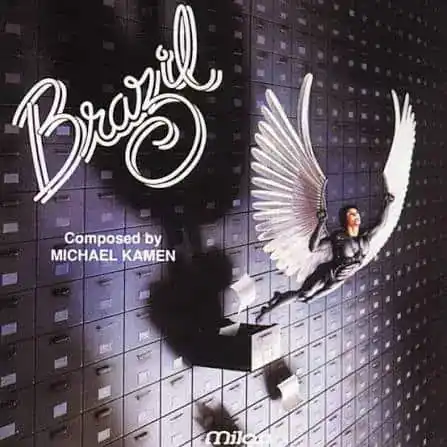
Terry Gilliam’s Brazil, released in 1985, gave Kamen a major film assignment. His credits cover composition, orchestration, arrangement, conducting and score production. The National Philharmonic Orchestra performed the music, and Kate Bush supplied vocals for the title song associated with Ary Barroso’s earlier composition.
The official account connects the introduction to Gilliam with Ray Cooper, who became aware of Kamen during work around The Final Cut. Kamen’s previous score for Venom was also part of the professional connection. A network built through rock recording and earlier films helped bring him into this new project.
The film’s mixture of bureaucracy, fantasy and anxiety gave the music several dramatic functions. Existing song material and newly written score could coexist within the same imaginative world. Kamen’s recorded work was prepared at Abbey Road during 1984, before the film appeared. His family archive preserves both the principal credits and a detailed list of the musical cues.
Edge of Darkness with Eric Clapton
“Edge of Darkness” – music by Eric Clapton and Michael Kamen.
The BBC serial Edge of Darkness brought Kamen together with Eric Clapton in 1985. The soundtrack identifies both musicians as writers of the music. Recording and mixing took place at Woodlands Sound Studio, BBC facilities and Eel Pie Studios, with Andy Jackson credited as engineer.
The production offered a television setting for a partnership that would develop further. The soundtrack’s programme includes pieces named for the series and its locations or events, including “Northmoor”, “Oxford Circus” and “Obituary”. The music had to belong to a sustained dramatic story while retaining enough identity to work as a released recording.
Clapton’s guitar and Kamen’s composing and arranging experience supplied different resources within that collaboration. Their subsequent work would encompass film scores, orchestral concerts and a guitar concerto. Edge of Darkness is a concrete early document of the partnership, with the joint authorship stated in its contemporary soundtrack credits.
Highlander and Queen
Queen – “Who Wants to Live Forever”, co-arranged by Brian May and Michael Kamen, with Kamen conducting the orchestra.
For Highlander in 1986, Kamen wrote and conducted the score while Queen contributed songs. Brian May‘s “Who Wants to Live Forever” connected the band’s writing with the film’s emotional story. Kamen arranged the song and incorporated its material into the score, working across the relationship between a featured song and the surrounding film music.
The official single entry identifies May and Kamen as co-arrangers and notes Kamen’s conducting contribution. The film credits name the National Philharmonic Orchestra, with further players contributing instruments including pipes and mandora. Its music combined several resources suited to a story moving across different periods and locations.
Kamen also conducted for the song’s music video. This extended his participation into another presentation of the same material, where an orchestral performance became part of the visual setting around Queen. The collaboration involved writing, arrangement and performance at different stages, each contributing to how the music reached its audience.
Lethal Weapon and the return of David Sanborn
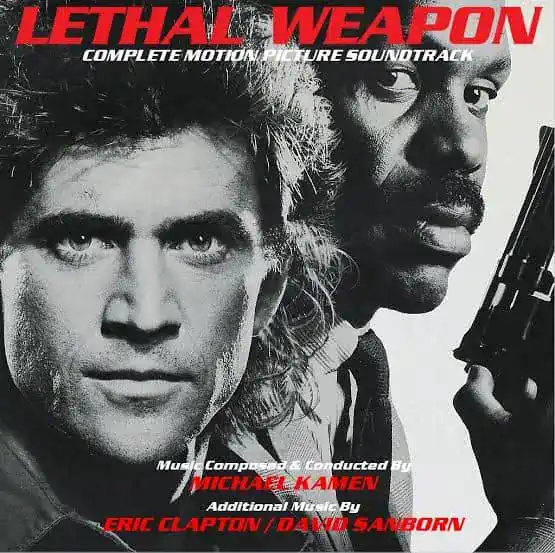
Lethal Weapon in 1987 brought Kamen and Clapton into a film score featuring David Sanborn. Kamen and Clapton received composition credits, with Kamen also conducting and participating in production. Sanborn’s saxophone formed part of a performing group that included an orchestra and the principal collaborators themselves.
The recording credits describe a substantial team. Orchestrators, engineers, a music editor and a production assistant helped prepare and capture the score. Sessions took place across several locations during late 1986 and early 1987. The film’s musical identity emerged through that organised work as well as through the recognisable sounds of its featured musicians.
For a Bowie-focused biography, Sanborn’s presence supplies a meaningful connection across time. Two members of the early Diamond Dogs ensemble were now working in another dramatic medium. Their later collaboration had its own purpose, but it extended a professional association that was already visible on Kamen’s earlier recordings and the Bowie tour.
Die Hard and musical character
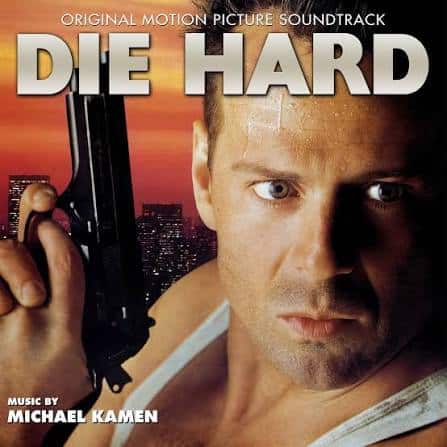
Kamen composed and conducted the music for Die Hard in 1988, working with a team of orchestrators and recording specialists. The score was recorded in Los Angeles. Its task involved a film whose action depended on tension, sudden changes of danger and a confined setting, with music contributing to the pace and character of the unfolding events.
In commentary quoted by his official website, Kamen discussed the use of Beethoven and “Singin’ in the Rain”. His account emphasised enjoyment and a sense of the absurd alongside the work’s technical demands. It offers a glimpse of how he approached composition as part of entertainment, even within a production built around violence and suspense.
Michael Kamen on conducting
“When I get up in front of the orchestra, I try to have fun.”
Michael Kamen, Die Hard DVD commentary, excerpt reproduced on his official website.
A concerto for David Sanborn
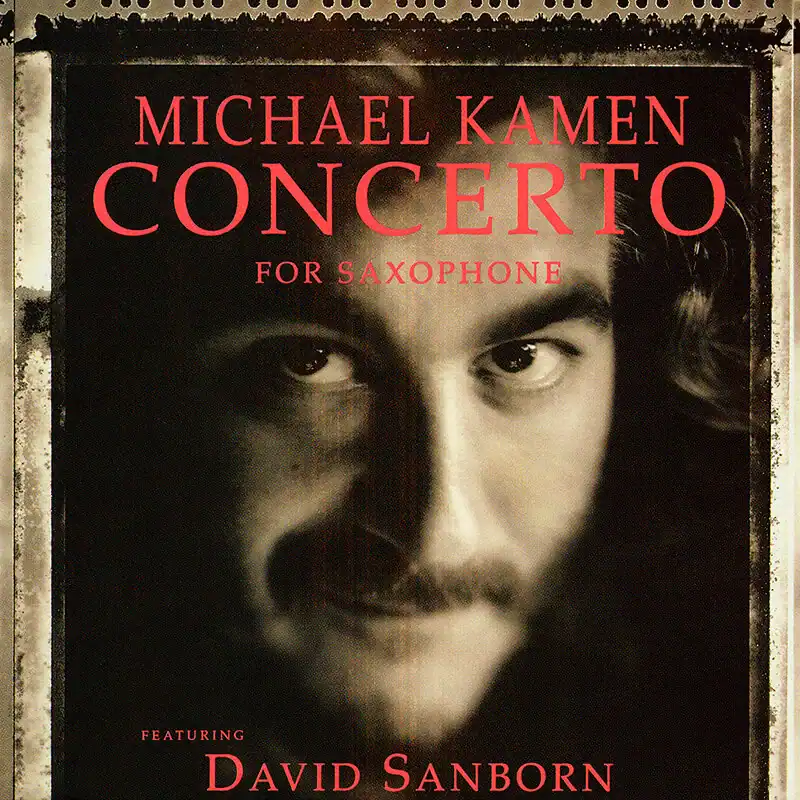
The Concerto for Saxophone, released in 1990, placed Sanborn’s alto saxophone within an orchestral work written by Kamen. The principal concerto was recorded with the National Philharmonic Orchestra. Its three movements gave the soloist an extended setting beyond the length and structure of a conventional pop song.
The album also contained shorter pieces, including “Helen Claire”, “Sasha”, “Zoe” and “Sandra”. Guest contributions included guitar from David Gilmour and Eric Clapton and percussion from Ray Cooper. The programme brought several of Kamen’s professional relationships into a recording centred on his own concert music.
Eric Clapton and the guitar concerto
Eric Clapton – Michael Kamen‘s Concerto for Electric Guitar and Orchestra.
Clapton commissioned Kamen’s Concerto for Electric Guitar and Orchestra. It formed part of the orchestral evenings associated with Clapton’s Royal Albert Hall residencies in 1990 and 1991. Kamen conducted the National Philharmonic Orchestra alongside the band, presenting his original work and orchestral arrangements of Clapton’s songs.
Kamen’s official catalogue describes the work as conceived for Clapton’s musical voice. Later recordings involved guitarist Tomoyasu Hotei, giving the composition another performing history. The concerto demonstrates that Kamen’s involvement in popular music also produced original concert works, with named soloists and orchestral forces forming the basis of the composition itself.
Roger Waters and The Wall in Berlin
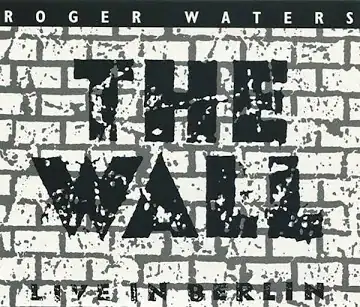
On 21 July 1990, Roger Waters presented The Wall in Berlin with a large cast of guest performers. Kamen orchestrated and conducted for the event. Its musical forces included the East Berlin Radio Orchestra and choir, alongside a band and other ensembles. The production transformed an established recorded work into an event on an exceptional scale.
Guest performers included Bryan Adams, Joni Mitchell, Van Morrison, Marianne Faithfull and Sinéad O’Connor. The variety of voices created a practical requirement to bring different performance styles into one continuous programme. Orchestral preparation and musical organisation were essential to supporting that cast within the staged work.
Robin Hood: Prince of Thieves
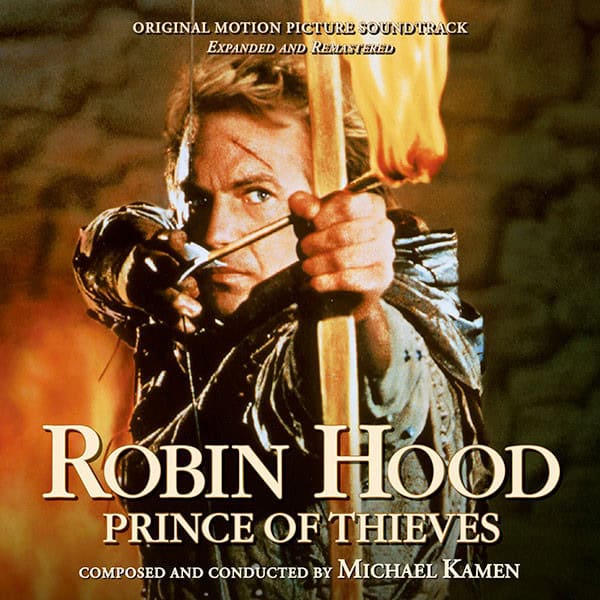
Kamen wrote the score for Robin Hood: Prince of Thieves in 1991, composing and conducting music for the adventure film starring Kevin Costner. The recording involved the Greater Los Angeles Orchestra and a substantial orchestration team. Sessions and later soundtrack editions preserve a detailed history of how the music was prepared and presented.
The score had to support action, romance and changes between intimate scenes and large confrontations. Its programme includes music associated with Sherwood, Marian, training sequences and the final rescue. These different settings required contrasts within a musical identity broad enough to belong to the whole film.
“(Everything I Do) I Do It for You”
Bryan Adams – “(Everything I Do) I Do It for You”, written by Bryan Adams, Robert John “Mutt” Lange and Michael Kamen.
The Bryan Adams recording of “(Everything I Do) I Do It for You” was written by Adams, Robert John “Mutt” Lange and Kamen. It became a major international success and spent sixteen consecutive weeks at number one in the United Kingdom. For Kamen, the song brought a songwriting credit to an audience far beyond specialist film-score listeners.
The song also received an Academy Award nomination. Its success belongs to the three credited writers and the recorded performance, while Kamen’s film score remains a separate body of work. Both parts of the project mattered to his career, bringing together the extended dramatic form of cinema music and the concentrated form of a popular song.
Kamen later spoke about wanting film songs to relate to the music already present in the picture. That comment explains a principle behind his approach: a song could grow from the film’s musical world and then take on a life as a recording in its own right.
Michael Kamen on songs in films
“I like songs in films when they have a relationship with the music that’s gone on in the films.”
Michael Kamen, World Entertainment Report profile, 1996, quoted on his official website.
“It’s Probably Me” and Lethal Weapon 3
“It’s Probably Me” – written by Sting, Eric Clapton and Michael Kamen for Lethal Weapon 3 (1992).
For Lethal Weapon 3 in 1992, Kamen worked again with Clapton and Sanborn. The soundtrack credits also identify him as a co-writer of “It’s Probably Me” with Sting and Clapton. Sting supplied the lyrics, while Kamen and Clapton received music credits. The recording brought their contributions into a single song associated with the film.
Its performing personnel included Sting on vocals and bass, Clapton on guitar, Sanborn on alto saxophone and Kamen on keyboards, with Steve Gadd and Don Alias among the other musicians. The record connected familiar collaborators through their own instrumental work as well as through writing and production.
Pavarotti and international concert projects
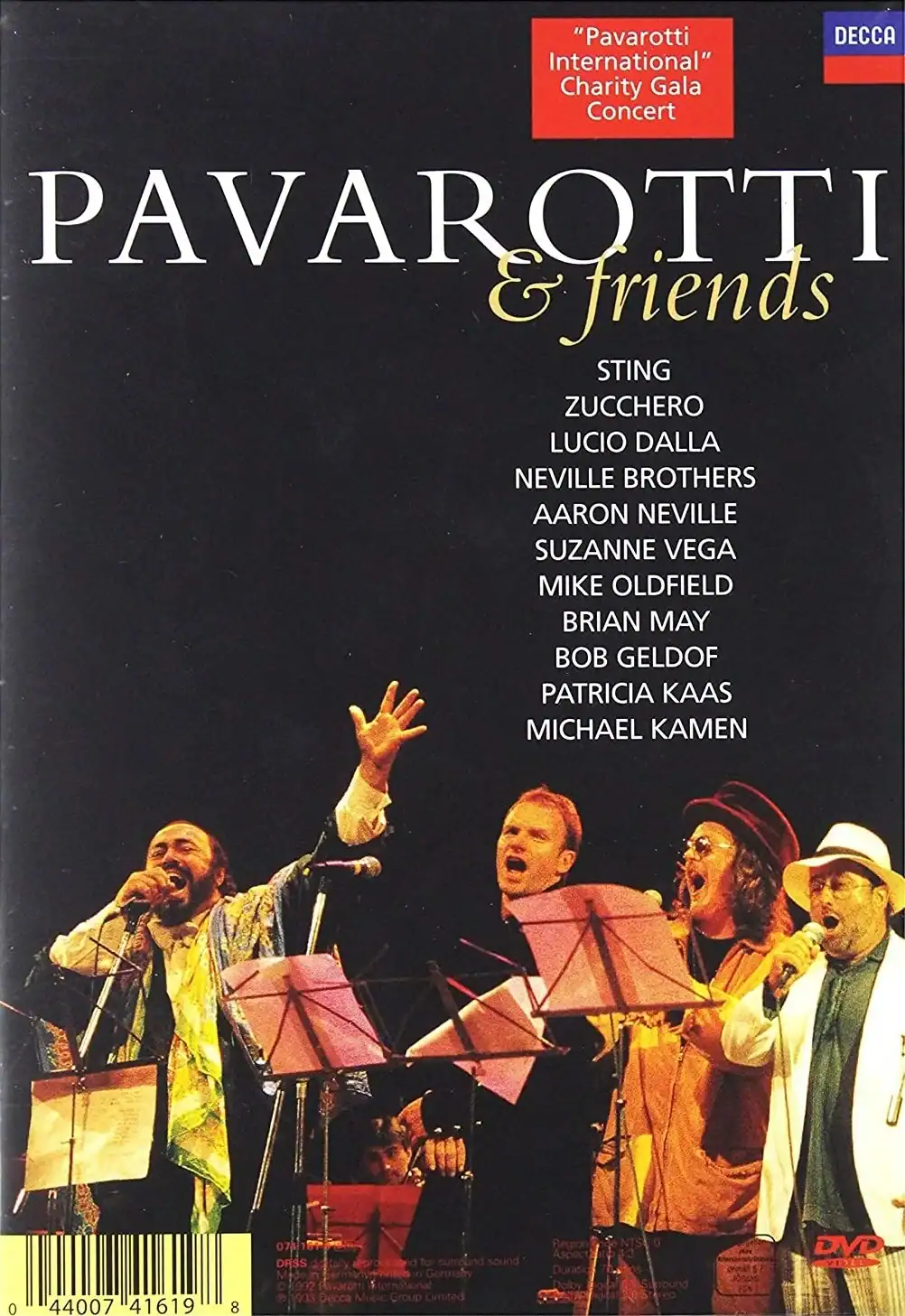
Kamen participated in the Pavarotti & Friends concerts, beginning with the Modena event in 1992. His credits included musical direction, arranging and conducting. The programmes placed opera singers beside musicians from popular music, requiring arrangements suited to different voices and ways of performing.
The 1994 concert included Bryan Adams, Andrea Bocelli and other performers, with Kamen among the conductors. These productions brought his orchestral experience into events where the musical programme was built around a changing cast. Individual songs had to work within a collective occasion rather than as separate studio projects.
Another large assignment was The Great Music Experience at Todai-ji Temple in Nara, Japan, in May 1994. Kamen served as musical director, arranger, orchestrator and conductor. Its participants included Bob Dylan, Joni Mitchell, INXS, the Chieftains, Japanese musicians and the Tokyo Philharmonic Orchestra. The event added a further international setting to his work in organising complex live performances.
Don Juan DeMarco and another film song
Bryan Adams – “Have You Ever Really Loved a Woman?”, written by Bryan Adams, Robert John “Mutt” Lange and Michael Kamen for Don Juan DeMarco (1995).
Kamen composed and conducted the music for Don Juan DeMarco in 1995. The film starred Johnny Depp, Marlon Brando and Faye Dunaway. The London Metropolitan Orchestra performed the score, with contributions from musicians including Julian Bream and Paco de Lucía giving the soundtrack further instrumental character.
The Bryan Adams song “Have You Ever Really Loved a Woman?” continued Kamen’s songwriting partnership with Adams and Lange. It received an Academy Award nomination, adding another prominent song credit to a project for which he also supplied the dramatic score. The film’s romantic subject offered a different setting from the action productions with which he was often associated.
Mr. Holland’s Opus
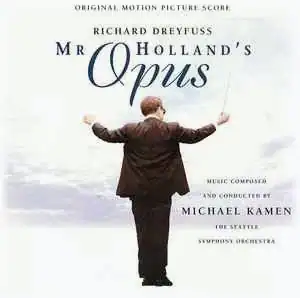
Mr. Holland’s Opus placed music education at the centre of its story. Kamen wrote and conducted the score for the film, which starred Richard Dreyfuss as a teacher whose work affected generations of students. The recording involved the Seattle Symphony Orchestra and the London Metropolitan Orchestra.
The project’s musical material included An American Symphony, for which Kamen received a Grammy for instrumental arrangement. He also wrote “Cole’s Song”, with lyrics by Julian Lennon and Justin Clayton and a performance by Lennon. Those contributions supplied different musical forms within a film concerned with teaching, family and the meaning of a musician’s work.
The Mr. Holland’s Opus Foundation
In 1996, Kamen founded the Mr. Holland’s Opus Foundation, inspired by the film and its depiction of the difference a teacher could make. The organisation supports music education by supplying instruments to underfunded school programmes and providing assistance to school districts. Its purpose addresses the practical means required for students to learn and play.
An instrument donation can affect an entire programme, increasing the number of students able to participate and improving the equipment available to a teacher. The foundation’s work connects musical ambition with everyday needs: playable instruments, functioning ensembles and the opportunity to develop skills through regular study.
This part of Kamen’s legacy extends beyond audiences buying records or attending concerts. It concerns future musicians at the point where their opportunities begin. The foundation’s own account identifies his commitment to music education as its starting purpose, giving his work a continuing presence within schools after his death.
What Dreams May Come
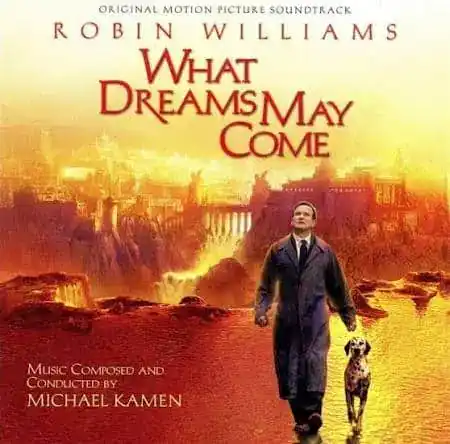
For What Dreams May Come in 1998, Kamen composed and conducted a score for a story of love, death and imagined worlds beyond ordinary life. The London Metropolitan Orchestra performed the music. Kamen also played an oboe solo, bringing his own instrumental voice into a film score late in his career.
The project included “Beside You”, written with Mark Snow and performed by Mick Hucknall. This reunited two musicians whose early friendship had helped form the ensemble decades before. Their collaboration now appeared in a very different professional setting, connecting an early relationship with mature careers in screen music.
Revisiting his work on Michael Kamen‘s Opus
The 1998 album Michael Kamen‘s Opus presented selected film music in newly recorded performances. Kamen curated the programme and participated as composer, orchestrator, conductor and co-producer. The album provided a way to hear pieces from different films within one musical sequence chosen for listening.
Its programme ranged from “Magic City” from The Next Man to material from more recent films. Such a collection changes the context of screen music: a passage originally timed to a scene can be presented as a complete track, while pieces written years apart become neighbours on a record.
Metallica and S&M
Metallica – “Nothing Else Matters”, performed with the San Francisco Symphony conducted by Michael Kamen, S&M (1999).
In April 1999, Metallica performed with the San Francisco Symphony at the Berkeley Community Theatre. Kamen arranged, orchestrated and conducted the music and shared production responsibilities for the resulting S&M album. The sessions placed the band’s amplified instruments beside a full orchestra in a live concert setting.
The project required a relationship between two ensembles with different performance practices. An orchestra works from written parts and a conductor’s direction; a rock band also depends on its internal timing, stage experience and established arrangements. Preparing music for both involves more than assigning a melody to strings. Each group needs a meaningful place in the performance.
The album credits name an extensive orchestration and music-preparation team alongside Kamen. Their work helped turn the arrangements into parts that could be rehearsed and played. The recordings became a major release in his later career, presenting another large collaboration through both live performance and a produced album.
The Iron Giant
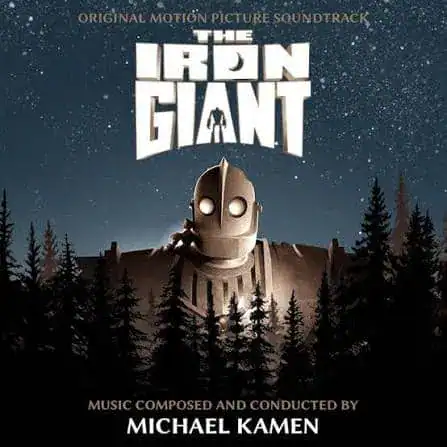
Kamen wrote and conducted the score for Brad Bird’s animated film The Iron Giant in 1999. The Czech Philharmonic Orchestra recorded the music in Prague. His credits include composition, orchestration, arrangement, conducting and score production, with Robert Elhai and Blake Neely among the other orchestrators.
The story centres on the friendship between a boy and a robot, moving between curiosity, humour, fear and sacrifice. An animated film can make sharply defined changes of movement and emotion, giving the score a detailed relationship with the picture. Kamen’s cue archive preserves the many passages prepared for those developments.
The New Moon in the Old Moon’s Arms
The National Symphony Orchestra commissioned The New Moon in the Old Moon’s Arms, a symphonic poem premiered at the Kennedy Center in January 2000. Leonard Slatkin directed the orchestra. Kamen drew inspiration from the history of the Ancestral Pueblo peoples of the American Southwest, described in the project’s contemporary material as the Anasazi.
The four-movement work approached the new millennium through a long historical perspective. Its movement titles included “The Prayer” and “In the Moonlight”, with outer sections referring to the years 1000 and 2000. The composition offered an extended musical structure designed for an orchestral concert rather than an edited film or a singer’s repertoire.
The recording also appeared alongside a concert presentation of music from Mr. Holland’s Opus. The release gave Kamen’s original orchestral work a place within his recorded catalogue, while the commission connected him with an institution devoted to performing and developing concert music.
Band of Brothers
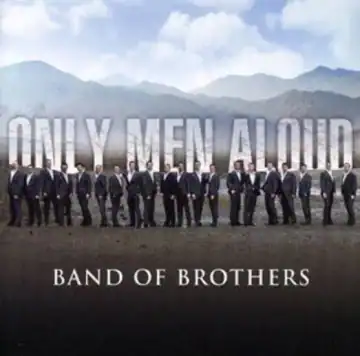
Kamen composed and conducted music for Band of Brothers in 2001, the television miniseries executive-produced by Steven Spielberg and Tom Hanks. The London Metropolitan Orchestra performed the score, with production credits also naming Michael Price and James Brett. The project required music for an extended narrative across several episodes.
Its dramatic material included combat, separation, loss and the relationships among soldiers. Scoring a series creates opportunities for music to return in new circumstances as characters and events develop. A theme can connect episodes while individual cues respond to the specific action and emotional perspective of a scene.
Party at the Palace and Coldplay
Coldplay – “Politik”, Grammy Awards 2003, with orchestral accompaniment conducted by Michael Kamen.
Kamen was musical director of Party at the Palace in June 2002, part of Queen Elizabeth II’s Golden Jubilee celebrations. The concert brought a large cast of performers to Buckingham Palace, including Brian May, Annie Lennox, Bryan Adams, Brian Wilson and Eric Clapton. The programme required musical coordination across numerous acts and arrangements.
The assignment returned musical direction to the foreground of his public work. His responsibilities concerned a whole event whose participants arrived with separate repertoires and performing identities. The concert and its released recording preserved another large-scale project in which his work enabled different musical contributions to share a stage.
In 2003, he arranged and conducted for Coldplay’s performance of “Politik” with the New York Philharmonic at the Grammy Awards. This placed a contemporary rock song within an orchestral television performance. It was among his final public collaborations, adding a younger group to the range of artists with whom he had worked.
Final film work and death
Kamen’s later films included Open Range in 2003, directed by and starring Kevin Costner. He composed, orchestrated and conducted its music and wrote the song “Holding All My Love for You”, with lyrics and performance by Julianna Raye. The Western supplied another dramatic setting for his final period of screen work.
His official biography records a diagnosis of multiple sclerosis in the mid-1990s. He continued working across recordings, films and live events during the years that followed. Kamen died suddenly on 18 November 2003, aged 55. His death ended a career still encompassing new projects and an active range of professional relationships.
The surviving catalogue includes original releases, later editions, concert recordings and archival material. These preserve several different forms of his work, from a featured instrumental contribution to a complete score. They allow his musical life to be approached through particular performances and compositions rather than through a list of famous collaborators alone.
Legacy within Bowie’s creative circle
Kamen occupies a distinctive position among Bowie’s collaborators because his appointment joined musical leadership with a background in composition for dance. The early Diamond Dogs production placed those abilities within a concert conceived around a complete stage environment. His responsibility concerned both the musicians’ work and its place in the wider presentation.
The collaboration also belongs to the history of musicians moving between different professional worlds. A conservatory-trained oboist who had sung and recorded with a rock ensemble could contribute to a Bowie tour and later become a film composer and conductor. That career path helps explain the variety of experience Bowie brought into his projects through the people he employed.
For the archive, Kamen’s importance rests on identifiable work and surviving testimony. The record of the production places him within a specific moment of Bowie’s development, while his subsequent career gives that moment a wider biographical context. The contribution remains available to listeners through the music and to researchers through the documented collaboration.
Official Website & Further Information
Michael Kamen‘s official website celebrates and documents his life and music. Maintained through his family archive, it includes a biography, a chronological catalogue, recording credits, information about concert works and material relating to his film scores. Individual entries help distinguish his responsibilities as writer, arranger, performer, producer and conductor.
For further information about his career and the preservation of his work, visit:
www.michaelkamen.com
Information about the continuing music-education work inspired by his foundation is available at:
Mr. Holland’s Opus Foundation
First-Hand Accounts & Historical Sources
Published first-hand accounts provide several perspectives on Kamen’s Bowie collaboration. Tony Defries discusses the production and its organisation; Mike Garson recalls playing in the band; Tony Visconti addresses the concert recordings and the later change of personnel. Kamen’s own interview identifies the oboe contribution that became memorable to Edward Shearmur.
These accounts are available through the MainMan archive, Garson’s published interview, Bowie’s official archive and Kamen’s 1998 interview. The short quotations reproduced in this article retain their published wording and identify the speaker and source. Recording and project credits are checked against the official Kamen catalogue.
Article Origin
This article has been researched and written exclusively for DavidBowieWorld.com. It brings together published first-hand recollections, official recording credits and verified biographical material to document Michael Kamen‘s place in David Bowie’s collaborative history and his wider musical career. It is an independently researched archive article; no direct cooperation or approval from Kamen’s family or estate is claimed.
© DavidBowieWorld.com — David Bowie Collaborations & Creative Circle Archive.
