
Mick Wayne – Guitarist on David Bowie’s Space Oddity Sessions
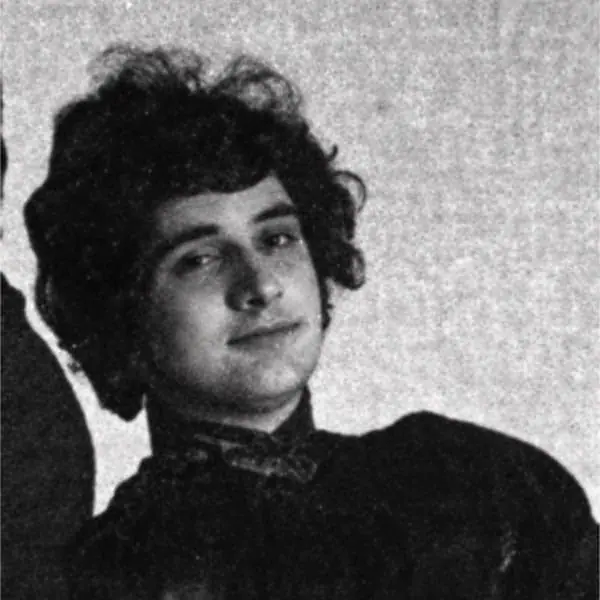
Mick Wayne was a British guitarist and songwriter whose electric guitar appears on David Bowie’s original hit recording of “Space Oddity”. Recorded in 1969, that performance placed Wayne within the small ensemble responsible for one of the most recognisable recordings of Bowie’s career. His playing contributed both melodic guitar passages and the unusual textures surrounding the song’s journey into space.
Wayne also led Junior’s Eyes, an independent band that released Battersea Power Station and supplied musicians for Bowie’s second album and performances during 1969. His work with Bowie therefore extended beyond a single studio booking: it belonged to a wider relationship involving producer Tony Visconti, fellow guitarist Tim Renwick, bassist John “Honk” Lodge and drummer John Cambridge.
Before that collaboration, Wayne had played with The Outsiders, The Hullaballoos, The Bunch of Fives and The Tickle. He had also contributed to James Taylor’s debut album for Apple Records. Later, his career included a brief period with the Pink Fairies. Together, these recordings reveal a musician active across the changing boundaries of British rhythm and blues, psychedelic pop, progressive rock and session work.
- Professional name: Mick Wayne
- Nationality: British
- Birth: 7 October 1943, Hammersmith, west London (reported birth details)
- Death: June 1994, in a house fire in Michigan, United States
- Roles: Guitarist, songwriter and bandleader
- Main Bowie connection: Electric guitar on the original 1969 recording of “Space Oddity”
- Further Bowie work: The 1969 David Bowie album and BBC recordings with Junior’s Eyes
- Own band: Junior’s Eyes, formed in 1968
- Junior’s Eyes album: Battersea Power Station (1969), produced by Tony Visconti
- Other documented recording: Second guitar on James Taylor’s original “Carolina in My Mind” (1968)
- Later band: Pink Fairies, during their 1972 transition between Paul Rudolph and Larry Wallis
Early life and the beginnings of a musical career
Wayne’s reported birth details are 7 October 1943 in Hammersmith, west London, although older biographies give different information. His early musical connections centred on the Kingston upon Thames area. He attended Wimbledon Grammar School and later met future bandmate Alan Collins at Kingston School of Art.
His association with Hull came through musicians and bands with whom he subsequently worked, including The Hullaballoos. These connections placed him within the overlapping London and northern English circles that would later bring John Cambridge and Mick Ronson into Bowie’s story.
Wayne emerged as a performer during the British rhythm-and-blues boom of the early 1960s. Club bands offered young musicians a place to develop electric guitar playing, accompany singers and build a repertoire. His first recording opportunities grew out of that environment.
The Outsiders and the Jimmy Page connection
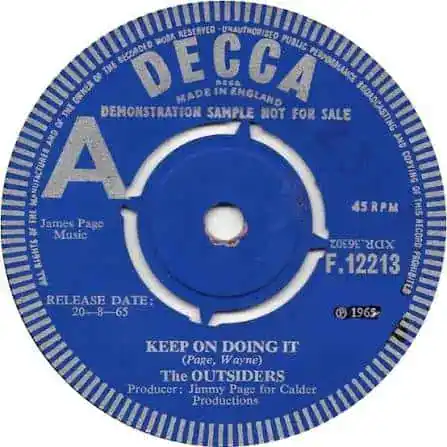
One of Wayne’s earliest groups was The Outsiders, formed in the Tolworth area of Surrey around 1962–1963. Wayne played lead guitar and sang. The group’s instrumentation also included harmonica, organ, saxophone and flute alongside bass and drums.
The Outsiders released “Keep On Doing It”, backed with “Songs We Sang Last Summer”, on Decca in August 1965. Wayne and Jimmy Page co-wrote both songs, and Page produced the recording. The single documents Wayne’s work as a songwriter several years before Junior’s Eyes.
Page was then active in the recording industry, before the formation of Led Zeppelin. His involvement with this single brought Wayne into contact with a musician whose studio career connected numerous British artists. Their shared writing credits are an early example of Wayne combining band activity with a wider recording network.
The Hullaballoos and The Bunch of Fives
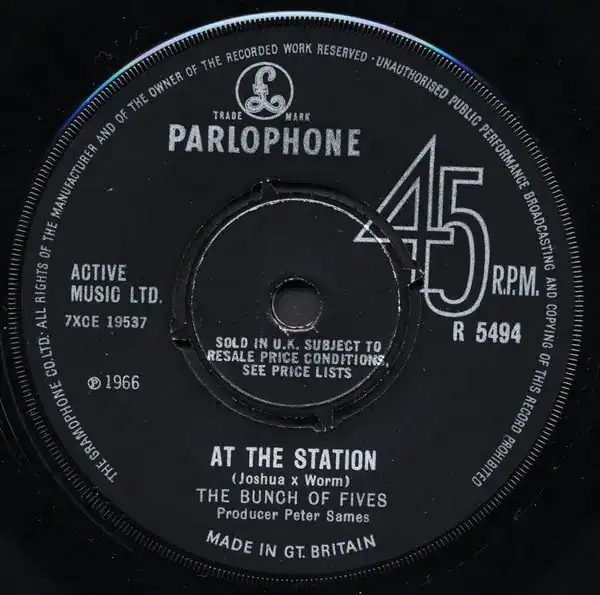
Wayne briefly joined The Hullaballoos near the end of the group’s original career. The Hull-based band had already attracted attention in the United States, and his arrival belonged to a late change of personnel before their break-up in 1966.
He subsequently worked with The Bunch of Fives, whose members included singer Mike Docker and former Pretty Things drummer Viv Prince. The group released “Go Home Baby”, backed with “At the Station”, in 1966.
The move brought Wayne into another ensemble rooted in the British club circuit. The Bunch of Fives also became the starting point for his next recording project, as changes in personnel and presentation led to the group taking the name The Tickle.
The Tickle: psychedelic songwriting in 1967
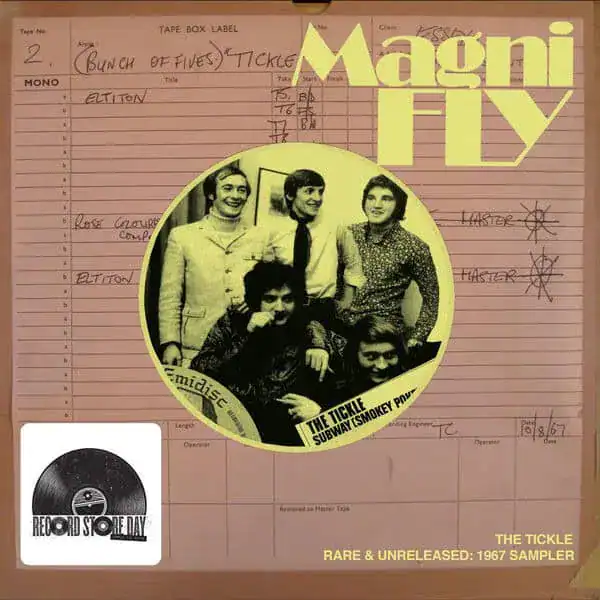
The Tickle released “Subway (Smokey Pokey World)”, backed with “Good Evening”, on Regal Zonophone in November 1967. Wayne was the band’s guitarist and principal songwriter.
The record belongs to the period when British pop groups were exploring layered vocals, unusual instrumental combinations and studio effects. Its elaborate arrangement gave Wayne’s writing a setting that reached beyond the rhythm-and-blues foundations of his earlier groups.
The single did not become a major hit, but later psychedelic compilations kept it in circulation. It remains an important part of Wayne’s discography, preserving his songwriting before Junior’s Eyes and before his best-known guitar appearance with Bowie.
Forming Junior’s Eyes
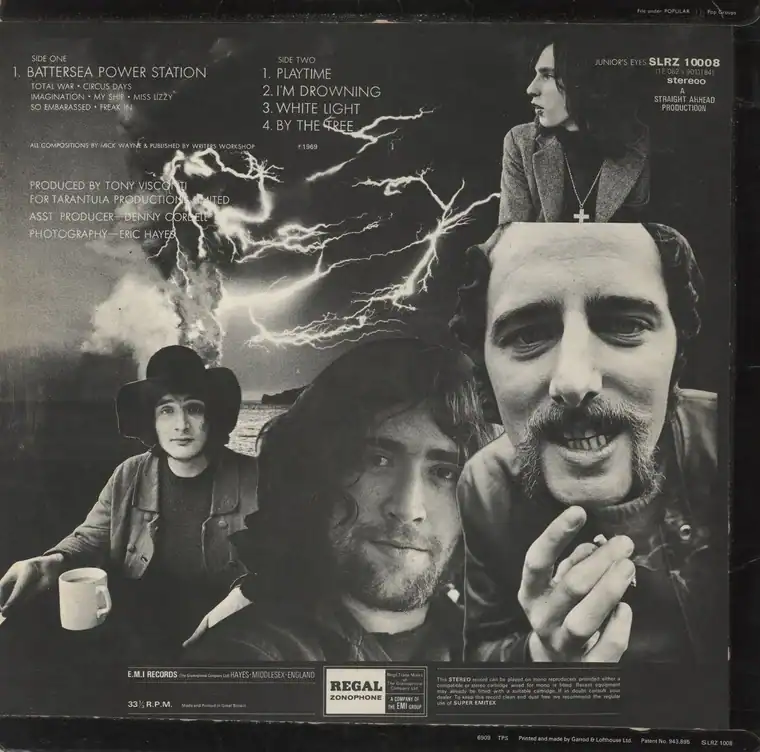
Wayne formed Junior’s Eyes in 1968. Early personnel included drummer John “Candy” Carr, followed by a line-up with bassist John “Honk” Lodge and drummer Steve Chapman. Singer Graham “Grom” Kelly subsequently joined, while organist John Redfern also spent a period with the group.
Junior’s Eyes developed a recording relationship with Tony Visconti and released singles on Regal Zonophone. Wayne combined lead guitar with responsibility for the original material, making the band the principal outlet for his songwriting.
Their early single “Mr. Golden Trumpet Player”, backed with “Black Snake”, involved pianist Rick Wakeman. It established a connection between musicians who would later contribute to Bowie’s 1969 recording period. Junior’s Eyes were developing their own career as these relationships took shape.
James Taylor and “Carolina in My Mind”
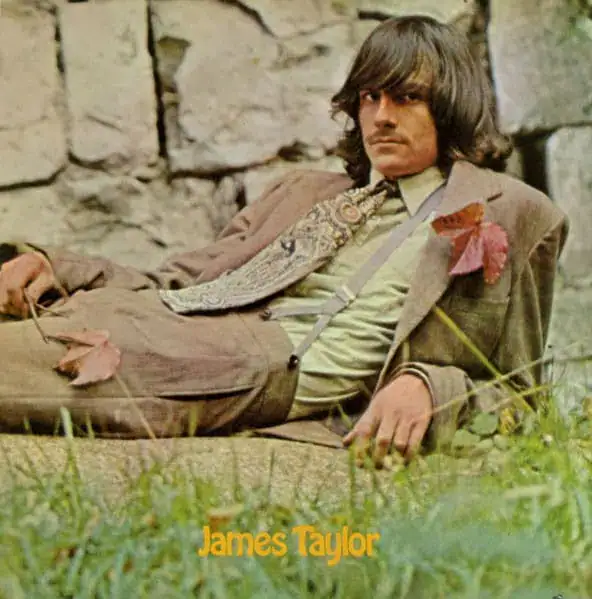
During 1968, Wayne also contributed to James Taylor’s self-titled debut album for Apple Records. Produced by Peter Asher, the album was recorded at Trident Studios in London between July and October.
Wayne played second guitar on “Carolina in My Mind”. The track also features Paul McCartney on bass and George Harrison among the backing singers, alongside Taylor and Asher. The guitar credit refers to the original Apple recording, rather than Taylor’s later re-recording of the song.
This session shows another side of Wayne’s working life. Alongside writing and performing with his own groups, he could contribute to an arrangement built around another singer’s composition. It also placed him at Trident before he returned to the studio for Bowie’s “Space Oddity”.
Battersea Power Station: Wayne’s own album
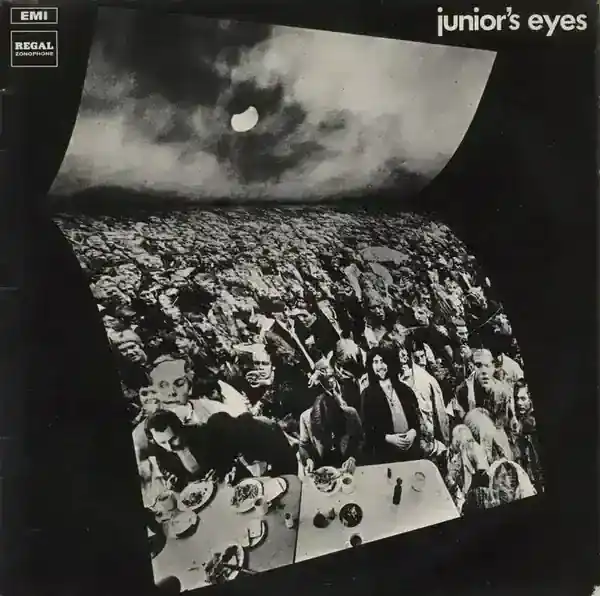
Junior’s Eyes released Battersea Power Station in June 1969, with Tony Visconti producing. The first side was organised as a linked suite; the second contained separate songs. The album included “Total War”, “Circus Days”, “Imagination”, “White Light” and “By the Tree”.
Wayne wrote the album’s material. The longer format allowed the group to work with connected sections and changes of atmosphere, reflecting the movement from psychedelic pop towards progressive rock during the late 1960s.
The record remained Junior’s Eyes’ only original studio album. Although it did not establish them as a major commercial act, subsequent reissues gave it a continuing audience. It is the fullest album-length statement of Wayne’s writing from this period and an essential companion to his better-known session credits.
Entering David Bowie’s recording circle
Tony Visconti connected Junior’s Eyes with Bowie. With experience of both artists’ material, the producer could draw on a band whose members were already accustomed to working together.
Tim Renwick joined Junior’s Eyes in 1969. Alongside Wayne, bassist Lodge and drummer Cambridge, he became part of the group of musicians involved in Bowie’s album and performance work. The collaboration expanded the band’s activity while its own recordings remained a separate part of its career.
Tim Renwick on the introduction to Bowie
“The band were introduced to David Bowie via producer Tony Visconti”
— Tim Renwick, career history on his official website. Short excerpt.
Preparing the commercial recording of “Space Oddity”
Bowie had developed “Space Oddity” through earlier versions, including acoustic recordings with John “Hutch” Hutchinson and the performance prepared for Love You Till Tuesday. The commercial single required a new recording and a more developed instrumental arrangement.
Gus Dudgeon took responsibility for producing the single, with Visconti handling the rest of the forthcoming album. After hearing Bowie’s demo, Dudgeon recognised a song that offered considerable scope for production.
Preparing it meant considering how the instruments would enter, how the launch sequence would build and how the closing passage would suggest the loss of contact. Wayne’s guitar became part of that larger design, combining lead playing with sounds that could participate in the drama.
Gus Dudgeon on preparing “Space Oddity”
“It was in need of production. It needed thought and it needed planning.”
— Gus Dudgeon, International Musician and Recording World, 1975; excerpt reproduced by MusicRadar in 2024.
Trident Studios, June 1969
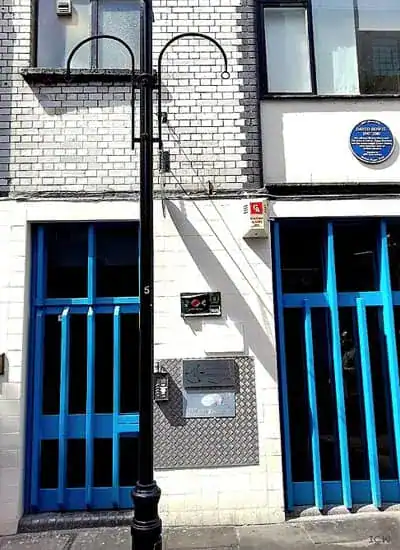
The principal session for the familiar recording of “Space Oddity” took place at Trident on 20 June 1969, followed by further overdubbing. Bowie contributed vocals, acoustic guitar and Stylophone, with Wayne on electric guitar.
Herbie Flowers played bass, Terry Cox played drums and Rick Wakeman contributed Mellotron. Paul Buckmaster arranged the orchestral material. This was a specially assembled studio ensemble, with Wayne joining musicians from outside Junior’s Eyes for the single.
The combination gave Dudgeon contrasting textures to work with. Bowie’s acoustic guitar supported the song, while the Stylophone, Mellotron, electric guitar and orchestral instruments helped create its unfamiliar surroundings. The production could move from a recognisable band sound into something more disorientating as the narrative progressed.
The electric guitar and the sound of the journey
Wayne’s electric guitar plays a melodic and atmospheric role in “Space Oddity”. Its lead passages offer an instrumental response to Bowie’s vocal, while changes of pitch and attack contribute to the impression of launch, movement and separation.
Session descriptions recount techniques such as picking between the bridge and tailpiece and using a cigarette lighter as a slide. These approaches widened the instrument’s range of sounds, allowing it to contribute effects as well as conventional musical phrases.
The guitar is particularly effective within a production that shifts between order and instability. The astronaut’s journey begins with procedures and communication, but the later sound becomes less secure. Wayne’s playing participates in that change without replacing the song’s vocal centre.
The release and its gradual breakthrough
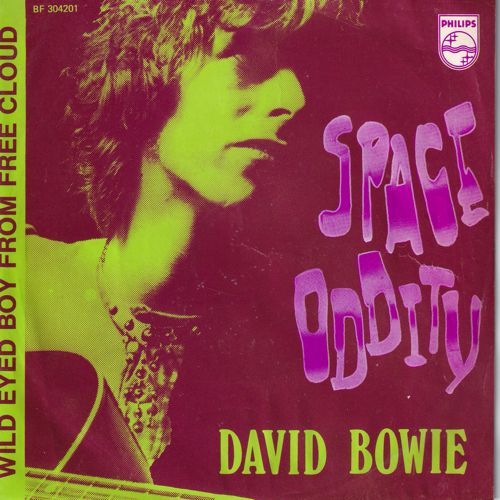
“Space Oddity” was released on 11 July 1969, shortly before the Apollo 11 mission. The timing connected it with an event attracting enormous public attention, although Bowie’s account of an isolated astronaut carried a more unsettling meaning than a simple celebration of space travel.
The record eventually reached the British Top Five, giving Bowie his first substantial singles-chart breakthrough. Success developed over the following months, rather than turning him into an established international star immediately upon release.
For Wayne, the hit preserved a guitar performance that would reach listeners far beyond Junior’s Eyes’ own audience. His playing remained part of the original master as the song returned through later releases and became one of the enduring points of reference in Bowie’s catalogue.
The second David Bowie album
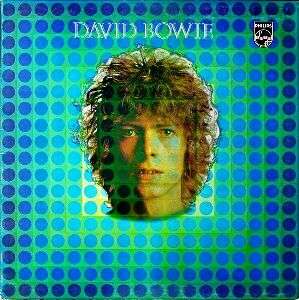
The album sessions of 1969 brought Wayne together with other members of the revised Junior’s Eyes line-up, including Tim Renwick, John “Honk” Lodge and John Cambridge. Additional musicians contributed across the recordings, giving the project a broader instrumental palette than a single fixed band.
Under Tony Visconti’s production, Bowie’s material ranged from intimate songs to extended compositions. The arrangements supported a songwriter moving between personal memories, social observation and imaginative storytelling. Visconti later recalled the exploratory character of the work.
Tony Visconti on making Bowie’s 1969 album
“We made it up as we went along.”
— Tony Visconti, interviewed by Dave Depper for Willamette Week, April 2016, discussing the 1969 album.
Junior’s Eyes as Bowie’s backing musicians
Alongside the studio work, Junior’s Eyes supplied backing musicians for Bowie’s performances during the later part of 1969. The group involved Wayne and Renwick on guitars, Lodge on bass and Cambridge on drums.
Their work together included Scottish appearances, a concert at the Purcell Room and radio broadcasts. The live setting required songs to function with the players available on stage, rather than with every resource heard in a completed studio arrangement.
This brought a different emphasis to the collaboration. Instrumental parts had to support Bowie’s voice and changing repertoire in real time. Junior’s Eyes continued their independent identity, while these engagements placed their musicians within Bowie’s developing concert presentation.
The BBC session of 20 October 1969
David Bowie with Junior’s Eyes — BBC Dave Lee Travis Show session, recorded on 20 October 1969, featuring Mick Wayne on guitar.
Bowie recorded a session for the Dave Lee Travis Show on 20 October 1969, backed by Wayne, Renwick, Lodge and Cambridge. The songs were “Let Me Sleep Beside You”, “Unwashed and Somewhat Slightly Dazed” and “Janine”.
The selection combined an earlier Bowie composition with material from the forthcoming album. It captures the musicians in a radio-session setting and provides a record of their collective playing beyond the commercial “Space Oddity” master.
“Let Me Sleep Beside You” and “Janine” were later included on Bowie at the Beeb in 2000. All three performances appeared in Conversation Piece in 2019, making the October session available as a complete group of recordings.
The album release and the Purcell Room concert
Bowie’s second album appeared in November 1969. It was titled David Bowie in Britain and Man of Words/Man of Music in the United States. Despite the success of “Space Oddity”, the album did not chart on its original release.
On 20 November 1969, Bowie performed at the Purcell Room on London’s Southbank. Junior’s Eyes and Comus were also on the bill. The concert followed the release of Bowie’s second album and presented a repertoire extending beyond his hit single.
Bowie performed “Space Oddity” with acoustic accompaniment. The choice gave the song a different setting from the elaborate studio recording and placed the emphasis on its composition and vocal narrative.
The programme also included material such as “Cygnet Committee”, “Janine”, “Letter to Hermione” and “Memory of a Free Festival”. It represented a wider view of Bowie’s work at a moment when the public was beginning to associate him strongly with Major Tom.
The end of Junior’s Eyes and Bowie’s next band
Junior’s Eyes disbanded in early 1970. Their members followed different paths: Renwick went on to form Quiver, while Cambridge continued working with Bowie.
Bowie’s next band, The Hype, brought together Bowie, Mick Ronson, Tony Visconti and Cambridge, with Mick “Woody” Woodmansey subsequently replacing Cambridge. Ronson became central to the heavier sound developed for The Man Who Sold the World.
Cambridge’s continued involvement linked the two periods, but the new group had its own personnel and musical identity. Wayne’s work belonged to the earlier phase, when Junior’s Eyes helped support Bowie’s transition into the 1969 album and performances.
America and a less fully documented period
After Junior’s Eyes ended, Wayne moved to Los Angeles and worked in a circle associated with Joe Cocker. The move extended a career that already combined his own band projects with recording for other artists.
His American activity is less fully documented than the released British recordings from the preceding years. By 1972 he was back in the London music scene, where another set of collaborations brought him into contact with musicians from the British underground.
Steve Peregrin Took and the Pink Fairies
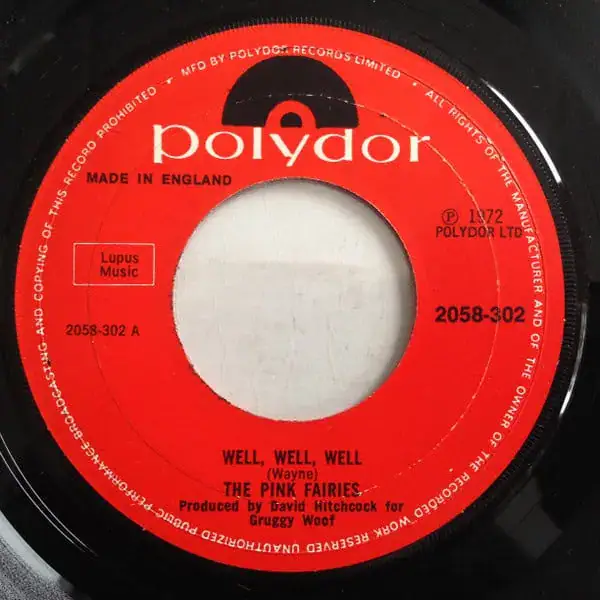
In 1972, Wayne worked with Steve Peregrin Took, formerly of Tyrannosaurus Rex, alongside bassist Duncan Sanderson and drummer Russell Hunter. The attempted recording project did not develop into a lasting band in that form.
Wayne, Sanderson and Hunter subsequently performed as a version of the Pink Fairies, following guitarist Paul Rudolph’s departure. They recorded “Well, Well, Well” and “Hold On”, released together as a single in 1972.
Wayne wrote “Well, Well, Well”, while “Hold On” carries a shared writing credit with Sanderson and Hunter. The record documents him working as guitarist, singer and songwriter within a three-piece ensemble.
His tenure was brief. Larry Wallis became the guitarist in the line-up that recorded Kings of Oblivion. Wayne’s earlier single recordings were later included as bonus tracks on expanded editions of that album.
Later recordings and his death
Wayne’s later recording history includes work associated with Ozo and the 1976 album Listen to the Buddha. His career had taken him through several different bands and recording situations, with much of the surviving material spread across individual singles and album appearances.
He died in a house fire in Michigan in June 1994. Reports of plans for further recording suggest that he was considering a return to new musical work near the end of his life.
His death left the existing recordings as the principal record of his musicianship. The music of The Tickle, Junior’s Eyes and the Pink Fairies, together with his session appearances, preserves different aspects of a career that rarely remained within one group for long.
Archive releases and renewed access to his work

RCA reissued Bowie’s 1969 album as Space Oddity in 1972, introducing the earlier work to listeners discovering him during the Ziggy Stardust period. In 2015, Esoteric Recordings released a two-CD expanded edition of Battersea Power Station, remastered from the original tapes. The set combined the album with singles, demos and a Junior’s Eyes BBC session from October 1968.
The collection also included The Tickle’s single, bringing together stages of Wayne’s career that had originally appeared on separate releases. The accompanying notes included contributions from historian David Wells and Wayne’s daughter Sarah.
Bowie’s Conversation Piece collection followed in 2019. Its presentation of the 1968–1969 period included the October 1969 BBC session and a new mix of the second album by Visconti. Together, these releases offered renewed access to Wayne’s own band recordings and his work in Bowie’s ensemble.
Legacy: a specific contribution to a landmark recording
Wayne’s place in Bowie history is anchored by his electric guitar on the original “Space Oddity”. The melodic playing and unusual textures became part of a recording whose arrangement continues to be closely associated with the song.
Battersea Power Station gives a wider view of his work, preserving him as a composer and bandleader. His appearances with Taylor and the Pink Fairies reveal further settings in which he contributed to a finished recording.
The BBC session adds the sound of Wayne working within a band alongside Bowie. It brings the collaboration into focus beyond the single, capturing a group handling material from different stages of the singer’s development.
His career forms part of the network of musicians behind Bowie’s early recordings. Through a short but identifiable period of work, Wayne helped give the music of 1969 an electric guitar presence that remains audible in the archive.
Official Website & Further Information
No verified official website dedicated to Mick Wayne is currently available for inclusion here. His musical work can be explored through the recordings that preserve his songwriting, band performances and sessions.
Battersea Power Station is the main album documenting Junior’s Eyes. Its expanded edition brings together additional singles and early material, offering a useful overview of Wayne’s own projects.
For his work with Bowie, the original 1969 David Bowie album, Bowie at the Beeb and Conversation Piece provide complementary listening. The original Apple recording of “Carolina in My Mind” and the Pink Fairies single extend that picture beyond Bowie.
First-Hand Contributions
This page includes published recollections from Tim Renwick, Gus Dudgeon and Tony Visconti. Their comments describe the introduction of Junior’s Eyes to Bowie, the preparation of “Space Oddity” and the making of the 1969 album.
The quotations retain their original context and appear with individual source acknowledgements. They bring the voices of participants into the account alongside the surviving music.
DavidBowieWorld.com welcomes additional first-hand memories, original correspondence and dated archive material relating to Wayne’s career. Such contributions can help preserve the history of a musician whose work is better documented on records than in an extensive personal biography.
Article Origin
This article has been researched and written for DavidBowieWorld.com as part of its David Bowie Collaborations & Creative Circle Archive. It brings together Wayne’s early band career, songwriting, session work and collaboration with Bowie during 1969.
The account is based on recording credits, release documentation, music-history research and published recollections. Reported birth details are qualified, and his death is dated to June 1994 because published accounts differ over the exact day.
The page will be updated when further reliable historical information becomes available, preserving Wayne’s contribution for Bowie listeners, musicians and researchers.
© DavidBowieWorld.com — David Bowie Collaborations & Creative Circle Archive.
