
Geoff MacCormack – David Bowie’s Lifelong Friend, Musician and Photographer
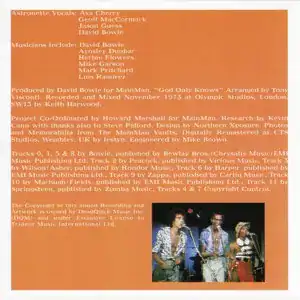
Geoff MacCormack, better known during the 1970s as Warren Peace, performing during David Bowie’s soul period. Editorial use.
There are many musicians who worked with David Bowie, but very few who knew the man long before the legend existed. Geoff MacCormack belongs to that exceptionally small group. Their friendship began during childhood in Bromley, when both boys were still at school and David Bowie was simply known as David Jones. Over the following six decades, Geoff witnessed Bowie’s transformation from an ambitious teenager fascinated by American rock ‘n’ roll into one of the most influential artists of the twentieth century.
Unlike collaborators who entered Bowie’s career through auditions or professional recommendations, MacCormack’s place was built upon friendship, loyalty and complete mutual trust. During the 1970s he became part of Bowie’s creative world as a backing vocalist, percussionist, performer, songwriter and travelling companion, working under the stage name Warren Peace. His contribution stretched across live performances, recording sessions, world tours and some of Bowie’s most adventurous artistic projects.
Equally important was the role MacCormack played away from the stage. Travelling beside Bowie across Britain, North America, Japan and the Soviet Union, he quietly documented many of these journeys with a camera. Those photographs, together with his memoirs and later exhibitions, now provide one of the most intimate visual records of Bowie’s life during the 1970s. More than almost anyone else, Geoff MacCormack observed David Bowie not simply as a performer, but as the lifelong friend he always continued to know as David Jones.
- Full name: Geoffrey Alexander MacCormack
- Professional name: Warren Peace
- Profession: Musician, backing vocalist, songwriter, percussionist, photographer, composer and author
- Born: Bromley, Kent, England
- First met David Bowie: Burnt Ash Primary School, Bromley
- Bowie collaboration: Backing vocalist, percussionist, songwriter, travelling companion and photographer
- Principal collaboration: 1973–1976
- Major Bowie albums: Aladdin Sane, Diamond Dogs, Young Americans, Station to Station
- Songwriting credit: Rock ‘n’ Roll with Me
- Known for: One of David Bowie’s oldest friends and creator of one of the most important private Bowie photographic archives.
Early Life
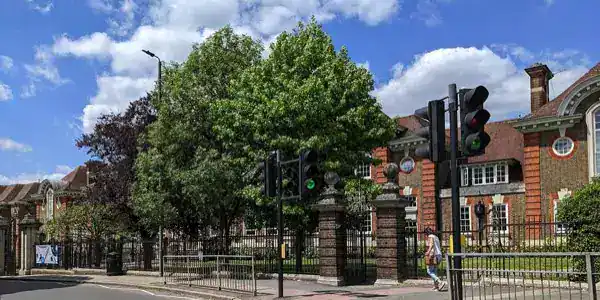
Bromley Technical High School
Geoffrey Alexander MacCormack was born in Bromley, Kent, England, where he spent his childhood during the years immediately following the Second World War. He first attended Burnt Ash Primary School, where he met fellow pupil David Jones, the future David Bowie. Their friendship began in the classroom and playground long before either boy imagined a career in music. After completing primary school, both continued their education at Bromley Technical High School, where their shared enthusiasm for music and popular culture continued to grow.
Music surrounded the MacCormack household. Geoff later recalled that every member of his family seemed to enjoy different styles. His mother played classical piano, introducing him to melody and harmony from an early age, while his brother listened to modern jazz and his sister preferred contemporary popular music. Together they unknowingly provided Geoff with a remarkably broad musical education. Rather than growing up within a single musical tradition, he became accustomed to hearing everything from classical compositions to jazz improvisation and the emerging sounds of post-war popular music.
Outside the family home another musical revolution was beginning. American rock ‘n’ roll, rhythm and blues and early soul recordings were crossing the Atlantic and transforming British youth culture. Performers such as Little Richard, Elvis Presley and Screamin’ Jay Hawkins offered a completely different energy from anything previously heard in Britain. Geoff and David shared a fascination with this exciting new music, later following artists such as Mose Allison and Georgie Fame around Soho and Eel Pie Island. Those shared musical discoveries helped strengthen a friendship that would endure for more than six decades and eventually become one of the most remarkable relationships in David Bowie’s life.
Meeting David Jones
The defining event of Geoff MacCormack‘s childhood came when he met another pupil at Burnt Ash Primary School in Bromley: David Robert Jones. The two boys quickly discovered that they shared an enthusiasm for music, humour and curiosity about the rapidly changing world around them. Their friendship developed naturally and would continue for more than sixty years, surviving school, adulthood, worldwide fame and the extraordinary changes that followed.
Long before David became known as David Bowie, he and Geoff spent countless hours discussing records, listening to new artists and imagining futures that revolved around music. Geoff has often recalled that Bowie possessed an unusual curiosity even as a child. He constantly searched for new performers, unusual records and ideas that challenged accepted conventions. That restless imagination, so evident throughout Bowie’s later career, was already visible during their school years.
Their friendship was built upon far more than a shared interest in music. Geoff knew David before the costumes, before the personas and before international success transformed him into one of the world’s most recognisable performers. Throughout Bowie’s life, Geoff continued to think of him simply as David, providing a rare perspective that would later make his recollections invaluable to historians.
As teenagers the two friends spent increasing amounts of time together exploring London’s developing music scene. Every new record, every live performance and every conversation deepened a friendship that neither of them realised would eventually become part of rock history.
Geoff MacCormack on his lifelong friendship with David Bowie
“Music was the language of our generation, our great love and expression.”
Growing Up Together in Bromley
As Geoff MacCormack and David Jones grew older, their friendship became increasingly centred on music. During the late 1950s and early 1960s they belonged to the first generation of British teenagers whose lives were transformed by American rock ‘n’ roll. Records became prized possessions, while every new artist arriving from the United States seemed to open another door to a wider world beyond suburban Bromley.
Neither teenager was content simply to listen. They analysed songs, compared singers, discussed arrangements and debated which performers possessed genuine originality. Geoff has often recalled that David was never interested in copying successful artists. Even as a schoolboy he wanted to understand what made them unique before developing ideas of his own. This constant curiosity would remain one of Bowie’s defining characteristics throughout his life.
Although both boys admired many of the same performers, they also broadened each other’s musical horizons. Geoff developed a deep appreciation for rhythm and blues and soul music, while David continually searched for artists who challenged conventional ideas of popular music. Their conversations ranged from Little Richard, Elvis Presley and Screamin’ Jay Hawkins to Mose Allison, Georgie Fame and countless other performers who rarely appeared on mainstream radio.
Looking back many decades later, Geoff described music as the language through which their friendship grew. They were not simply collecting records or following fashions; they were educating themselves, absorbing influences that would later resurface in David Bowie’s songwriting, performances and artistic philosophy.
Geoff MacCormack on the music that shaped their youth
“My mother played classical music, my brother played modern jazz, my sister pop music and David and I found rock ‘n’ roll by artists such as Little Richard, Elvis Presley and Screamin’ Jay Hawkins.”
Exploring London’s Music Scene
As their confidence grew, Geoff and David increasingly travelled from Bromley into central London. Soho during the early 1960s was unlike anywhere else in Britain. Coffee bars, jazz clubs, rhythm and blues venues and independent record shops attracted ambitious young musicians from across the country, all searching for inspiration and opportunity.
The two friends spent countless hours wandering through Soho, discovering new music and watching performers whenever they could afford the admission price. Geoff has remembered following musicians they admired through the streets of London simply in the hope of hearing another performance or catching a glimpse of an artist whose records had inspired them.
Another favourite destination was Eel Pie Island in Twickenham. During the early 1960s the famous ballroom became one of Britain’s most important rhythm and blues venues, hosting artists whose influence on the young David Jones would later become unmistakable. Geoff accompanied his friend on many of these musical adventures, witnessing first-hand the excitement that live performance generated in the future David Bowie.
These journeys into London broadened both young men’s artistic outlook. Fashion, theatre, painting, literature and music existed side by side, encouraging Bowie to think beyond the limitations of conventional pop performance. Geoff was there throughout these formative years, watching ideas gradually develop that would eventually shape Bowie’s extraordinary career.
George Underwood and Their Lifelong Circle of Friends
Among the closest members of this early friendship circle was George Underwood, another school friend who shared Geoff and David’s fascination with music and art. The three young men remained closely connected throughout their teenage years, encouraging one another’s creative ambitions while developing remarkably different careers.
George Underwood would later become internationally recognised as one of David Bowie’s most important illustrators and album artists, designing covers, books and promotional material across several decades. Geoff MacCormack, meanwhile, would become Bowie’s travelling companion, performer and photographer. Although their individual paths differed considerably, the friendships established during childhood remained remarkably strong.
The famous incident in which Underwood accidentally injured David’s left eye never altered the close relationship between the three friends. Bowie forgave Underwood almost immediately, and Geoff witnessed how quickly youthful disagreements disappeared in favour of mutual respect and lasting affection. The story has become one of the best-known episodes in Bowie’s early life, yet for those who knew him personally it represented only one small chapter in a friendship that continued for decades.
Together Geoff MacCormack, George Underwood and David Jones formed a creative nucleus that would remain surprisingly influential throughout Bowie’s career. Long before managers, producers and record companies entered the picture, these friendships helped shape the artistic confidence that Bowie carried into adulthood.
Haddon Hall – A House Filled with Creativity
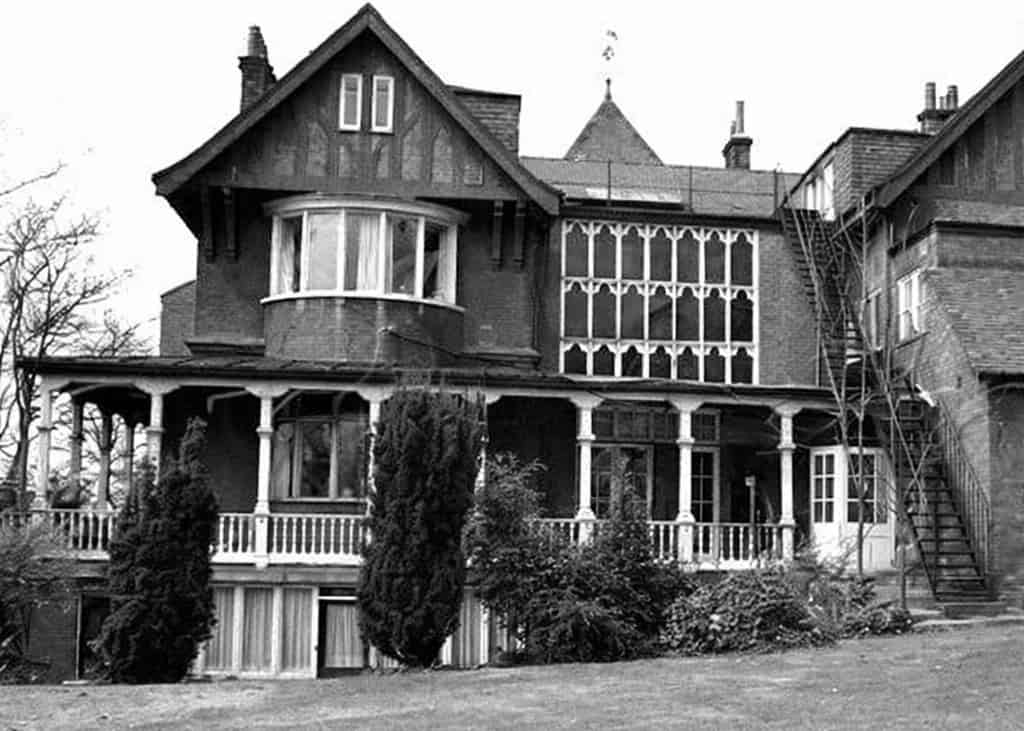
Haddon Hall, Beckenham. During the late 1960s and early 1970s it became one of the most important centres of David Bowie’s creative life. Editorial use.
By the end of the 1960s David Bowie’s career was beginning to gather momentum. After the success of Space Oddity, he and Angie Bowie moved into Haddon Hall in Beckenham, a large Victorian house that soon became one of the most important creative centres in Bowie’s early career. Geoff MacCormack was among the regular visitors, witnessing at close range the remarkable artistic energy that filled the house.
Haddon Hall was far more than a home. Musicians, artists, actors, designers, photographers and close friends drifted constantly through its rooms. Songs were rehearsed, lyrics rewritten, costumes discussed and future projects imagined late into the night. The atmosphere reflected Bowie’s growing confidence and his determination to push beyond the boundaries of conventional rock music.
Geoff watched many of these developments unfold naturally. Future members of the Spiders from Mars, including Mick Ronson, Trevor Bolder and Woody Woodmansey, became increasingly frequent visitors as Bowie assembled the group that would accompany him through the Ziggy Stardust years. Friends such as George Underwood and Dana Gillespie also remained part of this expanding creative community.
For Geoff, Haddon Hall was never simply a famous Bowie address. It was a place where friendship, imagination and artistic ambition merged into everyday life. Looking back, he recognised it as one of the environments in which David Bowie truly began to emerge from David Jones.
The BBC John Peel Session
One of Geoff MacCormack‘s earliest documented musical collaborations with David Bowie took place during the BBC radio sessions recorded for John Peel in June 1971. Credited as Geoffrey Alexander, he joined Bowie and Dana Gillespie on vocals during performances that captured Bowie at an important transitional moment between his early singer-songwriter years and the arrival of Ziggy Stardust.
During the session Geoff sang the second verse of It Ain’t Easy, demonstrating that Bowie already trusted his oldest friend enough to include him in nationally broadcast performances. Although his contribution was relatively modest, it marked the beginning of a professional relationship that would expand dramatically over the next few years.
The BBC recordings are historically significant for another reason. They represent one of the earliest occasions on which Mick Ronson, Trevor Bolder and Woody Woodmansey performed together as Bowie’s backing musicians, effectively introducing the line-up that would soon become the legendary Spiders from Mars.
For Geoff MacCormack, the session marked an important turning point. After years of supporting Bowie as a close friend, he was now beginning to contribute directly to Bowie’s musical career. Neither man could yet know that within two years they would be travelling together around the world as part of one of the most celebrated live productions in rock history.
Joining David Bowie
By the beginning of 1973 David Bowie was preparing for the most demanding period of his career. The Rise and Fall of Ziggy Stardust and the Spiders from Mars had established him as one of Britain’s most exciting new artists, while growing success in the United States meant that increasingly ambitious tours were being planned. Bowie wanted to expand both the musical and theatrical scope of his live performances and began assembling a larger touring company capable of bringing his evolving vision to the stage.
Among the people he turned to was Geoff MacCormack. Unlike most musicians who entered Bowie’s world through auditions or recommendations, Geoff was someone Bowie had trusted since childhood. Their friendship had already survived almost twenty years, and Bowie knew exactly what his oldest friend could contribute—not only as a musician, but also as someone whose calm personality and sense of humour would prove invaluable during the pressures of international touring.
MacCormack was invited to join Bowie’s touring organisation as a backing vocalist and performer. It was an extraordinary opportunity. Only a few years earlier the two friends had been discussing records and dreaming about the future; now Geoff found himself preparing to perform before audiences across North America and Japan as part of one of the most innovative live productions of the decade.
At around the same time Bowie encouraged Geoff to adopt the professional name Warren Peace, a playful pseudonym that perfectly suited the theatrical spirit of the Ziggy Stardust era. MacCormack later explained that Warren Peace was very much “a mythical character invented for a mythical period.” Although audiences came to know him by this name, those closest to Bowie continued to know him simply as Geoff.
The invitation also reflected one of Bowie’s greatest strengths as a bandleader. Rather than choosing collaborators solely for technical ability, he surrounded himself with people he genuinely trusted. Geoff has often recalled that Bowie rarely asked whether someone thought they could accomplish a particular task. Instead, Bowie assumed they could and expected them to rise to the challenge. That confidence inspired many of his collaborators to achieve far more than they believed possible.
For Geoff MacCormack, accepting Bowie’s invitation meant leaving behind the familiarity of everyday life for an unpredictable existence on the road. It was a leap into the unknown, but one made considerably easier by the knowledge that he would be travelling alongside one of his oldest friends rather than working for a distant superstar.
Preparing for the Road
Rehearsals for the forthcoming tour introduced Geoff to the disciplined environment that surrounded Bowie’s increasingly ambitious live productions. The performances demanded far more than straightforward backing vocals. Bowie expected every member of the touring company to contribute to the overall presentation, combining music with movement, theatre and visual storytelling.
MacCormack quickly demonstrated that he possessed the flexibility Bowie valued so highly. Comfortable as both a singer and performer, he adapted naturally to the demands of the production, becoming an increasingly important member of the wider ensemble. His willingness to embrace unfamiliar challenges would later prove invaluable as Bowie’s stage shows became more elaborate during the years that followed.
Although Geoff had entered the touring company because of a lifelong friendship, he remained there because of his professionalism. Bowie expected high standards from everyone around him, regardless of how long he had known them, and MacCormack consistently earned the confidence placed in him through hard work, reliability and musical instinct.
The rehearsals also marked the beginning of one of the most remarkable journeys in Bowie’s career. Over the next three years Geoff MacCormack would travel with Bowie across the United States, Canada, Japan, the Soviet Union and Europe, contribute to several classic albums, appear in ambitious stage productions and quietly document many of these experiences with his camera. What had begun as a childhood friendship in Bromley was about to become one of the most extraordinary collaborations in Bowie’s creative life.
The Ziggy Stardust Tour
When Geoff MacCormack joined David Bowie’s touring company in 1973, he stepped directly into one of the most exciting periods in modern music. The success of The Rise and Fall of Ziggy Stardust and the Spiders from Mars had transformed Bowie from an admired British performer into an international attraction. Demand for concerts continued to grow rapidly, particularly in North America, where Bowie was beginning to establish the loyal audience that would remain with him throughout his career.
Performing under the stage name Warren Peace, Geoff became part of an enlarged live ensemble that extended beyond the core members of the Spiders from Mars. His role combined backing vocals, percussion and stage performance, helping Bowie create concerts that blurred the boundaries between rock music, theatre and visual art. Every performance was carefully constructed, with costumes, lighting and choreography becoming just as important as the music itself.
For Geoff, the experience was unlike anything he had previously imagined. Only a few years earlier he had been watching his oldest friend search for success in London’s clubs and recording studios. Now he found himself performing before thousands of people every night, watching Bowie’s extraordinary popularity increase from city to city.
Although audiences naturally focused on Bowie, the touring company quickly developed into a close-knit group. Long journeys, rehearsals and performances created friendships that extended well beyond the stage. Geoff’s easy-going personality and long history with Bowie made him a natural presence within the organisation, providing a reassuring sense of familiarity during an otherwise fast-moving and often unpredictable period.
Unlike musicians hired for a single tour, Geoff understood Bowie’s personality long before fame arrived. He knew when Bowie preferred quiet conversation, when he wanted to discuss music, films or books, and when he simply needed space to prepare for a performance. That understanding helped make Geoff one of the people Bowie felt most comfortable travelling with.
Crossing the Atlantic by Sea
One of the most unusual aspects of Bowie’s touring life during the early 1970s was his reluctance to fly. Instead of travelling by air whenever possible, Bowie frequently chose passenger ships and trains, turning international touring into a far more adventurous experience than most contemporary rock musicians enjoyed.
Geoff MacCormack shared many of these remarkable journeys. Travelling by sea allowed Bowie to escape the constant pressure of airports, journalists and publicity while also satisfying his fascination with travel itself. The slower pace created opportunities for long conversations, reading, listening to music and planning future artistic projects.
For Geoff these voyages became just as memorable as the concerts themselves. Rather than moving rapidly from one city to another, the touring party experienced the changing landscapes and cultures between destinations. Those journeys strengthened the friendship between Bowie and MacCormack while also providing Geoff with countless opportunities to photograph life behind the scenes.
Many of the photographs that later appeared in Geoff’s books were taken during these travels. Unlike formal publicity images, they captured moments of relaxation and quiet reflection, revealing Bowie away from the spotlight and surrounded by the people he trusted most.
Life on the Road
Touring with David Bowie during the Ziggy Stardust era involved far more than performing on stage. Days were filled with rehearsals, interviews, sound checks, travel and endless logistical planning. Even so, Bowie remained intensely curious about the places he visited, often encouraging those around him to explore cities rather than simply moving from hotel to venue and back again.
Geoff later recalled that Bowie was constantly searching for inspiration. Museums, bookshops, cinemas, galleries and record stores frequently became part of their daily routine whenever time allowed. Music remained central to every conversation, but Bowie’s interests extended equally towards literature, painting, fashion, theatre and contemporary art.
These experiences reinforced something Geoff had recognised since childhood: David Jones had never stopped learning. International success had not diminished his curiosity. If anything, fame simply gave him greater opportunities to discover new ideas, new cultures and new artistic influences.
For Geoff MacCormack, travelling alongside Bowie was therefore much more than life on a concert tour. It became an education in creativity itself. Every city, every journey and every conversation contributed to the artistic atmosphere that surrounded Bowie during one of the most productive periods of his career.
The First American Tour
For Geoff MacCormack, the United States represented far more than another destination on David Bowie’s itinerary. Like countless young British musicians of his generation, he had grown up listening to American rock ‘n’ roll, rhythm and blues and soul records. Now he found himself performing in the country that had produced many of the artists who had inspired both him and Bowie since childhood.
The American audiences Bowie encountered in 1973 were enthusiastic but still discovering the Ziggy Stardust phenomenon. Although Bowie was already a major star in Britain, the United States offered a fresh challenge. Night after night Geoff watched audiences respond to the theatrical spectacle of Ziggy Stardust, while Bowie steadily established himself as one of the most original live performers of the decade.
Away from the concert halls, Geoff experienced America alongside Bowie rather than simply as a member of a touring band. They explored cities together, met musicians, visited record stores and absorbed the atmosphere of a country that fascinated Bowie both culturally and artistically. These experiences would later influence many of Bowie’s recordings throughout the 1970s.
For Geoff, the journey also reinforced something he had always admired about his oldest friend. Bowie rarely travelled as a tourist. Every city became an opportunity to discover new ideas, new music, new books and new people. Curiosity remained one of the defining characteristics of his personality, regardless of the country in which he found himself.
Japan
Following the American concerts, Bowie and his touring company travelled to Japan, where audiences welcomed the Ziggy Stardust production with enormous enthusiasm. For Bowie the visit held particular significance because of his admiration for Japanese culture and, especially, the work of fashion designer Kansai Yamamoto, whose extraordinary costumes had become inseparable from the Ziggy Stardust image.
Geoff witnessed first-hand the respect Bowie showed towards Japanese art, theatre and design. Rather than treating the country as simply another stop on a world tour, Bowie immersed himself in its culture, architecture and traditions whenever opportunities arose. His interest in Japanese aesthetics extended well beyond costume design and reflected his lifelong desire to learn from different artistic traditions.
The visit also provided Geoff with further opportunities to photograph everyday life away from the stage. While publicity photographers concentrated on performances, Geoff quietly recorded informal moments during travel, rehearsals and sightseeing. These photographs would later become some of the most valuable images within his personal archive.
Japan marked another important stage in the extraordinary journey shared by Bowie and MacCormack. Their friendship, which had begun in the classrooms of Bromley almost twenty years earlier, had now taken them to the opposite side of the world.
The Trans-Siberian Railway
Perhaps the most remarkable journey Geoff MacCormack shared with David Bowie took place after the Japanese concerts had finished. Rather than returning to Europe by air, Bowie decided to travel west across the Soviet Union aboard the famous Trans-Siberian Railway. Geoff accompanied him throughout what has since become one of the most celebrated episodes in Bowie’s travelling life.
The journey began in the Soviet Far East before continuing thousands of kilometres across Siberia towards Moscow. Travelling by train allowed Bowie to experience landscapes, people and cultures that remained largely inaccessible to most Western visitors during the Cold War. Geoff later recalled both the fascination and the uncertainty of travelling through a country that felt completely different from anything they had previously encountered.
Life aboard the train unfolded at an entirely different pace from the hectic schedule of an international concert tour. Long hours were spent looking through carriage windows at forests, mountains and isolated settlements stretching endlessly across the Siberian landscape. Bowie read extensively, listened to music, talked with Geoff and quietly absorbed impressions that would remain with him for years afterwards.
MacCormack photographed much of the journey, producing images that have since become some of the most iconic visual documents of Bowie’s travels. Unlike concert photographs, these pictures reveal Bowie in moments of quiet reflection—travelling, observing and experiencing the world far from recording studios and concert stages.
Their route eventually brought them to Moscow, where Bowie and Geoff witnessed the annual May Day celebrations before continuing west through Eastern Europe and finally returning to Britain. The adventure became one of the defining memories of Geoff’s years with Bowie and later formed an important part of both his books and photographic exhibitions.
Geoff MacCormack on the Trans-Siberian journey
“I think much of our travels, especially the Soviet Union journey, fed David’s influences, including his writing.”
The Final Ziggy Stardust Concert
On 3 July 1973 Geoff MacCormack stood on stage at London’s Hammersmith Odeon during one of the most famous concerts in rock history. The performance marked the final date of the British leg of the Ziggy Stardust Tour and concluded months of relentless touring that had taken David Bowie from Britain to the United States and Japan.
Near the end of the evening Bowie shocked both the audience and several members of his own touring company by announcing that this was “not only the last show of the tour, but the last show that we’ll ever do.” Many people interpreted the statement as Bowie’s retirement from live performance, although he was in fact referring to the retirement of the Ziggy Stardust character. Several members of the Spiders from Mars later admitted they had not been told in advance that Bowie intended to end the Ziggy era that evening.
MacCormack later recalled that although he knew Bowie wanted to retire Ziggy Stardust, he had no idea what that decision would mean for his own future. Having only recently joined Bowie’s touring organisation, he naturally wondered whether his own involvement had also come to an end.
Within a remarkably short time Geoff discovered that Bowie’s plans extended far beyond Ziggy Stardust. Rather than ending their collaboration, Bowie invited his oldest friend to remain part of the next stage of his musical evolution. It was another demonstration of the trust Bowie placed in MacCormack and marked the beginning of an even closer working relationship.
Recording Aladdin Sane
While touring continued, Geoff MacCormack also began contributing to David Bowie’s studio recordings. His first significant recording work came during the sessions for Aladdin Sane, the album often described as “Ziggy goes to America.” Recorded between concert dates in Britain and the United States, the album captured Bowie’s experiences on the road while introducing a harder, more sophisticated musical direction.

MacCormack joined the growing group of musicians and backing vocalists surrounding Bowie during these sessions. Although his role was supportive rather than prominent, it marked the beginning of several years of regular studio work. Bowie increasingly relied on trusted friends who understood both his musical ideas and his rapidly changing artistic ambitions.
Working in the recording studio revealed another side of Bowie. Geoff observed the meticulous attention Bowie devoted to arrangements, vocal harmonies and musical detail. Even after exhausting concert schedules, Bowie remained intensely focused whenever recording sessions began, continually refining songs until they matched the sound he imagined.
For MacCormack, Aladdin Sane represented an important transition. His contribution moved beyond friendship into genuine professional collaboration, establishing him as a regular participant in Bowie’s recording projects throughout the mid-1970s.
Pin Ups and Château d’Hérouville
Later in 1973 Bowie travelled to the famous Château d’Hérouville recording studios in France to record Pin Ups, his tribute to many of the British artists who had inspired him during the 1960s. Geoff MacCormack remained part of Bowie’s wider creative circle throughout this period, witnessing another dramatic shift in Bowie’s musical direction.
Unlike Bowie’s previous albums of original material, Pin Ups celebrated songs by artists including The Pretty Things, The Yardbirds, Pink Floyd, The Who and Them. For Geoff the project reflected something he had recognised since childhood: Bowie never forgot the music that had shaped his own artistic development. Revisiting those songs became both a tribute to his influences and a temporary farewell to the Ziggy Stardust era.
Life at the Château was markedly different from the pressures of touring. Surrounded by the French countryside, Bowie and his musicians worked in a relaxed but highly productive atmosphere. Geoff’s photographs from this period capture moments between recording sessions that reveal the camaraderie shared by Bowie and those closest to him.
The Astronettes
The Astronettes: Ava Cherry, Jason Guess and Geoff MacCormack (Warren Peace). Editorial use.
As David Bowie moved away from glam rock and towards American soul music, he assembled a vocal trio known as The Astronettes. The group consisted of Ava Cherry, Jason Guess and Geoff MacCormack, who continued to perform under the stage name Warren Peace.
Originally conceived as a recording project, The Astronettes reflected Bowie’s growing fascination with soul, funk and rhythm & blues. Working with producer Tony Visconti, Bowie wrote and produced material that explored a very different musical direction from Ziggy Stardust and pointed towards the sound that would soon emerge on Young Americans.
Although the recordings remained unreleased for many years, they have since become recognised as an important part of Bowie’s artistic transition. For Geoff MacCormack, The Astronettes represented another step beyond touring, placing him at the centre of Bowie’s rapidly evolving musical ambitions.
For Geoff MacCormack, participation in The Astronettes further expanded his role within Bowie’s creative world. No longer simply a touring musician, he had become part of Bowie’s wider experimentation with new musical styles, vocal arrangements and recording techniques.
The 1980 Floor Show
The Astronettes also appeared as part of The 1980 Floor Show, the ambitious television special recorded at London’s Marquee Club in October 1973. Designed as a theatrical celebration of Bowie’s evolving artistic vision, the programme combined music, elaborate costumes and guest performances into one of the most visually striking productions of Bowie’s career.
Performing alongside Bowie, Ava Cherry and Jason Guess, Geoff MacCormack helped bridge the transition between the Ziggy Stardust period and the more soul-oriented direction Bowie was already beginning to explore. Although the programme was initially intended for American television, it has since become one of the most important surviving visual documents of Bowie’s creative experimentation during 1973.
Looking back, MacCormack later described the production with characteristic humour, calling it “beyond camp.” Despite its theatrical extravagance, The 1980 Floor Show remains a fascinating snapshot of Bowie’s constant refusal to stand still artistically and another milestone in Geoff MacCormack‘s remarkable journey beside his lifelong friend.
Diamond Dogs and “Rock ‘n’ Roll with Me”
During 1974 David Bowie entered another period of rapid artistic reinvention. Having retired Ziggy Stardust, he developed the dark, dystopian world of Diamond Dogs, inspired partly by George Orwell‘s Nineteen Eighty-Four and partly by his own fascination with theatrical storytelling. Geoff MacCormack remained closely involved during this creative transition, not only as a trusted performer but also as one of the very few collaborators to receive a songwriting credit alongside Bowie.
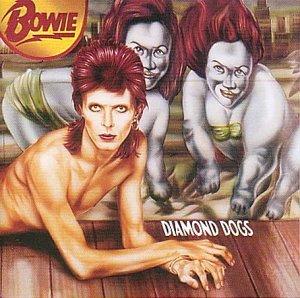
The result was Rock ‘n’ Roll with Me, one of the most heartfelt songs on Diamond Dogs. Officially credited to David Bowie and Warren Peace, the song grew from musical ideas developed by Geoff MacCormack during rehearsals and informal sessions with Bowie. Although Bowie completed the lyric and final arrangement, he insisted that Geoff receive a co-writing credit—an indication of the respect he had for his oldest friend’s contribution.
Unlike much of Diamond Dogs, which explores themes of urban decay, isolation and survival, Rock ‘n’ Roll with Me offers a more emotional and reflective moment. Many listeners have interpreted the song as expressing the relationship between performer and audience, while others hear it as a celebration of loyalty and friendship. Whatever its inspiration, it remains one of the most personal songs in Bowie’s catalogue and one that Geoff MacCormack would later choose as the title of his acclaimed photographic memoir.
MacCormack has always spoken modestly about his songwriting contribution, describing it as one of those happy accidents that occasionally occur during creative collaboration. Even so, the shared credit demonstrates that Bowie’s trust in Geoff extended well beyond friendship into genuine artistic partnership.
The Diamond Dogs Tour
If the Ziggy Stardust concerts had already pushed the boundaries of live rock performance, the Diamond Dogs Tour took theatrical ambition to an entirely new level. Premiering in 1974, the production featured elaborate moving scenery, hydraulic bridges, towering street sets and carefully choreographed performances that transformed Bowie’s concerts into something approaching musical theatre.
Geoff MacCormack played a far more prominent role than he had during the Ziggy years. Together with Gui Andrisano, he appeared as one of the two performers often referred to as the “Diamond Dogs“, combining backing vocals with choreography, mime and theatrical movement throughout the show. Their performances became an essential part of Bowie’s vision for a stage production unlike anything audiences had previously experienced.
One story Geoff has often shared illustrates Bowie’s extraordinary confidence in the people around him. Rather than asking whether Geoff could learn the demanding choreography required for the new production, Bowie simply told him that he would learn it. Geoff later recalled that Bowie’s complete belief in his abilities gave him the confidence to achieve something he had never imagined attempting. It was characteristic of Bowie’s leadership style: he frequently encouraged collaborators by assuming they were capable of far more than they believed themselves.
Geoff MacCormack on David Bowie’s belief in his collaborators
“David told me (not asked) to learn choreography for the Diamond Dogs Tour. His belief was enough. Many times it’s the attitude rather than the skill that counts.”
The scale of the production demanded absolute commitment from everyone involved. Performers had to master complicated stage movements while navigating enormous moving sets and maintaining precise vocal performances. Geoff embraced the challenge, later describing the Diamond Dogs Tour as one of the most rewarding experiences of his career.
When interviewed years later about his years with Bowie, MacCormack did not hesitate when asked which tour he enjoyed most. His answer was immediate: Diamond Dogs. Hands down. The combination of theatrical ambition, musical innovation and the trust Bowie placed in his performers made it an unforgettable experience.
Travelling with David Bowie
By now Geoff MacCormack‘s relationship with Bowie extended far beyond rehearsals and recording studios. The two childhood friends spent months travelling together by ship, train, coach and car, often covering thousands of miles between performances. Those journeys created opportunities for conversations that rarely took place in public, allowing Geoff to observe Bowie during moments of relaxation rather than performance.
Unlike many international artists, Bowie still preferred travelling by sea whenever practical. The slower pace suited his personality, providing time to read, write, listen to music and absorb new surroundings. Geoff accompanied him on many of these remarkable journeys, quietly documenting life on board with his camera while preserving memories that would later become some of the most treasured images in his archive.
For Geoff, these experiences reinforced a simple truth. No matter how famous David Bowie became, he remained the same endlessly curious friend Geoff had first met at school in Bromley. International success altered Bowie’s public identity beyond recognition, but it never fundamentally changed the person behind it.
Young Americans and a New Musical Direction
By late 1974 David Bowie had begun another remarkable artistic transformation. Having left behind the dystopian world of Diamond Dogs, he immersed himself in American soul, rhythm and blues and gospel music. The result was Young Americans, an album that surprised audiences and critics alike by abandoning glam rock in favour of a sophisticated soul sound inspired by Philadelphia’s thriving music scene.
For Geoff MacCormack this change felt entirely natural. Unlike many listeners who viewed Bowie’s reinventions as sudden departures, Geoff recognised that David’s fascination with soul music stretched back to their teenage years in Bromley. Together they had admired artists such as James Brown, Otis Redding and other American rhythm and blues performers long before Bowie achieved international success. The move towards soul therefore represented less a change of direction than the fulfilment of musical interests that had existed for many years.
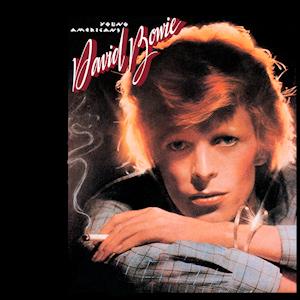
MacCormack remained closely involved throughout this period, contributing backing vocals as Bowie assembled a new group of musicians capable of delivering the rich harmonies and powerful vocal arrangements that characterised the album. Recording sessions brought Geoff together with an exceptional collection of performers, including Luther Vandross, Ava Cherry, Robin Clark and other vocalists whose contributions became central to the album’s distinctive sound.
Working on Young Americans also demonstrated Bowie’s remarkable ability to unite musicians from very different backgrounds. Geoff, who had travelled beside Bowie since the Ziggy Stardust era, watched his oldest friend build another creative family, this time rooted in American soul rather than British glam rock. It was yet another example of Bowie’s willingness to reinvent both his music and the people with whom he surrounded himself.
The Soul Tour
The concerts supporting Young Americans revealed another side of David Bowie. Gone were the elaborate dystopian sets of the Diamond Dogs Tour. In their place came a cleaner, more musically focused production that placed greater emphasis on vocal performance, rhythm and the powerful ensemble created by Bowie’s expanded band.
Geoff MacCormack adapted effortlessly to this new environment. His experience as both a vocalist and performer allowed him to move naturally from the theatrical choreography of Diamond Dogs to the sophisticated harmonies required by Bowie’s new soul repertoire. Once again he demonstrated the versatility that Bowie valued so highly in his collaborators.
Looking back, Geoff often remarked that Bowie never remained artistically comfortable for very long. Just as audiences had become accustomed to Ziggy Stardust, Bowie dismantled the character. When they expected another glam rock production, he introduced soul music instead. Geoff had the unique experience of witnessing these transformations from within, understanding that Bowie regarded artistic change not as a risk but as an essential part of his creative life.
Recording Station to Station
Geoff MacCormack‘s collaboration with David Bowie continued into 1975 during the recording of Station to Station, an album that marked another dramatic shift in Bowie’s artistic identity. Recorded primarily at Cherokee Studios in Los Angeles, the sessions introduced the enigmatic Thin White Duke and combined elements of soul, funk, art rock and the emerging European influences that would later define Bowie’s Berlin period.
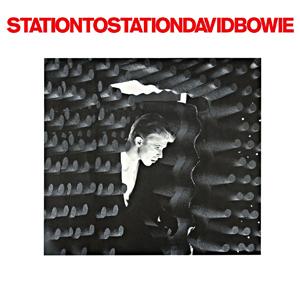
MacCormack again contributed backing vocals, working alongside a group of musicians that included Earl Slick, Carlos Alomar, Dennis Davis, George Murray and Roy Bittan. The atmosphere surrounding the sessions differed considerably from Bowie’s earlier recordings. Despite the increasingly demanding circumstances of Bowie’s personal life, the musicians remained focused on creating one of the most ambitious albums of his career.
One of Geoff’s best-known recollections concerns the recording of Golden Years. During the vocal sessions Bowie temporarily lost his voice, leaving MacCormack to complete elements of the backing vocal arrangement. Geoff has also recalled helping organise parts of the harmony, another indication of the confidence Bowie placed in his oldest friend inside the recording studio.
Station to Station would prove to be Geoff MacCormack‘s final major studio collaboration with Bowie during the 1970s. By the time the album was completed, Bowie was already preparing for another dramatic change of direction that would eventually lead him to Europe and the celebrated Berlin Trilogy.
The Man Who Fell to Earth
While work on Station to Station continued, Bowie also accepted the leading role in Nicolas Roeg’s film The Man Who Fell to Earth. Geoff MacCormack remained close to his lifelong friend throughout this period, visiting the production and photographing many informal moments behind the scenes.
Several of Geoff’s photographs from the film set have since become among the most admired images in his archive. Rather than portraying Bowie in character before the cameras, they reveal quieter moments between scenes, offering a rare glimpse of the actor relaxing, reading, talking with friends or preparing for filming.
MacCormack later revealed that he had originally been considered as a possible body double for Bowie during parts of the production. Although this was ultimately unnecessary, the story illustrates how closely Geoff remained connected to Bowie’s creative projects, extending far beyond his musical contributions.
Looking back, Geoff has frequently described the period surrounding The Man Who Fell to Earth as one of the happiest of their years together. Despite the demanding schedules of recording, filming and touring, he remembered Bowie as being completely focused on the opportunity to explore a new artistic medium. For Geoff it represented another example of Bowie’s determination never to stand still creatively, constantly searching for fresh challenges and new forms of expression.
Video: Geoff MacCormack and David Bowie
This short documentary places Geoff MacCormack‘s remarkable story within the wider context of David Bowie’s career. Combining archive footage, photographs and Geoff’s own memories, it illustrates how a childhood friendship developed into one of the longest and most trusted relationships in Bowie’s life.
More than simply a touring musician, MacCormack became a backing vocalist, songwriter, photographer and travelling companion, accompanying Bowie through the Ziggy Stardust, Diamond Dogs, Young Americans and Station to Station years. His unique perspective continues to provide historians with invaluable first-hand insight into both David Bowie the artist and David Jones the lifelong friend.
Geoff MacCormack‘s Photography
Although Geoff MacCormack is widely recognised for his musical collaborations with David Bowie, his greatest historical legacy may ultimately be the remarkable collection of photographs he created while travelling with his lifelong friend. Unlike professional photographers who were granted carefully controlled access, Geoff photographed Bowie from within his closest circle. His camera recorded everyday life rather than publicity images, producing an archive that is both historically important and deeply personal.
MacCormack has often insisted that he never considered himself a professional photographer. In interviews he has described himself as an enthusiastic amateur who happened to carry a camera while travelling the world with David Bowie. Ironically, he believes this lack of technical obsession became one of his greatest advantages. Instead of concentrating on camera settings, lenses and exposure, he concentrated on the people around him, capturing relaxed moments that professional photographers rarely witnessed.
Geoff MacCormack on photography
“The truth is, I’m not a photographer, never was! However, my ignorance of photography was my blessing.”
His photographs document Bowie reading on trains, relaxing in hotel rooms, writing lyrics, rehearsing with musicians, travelling aboard ships, exploring foreign cities and spending time with friends. They reveal David Jones rather than the carefully constructed public image of David Bowie, offering a unique perspective unavailable anywhere else.
Many of the photographs taken during the 1973–1976 tours have since become iconic. They include images from the United States, Japan, the Soviet Union, the Diamond Dogs Tour, the Soul Tour, the recording of Station to Station and the filming of The Man Who Fell to Earth. Together they form one of the most valuable visual archives of Bowie’s creative life during the 1970s.
From Station to Station: Travels with Bowie 1973–1976
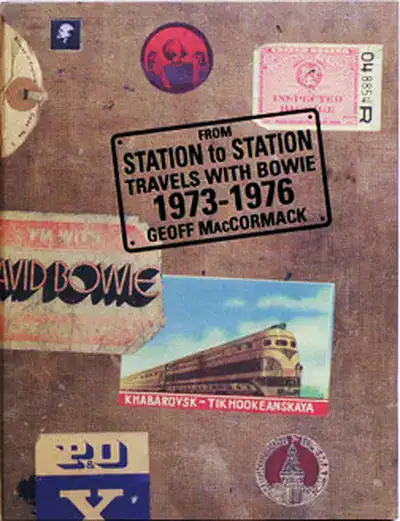
In 2007 Geoff MacCormack opened part of his personal archive to the public with the publication of From Station to Station: Travels with Bowie 1973–1976. Combining previously unseen photographs with detailed recollections, the book quickly established itself as one of the most important first-hand accounts of Bowie’s touring years.
Rather than functioning as a conventional biography, the book follows Bowie and MacCormack across three extraordinary years of international travel. Concerts, recording sessions, train journeys, ocean voyages and informal moments are woven together into a personal narrative that only someone inside Bowie’s closest circle could have written.
The original edition carried a foreword written by David Bowie himself. Writing as David Jones, Bowie praised Geoff’s idea of documenting their adventures and reflected warmly on the extraordinary journeys they had shared together. The foreword remains one of Bowie’s most personal written tributes to one of his oldest friends.
David Bowie: Rock ‘n’ Roll with Me
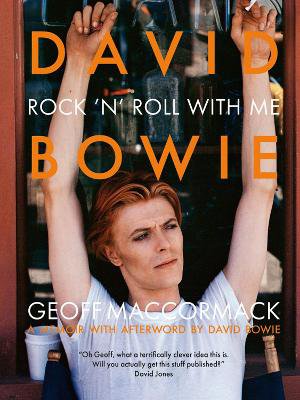
More than fifteen years later Geoff MacCormack returned to his archive with the publication of David Bowie: Rock ‘n’ Roll with Me. Published in 2023 by ACC Art Books, the beautifully produced 240-page volume expanded significantly upon his earlier work and presented almost 150 photographs spanning Bowie’s most creative decade.
The title deliberately references Rock ‘n’ Roll with Me, the song Geoff co-wrote with Bowie for the Diamond Dogs album. Richly illustrated and accompanied by personal recollections, the book explores Bowie’s life on stage, in recording studios, aboard trains and ships, during rehearsals and while travelling across Europe, America and Asia.
Unlike many Bowie books built around familiar publicity photographs, Rock ‘n’ Roll with Me presents the private David Jones—the friend Geoff had known since childhood. The result is one of the most intimate visual biographies ever published about Bowie.
Exhibitions
The success of Geoff MacCormack‘s photographic archive has led to numerous exhibitions devoted to his work. Among the most celebrated was Rock ‘n’ Roll with Me at Brighton Museum & Art Gallery, where visitors experienced Bowie’s career through the eyes of one of his closest lifelong friends. The exhibition attracted thousands of visitors and remained on display for an extended period due to its popularity.
MacCormack’s photographs have also formed the basis of exhibitions in the United States, the United Kingdom and Europe, including displays focusing on Bowie’s remarkable journey across the Soviet Union. These exhibitions demonstrate that Geoff’s work possesses importance not only as music history but also as documentary photography.
His images continue to appear in museums, galleries and publications, helping new generations understand David Bowie beyond the familiar stage performances and publicity portraits.
David Bowie: Music Lover

Geoff MacCormack has continued contributing to Bowie scholarship long after his years as a touring musician. Working with acclaimed Bowie author Jérôme Soligny, he collaborated on David Bowie: Music Lover – The Inside Story of David Bowie’s Record Collection, a detailed study exploring the records, artists and musical influences that shaped Bowie’s extraordinary career.
Drawing upon decades of friendship and extensive historical research, the publication examines more than one hundred artists who formed part of Bowie’s personal record collection. The project once again demonstrated Geoff’s commitment to preserving and sharing the wider story behind Bowie’s creative life.
Personal Memories of David Bowie
Throughout numerous interviews Geoff MacCormack has consistently resisted describing David Bowie as an untouchable superstar. Instead, he speaks warmly of the friend he always continued to know as David Jones. Even after six decades, Geoff’s memories remain grounded in humour, friendship and shared experiences rather than celebrity.
Geoff MacCormack on David Jones, the friend behind David Bowie
“For me, he was always David Jones, even though he was Bowie to the whole world.”
One recurring theme in Geoff’s recollections is Bowie’s remarkable confidence in the people around him. Rather than asking collaborators whether they believed they could accomplish a difficult task, Bowie often assumed they could. Geoff frequently cites the Diamond Dogs choreography as an example. Bowie simply told him to learn the routines, convinced that his oldest friend would succeed. That confidence inspired Geoff to discover abilities he had never imagined possessing.
Geoff has also spoken about Bowie’s endless curiosity. Whether travelling through the Soviet Union, browsing bookshops in New York or discussing obscure rhythm and blues records, Bowie never stopped searching for new ideas. International fame never diminished his enthusiasm for learning, something Geoff admired from their earliest schooldays until their final meetings.
Beyond David Bowie
Although David Bowie remains central to Geoff MacCormack‘s public profile, his own career extends far beyond those remarkable touring years. He has worked as a composer, producer, photographer, visual artist and exhibition curator, while continuing to write and speak about creativity, music and the extraordinary experiences that shaped his life.
Today Geoff’s photography, artwork and publications continue to reach audiences around the world, ensuring that his own artistic achievements are recognised alongside his unique contribution to Bowie’s history.
Legacy
Few individuals occupied as many different roles within David Bowie’s career as Geoff MacCormack. He was a childhood friend, touring musician, backing vocalist, songwriter, percussionist, photographer, travelling companion, author and trusted confidant. Even more importantly, he remained one of the very few people who knew Bowie before, during and after international fame.
His photographs preserve moments that would otherwise have disappeared forever, while his books and interviews continue to provide historians with invaluable first-hand testimony. Together they offer a rare opportunity to understand David Bowie not only as an iconic performer but also as a loyal friend whose extraordinary imagination remained rooted in the friendships of his youth.
Place within Bowie’s Collaborative Universe
Within David Bowie’s vast network of collaborators, Geoff MacCormack occupies an entirely unique position. Many musicians worked with Bowie on individual albums or tours, but very few shared a friendship that stretched from primary school through more than sixty years of life. His contribution cannot be measured solely through album credits or concert appearances. Geoff witnessed the transformation of David Jones into David Bowie from closer than almost anyone else and helped preserve that journey through music, photography and memory.
Official Website & Further Information
Today Geoff MacCormack continues to publish books, exhibit his photography and artwork, and participate in interviews discussing his remarkable career and lifelong friendship with David Bowie.
For information about Geoff MacCormack‘s books, photographic prints, exhibitions and current projects, visit his official website:
www.geoffmaccormack.com
Article Origin
This article has been researched and written for DavidBowieWorld.com using verified historical sources, published interviews, official album credits, Geoff MacCormack‘s own books, his official website and documented first-hand recollections. The aim is to present a historically accurate account of one of David Bowie’s longest and most significant creative friendships.
