
Lindsay Kemp – Mime Artist, Teacher and David Bowie Collaborator
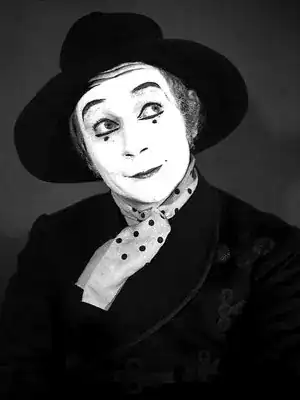
Photo: Allan Warren / Wikimedia Commons / CC BY-SA 3.0 (editorial use).
Lindsay Kemp was a British dancer, mime artist, choreographer, director, performer and teacher whose work became an important part of David Bowie’s theatrical education during the late 1960s. Bowie studied dance and mime with Kemp in London in 1967 and subsequently joined him in the theatrical production Pierrot in Turquoise.
Their collaboration connected two very different stages of Bowie’s career. Kemp first encountered Bowie while the young singer was still searching for a distinctive artistic direction. Five years later, Kemp returned to work with Bowie when the Ziggy Stardust phenomenon was transforming him into one of Britain’s most visually distinctive rock performers.
Kemp should not be described as the sole creator of Bowie’s theatrical identity. Bowie drew upon many influences throughout his career. Kemp’s documented contribution was more specific: he introduced Bowie to disciplined mime, expressive movement and a theatrical approach in which gesture, costume, character and visual presentation were integral parts of performance.
Key Facts
- Full name: Lindsay Kemp
- Born: 3 May 1938
- Died: 24 August 2018, Livorno, Italy
- Profession: Dancer, mime artist, choreographer, director, performer and teacher
- Lindsay Kemp Company: Formed in 1962
- Bowie connection began: 1967
- Bowie studied with Kemp: Floral Street, Covent Garden, London
- Stage collaboration: Pierrot in Turquoise
- Bowie’s role: Cloud
- Later Bowie collaboration: Rainbow Theatre concerts, London, August 1972
Early Life and Training
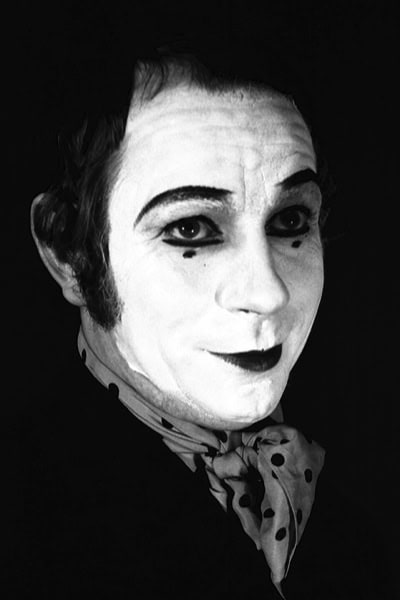
Lindsay Kemp grew up largely in northern England and developed an interest in performance at an early age. After attending art classes in Bradford and completing national service with the Royal Air Force, he pursued professional training in dance and theatre.
Kemp attended the Ballet Rambert School in London. He also studied with French mime artist Marcel Marceau and with Hilde Holger, the Viennese expressionist dancer and choreographer. These different disciplines became important components of his own approach to performance.
Kemp did not restrict himself to conventional ballet or mime. His developing theatrical language combined dance, mime, costume, make-up, music and highly controlled physical expression. European theatre, expressionist dance, commedia dell’arte and literary sources all became part of his work.
He formed the Lindsay Kemp Company in 1962 and gradually built an independent reputation through experimental stage productions. His work often existed between established artistic categories, drawing responses from theatre critics as much as from the dance world.
This unusual mixture of disciplines was significant for the young David Bowie. By the middle of the 1960s Bowie had already tried several musical identities, but he had not yet achieved sustained commercial success. Kemp exposed him to another way of thinking about performance in which the body and the visual environment could carry meaning alongside music and words.
David Bowie Meets Lindsay Kemp
Bowie’s documented period of study with Kemp began in 1967. He attended dance and mime lessons with Kemp at Floral Street in Covent Garden, London.
At the time Bowie was still in the Deram period of his recording career. His self-titled debut album had appeared in June 1967, but its commercial reception had been modest. During the same period he was increasingly looking beyond the conventional role of a pop singer.
Mime gave Bowie a practical means of exploring performance without relying entirely on dialogue or song. Through physical control, gesture, facial expression and movement, a performer could suggest emotion, character or an imagined environment.
Kemp’s lessons therefore arrived during an important period of experimentation. Bowie’s interest in theatre, mime and multimedia performance increasingly existed alongside his songwriting rather than separately from it.
“Lindsay taught me more about what one can do with a stage than anyone.”
— David Bowie, Time, 1983
Kemp’s Approach to Performance
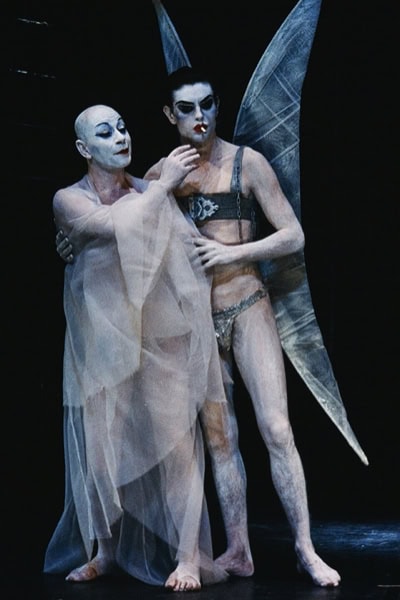
Kemp regarded movement as a central means of communication. His work did not treat choreography simply as decorative movement surrounding a performer. Instead, posture, timing, facial expression, costume and gesture could become part of the character itself.
In a 2016 interview, Kemp described one of the lessons he believed he had given Bowie directly.
Lindsay Kemp on teaching David Bowie
“I taught him to express and communicate through his body.”
— Lindsay Kemp, The Guardian, 2016
Kemp also recalled discussing make-up, costume, stagecraft, performance technique, music hall, avant-garde theatre, kabuki and the work of French writer Jean Genet with Bowie.
These recollections do not mean that every aspect of Bowie’s later performance style originated with Kemp. Bowie continued to absorb ideas from music, theatre, visual art, film, fashion and literature throughout his career. Kemp was one important teacher within that much larger development.
Bowie’s own later recollection provides a particularly useful indication of what remained with him. Immediately after crediting Kemp in the 1983 Time interview, Bowie observed that even a very small movement could have a large effect on stage.
That idea — that physical economy could be as effective as theatrical exaggeration — became part of Bowie’s increasingly sophisticated understanding of stage presence.
Pierrot in Turquoise
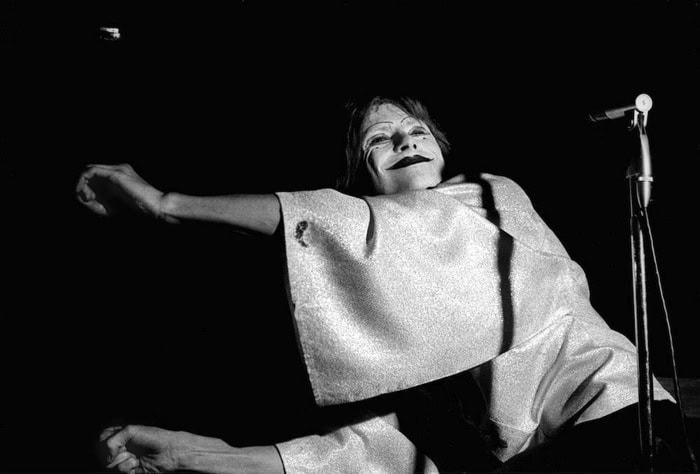
Bowie’s studies with Kemp soon developed into a professional stage collaboration. After approximately a month of training, Bowie made his first appearance with Kemp’s company in Pierrot in Turquoise on 28 December 1967.
The production drew upon characters and imagery associated with commedia dell’arte, but transformed them through Kemp’s distinctive mixture of mime, dance, music and visual theatre.
Bowie appeared as Cloud. Rather than occupying the stage as a conventional pop singer, he became part of Kemp’s theatrical environment while contributing music to the production.
Bowie songs used in Pierrot in Turquoise included When I Live My Dream, Columbine, The Mirror and Threepenny Pierrot.
The collaboration provided Bowie with first-hand experience of combining original songs with costume, movement and an established theatrical narrative.
This is an important distinction. Bowie was not merely learning theatrical techniques in a classroom; he was applying them in front of an audience as part of a working company.
Bowie as Cloud
David Bowie performing “Columbine” in Pierrot in Turquoise, in which he appeared as Cloud.
Bowie’s appearance as Cloud is particularly significant because it survives from the period before the famous stage identities of the 1970s.
It demonstrates that Bowie had already begun working within a theatrical framework in which a singer could assume a defined visual and dramatic role.
Cloud should not, however, be described as an early version of Ziggy Stardust. There were several years, numerous musical developments and many additional influences between Pierrot in Turquoise and Bowie’s creation of Ziggy.
What can safely be said is that the role gave Bowie practical experience in performing his music while simultaneously participating in a constructed theatrical world.
Scottish Television and The Looking Glass Murders
An important part of the Bowie–Kemp collaboration survives because Scottish Television recorded a version of the production in Edinburgh in 1969.
The approximately 25-minute television production is associated with the titles Pierrot in Turquoise and The Looking Glass Murders and dates from 1970 in British television records.
Bowie appears as Cloud alongside Lindsay Kemp and Jack Birkett. During the programme Bowie performs When I Live My Dream while positioned high on a stepladder, one of the most recognisable surviving visual documents from his period with Kemp.
The recording is historically valuable because it provides direct visual evidence of the theatrical environment in which Bowie had been working. Painted faces, stylised movement, costume, mime and music are brought together within a single production.
The British Film Institute has subsequently screened the programme in connection with Bowie retrospectives, recognising it as an important surviving document from his early theatrical development.
Mime in Bowie’s Own Work
David Bowie – The Mask (A Mime)
Bowie continued using mime after his first work with Kemp. During 1968 theatrical performance became an increasingly visible part of his activities.
Among the pieces he performed was the Tibetan-inspired mime Yet-San and the Eagle. Bowie presented mime on bills that otherwise contained musical performers, placing his theatrical work directly alongside contemporary rock and pop culture.
The period is important because Bowie had not yet established a stable commercial identity. Instead of abandoning performance when his recording career stalled, he expanded the range of forms in which he worked.
Theatre and mime became part of a larger search that also included songwriting, film, poetry and multimedia presentation.
Turquoise and Feathers
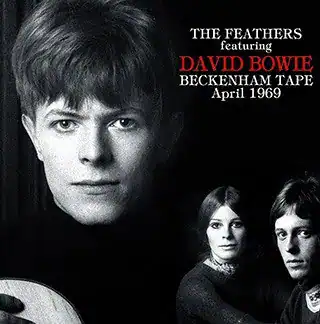
In 1968 Bowie also experimented with combining music and performance through the short-lived groups Turquoise and Feathers.
Turquoise brought Bowie together with Hermione Farthingale and guitarist Tony Hill. After Hill’s departure, John Hutchinson joined Bowie and Farthingale in the configuration known as Feathers.
Their performances incorporated more than songs alone. Music, poetry and mime could exist within the same programme, reflecting Bowie’s growing interest in presenting performance as a combination of disciplines.
These projects should not be described simply as extensions of Kemp’s company. Bowie was beginning to adapt ideas he had encountered in theatre and use them within projects of his own.
From Mime to Rock Performance
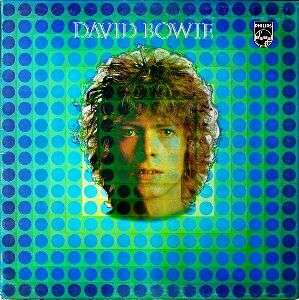
Bowie’s recording career changed dramatically with the release and later success of Space Oddity in 1969. As music again became his primary professional focus, formal mime performances became less central to his public work.
The theatrical education itself did not disappear.
Bowie had gained direct experience of costume, character, controlled physical movement and visual presentation. He had also seen how a stage performance could create its own world rather than simply reproduce music recorded in a studio.
During the early 1970s those ideas became increasingly relevant as Bowie developed a stronger visual identity and began treating live performance as part of the overall presentation of his music.
The Rise of Ziggy Stardust
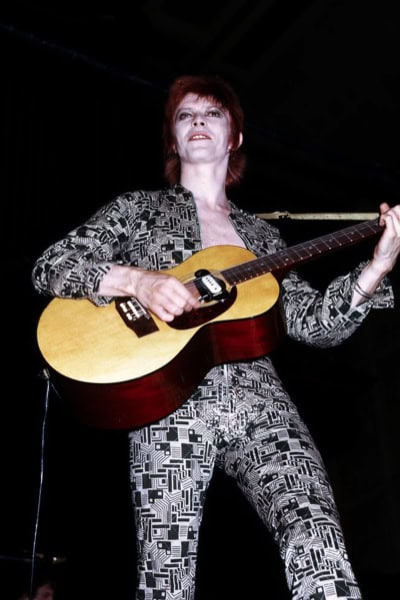
By 1972 Bowie’s circumstances were entirely different from those of his first period with Kemp.
The Rise and Fall of Ziggy Stardust and the Spiders from Mars was released in June 1972, while Bowie and the Spiders from Mars were already taking the Ziggy character onto British stages.
Ziggy combined music with hairstyle, costume, movement and an evolving fictional identity. Bowie’s presentation had become far more theatrical than that of a conventional rock frontman.
It would be inaccurate to credit Kemp alone for this transformation. Bowie’s Ziggy-period visual language involved numerous collaborators and influences, including costume design, photography, theatre, Japanese aesthetics, science fiction and contemporary rock culture.
Nevertheless, Bowie now had an opportunity to work again with the teacher who had introduced him to formal mime and movement five years earlier.
Lindsay Kemp and the Rainbow Theatre
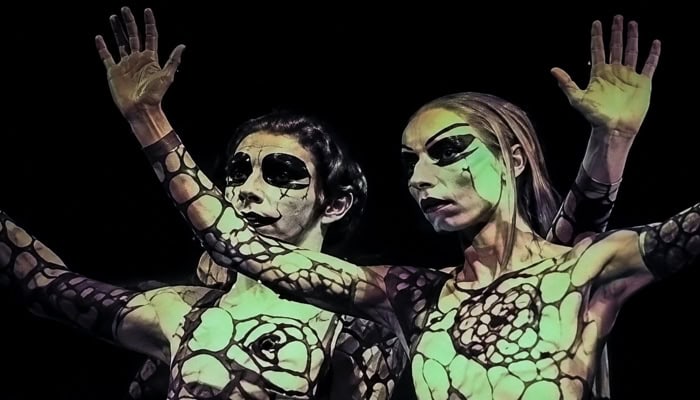
Kemp returned to Bowie’s professional world for the Rainbow Theatre concerts in London in August 1972.
Bowie presented three particularly elaborate shows involving Kemp and his troupe at the Rainbow on 19, 20 and 30 August 1972.
Kemp’s theatrical contribution expanded the visual scope of the Ziggy Stardust presentation. His involvement brought mime and choreographed theatrical elements onto a stage otherwise occupied by Bowie and the Spiders from Mars.
The collaboration is historically striking because the relationship between the two artists had changed.
In 1967 Bowie had entered Kemp’s theatrical world as a student and young performer. At the Rainbow in 1972, Kemp and members of his company were entering Bowie’s increasingly successful rock spectacle.
Kemp remained a theatrical collaborator rather than the creator of the Ziggy concept. The distinction is important when assessing his place in Bowie’s history. His documented contribution was to the staging and theatrical dimension of these particular performances.
The Rainbow as Rock Theatre
The Rainbow concerts demonstrated the extent to which Bowie was willing to push a rock show towards theatre.
The songs remained central, but the visual presentation around them was capable of creating additional meaning. Costume, lighting, physical movement and theatrical performers could all contribute to the atmosphere.
This was the area in which Bowie’s earlier training with Kemp had direct relevance. Bowie understood that even a relatively small gesture could alter the way an audience perceived a performer.
At the same time, the scale had changed dramatically. What had once been an experimental collaboration involving a little-known young singer was now being incorporated into the presentation of one of the most discussed new figures in British rock.
John, I’m Only Dancing
David Bowie – John, I’m Only Dancing, directed by Mick Rock, 1972.
Kemp’s 1972 collaboration with Bowie also survives on film.
On 25 August 1972, between the three Rainbow concerts, photographer and filmmaker Mick Rock filmed Bowie during rehearsals for the promotional film for John, I’m Only Dancing.
Rehearsal footage featuring Lindsay Kemp and members of his troupe was incorporated into Rock’s completed film.
The footage provides a second important visual record of the Bowie–Kemp collaboration.
The contrast with Pierrot in Turquoise is particularly revealing. In the earlier production Bowie existed within Kemp’s theatrical environment. In the 1972 film, Kemp and his performers appear within the visual world of Ziggy Stardust.
Kemp’s Place in Bowie’s Stagecraft
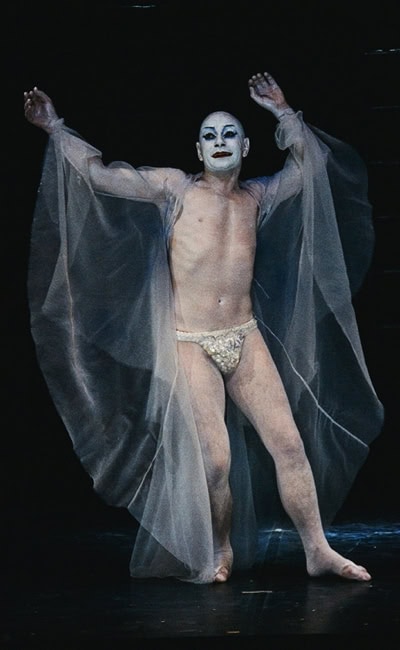
The strongest evidence for Kemp’s lasting importance comes from Bowie himself.
Bowie did not claim that Kemp had invented his characters or determined the course of his career. What he specifically credited Kemp with was teaching him about what could be achieved on a stage.
That distinction allows Kemp’s contribution to be understood without exaggeration.
Bowie’s later stagecraft was extraordinarily varied. Ziggy Stardust’s physicality differed from the controlled severity associated with the Thin White Duke, while the mature Bowie of later tours frequently performed without adopting a named character at all.
What remained consistent was an awareness of physical presentation. Bowie knew how posture, stillness, movement, costume and positioning could change the emotional effect of a performance.
Kemp was one of the people who helped give Bowie a formal understanding of those possibilities at a formative stage in his career.
Jean Genet and the Wider Theatrical World
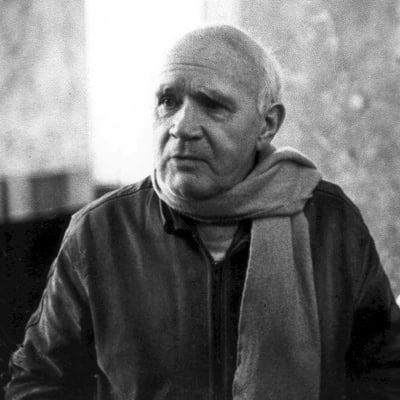
Kemp’s influence was not limited to movement lessons.
In later recollections Kemp described discussing the French writer Jean Genet with Bowie, together with subjects including kabuki, music hall and avant-garde performance.
Genet became especially important within Kemp’s own theatrical work. Kemp’s production Flowers, based on Genet’s Notre-Dame-des-Fleurs, became one of his best-known productions during the 1970s.
It would be speculative to claim that a particular Bowie song or character resulted directly from one of these conversations. Their documented significance is broader: Kemp introduced Bowie to a theatrical and literary environment extending well beyond contemporary British pop music.
Lindsay Kemp Beyond David Bowie
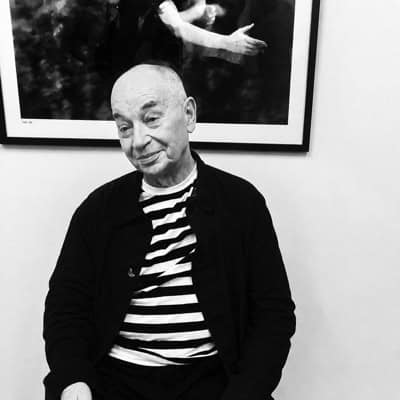
Kemp’s historical importance extends far beyond his association with Bowie. He built a substantial career as a choreographer, performer, director and teacher, working internationally for decades.
His production Flowers became a particularly important part of his reputation during the 1970s. Based on the writing of Jean Genet, the production travelled internationally and helped establish Kemp and his company with a much wider audience.
Kemp also returned professionally to the organisation where he had once trained. In 1975 he created The Parades Gone By for Ballet Rambert. The work received its world premiere at Leeds Playhouse on 25 March 1975.
Rambert records Kemp as responsible for the production, choreography and scenario, with Carlos Miranda providing the music and Natasha Kornilof associated with the design.
In 1977 Kemp collaborated with choreographer Christopher Bruce on Cruel Garden, a full-length work inspired by the life and writings of Spanish poet and playwright Federico García Lorca.
The production premiered on 5 July 1977 and became another major work in Kemp’s association with Rambert.
Film and Acting

Kemp also appeared as an actor in film.
Kemp’s film work included a role in The Vampire Lovers in 1970, although his scenes were deleted from the completed film. He subsequently appeared in Ken Russell’s Savage Messiah in 1972, The Wicker Man in 1973 and Derek Jarman’s Jubilee in 1978.
Decades later he appeared in Todd Haynes’s Velvet Goldmine in 1998, a film whose fictional glam-rock world drew upon aspects of the cultural period in which Kemp himself had worked with Bowie.
These film appearances formed only one part of a career that continued to encompass live performance, choreography, teaching, theatre and opera.
Kate Bush
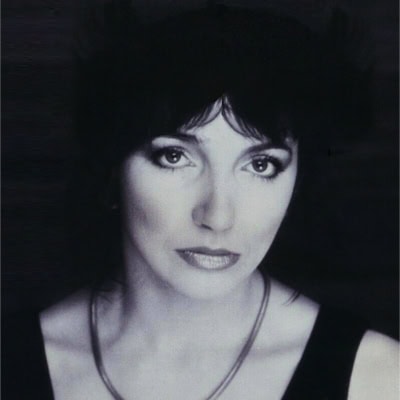
Bowie was not the only major British musician to study with Kemp.
Kate Bush also became his student after seeing his theatrical work. Kemp’s teaching became an important part of her development as a physical performer.
Bush later worked with Kemp and maintained a strong affection and respect for him. Following his death in 2018, she described herself as having been extremely fortunate to study and work with him.
Bowie and Bush developed very different forms of musical theatre, and their work should not be conflated. Their separate relationships with Kemp nevertheless demonstrate his unusual ability to connect experimental theatre and movement with performers working primarily in popular music.
Life and Work in Europe
Kemp eventually left Britain and spent much of his later career in continental Europe.
From the end of the 1970s he was based for periods in Spain and later Italy, continuing to create, revive and perform theatrical works.
He also worked in opera, taught performers and continued drawing and designing. His career therefore extended far beyond the glam-rock period with which he is often associated in Bowie histories.
Kemp remained professionally active into his eighties rather than withdrawing from performance. His continuing work reflected the same combination of theatre, movement and visual imagination that had characterised his early career.
Death
Lindsay Kemp died on 24 August 2018 in Livorno, Tuscany, Italy. He was 80 years old.
He had remained active until the end of his life and had been rehearsing with his company on the day of his death.
The official David Bowie website marked his passing the following day, recalling his work with Bowie in Pierrot in Turquoise, the Rainbow Theatre performances and the surviving John, I’m Only Dancing footage.
Legacy
Lindsay Kemp occupies a distinctive place in David Bowie’s artistic history.
His importance does not depend upon claiming that he created Ziggy Stardust or single-handedly transformed Bowie into a theatrical performer. Neither claim is necessary and neither accurately describes the complexity of Bowie’s development.
The documented relationship is already substantial.
Bowie studied dance and mime with Kemp in 1967. After only a short period of training he joined Kemp’s company and appeared as Cloud in Pierrot in Turquoise. Their work together was later preserved through Scottish Television. Bowie subsequently experimented with mime and multimedia performance in projects of his own.
Five years after their first collaboration, Kemp returned to Bowie’s world for the theatrical Rainbow Theatre concerts of August 1972, at the height of Bowie’s emergence as Ziggy Stardust. Rehearsal footage of Kemp and his troupe also survived in Mick Rock’s film for John, I’m Only Dancing.
Most importantly, Bowie himself later acknowledged what Kemp had taught him: an understanding of what a performer could achieve on a stage and how much meaning could be contained within even a small physical movement.
Kemp therefore belongs among the formative teachers and collaborators who helped broaden Bowie’s understanding of performance beyond music alone.
Bowie ultimately developed those lessons in directions that were entirely his own, but the theatrical education he received from Lindsay Kemp remained an identifiable part of the foundation.
Official Website & Further Information
Further historical information about Lindsay Kemp and his work with David Bowie can be found through the official David Bowie archive. Rambert’s archive also preserves information about Kemp’s training and his later work with the company.
David Bowie – Official Website
Rambert – Official Website and Archive
Article Origin
This DavidBowieWorld archive article was researched and rewritten using documented material relating to Lindsay Kemp’s career and his work with David Bowie. The central chronology has been checked against the official David Bowie archive, British Film Institute records, Rambert archival material and published interviews with Bowie and Kemp.
Particular care has been taken to distinguish documented collaboration from later interpretation. Kemp’s influence is therefore presented through verifiable lessons, performances, productions and first-hand statements rather than attributing Bowie’s later characters or stage identities to Kemp without supporting evidence.
© DavidBowieWorld.com — David Bowie Collaborations & Creative Circle Archive.
