
David Bowie & Nine Inch Nails – The Dissonance / Outside Tour 1995
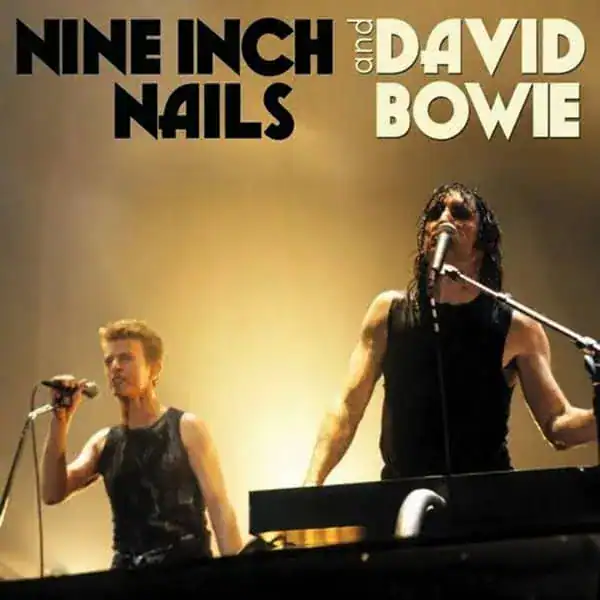
In September 1995, David Bowie and Nine Inch Nails began a North American concert partnership built around an unusual idea: the change between the acts would become part of the performance. Instead of a conventional interval, musicians and repertoire crossed over during a shared sequence, connecting Nine Inch Nails’ set with Bowie’s presentation of 1. Outside and selected earlier material.
Trent Reznor entered the tour as the creative force behind a major contemporary act, while Bowie brought a new album and a catalogue whose experimental side had already influenced younger musicians. Their different positions made the pairing compelling, but also complicated. Admiration between the artists did not guarantee agreement between their audiences.
The collaboration extended beyond the concerts through remixes, the I’m Afraid of Americans video and later expressions of mutual respect. Its importance rests in those specific encounters: two working bands learning a shared transition, familiar songs placed in unfamiliar surroundings, and a relationship that eventually carried personal meaning as well as professional consequences.
Key Facts
- Partnership: David Bowie and Nine Inch Nails.
- Period covered: The shared North American concert dates in September and October 1995, with later related collaborations.
- Tour names: The Outside Tour in Bowie’s history; the shared engagement is also widely known as the Dissonance Tour.
- Opening concert: 14 September 1995, Meadows Music Theatre, Hartford, Connecticut.
- Bowie album: 1. Outside, released in September 1995.
- Nine Inch Nails context: The Downward Spiral and the continuing Self Destruct touring period.
- Shared repertoire: Subterraneans, Scary Monsters (and Super Creeps), Reptile, Hallo Spaceboy and Hurt.
- Bowie band: Bowie, Reeves Gabrels, Carlos Alomar, Gail Ann Dorsey, Zachary Alford, Mike Garson, Peter Schwartz and George Simms.
- Nine Inch Nails live band: Trent Reznor, Robin Finck, Danny Lohner, Chris Vrenna and Charlie Clouser.
- Related recordings: The Hearts Filthy Lesson remixes and the 1997 I’m Afraid of Americans remix project.
- Later connection: Reznor’s published tributes, the Farewell Mix of I Can’t Give Everything Away and subsequent performances of Bowie’s music.
From Tin Machine to a different kind of solo career
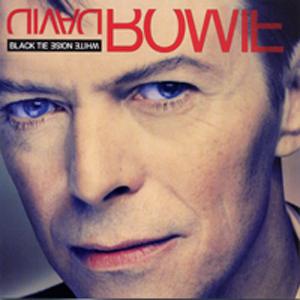
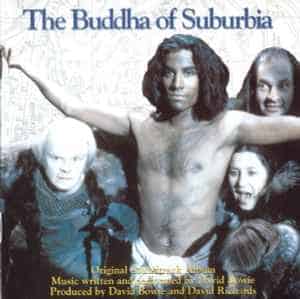
Bowie’s position in 1995 had developed through several distinct projects. Tin Machine had returned him to working within a rock group, while Black Tie White Noise and The Buddha of Suburbia explored different combinations of songs, electronics and instrumental material. The next step did not emerge from one sudden encounter with industrial rock.
Reeves Gabrels provided an important thread through that development. Having worked with Bowie in Tin Machine, he continued into the solo recordings and became a central guitarist in the Outside touring band. The continuity of personnel matters alongside the changes in musical direction: Bowie was carrying relationships forward while altering the framework around them.
This background gives the Nine Inch Nails partnership a more useful context than a story of an established star discovering contemporary music overnight. Bowie already had recent recordings to build on, and the repertoire for the new tour belonged to that ongoing work.

The question was how to present it. A concert dominated by familiar singles would have offered one answer, but the eventual North American programme placed the new material and less predictable older selections in front of an audience drawn partly by another artist.
Reuniting with Brian Eno for 1. Outside
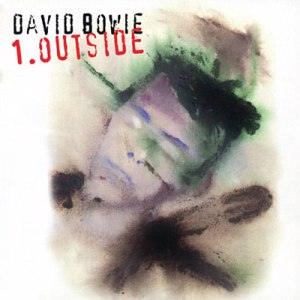
For 1. Outside, Bowie reunited with Brian Eno, whose earlier work with him had helped shape the recordings associated with the late 1970s. David Richards also played a substantial production and engineering role. The album developed a fictional world around art, violence, identity and the investigation of a death.
Its subtitle, The Nathan Adler Diaries: A Hyper-cycle, signals the narrative framework. Songs were interspersed with spoken character pieces, making the full record more complicated than a straightforward sequence of unrelated tracks. The listener encountered fragments of a story rather than a conventional plot explained from beginning to end.
The instrumental contributions were equally important. Piano, guitar, rhythm instruments and electronic treatments existed within the same project. Calling the album industrial can describe part of its sound, but does not account for everything happening within it.
The touring challenge followed from that variety. A band had to make the selected songs work as concert performances, where an audience could not turn back to a previous track or study the accompanying text. The stage programme consequently presented an interpretation of the album’s world rather than a complete dramatic enactment of its narrative.
Nine Inch Nails before the partnership
Nine Inch Nails had established a recording identity before meeting Bowie on the shared stage. Pretty Hate Machine appeared in 1989, followed by Broken in 1992 and The Downward Spiral in 1994. The releases moved through different balances of electronics, guitars, melody and aggression rather than repeating one production formula.
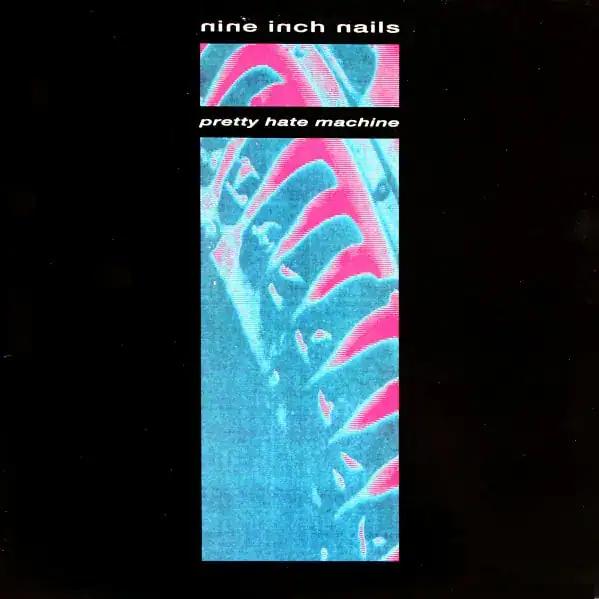
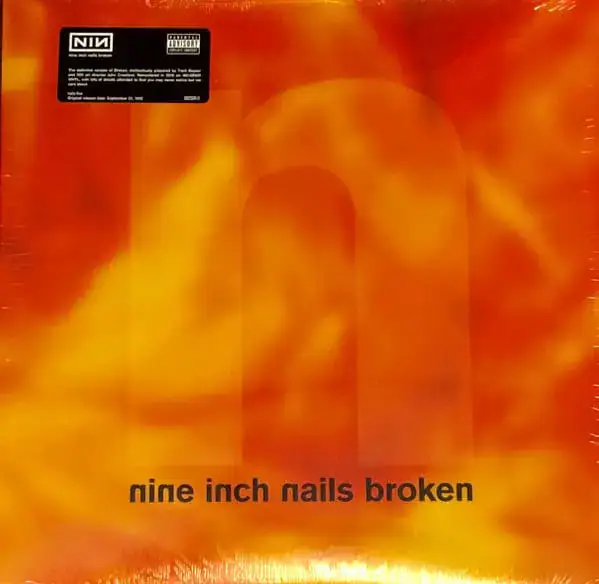
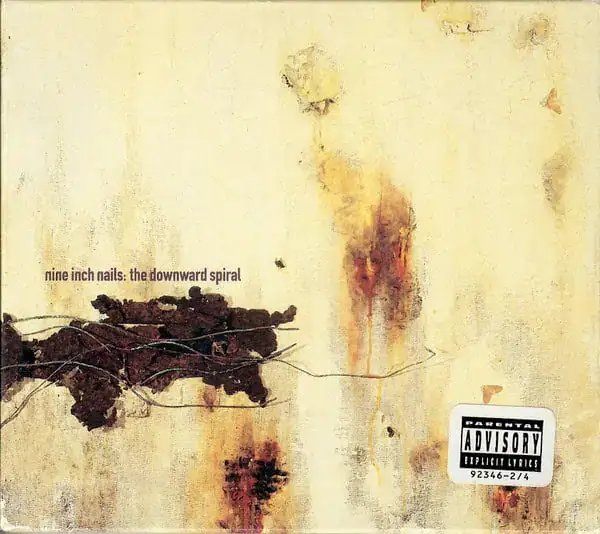
Reznor remained the central writer and studio figure, but Nine Inch Nails’ public identity also depended on live performance. The concert band gave physical form to music constructed through recording, programming and repeated studio decisions. It was this working ensemble, not simply a collection of album masters, that would meet Bowie’s musicians in 1995.
The earlier records supplied recognisable material for the audience, including Head Like a Hole, Terrible Lie and Wish. Those songs had already helped establish a relationship between the act and its listeners before the collaboration was announced.
That history makes the pairing different from an older artist introducing an unknown group. Nine Inch Nails arrived with an established repertoire, a demanding performance style and a substantial audience of its own. Reznor’s admiration for Bowie existed alongside that independent achievement.
The Downward Spiral and the scale of NIN’s breakthrough
Nine Inch Nails – Woodstock 1994
The Downward Spiral gave the 1995 partnership its immediate Nine Inch Nails context. Released in March 1994, the album included Closer, March of the Pigs, Reptile and Hurt, placing sharply contrasting songs within a sustained account of psychological deterioration.
The Rock & Roll Hall of Fame’s account of Woodstock 1994 identifies that festival as an important public moment. The musicians’ mud-covered appearance and the broadcast of their performance helped carry their live identity to an audience beyond the existing industrial music scene.
By the following year, their concerts belonged to a major touring operation. The group was not waiting for Bowie’s approval to become culturally significant, and the collaboration should not be described as the moment industrial music first entered public awareness.
What changed was the immediate company in which the music appeared. A listener coming for Nine Inch Nails could encounter Bowie singing one of Reznor’s songs, then remain for material that led into a different history of electronic and experimental rock. The tour created that opportunity without ensuring that everyone would welcome it.
Admiration without a simple story of influence
Reznor’s respect for Bowie was explicit, but the musical relationship was not a one-way transfer of ideas. Bowie’s catalogue offered a model of changing direction, while Nine Inch Nails demonstrated how a younger artist could build an individual language from technology, noise and songcraft.
Bowie also resisted the suggestion that Outside simply copied Nine Inch Nails. In an interview with HP Newquist published in Guitar in January 1996, he identified the Swiss group The Young Gods as an important earlier interest, particularly their use of sampled guitar material.
That distinction leaves room for genuine enthusiasm about Reznor without reducing an album’s creation to the tour that accompanied it. Bowie could recognise an affinity in another artist while arriving at his own material through several other sources and working relationships.
The partnership becomes more interesting when both histories remain visible. Neither musician needed to surrender an individual identity for the collaboration to work. Their shared concerts depended on finding points of contact between bodies of work that retained different authors, performers and audiences.
The invitation and Reznor’s decision to accept
Reznor later recalled receiving Bowie’s invitation after he had already decided he did not want to continue touring immediately. A call from an artist he admired changed that decision. In a 2005 interview with Jonathan Zwickel, he described remembering the message and the prospect of working with Bowie.
The account also explains what impressed him about the proposed programme. Bowie was prepared to concentrate on difficult new material despite recognising that the audience might resist it. Reznor remembered the decision as an example of making artistic judgement more important than a guaranteed comfortable response.
Trent Reznor on Bowie’s artistic courage
“The courage that he’s shown artistically, just to keep trying new things.”
— Trent Reznor, interview with Jonathan Zwickel, reproduced by David Bowie’s official website, October 2005.
This is retrospective testimony, not a transcript of a planning meeting. Its significance is the principle Reznor remembered: an established performer choosing a demanding present-tense project. That example stayed with him after the practical business of the tour had ended.
Outside and Dissonance: two names, one shared engagement
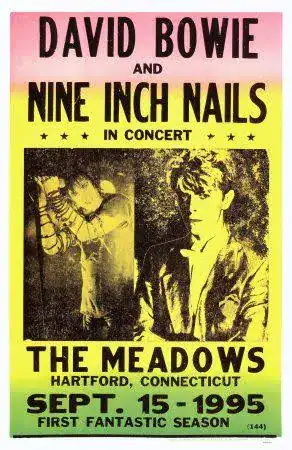
The Outside Tour was Bowie’s larger touring project, continuing beyond the North American dates with Nine Inch Nails. Dissonance is the name commonly associated with the shared 1995 engagement within Nine Inch Nails’ touring history. The terms overlap without describing every concert Bowie played in 1995 and 1996.
The order was Nine Inch Nails first, a joint transition, and Bowie continuing with his own band. Descriptions such as support act and co-headliner capture different aspects of the billing, but neither explains the central performance idea by itself.
A conventional opening slot would have finished before the next artist began. Here, the end of one set and the beginning of another were deliberately connected. The collaboration occupied that boundary, allowing the audience to experience the change of personnel as music rather than backstage procedure.
This scope is important for later recordings and photographs. An Outside-era performance is not automatically a Bowie–NIN collaboration. Once the shared North American run ended, Bowie continued the tour in other circumstances, with different supporting acts and changes to the programme.
The two live bands
Bowie’s North American ensemble combined long-standing collaborators with newer members. Reeves Gabrels and Carlos Alomar supplied contrasting guitar resources; Mike Garson played piano and keyboards; Peter Schwartz worked with keyboards and synthesisers and served as musical director. George Simms contributed vocals and keyboards.
The rhythm section paired Gail Ann Dorsey on bass and vocals with Zachary Alford on drums. Bowie himself sang and played saxophone. This was a substantial touring band, capable of presenting material that required more than one kind of guitar arrangement or a single keyboard texture.
Nine Inch Nails’ live personnel were Trent Reznor, guitarist Robin Finck, bassist and guitarist Danny Lohner, drummer Chris Vrenna and keyboard player and programmer Charlie Clouser. Their duties could cross instrumental boundaries, but those were the principal roles within the line-up.
The shared section brought these musicians into the same performance space. Its effect depended on their preparation and coordination as well as the visibility of the two singers. The idea becomes less abstract when understood as a practical arrangement involving two complete working bands.
14 September 1995: the opening in Hartford
The tour opened at Meadows Music Theatre in Hartford, Connecticut, on 14 September 1995. Bowie was therefore presenting Outside material before the album’s late-September release. Many listeners could not yet have become familiar with the full recording through an ordinary purchase.
That timing was part of the challenge. The audience could recognise Nine Inch Nails material, encounter the collaboration, and then hear a large amount of music whose place within Bowie’s new album was still unfamiliar.
Bowie’s official anniversary account recalls his deliberately provocative description of the undertaking:
Bowie acknowledges the commercial risk
“How do you commit commercial suicide?”
— David Bowie, USA Today, 14 September 1995, quoted in the official 2020 tour retrospective.
The line expresses his awareness of the commercial difficulty; it is not evidence that the tour was literally conceived to lose money. Opening before the album’s release, avoiding a conventional hits programme and facing a mixed audience made the risk easy to understand. The concerts had to establish their own momentum rather than rely entirely on recognition.
A continuous show instead of a conventional interval
David Bowie & Nine Inch Nails – Shared live performances, 1995
The defining arrangement was the gradual handover between acts. Nine Inch Nails did not simply finish, leave a cleared stage and wait for Bowie’s equipment to become ready. Bowie entered an existing performance, and the personnel changed across a sequence of songs.
The shared repertoire comprised Subterraneans, Scary Monsters (and Super Creeps), Reptile, Hallo Spaceboy and Hurt. Their order in a documented Camden set follows that sequence, while recordings should still be checked individually before describing the precise movements at every concert.
The change could therefore be heard as an extended musical passage. Bowie material entered the Nine Inch Nails environment, and Reznor material became part of the transition towards Bowie’s ensemble. The singers met within both catalogues rather than limiting the exchange to one ceremonial guest appearance.
There was also a practical consequence for the audience. The moment at which one act ended was no longer marked by a normal break. Listeners were carried towards a different band before having the familiar interval in which to decide whether to stay, leave or reset their expectations.
Subterraneans: beginning the crossing with Low
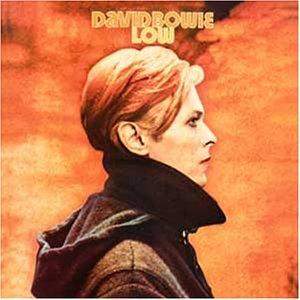
Subterraneans came from Low, released in January 1977. Its presence located the collaboration within Bowie’s earlier experimental catalogue before the new Outside songs took over. This was not the most obvious choice for announcing an established star to a large arena audience.
Its role in the transition is especially significant because the original recording belongs to the atmospheric second side of Low. Choosing it placed texture, space and an unfamiliar vocal setting ahead of an immediately recognisable hit chorus.
Within the 1995 sequence, the song acted as a threshold. Its appearance signalled that Bowie’s contribution would involve more than a straightforward run through the singles most familiar from radio or television.
The connection to Low also gave the meeting a historical dimension. Electronic sound and unconventional structures had a place in Bowie’s work long before 1995. The transition could bring that history into contact with the contemporary Nine Inch Nails stage without requiring the two periods to sound identical or to have followed the same recording methods.
Scary Monsters: an older song within a new ensemble
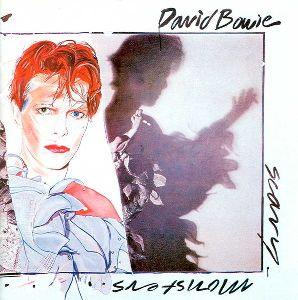
Scary Monsters (and Super Creeps), originally released on Bowie’s 1980 album of the same name, offered another kind of connection. Unlike Subterraneans, it brought a more direct rock-song framework into the shared performance.
The choice linked the collaboration with a part of Bowie’s catalogue already marked by tension, distorted guitar and a forceful vocal delivery. The 1995 setting did not need to invent those qualities from nothing; it could place them within a new instrumental balance.
A song can retain its identity while its surroundings change. Different guitarists, keyboards and rhythmic emphasis alter the listener’s encounter without transferring the composition’s authorship. The collaboration’s interest lies partly in that distinction: the performers were interpreting an existing song together.
Alongside Subterraneans, the selection also prevented the shared section from becoming only a promotion for the two current albums. Bowie offered material from different phases, allowing the meeting to involve his musical past while keeping the performance directed towards the immediate concert.
Reptile: Bowie entering Nine Inch Nails’ repertoire
David Bowie & Nine Inch Nails – Reptile, live during the Outside / Dissonance Tour, 1995
Reptile reversed the direction of the exchange. A song from The Downward Spiral became a setting in which Bowie participated in Nine Inch Nails’ musical world, rather than requiring Reznor to appear only within his older collaborator’s catalogue.
Its inclusion is essential to understanding the partnership. Two artists sharing a stage does not necessarily produce a balanced exchange, but the repertoire here deliberately included songs from both sides. Bowie was willing to interpret material that belonged to Reznor’s existing audience.
The song’s position also complicated the handover. The transition was not a simple march from old music to new music or from industrial rock to something gentler. A Nine Inch Nails composition could sit between Bowie selections, keeping the collaboration active across the sequence.
That arrangement gave the meeting a musical purpose beyond a photograph of two singers together. Audiences could compare how a composition behaved in the overlap between ensembles, hearing a guest performer respond to a song whose original identity had already been established elsewhere.
Hallo Spaceboy before the Pet Shop Boys remix
Hallo Spaceboy brought Bowie’s new album directly into the shared section. It belonged to Outside and was therefore contemporary material rather than a retrospective gesture. Its place beside older Bowie songs and Nine Inch Nails compositions made the new repertoire part of the conversation.
The 1995 performance must be distinguished from the Pet Shop Boys remix released as a single in February 1996. That later reworking gave the song another public identity and involved a separate collaboration.
The distinction reveals how active this period was. Bowie could perform one song with Nine Inch Nails in 1995 and subsequently release it in another form with different collaborators. The composition connected those events, while the arrangements and credits remained individual to each project.
Hurt: the emotional centre of the handover
David Bowie & Nine Inch Nails – Hurt, live during the Outside / Dissonance Tour, 1995
Hurt closed The Downward Spiral and became one of the most widely remembered songs from the shared sequence. Its importance to the tour came before Johnny Cash’s later recording, so the 1995 performances belong to the song’s earlier public life.
In his Fresh Air interview with Terry Gross in 2011, Reznor discussed writing the album and the uncomfortable relationship between its fictional trajectory and his subsequent personal experience. His account establishes the seriousness of the song for its writer without requiring every performance to be treated as literal autobiography.
Bowie’s presence added another voice to a composition already identified with Reznor. The encounter did not remove the song from Nine Inch Nails’ catalogue; it allowed a different performer to inhabit it alongside its author.
The handover gained a powerful dramatic focus from that arrangement. Instead of ending solely with volume or spectacle, the shared section could centre on an exposed vocal exchange. The audience then faced Bowie’s continuing set after a song that had brought the two artists into unusually close musical proximity.
Bowie’s own set: new work and selected older material
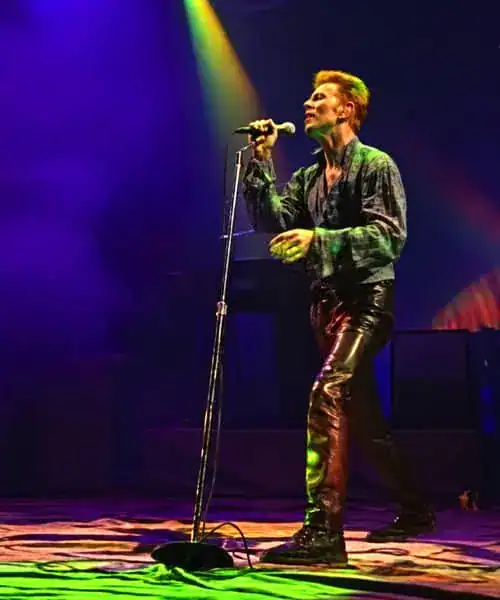
After the shared passage, Bowie continued with his own musicians. The programme placed Outside songs beside earlier selections such as Look Back in Anger, Andy Warhol, Breaking Glass, Joe the Lion and Teenage Wildlife. Exact choices varied across the run.
This was a selective use of his catalogue. Songs from different decades could be grouped according to how they worked with the current band and atmosphere, rather than arranged as a chronological career survey.
The approach also required something from the listener. Recognition could help, but the programme did not guarantee the familiar sequence of major singles associated with a retrospective show. A person arriving with a fixed expectation of Bowie might encounter a very different presentation.
Outside material supplied the immediate centre. Songs such as The Hearts Filthy Lesson, The Voyeur of Utter Destruction (As Beauty), I Have Not Been to Oxford Town, We Prick You and I’m Deranged gave the touring musicians a substantial current repertoire to establish in performance.
Guitars, piano, electronics and the stage environment
The tour’s sound cannot be explained entirely by calling it industrial. Bowie’s ensemble combined two guitarists, piano, synthesisers, bass, drums and additional voices. The arrangements could move between dense electronic surfaces and passages in which an individual instrument became more exposed.
The distinction between Alomar and Gabrels is especially useful. Two guitar resources allowed rhythmic support and more disruptive lead work to coexist, while Garson’s piano introduced an instrumental vocabulary that did not simply duplicate synthesiser textures.
Visual presentation supported the atmosphere without reproducing the elaborate scenic machinery associated with the Glass Spider Tour. Descriptions and photographs document draped materials, mannequins and a deliberately unsettled environment. The phrase Ouvrez le Chien appeared in the stage design and later supplied the title of the Dallas live album.
The result was a setting for the songs rather than a complete theatrical explanation of Outside’s fictional investigation. The tour drew on the album’s atmosphere while leaving the music capable of changing shape from night to night.
Audience friction and the limits of the experiment
The partnership did not produce a uniformly enthusiastic response. Contemporary reviews and later recollections describe listeners leaving after Nine Inch Nails, confusion over Bowie’s choices and disagreement about whether the two performances worked together.
Those reactions deserve inclusion because they were part of the event, but they should not be converted into a claim about every member of either audience. Some listeners discovered unfamiliar music; others remained unconvinced. A shared artistic intention could not determine the response of a large crowd.
Nor does later admiration erase the difficulty of presenting unreleased or unfamiliar songs in that setting. What now appears to be a coherent historical period was experienced in real time, before listeners knew how the recordings and relationships would develop.
The tour’s achievement is therefore more specific than universal conversion. It created an opportunity for an audience to hear the meeting, and it sustained the collaboration despite resistance. Whether that was compelling or frustrating remained an individual judgement, visible in the different accounts that survive.
The Hearts Filthy Lesson: collaboration through remixing
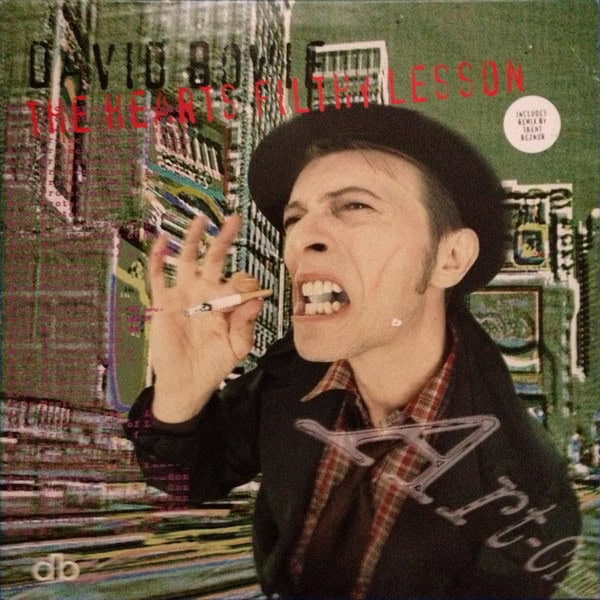
The relationship also entered the studio through The Hearts Filthy Lesson. Reznor worked on the Alternative Mix, with Dave Ogilvie and Chris Vrenna involved in the remix credit. This belongs to the 1995 collaboration and predates the better-known I’m Afraid of Americans project.
Remixing offered a different form of exchange from touring. The existing song and recorded material became resources that could be reorganised, processed and placed within another production approach. The musicians did not have to recreate the concert handover in order to collaborate meaningfully.
The distinction between the album version and the remix remains important. Outside’s original production belongs to the album’s own team; a later reworking does not make Reznor a producer of the entire record.
Concert film and the evidence that survives
Surviving concert clips allow the shared songs and changes of personnel to be examined, while complete recordings can preserve the relationship between the transition and the surrounding sets. The difference between a single duet and the complete passage becomes particularly clear when the surrounding music is retained.
A familiar short clip does not necessarily represent the entire programme. Different uploads may be edited, misdated or labelled with the nearest major city rather than the actual venue. The documented Camden concert of 22 September 1995 is one useful reference point for comparing the five-song sequence with a dated set list.
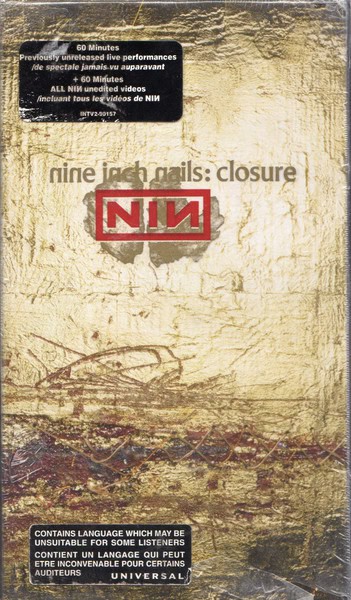
The Nine Inch Nails video release Closure, issued in 1997, includes Hurt with David Bowie within its touring material. That officially released excerpt forms one part of a much larger body of surviving concert documentation.
The filmed performances also preserve a physical meeting that audio alone cannot show: singers sharing stage space while different musicians enter or leave. That visible exchange explains part of the project’s continuing appeal, giving the musical transition a human form beyond the names printed on a concert ticket.

Dissonance / 1.Outside tour 1995

Dissonance, live 1995
-
Dissonance / 1.Outside tour 1995
David Bowie & Nine Inch Nails Dissonance/ 1.Outside tour 1995. Production mix. The Man Who Sold the World Subterraneans Scary Monsters Reptile Halo Space Boy Hurt The Heart's Filthy Lesson Under Pressure For more David Bowie material which you might not find on other Bowie forums & social networking sites visit the forum in this link as a lot of my videos are posted there but 'unlisted 'here so they appear there long before they become 'public' on my channel.. 😉 Bowie Zone forum. -
Dissonance, live 1995
00:19 Wish - 04:09 Subterraneans - 07:28 Scary Monsters - 12:50 Reptile - 19:04 Hallo Spaceboy - 24:20 Hurt - 30:20 The Hearts Filthy Lesson - 35:32 The Man Who Sold The World - 39:05 Under Pressure -
From Outside to Earthling
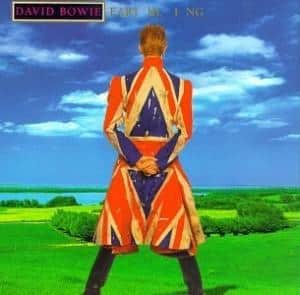
Earthling appeared in February 1997, produced by Bowie, Reeves Gabrels and Mark Plati. Its recording personnel included Gail Ann Dorsey, Mike Garson and Zachary Alford, preserving important connections with the Outside touring ensemble.
The album pursued another balance of electronic rhythm and live playing. Its engagement with jungle and drum-and-bass belongs to a wider musical context, not simply to Nine Inch Nails’ influence. Reznor should not be credited with producing the album or supplying its entire musical direction.
The continuity lies partly in the working band and in Bowie’s continued willingness to alter the relationship between technology and performance. Outside and Earthling are connected stages, but they are not identical records with different titles.
Lost Highway: another meeting within a soundtrack
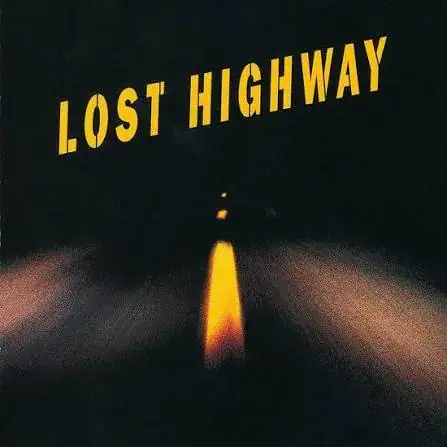
David Lynch’s 1997 film Lost Highway created another connection between the two artists’ work. The soundtrack produced by Reznor included Bowie’s I’m Deranged as well as Nine Inch Nails’ The Perfect Drug and material credited to Reznor himself.
I’m Deranged came from Outside. Its use within the soundtrack carried a song associated with the 1995 album into a different dramatic setting, where recorded music contributed to the atmosphere of a film rather than a concert sequence.
The soundtrack brings work by several artists into a programme assembled for Lynch’s film, and its credits distinguish those contributions. Bowie’s recording appears alongside Reznor’s soundtrack work without becoming the same kind of collaboration as the live duets.
Nevertheless, it belongs in the wider account. It shows that their musical worlds continued to intersect after the tour, through another project concerned with unstable identity, atmosphere and the unsettling possibilities of recorded sound.
I’m Afraid of Americans: a song with several histories
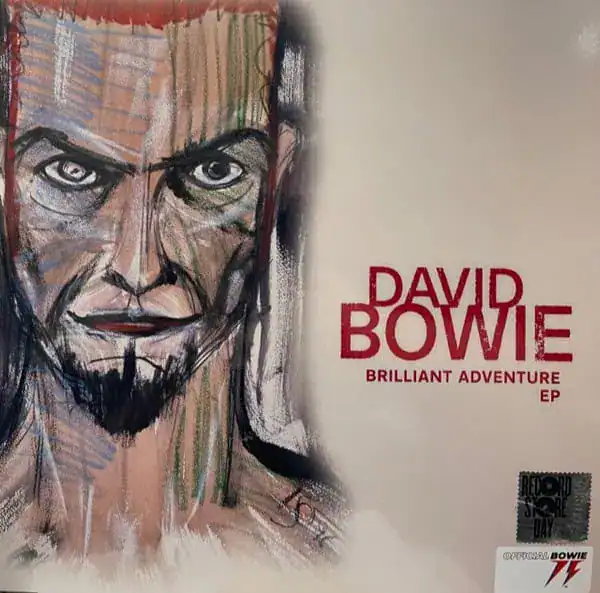
I’m Afraid of Americans did not begin with the 1997 remix. An earlier version developed during the Outside sessions with Brian Eno. The archival Johnny Downloader, mixed in November 1994 and released on the Brilliant Adventure EP in 2022, provides a documented stage in that development.
A version also appeared on the Showgirls soundtrack before the song was reworked for Earthling. These stages matter because they establish that the composition existed before Nine Inch Nails’ later production work.
The remix project brought Reznor and his collaborators into an already developing recording history. It continued the relationship established through the concerts and The Hearts Filthy Lesson while giving the song another arrangement and public identity.
Rather than treating one version as though it created all the others, the history is better understood as a succession of transformations. The writing, album recording, remix production and video each contributed something different to the track’s eventual place in Bowie’s catalogue.
The NIN remixes and the importance of V1
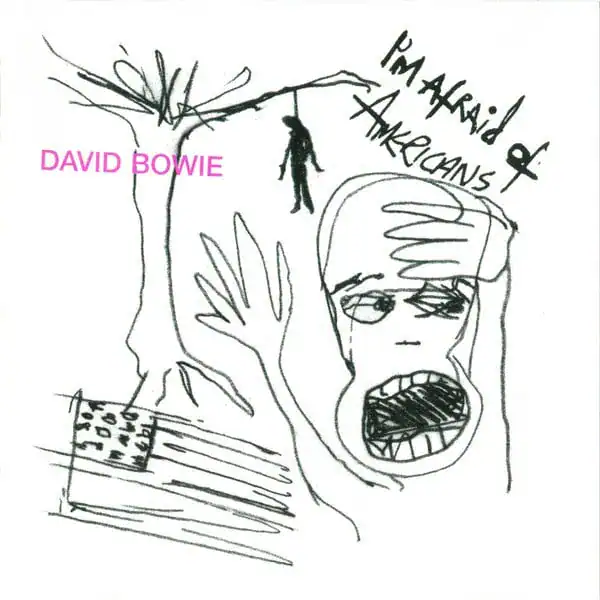
The I’m Afraid of Americans remix project is the clearest later studio connection between Bowie and Nine Inch Nails. The V1 version became especially prominent through the single and video, and later Bowie compilations continued to include it.
Official credits identify production and additional performances by Trent Reznor, Charlie Clouser, Keith Hillebrandt, Dave “Rave” Ogilvie and Danny Lohner. Ogilvie is credited with mixing, while Brian Pollack engineered at Nothing Studios in New Orleans. Recognising that team avoids reducing a collaborative production to one name.
The song remained credited to Bowie and Eno as writers. The NIN contribution concerns the reworking and additional recorded performances, a substantial role that does not require describing the release as a newly co-written duet.
The different numbered mixes also make clear that this was a remix project rather than one unchanging alternate take. The V1 version became the most familiar reference point, but it belonged to a wider set of approaches to the source material.
Bowie and Reznor in the I’m Afraid of Americans video
David Bowie – I’m Afraid of Americans (1997), featuring Trent Reznor. Directed by Dom & Nic.
The video directed by Dom & Nic gave the collaboration an enduring visual form. Reznor appears as a threatening pursuer, while Bowie moves through New York in a state of mounting unease. The V1 remix supplies the recording associated with that encounter.
Their roles differ from the shared concert stage. In 1995, they were singers interpreting songs together; in the video, they participate in a constructed sequence of fear and pursuit. The familiarity of the performers adds another layer to the scene without making it a documentary of their relationship.
The film can be read as an image of paranoia rather than a literal statement that one individual represents an entire country. Its force comes from gesture, movement and the uncertainty of the threat, alongside the song’s repeated central phrase.
For viewers who never attended the tour, the video became a compact and widely recognisable image of the Bowie–Reznor association. It preserved their connection through a separate creative project rather than merely illustrating the earlier concerts.
Bowie’s 2005 appreciation of Nine Inch Nails
In 2005, Bowie wrote about Nine Inch Nails for Rolling Stone’s The Immortals. His official website published the longer version of the text, which discussed Pretty Hate Machine, The Downward Spiral, Reznor’s use of technology and the visual imagination surrounding the music.
The piece is important because Bowie assessed the work itself. He described sound, imagery and melody rather than offering only a general endorsement of a younger musician he had once toured with.
Bowie on the attraction within Reznor’s music
“contains a beauty that attracts and repels in equal measure.”
— David Bowie, excerpt from his appreciation of Nine Inch Nails for Rolling Stone’s The Immortals; full text published by davidbowie.com, April 2005.
That phrase expresses his response to the tension within Reznor’s music. It does not suggest that the two artists had identical methods or intentions. The appreciation recognises an individual body of work, written a decade after the shared tour and therefore evidence that Bowie’s interest had outlasted its immediate promotional setting.
A personal example beyond the stage
Reznor’s later accounts describe Bowie as more than an artistic influence. In the 2005 interview, he recalled meeting somebody who had experienced serious difficulties and had subsequently built a better life. The example mattered during a period when Reznor was struggling himself.
Reznor remembers a reason for hope
“I saw that there was hope on the other end.”
— Trent Reznor, interview with Jonathan Zwickel, reproduced by David Bowie’s official website, October 2005.
The statement is personal testimony, not a claim that one conversation produced an immediate recovery. It identifies what Reznor found encouraging in another person’s life: evidence that a difficult present did not have to remain permanent.
The distinction preserves the weight of the recollection. Bowie could offer an example and a relationship without being assigned sole responsibility for decisions Reznor later made. Their connection had become meaningful away from recordings and concerts, while remaining something Reznor described in his own words.
After 2016: I Can’t Give Everything Away
Nine Inch Nails – I Can’t Give Everything Away (Farewell Mix), live in Bakersfield, 19 July 2017
Following Bowie’s death in January 2016, Reznor and Atticus Ross worked on I Can’t Give Everything Away, the closing song of Blackstar. Their reworking became known as the Farewell Mix and was subsequently connected with Nine Inch Nails’ live tribute.
At the Bakersfield concert on 19 July 2017, Reznor explained that working on the song had helped them process the loss. Contemporary reporting preserved his introduction and footage of the performance.
A song became a way of remembering Bowie
“we worked on a song of his that gave us some sort of closure.”
— Trent Reznor, introducing I Can’t Give Everything Away in Bakersfield, 19 July 2017; reported by Loudwire the following day.
The tribute was a later response to an existing song, made after Bowie’s death. Its significance lies in that act of remembrance: a musician who had sung Hurt beside Bowie now returning to Bowie’s own music in the experience of losing him.
Official releases and the limits of the concert archive
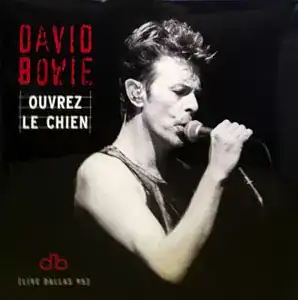
Ouvrez le Chien (Live Dallas 95) documents Bowie’s performance at the Starplex Amphitheater on 13 October 1995. Released for streaming in July 2020 and subsequently on physical formats, it makes an important part of the North American Outside period available officially.
Its track list does not include the five-song joint transition. It should therefore not be promoted as a complete release of the Bowie–Nine Inch Nails collaboration. The absence matters for collectors who might otherwise expect the duets to appear on it.
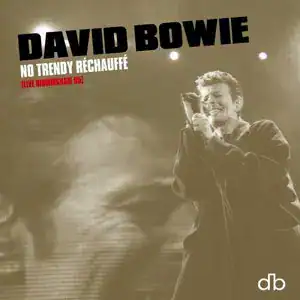
No Trendy Réchauffé documents Birmingham on 13 December 1995, after the shared North American dates. It provides another view of Bowie’s band rather than another recording of the same partnership.
These releases complement the excerpt in Closure and the surviving concert recordings, but they answer different questions. Dallas documents Bowie’s set during the co-bill; Birmingham documents the continuing tour; the joint footage preserves the musical overlap. Keeping those distinctions makes the archive more useful and avoids promising material that a release does not contain.
2021: Fantastic Voyage and Fashion
Trent Reznor, Atticus Ross and Mariqueen Maandig – Fashion, A Bowie Celebration, 2021
Reznor returned to Bowie’s repertoire for A Bowie Celebration: Just For One Day, the livestream organised around Mike Garson and broadcast on 9 January 2021. The performances included Fantastic Voyage and Fashion, with Atticus Ross involved and Mariqueen Maandig participating in the presentation of Fashion.
The choices moved beyond the obvious songs from the 1995 transition. Fantastic Voyage came from Lodger, while Fashion belonged to Scary Monsters. The tribute therefore drew on a wider relationship with Bowie’s catalogue rather than recreating the old co-bill.
In an interview published ahead of the event, Reznor again discussed the importance of having known Bowie:
Reznor expresses his gratitude
“I’m grateful that our lives intersected”
— Trent Reznor, Consequence of Sound interview, January 2021; quoted by Kerrang! on 7 January 2021.
The performance and the recollection belong together without being interchangeable. One is a musical tribute; the other is Reznor’s account of gratitude. Both show that the relationship retained meaning long after the original tour.
Legacy: what the alliance changed and what it preserved
The Bowie–Nine Inch Nails partnership remains distinctive because collaboration was built into the structure of the concert. The handover required more than an invitation to sing one encore. It connected two sets through changing musicians, material from both catalogues and a deliberate refusal to stop the evening at the conventional boundary between acts.
That structure made the meeting audible. Subterraneans, Scary Monsters, Reptile, Hallo Spaceboy and Hurt supplied different points of contact, joining an older experimental catalogue, a current Bowie album and Nine Inch Nails’ recent work within one passage. Neither artist’s history disappeared in the process.
The mixed response belongs to the legacy as well. The tour did not erase differences of taste or guarantee that admiration between musicians would be shared by their fans. Its importance does not depend on claiming universal acclaim. It rests in the documented performances and in the willingness to sustain a demanding idea in public.
The later projects extended the connection in other forms. A remix can reorganise a recording; a video can construct another relationship between familiar performers; an appreciation can explain why another artist’s work matters. These activities make a stronger historical account than a vague assertion that the tour transformed everything either musician subsequently created.
For Bowie, the engagement belongs to an active period of new albums and changing performance methods. For Reznor, it brought a major influence into a working relationship that eventually became personally important. His subsequent recollections establish that significance without requiring the concerts to be rewritten as a simple rescue narrative.
The partnership consequently deserves attention as both a practical musical experiment and the beginning of a lasting connection. Its clearest legacy is the work that survives: songs shared on stage, recordings reinterpreted in the studio, and later tributes that carried the relationship into another generation of listeners.
Official Websites & Further Information
David Bowie’s official website provides release documentation, historical articles and the complete version of his 2005 appreciation of Nine Inch Nails. Its tour retrospective is also a useful starting point for the opening date, Bowie’s band and the shared repertoire.
Nine Inch Nails’ official website supplies the band’s discography and release information. For historical listening, the distinction between an original release, a later remaster and a remix remains valuable, particularly around The Downward Spiral, Closure and the Bowie-related production work.
The independent NIN Live Archive offers a different resource: dated concert entries, set lists and descriptions of surviving sources. It is useful for comparing performances, but it is not the official Bowie or Nine Inch Nails website. Recording notes should be read alongside the source they describe, especially where a tape is incomplete or a date has been corrected.
Interviews supply the personal dimension. Reznor’s 2005 and 2021 recollections explain what he valued in Bowie, while Bowie’s own essay documents his response to Reznor’s music. Reading those statements in their publication context helps distinguish the artists’ words from later interpretations of the partnership.
Article Origin
This article has been prepared for DavidBowieWorld.com as part of its David Bowie Collaborations & Creative Circle Archive. It develops the original page through official release documentation, published interviews, contemporary and retrospective reporting, and dated concert records.
The focus is the 1995 North American partnership, with later sections following clearly identified related work. The larger Outside Tour is distinguished from the dates shared with Nine Inch Nails, and original compositions are kept separate from subsequent remix and performance credits.
The quotations are short excerpts from published first-person statements. Bowie’s tour remark and his 2005 appreciation are identified separately, while Reznor’s recollections retain their retrospective context. His 2017 introduction concerns a posthumous tribute, not a joint recording made during Bowie’s lifetime.
This is an independently prepared historical article. No direct cooperation with Bowie, Reznor, their families or either artist’s organisation is claimed. Concert footage and audience recordings are considered according to their identifiable date, venue and contents, rather than accepted solely on the basis of an upload title.
Musical observations describe the function of repertoire and the structure of the shared show. Claims about intention or personal influence are attributed where the artists have supplied an account, rather than inferred from a dramatic photograph or a familiar story. Further dated evidence may refine individual performances while preserving those distinctions.
© DavidBowieWorld.com — David Bowie Collaborations & Creative Circle Archive.
