David Lynch & David Bowie | Twin Peaks, Phillip Jeffries and I’m Deranged
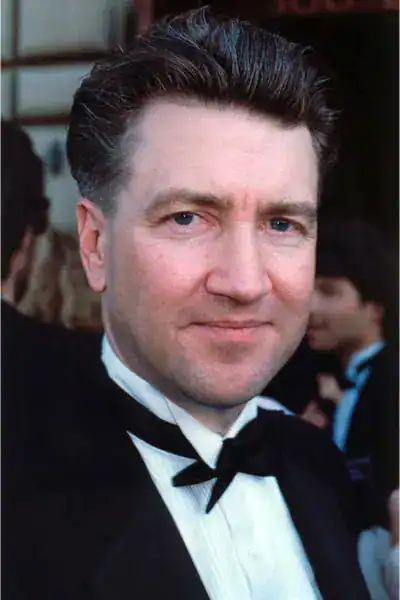
Photo: Alan Light / Wikimedia Commons / CC BY 2.0 (editorial use)
David Lynch was an American filmmaker, visual artist, musician and sound designer whose work reshaped modern cinema and television. His connection with David Bowie was not merely thematic: Bowie appeared in Lynch’s Twin Peaks: Fire Walk with Me as the mysterious FBI agent Phillip Jeffries, one of the most haunting figures in the wider Twin Peaks mythology.
Their creative link continued through music when Lynch used Bowie’s I’m Deranged in Lost Highway. Years later, Phillip Jeffries returned to Lynch’s universe in Twin Peaks: The Return, using old Bowie footage and new voice work after Bowie’s death.
- Name: David Keith Lynch
- Born: 20 January 1946, Missoula, Montana, USA
- Died: 16 January 2025
- Profession: Film director, visual artist, musician, actor and sound designer
- Bowie connection: Directed Bowie as Phillip Jeffries in Twin Peaks: Fire Walk with Me
- Further Bowie link: Used I’m Deranged in Lost Highway
- Known for: Eraserhead, The Elephant Man, Blue Velvet, Twin Peaks, Lost Highway, Mulholland Drive
A true Bowie collaborator
David Lynch should not be treated only as an artist whose themes resemble Bowie’s. The connection between them was direct. Lynch cast Bowie in Twin Peaks: Fire Walk with Me, worked with him on the character of Phillip Jeffries, and later placed Bowie’s music at the centre of Lost Highway.
The artistic parallels are real, but they are secondary. The main historical fact is that Lynch and Bowie crossed paths through film, performance, sound and the strange symbolic territory both men occupied so naturally.
Twin Peaks: Fire Walk With Me
Twin Peaks: Fire Walk With Me (1992) – David Bowie as FBI Agent Phillip Jeffries
In 1992, Bowie appeared in Lynch’s film Twin Peaks: Fire Walk with Me, the prequel to the original Twin Peaks television series. He played Phillip Jeffries, an FBI agent connected to the mysterious Blue Rose investigations and to events beyond ordinary reality.
Bowie’s screen time is brief, but the character’s impact is enormous. Jeffries arrives in the FBI office in Philadelphia in a state of distress, speaks in fragmented and cryptic phrases, and seems to exist partly outside normal time. The scene became one of the most discussed moments in the Twin Peaks universe.
Phillip Jeffries
Phillip Jeffries is one of the most Bowie-like characters Lynch ever created: elegant, displaced, mysterious, unstable and impossible to fully explain. He appears as someone who has seen too much and returned from somewhere language cannot easily describe.
Bowie’s presence gives the character instant mythic weight. Jeffries does not need a long backstory to seem important. Bowie brings with him the memory of his own screen history, his musical personas and his ability to suggest other worlds without overexplaining them.
“We’re not gonna talk about Judy”
One of Bowie’s most famous lines in the film is connected to Judy, a mysterious name that would become even more important in later Twin Peaks mythology. The line helped turn Phillip Jeffries into a puzzle that fans continued to analyse for decades.
This is exactly where Bowie and Lynch’s artistic languages meet. Lynch offered mystery without resolution; Bowie embodied it. The result was a character who felt less like a conventional cameo and more like a doorway into the hidden architecture of the story.
The Missing Pieces
Bowie’s Jeffries material was expanded in Twin Peaks: The Missing Pieces, the feature-length collection of deleted and extended scenes from Fire Walk with Me. These scenes give more room to the character’s strange journey and his connection to Buenos Aires, the FBI and the supernatural world behind the series.
For Bowie fans, The Missing Pieces is valuable because it shows more of his work within Lynch’s universe and confirms that Phillip Jeffries was not a throwaway appearance. He was a small but important part of the larger design.
Lost Highway and I’m Deranged
Lynch’s second major Bowie connection came with Lost Highway in 1997. The film used Bowie’s I’m Deranged, from the 1995 album Outside, as a defining musical element.
The choice was perfect. Lost Highway is a film about identity fracture, doubles, fear, transformation and unstable reality. I’m Deranged already sounded as if it belonged to such a world: nervous, elegant, nocturnal and psychologically unsettled.
By placing Bowie’s music at the opening and closing edges of the film, Lynch made the song part of the film’s circular structure. It does not simply accompany the images; it helps establish the emotional and metaphysical atmosphere of the work.
Bowie, Lynch and the 1990s
The Bowie–Lynch connection belongs especially to the 1990s, a period when both artists were working with darkness, fragmentation and uneasy reinvention. Bowie’s Outside era and Lynch’s cinema shared an interest in damaged identity, secret worlds and characters who seem to be trapped inside systems they cannot understand.
This does not mean that Bowie and Lynch were doing the same thing. Bowie worked through music, persona, image and performance. Lynch worked through cinema, sound design, painting and dream logic. But their worlds were compatible because both understood that mystery can be more powerful than explanation.
Twin Peaks: The Return
When Lynch returned to Twin Peaks in 2017 with Twin Peaks: The Return, Phillip Jeffries became important again. Bowie had been expected to reprise the role, but this was no longer possible after his death in January 2016.
Lynch and the production team received permission to use old footage of Bowie from Fire Walk with Me. Jeffries also appeared in a transformed form, represented not as Bowie in person but through a strange machine-like presence within the surreal mythology of the new series.
Bowie’s voice request
One of the most unusual details about The Return concerns Bowie’s voice. Lynch later explained that Bowie did not want his original voice from Fire Walk with Me reused, apparently because he had become uncomfortable with his Louisiana accent in the role.
To respect that request, the lines were re-dubbed by Nathan Frizzell, an actor from Louisiana. This makes Phillip Jeffries in The Return a strange posthumous presence: visually connected to Bowie, mythologically inseparable from Bowie, but no longer fully voiced by him.
Lynch on Bowie
Lynch spoke warmly about Bowie after his death and described him as a unique figure. He compared Bowie’s uniqueness to Elvis, not because the two artists were alike, but because both possessed a rare quality that set them apart from everyone around them.
Lynch also said Bowie was easy to talk to, regular in person and someone he wished he could have worked with again. That regret gives the collaboration a slightly unfinished quality. Bowie and Lynch crossed paths powerfully, but only briefly.
Shared artistic territory
Bowie and Lynch both created worlds where identity is unstable. Bowie did this through characters, songs, costumes, voices and performance. Lynch did it through rooms, dreams, doubles, sound, silence and images that resist simple interpretation.
Both artists also understood the power of atmosphere. A Bowie song and a Lynch scene can feel similar in one important sense: each can suggest a complete world before the audience fully understands what that world means.
Sound and image
Lynch’s cinema is inseparable from sound. His use of music, drones, silence, machinery, pop songs and environmental noise gives his films their emotional force. Bowie, too, understood sound as architecture: a way to build identities, cities, nightmares and imaginary spaces.
That is why I’m Deranged worked so perfectly in Lost Highway. It already felt cinematic, unstable and haunted. Lynch did not need to force Bowie’s music into his film; the song seemed to have been waiting for that world.
More than a cameo
Bowie’s appearance in Fire Walk with Me is sometimes described as a cameo, but that word can make the role sound smaller than it is. Phillip Jeffries is brief, but he is not decorative.
The character opens a crack in the film’s reality. He points toward hidden forces, names and histories that the audience cannot yet understand. Bowie’s own aura makes that crack feel deeper. He arrives, disturbs the entire narrative, and disappears.
Legacy within Bowie’s universe
David Lynch belongs in Bowie’s extended collaboration universe because he gave Bowie one of his strangest and most enduring screen roles. Phillip Jeffries is not Bowie’s largest acting part, but it is one of the roles most perfectly suited to his late-career aura.
Lynch also recognised something essential in Bowie: the ability to make mystery feel human. Whether through Jeffries in Twin Peaks or I’m Deranged in Lost Highway, Bowie’s presence helped Lynch deepen worlds already built on ambiguity and unease.
Place on this site
David Lynch’s page should therefore be framed around collaboration rather than vague influence. The key points are clear: Lynch directed Bowie in Twin Peaks: Fire Walk with Me, used Bowie’s music in Lost Highway, and later returned Phillip Jeffries to the mythology of Twin Peaks: The Return.
On those terms, Lynch is one of the most important film-based figures in Bowie’s wider creative story. Their connection was brief, strange, direct and unforgettable — exactly the kind of crossing that belongs in Bowie’s universe.
