

Mark Plati – Producer, Musician and David Bowie Collaborator

Mark Plati occupied an unusual position in David Bowie’s creative world. He could produce and mix a recording, play bass or guitar on it, then take a guitar onto the stage and help organise a live band. His work with Bowie began in the mid-1990s and became especially visible on Earthling, ‘hours…’, the concerts of 1999–2002 and the long-delayed album Toy.
The distinction between those roles matters. Plati was one of the credited producers of Earthling and co-produced Toy with Bowie. He played several instruments and helped mix ‘hours…’, whose credited producers were Bowie and Reeves Gabrels. He also worked as a guitarist and musical director for Bowie’s live shows. These are substantial, documented contributions without attributing every later Bowie record to him.
Following Plati through the studios and onto the stage reveals a collaborator whose value lay in adapting to the work in front of him. The story includes digital editing and rapid rearrangement, acoustic performances, songs revived from Bowie’s early years, and the complicated passage from an unreleased album to a later official release.
- Name: Mark Plati
- Work: Producer, engineer, mixer, musician and musical director
- Bowie collaboration: From the mid-1990s through the 2002 live period
- Earthling: Credited producer with David Bowie and Reeves Gabrels; credited co-writer on four tracks
- ‘hours…’: Bass, guitars, keyboards and drum programming; album mixing with Bowie and Gabrels
- Toy: Co-producer with Bowie, musician and mixer; recorded in 2000 and officially released in 2021–22
- On stage: Guitarist and musical director for Bowie performances around 1999–2002
- Important distinction: Bowie and Tony Visconti are the credited producers of Heathen and Reality
Before Bowie: the producer and the player
Plati came to Bowie with experience in recording, production and the practical use of emerging studio technology. His career had included work in dance music and remixing, where a producer often has to think simultaneously about the performance, the rhythmic construction and the final mix. Those habits would prove useful on a Bowie album that brought guitar-driven playing into contact with electronic editing.
He also had the perspective of a working instrumentalist. This is an important part of his Bowie story because his studio decisions were not separate from an understanding of what a bassist or guitarist could actually play. Recording a band requires an ear for the individual contribution and the collective arrangement. Plati could engage with both, rather than approaching the music only as a technical problem.
Accounts of his work before Bowie identify a connection with Prince and the Graffiti Bridge period. That background should not be turned into a claim that Bowie wanted to reproduce Prince’s sound. It establishes that Plati had already worked in demanding professional environments and was comfortable moving between different kinds of music. Bowie’s interest was in what a collaborator could contribute to the current project, not in importing another artist’s identity intact.
When Plati entered Bowie’s orbit, his versatility became a practical advantage. A session might require assembling musical ideas quickly; another might call for a bass part or a fresh approach to a mix. Later, the same person could help carry songs into a concert setting. His career cannot be explained by one job title, and the changing nature of his responsibilities is one of the reasons his partnership with Bowie deserves a full account.
1996–97: making Earthling
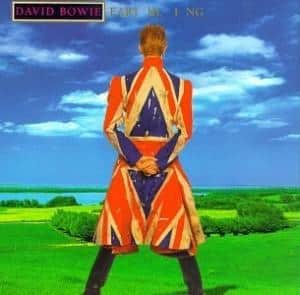
Earthling, released in February 1997, is the first major Bowie album at the centre of Plati’s documented contribution. Bowie’s official album page names David Bowie, Reeves Gabrels and Mark Plati as its producers. The credit is significant: Plati was not simply someone who adjusted the sound after the songs had been completed. He belonged to the team responsible for making the album.
The record brought together the force of a rock band and ideas drawn from contemporary electronic dance music. Its restless patterns, sharp transitions and dense layering can give an impression of continuous movement. Explaining that sound accurately requires more than assigning it to one producer. Bowie’s songs and decisions, Gabrels’s guitar work and contributions from the other musicians remain part of the picture. Plati’s work helped those elements take a coherent recorded form.
His own reflections on the sessions describe a process in which the three principal collaborators could try ideas, settle song arrangements and prepare material for the band. Such an account explains the difference between a musical influence and a recording method. Electronic sounds did not make the players irrelevant; the players and recorded material became sources that could be arranged, altered and combined.
Earthling also establishes a limit to an easy description of Plati as Bowie’s later, quieter studio partner. The album is often loud, urgent and rhythmically busy. His Bowie work began in a setting where speed and experiment were part of the production process. The more restrained music associated with some later sessions shows a change of context, not evidence that he had only one preferred sound.
Songwriting credit and what it means
The official Earthling track list credits Plati as a co-writer with Bowie and Gabrels on “Little Wonder,” “Looking for Satellites,” “Battle for Britain (The Letter)” and “The Last Thing You Should Do.” These credits deserve explicit mention because they establish a contribution beyond producing and engineering. They do not, by themselves, identify which individual invented a particular beat, chord or phrase.
A co-writing credit is evidence of shared authorship of the finished composition. It should not be stretched into a detailed origin story without a reliable account from the people involved. Equally, omitting the credit would make Plati’s participation seem narrower than the release documentation indicates. The responsible description is that he was a credited collaborator in the writing of those four songs.
“Little Wonder” is a useful example of the musical problem the team addressed. Its sections needed to retain the impact of a song while working within a complicated rhythmic environment. A listener may hear the pull between electronic movement and the performance of a band, but a close listening impression is not a substitute for a session log. The official credit gives the firm historical point from which musical interpretation can begin.
Across the album, this distinction between documented role and inferred detail remains valuable. Bowie was a named producer and writer; Gabrels was likewise central to the period; Plati had both production and selected writing credits. Each fact helps describe the collaboration without forcing a single person to account for everything distinctive in the finished record.
The studio as an instrument
One aspect of Plati’s work was the capacity to move recorded material around while an idea was still developing. Digital recording made it possible to test a new sequence of verse, chorus and instrumental passage without committing the musicians to a complete new performance each time. In the Earthling period, that flexibility could become part of the creative conversation.
The ability to rearrange a track quickly should not be mistaken for the computer composing the song. A person still had to recognise which section carried tension, which transition felt abrupt for a useful reason and where a performance needed room. Technology shortened the time between a suggestion and hearing its result. That speed could let Bowie and his collaborators make decisions while the original idea was still vivid.
Plati’s position made him particularly suited to that exchange. As an engineer and producer, he understood the recorded materials; as a player, he could judge whether a change helped the music. He could participate in the process without treating recording and performance as separate worlds. It is one of the more concrete explanations for why his responsibilities expanded across the partnership.
These methods also give a more precise account of experimentation than a vague claim that the album was futuristic. What mattered in the room was a series of decisions: capture something, hear what it could become, change its place or weight, and listen again. Plati helped make that process possible for an artist interested in finding unfamiliar forms for his songs.
1998: recordings beyond the album
The collaboration did not end when Earthling was released. Bowie’s official information about the later release of “Tryin’ to Get to Heaven” identifies a recording made at Looking Glass in New York in February 1998. Bowie is credited as its producer, with Gabrels and Plati as co-producers. Plati is also credited with mixing, synthesizers and programming on the track.
The recording offers a useful reminder that the chronology of a session and the date on which a listener can buy the music are often different. “Tryin’ to Get to Heaven” was officially issued much later. It belongs to the late-1990s working relationship even though its eventual release arrived in another phase of Bowie’s catalogue.
Plati also contributed to work that developed from live recordings and studio reconsideration. Such material illustrates a practice that was neither a conventional new-album session nor a simple document of a concert. A performance could be recorded, revisited and developed into something different. Any particular version, however, needs to be described according to its own credits rather than grouped automatically with every other recording of the period.
This part of the story fills a gap left by short biographies that move straight from Earthling to ‘hours…’. Bowie and Plati had an active musical connection in between. That continuity makes the next album easier to understand: their later work built on experience of recording, arranging and making decisions together.
1999: ‘hours…’ and a different emphasis
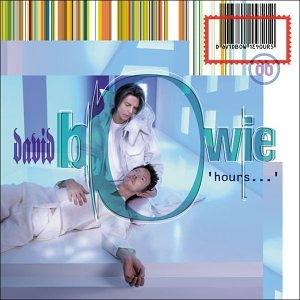
For ‘hours…’, released in October 1999, Bowie moved into a different musical atmosphere. The album’s official producer credit names Bowie and Reeves Gabrels. A contemporary Bowie press release nevertheless gives Plati a substantial instrumental and mixing role: bass, acoustic and electric twelve-string guitar, keyboards and drum programming, with the album mixed by Bowie, Gabrels and Plati.
That combination of credits is the accurate way to place him on the record. Calling him its sole producer would be wrong; leaving him out because his name does not appear in the main producer line would also be wrong. He contributed to how the songs were played and to how the performances were assembled and heard. The roles were related but remain distinct.
The record’s slower pace in places gave space for a different kind of attention. A bass part might be felt through the shape it gives a song rather than through virtuoso display. A twelve-string guitar can add breadth without demanding the listener’s focus. The credits do not tell us who determined each final texture, but they show that Plati’s work extended across several of the album’s instrumental colours.
Understanding this album beside Earthling also prevents an over-simple narrative. Plati was not responsible for pushing Bowie towards electronic music and then, two years later, towards an opposite style. Bowie and Gabrels remained decisive figures in both periods. Plati’s documented strength was the capacity to contribute meaningfully as the musical task changed.
“What’s Really Happening?” and BowieNet
The making of “What’s Really Happening?” shows Plati in an unusually public studio situation. The song grew from a BowieNet competition won by Alex Grant, who contributed lyrics. Bowie’s official account describes a recording session shown live online in May 1999. Plati produced that particular session and also played bass, according to a contemporary Bowie report.
This is a more specific production credit than a blanket assertion about the whole ‘hours…’ album. An individual song session can have a documented producer even when the album lists a different overall production partnership. The distinction is small on paper but important for a biography that aims to reflect what Plati actually did.
The webcast also makes sense within Bowie’s interest in the possibilities of BowieNet. It invited an audience to witness part of a recording process that would normally remain private. That public element did not remove the ordinary need to make musical choices. Plati still had to help turn the contributions and performance into a track that could sit on the album.
The episode brings together several strands of his role at this point: production, instrumental playing and the ability to work quickly in front of others. It also gives the page a concrete example of collaboration rather than a general statement about technical skill. Grant’s credited contribution should remain visible in the story, because the song’s unusual origin is part of what made the session distinctive.
From studio work to the 1999 stage
Plati’s relationship with Bowie acquired a new dimension when he began performing in Bowie’s band. In an interview quoted on Bowie’s official website, Plati remembered that by 1999 he had spent a long time in studios and had not expected to return to live playing. The VH1 Storytellers appearance offered a reason to bring in an additional acoustic guitarist. What he imagined as one concert grew into further work.
“I was a real studio rat by 1999.”
— Mark Plati, interview reproduced by DavidBowie.com, 2003There is an appealing contrast here, but it should not be overstated. The musician onstage was not a new person replacing the engineer. Playing with Bowie required knowledge of the songs and sensitivity to the parts already carried by other members of the band. His time in the studio could inform that work, while the demands of a concert exposed him to decisions that could not be revised after the fact.
Bowie’s brief promotional performances for ‘hours…’ placed new songs beside selections from earlier decades. The lineup varied, and Plati’s presence is documented in specific shows rather than assumed at every Bowie performance. The October 1999 Paris concert later released as Something in the Air credits him on guitar. The official release also credits him with mixing that live album.
That Paris recording therefore documents both sides of his association with the performance: a musician heard in the band and a mixer who later worked on its released sound. Those credits should be kept separate from an assumption that mixing a concert recording means determining everything that happened on the stage.
Paris, the live recordings and musical continuity
Something in the Air (Live Paris 99) preserves a show at the Elysée Montmartre on 14 October 1999. Its set list ranged from recent material to songs Bowie had not performed for many years. For a musician joining Bowie in this period, the task involved more than learning a new album. The band needed to make works from different moments of Bowie’s career function in one evening.
Plati played guitar alongside Page Hamilton, while Gail Ann Dorsey, Sterling Campbell and Mike Garson anchored other parts of the arrangement; Emm Gryner and Holly Palmer contributed backing vocals. Naming the ensemble matters because it prevents the live sound from being credited to Plati alone. His musical contribution is real within a group whose members each had their own responsibilities.
Later release of this performance also created a new opportunity to hear his mixing work. A live recording is not the same as being present at the event: microphones, balances and editing affect how later listeners encounter the music. The official credit establishes his role in presenting the show as an album, while the concert credits establish his playing on the night.
This phase prepared Plati for a broader responsibility. Bowie was dealing with an extensive catalogue, changing personnel and songs that could be performed in several arrangements. A musician who knew both recording and live performance could help connect those demands. That observation explains the practical value of his background without inventing undocumented conversations between Bowie and Plati.
Glastonbury 2000 and the band in motion
Plati remained part of Bowie’s performing world as it moved into 2000. Bowie’s Glastonbury appearance became one of the best-known shows of this later period, and Plati has spoken publicly about preparing for it. The performance is important in this biography not because one guitarist can claim ownership of it, but because it places Plati within a functioning band immediately before the sessions that produced Toy.
A large festival set draws on a broad range of songs. For the players, that involves practical decisions about keys, endings, instrumental space and the movement between one number and the next. The result appears continuous to the audience, but it depends on preparation and attention to the group. Plati’s later account of musical direction belongs to this wider context of organising live material.
Two days after Glastonbury, Bowie recorded a concert at the BBC Radio Theatre in London. The officially released live material adds another document of the 2000 period. It is useful to distinguish such recordings from a studio album: they establish who played at a particular performance and how that ensemble approached the songs in concert.
The passage from those concerts into Toy is historically important. Bowie chose to enter the studio with musicians from his live world and revisit earlier songs. Plati was already part of the circle. His later co-production of Toy grew from that moment, rather than appearing as an unrelated project conceived years after the performances.
The idea behind Toy
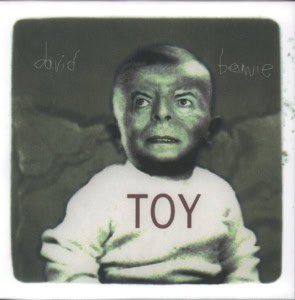
The roots of Toy reached back to Bowie’s return to “Can’t Help Thinking About Me” for VH1 Storytellers in 1999. The song came from his pre-Space Oddity years. According to the official account accompanying Toy’s eventual release, Bowie and Plati compiled a list of other early songs to reconsider in 2000.
This was an unusual proposition. Bowie was not merely collecting old masters or asking listeners to celebrate recordings because they were rare. He would sing and arrange material associated with his younger self using the perspective of an older artist and the abilities of his current band. The time separating the original songs from the new performances was part of the project’s interest.
The recorded selections included titles such as “I Dig Everything,” “The London Boys,” “Karma Man,” “Conversation Piece” and “Shadow Man.” They came from different stages of Bowie’s early writing rather than one abandoned album. Bringing them together offered a new way to hear connections and differences. The later Toy track list should be the guide to precisely what was finished and issued.
Plati’s involvement in selecting material matters because it places him at the project’s conception as well as in its sessions. It does not mean Bowie surrendered control of which parts of his past he wished to revisit. The evidence describes a collaboration in which Bowie’s older songs became material for renewed decisions by the singer, co-producer and band.
Recording Toy in 2000
After Glastonbury, Bowie recorded Toy with musicians including Plati, Sterling Campbell, Gail Ann Dorsey, Earl Slick, Mike Garson, Holly Palmer and Emm Gryner. The official release credits Bowie and Plati as producers. It credits Pete Keppler with engineering the main album, and Plati with its mixing. That division of work is worth stating rather than flattening the sessions into a single all-purpose producer credit.
Plati’s instrumental credits on Toy include acoustic and electric guitar, bass, Mellotron and backing vocals. The variety fits the method of a band playing together, then adding the parts that would complete each recording. Other contributors appeared on particular tracks, so even a clear list of core musicians does not describe every sound on the released album.
The aim, as described in the official account, was to capture performances with the band playing live and choose effective takes. That approach differed in emphasis from moving blocks of audio rapidly around a computer during Earthling. Yet it was not an absolute rejection of studio construction. Arrangement, overdubbing and mixing still mattered, and Toy contains examples of recorded material being reorganised.
Its title track, “Toy (Your Turn to Drive),” was built from a jam associated with “I Dig Everything.” The official account describes elements of the band’s performances being rearranged and looped. That detail complicates any claim that Toy was made only by pressing record and leaving the musicians untouched. Plati’s contribution lay in serving the particular song, whether the best solution was a shared live take or a later construction.
What Plati remembered about Toy
Years after the sessions, Plati described Toy in affectionate terms when its official release was announced. His words communicate the experience of the musicians working together, but they should be read as his retrospective account rather than as an objective measurement of how every participant felt at every moment.
“It’s the sound of people happy to be playing music.”
— Mark Plati, official Toy announcement, 2021The remark makes sense beside the album’s method. Bowie brought familiar musicians into the studio to look again at material associated with another stage of his life. Plati’s description emphasises their energy, not a claim that the resulting record was simply carefree or that every song carried the same emotional meaning.
He also recalled Earl Slick suggesting that the two of them overdub acoustic guitars across the material. According to Plati, Bowie later heard a song reduced to vocal and acoustic guitars, which suggested the possibility of stripped-down mixes. Versions developed from that idea appeared in the later Toy:Box set. The story gives a concrete example of an idea moving from one musician’s suggestion through Bowie’s response into a later presentation of the recordings.
These recollections are more informative than calling Plati a trusted collaborator without further explanation. They show him listening to the band, making overdubs, mixing material and taking part in decisions that affected how listeners eventually heard it. The album remained Bowie’s project, yet Plati had a distinct and documented hand in its making.
Why Toy did not appear as planned
Bowie hoped to bring Toy to listeners soon after it was recorded. That did not happen. The official release account explains that the immediate issue of an album on the timetable Bowie imagined was not achieved, and the project remained unreleased in its intended form for many years. Individual songs and versions found other routes into public view.
The delay can easily lead to an inaccurate shorthand: that Bowie and Plati recorded a failed album and simply abandoned everything in it. The recordings remained part of the archive and, eventually, an official release. Plati’s later work on the material further demonstrates that the project did not cease to matter merely because the original release plan had collapsed.
It is also important not to claim that every detail of the business decisions is established by a musician’s brief retrospective comment. A recording can be complete as a creative project yet remain unreleased for reasons outside the performance itself. The available first-party account supports that distinction without requiring a dramatic story about a single meeting or a single villain.
For Plati’s biography, the delay makes the chronology unusual. He made the album with Bowie in 2000, continued with other work, and then returned to its history publicly when Toy was released more than two decades later. A page organised only by retail release dates would place one of his central Bowie projects in the wrong creative period.
The transition to Heathen
Some work from the Toy period connects to material later associated with Heathen, released in 2002. The relationship should be described carefully. Bowie and Tony Visconti are the credited producers of Heathen. Plati’s central documented co-production credit is for Toy; his prominent 2002 Bowie role was also onstage as guitarist and musical director.
Visconti had worked with Bowie in earlier decades and returned for these albums. His collaboration with Bowie is documented by their official production credits. Plati’s contribution to the same broad period is most clearly established by the preceding Toy sessions and his place in the live band. Treating those distinct projects separately makes the transition from one working partnership to another easier to follow.
This correction does not lessen Plati’s importance. A person can be a major figure in an artist’s working life without producing everything that artist makes. Plati’s record includes co-production, songwriting credit, mixing, instrumental performance and live musical direction. Each role can be explained on its own evidence rather than relying on a broad statement that he shaped all of Bowie’s final decades.
The distinction is especially helpful here because Heathen became an important part of the music Bowie performed in 2002. Plati helped present that repertoire with the band onstage. Playing and helping direct live performances of the songs is a genuine contribution, separate from claiming responsibility for producing the studio album.
2002: guitar and musical direction
During the 2002 concert period, Plati was a guitarist in Bowie’s band and described himself as its musical director. Bowie’s official site reproduced a passage from his own journal in which he said he had spent much of the year doing both jobs. The account gives a strong first-hand basis for describing his live role; it is more precise than saying only that he helped to stabilise the sound.
Musical direction for a touring band involves practical coordination, although the surviving quotation alone does not document every rehearsal instruction or arrangement choice Plati made. His own words show that he regarded the position as challenging and had been asked about what a bandleader actually did. They do not require us to invent a list of private decisions taken on Bowie’s behalf.
His guitar role also operated within a lineup with other strong players. At different 2002 shows, Bowie performed with musicians including Earl Slick, Gerry Leonard, Gail Ann Dorsey, Sterling Campbell and Mike Garson. More than one guitarist onstage was a way to distribute parts and sounds, not evidence that one of them was unnecessary. A live Bowie arrangement could need a strong rhythm foundation, a contrasting texture and a featured part at the same time.
Plati’s combined responsibilities made his perspective distinctive. He understood what a recording might suggest, what a concert performance actually required and how the members of a band could move through a large catalogue together. That is an interpretation of his documented jobs, not a claim that he controlled Bowie’s set lists or made artistic decisions independently of him.
Keeping different Bowie eras playable
By 2002 Bowie could draw on songs separated by decades. A concert might place new Heathen material near songs whose original musicians, instruments and recording methods belonged to very different times. The task for the current band was to make that movement convincing onstage without pretending it had become the band that made every original record.
A useful musical director must respect the recognisable shape of a song and the abilities of the people available to perform it. Bowie’s voice and stage decisions remained central; the band had to react to him and to one another. Plati’s place within that process was substantial precisely because it operated in service of a shared performance.
Contemporary reports document the scale of some shows and the varied repertoire. They do not prove that a single player devised every transition or chose every arrangement. A responsible history can acknowledge the demands of the job without mistaking a job title for evidence of unlimited authority. Plati’s own journal gives us his role; the concert records show where the results could be heard.
This period also clarifies a broader feature of his partnership with Bowie: its usefulness lay in crossing boundaries between the studio and the stage. Plati had mixed music for release, played on studio recordings and performed the songs publicly. Each experience informed the next, while each needed its own credit and description.
Where the touring partnership ends
Plati’s 2002 participation did not extend into Bowie’s later A Reality Tour. Bowie’s official report on the 2003 Reality launch described the live band as essentially the Heathen-era group without Plati. His documented role in the earlier shows remains substantial, while the subsequent tour had a different lineup.
The point is not to invent a dispute or a dramatic departure. The fact that one musician did not continue in a subsequent touring lineup says nothing on its own about personal relationships. Bands change as projects change. Without direct evidence, there is no reason to assign a motive or turn an ordinary change of personnel into a story of conflict.
Reality itself was released in 2003 and, like Heathen, names Bowie and Visconti as producers. Plati’s earlier collaboration remains a significant part of the period leading into those records, but it should not be described as a direct production credit on Reality or as membership of its touring band.
Drawing this boundary makes the preceding years more intelligible. Plati’s principal Bowie chapter runs through Earthling, ‘hours…’, the 1999–2002 stage work and Toy. The official arrival of Toy much later belongs to the release history of recordings already made with him, not to a new Bowie studio partnership in the 2020s.
2021–22: Toy reaches the public

The first official issue of Toy came as part of the Brilliant Adventure (1992–2001) box set in November 2021. The expanded Toy:Box followed in January 2022, bringing together the album, alternative material and the stripped-down mixes. The dates distinguish two related releases rather than treating Toy as though it had first been recorded at either time.
The official credits retain the original creative history: Bowie and Plati produced the main album; Pete Keppler engineered it; Plati mixed it with assistance. Additional versions have their own credits, including particular later work by Tony Visconti. The expanded set therefore gives readers and listeners an opportunity to distinguish the 2000 recordings from the ways they were subsequently prepared and presented.
Plati’s comments for the release are first-hand testimony from someone who worked on the material. They are especially useful for details such as the acoustic-guitar overdubs and the idea behind alternative mixes. The track lists and credits are stronger evidence for who performed or produced a particular released version. Both kinds of source are needed to avoid treating an evocative memory as a substitute for documentation.
The delay also changes how the project can be heard in relation to Bowie’s catalogue. A listener encountering Toy after Blackstar might place it emotionally at the end of the story. Historically it belongs to Bowie’s work around 2000, between the ‘hours…’ concert period and the records of the early 2000s. Plati’s biography helps return it to that context.
Beyond the Bowie partnership
Plati worked with other artists before and after his Bowie years. His own professional biography describes a career as producer, engineer and musician rather than a single engagement with one singer. That wider history matters because the skills Bowie drew on were developed through work in different musical settings.
Connections with dance music and remixing were particularly relevant to the late-1990s studio, while playing guitar and bass gave Plati a route into arrangements and live performance. Different projects called for different balances between these abilities. It would be misleading to suggest that every later production repeated the sound of Earthling or that the Bowie records exhausted his creative interests.
The Bowie collaboration remains a major part of his public story because it can be followed in unusually varied documentation: album producer credits, track writing credits, musician lists, live releases, official announcements and his own reflections. Few single labels accommodate that range. “Producer” identifies only some of it; “guitarist” identifies another part; “collaborator” is useful only when the specific roles follow.
As with other musicians who worked closely with Bowie, Plati’s independent career should not be described merely as an afterword. He was a working professional before Bowie and continued to be one afterwards. His Bowie recordings are better understood in light of that experience than as an unexplained appearance in an otherwise self-contained artist biography.
Mark Plati within Bowie’s collaborative universe
Plati’s Bowie story has an unusually wide span of practical activity. He co-produced an album whose electronic and band elements were closely intertwined, helped write four of its tracks, played and mixed on another studio album, joined the performing band, served as musical director and co-produced a project that remained unreleased in its intended form for more than twenty years.
That list can sound like an attempt to give one collaborator a share of every achievement. The credits actually allow a more careful conclusion. Bowie selected the direction of his work and collaborated with other musicians and producers throughout the period. Gabrels was central to Earthling and ‘hours…’; Visconti produced the subsequent Heathen and Reality albums with Bowie. Plati’s documented contributions have their own character within that network.
His ability to move between roles made him valuable as Bowie changed the kind of work being done. A fast-moving studio project needed the judgement to build and alter recorded arrangements. A live show needed a player who could hear his own part in relation to the group. Toy needed a co-producer prepared to revisit old songs without simply reproducing the old records.
That range explains why Plati appears so often in the history of this period. His work can be traced from individual songs to full albums and concerts, with each credit identifying a different part of the partnership.
Historical legacy
Mark Plati helped Bowie make music during a period when the relationship between a performance and its final recorded shape could change from one project to the next. On Earthling he was a credited producer and co-writer; on ‘hours…’ a player and mixer; onstage a guitarist and musical director; on Toy a co-producer, musician and mixer. Those roles form a coherent partnership without making them identical.
What links the projects is an ability to listen and respond to the needs of the song and the people making it. The historical record is strongest when it preserves that specificity. Plati’s work belongs not only to the credits of Bowie’s late-1990s recordings, but also to the sound of a band taking those songs into performance and to the eventual recovery of an album made at a particular moment in Bowie’s life.
Official Website & Further Information
Mark Plati’s official biography provides information about his wider career. Bowie’s official pages for Earthling, ‘hours…’ and the Toy release provide credits and historical context. Bowie’s official Paris 1999 live release documents Plati’s guitar and mixing roles.
Article Origin
This article was prepared for DavidBowieWorld.com using official Bowie album and release credits, contemporary Bowie reports, Plati’s published first-hand comments and his professional biography. Recording and performance roles are distinguished from interpretations of how the music sounds.
© DavidBowieWorld.com — David Bowie Collaborations & Creative Circle Archive.
