Richard Grando – Baritone Saxophone and Flute on David Bowie’s Diamond Dogs Tour
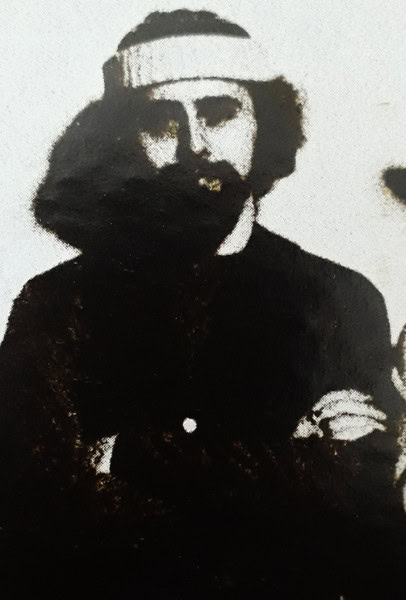
Richard Grando played baritone saxophone and flute in David Bowie’s touring band in 1974. On the opening leg of the Diamond Dogs Tour, he worked in Michael Kamen’s ensemble alongside David Sanborn, who played alto saxophone and flute. The two reed players helped give Bowie’s live arrangements an instrumental range suited to the scale of the production.
Two concert releases preserve Grando’s work with Bowie. David Live draws on the July engagement at the Tower Theater in Upper Darby, outside Philadelphia. Cracked Actor (Live Los Angeles ’74) presents the performance at the Universal Amphitheatre on 5 September 1974. Between those engagements, Bowie changed several positions in the band and began introducing songs from his Philadelphia studio sessions.
Grando had already worked with several kinds of woodwind before joining Bowie. His earlier recording credits extend from soprano saxophone and recorder with Tom Paxton to flute with The Bridge and tenor saxophone with Cat Mother.
- Name: Richard Grando
- Role with David Bowie: Baritone saxophone and flute
- Tour: Diamond Dogs Tour, North America, 1974
- Documented touring periods: The June–July opening leg and the September return
- Fellow reed player: David Sanborn, alto saxophone and flute
- Musical director on the opening leg: Michael Kamen
- Contemporary live album: David Live, recorded in July 1974 and released that October
- Archival live album: Cracked Actor (Live Los Angeles ’74), recorded on 5 September 1974 and first officially released in 2017
- Selected earlier credits: Tom Paxton, Earth Opera, the Quinaimes Band, The Bridge and Cat Mother
Early Career – The Woodwind Credits Before Bowie
By the end of the 1960s, Richard Grando’s name had begun appearing on American records that brought singers and groups together with additional instrumentalists. These credits give the clearest account of his early musical work. They establish which instruments he was credited with and show him working in several kinds of ensemble before the Diamond Dogs Tour.
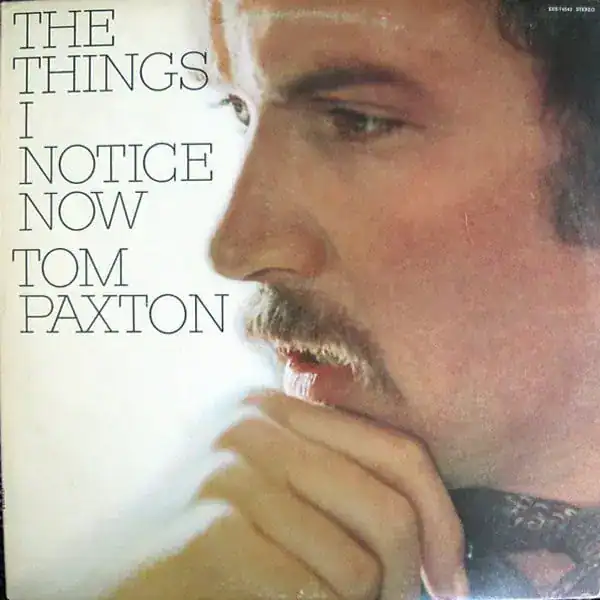
Tom Paxton’s Elektra album The Things I Notice Now credits Grando with soprano saxophone and soprano recorder. The album includes Paxton’s extended composition “The Iron Man,” whose credited instrumentation also includes flute, flugelhorn, cello and violin. Grando’s two instruments belong to a broader palette than the guitar and voice commonly associated with Paxton’s songs.
Grando also appears in the credits for The Great American Eagle Tragedy, the second album by Earth Opera, released by Elektra in 1969. The group included Peter Rowan and David Grisman and drew from folk, country and psychedelic rock. Grando is listed among its guests, with detailed personnel listings specifying soprano saxophone, tenor saxophone and recorder.
1971–1973 – The Quinaimes Band, The Bridge and Cat Mother
The self-titled Quinaimes Band album, released by Elektra in 1971, credits Richard Grando as a guest saxophonist. The group’s guitars, keyboards, bass and drums were supplemented by instruments including fiddle, pedal steel and additional percussion. Grando’s saxophone was one of several guest contributions to the record.
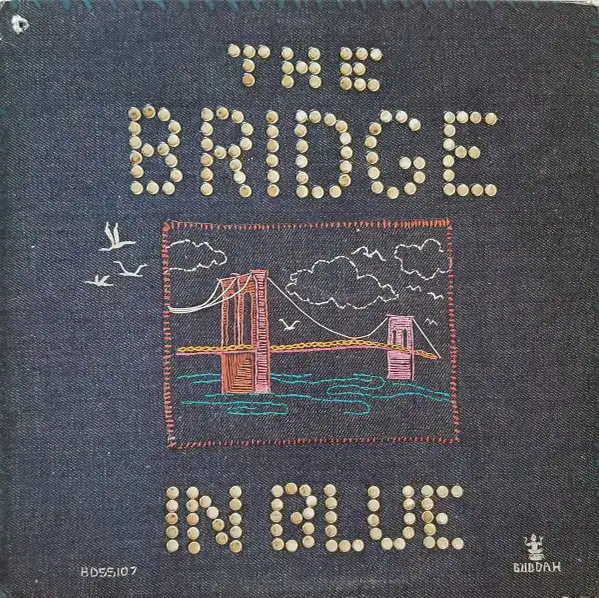
On The Bridge in Blue, released by Buddah Records in 1972, Grando is credited with saxophone, flute and percussion. The personnel also include Steve Goldberg on trombone, trumpet and flugelhorn. The album provides a documented example of Grando playing flute before his work on Bowie’s Diamond Dogs Tour.
Grando returned to a specifically identified saxophone role on Cat Mother Last Chance Dance, released by Polydor in 1973. He is credited with tenor saxophone on an album whose supporting instrumentation includes pedal steel, violin and vibraphone.
1974 – From the Diamond Dogs Album to a Touring Band
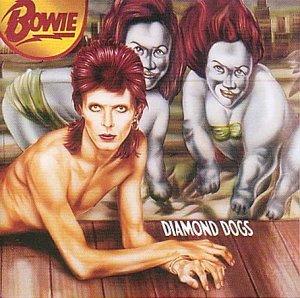
RCA released Bowie’s studio album Diamond Dogs in May 1974. Hunger City, the ruined metropolis evoked on the album, supplied the visual setting for the concert production. Grando’s documented association with the project begins with the touring band and the live arrangements of that material.
The stage project called for a band that could move between the new material and songs Bowie had written for earlier line-ups. Michael Kamen directed the opening ensemble and played electric piano, Moog synthesiser and oboe. Mike Garson played piano and Mellotron. With keyboards and reeds available alongside the rock rhythm section, the music could change character as the action moved around the set.
The opening band included Earl Slick on guitar, Herbie Flowers on bass, Tony Newman on drums and Pablo Rosario on percussion. Grando and David Sanborn were the two credited saxophone and flute players. Gui Andrisano and Geoff MacCormack, billed as Warren Peace, sang backing vocals.
Earl Slick on auditioning for David Bowie
“the weirdest audition ever on the planet”
— Earl Slick, interviewed by Denver Westword.
Slick recalled being asked to play along with recordings of songs he had never heard. His account describes how one member of the band entered the project. Grando’s recruitment is less clearly documented. The concert personnel put him in the working group by the opening leg, with the Ottawa line-up providing a specific early date.
June 1974 – Montréal, Ottawa and the Hunger City Production
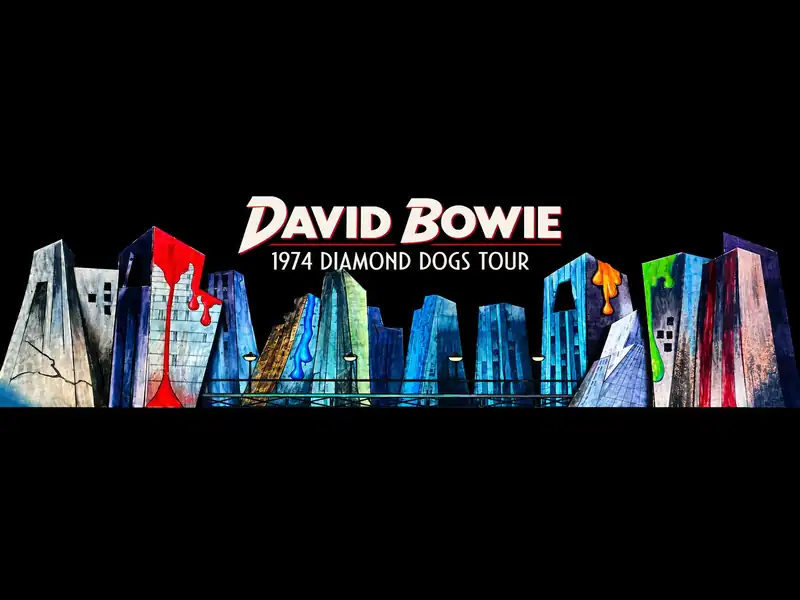
The tour opened in Montréal on 14 June 1974 and moved to the Civic Centre in Ottawa on 15 June. The production used a city set and stage machinery to move Bowie through and above the scenery. In “Space Oddity” he sang from a platform extended over the audience. For “Cracked Actor,” he addressed a skull. The musicians accompanied these changes in staging while giving the concert a continuous musical shape.
From the band’s perspective, the challenge was to make entrances, transitions and endings work within both the arrangement and the stage action. The instrumental group was broad enough to change the texture around the voice. Guitar and percussion could give an entrance a hard edge, while the keyboards and woodwinds could sustain a sound through a slower theatrical passage. The concert brought together jobs familiar to a rock band and demands more commonly associated with theatre.
Tony Defries on Michael Kamen’s responsibility
“we gave MK a lot of responsibility and he managed it extremely well.”
— Tony Defries, quoted by the Michael Kamen official website.
Baritone Saxophone and Flute – Grando’s Place in the Band
David Bowie – “1984”, recorded live at the Tower Theater in July 1974. From David Live, 2005 mix, remastered in 2016.
Grando’s baritone saxophone gave Michael Kamen’s touring band a lower reed voice alongside David Sanborn’s alto. Herbie Flowers, Tony Newman and Pablo Rosario supplied the bass, drums and percussion around which those reed parts could be arranged. Both saxophonists also doubled on flute. Kamen brought another woodwind colour through his oboe.
The opening number, “1984,” and the longer sequence of “Sweet Thing,” “Candidate” and “Sweet Thing (Reprise)” illustrate two of the demands placed on that band. One is built around a persistent rhythmic figure, while the other moves through several changes of pace and intensity. The recording credits establish the players and their instruments. Identifying the musician responsible for a particular phrase would require more detailed evidence.
July 1974 – The Tower Theater and the Recording of David Live
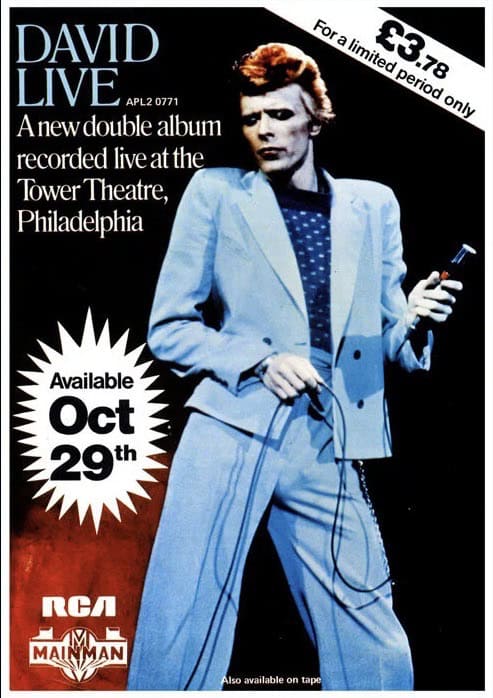
The Tower Theater in Upper Darby, Pennsylvania, just outside Philadelphia, was the source of David Live. The venue is frequently described simply as Philadelphia on release information. The performance location is distinct from Sigma Sound Studios, where Bowie worked on a separate project the following month.
Published accounts give different dates for the recording. The official 2016 catalogue text names 8–12 July 1974 as the source period. In an interview published on Bowie’s official website, producer Tony Visconti recalled recordings from two nights and identified them as 11 and 12 July. Earlier pressings carried other dates. The July Tower engagement is the common ground among these accounts.
Grando’s album credit is for baritone saxophone and flute. Visconti explained that the original singers augmented some of the backing vocals and that Mike Garson replaced his “Aladdin Sane” piano solo. He also described re-recording of saxophone material. His account concerns the preparation of the album from the live tapes and leaves the identity of individual replacement passages open.
Tony Visconti on the saxophones on David Live
“most of the saxophones were rerecorded, I was surprised to learn.”
— Tony Visconti, “TV Talks David Live,” DavidBowie.com.
July 1974 – Madison Square Garden
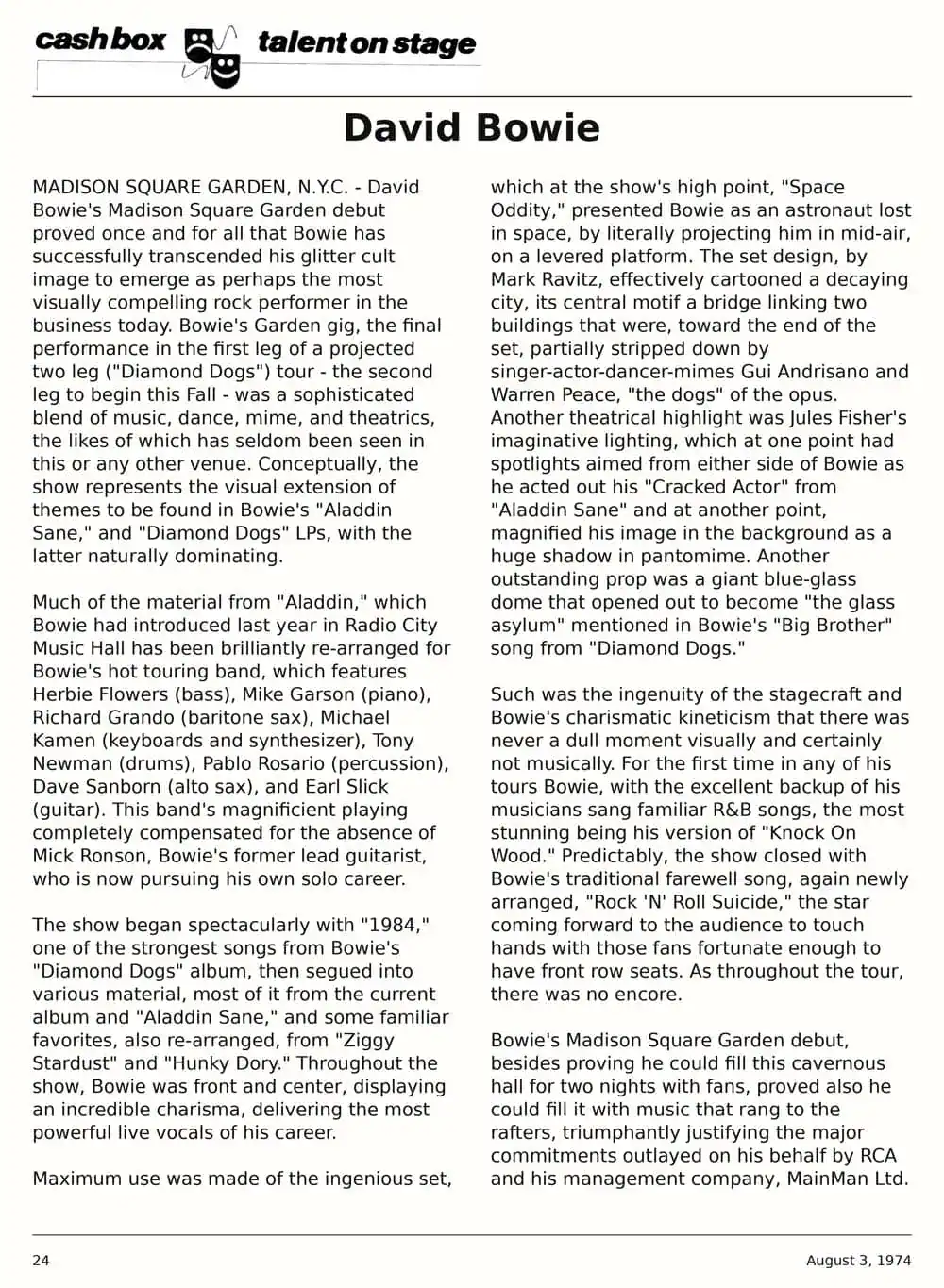
A contemporary Cash Box review of Bowie at Madison Square Garden identifies Grando as the baritone saxophonist and Sanborn as the alto saxophonist. The reviewer also singled out the degree to which the Aladdin Sane songs had been rearranged since Bowie’s previous New York appearances. The piece places those instrument credits in a report published while the tour was still under way.
The report describes music, dance, mime and theatre as parts of the same show. The stage presentation offered an immediate context for instrumental changes that listeners to David Live could only hear. It also shows how recognisable the reworked music was to a contemporary reviewer, even in a production whose visual scale often dominated accounts of the tour.
August 1974 – Sigma Sound and the Songs That Reached the Stage
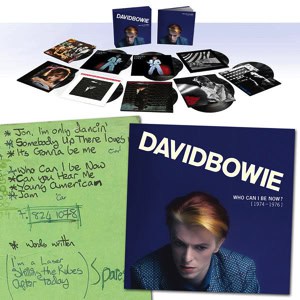
During the break between the summer and September concerts, Bowie worked at Sigma Sound Studios in Philadelphia on the material that would feed into Young Americans. The sessions matter to Grando’s story because songs from them subsequently entered the concert repertoire. The July and September concert credits establish his work with the stage band. The Sigma sessions have their own recording personnel.
The summer ensemble had already performed “Knock on Wood,” introducing an American soul composition into a set drawn largely from Bowie’s own catalogue. Two pieces from the recent studio work, “It’s Gonna Be Me” and “John, I’m Only Dancing (Again),” reached the Los Angeles set in September. Those additions meant that the band was now performing songs that had yet to be released as well as adapting familiar ones to the current line-up.
5 September 1974 – The Universal Amphitheatre, Los Angeles
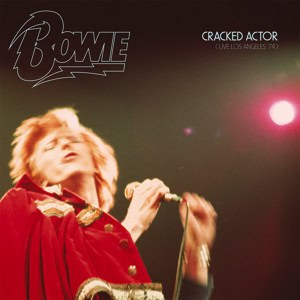
When the tour resumed, Bowie played a run at the Universal Amphitheatre in Los Angeles. The performance on 5 September 1974 became the source of Cracked Actor (Live Los Angeles ’74). Grando appears in the LP personnel on baritone saxophone and flute, alongside Sanborn on alto saxophone and flute. The short announcement on Bowie’s official site named Sanborn. The LP personnel list identifies both players.
The band around them had changed. Doug Rauch played bass and Greg Errico played drums. Slick remained on guitar, and Carlos Alomar added a second guitar. Garson continued at the keyboards and Rosario played congas. The expanded vocal group credited on the LP included Luther Vandross, Robin Clark, Ava Cherry, Anthony Hinton and Diane Sumler alongside Warren Peace.
The first part of the concert follows a sequence familiar from David Live. “1984,” “Rebel Rebel,” “Moonage Daydream” and the “Sweet Thing” sequence appear early in both recordings. The September band then makes room for recent material. “Knock on Wood” leads into “It’s Gonna Be Me,” and “John, I’m Only Dancing (Again)” closes the concert. The familiar first stretch and the changed later repertoire make the September performance a particularly clear record of a tour in transition.
From “Knock on Wood” to “John, I’m Only Dancing (Again)”
David Bowie – “John, I’m Only Dancing (Again)”, recorded live at the Universal Amphitheatre, Los Angeles, on 5 September 1974. From Cracked Actor (Live Los Angeles ’74).
“Knock on Wood,” written by Eddie Floyd and Steve Cropper, gives the rhythm section room to establish a groove around which voices and instruments can answer the lead. It was already part of the Tower repertoire. In Los Angeles its placement immediately before “It’s Gonna Be Me” brings two different approaches to soul into the same part of the set.
“It’s Gonna Be Me” moves more slowly and gives Bowie longer vocal lines to sustain. The accompaniment can hold tension between phrases, giving the singer room to vary the timing and emphasis. “John, I’m Only Dancing (Again)” draws its momentum from repetition. Bowie reshaped a song first released in 1972 into an extended dance number in which the interplay of rhythm instruments, lead vocal and backing voices could carry a much longer performance.
October 1974 – The Soul Tour and the Limits of the Credits
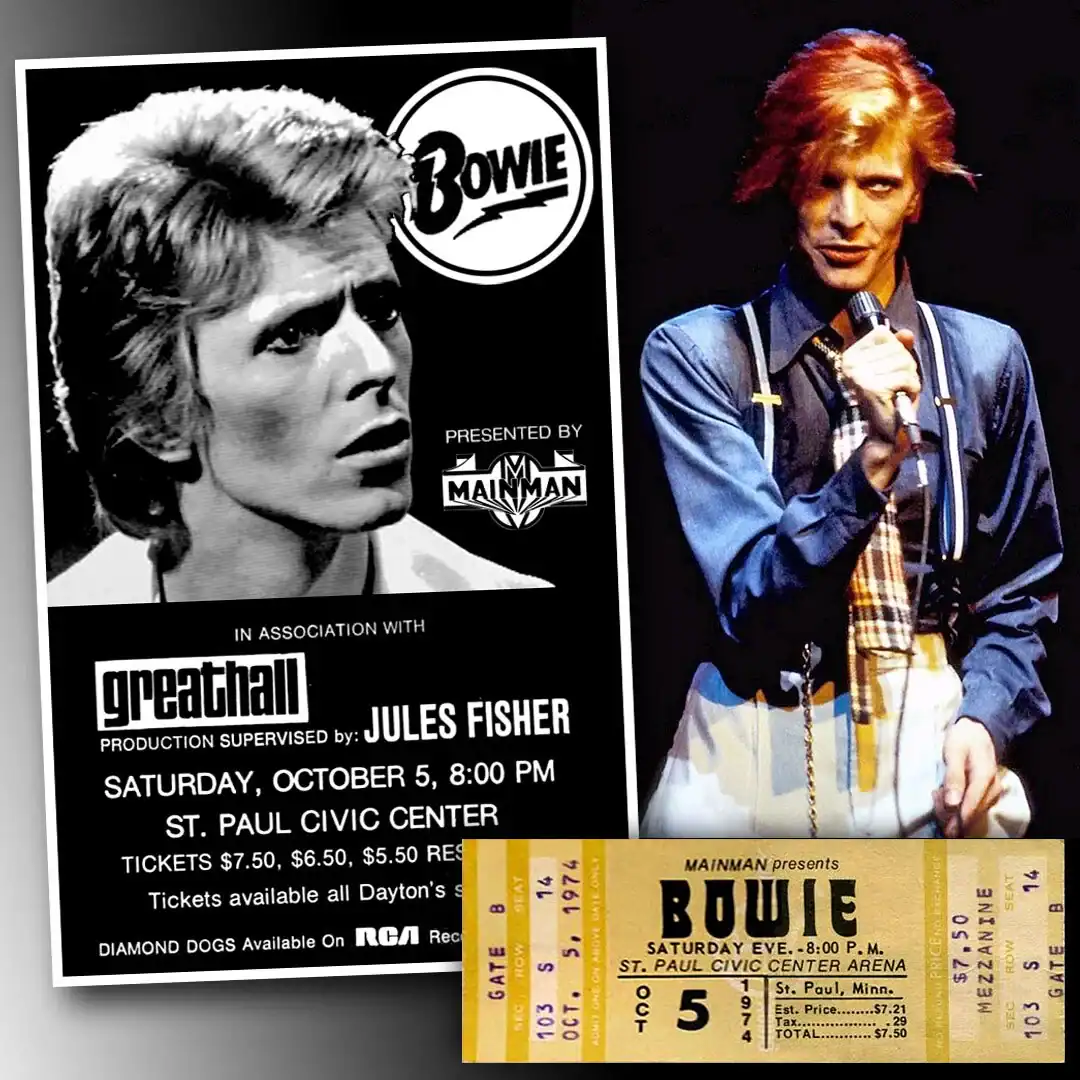
The autumn production dropped the large Hunger City set and placed more of the Philadelphia material in the programme. Dennis Davis and Emir Ksasan are credited as drummer and bassist on the later Soul Tour recordings. An official retrospective about the autumn opening in Saint Paul on 5 October includes Grando among the musicians named for this phase of the tour. Other published line-ups identify Sanborn as the sole saxophonist for the Soul Tour.
The Saint Paul article is evidence of a published attribution. Its general personnel list leaves Grando’s precise dates open. The later recording credits for Detroit and Nashville cover two identifiable performances and have to be read separately. A dated autumn programme, contemporary review or first-hand account specific to Grando could help establish the extent of his involvement.
Mike Garson on changing styles with Bowie
“I could do soul music on Young Americans, or play jazzy on Aladdin Sane, or play gospel.”
— Mike Garson, interviewed by Vogue.
October 1974 – David Live Reaches Record Buyers

RCA released David Live in October 1974, while Bowie was touring with the autumn production. The record brought the summer line-up into circulation at the same time that audiences were encountering the revised show. A listener buying the album and attending a concert that autumn could therefore hear two different versions of Bowie’s touring band.
The original double LP begins with “1984” and ends with “Rock ’n’ Roll Suicide.” Across four sides it brings together songs from the Ziggy Stardust period, selections from Aladdin Sane and Diamond Dogs, the cover of “Knock on Wood” and Bowie’s live performance of “All the Young Dudes.” Its sequence gave the summer band’s work a form that could be heard independently of the scenery and movement that had shaped the concert.
“Knock on Wood” had already appeared as a live single in the UK, backed by “Panic in Detroit.” The pairing put a cover of an American soul record on one side and a rearranged Bowie song on the other. Both recordings belong to the Tower material, and their release on a single gave listeners a shorter introduction to the band heard on the double album.
26 January 1975 – Alan Yentob’s Cracked Actor
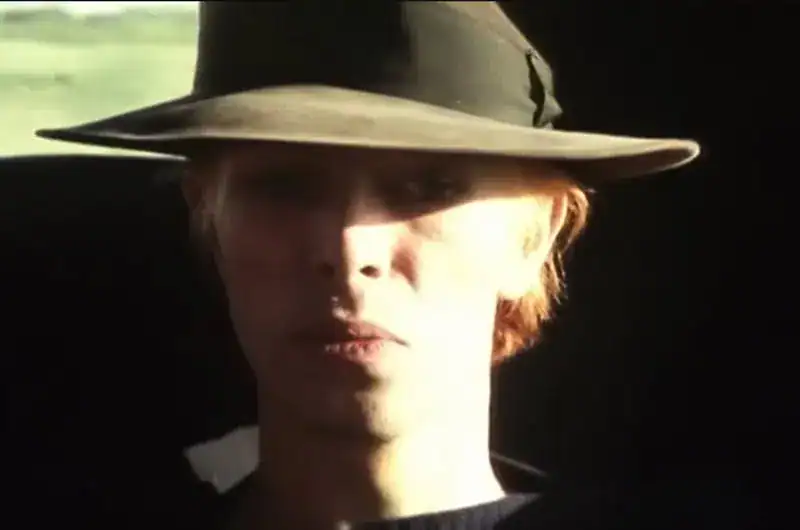
Alan Yentob’s Cracked Actor was first broadcast on BBC1 on 26 January 1975 as part of Omnibus. Filmed during Bowie’s 1974 American tour, the documentary included footage from the Los Angeles engagement. Its title comes from the Aladdin Sane song Bowie performed onstage with a skull.
The documentary brought together performance footage, travel and interviews. In one of its conversations away from the stage, Bowie described the hold America had on his imagination. The concert album released under the same title in 2017 presents the 5 September Los Angeles performance as a separate audio release.
David Bowie on America
“America, became a myth-land for me.”
— David Bowie in Alan Yentob’s Cracked Actor, transcribed by Chris O’Leary in “Knock on Wood”.
2005–2016 – A Remix, a Remaster and Two Ways to Hear the Tower Band
The 2005 edition of David Live presented Tony Visconti’s new mix and broadened the programme of the original double album. It includes “Space Oddity,” “Panic in Detroit,” “Time” and “Here Today, Gone Tomorrow.” Visconti recalled that the telephone microphone used for “Space Oddity” had been a problem on the original recording. The later mix brought one of the production’s best-known stage sequences back into the album programme.
The two mixes offer different balances within the same Tower material. A sound that blends into the keyboards or guitar in one version may be more apparent in the other. For anyone following the reeds, comparing the mixes is a way to hear the ensemble in more detail. Visconti’s account of the replacement passages remains relevant to attempts to identify what was captured directly at the venue.
In 2016, Who Can I Be Now? (1974–1976) brought together remastered versions of the original and 2005 mixes. The box also includes Diamond Dogs, Young Americans and The Gouster. That grouping places the Tower performances between the studio work that supplied the original show with much of its repertoire and the Philadelphia material that entered the tour in September.
2017 – Cracked Actor Brings the September Band into the Official Catalogue
Cracked Actor (Live Los Angeles ’74) was first officially issued for Record Store Day on 22 April 2017. A CD edition followed in June. Tony Visconti mixed the show in late 2016 after the multitrack tapes were brought together. Bowie is credited as producer.
The release expanded the official record of Grando’s work with Bowie. David Live had established his place in the summer band. The Los Angeles concert made it possible to hear another performance with the same two reed players after changes to the guitars, rhythm section and backing vocals. It also preserved Grando’s place in the September line-up as Bowie began performing songs from the new studio project in front of an audience.
2020 – I’m Only Dancing Documents the Later Line-Up
Parlophone released I’m Only Dancing (The Soul Tour 74) in 2020. Most of the album comes from the Michigan Palace, Detroit, on 20 October 1974. The additional encores come from the Municipal Auditorium, Nashville, on 30 November 1974. The published personnel for those recordings credit Sanborn with alto saxophone and flute. Grando is absent from that release’s personnel list.
A comparison of the Detroit programme with the Los Angeles recording shows how the new repertoire moved within the show. “John, I’m Only Dancing (Again)” closes the released September concert. In the Detroit programme it comes immediately after “Rebel Rebel,” close to the beginning of Bowie’s set. Its new position shows how prominently a song added during the September return featured in the autumn performance.
Richard Grando’s Place in Bowie’s Live History
Richard Grando’s Bowie credits document a reed section in which baritone saxophone had a distinct place. On the opening leg, he worked in Michael Kamen’s ensemble during the first staging of the Diamond Dogs production. By September the band had a new rhythm section, a second guitarist and a larger group of backing singers. Grando and David Sanborn remained part of the line-up as Bowie began to bring music from the August studio sessions into the show.
The July and September recordings preserve that continuity at a point when several other positions in the band were changing. Heard alongside one another, they show how the same two reed players fitted into different arrangements and a changing repertoire. Grando’s earlier credits with The Bridge and other artists give that work a wider context, documenting his experience on several woodwinds before he joined the tour.
Further Information and First-Hand Contributions
The surviving recordings and personnel credits establish Grando’s work with Bowie in the summer and September of 1974. First-hand recollections or dated material from the musicians and crew could help establish how he was recruited and clarify his involvement, if any, in the autumn concerts. A dated photograph, a rehearsal part or a concert programme is especially valuable when it can be matched to a specific venue and performance.
Article Origin
This article was researched and written for DavidBowieWorld.com as part of the David Bowie Collaborations & Creative Circle Archive. It draws on record credits, contemporary concert reporting and published recollections from people involved in Bowie’s work in 1974.
© DavidBowieWorld.com — David Bowie Collaborations & Creative Circle Archive.
