
David Bowie 1972-08-19 London ,The Rainbow Theatre - Awesome Incredible Stupendous - SQ -8
Label: From The Hunky Geordie Tapes
Audio Source: Audience
Total running time: 1:27:49
Sound Quality: Considerable noise and dullness, but listenable
Attendance: Approximately 3,000 (reported)
Artwork: Steve23yh
Format: Unofficial concert recording
David Bowie 1972-08-19 London, The Rainbow Theatre – Awesome Incredible Stupendous –
David Bowie – Awesome Incredible Stupendous documents the performance at London's Rainbow Theatre on 19 August 1972, during the Ziggy Stardust Tour. Issued as From The Hunky Geordie Tapes – HUG261CD, this unofficial recording preserves one of the most elaborate concerts of Bowie's breakthrough year. The evening brought together the Spiders from Mars, pianist Matthew Fisher and Lindsay Kemp's theatrical company in a production combining rock music, mime, dance, elaborate costumes and projected imagery.
The recording has a stated running time of 1 hour, 27 minutes and 49 seconds and contains 21 tracks, including the introductory music, the concert performance, a separate dance theme, band introductions and the encore Moonage Daydream. The audience source is noisy and somewhat dull, but remains listenable. Unlike several other releases of the same Rainbow concert, this edition is presented without an additional collection of BBC bonus recordings, allowing the focus to remain on the performance itself.
Sound Quality Rating
Key Facts
Artist: David Bowie
Title: Awesome Incredible Stupendous
Date: 19 August 1972
Venue: Rainbow Theatre, Finsbury Park, London, England
Tour: Ziggy Stardust Tour
Catalogue Number: HUG261CD
Recording Lineage: Not documented
Tracklisting – Awesome Incredible Stupendous
01. Ode To Joy
02. Lady Stardust
03. Hang On To Yourself
04. Ziggy Stardust
05. Life On Mars?
06. The Supermen
07. Changes
08. Five Years
09. Space Oddity
10. Andy Warhol
11. My Death
12. The Width Of A Circle
13. The Wild Eyed Boy From Freecloud
14. Starman
15. Queen Bitch
16. Suffragette City
17. White Light/White Heat
18. Waiting For The Man
19. Dance Theme
20. Band Introductions
21. Moonage Daydream
Original Artwork – HUG261CD
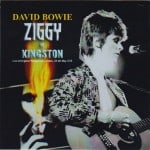
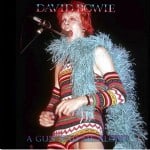
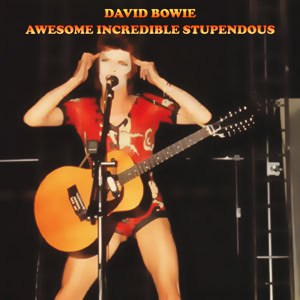
The following four images reproduce the artwork supplied with Awesome Incredible Stupendous, credited to Steve23yh. The original image proportions and red borders are preserved, with a maximum display height of 300 pixels.


August 1972 – Preparing the Rainbow Theatre Shows
The Rainbow Theatre concerts of 19 and 20 August 1972 marked an important turning point in David Bowie's development as a live performer. The release of The Rise and Fall of Ziggy Stardust and the Spiders from Mars in June had transformed his public profile, while the success of Starman brought the Ziggy Stardust character to a wider audience.
Bowie had already developed a striking visual identity for the tour, but the Rainbow concerts offered an opportunity to expand the presentation into something approaching a complete theatrical production.
Rehearsals took place during August, including preparations at the Theatre Royal Stratford East and further work at the Rainbow Theatre itself. The production required the musicians, dancers, lighting technicians and stage crew to coordinate their contributions.
The resulting performances were far more elaborate than the relatively straightforward concerts Bowie had been giving earlier in the year. They represented an attempt to combine the immediacy of a rock concert with the visual language of experimental theatre.
Lindsay Kemp – The Theatrical Collaboration
Lindsay Kemp was one of the most important figures in Bowie's early artistic development. Bowie had studied mime with Kemp in the late 1960s and had participated in his theatrical work, including Pierrot in Turquoise.
That experience encouraged Bowie to approach performance through movement, costume, character and dramatic presentation. The Rainbow concerts brought those interests directly into the Ziggy Stardust production.
Kemp and his company contributed theatrical sequences involving dancers, mime and distinctive costumes. Their appearances gave several songs a visual interpretation that extended beyond the normal presentation of a rock band.
The collaboration also demonstrated that Ziggy Stardust was more than a collection of songs. Bowie was developing a character whose identity could be explored through music, visual design and theatrical performance.
Ode To Joy – The Opening Atmosphere
The recording begins with Ode To Joy, used as introductory music before the live performance.
The electronic arrangement associated with Walter Carlos and Stanley Kubrick's film A Clockwork Orange had become part of Bowie's early Ziggy Stardust stage presentation.
Its futuristic atmosphere was particularly suitable for a production built around an imagined rock star and an elaborate theatrical environment.
As the introductory music ended, the audience's attention shifted towards the stage, where Bowie was about to begin with the comparatively restrained Lady Stardust.
Lady Stardust – A Dramatic Entrance
The decision to open with Lady Stardust was significant. Rather than immediately presenting the audience with a powerful rock number, Bowie began with a song about the fascination surrounding an unusual and glamorous performer.
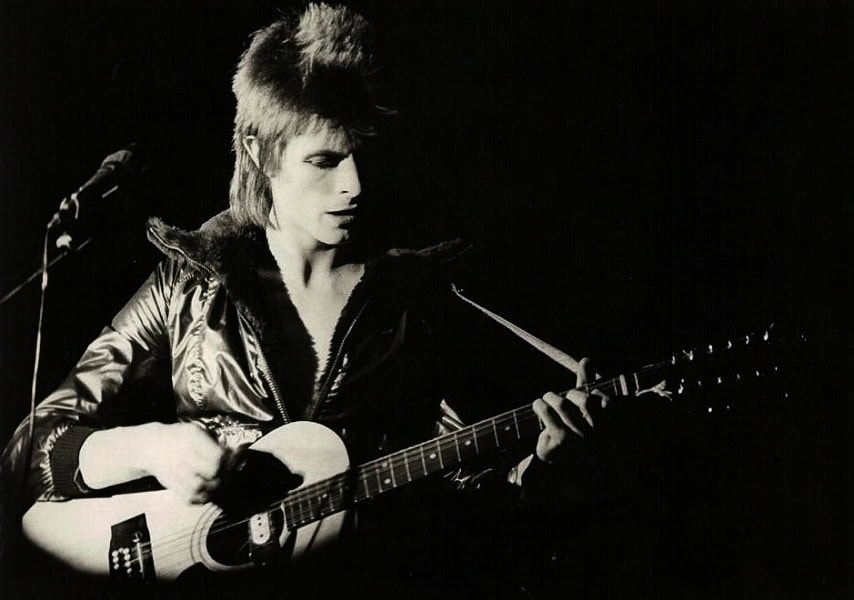
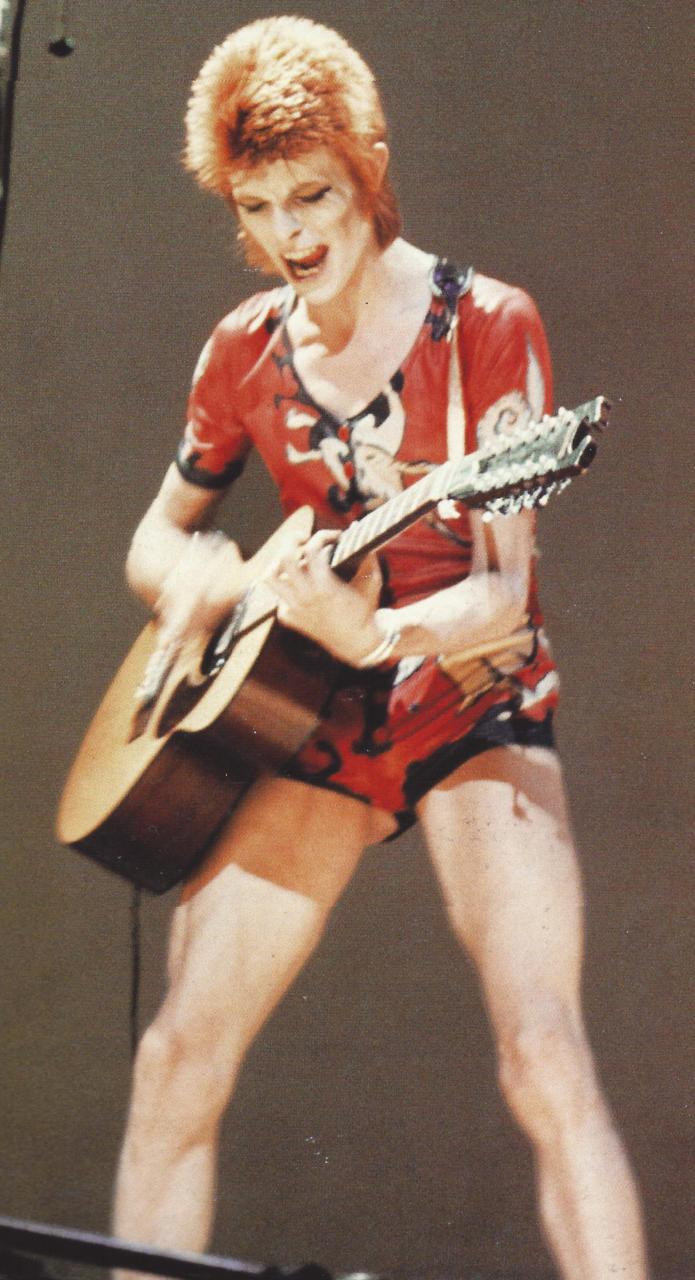
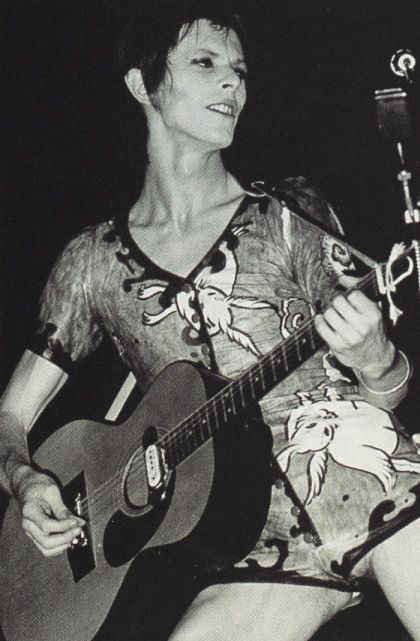
Contemporary descriptions recount Bowie appearing through theatrical fog with a twelve-string guitar, his Ziggy Stardust appearance emphasised by carefully controlled lighting.
The song's lyrical subject was closely connected with the image Bowie was presenting. The performer described in the composition became reflected in the figure standing before the audience.
The original account of the Rainbow concert also describes an image of Marc Bolan being projected during the performance. Although Lady Stardust has often been associated with Bolan, the song's precise inspiration should not be reduced to a single interpretation.
A contemporary account in Petticoat magazine captured the impact of Bowie's entrance with the observation:
"the boy is beautiful"
The remark reflects the importance of appearance and theatrical presence in the developing Ziggy Stardust phenomenon.
Hang On To Yourself and Ziggy Stardust
After the atmospheric opening, the concert moved into the driving rock arrangements of Hang On To Yourself and Ziggy Stardust.
These performances demonstrated the strength of the Spiders from Mars as a live band. Mick Ronson's guitar, Trevor Bolder's bass and Mick Woodmansey's drums provided a compact and energetic foundation for Bowie's vocals.
Hang On To Yourself had developed from earlier Arnold Corns material into an important part of the Ziggy Stardust repertoire.
Ziggy Stardust, meanwhile, introduced the fictional rock star at the centre of the album's narrative. Its performance within the Rainbow production gave the character a physical presence that went beyond the studio recording.
Life On Mars?, The Supermen and Changes
The inclusion of Life On Mars?, The Supermen and Changes demonstrated that the Rainbow programme drew on several stages of Bowie's recording career.
Life On Mars? and Changes came from Hunky Dory, while The Supermen originated on The Man Who Sold The World.
These songs had different musical identities, but the live arrangements brought them into the sound of the Spiders from Mars.
The sequence also showed how Bowie's earlier songwriting could be incorporated into the theatrical world of Ziggy Stardust without losing its original character.
Five Years – Music and Costume Changes
The transition from Changes to Five Years was closely coordinated with the theatrical staging.
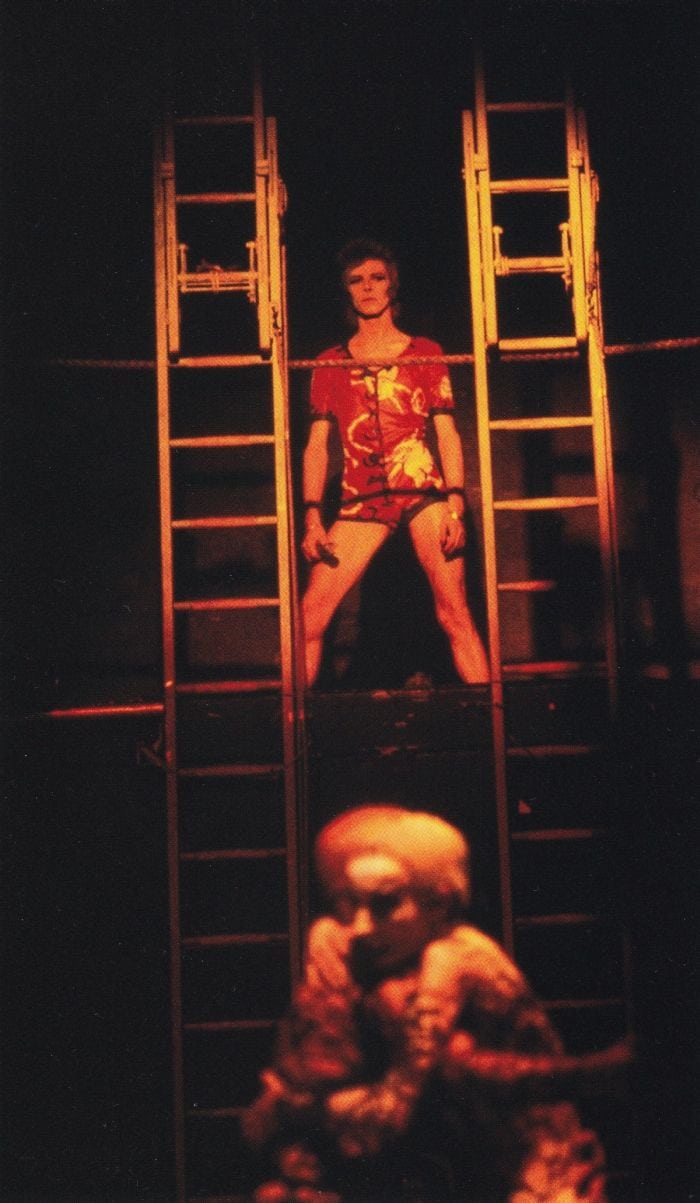
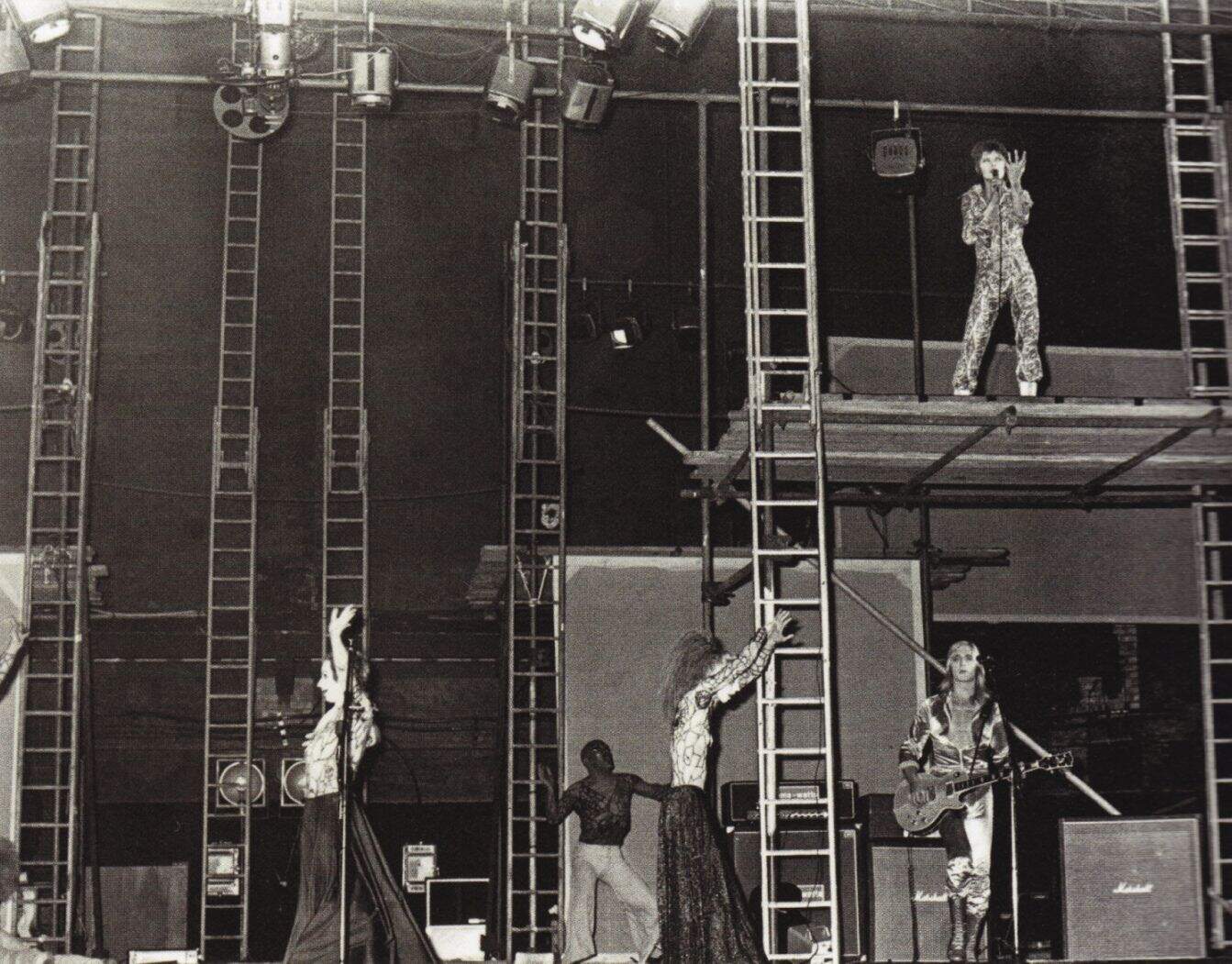
According to the original concert account, Mick Woodmansey extended the drum introduction while Bowie changed costume and moved through the multi-level stage structure.
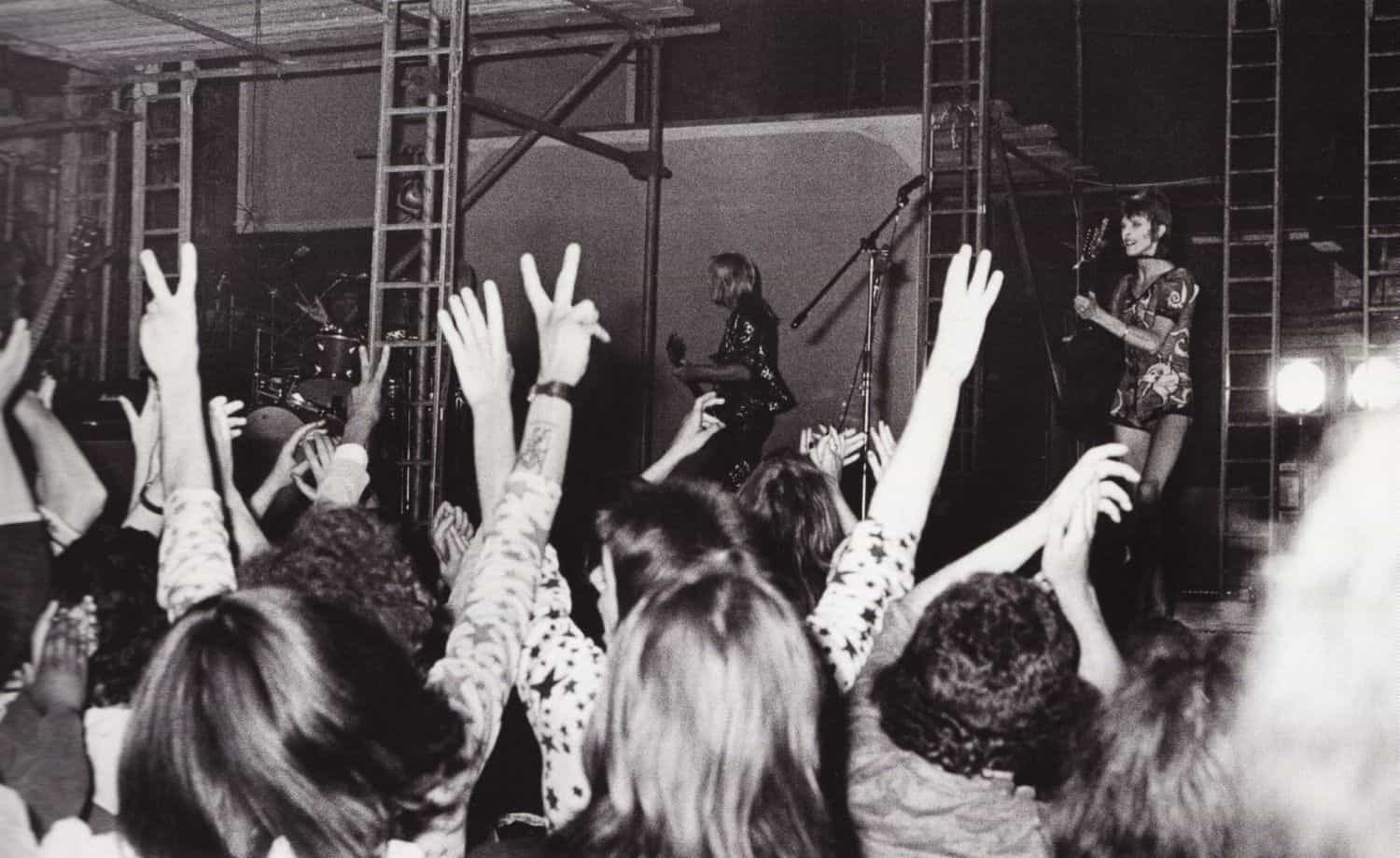
The scaffolding allowed Bowie to reappear at a different height, creating a dramatic visual effect.
This arrangement illustrates the practical demands of the Rainbow production. The music had to accommodate the movement of performers and the timing of costume changes.
The audience recording preserves the extended musical introduction, providing an audible reminder of the theatrical activity taking place beyond the microphone.
Space Oddity and Andy Warhol
Space Oddity remained one of Bowie's best-known compositions in 1972. Its narrative of space travel fitted naturally into the science-fiction atmosphere surrounding Ziggy Stardust.
The Rainbow performance included Bowie and Mick Ronson using vocal effects to imitate elements of the spacecraft launch sequence, producing a moment of humour within the arrangement.
Andy Warhol, from Hunky Dory, reflected another important part of Bowie's artistic interests.
Warhol's influence on popular culture, celebrity and visual identity had clear connections with the image-making that Bowie was exploring during this period.
The presence of both songs demonstrated how the Rainbow concert brought together Bowie's earlier compositions and his newer theatrical identity.
My Death – Jacques Brel and Dramatic Performance
My Death was one of the most striking selections in the Rainbow programme.
Originally written by Jacques Brel as La Mort, the composition reached English-speaking audiences through theatrical adaptations associated with Jacques Brel Is Alive and Well and Living in Paris.
Bowie's interest in Brel reflected his attraction to dramatic songwriting, cabaret and European theatrical traditions.
The surviving recording preserves Bowie's spoken introduction:
"This is a Jacques Brel number..."
The performance provided a contrast with the louder rock material and demonstrated Bowie's ability to create dramatic tension through his voice and interpretation.
Its appearance at the Rainbow also anticipated the importance the song would assume in later Ziggy Stardust concerts.
The Width Of A Circle – Mick Ronson's Guitar
The Width Of A Circle was among the most expansive pieces in Bowie's early concert repertoire.
Originally released on The Man Who Sold The World, the song provided a substantial showcase for Mick Ronson's guitar playing.
Its extended instrumental passages and changing musical sections distinguished it from the shorter compositions on the Ziggy Stardust album.
Within the Rainbow concert, the performance reinforced the musical strength of the Spiders from Mars and balanced the elaborate theatrical elements with powerful instrumental playing.
Wild Eyed Boy From Freecloud – A Rare Performance
Wild Eyed Boy From Freecloud was an unusual selection for the Ziggy Stardust Tour.
The song originally appeared on Bowie's 1969 album and is notable for its elaborate narrative structure and dramatic imagery.
Its inclusion at the Rainbow was particularly appropriate because the theatrical production provided a setting in which the song's storytelling qualities could be emphasised.
The surviving performance is valuable to collectors because the composition was not a regular feature of Bowie's later concert repertoire.
It also demonstrates the breadth of material Bowie was willing to include in the Rainbow programme, extending well beyond the songs most closely associated with Ziggy Stardust.
Starman – Lindsay Kemp and the Rainbow Reference
Starman had become one of Bowie's defining songs during the summer of 1972.
At the Rainbow, its performance was expanded through Lindsay Kemp's theatrical participation.
Contemporary descriptions recount Kemp appearing in a costume incorporating wings and a wig, representing the mysterious figure at the centre of the song.
The staging connected the song's imagery with a physical character, strengthening the theatrical world surrounding Ziggy Stardust.
Bowie also introduced a playful reference to Over The Rainbow, acknowledging the name of the venue.
The moment became one of the memorable details associated with the August 1972 performances and demonstrated Bowie's willingness to adapt songs to the particular circumstances of a concert.
Queen Bitch and Suffragette City
Following the theatrical presentation of Starman, the concert returned to more direct rock arrangements.
Queen Bitch, from Hunky Dory, reflected Bowie's admiration for the Velvet Underground and the guitar-driven sound associated with the New York group.
Suffragette City provided another energetic performance, driven by the rhythm section and Mick Ronson's guitar.
Together, these songs helped maintain the musical momentum of the concert while contrasting with the more theatrical and restrained selections heard earlier in the programme.
White Light/White Heat and Waiting For The Man
The inclusion of two Velvet Underground songs demonstrated the importance of Lou Reed's music to Bowie's artistic development.
White Light/White Heat and Waiting For The Man had been part of the musical world that influenced Bowie during the late 1960s.
The Spiders from Mars approached these compositions with a forceful guitar sound, transforming them into powerful live performances.
Bowie's connection with Lou Reed would become particularly visible through his production work with Mick Ronson on Reed's album Transformer.
The Rainbow performances therefore provide another example of the relationship between Bowie's own music and the artists who influenced him.
Dance Theme – The Theatrical Interlude
One distinguishing feature of Awesome Incredible Stupendous is the separate listing of Dance Theme as track 19.
The Rainbow production involved Lindsay Kemp's company and incorporated choreographed movement alongside the musical programme.
The presence of a separately indexed dance theme is therefore consistent with the theatrical character of the performance.
However, the original tracklisting does not identify the composition or provide a detailed explanation of the recording segment.
For that reason, the title is retained exactly as supplied rather than assigning it an unsupported composer or musical origin.
Band Introductions and Moonage Daydream
The recording preserves Bowie's acknowledgements to the musicians and theatrical performers who had contributed to the concert.
He thanked the Spiders from Mars, the dancers and Lindsay Kemp, recognising the collaborative nature of the production.
The encore was Moonage Daydream, one of the defining songs from The Rise and Fall of Ziggy Stardust and the Spiders from Mars.
Bowie introduced the number with the words:
"This is one of Ziggy's numbers."
The performance brought the concert to a powerful conclusion, with Mick Ronson's guitar playing taking a prominent role.
The Rainbow Theatre Band – 19 August 1972
The principal musical personnel for the Rainbow Theatre performance were:
David Bowie – Lead vocals, guitar, harmonica
Mick Ronson – Lead guitar, backing vocals
Trevor Bolder – Bass guitar
Mick "Woody" Woodmansey – Drums
Matthew Fisher – Piano
Lindsay Kemp – Mime, choreography and theatrical performance
The Astronettes and theatrical company – Dance and stage presentation
The piano personnel require a distinction between the rehearsals and the concerts themselves. Nicky Graham was associated with the August 1972 preparations, but an account published by Mainman states that he was replaced by Matthew Fisher for the Rainbow performances of 19 and 20 August. This is also consistent with concert documentation identifying Fisher at the piano during the shows.
Nicky Graham – Piano; associated with the August 1972 rehearsals and touring period, but not confirmed here as a performer at the 19 August concert.
The names of Robin Lumley, Mike Garson, John Hutchinson, Aynsley Dunbar, Geoffrey MacCormack, Ken Fordham and Brian Wilshaw belong to other periods of the Ziggy Stardust Tour. They are not listed as performers at this specific concert without evidence of their participation.
Crew and Technical Production
The Rainbow Theatre production required a substantial technical team responsible for sound, lighting, stage equipment, costumes and the coordination of the theatrical performers.
Personnel associated with the wider Ziggy Stardust touring operation include:
Robin Mayhew – Sound engineering
Mick Hince – Touring and technical support
Peter Hunsley – Stage equipment
Suzi Fussey – Hair, makeup and wardrobe
Additional names appearing in the original touring notes include Will Palin, Dean Heiser, Nigel Olliff, Nick Gilbey and Paul Normand. Their precise assignments at this particular concert have not been independently established.
Video – David Bowie, Rainbow Theatre 1972
The following video is retained from the original page as additional material associated with Bowie's Rainbow Theatre performances.
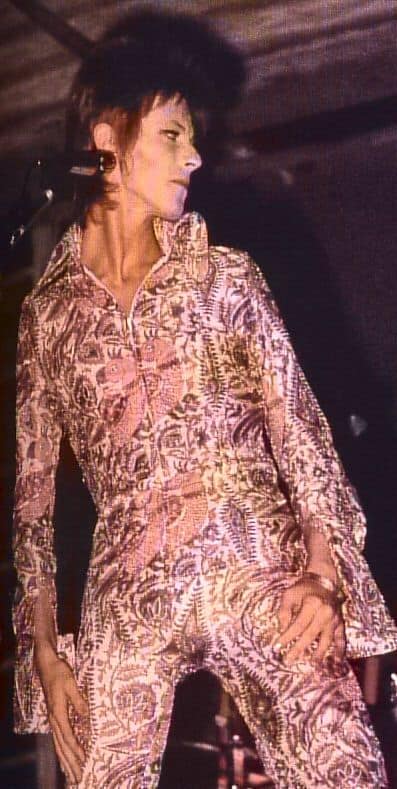
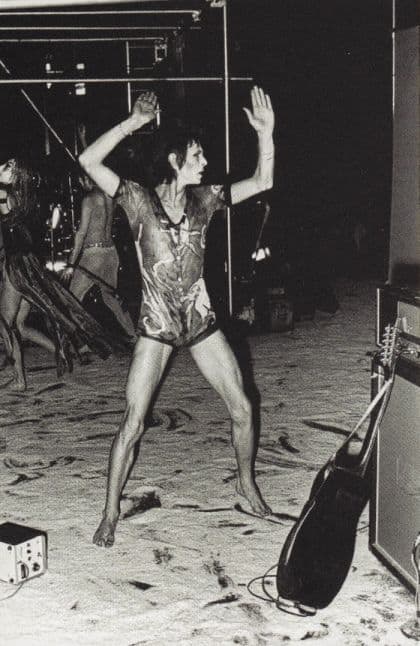
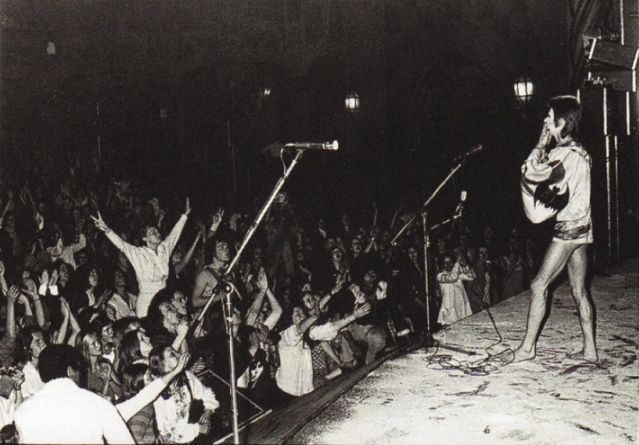
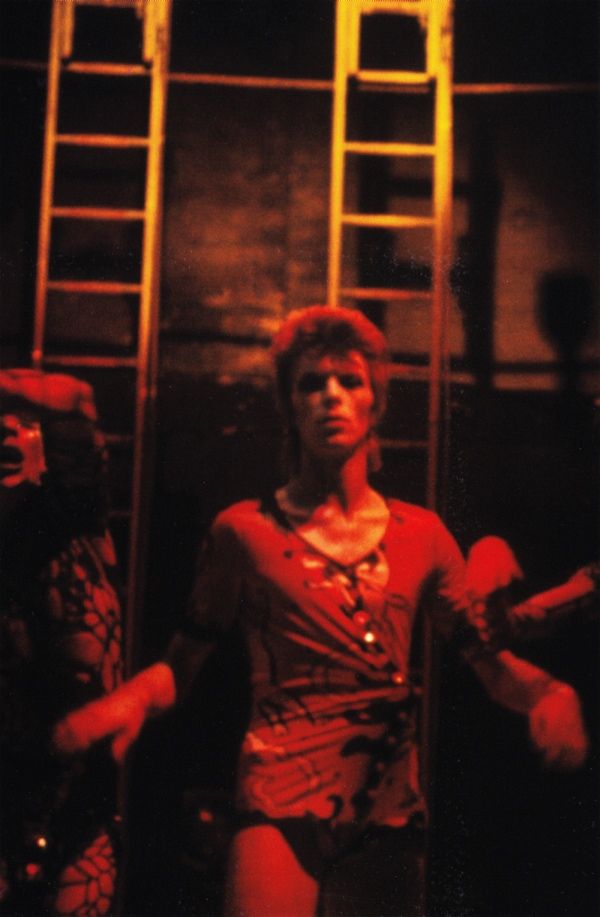
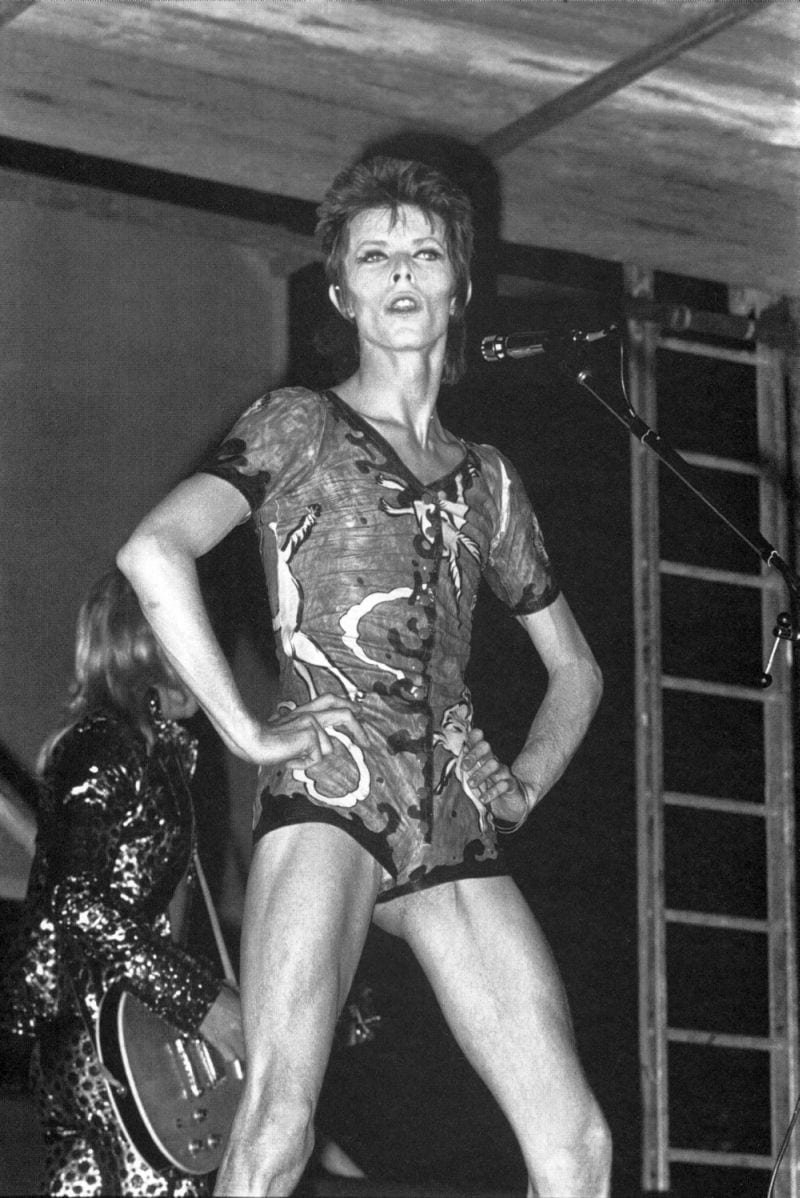
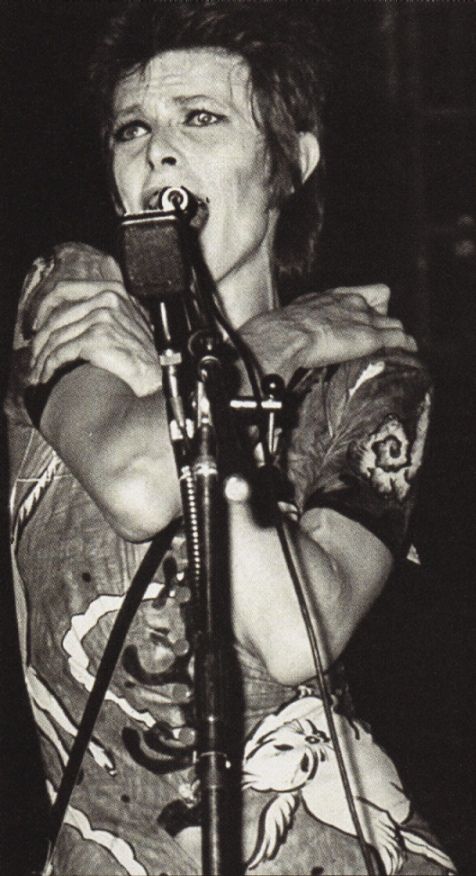
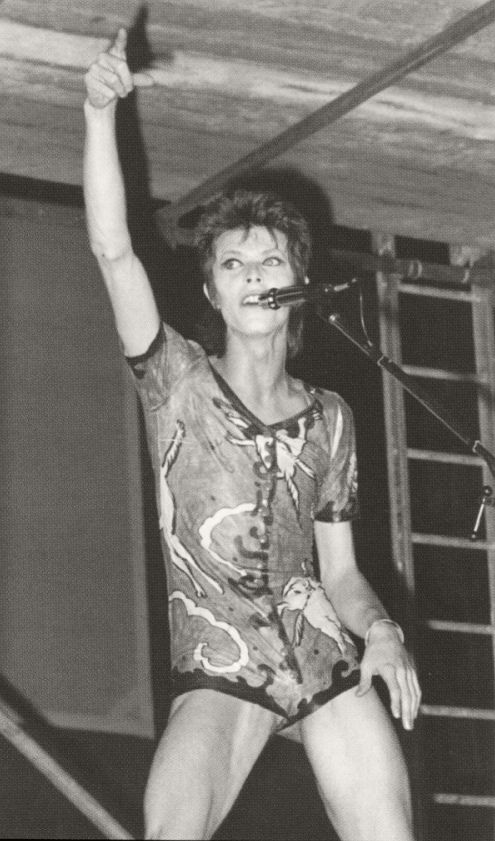
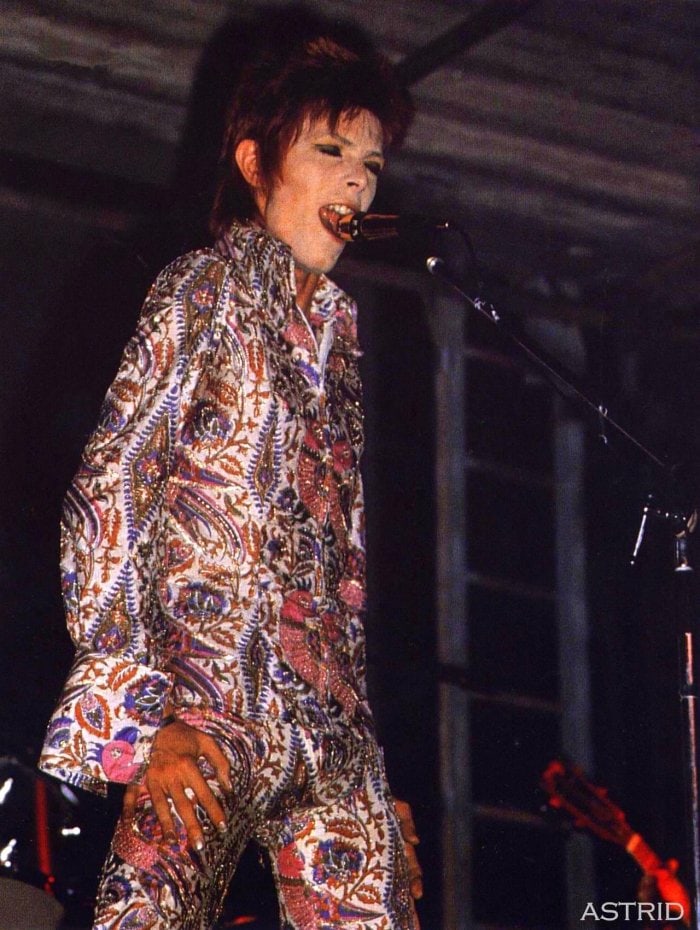
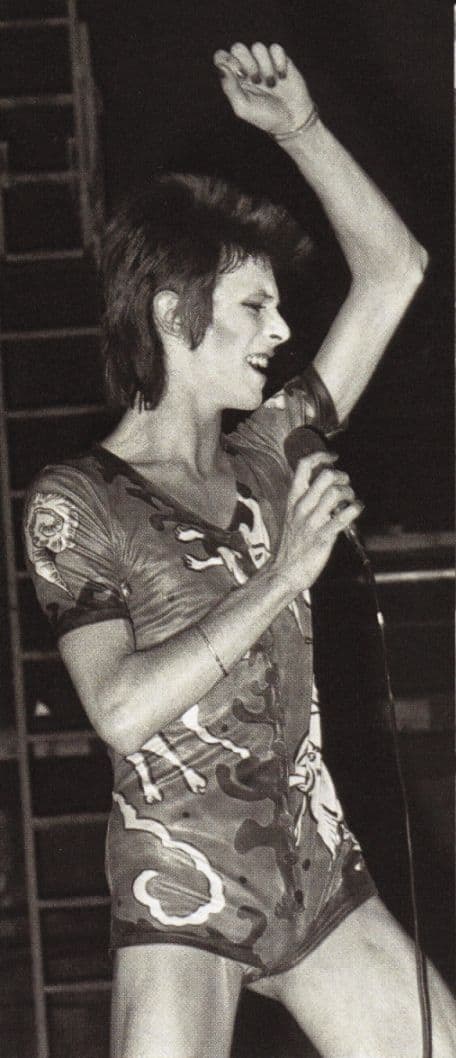
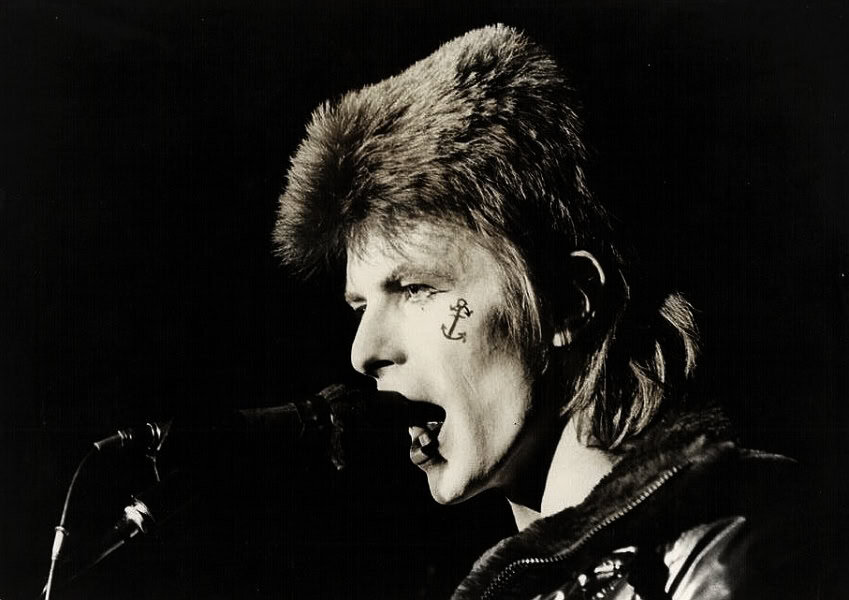
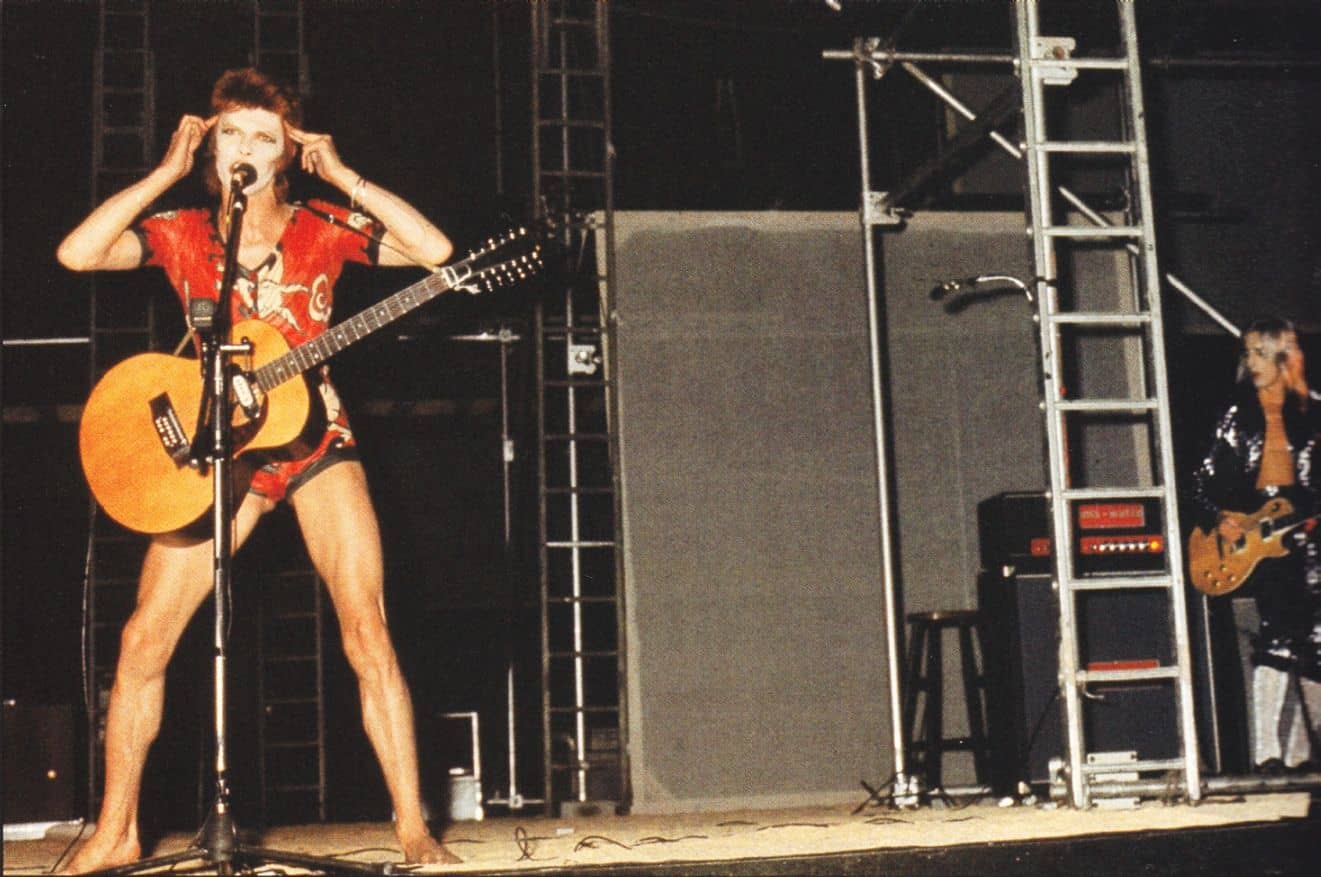
Rainbow Theatre – Photographic Archive
The following photographic slider contains additional archive material relating to the Rainbow Theatre performances.
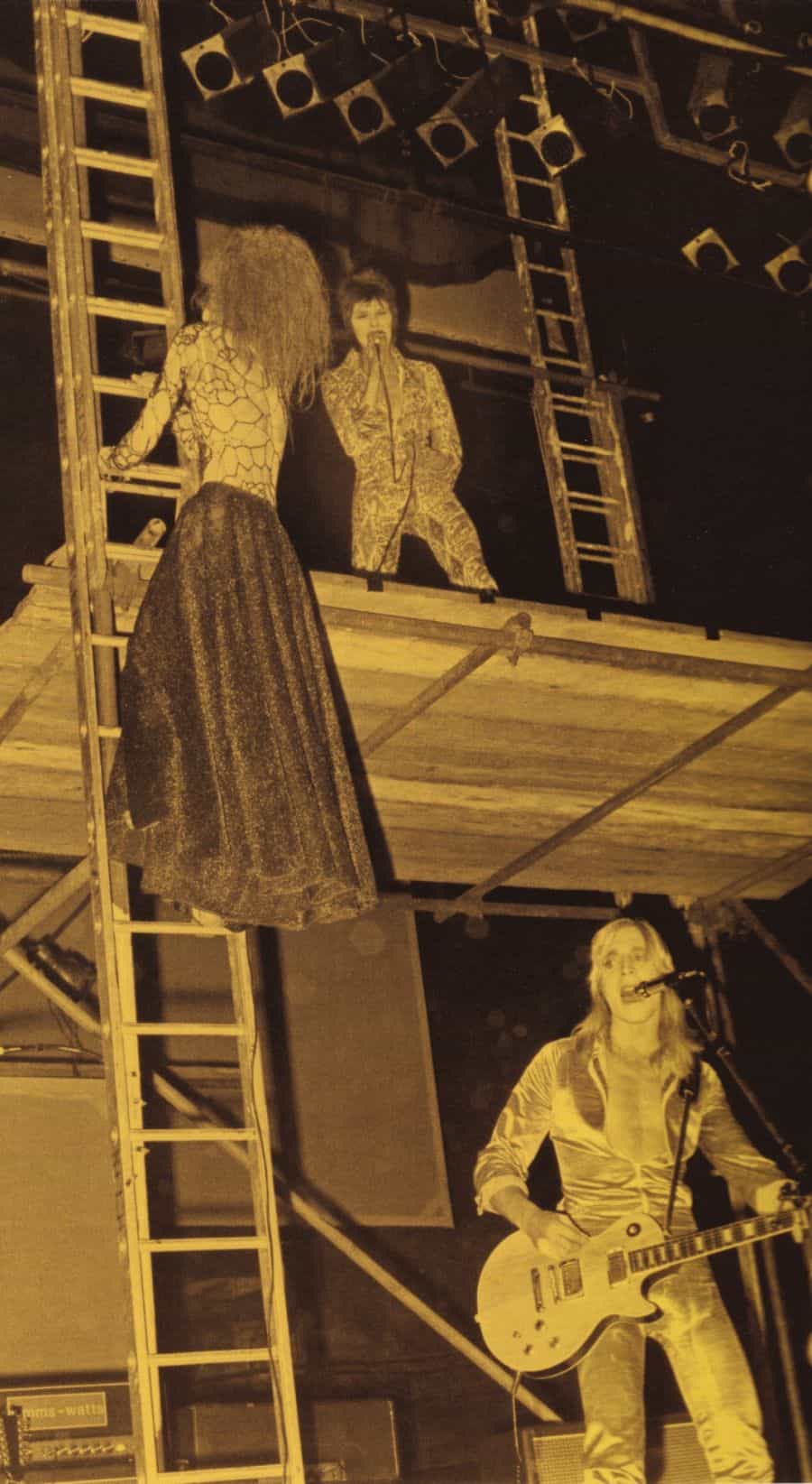
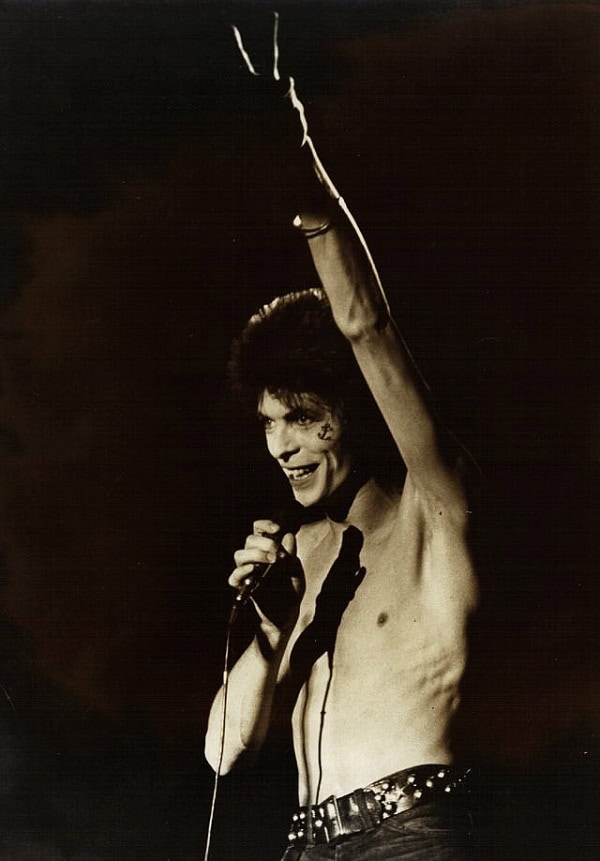
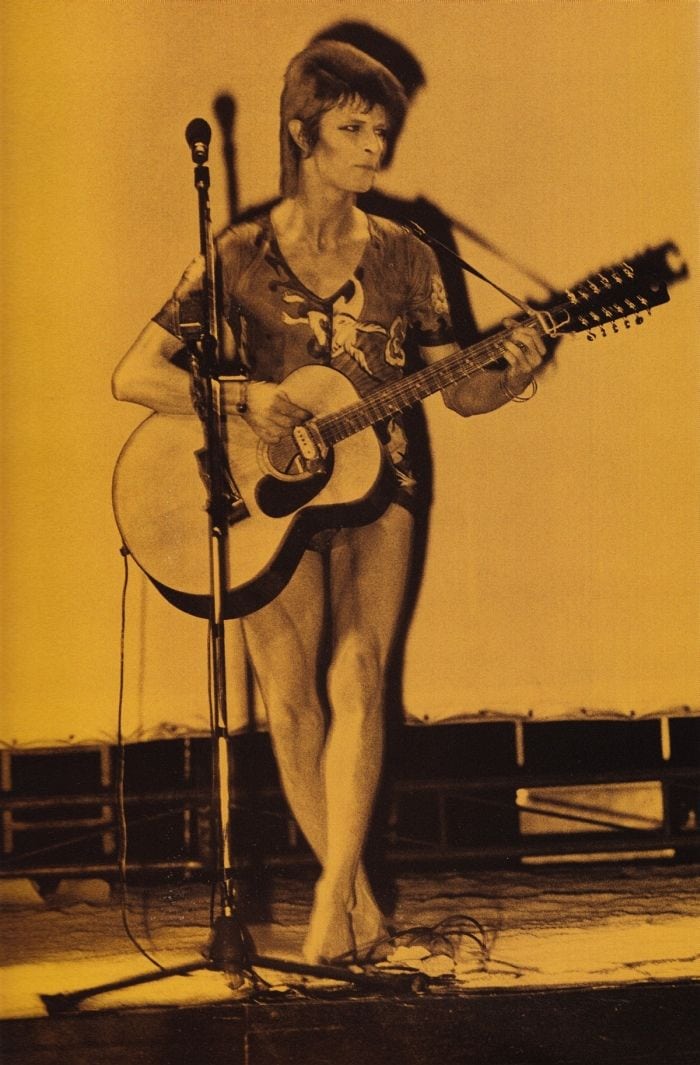
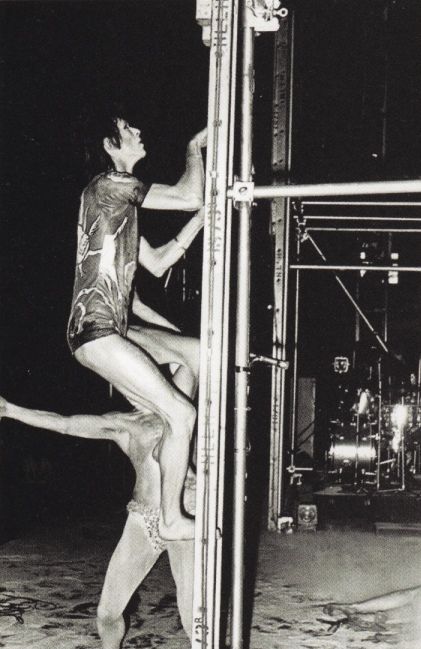
Rainbow Theatre – Archive Booklet
The following digital booklet is retained from the original page.
Concert Setlist – Rainbow Theatre, 19 August 1972
The following external setlist reference allows comparison between the circulating recording and the documented concert programme.
Sound Quality and Recording Characteristics
Awesome Incredible Stupendous is an audience recording with the limitations expected from a tape made in a concert venue in 1972.
The sound is frequently dull and contains considerable background noise. The balance between Bowie's voice, Mick Ronson's guitar and the rhythm section varies throughout the performance.
Nevertheless, the recording remains listenable and preserves the sequence of the concert, including the spoken introductions, dance-theme segment and closing acknowledgements.
The inclusion of these elements is particularly valuable because the Rainbow concert was not simply a sequence of musical performances. It was a carefully staged production in which the theatrical presentation was integrated with the music.
The recording's three-star sound-quality rating reflects its technical limitations while recognising its value as a surviving historical document.
Collector's Notes – From The Hunky Geordie Tapes HUG261CD
Awesome Incredible Stupendous is one of several unofficial releases documenting the Rainbow Theatre concert of 19 August 1972.
This edition is identified as HUG261CD from From The Hunky Geordie Tapes, with artwork credited to Steve23yh.
The recording contains 21 indexed tracks and has a stated running time of 1:27:49. Unlike some other editions of the same concert, it does not append a collection of BBC sessions or miscellaneous studio recordings.
The inclusion of a separately indexed Dance Theme and Band Introductions is an important distinguishing feature of this tracklisting.
The original documentation does not establish a complete tape lineage or demonstrate whether this edition derives from a unique audience source, a previously circulating transfer or a remastered copy of another recording.
Collectors should therefore distinguish between the identity of the concert itself and the provenance of the particular recording used for this release.
Historical Significance – The Rainbow Theatre Experiment
The August 1972 Rainbow Theatre performances occupy an important place in Bowie's transition from a rapidly emerging rock star to a performer whose concerts combined music, character and theatrical design.
The production reunited Bowie with Lindsay Kemp, whose influence had helped shape his understanding of mime, dramatic movement and stage presentation.
It also demonstrated the versatility of the Spiders from Mars. The band moved between forceful rock performances, restrained ballads, extended guitar arrangements and unusual early compositions while supporting a complex theatrical production.
The inclusion of Matthew Fisher on piano added another musical dimension to the performances. His participation also illustrates the changing keyboard personnel associated with Bowie's live work during 1972.
Although the surviving audience tape cannot reproduce the visual spectacle, it preserves the musical structure and spoken moments that formed part of the evening.
For historians, the recording provides evidence of how Bowie was experimenting with the relationship between music and theatre at a decisive point in his career.
About Awesome Incredible Stupendous – 19 August 1972
David Bowie – Awesome Incredible Stupendous documents the Rainbow Theatre concert of 19 August 1972 in an unofficial edition from From The Hunky Geordie Tapes, HUG261CD.
The release contains 21 tracks, beginning with Ode To Joy and concluding with Moonage Daydream, with a stated running time of 1:27:49.
Its sound quality is limited by audience noise and a dull tonal balance, but the recording preserves one of the most ambitious theatrical presentations of Bowie's early career.
The concert featured Bowie, the Spiders from Mars, pianist Matthew Fisher and Lindsay Kemp's theatrical company, combining material from several Bowie albums with compositions associated with Jacques Brel and the Velvet Underground.
As a collector's recording, Awesome Incredible Stupendous is valuable for its documentation of the concert programme, its separate indexing of the dance theme and band introductions, and its preservation of a historically significant performance.
The Rainbow Theatre shows demonstrated how far Bowie had developed the Ziggy Stardust concept by August 1972, anticipating the increasingly elaborate stage presentations that would become a defining part of his subsequent career.
