Ken Fordham – Saxophonist with David Bowie and the Spiders from Mars

Ken Fordham was a saxophonist who became part of David Bowie’s expanded musical circle in 1973, during the final international phase of the Ziggy Stardust era. He joined the enlarged touring ensemble surrounding Bowie and The Spiders from Mars and also contributed to Bowie’s studio work during the same remarkable year.
Fordham’s Bowie association was comparatively brief, but the period in which it took place was extraordinary. During 1973 Bowie toured the United States and Japan, released Aladdin Sane, returned to Britain for the final Ziggy Stardust concerts, ended the touring incarnation of Ziggy at London’s Hammersmith Odeon on July 3, and subsequently released Pin Ups.
Unlike several of Bowie’s better-documented collaborators, relatively little reliable biographical information about Fordham himself has entered the public record. His place in Bowie history therefore rests primarily on surviving recording credits, official Bowie documentation, contemporary tour records and recordings from 1973. Together they establish him as one of the additional musicians who helped broaden Bowie’s sound during the final months of the Spiders from Mars era.
- Name: Ken Fordham
- Profession: Saxophonist
- Born: Date and place not publicly documented
- David Bowie period: 1973
- David Bowie studio connection: Aladdin Sane (1973) and Pin Ups (1973)
- Confirmed Aladdin Sane track credit: Saxophone on Lady Grinning Soul
- Pin Ups credit: Baritone saxophone
- Confirmed Pin Ups track credit: Baritone saxophone on Sorrow
- David Bowie live connection: Member of Bowie’s expanded 1973 touring ensemble alongside the Spiders from Mars
- Documented live instruments: Tenor, baritone and alto saxophones
- Major documented concert: Earl’s Court, London – May 12, 1973
- Historic final Ziggy appearance: Hammersmith Odeon, London – July 3, 1973
- Core Spiders from Mars: Mick Ronson, Trevor Bolder and Mick “Woody” Woodmansey
Ken Fordham – a musician documented through his work
Ken Fordham occupies an unusual position in the documented history of David Bowie’s musicians. His name appears clearly in recording credits and descriptions of Bowie’s 1973 touring ensemble, yet a conventional biography of Fordham is difficult to construct from dependable published information.
Basic details that would normally introduce a musician’s life story – a securely documented date and place of birth, childhood, musical education and a complete account of his early professional career – are not readily available from reliable sources.
For that reason, those gaps should not be filled with assumptions.
What can be documented is substantial enough in its own right. During 1973 Fordham became part of an enlarged Bowie ensemble that combined the established Spiders from Mars with additional instrumentalists and singers. He participated in Bowie’s studio work, performed during the later stages of the Ziggy Stardust tour and subsequently played baritone saxophone on Pin Ups.
His involvement therefore coincided with one of the fastest-moving and most important transitional periods in Bowie’s career.
The Spiders from Mars and the expanded band

Fordham’s position is easiest to understand when a distinction is made between The Spiders from Mars themselves and the additional musicians who later joined Bowie’s touring company.
The core Spiders were guitarist Mick Ronson, bassist Trevor Bolder and drummer Mick “Woody” Woodmansey. Together with Bowie, they formed the central rock band associated with The Rise and Fall of Ziggy Stardust and the Spiders from Mars.
As the Ziggy Stardust tour developed, Bowie increasingly supplemented that original unit with other musicians.
Mike Garson became a particularly important addition on piano. Bowie’s longtime friend Geoffrey MacCormack joined on backing vocals and percussion, while John Hutchinson, who had worked with Bowie during the late 1960s, returned on rhythm guitar.
Wind instruments also became a more substantial part of the stage arrangements. Ken Fordham joined on saxophone, while Brian Wilshaw played saxophone and flute.
This distinction is important. Fordham was not one of the original Spiders from Mars. He was one of the additional musicians who expanded Bowie’s live sound during the later Ziggy Stardust period.
A changing Bowie sound
The expansion of the band was closely connected with the development of Bowie’s music. The earlier Ziggy Stardust concerts had relied heavily on the powerful relationship between Ronson’s guitar, Bolder’s bass and Woodmansey’s drums, with Bowie’s vocals and guitar at the centre.
By late 1972 and early 1973 the musical language surrounding Bowie had broadened. Piano occupied a more important role, backing vocals and additional percussion became more prominent, and extra saxophones created possibilities that the original four-man stage configuration could not provide on its own.
Bowie was himself a saxophonist and had played the instrument since his youth. Adding musicians such as Fordham therefore did not replace Bowie’s own saxophone playing. Instead, it gave the arrangements a wider range of instrumental colours and allowed several saxophone registers to be used within the same musical setting.
Aladdin Sane
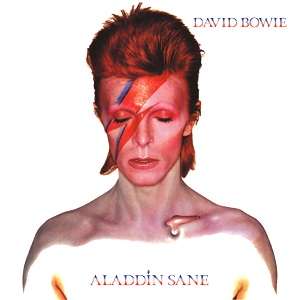
Fordham’s association with Bowie was not restricted to touring. His playing is documented on Aladdin Sane, the album Bowie created while his international success as Ziggy Stardust was accelerating.
The album followed The Rise and Fall of Ziggy Stardust and the Spiders from Mars, but did not simply repeat the musical formula of its predecessor.
The principal rock group remained familiar: Mick Ronson on guitar and piano, Trevor Bolder on bass and Woody Woodmansey on drums. Around them, however, the arrangements became broader and often more adventurous.
Mike Garson‘s piano became central to the album’s identity, most famously on the title track, while saxophone provided another important colour within the record’s expanded instrumental palette.
Fordham’s participation in the album establishes an important point about his role: he was not simply a musician hired to strengthen the touring group. He also participated in Bowie’s studio work during the same period.
Lady Grinning Soul
David Bowie – Lady Grinning Soul
One of Fordham’s specifically documented performances on Aladdin Sane is Lady Grinning Soul, the album’s closing track.
The recording features David Bowie on vocals and acoustic guitar, Mick Ronson on acoustic and electric guitars, Mike Garson on piano, Trevor Bolder on bass and Mick “Woody” Woodmansey on drums.
Ken Fordham is specifically credited with saxophone on the recording.
The track is especially notable for Garson’s dramatic piano and Ronson’s guitar work, but Fordham’s confirmed personnel credit gives us a rare track-level identification of his contribution to Aladdin Sane.
This is important when documenting Fordham’s studio work because Bowie himself also played saxophone. Individual saxophone performances should therefore only be attributed to Fordham when the available personnel information specifically supports that identification.
Studio work and the touring band
Fordham’s studio participation coincided with the transformation of Bowie’s live show. Recording, travelling, rehearsing and performing overlapped throughout this period rather than forming neatly separated chapters.
New compositions entered the concerts while established Ziggy Stardust material remained central to the repertoire.
Fordham consequently joined a working band that had to move between the direct rock attack of the established Ziggy show and the increasingly piano- and saxophone-rich arrangements associated with Aladdin Sane.
Bowie US Tour II – February 1973
In February 1973 Bowie returned to the United States with the enlarged group. The official David Bowie archive records that the concerts were advertised as “Bowie US Tour II”.
This is worth noting because the 1973 concerts are sometimes retrospectively called the “Aladdin Sane Tour”. Although songs from Aladdin Sane became increasingly prominent, the tour remained a continuation of the Ziggy Stardust touring cycle.
The new American leg opened at Radio City Music Hall in New York. For Fordham, these performances provide particularly valuable documentation because Bowie himself referred to him from the stage.
Radio City Music Hall – February 14, 1973
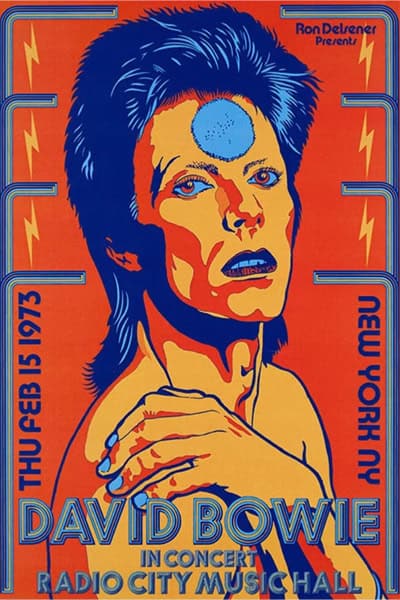
On February 14, 1973, Bowie performed the first of two nights at Radio City Music Hall.
The concerts were important in Bowie’s continuing rise in the United States and introduced new stage costumes, songs and members of the expanded band.
A surviving audience recording captures Bowie speaking to the crowd and introducing some of the musicians who had recently joined him. Fordham is named directly.
David Bowie on Ken Fordham
“a very quick one is Ken Fordham who’s very quick but a little bit tired”
— David Bowie, Radio City Music Hall, New York, February 14, 1973
The remark is brief and informal, but historically valuable. It captures Bowie naming Fordham while the collaboration was actually taking place rather than in a later recollection.
Bowie also referred to other additions to his musical circle during the introduction, placing Fordham within the enlarged ensemble assembled for the 1973 performances.
The developing 1973 repertoire
The American concerts demonstrated how rapidly Bowie’s repertoire had developed. Established material such as Ziggy Stardust, Changes, Moonage Daydream, Five Years and Space Oddity was performed alongside newer songs associated with Aladdin Sane.
The expanded ensemble allowed Bowie to retain the power of the original Spiders while introducing the piano, backing vocals, percussion and additional saxophones required by the developing arrangements.
Japan – April 1973

After the American dates, Bowie’s touring schedule continued to Japan in April 1973.
This was Bowie’s first Japanese concert tour and another important stage in the international expansion of the Ziggy Stardust phenomenon.
The concerts continued to combine established Ziggy Stardust material with songs from Aladdin Sane, illustrating how closely the two phases overlapped in live performance.
Reliable first-person testimony from Fordham describing his experiences in Japan has not been identified. His personal impressions of the country, audiences and tour should therefore not be reconstructed through assumption.
Return to Britain
Following Japan, Bowie returned to Britain for the final substantial phase of the Ziggy Stardust tour.
By then Aladdin Sane had been released and Bowie was operating on a far larger scale than when the Ziggy concerts had begun. The stage presentation had become increasingly elaborate and the touring ensemble had expanded accordingly.
One of the best-documented performances from this phase took place at Earl’s Court in London on May 12, 1973.
Earl’s Court – May 12, 1973
David Bowie – Earl’s Court, London, May 12, 1973
The Earl’s Court concert is especially important for documenting Fordham because the official David Bowie archive has published a detailed personnel list for the performance.
The ensemble included Bowie, Mick Ronson, Trevor Bolder, Woody Woodmansey, Mike Garson, Brian Wilshaw, Ken Fordham, John Hutchinson and Geoffrey MacCormack.
Most importantly for Fordham’s individual history, his instruments are specified as tenor saxophone, baritone saxophone and alto saxophone. Brian Wilshaw is separately listed on tenor saxophone and flute.
This is important evidence because it establishes Fordham not simply as a generic “saxophonist”, but as a musician capable of covering several saxophone registers within Bowie’s expanded live arrangements.
The Earl’s Court ensemble
The Earl’s Court personnel provide a useful snapshot of how far Bowie’s touring band had developed from the original Ziggy configuration.
David Bowie – vocals, 12-string acoustic guitar, Minimoog, percussion, harmonica
Mick Ronson – lead guitar, backing vocals
Trevor Bolder – bass guitar, backing vocals
Mick “Woody” Woodmansey – drums
Mike Garson – piano, Mellotron
Brian Wilshaw – tenor saxophone, flute
Ken Fordham – tenor, baritone and alto saxophones
John Hutchinson – rhythm guitar, backing vocals
Geoffrey MacCormack – percussion, backing vocals
The core Spiders remained the rhythmic and guitar foundation, but the additional musicians allowed Bowie to present increasingly complex arrangements without losing the force of the original band.
The final British Ziggy performances
The British tour continued through May and June and into the opening days of July. For audiences, these remained Ziggy Stardust performances, but Bowie was already moving creatively beyond the persona and towards the next stage of his career.
The public did not know that the touring incarnation of Ziggy Stardust was approaching its end. That became clear only at the final scheduled concert.
Hammersmith Odeon – July 3, 1973
David Bowie – Ziggy Stardust, Hammersmith Odeon, London, July 3, 1973
On July 3, 1973, Bowie and the touring ensemble appeared at Hammersmith Odeon in London.
The show became one of the defining concerts in Bowie history. It was the final performance of the Ziggy Stardust tour and was filmed by American filmmaker D. A. Pennebaker.
Fordham belonged to the expanded musical ensemble associated with this final touring phase, placing him within the group surrounding Bowie as the Ziggy Stardust era reached its historic conclusion.
The end of Ziggy Stardust
Near the end of the Hammersmith concert, before Rock ‘n’ Roll Suicide, Bowie made the announcement that transformed the historical meaning of the evening.
He told the audience that the concert was the final show of the tour and also the last show “we’ll ever do”.
Many listeners initially interpreted the statement as Bowie’s retirement from live performance. Instead, it marked the end of the Ziggy Stardust touring structure and, in practical terms, the end of the classic Spiders from Mars era.
For Fordham, Hammersmith also marked the conclusion of the principal live chapter of his documented Bowie association.
The Pennebaker film and soundtrack
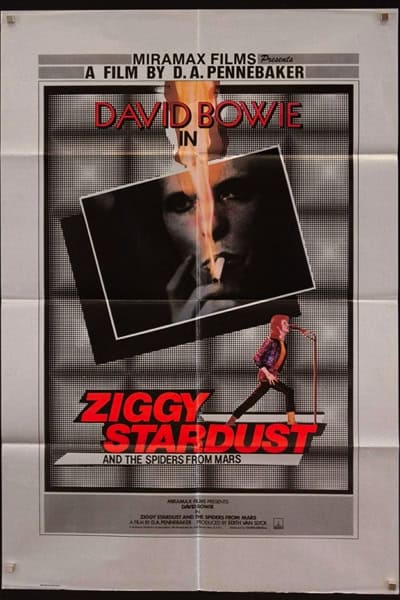
D. A. Pennebaker’s footage gave the Hammersmith performance a lasting archival importance. For musicians such as Fordham, about whom relatively little personal biographical material survives, filmed and recorded performances are especially valuable evidence.
The concert was eventually released in film and soundtrack form as Ziggy Stardust and the Spiders from Mars, preserving the expanded live sound of Bowie’s final Ziggy Stardust performance for later generations.
The documentation surrounding the concert reinforces Fordham’s place within the wider musical company that surrounded Bowie during the final phase of the tour.
After the Ziggy tour
The end of the Ziggy Stardust tour did not immediately end Fordham’s professional relationship with Bowie.
Only weeks later Bowie began another studio project, and Fordham was among the musicians retained from the Aladdin Sane period.
That album was Pin Ups.
Pin Ups
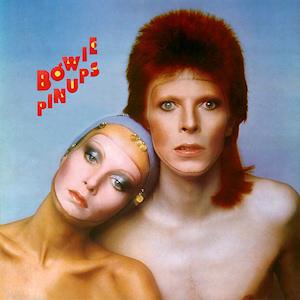
Pin Ups was built around Bowie’s interpretations of songs associated principally with the British music scene of the mid-1960s.
Instead of recording another album of newly written Bowie compositions, Bowie revisited material associated with artists and groups whose records had formed part of the musical environment in which his own early career developed.
The project retained several musicians from the preceding period. Mick Ronson remained on guitar and piano, Trevor Bolder on bass, Mike Garson on keyboards and Geoffrey MacCormack on backing vocals.
Woody Woodmansey was no longer behind the drum kit; Aynsley Dunbar played drums.
Ken Fordham was also retained from Aladdin Sane.
Fordham’s Pin Ups role
The official David Bowie personnel listing for Pin Ups gives Fordham a very specific instrumental credit: baritone saxophone.
Bowie himself is credited with vocals, guitar, tenor and alto saxophone, harmonica, arrangements, backing vocals and Moog synthesiser.
Fordham’s baritone saxophone therefore occupied a lower register than Bowie’s credited tenor and alto instruments, allowing several saxophone voices to form part of the album’s arrangements.
The credit also demonstrates the continuity between Aladdin Sane, the 1973 tour and Pin Ups. Fordham’s Bowie work moved between studio and stage rather than consisting of a single isolated engagement.
Sorrow

One of Ken Fordham‘s specifically documented contributions to the Pin Ups sessions is Sorrow, the only single released from the album.
The recording featured David Bowie on vocals, 12-string acoustic guitar and tenor saxophone, with Mick Ronson on electric guitar and vocals, Mike Garson on piano, Trevor Bolder on bass, Aynsley Dunbar on drums and Geoff MacCormack on backing vocals.
Ken Fordham is specifically credited with baritone saxophone on the recording, complementing Bowie’s own tenor saxophone contribution. Additional session musicians provided violin, viola and cello.
Sorrow was recorded in July 1973 and released as a single on October 12, 1973. It reached number three on the UK Singles Chart and became one of the best-known recordings from Pin Ups.
For Fordham’s history, the personnel credit is particularly valuable because it provides a clearly documented example of Bowie and Fordham both playing saxophone on the same recording, but in different registers.
Bowie and Fordham on saxophone
The documented personnel for Sorrow illustrates an interesting aspect of Fordham’s role in Bowie’s music.
Bowie had been a saxophonist since his youth and continued playing the instrument throughout his career. Fordham was therefore not brought into Bowie’s musical world because Bowie himself could not play saxophone.
Instead, the use of additional saxophonists allowed Bowie to build arrangements across different registers.
On Sorrow, Bowie is credited with tenor saxophone while Fordham plays baritone. The track therefore provides a particularly clear example of the way their instruments could complement one another.
October 1973 – Pin Ups released
The Sorrow single appeared on October 12, 1973, followed by Pin Ups in the United Kingdom on October 19, 1973.
The album reached number one on the UK album chart.
Its release came little more than three months after the final Ziggy Stardust concert at Hammersmith Odeon, illustrating the extraordinary speed with which Bowie moved from one project to another during 1973.
For Fordham, Pin Ups became the final major studio project of his clearly documented Bowie association.
From Aladdin Sane to Pin Ups
Taken together, Fordham’s 1973 studio and touring work gives him a more substantial place in Bowie history than the description “tour saxophonist” alone might suggest.
His saxophone is specifically documented on Lady Grinning Soul. He became part of the expanded touring ensemble surrounding the Spiders from Mars. At Earl’s Court he was documented on tenor, baritone and alto saxophones. And during the Pin Ups sessions he played baritone saxophone, including a specific credit on Sorrow.
Studio and stage therefore form a continuous sequence within Fordham’s documented Bowie work during 1973.
Why Fordham is sometimes overlooked
There are understandable reasons why Ken Fordham receives less attention in accounts of the Ziggy Stardust period.
Ronson, Bolder and Woodmansey were the central Spiders from Mars and were strongly identified with Bowie’s visual and musical breakthrough. Mike Garson‘s remarkable piano work on Aladdin Sane made him one of the most recognisable instrumental collaborators of the period, while Geoffrey MacCormack later documented his friendship and travels with Bowie extensively.
Fordham, by contrast, left behind no comparable body of published recollections that has been reliably identified.
His role therefore has to be reconstructed predominantly through recording credits, official documentation and contemporary performance evidence.
Ken Fordham‘s documented Bowie timeline
Early 1973
Fordham becomes part of Bowie’s expanded musical circle during the period surrounding
Aladdin Sane and the continuing Ziggy Stardust tour.
January 1973
Lady Grinning Soul is recorded. Fordham is specifically credited with saxophone
on the track.
February 14, 1973
Fordham performs at Radio City Music Hall in New York during the opening of Bowie US Tour II.
Bowie introduces him by name from the stage.
February–March 1973
Fordham performs as part of Bowie’s expanded touring ensemble during the American phase
of the 1973 tour.
April 1973
The continuing Ziggy Stardust tour reaches Japan, while Aladdin Sane is released
during the same month.
May 12, 1973
Fordham performs at Earl’s Court in London. The official Bowie personnel listing credits
him with tenor, baritone and alto saxophones.
May–July 1973
Fordham remains associated with the expanded ensemble during the closing British phase
of the Ziggy Stardust tour.
July 3, 1973
The final Ziggy Stardust tour performance takes place at Hammersmith Odeon in London and
is filmed by D. A. Pennebaker.
July 1973
Sorrow is recorded for Pin Ups. Fordham is specifically credited with
baritone saxophone, while Bowie plays tenor saxophone.
October 12, 1973
Sorrow is released as the only single from Pin Ups.
October 19, 1973
Pin Ups is released in the United Kingdom with Fordham credited on baritone
saxophone.
Why Ken Fordham matters in Bowie history
Fordham’s importance should neither be exaggerated nor overlooked.
He was not an original Spider from Mars and there is no reason to portray him as a dominant creative force comparable with Mick Ronson or as a long-term collaborator who repeatedly returned throughout Bowie’s career.
His documented contribution is more precise.
He was one of the musicians Bowie added when the Ziggy Stardust touring sound expanded. He worked within an ensemble that required tenor, alto and baritone saxophones. He contributed to Aladdin Sane, with a specific saxophone credit on Lady Grinning Soul. He participated in the final phase of the Ziggy Stardust tour and subsequently played baritone saxophone on Pin Ups, including the hit single Sorrow.
Those achievements establish a clear and meaningful place in Bowie’s musical history without requiring speculation about the parts of Fordham’s life that remain undocumented.
Legacy
Ken Fordham‘s story illustrates an important aspect of David Bowie’s working methods. Behind the instantly recognisable public personas and famous core bands stood a wider network of musicians who entered Bowie’s creative world when particular arrangements, instruments or live productions demanded them.
Fordham became one of those musicians during 1973.
His contribution can be followed through several unusually strong pieces of documentation: his saxophone credit on Lady Grinning Soul, Bowie’s own onstage introduction at Radio City Music Hall, the detailed Earl’s Court personnel list identifying him on tenor, baritone and alto saxophones, and his baritone saxophone work on Pin Ups and Sorrow.
His personal biography remains elusive, but his professional contribution to Bowie’s 1973 musical world is firmly documented.
For that reason, Ken Fordham deserves a distinct place within the David Bowie Collaborations & Creative Circle Archive: not as an original Spider from Mars, but as one of the additional musicians who helped shape the expanded sound of Bowie’s final Ziggy Stardust year.
Official Website & Further Information
No verified official personal website for Ken Fordham has been identified.
Further documentation of his work can be found in official David Bowie archival material and in detailed recording documentation for Aladdin Sane, Lady Grinning Soul, Pin Ups and Sorrow.
Article Origin
This article was researched and written for DavidBowieWorld.com as part of the David Bowie Collaborations & Creative Circle Archive.
The article is based on documented recording personnel, official David Bowie archival material, contemporary concert documentation and detailed Bowie recording research. Where the available evidence does not establish details of Ken Fordham‘s personal history, those details have deliberately not been reconstructed through assumption.
The aim of this page is to document Fordham’s confirmed contribution to David Bowie’s music and touring history while maintaining a clear distinction between established fact and information that remains unknown.
© DavidBowieWorld.com — David Bowie Collaborations & Creative Circle Archive.

I was a friend of Mark Fordham, and his sister, Claire Cross in Weymouth, Dorset.
They had a substantially more famous sibling in Julia Fordham, who was a star in her own right in the late ‘80s/ early ‘90s.
She moved from Weymouth to Hayling Island (near Portsmouth), now presumably in a bigger city somewhere.
Fordham is not a common name, so I wonder if there’s any connection? Sadly I lost contact with that family some years ago, but Julia will still be contactable.