
Matthew Fisher – Piano at Bowie’s Rainbow Theatre Shows
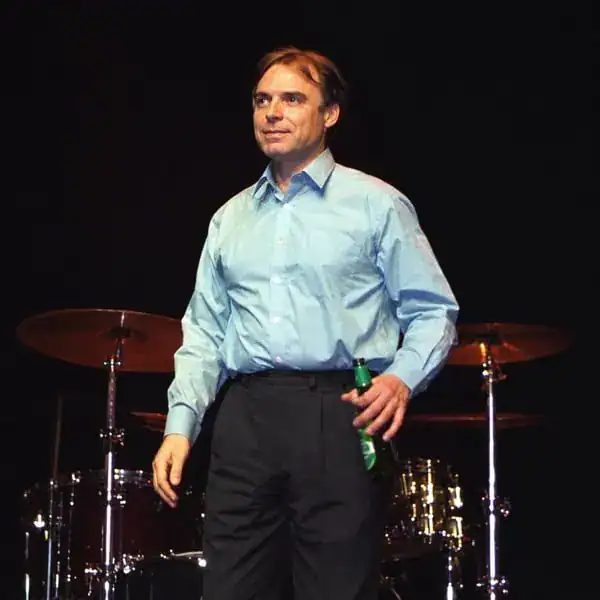
Matthew Fisher played piano with David Bowie and the Spiders from Mars at two concerts at London’s Rainbow Theatre on 19 and 20 August 1972. Already known for his work as Procol Harum’s organist, Fisher joined Bowie’s live group for this brief engagement during the rise of Ziggy Stardust.
The Rainbow performances presented Ziggy Stardust on a larger theatrical scale. Fisher’s contribution belongs specifically to those two shows: he did not record the Ziggy Stardust studio album or join Bowie’s continuing tour.
- Full name: Matthew Charles Fisher
- Born: 7 March 1946
- Birthplace: Addiscombe, Croydon, Surrey, England
- Instrument with Bowie: Piano on selected songs
- Bowie performances: Two concerts
- Dates: 19 and 20 August 1972
- Venue: Rainbow Theatre, Finsbury Park, London
- Performing group: David Bowie and the Spiders from Mars
- Other major association: Procol Harum
- Scope of Bowie collaboration: The two Rainbow Theatre shows
Before Bowie: Procol Harum
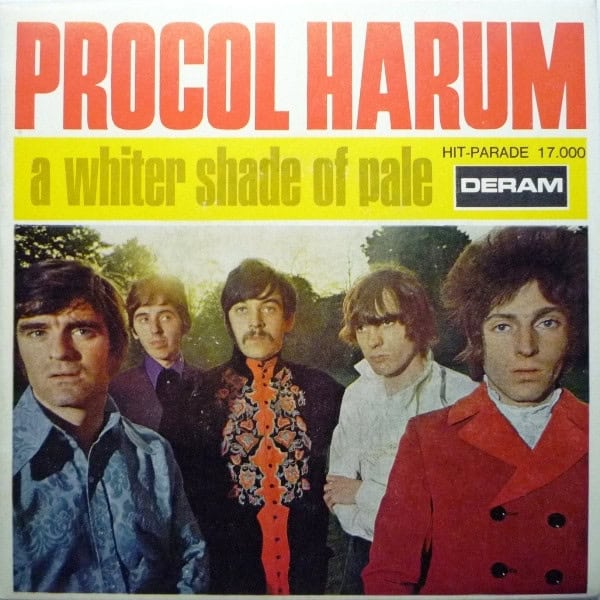
Fisher was known as the organist of Procol Harum before his appearances with Bowie. Born in Addiscombe, Croydon, in 1946, he studied piano and developed a strong interest in the sound of the Hammond organ.
Fisher joined Procol Harum in 1967. His organ playing became a defining element of the group’s debut single, “A Whiter Shade of Pale”. He performed on its first three albums: Procol Harum, Shine on Brightly and A Salty Dog. He also produced A Salty Dog.
Fisher left the group in 1969. By the time he appeared with Bowie in August 1972, he had worked as a keyboard player, composer and producer. His Rainbow Theatre credit is for piano, although his best-known Procol Harum performance was played on the Hammond organ.
August 1972: Bowie’s Rainbow Theatre concerts
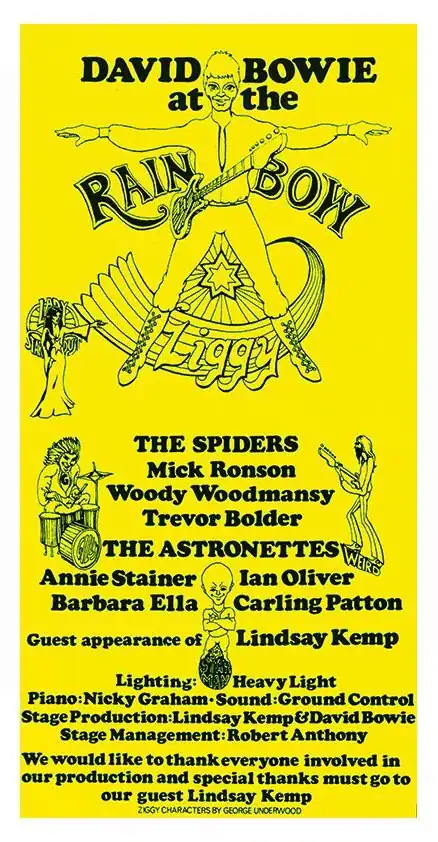
By August 1972, Bowie had released The Rise and Fall of Ziggy Stardust and the Spiders from Mars, and “Starman” had brought him a wider audience. The concerts on Saturday 19 and Sunday 20 August gave the developing stage production a prominent London setting. Contemporary reporting stated that the second performance was added after the first had sold out.
The core Spiders from Mars were Mick Ronson on guitar, Trevor Bolder on bass and Mick “Woody” Woodmansey on drums. Fisher joined them on piano for selected songs at the two Rainbow performances. The concerts drew on Bowie’s existing repertoire while expanding the presentation of the Ziggy Stardust character.
Bowie’s live group did not retain the same keyboard player throughout 1972. Fisher’s appearance at the Rainbow was one brief part of that changing line-up, rather than the start of a permanent position with the Spiders.
Fisher’s own account: two shows, not a tour
In a 2012 interview, Fisher was asked whether he had toured with Bowie. He rejected that description and recalled playing two gigs at the Rainbow Theatre in Finsbury Park around the time “Starman” was a hit.
Matthew Fisher on his Bowie appearances
“People keep saying that but I just did two gigs”
— Matthew Fisher, interview with DMME, 2012
Fisher’s first-hand account establishes the extent of his involvement more clearly than a general list of musicians associated with the Ziggy Stardust period. It also distinguishes these live appearances from participation in Bowie’s studio recordings.
In the same interview, Fisher remembered Roxy Music as the support act at the Rainbow. He also corrected another possible mix-up: he attended Bowie’s later Hammersmith Odeon concert, where Jeff Beck appeared, but was there as a member of the audience. His memories distinguish the two Rainbow performances from that separate Bowie event.
Ken Scott’s introduction and Bowie’s first call
In personal recollections supplied to DavidBowieWorld.com, Fisher explained that Ken Scott had recommended him to Bowie. Scott had produced Hunky Dory and had also been the engineer on Procol Harum’s A Salty Dog, an album Fisher had produced. The connection therefore came through someone who had worked with both musicians.
Fisher remembered initially doubting that the caller really was Bowie. He thought it might be Procol Harum roadie John “Kelloggs” Kalinowsky playing a joke on him. Once convinced, he immediately told Bowie how much he liked Mott the Hoople’s “All the Young Dudes”. In his account, Fisher recalled Bowie’s songwriting credit and was less certain about the production credit.
Rehearsals at the Rainbow
Fisher recalled rehearsing at the Rainbow shortly before the concerts. Around this time, Bowie telephoned again while Fisher was out. His first wife, Linda, who was pregnant with their oldest son, Peter, hurried upstairs to answer the call and was out of breath. Fisher remembered that Bowie kindly told her to relax and recover her breath before continuing the conversation.
When he was not needed on stage during rehearsals, Fisher went down to sit in the stalls. Although familiar with many of Bowie’s records, he had never seen him perform live. Hearing him in the theatre left Fisher particularly impressed by the power of his voice.
Some recorded performances had previously given Fisher the impression of a casual delivery, occasionally with uncertain tuning. Watching the rehearsals changed his understanding: he came to regard those choices as deliberate and controlled.
Matthew Fisher on Bowie’s singing
“I realised that when it came to his singing, everything he did was quite deliberate and controlled. Nothing was accidental.”
— Matthew Fisher, personal recollections supplied to DavidBowieWorld.com
His piano parts and the “Starman” moment
David Bowie – “Starman”, Rainbow Theatre, London, 19 August 1972. The “Over the Rainbow” moment recalled by Fisher below took place on the following evening.
Fisher’s new account clarifies that he did not play on every song. His contribution was mainly to a few rock ’n’ roll numbers, including Lou Reed’s “Waiting for the Man” and Bowie’s “Suffragette City”. He also remembered Mick Ronson playing piano on a couple of songs, including “Lady Stardust”.
Fisher particularly liked the “Starman” record and asked whether he could play on that song. His request was granted. He recalled that on the second night, 20 August 1972, Bowie and he moved into “Over the Rainbow” after Bowie sang “There’s a Starman, over the Rainbow”. According to Fisher, the audience received the moment very warmly.
Matthew Fisher on playing “Starman”
“I asked if I could play on ‘Starman’ as I really liked the record and my request was granted.”
— Matthew Fisher, personal recollections supplied to DavidBowieWorld.com
These recollections identify specific songs on which Fisher played and distinguish his piano contribution from Ronson’s. They also provide Fisher’s own account of a musical exchange during the second concert, beyond the simple credit of pianist at the two Rainbow shows.
A conversation that inspired “Strange Days”
Fisher remembered Bowie’s conversation as being full of phrases that sounded like potential song titles. One remark stayed with him: “Oh, yes! Those were Strange Days”. Fisher explained that the phrase eventually inspired him to write his own song, “Strange Days”.
Matthew Fisher on Bowie’s conversation
“Who knows, if I’d spent more time in his company maybe I’d have written a few more songs.”
— Matthew Fisher, personal recollections supplied to DavidBowieWorld.com
After the Rainbow shows
Bowie’s keyboard line-up changed again after the Rainbow performances. Mike Garson joined later in 1972 and began a much longer association with Bowie.
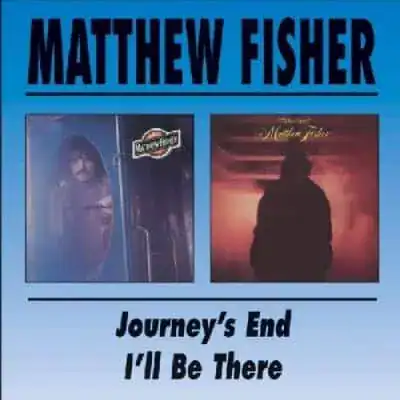
Fisher followed his own musical path. His first solo album, Journey’s End, appeared in 1973. His later work included further solo recordings, songwriting, production and engineering. He returned to Procol Harum, performing with the group again from 1991 until 2004.
His work around this period also reached beyond his own records. Fisher contributed to sessions with Jerry Lee Lewis and produced guitarist Robin Trower’s 1973 debut album, Twice Removed from Yesterday. These projects place the brief Rainbow engagement among several different musical commitments in the early 1970s.
Recognition for A Whiter Shade of Pale
Fisher’s contribution to Procol Harum’s “A Whiter Shade of Pale” later became the subject of a dispute over authorship of the music. The dispute concerned the organ melody he had created for the 1967 recording.
A final House of Lords judgment in 2009 upheld his recognition as a co-author of the music and his share of the musical copyright. This later recognition forms part of Fisher’s Procol Harum history; it does not change the nature or length of his 1972 work with Bowie.
Official Website & Further Information
Information about Fisher’s work with Procol Harum, his solo music and his other projects is available through his official website: matthewfisher.com .
Article Origin
This article was researched and written for DavidBowieWorld.com and updated with personal recollections supplied by Matthew Fisher in response to correspondence about the page. His account adds details of Ken Scott’s introduction, Bowie’s telephone calls, the Rainbow rehearsals, his piano contributions and the inspiration for “Strange Days”.
The article also draws on Fisher’s published first-hand interview and contemporary reporting of the Rainbow concerts. Details of his Procol Harum career were checked against the Procol Harum archive and published records of the authorship judgment.
© DavidBowieWorld.com — David Bowie Collaborations & Creative Circle Archive.
