
David Bowie & John “Hutch” Hutchinson (1969)
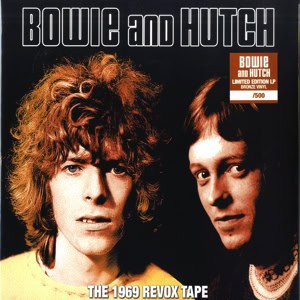
Few musicians witnessed David Bowie’s artistic transformation as closely as guitarist and vocalist John “Hutch” Hutchinson. Their friendship stretched back to the mid-1960s and developed through several distinct phases of Bowie’s early career, from London’s beat-group circuit to experimental theatre, acoustic performance and the creation of Space Oddity.
Although their documented collaboration was relatively brief, Hutchinson occupied a unique position within Bowie’s development. Unlike many later collaborators who joined established tours or recording sessions, Hutchinson worked alongside Bowie before international success, during a period when Bowie was still searching for the artistic direction that would define his career.
Together they performed as an acoustic duo, recorded early home demos, participated in the original two-voice arrangement of Space Oddity and created the Mercury Demo tape that helped Bowie obtain a recording contract. Those recordings preserve Bowie at a pivotal moment, when many of the ideas that would shape his second album were still evolving.
This page follows the complete story of John Hutchinson‘s collaboration with David Bowie, placing their work within its historical context while distinguishing carefully between documented fact, officially released recordings and later recollections.
- Full name: John “Hutch” Hutchinson
- Born: 1941
- Died: 19 April 2021, aged 79
- Known for: Guitarist, vocalist and long-time friend of David Bowie
- First collaboration with Bowie: The Buzz (1966)
- Later collaborations: Feathers, the Bowie & Hutch acoustic duo and the Ziggy Stardust touring band (1973)
- Historic recordings: The Clareville Grove Demos, the Love You Till Tuesday version of Space Oddity and The Mercury Demos
- Most famous contribution: Performing the Ground Control passages opposite Bowie’s Major Tom in early duet versions of Space Oddity
- Returned to Bowie’s band: Hutchinson played guitar and sang backing vocals during part of the Ziggy Stardust tour in 1973
- Memoir: Bowie & Hutch
- Historical importance: One of Bowie’s earliest professional collaborators and an important participant in the development and early performance history of Space Oddity
John Hutchinson before David Bowie
Long before his name became associated with Space Oddity, John Hutchinson had established himself as an experienced guitarist within London’s rapidly changing music scene. During the early and mid-1960s, hundreds of young musicians moved between beat groups, rhythm and blues bands and club residencies, often performing with several different line-ups before finding lasting success. Hutchinson belonged to that generation of versatile musicians whose careers developed within the thriving live circuit that surrounded London during the British beat boom.
Unlike David Bowie, whose artistic ambitions increasingly extended beyond conventional pop music into theatre, mime and songwriting, Hutchinson earned a reputation primarily as a dependable guitarist and vocalist. His musical background gave him a solid understanding of harmony singing and acoustic accompaniment, qualities that would later become essential to the recordings he made with Bowie.
Although Hutchinson never pursued the level of public recognition achieved by Bowie, his musicianship and adaptability enabled him to work comfortably in changing musical environments. Those qualities would become particularly valuable during the experimental period that followed Bowie’s departure from straightforward rhythm and blues towards a more personal style of songwriting.
The Buzz
John “Hutch” Hutchinson first worked professionally with David Bowie in 1966. Following the end of Bowie’s association with The Lower Third, auditions were organised in London for a new group that would accompany him during live performances. Hutchinson, who had recently returned to Britain after working as a musician in Scandinavia, heard that a guitarist was required and attended an audition at the Marquee Club.
Hutchinson brought his Fender Telecaster to the audition and impressed Bowie with his guitar playing, including his ability to perform the driving rhythm-and-blues style associated with Bo Diddley. He was offered the position and became the lead guitarist in the newly assembled backing group.
By this time, Bowie was already performing professionally under the name David Bowie. He had adopted the name during 1965 and released Can’t Help Thinking About Me under that name in January 1966. The Buzz therefore belonged to the beginning of his career as David Bowie rather than to his earlier period as David Jones.
The principal line-up assembled around Bowie consisted of:
- David Bowie — vocals, guitar and saxophone
- John “Hutch” Hutchinson — lead guitar and vocals
- Derek “Dek” Fearnley — bass guitar
- John “Ego” Eager — drums
- Derrick “Chow” Boyes — keyboards
The name The Buzz was suggested by Radio London disc jockey Earl Richmond. Unlike The Lower Third, whose members had regarded themselves as an independent group with Bowie as their singer, The Buzz was organised specifically as Bowie’s backing band. Hutchinson later identified this as an important change in the way Bowie presented himself professionally.
John Hutchinson on joining The Buzz
“We understood we’d been hired to back an up-and-coming singer.”
— John “Hutch” Hutchinson, interviewed for Uncut
Hutchinson explained that Bowie regarded The Lower Third as a self-contained four-piece group with a lead singer, whereas The Buzz represented a move towards Bowie operating as a solo performer supported by musicians selected for his own act. The group members understood from the beginning that they had been recruited to accompany Bowie’s developing career.
The Buzz began performing with Bowie in February 1966. During the spring, they appeared at clubs and concert venues around Britain and became the regular band for the series of Sunday-afternoon performances known as The Bowie Showboat. These Radio London-sponsored shows were held at the Marquee Club between April and June 1966 and gave Bowie an opportunity to present himself as the central attraction in a programme built around his own name.
The group’s live repertoire combined Bowie’s own compositions with rhythm-and-blues, soul and contemporary pop material. Hutchinson later remembered that Bowie’s songs were already noticeably different from much of the current chart music. Their structures could be unusual, but Hutchinson’s experience as a guitarist and harmony singer enabled him to adapt to Bowie’s developing material.
The musicians were also given a coordinated visual identity. Hutchinson recalled that the members of The Buzz wore matching checked shirts and beige trousers, while Bowie dressed differently so that he remained visually distinct from his backing musicians. This early attention to the appearance of the complete group anticipated the increasingly deliberate visual presentation Bowie would develop throughout his later career.
Hutchinson’s period with The Buzz lasted only several months. By June 1966, he had family and financial responsibilities and could not depend upon the limited and uncertain income provided by the group. He left the band and returned to a more secure working life. Guitarist Billy “Haggis” Gray subsequently replaced him, making his first documented appearance with the group in July.
Hutchinson therefore did not remain with The Buzz throughout the whole of its existence. The group continued working with Bowie during the remainder of 1966, while Bowie increasingly moved away from the rhythm-and-blues-based approach that had characterised his earlier bands.
Although Hutchinson’s first period with Bowie was brief, it established a friendship and musical understanding that survived his departure. Unlike many musicians connected only with one of Bowie’s early groups, Hutchinson later returned to work with him in the mixed-media trio Feathers, in the Bowie and Hutch acoustic duo and, eventually, during the final phase of the Ziggy Stardust tour in 1973.
Different Artistic Directions
By the latter half of 1966, David Bowie had become increasingly dissatisfied with the limitations of the British beat-group format. Although he remained determined to succeed as a recording artist, he no longer believed that simply forming another rhythm and blues band would allow him to achieve the artistic identity he was seeking.
Instead, Bowie began exploring a much broader range of creative influences. Literature, theatre, contemporary art and experimental performance all became increasingly important to his work. This period also marked the beginning of his association with the mime artist Lindsay Kemp, whose teaching encouraged Bowie to think about movement, gesture and visual storytelling as essential parts of musical performance rather than separate disciplines.
These new interests gradually transformed Bowie’s approach to songwriting. Rather than concentrating solely on commercially accessible pop songs, he became increasingly interested in character-driven narratives, dramatic structure and more personal subject matter. Many of these ideas would later become central to compositions such as Space Oddity, Cygnet Committee and Wild Eyed Boy from Freecloud.
John Hutchinson did not participate directly in Bowie’s theatrical studies, yet their friendship remained intact throughout this period of experimentation. Unlike many musicians from Bowie’s earlier bands who disappeared from his professional life, Hutchinson remained someone Bowie trusted both personally and musically. That continuing friendship would prove significant when Bowie later began performing acoustic material and required a guitarist capable of supporting more intimate vocal arrangements.
The artistic changes that began during 1966 therefore formed an essential bridge between Bowie’s beat-group years and the more experimental projects that followed. They eventually led to the formation of Feathers, where Bowie, Hutchinson and Hermione Farthingale combined acoustic music with elements of theatre and performance in a way that reflected Bowie’s rapidly evolving artistic ambitions.
From Turquoise to Feathers
During 1968, David Bowie attempted to bring together the different artistic disciplines that had become increasingly important to him. His work with mime artist Lindsay Kemp had encouraged him to combine music with movement, character, poetry and theatrical presentation rather than treating songs as isolated performances.
Bowie initially developed these ideas through a mixed-media trio called Turquoise. The original line-up consisted of Bowie, dancer and vocalist Hermione Farthingale and guitarist Tony Hill, who had previously played with The Misunderstood. This was the group that first performed and recorded Ching-a-Ling in October 1968.
Turquoise was not organised as a conventional electric rock band. Its performances combined acoustic music with poetry, mime, movement and theatrical presentation. Bowie used the project to explore a form of performance in which the visual and dramatic elements were as important as the songs themselves.
Tony Hill’s time with the trio was brief. After Hill departed, Bowie and Farthingale invited John “Hutch” Hutchinson to join them. Hutchinson had recently returned to Britain after spending time in Canada and had not worked with Bowie since leaving The Buzz in 1966.
John Hutchinson on returning to work with David Bowie
“After The Buzz, I left for Canada. I came back in 1968, and David and his then-girlfriend Hermione Farthingale asked me to join Feathers.”
— John “Hutch” Hutchinson, recalling David Bowie for Classic Rock
With Hutchinson replacing Hill, the trio became known as Feathers. The change reunited Bowie with a guitarist and harmony vocalist who already understood his working methods, while also placing Hutchinson in a musical environment very different from the rhythm-and-blues material they had performed together in The Buzz.
The Feathers line-up consisted of:
- David Bowie — vocals, acoustic guitar, mime and spoken performance
- Hermione Farthingale — vocals, movement and dance
- John “Hutch” Hutchinson — vocals and acoustic guitar
The trio’s performances were built around acoustic instruments and vocal harmonies, but Feathers should not be described simply as a folk group. Music was presented alongside mime, poetry, dance and theatrical movement, reflecting Bowie’s growing interest in creating a complete stage presentation.
Farthingale was therefore more than Bowie’s girlfriend or an additional singer. Her training and experience as a dancer contributed directly to the visual and physical character of the performances. Hutchinson provided the strongest conventional musical foundation through his guitar playing, harmony singing and previous experience as a professional live performer.
Their repertoire included Bowie compositions, selected songs by other writers, spoken material and mime sequences. Songs associated with this period included Ching-a-Ling, When I’m Five and material that Bowie continued developing after the trio had ended.
Feathers performed at relatively small venues and arts-oriented events rather than undertaking a conventional national rock tour. The limited scale of the project allowed Bowie to experiment with presentation and repertoire without the expectations attached to a commercial pop group.
Although Feathers existed only briefly, the trio represented an important stage in Bowie’s artistic development. It brought together music, theatre, mime and movement within a single performance and created the circumstances in which Bowie and Hutchinson developed the close acoustic partnership that continued after Farthingale’s departure.
From Trio to Duo
During the opening months of 1969, the collaboration between David Bowie, Hermione Farthingale and John “Hutch” Hutchinson came to an end. At roughly the same time, Bowie and Farthingale’s personal relationship also ended, bringing the Feathers project to a natural conclusion. Rather than replacing the departing member, Bowie and Hutchinson decided to continue working together as an acoustic duo.
The transition required remarkably few musical adjustments. Hutchinson had already become an essential part of Bowie’s developing repertoire through Feathers, providing acoustic guitar, harmony vocals and the steady musicianship that allowed Bowie to concentrate on songwriting and performance. Their established musical understanding enabled them to continue almost immediately as a two-man act.
The new format also reflected Bowie’s rapidly changing artistic priorities. Instead of writing material intended for a conventional beat group, he was increasingly producing personal, narrative-driven compositions whose intimacy suited performance by two voices and two acoustic guitars. Without the theatrical elements that had characterised Feathers, greater attention could be given to the songs themselves.
For Bowie, the period also coincided with significant personal change. The end of his relationship with Hermione Farthingale inspired several deeply personal compositions, including Letter to Hermione, An Occasional Dream and other songs that would become part of the repertoire performed with Hutchinson during 1969. Those compositions reflected a more introspective style of songwriting than Bowie’s earlier beat-group material.
Unlike many later collaborators who joined Bowie after he had already established an international career, Hutchinson worked alongside him while his musical identity was still evolving. Their rehearsals, informal performances and home recordings document a songwriter refining arrangements, rewriting lyrics and experimenting with ideas that would shortly develop into the material presented to Mercury Records.
The Bowie and Hutch partnership soon produced three of the most historically important recording projects of Bowie’s early career: the Clareville Grove Demos, the original filmed version of Space Oddity for Love You Till Tuesday, and the Mercury Demos. Together, these recordings preserve the complete evolution of Bowie’s songwriting immediately before his commercial breakthrough with Space Oddity.
From Feathers to Bowie & Hutch
Following the end of Feathers in early 1969, David Bowie and John “Hutch” Hutchinson continued working together under far simpler circumstances. Without the theatrical framework of the trio, they concentrated almost entirely on songwriting, rehearsal and acoustic performance. Their partnership became informal, flexible and ideally suited to Bowie’s rapidly growing catalogue of new compositions.
Working with two acoustic guitars and close vocal harmonies allowed the pair to rehearse almost anywhere. Most importantly, it created an environment in which Bowie could refine songs without the expense or pressure of professional recording studios. Hutchinson’s reliable guitar playing and harmony vocals gave Bowie the freedom to experiment continually with lyrics, arrangements and vocal ideas.
The repertoire expanded quickly during the opening months of 1969. Alongside recently written compositions such as Space Oddity, An Occasional Dream, Conversation Piece and Letter to Hermione, the duo continued performing material inherited from the Feathers period while introducing new songs as Bowie’s writing developed.
Unlike a conventional touring act, Bowie and Hutch worked primarily through rehearsals, home performances and demonstration recordings. Those sessions captured Bowie during one of the most creative periods of his early career and documented the gradual evolution of songs before they entered professional recording studios.
The first major result of this collaboration was a series of home recordings made at Bowie’s flat at 44 Clareville Grove in South Kensington. Today these recordings are known collectively as the Clareville Grove Demos, preserving Bowie and Hutchinson exactly as they performed together during the spring of 1969.
The Clareville Grove Demos
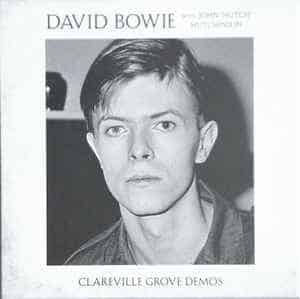
In January 1969, following the end of Feathers, David Bowie and John “Hutch” Hutchinson recorded a series of home demos at Bowie’s flat in Clareville Grove, London. Recorded live to tape, the performances preserve Bowie and Hutchinson working as an acoustic duo at a crucial stage in Bowie’s development as a songwriter.
The recordings were made before the professional version of Space Oddity recorded at Morgan Studios on 2 February 1969 for the promotional film Love You Till Tuesday. They therefore document the song and the duo’s wider repertoire immediately before Bowie began presenting the material in professional recording studios.
The arrangements are deliberately simple. Bowie and Hutchinson performed principally with acoustic guitars and shared vocals, while Bowie also used the Stylophone. Rather than finished commercial master recordings, these were home demonstrations that captured the songs directly and without orchestration, overdubbing or elaborate studio production.
The surviving session contains six performances:
- Space Oddity
- Lover to the Dawn
- Ching-a-Ling
- An Occasional Dream
- Let Me Sleep Beside You
- Life Is a Circus, written by Roger Bunn
The Clareville Grove version of Space Oddity contains the completed lyric and preserves the song as a dialogue between two performers. Hutchinson sings the Ground Control passages while Bowie performs Major Tom, establishing the dramatic division that remained part of the duo’s early presentations of the composition.
Lover to the Dawn was later substantially reworked into Cygnet Committee, recorded for Bowie’s 1969 album. Although the later composition developed far beyond the demo, the Clareville Grove performance preserves important melodic and lyrical material from its earlier form.
Ching-a-Ling had already been recorded in October 1968 by Turquoise, the trio consisting of Bowie, Hermione Farthingale and Tony Hill. After Hill was replaced by Hutchinson and the group became Feathers, the song remained in the repertoire. Bowie and Hutchinson continued to perform it after Farthingale’s departure.
The demo of An Occasional Dream differs lyrically in places from the version Bowie later recorded for his second album. Like Letter to Hermione, the song was connected with Bowie’s relationship with Farthingale and the personal upheaval surrounding their separation.
A professional studio version of Let Me Sleep Beside You had already been recorded in September 1967, although it remained unreleased until its appearance on The World of David Bowie in 1970. Its inclusion among the Clareville Grove demos shows that Bowie continued to regard the song as part of his active repertoire.
Life Is a Circus was not written by Bowie. It was composed by Roger Bunn and had been recorded by the group Djinn. On the Clareville Grove demo, Bowie and Hutchinson share the vocals in close harmony, demonstrating that their repertoire included carefully chosen material by other writers as well as Bowie’s own compositions.
The recordings were officially issued by Parlophone on 17 May 2019 as Clareville Grove Demos, a boxed set of three seven-inch singles. Four of the six performances were previously unreleased, while the versions of Space Oddity and An Occasional Dream had appeared earlier on the fortieth-anniversary edition of Space Oddity.
The cover photograph and accompanying print were taken by Bowie’s manager Kenneth Pitt inside the Clareville Grove flat. Bowie’s unusually short haircut in the photographs resulted from his recent work in the film The Virgin Soldiers.
Historically, the Clareville Grove demos form a distinct recording project. They should not be confused with the later Mercury Demos, which were recorded in the spring of 1969 as a longer ten-song presentation for Mercury Records. The Clareville Grove session belongs to January and captures Bowie and Hutchinson shortly after Feathers ended and before the Love You Till Tuesday recording of Space Oddity.
For John Hutchinson, the six recordings provide some of the clearest surviving evidence of his contribution to Bowie’s early work. His guitar playing, harmony singing and role as Ground Control were integral to the performances, preserving the sound of the Bowie and Hutch partnership before Bowie’s songs were transformed by professional arrangements and studio production.
Developing Space Oddity
The evolution of Space Oddity can be followed more clearly than almost any other early David Bowie composition. Through a sequence of home demos, soundtrack recordings and studio sessions, the surviving recordings document how the song developed from an acoustic duet into the orchestral single that launched Bowie’s international career.
The earliest surviving performance is the version recorded by Bowie and John “Hutch” Hutchinson at Clareville Grove in January 1969. At this stage the composition was already structurally complete, although Bowie continued to refine individual lyrics, phrasing and musical details before entering a professional recording studio.
Unlike the later commercial single, the Clareville Grove recording presents Space Oddity exactly as Bowie and Hutchinson performed it live. Two acoustic guitars, shared vocals and Bowie’s Stylophone create an intimate arrangement that places the dramatic dialogue between Ground Control and Major Tom at the centre of the performance.
On 2 February 1969, Bowie recorded a new studio version at Morgan Studios for the promotional film Love You Till Tuesday. Although professionally recorded, the arrangement still retained Hutchinson as the voice of Ground Control, demonstrating that Bowie had not yet abandoned the original duet concept.
Only several months later, during the sessions at Trident Studios in June 1969, did Bowie fundamentally rethink the presentation of the song. The dialogue between Ground Control and Major Tom was no longer divided between two singers. Bowie performed both roles himself, while producer Gus Dudgeon and arranger Paul Buckmaster transformed the composition into the richly orchestrated recording released as the commercial single.
The surviving recordings therefore document a gradual artistic development rather than a single moment of inspiration. The Clareville Grove demo, the Love You Till Tuesday soundtrack recording and the later Trident Studios master each preserve a different stage in the evolution of one of Bowie’s most important compositions.
For John Hutchinson, these recordings remain historically significant because they preserve his direct involvement during the formative stages of Space Oddity. His guitar playing and vocal role as Ground Control formed an essential part of the song’s earliest documented performances, providing valuable insight into how Bowie originally conceived the composition before its transformation into the version that became internationally known.
Ground Control and Major Tom
One of the most distinctive features of the early Bowie and Hutch performances of Space Oddity was the division of the song’s dialogue between two singers. Rather than presenting the entire narrative himself, Bowie performed the role of Major Tom, while John “Hutch” Hutchinson sang the responses of Ground Control.
This approach transformed the composition into a genuine dramatic conversation. Instead of one vocalist changing character during the performance, the communication between Earth and the astronaut was represented by two separate voices, making the dialogue more immediate and theatrical for a live audience.
John Hutchinson on the original Space Oddity duet
“David wrote ‘Space Oddity’ for the two of us to sing.”
Hutchinson consistently described Space Oddity as Bowie’s composition. Although he occasionally offered musical suggestions during rehearsals, he never claimed any part of the songwriting. His documented contribution was as guitarist, harmony vocalist and the original voice of Ground Control during the song’s earliest performances.
The surviving Clareville Grove demo and the professionally recorded Love You Till Tuesday soundtrack both preserve this original arrangement. Together they demonstrate that the dialogue between Ground Control and Major Tom formed an important part of the song’s earliest presentation before Bowie later reinterpreted it as a solo performance.
When Bowie recorded the commercial version at Trident Studios in June 1969, he chose to perform both roles himself. That decision reflected the transition from an intimate acoustic partnership to a fully produced studio recording rather than any change in Hutchinson’s earlier importance to the song’s development.
David Bowie on the original concept of Space Oddity
“I wrote that intending to sing it with a friend of mine, John Hutchinson; we were going to be Hutch and Bowie.”
— David Bowie
The Clareville Grove Version
The Clareville Grove recording presents Space Oddity in an intimate acoustic setting. The two guitars and contrasting voices carry the performance without the orchestration and elaborate studio production associated with the later single.
Although simpler in sound, the recording already contains the central story of Major Tom, the countdown, the exchange with Ground Control and the astronaut’s increasing separation from Earth. It therefore documents a stage at which the song’s identity was already clearly established, even though Bowie continued to refine individual details.
The performance is also important because it preserves Hutchinson’s voice as part of the song rather than merely documenting him as an accompanying guitarist. His Ground Control passages form an essential part of the arrangement and demonstrate why the song was particularly suited to the Bowie and Hutch partnership.
Inspiration and Interpretation
Bowie repeatedly identified Stanley Kubrick’s film 2001: A Space Odyssey as a principal inspiration for Space Oddity. The title itself echoes the film, while the song transforms space travel into a narrative of distance, uncertainty and isolation.
The composition was written and demoed before the Apollo 11 Moon landing. Its later association with the mission was strengthened by the timing of the commercial single, which was released in the United Kingdom on 11 July 1969, five days before Apollo 11 was launched.
It is therefore inaccurate to state that Bowie wrote Space Oddity specifically for the Moon landing. The space race formed part of the contemporary background, but the documented chronology and Bowie’s own comments place Kubrick’s film at the centre of the song’s inspiration.
The early duet recordings remain essential to understanding this development. They show that the characters, dramatic exchange and atmosphere of isolation were present before the commercial production transformed the song into Bowie’s first major hit.
Love You Till Tuesday
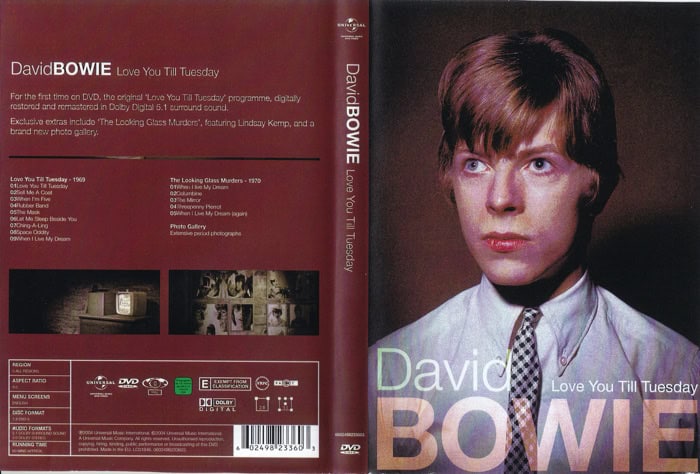
While David Bowie and John “Hutch” Hutchinson continued refining their acoustic repertoire, Bowie’s manager Kenneth Pitt sought new ways to present his client to record companies, television executives and film distributors. One of his most ambitious projects became Love You Till Tuesday, a professionally produced promotional film designed to demonstrate Bowie’s abilities as a singer, songwriter, actor and mime artist.
As part of the production, a new studio version of Space Oddity was recorded at Morgan Studios, London on 2 February 1969. Unlike the earlier Clareville Grove home recording, this performance was made under professional studio conditions while still preserving the original dialogue between Ground Control and Major Tom.
The Morgan Studios session featured David Bowie (vocals, acoustic guitar, Stylophone and ocarina), John “Hutch” Hutchinson (vocals and acoustic guitar), Colin Wood (organ, Mellotron and flute), Dave Clague (bass) and Tat Meager (drums). The recording was produced by Jonathan Weston and represented the first professionally recorded version of Space Oddity.
Several days later, director Malcolm J. Thompson filmed the accompanying performance sequence for Love You Till Tuesday. Bowie appeared as Major Tom in one of the earliest examples of his interest in combining music, costume, mime and visual storytelling into a single artistic presentation.
Although created for a promotional film rather than commercial release, the recording occupies an important place in the history of Space Oddity. It bridges the gap between the intimate Clareville Grove demos and the commercially released Trident Studios recording made later that year.
The soundtrack also preserves John Hutchinson‘s final professional recording of Space Oddity. He once again performed the Ground Control passages opposite Bowie’s Major Tom, maintaining the dramatic dialogue that characterised the earliest presentations of the composition.
Kenneth Pitt hoped that Love You Till Tuesday would attract television distribution and stimulate renewed interest from the recording industry. Although those ambitions were not immediately realised, the project demonstrated Bowie’s rapidly developing artistic identity and helped document an important transitional period immediately before his commercial breakthrough.
Only a few months later, Bowie returned to the studio to record the definitive commercial version of Space Oddity at Trident Studios. Produced by Gus Dudgeon and arranged by Paul Buckmaster, the new recording abandoned the original duet format and featured Bowie performing both Ground Control and Major Tom himself. Hutchinson did not participate in those sessions, making the Love You Till Tuesday soundtrack the final professional recording to preserve the original Bowie and Hutch interpretation of the song.
The Mercury Demos
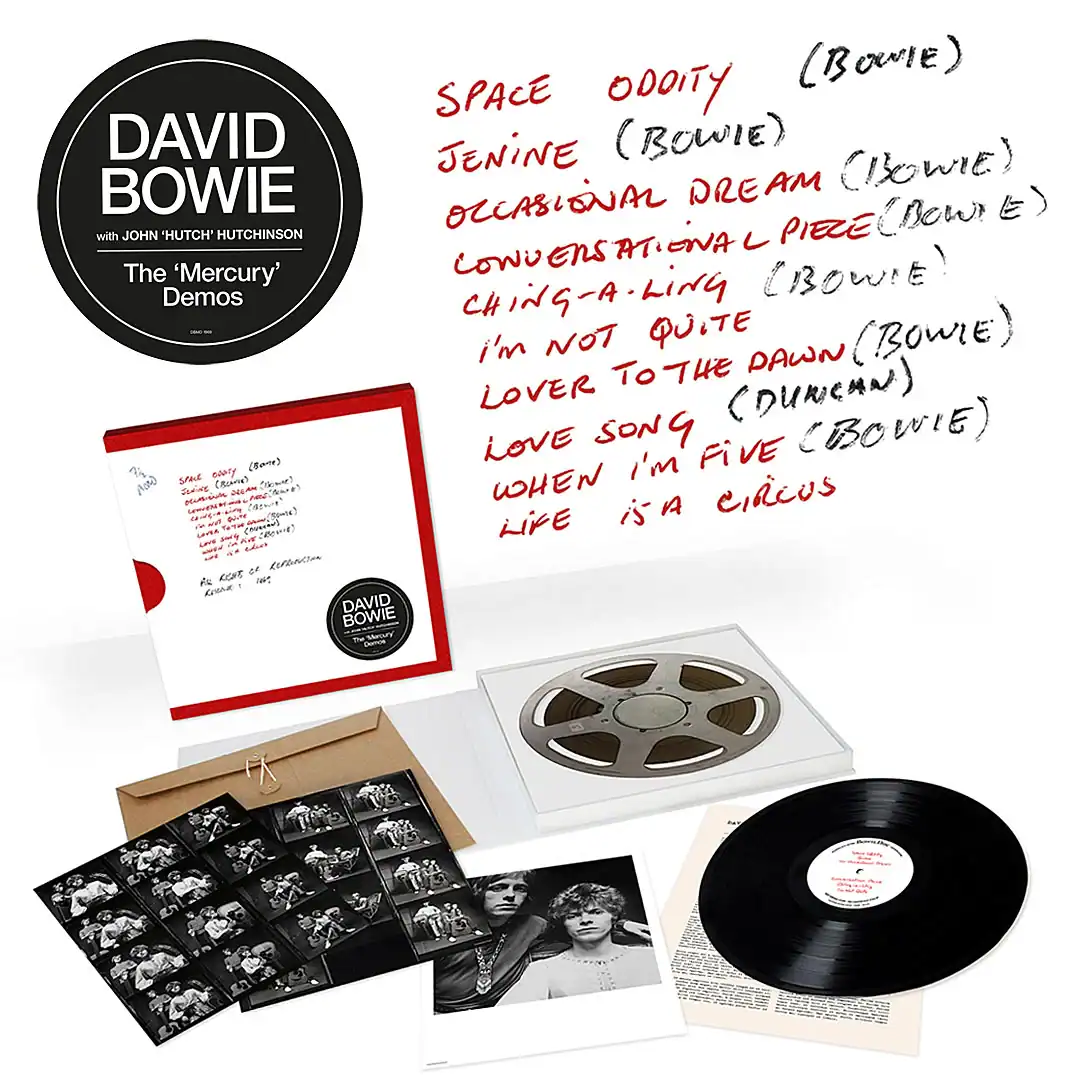
During the spring of 1969, David Bowie and John “Hutch” Hutchinson made what would become one of the most historically significant recordings of Bowie’s early career. Recorded live in Bowie’s flat on a Revox reel-to-reel tape recorder, the session captured the duo’s complete working repertoire in a continuous performance lasting approximately forty-one minutes.
Unlike the earlier Clareville Grove recordings, which documented individual home demos, this session was conceived as a complete presentation of the Bowie and Hutch acoustic set. Rather than recording isolated songs, Bowie and Hutchinson performed a continuous programme that included introductions, conversation, tuning and occasional informal exchanges, preserving the atmosphere of an actual performance.
The recording was made at the request of Mercury Records A&R representative Calvin Mark Lee, who intended to present the tape to Mercury executive Bob Reno. During the recording Bowie refers to both men by name, confirming that the session was prepared as a professional demonstration rather than a private rehearsal.
The Mercury tape contains the following programme:
- Space Oddity
- Janine
- An Occasional Dream
- Conversation Piece
- Ching-a-Ling
- I’m Not Quite (later retitled Letter to Hermione)
- Lover to the Dawn
- Love Song (Lesley Duncan)
- When I’m Five
- Life Is a Circus (Roger Bunn)
The session presents Bowie at a remarkable stage of artistic development. Personal songs inspired by recent events in his own life appear alongside theatrical compositions, childhood reflections and carefully selected songs by other writers. Together they illustrate both the breadth of Bowie’s songwriting and the versatility of the Bowie and Hutch partnership immediately before his commercial breakthrough.
The Mercury Demos were performed entirely by the acoustic duo. Bowie sang, played guitar and Stylophone, while Hutchinson contributed guitar and harmony vocals throughout the session. Without orchestral arrangements or studio overdubs, the recording places complete emphasis on the songs themselves and the close musical understanding between the two performers.
Several performances document compositions that were still evolving. Conversation Piece is introduced by Bowie as “a new song”, while I’m Not Quite later became Letter to Hermione. Lover to the Dawn subsequently developed into the much more ambitious Cygnet Committee, demonstrating how rapidly Bowie’s songwriting continued to evolve during 1969.
The tape also preserves spontaneous moments rarely heard on contemporary demonstration recordings. Informal conversation, tuning, brief humour and even a short quotation of the Beatles’ Hey Jude during Janine remained on the finished tape, providing an unusually authentic document of the working relationship between Bowie and Hutchinson.
The Mercury Demos played an important role in securing Bowie’s recording agreement with Mercury Records. Although they were never intended as a commercial album, the recordings demonstrated the quality of Bowie’s songwriting and helped convince the company of his potential as a recording artist.
For decades the complete session circulated only in unofficial form. Parlophone finally released the entire recording on 28 June 2019 under the title The Mercury Demos, presenting the performance in its original running order for the first time. Earlier official releases had included only an edited version of Space Oddity.
Together with the Clareville Grove recordings and the Love You Till Tuesday soundtrack, the Mercury Demos preserve the complete story of the Bowie and Hutch partnership during 1969. They remain the most comprehensive surviving record of the duo at the point where David Bowie stood on the threshold of international success.
A Continuous Performance
One of the defining characteristics of The Mercury Demos is that the entire programme was recorded as a single continuous performance. Rather than compiling individual demonstration recordings over several sessions, Bowie and Hutchinson presented their repertoire exactly as they would have performed it live, allowing the tape recorder to run throughout.
The recording therefore preserves much more than the songs themselves. Spoken introductions, brief conversations, tuning, moments of humour and the natural pauses between performances remain intact, creating one of the most revealing documents of Bowie’s early working methods.
The session was recorded on a Revox reel-to-reel tape recorder in Bowie’s flat. The simplicity of the equipment reflected the purpose of the recording. It was intended to demonstrate the strength of the songs and the quality of the performances rather than the possibilities of studio production.
Throughout the programme Bowie performed lead vocals, acoustic guitar and Stylophone, while Hutchinson contributed acoustic guitar and harmony vocals. Their familiarity with the material allowed the performances to flow naturally from one song to the next with very little interruption.
Unlike later Bowie recordings that relied upon increasingly sophisticated arrangements and production techniques, The Mercury Demos document the songs in their most direct form. The recording captures a songwriter and his musical partner presenting new material with confidence, honesty and very little separating the listener from the performance itself.
Janine
The Mercury Demo of Janine captures the relaxed atmosphere of the session particularly well. During the performance, Bowie briefly quotes the melody of the Beatles’ Hey Jude, a spontaneous moment that remained on the continuous recording. Rather than editing such moments out, the uninterrupted tape preserves the natural interaction between Bowie and Hutchinson as they worked through their repertoire.
Although informal, details such as these illustrate that The Mercury Demos were intended to demonstrate Bowie’s songs in an honest performance setting rather than as polished commercial masters. The recording therefore offers an unusually authentic insight into the musical partnership between Bowie and Hutchinson during the spring of 1969.
I’m Not Quite
One of the most historically revealing performances on The Mercury Demos is the song Bowie introduces as I’m Not Quite. At the time of the recording, the composition had not yet received its final title and was still evolving alongside several other new works written during the opening months of 1969.
Before the release of Bowie’s second studio album later that year, the song was retitled Letter to Hermione. The change reflected its deeply personal subject matter, inspired by the end of Bowie’s relationship with Hermione Farthingale. The Mercury Demo therefore preserves an important stage in the song’s development, documenting both its original working title and its place within the Bowie and Hutch repertoire before the material entered the recording studio.
Two Songs by Other Writers
Although The Mercury Demos were primarily intended to demonstrate David Bowie’s songwriting, the programme also included two compositions by other writers. Their inclusion reflected the repertoire that Bowie and John “Hutch” Hutchinson were performing together during the first half of 1969 rather than an attempt to present only Bowie’s own material.
Love Song was written by Lesley Duncan, one of Britain’s most respected singer-songwriters. Bowie admired Duncan’s writing, and the song’s understated acoustic style fitted naturally alongside the more reflective material that he and Hutchinson were performing at the time.
The second cover, Life Is a Circus, was written by Roger Bunn, a close friend of Bowie during the late 1960s. Bowie had long admired Bunn’s songwriting, and the inclusion of the composition illustrates the wide range of musical influences shared by the acoustic duo.
Rather than weakening the purpose of the Mercury presentation, these two songs demonstrated that Bowie and Hutchinson could interpret material by other writers with the same musical sensitivity they brought to Bowie’s own compositions. They also provided variety within the programme while placing Bowie’s original songs in a broader musical context.
An Audition That Changed Everything
The Mercury Demos represented far more than an informal collection of home recordings. Prepared specifically for Mercury Records, the tape demonstrated the breadth of David Bowie’s songwriting, the strength of his acoustic performances with John “Hutch” Hutchinson and his growing confidence as a recording artist.
The recording was submitted through Mercury Records A&R representative Calvin Mark Lee, who introduced the material to executive Bob Reno. The demonstration successfully convinced Mercury to offer Bowie a recording agreement, marking one of the most significant turning points of his early career.
Although Bowie signed with Mercury Records, his recordings in the United Kingdom were released through the company’s Philips label. The agreement finally provided the professional recording opportunity that Kenneth Pitt had worked towards throughout 1968 and the first half of 1969.
For John “Hutch” Hutchinson, the Mercury Demos marked the culmination of his most important period of collaboration with Bowie. His guitar playing, harmony vocals and performances throughout the session remain among the clearest surviving documents of his contribution to Bowie’s formative years.
Only weeks later, Bowie entered Trident Studios to record the definitive commercial version of Space Oddity. Although Hutchinson did not participate in those sessions, his contribution to the Clareville Grove Demos, the Love You Till Tuesday recording and The Mercury Demos had already played an important role in the chain of events that led to Bowie’s first major commercial success.
John “Hutch” Hutchinson on Playing Space Oddity with David Bowie
John “Hutch” Hutchinson discusses performing Space Oddity with David Bowie.
Hutchinson’s first-hand recollections are particularly valuable because he participated in the song before the commercially released recording was made. His account helps explain why the earliest complete versions sound different from the later single.
In the acoustic arrangement, Bowie and Hutchinson could present the communication between Ground Control and Major Tom through two separate voices. The dramatic structure was therefore built into the performance rather than being created entirely through studio production.
The interview also places Space Oddity within the broader Bowie and Hutch partnership. Their work together included more than one song or one recording session: they rehearsed and recorded a developing repertoire during the period between Feathers and Bowie’s new recording agreement.
Space Oddity — The Mercury Demo
Space Oddity, performed by David Bowie and John “Hutch” Hutchinson during the 1969 Mercury Demo session.
This recording preserves one of the earliest complete performances of Space Oddity by David Bowie and John “Hutch” Hutchinson. Captured during the Mercury Demo session in the spring of 1969, it documents the song before the orchestral arrangement and studio production of the commercially released single transformed its overall character.
Unlike the later Trident Studios recording, the Mercury Demo presents Space Oddity as an intimate acoustic performance. Bowie sings the role of Major Tom while Hutchinson performs the Ground Control passages, preserving the original dramatic dialogue that characterised the earliest presentations of the composition.
The performance also demonstrates the close musical understanding that had developed between Bowie and Hutchinson. Supported only by acoustic guitars and Bowie’s Stylophone, the arrangement places complete emphasis on the songwriting and the interaction between the two performers rather than studio production.
Today the Mercury Demo remains one of the most important surviving recordings of Bowie’s formative years. Together with the Clareville Grove recordings and the Love You Till Tuesday soundtrack version, it documents the complete evolution of Space Oddity before the song became Bowie’s first international hit.
From the Demo to the Commercial Single
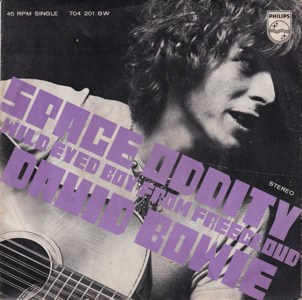
Following the Mercury Demo session, David Bowie entered Trident Studios in London on 20 June 1969 to record the definitive commercial version of Space Oddity. Produced by Gus Dudgeon and arranged by Paul Buckmaster, the session transformed the intimate acoustic performance into a richly orchestrated studio recording.
Unlike the earlier Bowie and Hutch interpretations, the commercial recording no longer divided the dialogue between two singers. Bowie performed both the Ground Control and Major Tom passages himself, while an expanded group of studio musicians and Buckmaster’s orchestral arrangement gave the composition the cinematic atmosphere for which it later became famous.
John “Hutch” Hutchinson did not participate in the Trident Studios recording. His contribution belonged to the formative stages of the composition, preserved through the Clareville Grove Demos, the Love You Till Tuesday soundtrack and the Mercury Demos. Those recordings document the song’s evolution before it reached its final commercial form.
Space Oddity was released in the United Kingdom on 11 July 1969, only days before the launch of the Apollo 11 mission. Although the timing strengthened the song’s association with the Moon landing, Bowie consistently explained that its principal inspiration came from Stanley Kubrick’s film 2001: A Space Odyssey rather than from the Apollo programme itself.
The single achieved only modest success immediately after its release but gradually gained momentum during the second half of 1969, eventually reaching number five on the UK Singles Chart. The success established Bowie as a major recording artist and marked the beginning of the international career that followed.
For Hutchinson, the commercial release represented the end of one chapter rather than the end of his association with Bowie. Although he was no longer part of Bowie’s recording group, his earlier contribution remained preserved in the demos that documented the song’s development from an acoustic duet into one of the defining recordings of Bowie’s career.
A Later Return to Bowie’s Touring Band
Although the Bowie and Hutch acoustic partnership came to an end during 1969, David Bowie and John “Hutch” Hutchinson did not permanently lose contact. Four years later, Bowie invited Hutchinson to rejoin his touring band during the closing phase of the Ziggy Stardust Tour, marking an unexpected reunion between two musicians whose friendship stretched back to the mid-1960s.
Hutchinson joined the touring ensemble in 1973 as an additional guitarist and backing vocalist. His principal responsibilities included rhythm guitar, twelve-string acoustic guitar and harmony vocals, strengthening the expanded stage production that Bowie had developed during the final months of the Ziggy era.
He performed with Bowie during the Japanese concerts in April 1973 before remaining with the touring band through the final stages of the tour. His appearances culminated in Bowie’s historic farewell performance as Ziggy Stardust at London’s Hammersmith Odeon on 3 July 1973, one of the most celebrated concerts of Bowie’s career.
Unlike the intimate two-man performances of 1969, Hutchinson now found himself performing within a large professional touring ensemble that included Mick Ronson, Trevor Bolder, Mick Woodmansey, Mike Garson, Geoffrey MacCormack and the brass section that had become an important feature of Bowie’s live sound. His role was no longer that of Bowie’s principal musical partner but of an experienced guitarist and vocalist contributing to an already established band.
Despite the different circumstances, Hutchinson’s return demonstrated the lasting professional respect between the two musicians. Bowie clearly trusted Hutchinson’s musicianship and invited him back at one of the most important moments of his career, just before retiring the Ziggy Stardust character that had transformed him into an international star.
The surviving soundtrack and film of the Hammersmith Odeon concert document Hutchinson’s participation during this historic performance. His appearance provides a remarkable link between Bowie’s formative acoustic years and the spectacular theatrical productions that defined the Ziggy Stardust period, illustrating how one of Bowie’s earliest collaborators remained part of his story at two very different stages of his career.
John Hutchinson After David Bowie
Following his final appearances with David Bowie during the Ziggy Stardust Tour in 1973, John “Hutch” Hutchinson continued working as a professional musician while largely remaining outside the public spotlight. Unlike many of Bowie’s later collaborators, he did not pursue an international solo career, but continued to perform, write and record music while maintaining a lifelong interest in Bowie’s early creative years.
As David Bowie’s reputation continued to grow, Hutchinson increasingly became recognised as one of the few surviving musicians who had witnessed the formative years of Bowie’s career at first hand. His unique perspective covered the period from The Buzz in 1966, through Turquoise and Feathers, the Bowie and Hutch acoustic partnership, the development of Space Oddity and his later return during the Ziggy Stardust Tour.
Hutchinson remained generous in sharing his memories through interviews, public appearances and conversations with researchers. Rather than seeking personal recognition, he consistently focused on documenting events as accurately as possible, helping to clarify numerous aspects of Bowie’s early career that had previously been misunderstood or inaccurately reported.
His recollections have become an important historical resource. Combined with official archive releases and contemporary documentation, they continue to provide valuable insight into one of the most creative and least documented periods of David Bowie’s artistic development.
Bowie & Hutch
In later life, John “Hutch” Hutchinson brought together many of his memories in the memoir Bowie & Hutch. Rather than presenting another biography of David Bowie, the book offers a first-hand account of the years before Bowie achieved international fame, told by one of the musicians who experienced those events alongside him.
Hutchinson recalls the formation of The Buzz, the experimental period with Turquoise and Feathers, the development of the Bowie and Hutch acoustic partnership and the recording sessions that produced the Clareville Grove Demos, the Love You Till Tuesday version of Space Oddity and the Mercury Demos. He also describes his unexpected return to Bowie’s touring band during the Ziggy Stardust Tour in 1973.
Unlike many publications written decades after the events by historians or journalists, Bowie & Hutch presents the perspective of a participant. Hutchinson combines personal memories with contemporary documentation, offering valuable insight into rehearsals, performances, recording sessions and the working relationship that existed between the two musicians during Bowie’s formative years.
The memoir has become an important historical source for researchers, helping to clarify numerous details of Bowie’s early career. When read alongside official archive releases such as Conversation Piece, Clareville Grove Demos and The Mercury Demos, it provides one of the most complete first-hand accounts of Bowie’s artistic development during the late 1960s and early 1970s.
Although the book naturally reflects Hutchinson’s own memories and experiences, it remains one of the most significant primary sources available for understanding David Bowie’s early career. Its value lies not only in the stories it tells, but also in preserving the observations of someone who stood beside Bowie during several decisive moments in his artistic development.
The 2019 Archive Releases
The year 2019 marked an important turning point in the public appreciation of John “Hutch” Hutchinson‘s contribution to David Bowie’s early career. Parlophone and the David Bowie archive issued a series of official releases that presented previously unavailable recordings in restored audio quality and placed them within their proper historical context.
The release of The Clareville Grove Demos allowed listeners to hear Bowie and Hutchinson performing together at Bowie’s London flat in January 1969, preserving six intimate home recordings made shortly after the end of Feathers. Later that year, The Mercury Demos presented the complete ten-song audition tape that had played an important role in securing Bowie’s recording agreement with Mercury Records.
Both releases were complemented by the comprehensive Conversation Piece box set, which documented Bowie’s creative development between 1968 and 1969 through studio recordings, demos, radio sessions and extensive historical documentation. Together, these archive projects significantly improved the understanding of Bowie’s formative years and confirmed Hutchinson’s central role during this period.
For many years, some of these recordings had circulated only in incomplete or unofficial form. Their official release not only restored the original audio quality but also established an authoritative chronology based on contemporary documentation and archival research. As a result, many long-standing misconceptions surrounding the Clareville Grove recordings, the Love You Till Tuesday version of Space Oddity and the Mercury Demos could finally be resolved.
For John “Hutch” Hutchinson, these releases represented long-overdue recognition of his contribution to David Bowie’s earliest creative successes. They demonstrated that his role extended well beyond performing the original Ground Control passages in Space Oddity, highlighting his importance as guitarist, harmony vocalist and one of Bowie’s closest musical collaborators during the years immediately preceding his commercial breakthrough.
John Hutchinson‘s Legacy
John “Hutch” Hutchinson died on 19 April 2021 at the age of seventy-nine. His passing prompted tributes from musicians, historians, researchers and David Bowie fans around the world, many of whom recognised his unique contribution to Bowie’s formative years.
Although Hutchinson never sought the public profile achieved by many of Bowie’s later collaborators, his historical importance continued to grow through official archive releases, documentary research and his own willingness to share first-hand recollections. His memories helped clarify numerous aspects of Bowie’s early career that had long been misunderstood or incompletely documented.
Today, Hutchinson is recognised not simply as the original voice of Ground Control in the earliest performances of Space Oddity, but as one of David Bowie’s earliest and most trusted musical collaborators. His work with The Buzz, Turquoise, Feathers, the Bowie and Hutch acoustic partnership, the Clareville Grove Demos, the Love You Till Tuesday soundtrack and the Mercury Demos documents one of the most creative periods of Bowie’s artistic development.
His return during the Ziggy Stardust Tour in 1973 further demonstrated the enduring respect between the two musicians. Few collaborators were able to contribute both before Bowie’s commercial breakthrough and again during one of the most celebrated periods of his career.
More than half a century after their earliest performances together, Hutchinson’s contribution continues to be recognised through official archive releases, contemporary documentation and his own memoir Bowie & Hutch. Together, these sources ensure that his place in David Bowie’s history remains secure as an essential witness to, and participant in, the remarkable beginnings of one of popular music’s most influential careers.
Historical Importance
John “Hutch” Hutchinson occupies a distinctive place in David Bowie’s history. Although his documented collaborations with Bowie covered only selected periods between 1966 and 1973, they coincided with some of the most formative years of Bowie’s artistic development. From The Buzz and the experimental performances of Turquoise and Feathers to the Bowie and Hutch acoustic partnership and his later return during the Ziggy Stardust Tour, Hutchinson witnessed and contributed to key moments in Bowie’s early career.
His greatest historical significance lies in the unique body of recordings that survives from 1969. The Clareville Grove Demos, the Love You Till Tuesday version of Space Oddity and The Mercury Demos document Bowie’s songwriting before commercial success transformed both the arrangements and the scale of his productions. Hutchinson’s guitar playing, harmony vocals and portrayal of Ground Control remain integral parts of those recordings.
Equally important are Hutchinson’s own recollections. Through interviews and his memoir Bowie & Hutch, he provided researchers with first-hand accounts that have helped clarify the chronology of Bowie’s early collaborations, recordings and performances. When considered alongside official archive releases and contemporary documentation, his testimony has become an essential source for understanding Bowie’s formative years.
Unlike many early collaborators whose contributions survive only in photographs or memories, Hutchinson’s work can still be heard. His performances preserve David Bowie at a moment when new songs were still being developed, arrangements remained fluid and artistic possibilities were wide open. For that reason, John “Hutch” Hutchinson remains not only an important collaborator in Bowie’s story, but also one of the most valuable first-hand witnesses to the remarkable beginnings of one of popular music’s most influential careers.
Official Website & Further Information
Readers wishing to explore John “Hutch” Hutchinson‘s contribution to David Bowie’s career in greater detail are encouraged to consult the official David Bowie archive together with the authorised archive releases issued by Parlophone Records. These publications provide the most reliable documentation of the recordings discussed throughout this article.
Particularly recommended are the official archive releases Conversation Piece, Clareville Grove Demos and The Mercury Demos, together with John “Hutch” Hutchinson‘s memoir Bowie & Hutch. When studied alongside contemporary documentation and verified historical research, these sources provide the clearest picture of Hutchinson’s collaboration with David Bowie between 1966 and 1973.
Article Origin
This article was researched and written exclusively for DavidBowieWorld.com as part of the website’s David Bowie Collaborations & Creative Circle Archive. It is based upon official archive releases, contemporary documentation, verified recording data and first-hand recollections by John “Hutch” Hutchinson, supported where possible by primary historical sources.
Particular attention has been given to establishing an accurate chronology of Hutchinson’s collaborations with David Bowie between 1966 and 1973. Earlier unsupported claims and frequently repeated misconceptions have been carefully reviewed against official archive material and documented historical evidence before inclusion.
Every effort has been made to distinguish confirmed historical fact from later interpretation. Where first-hand testimony exists, it has been considered alongside contemporary documentation and official David Bowie archive releases to provide the most accurate account currently available.
As new verified information, archival discoveries or primary sources become available, this article will continue to be updated to ensure that it remains an authoritative historical reference.
© DavidBowieWorld.com — David Bowie Collaborations & Creative Circle Archive.
