
John Watson – Bassist with David Bowie and The Manish Boys
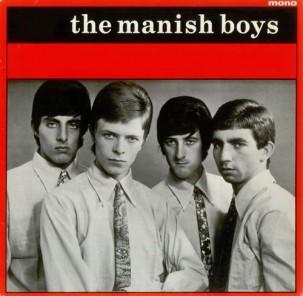
John Watson was the bass guitarist in The Manish Boys, the Maidstone rhythm and blues group joined by the young David Bowie, then performing under the name Davie Jones, during the summer of 1964.
Watson was already a member of the band when Jones arrived. Together they performed during the second half of 1964 and the opening months of 1965, a brief period that included live appearances, early television exposure and the recording of the only single released by The Manish Boys.
Watson played bass on both sides of that single: I Pity the Fool and the Jones composition Take My Tip. The two tracks were recorded at IBC Studios in London on 15 January 1965 and released by Parlophone on 5 March 1965.
These recordings constitute Watson’s documented contribution to Bowie’s official discography. Reliable information about Watson’s life and career outside The Manish Boys remains limited, so this page concentrates on the period that can be supported by recording documentation, contemporary appearances and first-hand recollections.
- Name: John Watson
- Instrument: Bass guitar
- Band: The Manish Boys
- Active with David Bowie: Summer 1964–March 1965
- Studio recordings with Bowie: I Pity the Fool and Take My Tip
- Recording date: 15 January 1965
- Recording studio: IBC Studios, Portland Place, London
- Original release: Parlophone R 5250, 5 March 1965
From Band Seven to The Manish Boys
The Manish Boys had already developed their own identity before Davie Jones joined them. Published histories of the group trace its origins to Band Seven, a Maidstone group formed in the early 1960s. After changes in personnel and musical direction, the musicians adopted the name The Manish Boys.
The name was derived from the Muddy Waters song Mannish Boy, although the group used the single-n spelling Manish. Their repertoire reflected the growing British interest in American rhythm and blues, soul and blues recordings. Rather than functioning only as a conventional guitar-based beat group, The Manish Boys developed a line-up that included organ and two horn players.
By 1964, the established group consisted of Johnny Flux on guitar, John Watson on bass guitar, Bob Solly on organ, Paul Rodriguez on tenor saxophone and trumpet, Woolf Byrne on baritone saxophone, and Mick White on drums.
This combination of guitar, organ, brass and rhythm section gave the band a fuller ensemble sound than many British beat groups of the period. The musicians were already performing together when Davie Jones was introduced to them in the summer of 1964.
Davie Jones joins The Manish Boys
Before joining The Manish Boys, Davie Jones had been the singer and saxophonist with Davie Jones and The King Bees. That group released Liza Jane, backed with Louie, Louie Go Home, through Vocalion on 5 June 1964. The single did not enter the British charts, and Jones’s association with The King Bees ended soon afterwards.
Jones’s manager, Leslie Conn, also had professional dealings with The Manish Boys. Through Conn, Jones was introduced to the Maidstone group and auditioned for them on 19 July 1964. He joined shortly afterwards as lead vocalist and saxophonist. Jones was seventeen years old at the time.
His arrival expanded the existing six-piece line-up to seven members. The group subsequently appeared under names including Davie Jones and The Manish Boys, although contemporary advertisements and later accounts do not always use exactly the same billing.
Jones was joining an established rhythm and blues group rather than assembling a new backing band of his own. John Watson, Johnny Flux, Bob Solly, Paul Rodriguez, Woolf Byrne and Mick White had already been performing together before his arrival.
John Watson’s role in The Manish Boys
John Watson played bass guitar in a line-up that combined a conventional rhythm section with guitar, organ and brass. Together with drummer Mick White, he provided the rhythmic foundation beneath Johnny Flux‘s guitar, Bob Solly‘s organ and the saxophone and trumpet parts played by Paul Rodriguez and Woolf Byrne.
Watson is officially credited as the bassist on both songs recorded by The Manish Boys with Davie Jones. His playing can therefore be heard on I Pity the Fool and Take My Tip, the two titles recorded at IBC Studios in January 1965.
No verified evidence has been found that Watson received a songwriting credit, performed a featured vocal part or participated in a separate recording session with Jones. His documented contribution was as the bass guitarist in the group’s live and studio line-up.
The Tonight appearance and the long-haired men campaign
Davie Jones and members of The Manish Boys appearing on BBC television, 12 November 1964
On 12 November 1964, Davie Jones made his first known television appearance in an item broadcast by the BBC current-affairs programme Tonight. The segment concerned the Society for the Prevention of Cruelty to Long-Haired Men, a publicity campaign highlighting the criticism and hostility experienced by young men who wore their hair long.
John Watson appeared in the report alongside Jones, fellow Manish Boys members Paul Rodriguez and Woolf Byrne, and Jones’s friend and former bandmate George Underwood. The appearance was not a musical performance, and it took place several months before The Manish Boys released their only single.
Jones acted as the principal spokesman. In the surviving footage, he presented the campaign in a serious manner and argued that men with long hair should not be treated differently because of their appearance.
Davie Jones on the treatment of long-haired men
“I think we all like long hair and we don’t see why other people should persecute us because of it.”
— Davie Jones, BBC Tonight, 12 November 1964
Watson’s presence connects him to one of the earliest surviving television documents in Bowie’s career. It also shows that The Manish Boys participated not only in Jones’s musical activities but in the publicity surrounding his developing public image.
Live performances with Davie Jones
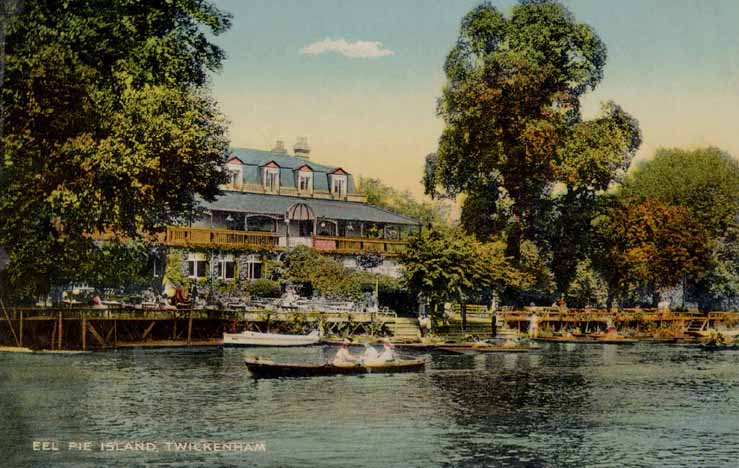
During the second half of 1964, The Manish Boys performed regularly at clubs, ballrooms, town halls and other venues in London and across southern England. As the band’s regular bassist, John Watson formed part of the line-up during this period of intensive live work with Davie Jones.
One documented engagement took place at the Eel Pie Island Hotel in Twickenham on 19 August 1964. The venue was an important centre for British rhythm and blues and had previously hosted performers including The Rolling Stones, Cyril Davies and Long John Baldry. Davie Jones and The Manish Boys returned to Eel Pie Island for further appearances later that year.
The group also performed at London clubs including Studio 51, The Scene and the Marquee Club. Other engagements took them to ballrooms, youth clubs and theatres outside London. The surviving concert chronology shows that the collaboration involved considerably more live work than the two studio recordings alone might suggest.
From 1 to 6 December 1964, Davie Jones and The Manish Boys appeared as the opening act on a six-date northern package tour featuring Gerry and the Pacemakers, Gene Pitney, The Kinks, Marianne Faithfull, the Mike Cotton Sound and Bobby Shafto with The Roofraisers.
The tour visited Wigan, Hull, Edinburgh, Stockton-on-Tees, Newcastle and Scarborough, with two performances scheduled at each venue. The Manish Boys were not prominently advertised in the surviving programme, but contemporary signed material and venue records confirm their participation.
Complete documentation does not survive for every performance given by the band, and some published concert lists contain conflicting dates. The surviving evidence nevertheless establishes that Watson and Jones worked together as members of an active touring group from the summer of 1964 into the opening months of 1965.
The unreleased Regent Sound session
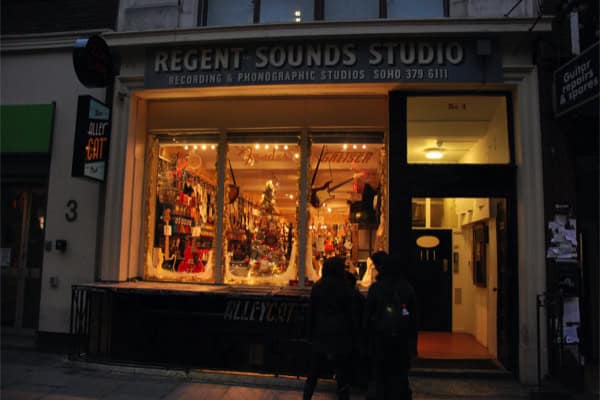
Before working with Shel Talmy, Davie Jones and The Manish Boys were given an opportunity to make demonstration recordings for Decca. On 6 October 1964, the group entered Regent Sound Studios in Denmark Street, London, for a session supervised by Decca producer Mike Smith.
The Manish Boys recorded three cover versions: Hello Stranger, originally recorded by Barbara Lewis; Duke of Earl, associated with Gene Chandler; and Love Is Strange, the rhythm and blues song made famous by Mickey & Sylvia.
The session did not result in a record contract or commercial release. None of the three recordings has been officially issued, and the tapes are not known to be publicly available. Consequently, the performances cannot be evaluated from circulating audio in the same way as the band’s later Parlophone single.
Watson was the regular bassist in the group at the time of the session. However, because the recordings remain unreleased and complete session documentation is not publicly available, this page does not assign detailed performance credits beyond his established position in the band’s line-up.
The Regent Sound recordings remain an important part of the group’s studio history. They show that The Manish Boys had entered a professional London recording studio several months before the January 1965 session that produced I Pity the Fool and Take My Tip.
Signing with Shel Talmy
In December 1964, Davie Jones and The Manish Boys began working with American producer Shel Talmy. Talmy had already produced successful recordings by The Kinks and was also beginning his association with The Who.
Talmy signed Jones and the group and prepared them for a new recording session. Unlike the earlier Regent Sound recordings, this session would produce material considered suitable for commercial release.
On 15 January 1965, Davie Jones and The Manish Boys entered IBC Studios in Portland Place, London. During a two-hour booking, they recorded two versions each of I Pity the Fool and Take My Tip. Talmy produced the session, with Glyn Johns working as recording engineer.
The regular group consisted of Davie Jones on vocals and saxophone, Johnny Flux on guitar, John Watson on bass, Bob Solly on organ, Paul Rodriguez on tenor saxophone and trumpet, Woolf Byrne on baritone saxophone, and Mick White on drums.
Talmy also brought in session guitarist Jimmy Page. Page played guitar during the session and supplied the distinctive fuzz-guitar solo heard on I Pity the Fool. He was an additional studio musician rather than a member of The Manish Boys.
Woolf Byrne on the recording session
“We went to IBC studios for two hours, and recorded two songs, twice.”
— Woolf Byrne, recollection published in David Bowie: Ultimate Record Collection
The recordings were subsequently placed with Parlophone. They became the only commercially released single made by The Manish Boys with Davie Jones.
I Pity the Fool
The Manish Boys – I Pity the Fool and Take My Tip, recorded in 1965
The A-side selected for The Manish Boys’ single was I Pity the Fool, a rhythm and blues song first recorded by American singer Bobby “Blue” Bland in 1960 and released by Duke Records in 1961. Bland’s recording reached number one on the American rhythm and blues chart.
The composition was originally credited to Deadric Malone, a pseudonym used by Duke Records owner Don Robey. Later accounts have identified singer and songwriter Joe Medwick as the song’s probable actual writer. Because the historical authorship remains disputed, the original record credit and the later attribution should be distinguished from one another.
The Manish Boys’ version featured Davie Jones on lead vocals and alto saxophone, with John Watson on bass guitar. Johnny Flux and Jimmy Page played guitar, Bob Solly played organ, Paul Rodriguez contributed tenor saxophone and trumpet, Woolf Byrne played baritone saxophone, and Mick White played drums.
Jimmy Page’s fuzz-guitar solo became the most immediately identifiable instrumental feature of the recording. Watson’s bass remained part of the underlying rhythm section, supporting the combined guitar, organ and brass arrangement.
For Davie Jones, I Pity the Fool became the A-side of his second commercially released single, following Liza Jane with The King Bees in 1964. For John Watson and The Manish Boys, it was the only A-side they released with Jones.
Take My Tip
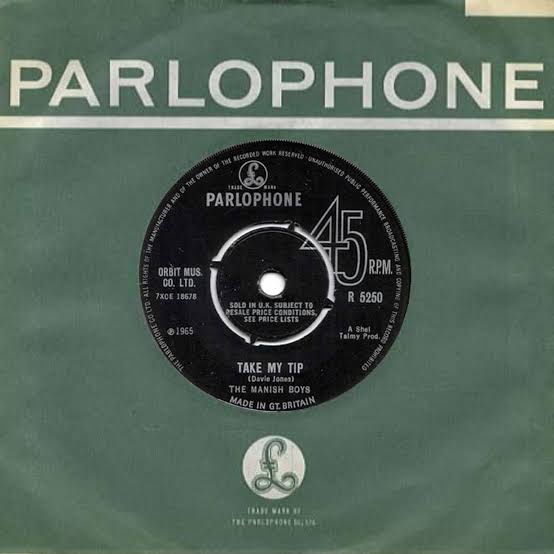
The B-side of the single, Take My Tip, was written by Davie Jones. It was the first composition written by the future David Bowie to appear on a commercially released record.
The song differed from the Bobby Bland material used for the A-side. Its arrangement reflected the soul-jazz and rhythm and blues style associated with the London club scene of the period, with organ, brass, guitar and rhythm section supporting Jones’s vocal.
John Watson played bass guitar as part of the same Manish Boys line-up heard on I Pity the Fool. His appearance on the B-side therefore connects him directly to the first officially released Bowie composition, rather than only to a cover version performed by the group.
American-born singer Kenny Miller later recorded his own version of Take My Tip, also produced by Shel Talmy. Miller’s recording was released as the B-side of Restless on 16 April 1965, making Take My Tip the first Bowie composition known to have been commercially recorded and released by another artist.
Although the Manish Boys single did not become a commercial success, the presence of an original Jones composition on the B-side marked an important step away from a repertoire based almost entirely on existing rhythm and blues material.
Release and television promotion
Parlophone released I Pity the Fool, backed with Take My Tip, in the United Kingdom on 5 March 1965. The catalogue number was Parlophone R 5250.
Although the group had frequently appeared as Davie Jones and The Manish Boys, the record label credited the single simply to The Manish Boys. Jones therefore received no separate artist billing on the original release, although his name appeared as the writer of the B-side.
The single did not enter the British record charts. Nevertheless, it brought the group an opportunity to promote the release on national television.
On 8 March 1965, three days after the single appeared, The Manish Boys performed I Pity the Fool on the BBC Two programme Gadzooks! It’s All Happening. This was Davie Jones’s first known musical performance on television. His earlier appearance on Tonight in November 1964 had been an interview rather than a musical performance.
The Gadzooks! programme was transmitted live and is not known to survive in the BBC archive. Contemporary photographs connected with the appearance remain, but no complete recording of the performance has been publicly identified.
For John Watson, the broadcast represented the only documented television music performance associated with his work alongside Jones. The promotional exposure did not turn the single into a chart success, and no second Manish Boys release followed.
The end of the collaboration
The release of I Pity the Fool did not provide the commercial breakthrough that Davie Jones and The Manish Boys had hoped for. During the weeks following the single’s release, Jones began looking towards another group, The Lower Third.
The transition was not an immediate change from one band to another on a single date. Jones was already developing a connection with The Lower Third while still completing engagements associated with The Manish Boys.
According to Bowie historian Kevin Cann, Jones gave his final contractual performance with The Manish Boys in Bletchley on 24 April 1965. On 5 May 1965, Jones met members of the group at Shel Talmy’s office and formally confirmed his departure.
Several factors have been associated with the separation. The single had not charted, Jones wanted more prominent billing, and he was increasingly determined to perform and record material under his own name. However, no single disagreement should be presented as the sole cause of the split.
John Watson did not continue into The Lower Third. Jones’s new group included guitarist Denis Taylor, bassist Graham Rivens and drummers Les Mighall and, later, Phil Lancaster. Watson’s documented collaboration with Jones therefore ended with The Manish Boys.
Later in 1965, Jones adopted the professional name David Bowie to avoid confusion with the singer Davy Jones of The Monkees. John Watson’s work with him belongs entirely to the earlier period when he was still performing as Davie or Davy Jones.
The recordings in Bowie’s later discography
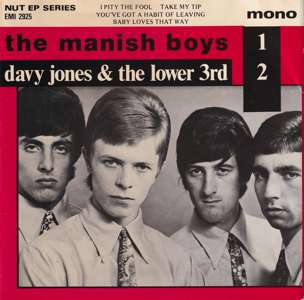
Although the original 1965 single was commercially unsuccessful, I Pity the Fool and Take My Tip were later recovered as part of the documented history of Bowie’s earliest recordings.
In March 1979, EMI reissued the two Manish Boys tracks on a four-track seven-inch EP. The reverse side contained You’ve Got a Habit of Leaving and Baby Loves That Way, recorded later in 1965 by Davy Jones and The Lower Third.
Further licensed reissues followed during the 1980s, including a See For Miles edition in 1982 and a twelve-inch picture-disc release in 1985. These releases made the previously scarce Manish Boys recordings available to a wider audience.
The 1991 compilation Early On (1964–1966) included I Pity the Fool and Take My Tip, but the versions on that collection used alternative vocal takes from the January 1965 session rather than simply reproducing both original single masters.
In 2007, the four-track collection was issued digitally under the title David Bowie 1965!. A seven-inch vinyl edition of the same EP followed as a Record Store Day release on 20 April 2013.
In July 2026, Parlophone announced that both Manish Boys recordings, together with their alternative vocal takes, would be included on David Bowie: The Shel Talmy Recordings. The collection was scheduled for release on 18 September 2026 and officially credited John Watson as the bassist in The Manish Boys.
These later releases preserve Watson’s playing as part of Bowie’s earliest recorded work. They do not represent renewed collaboration: no verified evidence has been found that Watson recorded or performed with Bowie again after leaving The Manish Boys.
Later life and career
Published histories of David Bowie and The Manish Boys contain very little verified information about John Watson’s life after the group’s association with Davie Jones ended in 1965.
Some online sources identify him as John Edward Watson and give 1944 as his year of birth. However, no sufficiently authoritative public documentation has been located to confirm those details. They are therefore not presented as established facts on this page.
No reliable account has been found of Watson’s subsequent professional career, later musical activities or present circumstances. It is also not known whether he continued to perform publicly after his time with The Manish Boys.
The bassist must not be confused with the American blues and funk musician Johnny “Guitar” Watson, whose birth name was also John Watson, or with other musicians and music-industry figures who share the same name.
If verified information supplied by Watson, his family, former band members or reliable contemporary documentation becomes available, this section can be expanded. Until then, leaving these details unconfirmed is more accurate than constructing a later biography from uncertain online references.
Legacy
John Watson’s documented association with David Bowie was brief, but it belongs to a clearly defined stage in Bowie’s early development. Watson was a member of The Manish Boys when the seventeen-year-old Davie Jones joined the already established Maidstone rhythm and blues group in 1964.
During their time together, Watson participated in live performances, appeared in the 1964 Tonight television report, entered the studio with Jones and played bass on both sides of The Manish Boys’ only released single.
His contribution is particularly significant because Take My Tip was the first Bowie composition to be commercially released. Watson also took part in the IBC session that brought Jones together with producer Shel Talmy, engineer Glyn Johns and session guitarist Jimmy Page.
There is no need to claim that Watson personally shaped Bowie’s later music or public identity. His place in the history is established by the surviving evidence: he was the bassist on two of Bowie’s earliest official recordings and a member of the group during one of the first documented periods of Bowie’s television, studio and professional live activity.
Watson’s work with Davie Jones therefore survives as part of the period immediately before the emergence of David Bowie as a professional name and independent recording identity.
Official Website & Further Information
No verified official website, authorised biography or official social-media account for John Watson of The Manish Boys has been identified. DavidBowieWorld.com will update this section if a reliable official source or confirmed first-hand contact becomes available.
Article Origin
This article has been researched and written exclusively for DavidBowieWorld.com. It is based on documented recording and release information, contemporary television and concert records, official David Bowie archive material, and published first-hand recollections from people directly involved with The Manish Boys.
The chronology of the group’s early studio work and the end of Davie Jones’s association with The Manish Boys draws in part on the detailed research of Bowie historian Kevin Cann. Recording details have been compared with the original Parlophone release, official Bowie discographical information and documented personnel from the January 1965 IBC session.
The two quotations used on this page come from Davie Jones’s surviving 1964 BBC Tonight appearance and a published first-hand recollection by Manish Boys saxophonist Woolf Byrne. No quotation has been attributed directly to John Watson because no verified interview or personal statement from him has been identified.
Where reliable biographical information about Watson is unavailable, the article deliberately leaves the matter unconfirmed rather than introducing assumptions. The page may be expanded if further contemporary documentation or verified first-hand material becomes available.
© 2026 DavidBowieWorld.com — Diedrich Streuper
