
Mick White – Drummer in David Bowie’s Manish Boys
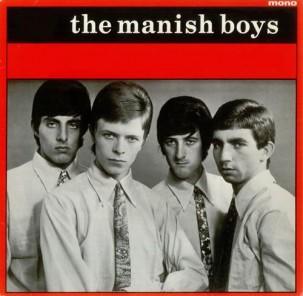
Mick White, also known as Michael Whitehead, played drums in The Manish Boys during David Bowie’s time with the group in 1964–1965. Bowie was then performing as Davie or Davy Jones.
The collaboration produced the single “I Pity the Fool” backed with “Take My Tip”. Produced by Shel Talmy, the recordings also featured session guitarist Jimmy Page.
Whitehead later shared memories of joining the band, rehearsing with its young singer and experiencing the opportunities and disappointments of their brief partnership. Those recollections give the drummer a voice within a story often told primarily through Bowie’s subsequent fame.
- Recording name: Mick White
- Also known as: Michael Whitehead; Mike Whitehead
- Instrument: Drums
- Band: The Manish Boys
- Period with Bowie: 1964–1965
- Bowie’s name at the time: Davie / Davy Jones
- Single: “I Pity the Fool” / “Take My Tip” (1965)
- Producer: Shel Talmy
- Guest session guitarist: Jimmy Page
- First-hand sources: Whitehead’s published recollections and interview
Before Bowie: joining The Manish Boys
Before meeting David Jones, Whitehead was working as a hairdresser in Gillingham, Kent. In his published recollections, he described members of The Manish Boys arriving at the salon in search of a drummer willing to go on the road.
Among them was guitarist Johnny Flux, whom Whitehead already knew. An audition followed, and Whitehead joined the group before its encounter with Bowie. His entry into the story therefore began through an existing musical friendship rather than recruitment by the future star.
An established band meets a new singer
The Manish Boys were already a Maidstone group when Bowie joined them in 1964. He had previously recorded with The King Bees, another R&B band. His move was a change of ensemble and musical setting, rather than his first encounter with rhythm and blues.
The group’s name came from Muddy Waters’s “Mannish Boy”. Their combination of guitars, organ and wind instruments placed them within the British R&B scene, while providing a different instrumental framework from Bowie’s preceding band.
First meeting at Coxheath
Whitehead remembered meeting the singer during a rehearsal at Paul Rodriguez’s parents’ house in Coxheath, near Maidstone. Bowie arrived with his manager, Leslie Conn.
The musicians tried songs together, with Bowie singing and playing instruments. Whitehead recalled the young singer’s striking appearance as well as the musical connection. Adding him also meant sharing the band’s earnings among seven members, a practical consideration they discussed before agreeing to the new line-up.
A singer who changed the atmosphere
Michael Whitehead on the young David Bowie
“His flamboyancy quickly rubbed off on the rest of us.”
— Michael Whitehead, recollections published by David Bowie News, 24 October 2018.
The remark describes Whitehead’s experience of working alongside Bowie. It is a personal memory of the singer’s effect on his bandmates, rather than evidence that the group had already developed Bowie’s later theatrical style.
The Decca audition recordings
Before the Shel Talmy sessions, The Manish Boys made audition recordings for Decca. An account drawing on keyboard player Bob Solly’s recollections places the session at Regent Sound Studios in Denmark Street on 6 October 1964.
The reported repertoire comprised “Hello Stranger”, “Duke of Earl” and “Love Is Strange”. These recordings document an earlier attempt to secure a recording opportunity, before the band’s Parlophone single appeared in March 1965.
They should be distinguished from the later recordings of “I Pity the Fool” and “Take My Tip”. The audition material did not become the band’s released single.
Clubs and the package tour
In his 2024 interview, Whitehead recalled performances at Eel Pie Island, The Witch Doctor in Hastings and Maidstone’s Star Club Ballroom. Leslie Conn helped secure work for the expanded group.
A larger opportunity followed in December 1964, when The Manish Boys joined the final six dates of a package tour featuring Gerry and the Pacemakers, Gene Pitney, The Kinks and Marianne Faithfull.
These appearances belong to Whitehead’s documented performing history with Bowie. They should be distinguished from the international tours undertaken by Bowie’s later bands.
Recording with Shel Talmy and Jimmy Page
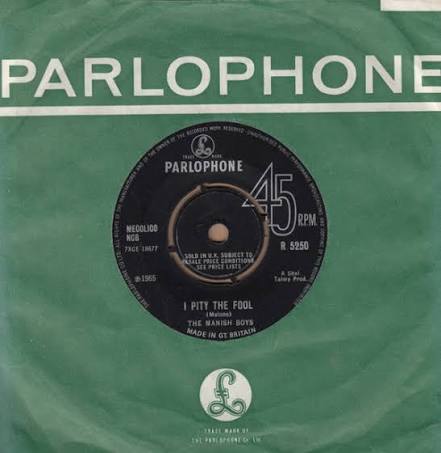
The group recorded with Shel Talmy at IBC Studios in London. Whitehead remembered a short session and the presence of Jimmy Page, who contributed guitar.
The resulting single paired a version of Bobby Bland’s “I Pity the Fool” with Bowie’s “Take My Tip”. It was released on 5 March 1965.
Page’s appearance was a session contribution. He was not a member of The Manish Boys, and Whitehead’s participation should not disappear behind the later celebrity of the visiting guitarist.
“Take My Tip” and Bowie’s early songwriting
The Manish Boys — “Take My Tip” (1965), Bowie’s first composition to appear on a released record.
“Take My Tip” was Bowie’s first composition to appear on a released record. Its inclusion made the single a document of both the band’s interpretation of American material and its singer’s developing songwriting.
White’s drumming belongs to that early recorded history. However, the available sources do not justify a detailed account of his technique, equipment or influence on Bowie’s later rhythmic ideas.
Gadzooks! It’s All Happening and the single’s reception
The Manish Boys appeared on BBC2’s Gadzooks! It’s All Happening, performing “I Pity the Fool” in an edition broadcast on 8 March 1965. The broadcast followed the single’s release on 5 March.
Publicity surrounding the appearance focused partly on the musicians’ long hair. In his later recollections, Whitehead also remembered setting up his drums on a raised platform and ducking as a television camera moved towards him.
Despite the television exposure, the single did not chart. Bowie subsequently joined The Lower Third, bringing his association with The Manish Boys to an end in spring 1965.
The end of the collaboration
Michael Whitehead on the band’s ending
“I remember being shocked.”
— Michael Whitehead, interview published by Classic Rock / Louder, 10 April 2024.
Whitehead recalled arriving for rehearsals and learning that the group was finished. His account presents the ending from a band member’s perspective: an abrupt disappointment rather than an inevitable step towards fame.
Later memories and continued music-making
In his 2018 recollections, Whitehead reported seeing Bowie perform in Sheffield in 1995. The same publication stated that Whitehead was then playing drums in his local church music group.
That information describes his circumstances in 2018; it should not be treated as confirmation of his present activities. His later testimony nevertheless shows that memories of The Manish Boys remained part of his life long after the group ended.
Archive releases and the surviving recordings
The Manish Boys recordings have appeared on later collections, including Early On (1964–1966). The dates in that compilation’s title cover several phases of Bowie’s early career, not the duration of White’s collaboration with him.
Archive releases and the surviving recordings

The Manish Boys recordings have appeared on later collections, including Early On (1964–1966). The dates in that compilation’s title cover several phases of Bowie’s early career, not the duration of White’s collaboration with him.
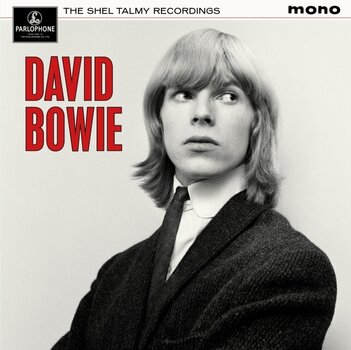
A further release, The Shel Talmy Recordings, appeared on Parlophone on 18 September 2026. Its CD and digital programme includes “I Pity the Fool” and “Take My Tip”, alongside alternative vocal versions of both songs.
The official announcement explicitly credits Mick White on drums. It separates The Manish Boys material from recordings by The Lower Third and Bowie’s solo demos.
Mick White in Bowie’s collaborative history
White’s place in Bowie’s history rests on a specific collaboration: live performances and recordings with The Manish Boys during 1964–1965.
The surviving testimony also restores something that recording credits alone cannot convey: the experience of a musician joining a working band, meeting an ambitious young singer and dealing with the group’s dissolution. That documented perspective gives the page its particular value.
Selected Manish Boys chronology
- Summer 1964: Davie Jones joins The Manish Boys after leaving The King Bees.
- August 1964: Bowie begins performing publicly with the group.
- 6 October 1964: The band makes audition recordings for Decca with Mike Smith at Regent Sound Studios, including “Hello Stranger” and “Love Is Strange”.
- 12 November 1964: Davie Jones appears on BBC television representing the Society for the Prevention of Cruelty to Long-Haired Men.
- 23 November 1964: The Manish Boys attend a BBC radio audition.
- 15 January 1965: “I Pity the Fool” and “Take My Tip” are recorded at IBC Studios with Shel Talmy.
- 23 February 1965: The band records an appearance for Gadzooks! It’s All Happening.
- 5 March 1965: Parlophone releases “I Pity the Fool” backed with “Take My Tip”.
- 8 March 1965: The group’s appearance on Gadzooks! It’s All Happening is broadcast.
- Spring 1965: Bowie’s association with The Manish Boys ends, and he continues with The Lower Third.
Official Website & Further Information
No independently verified official website for Mick White has been identified during the research for this article. Further information is available through his published recollections and interview.
The official David Bowie website provides recording
information and credits for
The Shel Talmy Recordings:
David Bowie — The Shel Talmy Recordings
First-Hand Contributions
This article draws on Michael Whitehead’s publicly available testimony, including his October 2018 recollections and the interview published by Classic Rock / Louder in April 2024.
These are published first-hand sources. They are not presented as correspondence supplied directly to DavidBowieWorld.com or as evidence that Whitehead has reviewed or endorsed this page.
Article Origin
This article has been researched and written for DavidBowieWorld.com using published first-hand recollections, historical reference material and official recording information.
Personal memories are attributed to their source. Unconfirmed biographical details and unsupported descriptions of White’s playing have been omitted.
© DavidBowieWorld.com — David Bowie Collaborations & Creative Circle Archive.
