
Johnny Flux – Guitarist in David Bowie’s Manish Boys
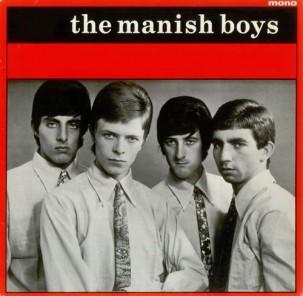
Photo: Unknown photographer.
Johnny Flux, later professionally known as John Edward, was a guitarist with The Manish Boys, the British rhythm and blues group fronted during 1964 and 1965 by Davy Jones, the young singer who would soon adopt the name David Bowie.
Flux was part of the group during the period in which it performed around Britain, appeared in publicity photographs and recorded the Parlophone single I Pity the Fool, backed with the Jones composition Take My Tip. Released in March 1965, the single remains an important surviving document of Bowie’s early development as a rhythm and blues singer and songwriter.
Johnny Flux was The Manish Boys‘ regular lead guitarist. During the recording session, however, producer Shel Talmy brought in session guitarist Jimmy Page to play the featured lead-guitar part on I Pity the Fool, while Flux contributed rhythm guitar.
After The Manish Boys ended, Flux left full-time performing and entered offshore broadcasting. He worked at Radio City before joining Radio London, where he broadcast under the name John Edward. He later became a record producer, songwriter, music publisher and entrepreneur, and created, controlled and voiced the television robot Metal Mickey.
Key Facts
- Birth name: John Edward Flux
- Professional names: Johnny Flux and John Edward
- Role with David Bowie: Guitarist in The Manish Boys
- Period with Bowie: 1964–1965
- Bowie’s professional name at the time: Davy Jones
- Shared release: I Pity the Fool / Take My Tip
- Release date: 5 March 1965
- Record label: Parlophone
- Catalogue number: R 5250
- Producer: Shel Talmy
- Guest lead guitarist on I Pity the Fool: Jimmy Page
- Offshore radio stations: Radio City and Radio London
- Radio London name: John Edward
- Later work: Songwriter, record producer, publisher and television performer
- Notable recording success: Renée & Renato’s Save Your Love
- Notable television creation: Metal Mickey
Before The Manish Boys
Before becoming known professionally as Johnny Flux, John Edward Flux developed interests that extended beyond performing music. While still living in Kent, he combined his enthusiasm for rhythm and blues with an interest in publishing, promotion and the wider entertainment business.
He became involved in the active Kent music scene and played guitar alongside saxophonist Woolf Byrne in the group that became known as The Manish Boys. Like many emerging British bands of the period, the musicians drew heavily upon American blues and rhythm and blues.
Their repertoire was influenced by performers including Muddy Waters, Bobby Bland and Bo Diddley. The group’s name was derived from Muddy Waters’ recording Mannish Boy, reflecting the musicians’ identification with the American blues tradition that was transforming British popular music during the early 1960s.
The Manish Boys existed before Davy Jones joined them. By the time he became their singer, the group had already developed its own identity and had begun establishing itself on the live rhythm and blues circuit.
Davy Jones joins The Manish Boys
Davy Jones joined The Manish Boys during 1964 after the end of his association with The King Bees. He had not yet adopted the name David Bowie and was still searching for a musical setting in which he could develop as both a singer and songwriter.
The Manish Boys offered Jones an established rhythm and blues group rather than a collection of musicians assembled specifically to accompany him. The band had its own repertoire, live experience and musical identity before his arrival.
Johnny Flux later recalled the relationship between Jones and the band with humour, questioning whether the act should be remembered as Davy Jones and The Manish Boys or as The Manish Boys with Jones as their singer. His recollection reflects the group’s view of itself as a working band rather than simply a backing group.
Like many British groups of the period, The Manish Boys experienced personnel changes during their brief existence. Flux and Woolf Byrne were among the musicians associated with the line-up during Jones’s time as vocalist and during the period that led to the recording of I Pity the Fool.
For Jones, joining The Manish Boys proved to be another important stage in his early professional development. The association gave him further experience on the British live circuit and ultimately led to a recording session with producer Shel Talmy.
A lead guitarist with Day-Glo pink hair
Johnny Flux served as The Manish Boys‘ regular lead guitarist during the period in which Davy Jones was the group’s vocalist. On stage, Flux became one of its most visually recognisable members and later remembered performing with striking Day-Glo pink hair.
The band was musically rooted in American rhythm and blues, but its appearance reflected the changing visual culture surrounding British popular music. Long hair, distinctive clothing and individual presentation were becoming increasingly important parts of a group’s public identity.
Flux’s role as The Manish Boys‘ live lead guitarist should be distinguished from the arrangement used during the recording of I Pity the Fool. For that studio session, producer Shel Talmy brought in Jimmy Page to perform the featured lead-guitar part.
Flux remained part of the session and contributed rhythm guitar. Page’s appearance was therefore a studio contribution and did not make him a regular member of The Manish Boys or permanently replace Johnny Flux.
Johnny Flux on Davy Jones and The Manish Boys
“It was my old haunt in my group ‘Davy Jones and The Manish Boys‘ days. Yus, ole David Bowie’s fledgling backing group, or maybe he was our singer, the jury’s still out on that one.”
Performing around Britain
The Manish Boys performed on the British club and theatre circuit during the period in which Davy Jones was their singer. Their live repertoire remained centred on American blues and rhythm and blues, the music that had originally brought the members together.
Johnny Flux later remembered appearing with established performers including Screaming Lord Sutch. Sutch’s theatrical presentation made him a distinctive figure on the British live circuit, and Flux would renew their professional association many years later as a record producer.
The Manish Boys also gained experience through larger engagements and package shows organised by promoter Terry King. Flux recalled appearing on a bill involving Gene Pitney, Marianne Faithfull and The Kinks.
Such engagements exposed the group to larger audiences and allowed its members to observe nationally recognised performers at close quarters. For Flux, these concerts formed the most prominent period of his career as a touring guitarist.
Recording I Pity the Fool
On 15 January 1965, The Manish Boys entered IBC Studios in London to record with American producer Shel Talmy. Talmy had already established himself through his work with The Kinks and was becoming one of the most important independent producers working in Britain.
The principal song recorded was I Pity the Fool, written by Deadric Malone and associated particularly with American blues singer Bobby “Blue” Bland. The choice reflected the band’s continuing commitment to American rhythm and blues.
Johnny Flux participated in the session as a member of The Manish Boys. Talmy nevertheless brought in the young session guitarist Jimmy Page to play the featured lead-guitar part, while Flux moved to rhythm guitar.
The use of session musicians was common in British recording studios during the 1960s. Producers sometimes selected outside players to obtain a particular sound or to complete recordings efficiently within the available studio time.
Page’s participation has attracted considerable attention because of his later international success. At the time, however, he was building his reputation as an in-demand London session guitarist.
The resulting recording preserved Davy Jones‘s developing rhythm and blues vocal style and remains the only commercially released record credited to The Manish Boys.
The Manish Boys with Davy Jones – I Pity the Fool, released in 1965
I Pity the Fool preserves Johnny Flux‘s only commercially released recording with Davy Jones and The Manish Boys. The track was recorded at IBC Studios in London on 15 January 1965 and produced by Shel Talmy.
Jimmy Page played the featured lead-guitar part, while Johnny Flux contributed rhythm guitar. The single was released by Parlophone on 5 March 1965.
Shel Talmy and Jimmy Page
Shel Talmy’s decision to use Jimmy Page reflected his established approach to studio production. Talmy regularly worked with skilled session musicians and used Page on a number of recordings during the period.
For Johnny Flux, the decision meant temporarily giving up his normal lead-guitar position for the studio performance. It did not alter his place within The Manish Boys, where he remained the regular guitarist during live appearances.
Page played the prominent guitar part on I Pity the Fool, including the distorted solo that became one of the recording’s most recognisable features. His contribution linked the session to another musician who would later become internationally famous.
Although Page’s presence is historically notable, the recording should not be represented as a collaboration between Bowie and a fully formed Led Zeppelin guitarist. In January 1965, both Jones and Page were still young musicians establishing their professional identities within the London music industry.
Take My Tip
During the same recording session, The Manish Boys also recorded Take My Tip. The song was written by Davy Jones and was issued as the B-side of I Pity the Fool.
Take My Tip is historically important because it was the first composition written by Jones to receive a commercial release. It therefore represents an early surviving example of his development as a songwriter several years before his breakthrough as David Bowie.
The song was not a second single and was not written by Ray Davies. It formed part of the same Parlophone release as I Pity the Fool, with the two tracks documenting the only commercial recording session released under The Manish Boys‘ name.
While the A-side drew directly upon American blues, Take My Tip demonstrated Jones’s ambition to contribute original material rather than relying entirely upon existing rhythm and blues songs.
The Manish Boys – Take My Tip, written by Davy Jones (1965)
Take My Tip was written by Davy Jones and released as the B-side of I Pity the Fool on 5 March 1965. It became the first composition by the future David Bowie to receive a commercial release.
Although overshadowed by the A-side, the recording remains historically important because it documents Jones’ earliest development as a songwriter while Johnny Flux was still a member of The Manish Boys.
The Parlophone single
Parlophone released I Pity the Fool, backed with Take My Tip, on 5 March 1965 under catalogue number R 5250.
The single did not enter the British charts and failed to provide the commercial breakthrough the group had hoped to achieve. Nevertheless, it remains historically important as the only record released under The Manish Boys‘ name.
The recording brought together several figures who would later become associated with major developments in British popular music. Davy Jones performed the lead vocal, Johnny Flux participated as a member of The Manish Boys, Shel Talmy produced the session and Jimmy Page contributed the featured guitar work.
For Bowie historians, the release is particularly significant because it contains Jones’s earliest commercially issued composition, Take My Tip, as well as one of the strongest surviving examples of his early rhythm and blues singing.
The long-hair publicity campaign
During his time with The Manish Boys, Davy Jones became involved in a publicity campaign concerning the treatment of men with long hair. In November 1964 he appeared on television as the spokesman for the humorously named Society for the Prevention of Cruelty to Long-Haired Men.
The campaign generated newspaper and television attention by presenting long-haired young men as victims of unfair treatment. Although it was delivered with apparent seriousness, it also functioned as a carefully constructed promotional device for Jones and The Manish Boys.
The subject returned when the band appeared on the BBC2 programme Gadzooks! It’s All Happening in March 1965 to perform I Pity the Fool. Reports suggesting that the BBC had imposed special conditions because of the group’s hair formed part of the surrounding publicity rather than evidence of a straightforward broadcasting ban.
Johnny Flux appeared with The Manish Boys during this period and was part of the band’s distinctive long-haired public image. The episode is important because it demonstrates that Jones was already exploring how appearance, publicity and performance could be combined long before the carefully constructed identities of his later career.
Davy Jones (later David Bowie) appears on the BBC’s Tonight programme on 12 November 1964 to discuss the Society for the Prevention of Cruelty to Long-Haired Men.
This rare BBC interview marked David Jones‘ first known television appearance. Speaking on behalf of the Society for the Prevention of Cruelty to Long-Haired Men, he discussed the criticism that long-haired young men regularly faced in Britain during the mid-1960s.
The appearance generated valuable publicity for The Manish Boys, with Johnny Flux serving as the band’s guitarist during this period. Looking back, the broadcast provides a fascinating glimpse of Bowie’s confidence in front of the cameras long before he became an international star.
Johnny Flux was a member of the group throughout this period, making the interview part of the band’s shared early history. Looking back, the broadcast is now recognised as David Bowie’s first televised appearance and an early example of his ability to attract public attention through image as well as music.
Touring with established artists
During the final phase of The Manish Boys, the group continued performing on the British live circuit. These engagements took the musicians beyond their Kent origins and brought them into contact with established recording artists and professional tour organisations.
Johnny Flux remembered appearances connected with performers including Gene Pitney, Marianne Faithfull, The Kinks and Screaming Lord Sutch. The concerts provided the group with experience of larger venues and audiences than those encountered during its earliest local performances.
At the same time, the lack of commercial success for I Pity the Fool made the group’s long-term future uncertain. Jones remained determined to continue as a recording artist, while Flux began considering a very different professional direction.
The final performances of The Manish Boys
The Manish Boys continued performing for a short period after the release of their Parlophone single, but the hoped-for commercial breakthrough did not follow. During 1965, the members began moving towards different careers and the group came to an end.
For Johnny Flux, the final performances coincided with a major decision. Having developed an interest in offshore radio, he applied for a position with Radio City rather than seeking another permanent role as a touring guitarist.
Davy Jones continued pursuing a recording career. He next became associated with The Lower Third and subsequently adopted the professional name David Bowie to avoid confusion with the American performer Davy Jones of The Monkees.
Flux later remembered the final separation of the group with characteristic humour, recognising in retrospect that it marked the point at which his own career and Bowie’s career permanently diverged.
Johnny Flux on the end of The Manish Boys
“It was the last time we played together. I got the gig and the band decided to split. Jones had metamorphosised into Bowie and was soon on his way to stardom.”
Applying to Radio City
Johnny Flux had become fascinated by offshore commercial radio, which offered British audiences an alternative to the limited popular-music programming available through the established broadcasters.
He prepared a demonstration tape and sent it to Radio City’s offices in Denmark Street, London. Flux later recalled receiving a reply from Dorothy Calvert, who invited him to meet representatives of the station.
Radio City transmitted from the former Maunsell sea forts at Shivering Sands in the Thames Estuary. Working there meant leaving behind the familiar routine of rehearsals, concert venues and road travel for an isolated broadcasting environment offshore.
Flux was accepted by the station and began a new career as a broadcaster. Saxophonist Woolf Byrne, his former colleague in The Manish Boys, also became associated with Radio City.
From guitarist to radio presenter
Joining Radio City marked the effective end of Johnny Flux‘s full-time career as a performing guitarist. Instead of moving into another rhythm and blues band, he entered the rapidly developing world of commercial broadcasting.
Radio presentation required a different range of skills. Flux had to introduce records, communicate directly with listeners and maintain the pace of live programmes while working with the station’s small team of broadcasters and engineers.
His previous experience as a musician and stage performer helped him adapt to working behind a microphone. An understanding of records, audiences and live presentation gave him a useful foundation for his new profession.
At Radio City, Flux used the name Johnny Flux and adopted Sweet Dreams by The Shadows as his theme music. His time at the station established the broadcasting experience that later enabled him to move to the larger Radio London.
Life aboard Radio City
Radio City broadcast from the Shivering Sands sea forts, a group of former wartime structures standing in the Thames Estuary. Presenters, engineers and support staff lived and worked in an environment far removed from a conventional radio studio.
Personnel reached the station by boat and transferred onto the forts in conditions that could be difficult or hazardous. Supplies, records, food and technical equipment also had to be transported from the mainland.
Once aboard, members of the small crew worked closely together. Broadcasting duties were combined with the practical demands of maintaining daily life on an isolated offshore structure.
Bad weather could delay deliveries and crew changes, extending the length of time broadcasters remained offshore. Despite the basic conditions, Flux remembered Radio City as an enjoyable and formative period of his professional life.
Broadcasting from Shivering Sands
Radio City’s programmes were transmitted to listeners across south-east England from studios installed within the converted sea forts. The station operated with a comparatively small staff, requiring presenters and engineers to cooperate closely.
Flux worked among broadcasters with differing personalities and presentation styles. His own recollections describe the companionship, humour and occasional tensions that developed among people living and working together in such unusual circumstances.
The experience gave him practical knowledge of commercial radio programming and live presentation. It also demonstrated that he could establish a professional identity outside the world of touring bands.
After several months at Radio City, Flux applied to join Radio London, a larger offshore station with a powerful signal and a substantial audience.
Moving to Radio London
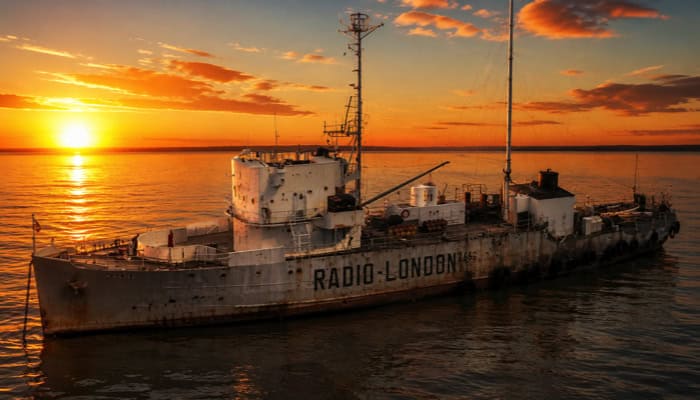
In November 1965, Johnny Flux transferred from Radio City to Radio London, popularly known as Big L. The station broadcast from the MV Galaxy, anchored off the Essex coast.
Radio London operated a polished American-influenced format and became one of the most successful offshore commercial stations serving Britain during the 1960s. Joining its presenting team represented an important professional step for Flux.
Programme director Ben Toney encouraged him to adopt a different broadcasting name. Flux chose his first two names and became known to Radio London listeners as John Edward.
The move also brought a considerable improvement in his earnings. In his own recollections, Edward contrasted the modest sums earned during his years as a musician with the substantially higher weekly wage he received at Big L.
Radio London helped consolidate his identity as a professional broadcaster and introduced the name John Edward, which he continued to use throughout much of his later work in music and television.
The Radio London Story – documentary about Wonderful Radio London (Big L)
In November 1965 Johnny Flux joined Wonderful Radio London, where he adopted the professional name John Edward. Broadcasting from the MV Galaxy, the station became one of Britain’s most influential offshore radio broadcasters during the 1960s.
Working at Big L represented a major step in Edward’s career, giving him experience at one of the best-known commercial radio stations before he moved into record production, songwriting and television.
Entering the record business
John Edward‘s offshore-radio career formed a bridge between his years as a performing musician and his later work behind the scenes in the entertainment industry. His knowledge of records, broadcasting and audiences gave him a broad understanding of both the creative and commercial sides of popular music.
After leaving offshore radio, he became involved in record production, songwriting, music publishing and artist development. Rather than returning permanently to the stage, he increasingly concentrated on creating and managing projects for other performers.
Working with his wife Sue Edward, he developed independent production and publishing interests. Their partnership would eventually produce the greatest commercial recording success of his career.
This transition represented another major reinvention. Within only a few years, Flux had moved from rhythm and blues guitarist to offshore disc jockey and then into the business of writing, producing and releasing records.
Record producer and entrepreneur
Under the name John Edward, Flux developed a varied career as a songwriter, producer, publisher and independent entrepreneur. His work was not confined to a single genre or type of performer.
He drew upon the different forms of experience he had accumulated since the early 1960s. His years as a guitarist gave him practical knowledge of musicians and recording sessions, while offshore radio had taught him how records were presented and promoted to a mass audience.
Edward’s independent approach allowed him to develop recordings and entertainment concepts outside the structure of a single major record company. He worked with Sue Edward on songwriting and publishing while continuing to produce individual projects.
His later career demonstrated that his brief association with Davy Jones was only one chapter in a much broader professional life. He created successful work in records and television that reached audiences who were often unaware of his earlier place in David Bowie’s history.
Renée & Renato and Save Your Love
John Edward achieved his greatest commercial recording success through his work with the vocal duo Renée & Renato. Together with Sue Edward, he wrote the romantic ballad Save Your Love.
John Edward also produced the recording and released it through his independent label, Hollywood Records. The British single carried the catalogue number HWD 003 and was backed with If Love Is Not the Reason.
Released in 1982, Save Your Love gradually gained public attention before reaching number one on the UK Singles Chart during the Christmas period. It remained at number one for four consecutive weeks.
The achievement represented far more than a general association with the project. Edward was directly responsible as co-writer, producer and label owner, making the record one of the clearest examples of his independent creative and commercial work.
The success also demonstrated the extraordinary distance his career had travelled since The Manish Boys. The former rhythm and blues guitarist had become the producer and co-writer of one of Britain’s most widely recognised number-one singles of the early 1980s.
Hollywood Records
Hollywood Records provided John and Sue Edward with an independent platform through which they could develop and release their own recording projects.
The label is most closely associated with the British release of Renée & Renato’s Save Your Love. Its success demonstrated that an independently developed recording could reach a national audience and compete with releases backed by much larger record companies.
John Edward‘s work through Hollywood Records combined several areas of his professional experience. He was involved not only in producing recordings but also in songwriting, artist development, publishing and the commercial organisation required to bring a record to market.
Hollywood Records should not be confused with a recording facility called Hollywood Studios. The documented connection concerns Edward’s record label and production activities.
Creating Metal Mickey
During the late 1970s, John Edward created Metal Mickey, a five-foot-tall robot character with a distinctive electronic voice and a mischievous personality.
Edward did more than provide the voice. He created the character, controlled the robot during appearances and spoke for Metal Mickey from offstage. This combination of mechanical operation, vocal performance and improvisation gave the character a convincing independent personality.
Metal Mickey appeared on British television before receiving a dedicated comedy series. The robot’s exchanges with children and presenters demonstrated Edward’s ability to respond spontaneously while remaining entirely in character.
The creation represented another extension of Edward’s varied entertainment career. His experience as a live performer and broadcaster proved valuable in controlling the pace, humour and vocal personality of the robot.
The Metal Mickey television series

A dedicated Metal Mickey television series began on ITV in 1980. The children’s comedy placed the robot within the household of the fictional Popkiss family and developed its humour through Metal Mickey’s disruptive observations and exchanges with the human characters.
Former Monkees member Micky Dolenz produced the series and directed many of its episodes. John Edward remained responsible for controlling and voicing the robot.
The series ran until 1983 and brought Metal Mickey to a nationwide audience. Its popularity made the robot one of the most recognisable British children’s television characters of the early 1980s.
Many viewers had no reason to know that Metal Mickey’s creator and voice had once played guitar alongside the young Davy Jones. The programme nevertheless became one of the defining achievements of Edward’s own career.
Working with Screaming Lord Sutch
John Edward later renewed his association with Screaming Lord Sutch, whom he had known from the British live circuit during his years with The Manish Boys.
Edward produced Sutch’s recording I’m a Ghost. In his own recollections, he stated that it was recorded at Mayfair Studios during the same session as Metal Mickey’s Lollipop, which he also produced.
The session brought together two very different strands of his career: his long-standing connection with Britain’s early rock and rhythm and blues scene and his later work with the Metal Mickey character.
It also demonstrated the durability of professional relationships formed during the 1960s. Although Edward and Sutch had followed different career paths, they remained connected through the wider British entertainment industry.
Screaming Lord Sutch performing Jack the Ripper, one of his signature stage performances.
Johnny Flux first encountered Screaming Lord Sutch while touring with The Manish Boys during the mid-1960s. Decades later, the two men worked together again when Flux produced Sutch’s recording I’m a Ghost.
The collaboration reflected the long-lasting friendships formed on the British rhythm and blues circuit and demonstrated how Flux remained connected with many of the musicians he had first met during David Bowie’s earliest professional years.
Remembering David Bowie
John Edward later shared detailed recollections of his years as Johnny Flux, including memories of The Manish Boys, Davy Jones and the transition from performing to offshore radio.
His accounts are particularly valuable because they describe Bowie’s career before international fame. They preserve details of local venues, payments, fellow musicians, touring, recording and the practical realities of life in a working rhythm and blues group.
Edward generally presented these memories with humour and without portraying The Manish Boys as a fully developed version of Bowie’s later career. His recollections instead show a group of young musicians attempting to build professional careers in a highly competitive period of British popular music.
For Bowie historians, such testimony adds personal context to the surviving recordings, photographs and contemporary reports. It helps document a formative period from which relatively little film or recorded material survives.
Legacy
Johnny Flux occupies a distinctive place in David Bowie’s early professional history. As a guitarist in The Manish Boys, he performed alongside Davy Jones during 1964 and 1965 and participated in the session that produced I Pity the Fool and Take My Tip.
The recording is significant not only as the sole Parlophone release by The Manish Boys but also because its B-side was the first commercially released composition written by the future David Bowie.
Flux’s own career subsequently developed in directions entirely separate from Bowie’s. As John Edward, he became an offshore radio presenter, songwriter, record producer, publisher, label operator and television performer.
His work on Renée & Renato’s Save Your Love established him as the co-writer and producer of a British Christmas number-one single, while Metal Mickey became an enduring reminder of his imagination and ability as a character creator and performer.
Johnny Flux should therefore be remembered not merely as an early Bowie associate but as an accomplished entertainment professional with an independent career spanning live music, offshore broadcasting, record production and television.
Official Website & Further Information
Johnny Flux shared detailed first-hand memories of his career through autobiographical writings and interviews, including recollections of The Manish Boys, Radio City, Radio London, record production and Metal Mickey. These accounts provide important personal context for documenting his association with David Bowie and his wider professional life.
DavidBowieWorld.com is dedicated to documenting the careers of David Bowie’s collaborators through carefully researched historical information and, where available, first-hand contributions from the artists themselves. This page will continue to be updated as new verified information becomes available.
Article Origin
This article has been compiled from contemporary reports, surviving recordings, official discographical information, offshore-radio archives, television production records and documented first-hand recollections by Johnny Flux. Personal memories have been identified as recollections rather than presented as independently documented facts.
© DavidBowieWorld.com — David Bowie Collaborations & Creative Circle Archive.
