John “Ego” Eager – Drummer with David Bowie and The Buzz
John “Ego” Eager was the drummer and a backing vocalist with David Bowie and The Buzz, the group formed around Bowie in February 1966. Eager joined at a transitional point in Bowie’s early career, shortly after the end of his association with The Lower Third and during the period in which he was establishing David Bowie as his permanent professional name.
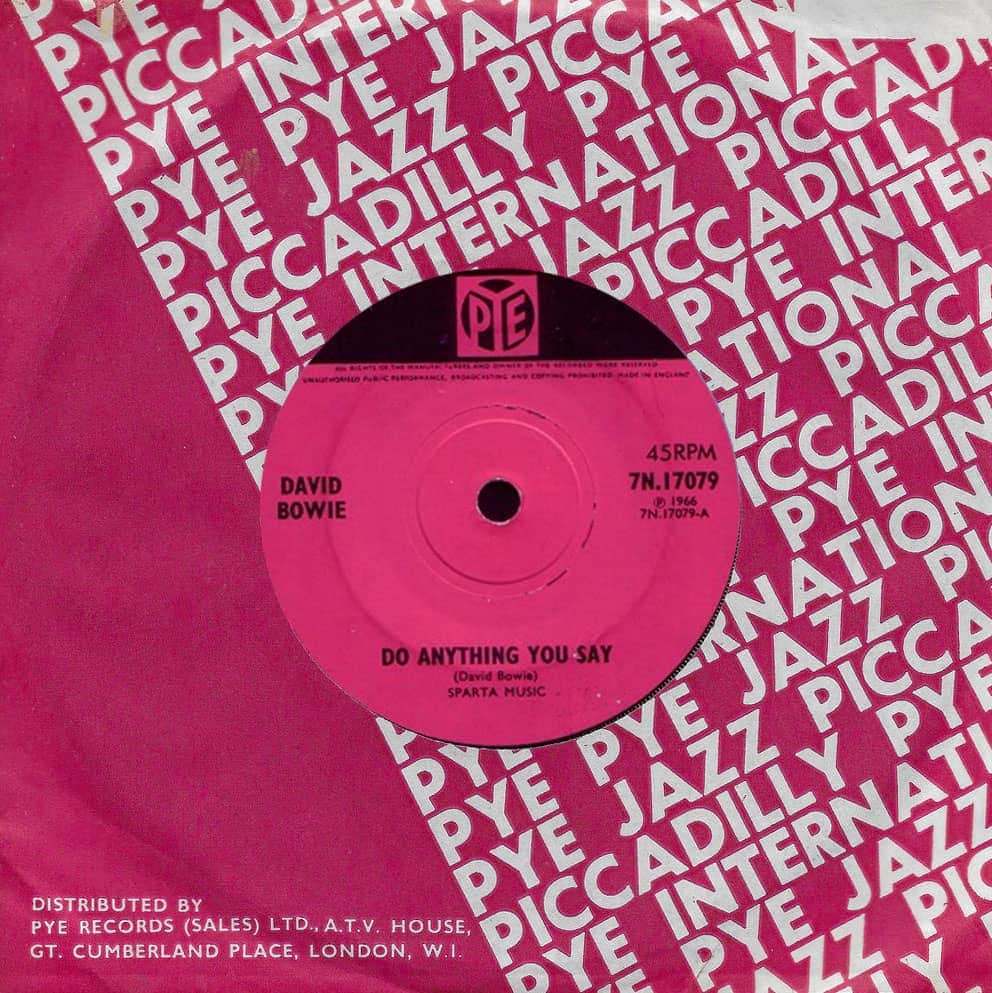
Eager was present throughout the main period of The Buzz‘s activity. He performed with Bowie at clubs, ballrooms and other venues around Britain, took part in the group’s television appearance on Ready Steady Go! and contributed to studio recordings made during 1966. His documented work included drums and vocals on Do Anything You Say, Bowie’s first single to be released simply under the name David Bowie, and drums on its B-side, Good Morning Girl.
The Buzz existed for less than a year, but the group occupied an important position between Bowie’s earlier rhythm-and-blues bands and the increasingly individual direction he pursued after 1966. During Eager’s time in the group, Bowie maintained a demanding live schedule, continued writing new material and worked with producer Tony Hatch at Pye Records.
Very little reliable biographical information about Eager’s life outside his work with Bowie has been published. This page therefore concentrates on the period that can be documented: his recruitment in February 1966, his live and studio work with David Bowie and The Buzz, and his participation in recordings connected with Bowie’s early career.
- Name: John Eager
- Nickname: “Ego”
- Instrument: Drums
- Additional role: Backing vocals
- Associated act: David Bowie and The Buzz
- Audition: 3 February 1966
- Period with The Buzz: February–2 December 1966
- First documented performance with the group: Mecca Ballroom, Leicester, 10 February 1966
- Television appearance: Ready Steady Go!, broadcast 4 March 1966
- First confirmed single recording: Do Anything You Say / Good Morning Girl
- Recording date: 7 March 1966
- Producer of that single: Tony Hatch
- Regular bandmates: Derek “Dek” Fearnley and Derek “Chow” Boyes, with John “Hutch” Hutchinson and later Billy Gray on guitar
- End of The Buzz: Bowie and Ralph Horton informed the musicians on 25 November 1966 that the group would no longer continue as Bowie’s regular backing band; its final documented performance took place on 2 December 1966
A musician with a limited surviving biography
Unlike several musicians who worked with Bowie later in his career, John Eager did not leave behind a widely documented public biography. Reliable published information about his date and place of birth, family background, musical education and earliest bands is extremely limited. It would therefore be misleading to construct a conventional account of his childhood or early musical development without adequate evidence.
What can be established is that Eager was active as a drummer in London by early 1966 and was among the musicians considered when Bowie needed a new backing group. Contemporary documentation and later histories of the period consistently identify him by the nickname “Ego”, although professional credits also appear under the name John Eager.
Eager’s documented place in Bowie’s career begins immediately after a significant change in the singer’s professional circumstances. Bowie’s working relationship with The Lower Third had ended, leaving him without a regular group at a time when new performances and recording work were already being planned. A replacement band therefore had to be assembled quickly.
Auditioning for David Bowie
On 3 February 1966, musicians were auditioned for the new group that would support David Bowie. John Eager was among those who took part and was offered the position of drummer shortly afterwards. The auditions marked the beginning of a new working unit rather than a continuation of The Lower Third under another name.
A further round of auditions followed on 6 February 1966. Guitarist John “Hutch” Hutchinson joined the emerging line-up, while bassist Derek “Dek” Fearnley and keyboard player Derek “Chow” Boyes completed the central group. These musicians became the first established version of David Bowie and The Buzz.
The name distinguished Bowie’s new backing group from the bands with which he had previously worked. Although posters and contemporary notices did not always use the billing consistently, the group became known as David Bowie and The Buzz. Bowie remained the principal singer, songwriter and public focus, while Eager, Fearnley, Boyes and Hutchinson provided the instrumental foundation and supporting vocals.
The formation of the group took place at considerable speed. Rehearsals began on 7 February 1966, only days after the first auditions. The musicians had little time to establish a shared repertoire before beginning a schedule that included club appearances, ballroom engagements and promotional work.
The first performances by The Buzz
The first documented live appearance by the new group took place at the Mecca Ballroom in Leicester on 10 February 1966. This performance came one week after Eager’s audition and three days after rehearsals had begun, demonstrating how quickly Bowie and his management needed the new band to become operational.
On 11 February 1966, Bowie and The Buzz appeared at the Marquee Club in London, supporting The T-Bones. The Marquee was already an important venue within London’s rhythm-and-blues and emerging rock scene, and it soon became one of the locations most closely associated with the group’s short history.
The following day, 12 February 1966, the band took part in an afternoon performance connected with Radio London’s Inecto programme at the Marquee. A further engagement followed later that day at Bowes Lyon House in Stevenage. The schedule continued with a performance at The Downs in Hassocks on 13 February and an appearance at Crawley Boys’ Club on 19 February.
These early engagements placed Eager within a working band that had to move rapidly between different kinds of venues. The surviving chronology includes London clubs, provincial ballrooms, youth clubs, town halls and other performance spaces. The Buzz was not assembled solely for studio recordings or occasional promotional appearances; it functioned as Bowie’s regular live group during much of 1966.
Eager’s role was not limited to keeping time behind the other musicians. The documented personnel for the period also identifies him as a supporting vocalist. The use of group vocals became particularly evident on the recordings made with producer Tony Hatch, where the voices of the individual Buzz members formed part of the arrangement around Bowie’s lead performance.
Preparing a new single
The Buzz began preparing original material almost immediately after the first live engagements. On 22 February 1966, Bowie and the group recorded a demonstration version of Do Anything You Say at Regent Sound Studios in London. Producer Tony Hatch, who had already worked with Bowie on Can’t Help Thinking About Me, attended the session.
Can’t Help Thinking About Me had been recorded with The Lower Third in December 1965 and released on 14 January 1966. The preparation of Do Anything You Say was therefore important for The Buzz because it gave the newly formed group an opportunity to participate in a recording intended for Bowie’s next single.
Hatch accepted Do Anything You Say as the proposed follow-up. Before the final recording session took place, however, Eager and the other members of The Buzz were given an early opportunity to appear with Bowie on national television.
Ready Steady Go!
On 3 March 1966, David Bowie and The Buzz attended rehearsals for the television programme Ready Steady Go! at Rediffusion’s studios in Wembley. The group also recorded a new backing track for Can’t Help Thinking About Me, the song Bowie had originally recorded with The Lower Third.
The Buzz did not play on the commercially released Pye single of Can’t Help Thinking About Me. Eager’s connection to the song came through the newly recorded television backing track and the appearance by Bowie’s current group. This distinction is important because the television performance should not be mistaken for evidence that Eager played on the original 1965 studio recording.
Bowie and The Buzz appeared on Ready Steady Go! on 4 March 1966. Bowie performed a new lead vocal over the backing track prepared the previous day, while the band appeared with him during the televised performance. The line-up consisted of John “Hutch” Hutchinson on guitar, Derek “Dek” Fearnley on bass, Derek “Chow” Boyes on keyboards and John “Ego” Eager on drums.
The appearance placed Eager and the newly formed group alongside Bowie during one of his earliest surviving periods of national television exposure. It also visually introduced The Buzz as Bowie’s new backing band, even though the song being promoted had originated during his preceding association with The Lower Third.
The television engagement did not interrupt the group’s live schedule. On the same day as the broadcast, Bowie and The Buzz also had documented engagements at Chislehurst Caves and the Marquee Club. Their Marquee appearance formed part of a continuing series of Friday performances at the London venue.
Recording Do Anything You Say
David Bowie – Do Anything You Say, featuring John Eager on drums and backing vocals
On 7 March 1966, Bowie and The Buzz entered Pye Studios in ATV House at 40 Bryanston Street, London, to make the final recording of Do Anything You Say. Tony Hatch produced the session and also played piano.
The documented personnel consisted of David Bowie on lead vocals, John “Hutch” Hutchinson on guitar and vocals, Derek “Dek” Fearnley on bass and vocals, Derek “Chow” Boyes on organ and vocals, and John “Ego” Eager on drums and vocals. The recording is therefore one of the clearest surviving examples of Eager’s dual role within The Buzz as both drummer and supporting vocalist.
The band also recorded Good Morning Girl during the same session. Written by Bowie, it was selected as the B-side of the forthcoming single. Eager is credited with drums and vocals on the recording, alongside Bowie, Hutchinson, Fearnley and Boyes.
The recordings were made by the working group rather than by an independently assembled team of session musicians. The instrumental and vocal personnel identifies the members of The Buzz individually, while Tony Hatch’s piano was added to the band’s established guitar, organ, bass and drums line-up.
Do Anything You Say was released by Pye Records on 1 April 1966, with Good Morning Girl on the reverse. Although The Buzz performed on both recordings, the single was credited simply to David Bowie. It was the first single released solely under the David Bowie name, without a band receiving joint billing on the label.
The single did not enter the national charts. Its commercial performance did not bring Bowie the breakthrough that he and his management were seeking, but it remains an important document of The Buzz as a studio group. For John Eager, it provided a clearly credited connection to two officially released Bowie recordings from 1966.
Good Morning Girl
David Bowie – Good Morning Girl, featuring John Eager on drums and backing vocals
Good Morning Girl was recorded at Pye Studios on 7 March 1966, during the same session as Do Anything You Say. Tony Hatch produced the recording.
The documented personnel consisted of David Bowie on lead vocals, John “Hutch” Hutchinson on guitar and vocals, Derek “Dek” Fearnley on bass and vocals, Derek “Chow” Boyes on organ and vocals, and John “Ego” Eager on drums and vocals. Tony Hatch also contributed piano.
The song was released as the B-side of Do Anything You Say by Pye Records on 1 April 1966. Although The Buzz performed on the recording, the single was credited solely to David Bowie.
Together, the two sides of the single provide the clearest commercially released document of The Buzz as Bowie’s working studio group. On Good Morning Girl, Eager’s contribution extended beyond the drum kit to the ensemble backing vocals.
The Marquee Club and the Friday performances
The Marquee Club became a central venue during Eager’s months with The Buzz. Beginning on 25 February 1966, the group appeared there on a series of Fridays connected with shows headed by The Alan Price Set. These engagements gave the recently assembled band a recurring London platform while it continued to perform elsewhere around Britain.
The Friday appearances formed only part of the group’s association with the Marquee. The venue’s manager, Jack Barrie, also offered Bowie a regular series of Sunday afternoon events. Promoted as the Bowie Showboat, the series began on 10 April 1966.
The Bowie Showboat
The first Bowie Showboat took place at the Marquee Club on 10 April 1966. The Sunday events ran from 3pm until 6pm and generally included two performances by Bowie and The Buzz, together with recorded music presented by a disc jockey. Ray Peterson appeared in that role, while Bowie also occasionally played records during the events.
Nine Bowie Showboat events were held between 10 April and 12 June 1966. They took place on 10, 17 and 24 April; 1, 8, 15 and 22 May; and 5 and 12 June. There was no Bowie Showboat on 29 May because Bowie and The Buzz were booked to perform at Blackpool’s South Pier.
The Sunday afternoon residency should not be interpreted as evidence that The Buzz performed only at the Marquee during this period. The group frequently travelled to other engagements before or after its London appearances. On 10 April, for example, the musicians performed at the Marquee during the afternoon and were also booked to appear at the Cedar Club in Birmingham that evening.
The surviving schedule shows that Eager was part of a regularly working live group. During April and May 1966, Bowie and The Buzz appeared at venues including the California Ballroom in Dunstable, the Wallaby Club in Chester, the Victoria Drill Hall in Newmarket, the Refectory in Golders Green, the University of Leeds and Greens Playhouse in Glasgow.
Some dates involved more than one engagement. The combination of Sunday afternoon performances at the Marquee with evening appearances outside London required the musicians to travel between venues on the same day. The chronology illustrates the practical reality of The Buzz as a touring backing group during this phase of Bowie’s career.
For Eager, the Marquee performances represented the most sustained documented residency of his time with Bowie. They placed him behind Bowie during a period in which the singer was attempting to build a regular audience, promote his Pye recordings and establish a recognisable identity separate from his previous bands.
The first attempt to record I Dig Everything
Following the release of Do Anything You Say, Bowie began preparing another single for Pye Records. The new song was I Dig Everything, an original composition reflecting the language and atmosphere of contemporary London. The Buzz incorporated the song into its work during the continuing series of live engagements in 1966.
An initial recording session took place at Pye Studios in Marble Arch, London, on 6 June 1966. Tony Hatch again acted as producer. Bowie and The Buzz participated in the session, with John Eager playing as a member of the group.
Additional musicians and vocalists were brought into the studio. The session included backing vocalists Madeline Bell, Kiki Dee and Lesley Duncan, together with trumpeter Andy Kirk, saxophonist Pete Sweet and trombonist Graham Livermore.
The session did not produce a master that Tony Hatch considered suitable for release. The musicians had not been given sufficient opportunity to prepare the complete arrangement together, and the attempted recording was abandoned. Bowie and The Buzz intended to undertake further rehearsal before trying the song again.
Eager’s participation in this first attempt must be distinguished from the version subsequently issued by Pye Records. Although he took part in the abandoned group session on 6 June, he did not play drums on the commercially released recording of I Dig Everything.
John Hutchinson leaves The Buzz
The line-up of The Buzz changed soon after the unsuccessful recording session. Guitarist John “Hutch” Hutchinson left the group on 15 June 1966. He had been part of the band since the February auditions and had played alongside Eager on Do Anything You Say, Good Morning Girl and the television backing track prepared for Can’t Help Thinking About Me.
Following Hutchinson’s departure, auditions for a replacement guitarist were held in the basement of the Church of the Annunciation, Marble Arch, on Bryanston Street in London. The search continued over several days, but no immediate replacement was added to the line-up.
The remaining musicians continued to honour live engagements while the auditions were taking place. Bowie, Eager, Derek Fearnley and Derek Boyes consequently performed several June dates as a four-piece, without a dedicated lead guitarist.
One of the musicians who auditioned but did not join The Buzz was Pete Hampshire. Hampshire later played guitar on Bowie’s 1967 recording of The Laughing Gnome, but he was not part of the regular Buzz line-up and should not be listed as one of Eager’s bandmates in the group.
Billy Gray joins the group
Guitarist Billy Gray was recruited before the end of June 1966. His arrival restored The Buzz to a five-piece line-up consisting of Bowie, Gray, Derek “Chow” Boyes, Derek “Dek” Fearnley and John “Ego” Eager.
The first documented performance by this five-piece line-up took place at the California Ballroom in Dunstable on 27 June 1966. Bowie and The Buzz had already appeared at the venue on several occasions, including performances on 23 April, 23 May, 6 June, 11 June and 20 June.
Gray’s recruitment allowed the band to return to an arrangement in which a designated guitarist played alongside Bowie’s vocals, Boyes’ keyboards, Fearnley’s bass and Eager’s drums. The personnel change did not alter Eager’s position within the rhythm section, and he continued as the group’s regular drummer.
The revised line-up remained active through the summer and autumn of 1966. The group continued performing at the Marquee Club and travelled to engagements outside London, while Bowie sought a new recording direction following the limited commercial response to his first two Pye singles.
The released version of I Dig Everything
Tony Hatch did not use the recording made by Bowie and The Buzz on 6 June as the master for the new single. Instead, a separate session took place at Pye Studios on 5 July 1966. For this recording, Hatch employed session musicians rather than Bowie’s regular backing group.
Bowie provided the lead vocal, but Eager, Fearnley, Boyes and Gray did not perform on the released master. The names of all the session musicians on the final recording have not been reliably established. The finished arrangement included Hammond organ, guitar, bass, drums, percussion, flute and backing vocals.
The B-side, I’m Not Losing Sleep, was also completed during the July session with session musicians. Eager should therefore not be credited as the drummer on either side of the commercially released single.
Pye Records released I Dig Everything with I’m Not Losing Sleep on 19 August 1966. Like Do Anything You Say, the single was credited solely to David Bowie. It did not enter the national charts and became Bowie’s final single for Pye Records.
The distinction between the two versions is essential when documenting Eager’s recording career. He participated in the abandoned 6 June attempt by Bowie and The Buzz, but the record heard on the released single was a different performance made on 5 July without him.
Continuing as Bowie’s live drummer
The decision to use session musicians did not immediately end Bowie’s working relationship with The Buzz. Eager remained Bowie’s live drummer after the final version of I Dig Everything had been recorded, and the group continued performing while Bowie looked beyond his existing agreement with Pye.
During July 1966, the documented schedule included appearances at the Marquee Club, the Lion Hotel in Warrington and the Playboy Club in London. Billy Gray was unable to appear at the Playboy Club engagement on 17 July, leaving Bowie to perform with Eager, Boyes and Fearnley.
Further bookings followed during August and September. The group continued to provide Bowie with a working live ensemble even though its members had been excluded from the master session for his final Pye single. Eager’s position during this phase was therefore primarily that of Bowie’s regular stage drummer rather than a musician automatically used for every studio recording.
This separation between the live group and the musicians selected for individual recording sessions became increasingly important as Bowie moved towards a new record contract. Eager remained part of The Buzz, but his presence on stage cannot be used by itself as evidence that he played on every Bowie recording made during the same period.
Moving beyond Pye Records
The release of I Dig Everything brought Bowie’s series of singles for Pye Records to an end. Although The Buzz continued working as his live band, Bowie needed a new recording agreement if he was to maintain a regular release schedule.
By this stage, Kenneth Pitt had become increasingly involved in the management of Bowie’s career. Pitt believed that new recordings could be used to demonstrate Bowie’s development as a songwriter and performer to another record company.
The next studio session was therefore not simply an extension of the earlier work with Tony Hatch. It introduced new material and a different production setting, while retaining Eager, Boyes and Fearnley from Bowie’s regular backing group.
The session at RG Jones Studios
On 18 October 1966, Bowie recorded three songs at RG Jones Studios, situated in Morden Manor on London Road in Morden, south-west London. The session lasted approximately four and a half hours.
The three compositions were Rubber Band, a new version of The London Boys and an early version of Please Mr Gravedigger, then known as The Gravedigger. The recordings were intended to present Bowie to prospective record companies and were used by Kenneth Pitt while seeking a new contract.
The documented core personnel included David Bowie on vocals, Derek “Chow” Boyes on piano, Derek “Dek” Fearnley on bass and John “Ego” Eager on drums. Additional session musicians also contributed, although not all their identities and individual parts have been reliably established.
Eager’s presence at the session is significant because it marked his return to an officially released Bowie recording after The Buzz had been excluded from the final master of I Dig Everything. His participation on the October recordings is supported by the surviving personnel documentation and should not be confused with the abandoned Pye session from June.
Recording Rubber Band
David Bowie – Rubber Band, 1966 single version, featuring John Eager on drums
Rubber Band represented a noticeable change from the rhythm-and-blues and mod-oriented material associated with Bowie’s earlier groups. Its subject, vocal presentation and prominent brass-band arrangement pointed towards the theatrical and observational songwriting that would become central to his first album.
The recording made on 18 October featured Eager on drums, with Fearnley on bass and Boyes on piano. Brass and other parts were supplied by additional musicians. Eager’s contribution belonged to the rhythm section underlying an arrangement that differed substantially from the sound of Do Anything You Say.
This October recording became the version selected for Bowie’s first single under his new agreement with Deram Records. A separate version of Rubber Band was recorded later for Bowie’s debut album. The single and album versions are therefore distinct performances and should not be treated as the same recording.
A new version of The London Boys
David Bowie – The London Boys, featuring John Eager on drums
The London Boys had existed before the formation of The Buzz. Bowie had written and demonstrated an earlier version during his association with Pye, but the song had not been accepted for release at that time. Its references to pills and the experiences of young people drawn into London nightlife made it darker than much of his other early material.
Bowie continued developing the song and recorded a new version during the RG Jones session on 18 October 1966. Eager played drums, while Boyes and Fearnley again formed part of the accompanying group. Trumpeter Chick Norton was among the additional musicians on the recording.
The October 1966 version retained a stronger connection to Bowie’s earlier mod-oriented work than Rubber Band. The two songs consequently presented contrasting sides of his writing: the theatrical character study of the A-side and the more sombre account of young lives within the London scene on the reverse.
This recording of The London Boys was selected as the B-side of Rubber Band. Eager can therefore be credited on both sides of Bowie’s first Deram single.
The early version of Please Mr Gravedigger
The third composition recorded on 18 October was listed as The Gravedigger. Bowie later developed the piece under the title Please Mr Gravedigger and recorded it again for his debut album.
The RG Jones performance was part of the same session involving Bowie, Boyes, Fearnley and Eager. It was not used as the finished album master. As with Rubber Band, the October recording must therefore be distinguished from the later version prepared during the album sessions.
The three recordings demonstrated that Bowie was moving beyond the musical approach of his Pye singles. They also show that Eager remained involved in Bowie’s studio work while the singer began exploring more theatrical songs, character narratives and arrangements that used musicians beyond the regular five-piece live group.
Signing with Deram Records
The recordings were used by Kenneth Pitt in his efforts to secure a new agreement for Bowie. On 27 October 1966, Bowie signed with Decca Records and its Deram label.
Deram had been established as a label through which Decca could release contemporary and more experimental pop recordings. The agreement gave Bowie the opportunity to make both a new single and his first full-length album.
The Buzz was still Bowie’s regular backing group when the Deram agreement was secured. Eager consequently entered the new phase as both a live band member and a musician who had already contributed to the recordings being prepared for Bowie’s first release on the label.
Live work during the Deram transition
Studio work did not replace the group’s live commitments. Two days after the RG Jones session, Bowie and The Buzz performed at the Adam & Eve Club in Southampton. Further appearances followed during the remainder of October and November.
The live schedule continued to place pressure on a group operating without commercial success or substantial financial security. Travelling between engagements remained an essential part of the work, while problems involving transport and the band’s limited income became increasingly difficult.
The line-up changed again after appearances at the Royal Links Pavilion in Cromer on 19 November 1966. Financial difficulties and problems with the group’s transport contributed to Billy Gray‘s decision to leave The Buzz.
Following Gray’s departure, the remaining core consisted of Derek Boyes, Derek Fearnley and John Eager. These three musicians had been with Bowie since the earliest weeks of The Buzz and remained together during the final stage of the group’s existence.
The decision to end The Buzz
By late November 1966, Bowie’s professional circumstances had changed considerably. He had signed with Deram, recording of his first album had begun, and his management was increasingly presenting him as an individual artist rather than as the leader of a permanently billed group.
On Friday 25 November 1966, David Bowie and his co-manager Ralph Horton informed the remaining members of The Buzz that they would no longer continue as Bowie’s backing band. The meeting took place at Kenneth Pitt‘s office in Curzon Street, London.
The musicians present from The Buzz were John “Ego” Eager, Derek “Dek” Fearnley and Derek “Chow” Boyes. Billy Gray had already left following the group’s performances in Cromer, leaving the three musicians who had formed the core of the band since February.
In a letter written to Kenneth Pitt the following day, Horton explained that the decision was connected to a shortage of live work, the continuing cost of paying the musicians, Bowie’s growing commitment to songwriting and concern about the pressure created by the existing schedule. The group was given one week’s notice.
The end of The Buzz was therefore not presented as the result of a dispute about Eager’s drumming or the musical abilities of the remaining members. It reflected the financial condition of the live group and a management decision to move Bowie away from the ballroom circuit while concentrating on his development as a solo recording artist.
The members offer to continue
Derek Fearnley later recalled that he, Boyes and Eager told Bowie and Horton that they were willing to continue working without payment. According to Fearnley’s account, Bowie became emotional after hearing their offer, but the financial difficulties extended beyond the musicians’ wages and the decision to dissolve the band remained unchanged.
This recollection demonstrates the commitment of the three remaining musicians, but it is Fearnley’s account of the meeting rather than a statement made directly by Eager. No words from the discussion are attributed to Eager individually.
Although the decision had been communicated, the group did not stop performing immediately. The one-week notice period allowed several existing engagements to be completed before Bowie and The Buzz finally separated as a live act.
The final live engagements
On 26 November 1966, the day after the Curzon Street meeting, Bowie and The Buzz performed at a community centre in Gosport. The venue is also documented in connection with the New Spot Club and Thorngate Ballroom. Bowie and the group played two sets, each lasting approximately 45 minutes.
The remaining live line-up consisted of Bowie with Eager, Fearnley and Boyes. Without Billy Gray, the group had returned to a four-piece format during its final engagements.
A further appearance followed at the Maid’s Head in King’s Lynn on 27 November 1966. This was the penultimate documented performance by Bowie and The Buzz. By then, the musicians already knew that their working relationship as a regular live group was ending.
The final performance took place at the Severn Club in Shrewsbury on 2 December 1966. The venue was also known as the 7 Club and was situated on Wyle Cop. This engagement marked the end of Eager’s documented period as Bowie’s regular stage drummer.
From Eager’s audition on 3 February to the final appearance on 2 December, his association with The Buzz had lasted approximately ten months. During that period, the group had maintained a substantial schedule of club, ballroom and promotional appearances while also taking part in television and studio work.
The release of Rubber Band
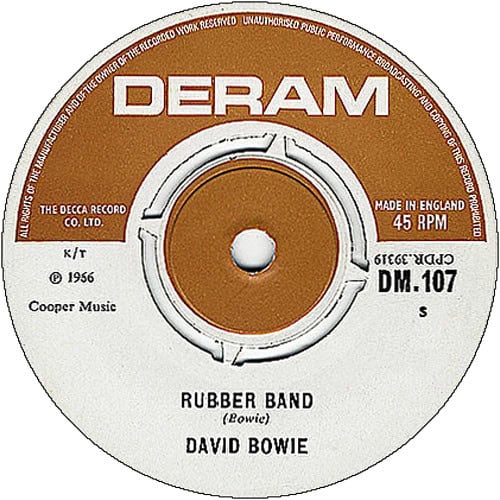
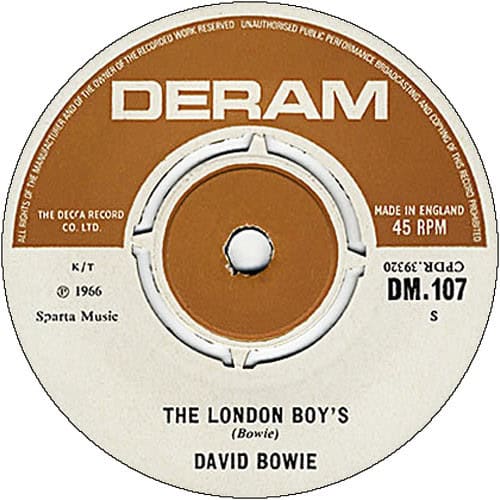
The final performance by The Buzz took place on the same day that Deram released Bowie’s new single. Rubber Band, backed with The London Boys, appeared in the United Kingdom on 2 December 1966.
Both sides had been recorded at RG Jones Studios on 18 October. Eager played drums on the single, with Derek Fearnley on bass and Derek Boyes on piano. Although The Buzz contributed to the recordings, the release was credited to David Bowie alone.
The timing created a clear dividing point in Bowie’s early career. A record featuring members of The Buzz entered the shops on the day the group played its final concert, while Bowie had already begun working on the album that Deram intended to release under his own name.
Rubber Band did not enter the national charts. Its musical direction nevertheless differed markedly from Bowie’s preceding Pye singles, using a theatrical vocal and brass-band setting rather than attempting to reproduce the sound of a conventional rhythm-and-blues group.
For Eager, the release added two further commercially issued Bowie recordings to his documented work. Unlike I Dig Everything, where his contribution was confined to an abandoned earlier attempt, his drumming can be heard on the released 1966 versions of both Rubber Band and The London Boys.
The end of the band, but not the recording connection
The dissolution of The Buzz ended Eager’s role as Bowie’s regular live drummer, but it did not immediately end his involvement in Bowie’s studio work. Recording of Bowie’s first album had already begun, and Eager, Boyes and Fearnley continued to participate in selected sessions.
Their subsequent studio contributions should not be described as a continuation of The Buzz as a functioning live band. After 2 December 1966, Bowie was being developed as a solo artist and different session musicians were brought in according to the requirements of individual songs.
Eager’s album work must therefore be examined recording by recording. His established presence on some tracks does not mean that he played drums throughout the entire album, and the varying personnel used during the sessions must be preserved in any accurate account of his contribution.
Recording Bowie’s first album
Recording for Bowie’s first full-length album began while The Buzz was still active as his live backing group. The sessions took place at Decca Studios, located at 165 Broadhurst Gardens in West Hampstead, London.
The album was produced by Mike Vernon and engineered by Gus Dudgeon. Instead of recording every song with one fixed band, Vernon combined musicians associated with The Buzz with guitarists, orchestral players and other session musicians selected for individual arrangements.
John Eager was among the principal musicians retained from Bowie’s live group. Derek Fearnley played bass and also worked with Bowie on arrangements, while Derek Boyes contributed piano and organ. Their involvement gave the album a direct connection to The Buzz, but the expanding instrumentation meant that the recordings were not simply studio reproductions of the group’s live performances.
The album sessions extended beyond the final concert by The Buzz. Eager’s work must therefore be understood in two related phases: first as the drummer in Bowie’s functioning live band, and then as a returning studio musician on recordings made after that band had ceased to operate.
The first album session – 14 November 1966
The first official session for the album took place on Monday 14 November 1966. Two songs were recorded: Uncle Arthur and She’s Got Medals.
John Eager played drums on both recordings. Derek Fearnley played bass, while guitarist John Renbourn and additional session musicians contributed to the arrangements.
Derek Boyes was unable to attend the session because of suspected appendicitis. His keyboard parts were added at a later date. The finished recordings consequently include Boyes, but his contribution was not performed at the original 14 November session alongside Eager.
This distinction demonstrates how the album was assembled through a combination of basic recording sessions and later overdubs. The credited personnel on a finished track did not necessarily perform together in the studio at the same moment.
Uncle Arthur
David Bowie – Uncle Arthur, featuring John Eager on drums
Uncle Arthur became the opening track on the completed album. The song presented a character whose apparently independent adult life remained controlled by his relationship with his mother.
The arrangement combined Bowie’s vocal with guitar, bass, drums and additional instrumentation including oboe and shawm. Eager’s drums formed part of a recording that already showed the wider instrumental palette being developed for the album.
Eager’s participation is directly documented in the personnel for the released recording. Uncle Arthur can therefore be included without qualification among the album tracks on which he played drums.
She’s Got Medals
David Bowie – She’s Got Medals, featuring John Eager on drums
She’s Got Medals was recorded at Decca Studios on 14 November 1966, the first official recording day for Bowie’s debut album. Bowie sang the lead vocal and added handclaps, while Eager played drums and Derek Fearnley played bass.
John Renbourn contributed guitar. Derek Boyes was unable to attend the original session because of suspected appendicitis, so his piano and organ parts were added at a later date.
The song told the story of a woman who assumed a male identity, entered the army and subsequently returned to life as a woman. For the purposes of documenting Eager’s career, the important point is that his drumming was retained on the master released on Bowie’s 1967 debut album.
The 24 November album session
Bowie returned to Decca Studios on 24 November 1966. Four songs were recorded during the session: There Is a Happy Land, We Are Hungry Men, Join the Gang and Did You Ever Have a Dream.
The session took place one day before Bowie and Ralph Horton informed Eager, Fearnley and Boyes that The Buzz would be dissolved. Eager was therefore still officially a member of Bowie’s live backing group when the recordings were made.
Eager played drums on all four songs. Boyes contributed keyboards, Fearnley played bass, and additional musicians were used according to the requirements of the individual arrangements.
There Is a Happy Land
David Bowie – There Is a Happy Land, featuring John Eager on drums
There Is a Happy Land was written from the perspective of childhood and described a world existing beyond the control and understanding of adults. It became the fifth song on the British edition of David Bowie’s debut album.
The recorded personnel includes John Renbourn on guitar, Derek Boyes on organ, Derek Fearnley on bass and John Eager on drums, together with additional session musicians. Eager’s contribution was included in the finished album master.
We Are Hungry Men
David Bowie – We Are Hungry Men, featuring John Eager on drums
We Are Hungry Men was recorded at Decca Studios on 24 November 1966. The song presented a fictional society confronting overpopulation and authoritarian control. Its spoken passages involved producer Mike Vernon and engineer Gus Dudgeon, while Bowie delivered the principal vocal performance.
The instrumental personnel included John Renbourn on guitar, Derek Boyes on organ, Derek Fearnley on bass and John Eager on drums. Additional musicians whose individual identities have not all been established contributed to the arrangement.
The song appeared on the British album released in 1967 but was omitted from the original United States edition. This difference between the two releases did not alter Eager’s documented credit on the recording itself.
Join the Gang
David Bowie – Join the Gang, featuring John Eager on drums
Bowie had written Join the Gang earlier in November 1966. The recording combined the continuing rhythm section of Derek Fearnley and John Eager with piano and organ from Derek Boyes.
Session musician Big Jim Sullivan contributed sitar and acoustic guitar. His presence added another instrumental colour to the song and illustrated the way in which experienced session players were incorporated alongside musicians from The Buzz.
Eager is directly credited with drums on the released version. The song was subsequently placed on side two of Bowie’s debut album.
Did You Ever Have a Dream
David Bowie – Did You Ever Have a Dream, featuring John Eager on drums
Did You Ever Have a Dream was recorded at Decca Studios on 24 November 1966. Big Jim Sullivan played banjo, Derek Boyes contributed treated piano, Derek Fearnley played bass and John Eager played drums. Trumpets were added by musicians whose names have not been securely documented, while Gus Dudgeon supplied the sound of breaking glass.
The song was considered for Bowie’s debut album and appeared on an early provisional acetate, but it was removed from the final running order. It was later released as the B-side of Love You Till Tuesday on 14 July 1967.
Although Did You Ever Have a Dream was not included on the original album, it remains part of Eager’s officially released work with Bowie. His participation is documented on the recording made during the album sessions and issued the following year.
Six confirmed album-period recordings
The sessions of 14 and 24 November establish Eager’s participation on six recordings: Uncle Arthur, She’s Got Medals, There Is a Happy Land, We Are Hungry Men, Join the Gang and Did You Ever Have a Dream.
Five of these recordings appeared on Bowie’s first album, while Did You Ever Have a Dream was released separately as a single B-side. Further sessions followed in December 1966 and February 1967, adding more titles to Eager’s documented studio work with Bowie.
The December 1966 album sessions
Eager returned to Decca Studios less than one week after the final live performance by The Buzz. On 8 and 9 December 1966, Bowie recorded four further songs for his debut album: Sell Me a Coat, Little Bombardier, Silly Boy Blue and Maid of Bond Street.
Mike Vernon again produced the recordings, with Gus Dudgeon working as engineer. John Eager played drums on all four songs, while Derek Fearnley continued on bass and Derek Boyes supplied keyboard parts where required.
These sessions took place after The Buzz had completed its final engagement in Shrewsbury. Eager, Fearnley and Boyes were therefore no longer functioning as Bowie’s regular live backing group, even though their established musical relationship continued in the studio.
Additional musicians were employed for the individual arrangements. Their presence reflected the method already used during the November sessions: a core rhythm section was combined with guitarists, orchestral players and other instruments selected for each composition.
Sell Me a Coat
David Bowie – Sell Me a Coat, featuring John Eager on drums
Sell Me a Coat was recorded during the sessions of 8 and 9 December. Bowie provided the lead vocal, John Renbourn played guitar, Derek Fearnley played bass and John Eager played drums. Additional musicians also contributed to the finished arrangement.
The song used the changing seasons as the setting for a failed relationship. Its recurring winter imagery supported a recording that combined a conventional rhythm section with the broader instrumental character of the album.
Sell Me a Coat was initially considered as a possible follow-up to Rubber Band, but it was not released as a single at that stage. It became the second track on the British edition of Bowie’s debut album.
The recording was later altered for the promotional film Love You Till Tuesday. New vocals by Bowie, Hermione Farthingale and John “Hutch” Hutchinson were recorded on 25 January 1969. Those later additions did not replace Eager’s original drum performance from December 1966.
Little Bombardier
David Bowie – Little Bombardier, featuring John Eager on drums
Little Bombardier was recorded at Decca Studios on 8 and 9 December 1966. The recording featured Bowie on vocals, Derek Boyes on harpsichord, Derek Fearnley on bass and John Eager on drums, together with additional session musicians.
Written in waltz time, the song told the story of Frankie Mear, a lonely former serviceman whose friendship with two children leads to suspicion and his eventual departure from the town in which he lives.
The use of harpsichord and orchestral instrumentation placed Eager’s drums within an arrangement that differed from the beat and rhythm-and-blues material The Buzz had performed earlier in 1966. His participation is directly credited on the released album master.
Little Bombardier became the opening track on side two of the British album. Its title was misspelled as Little Bombadier on the cover of the original United States release, but the recording itself was unchanged.
Silly Boy Blue
David Bowie – Silly Boy Blue, featuring John Eager on drums, Chinese gong and backing vocals
Bowie had first developed an earlier version of Silly Boy Blue before Eager joined him. By the time of the December 1966 sessions, the lyrics and presentation had been substantially revised to reflect Bowie’s growing interest in Tibetan Buddhism.
The album recording featured David Bowie on vocals, Derek Boyes on piano and backing vocals, Derek Fearnley on bass and backing vocals, and John Eager on drums and backing vocals. Eager is also credited with playing Chinese gong. Marion Constable contributed additional vocals, while orchestral instruments included trumpet, cello and violin.
The first verse was arranged without a conventional drum pattern. Eager’s full drum part entered later in the recording, while the Chinese gong contributed to the song’s wider instrumental setting.
The recording demonstrates that Eager’s contribution to the album was not limited to a standard drum-kit role. On Silly Boy Blue, his credited work also included backing vocals and additional percussion.
The song was included as the second track on side two of the album. Bowie later recorded and performed other versions with different musicians, but those subsequent recordings should not be attributed to Eager.
Maid of Bond Street
David Bowie – Maid of Bond Street, featuring John Eager on drums
Maid of Bond Street was completed during the album sessions held at Decca Studios on 8 and 9 December 1966. Bowie used the song to portray a fashionable young woman associated with the commercial and social world surrounding London’s Bond Street.
The documented personnel included Bowie on vocals, Big Jim Sullivan on guitar, Derek Boyes on piano, Derek Fearnley on bass and John Eager on drums. Additional session musicians were also used.
Like Little Bombardier, the song was written in waltz time. Its concise arrangement became the penultimate track on the British edition of Bowie’s debut album.
Maid of Bond Street was omitted from the original United States edition, together with We Are Hungry Men. The omission concerned the configuration of the American album and does not change Eager’s documented participation in the recording.
Studio work after The Buzz
The December sessions confirm that Bowie’s decision to dissolve The Buzz did not represent an immediate rejection of the musicians with whom he had worked throughout 1966. Eager, Fearnley and Boyes continued to provide parts for the album after their regular live role had ended.
Their contributions were nevertheless made within a different professional structure. Bowie was now recording as a solo artist under the direction of a producer, with changing combinations of musicians selected for each arrangement.
Eager’s role during these sessions was consequently that of a returning studio drummer and vocalist with prior knowledge of Bowie’s work. He was no longer part of a band that would automatically accompany Bowie at every live appearance or recording session.
Ten released album-period performances
The four December recordings brought the number of confirmed Eager performances from the album sessions to ten. Nine of those tracks were later included on the British edition of David Bowie, while Did You Ever Have a Dream was issued separately as a single B-side.
The confirmed recordings at this stage were Uncle Arthur, She’s Got Medals, There Is a Happy Land, We Are Hungry Men, Join the Gang, Did You Ever Have a Dream, Sell Me a Coat, Little Bombardier, Silly Boy Blue and Maid of Bond Street.
Further recording sessions followed in early 1967. These produced Bowie’s next single and completed additional material for the album, extending Eager’s documented studio association with Bowie beyond the end of The Buzz.
Returning to Decca in January 1967
After the December album sessions, Eager returned to Decca Studios for another Bowie recording project. On 26 January 1967, backing tracks were recorded for The Laughing Gnome and The Gospel According to Tony Day.
The two songs were planned as a separate single rather than as part of the final running order of Bowie’s debut album. Mike Vernon produced the session, Gus Dudgeon worked as engineer and Derek Fearnley prepared the arrangement for The Laughing Gnome.
The session again combined former members of The Buzz with additional musicians. John Eager played drums, Fearnley played bass and Derek Boyes contributed keyboards. Guitarist Pete Hampshire and organist Bob Michaels were among the musicians brought in for the new recordings.
Hampshire had unsuccessfully auditioned as a possible replacement for John Hutchinson in The Buzz during June 1966. His appearance at the January session did not make him a former member of the group; he participated as an additional guitarist after The Buzz had already ceased to exist.
The Laughing Gnome
David Bowie – The Laughing Gnome, featuring John Eager on drums
The backing track for The Laughing Gnome was recorded at Decca Studios on 26 January 1967. The documented personnel included David Bowie, Pete Hampshire on guitar, Derek Boyes on organ, Derek Fearnley on bass and John Eager on drums.
The recording was structured as a novelty song in which Bowie encounters a gnome and exchanges a series of wordplays with the character. Its final form depended not only on the instrumental backing track but also on vocal and tape-speed effects added during later sessions.
Eager’s contribution belonged to the initial instrumental recording. His drums provided the rhythmic foundation beneath the guitar, bass, organ and the woodwind parts added by other musicians.
The track is another example of Eager working within an arrangement far removed from the live rhythm-and-blues repertoire with which The Buzz had begun in February 1966. By January 1967, Bowie’s recordings regularly combined the former group’s rhythm section with theatrical writing, unusual characters and additional studio instrumentation.
The Gospel According to Tony Day
David Bowie – The Gospel According to Tony Day, featuring John Eager on drums
The Gospel According to Tony Day was recorded during the same session as the backing track for The Laughing Gnome on 26 January 1967. Its working title was The Gospel According to Tony Day Blues.
The documented personnel consisted of Bowie on vocals, Pete Hampshire on guitar, Derek Fearnley on bass and vocals, Bob Michaels on organ and John Eager on drums. Bassoon and oboe were played by musicians whose identities have not been securely established.
Unlike The Laughing Gnome, which required several later overdub sessions, The Gospel According to Tony Day was completed on 26 January. It was subsequently selected as the B-side of the forthcoming single.
Eager can therefore be credited without qualification as the drummer on the released recording. His work on the song extended his studio association with Bowie into 1967, several weeks after their final performance together as members of The Buzz.
Former band members and additional musicians
The January session illustrates the difference between The Buzz as a former live group and the continuing use of its individual musicians. Eager, Fearnley and Boyes were present because Bowie and the production team continued to employ them for recording work, but the single was not made by a re-formed version of The Buzz.
Pete Hampshire and Bob Michaels were added according to the needs of the two songs. Woodwind players and later vocal contributions further expanded the personnel beyond the line-up that had performed with Bowie during 1966.
The recording should therefore be described as a David Bowie studio session featuring former members of The Buzz, rather than as a new single recorded by David Bowie and The Buzz as an active band.
The vocal sessions for The Laughing Gnome
The instrumental recording made on 26 January did not complete The Laughing Gnome. Bowie returned to Decca Studios on 7 February 1967 to record vocal overdubs.
Gus Dudgeon supplied the voice of the second gnome. The high-pitched vocal effect was created by recording voices with the tape running at a different speed and then playing the tape back at its normal setting.
Further vocals were added on 10 February 1967. These sessions concentrated on Bowie’s performance, Dudgeon’s character voice and the exchanges between them. Eager’s documented drum contribution remained the backing track recorded on 26 January; no additional drum recording is attributed to him during the February vocal sessions.
The song was still not completely finished after the 10 February session. Further work followed in March, but before that final work took place Bowie returned to Decca Studios to complete additional recordings for his debut album.
Two more confirmed Eager recordings
The January session added two further titles to Eager’s documented work with Bowie: The Laughing Gnome and The Gospel According to Tony Day. Both were prepared for commercial release and both retained his drum performance.
These recordings show that Eager’s association with Bowie continued beyond the formal life of The Buzz. By this point he was no longer Bowie’s regular stage drummer, but he remained part of the pool of musicians used during Bowie’s first months as a Deram recording artist.
The final album recording session
The final recording session for Bowie’s debut album took place at Decca Studios on Saturday 25 February 1967. The session ran from 10am until 6pm and produced three recordings: a new version of Rubber Band, together with Love You Till Tuesday and When I Live My Dream.
All three songs were arranged by Bowie and Arthur Greenslade. Mike Vernon remained the producer and Gus Dudgeon the engineer. John Eager returned on drums, with Derek Fearnley on bass and Derek Boyes on keyboards.
A new stereo recording of The London Boys was also considered for the session but was not made. The version issued as the B-side of Rubber Band therefore remained the recording completed at RG Jones Studios on 18 October 1966.
The album version of Rubber Band
David Bowie – Rubber Band, 1967 album version featuring John Eager on drums
The first version of Rubber Band had been recorded with Eager, Fearnley and Boyes on 18 October 1966 and released as a single on 2 December. Bowie chose to record the song again for inclusion on his debut album.
The album version was a separate performance rather than a remix or edit of the earlier single master. It was recorded at a slower tempo and was approximately twenty seconds longer. Bowie also changed the year mentioned in the lyric from 1912 to 1910.
The personnel again included Derek Boyes on organ, Derek Fearnley on bass and John Eager on drums. Additional brass and woodwind parts were played by session musicians, while Arthur Greenslade worked with Bowie on the arrangement.
Eager can consequently be heard on two different studio versions of Rubber Band: the October 1966 single recording and the February 1967 album remake. Both versions were commercially released, but they should be listed as separate performances in his recording history.
Love You Till Tuesday
David Bowie – Love You Till Tuesday, 1967 album version featuring John Eager on drums
The album version of Love You Till Tuesday was recorded on 25 February 1967. The documented personnel consisted of Bowie on vocals, John Renbourn on guitar, Derek Boyes on piano, Derek Fearnley on bass and John Eager on drums, together with additional session musicians.
Bowie and Arthur Greenslade prepared the arrangement. The song used a sequence of days to frame a comic declaration of affection that might not last beyond the following Tuesday.
This February recording became the version included on Bowie’s debut album. A different version was made on 3 June 1967 for release as a single. Eager is credited on the February album recording, but his presence should not automatically be transferred to the separately recorded June version.
The distinction is particularly important because the album and single versions have sometimes been grouped together in general discographies. For an accurate account of Eager’s work, his confirmed contribution is the album master recorded on 25 February.
When I Live My Dream
David Bowie – When I Live My Dream, 1967 album version featuring John Eager on drums
When I Live My Dream was the third song recorded during the final album session. Bowie sang the lead vocal, with John Renbourn on guitar, Derek Boyes on organ, Derek Fearnley on bass and John Eager on drums. Other session musicians contributed to the orchestral setting.
The arrangement was again prepared by Bowie and Arthur Greenslade. The recording became the final track on side one of the British edition of the album.
Bowie recorded another version of When I Live My Dream on 3 June 1967. Although that later performance was considered for release and was subsequently used in the promotional film Love You Till Tuesday, it was distinct from the album recording featuring Eager.
Eager should therefore be credited specifically with the drum performance on the 25 February album version. No assumption is made here about his participation in the later remake.
Completing the album
The 25 February session completed the principal recording work for Bowie’s debut album. Final work on the mixes took place on 1 March 1967.
The album was prepared in both mono and stereo. Differences between the two editions resulted from the mixing process and do not represent separate drum performances by Eager.
The sessions had extended from 14 November 1966 until the beginning of March 1967. Eager’s participation therefore covered the first day of album recording, sessions made immediately before and after the end of The Buzz, and the final day on which new performances were recorded.
The two album tracks without Eager
The British edition of David Bowie contained fourteen songs. John Eager is credited with drums on twelve of those recordings.
He is not credited on Come and Buy My Toys. That song was built around Bowie’s vocal and the acoustic playing of John Renbourn, with bass from Derek Fearnley, and did not include a drum part from Eager.
Eager is also not credited on the released album version of Please Mr Gravedigger. The track was presented as a largely unaccompanied dramatic performance by Bowie, using studio-created environmental and vocal effects instead of a conventional instrumental backing.
These two exceptions are important because the general personnel listing for the album identifies Eager simply as its drummer. That overall credit should not be interpreted as evidence that he performed on all fourteen tracks.
John Eager‘s twelve album performances
Eager’s confirmed performances on the British edition of David Bowie are:
- Uncle Arthur
- Sell Me a Coat
- Rubber Band – album version
- Love You Till Tuesday – album version
- There Is a Happy Land
- We Are Hungry Men
- When I Live My Dream – album version
- Little Bombardier
- Silly Boy Blue
- Join the Gang
- She’s Got Medals
- Maid of Bond Street
In addition to these twelve album tracks, Eager played on Did You Ever Have a Dream, which was recorded during the album sessions but removed from the final running order. It was subsequently released as a single B-side.
This gives a more precise account than describing Eager only as “the drummer on David Bowie’s first album.” He was the principal drummer used across most of the record, but the album also included two tracks on which he did not perform.
Completing The Laughing Gnome
After the final album mixes were prepared, work continued on The Laughing Gnome. The instrumental backing featuring John Eager had already been recorded on 26 January 1967, and Bowie’s vocals and Gus Dudgeon‘s character voice had been added during February.
The recording was completed at Decca Studios on 8 March 1967. The final work concerned the vocal presentation and the balance of the gnome voices rather than a replacement of Eager’s original drum performance.
The completed master retained Eager on drums, Derek Fearnley on bass, Derek Boyes on organ and Pete Hampshire on guitar. Dudgeon supplied the second gnome voice in addition to his work as recording engineer.
Bowie and The Riot Squad
During the spring of 1967, Bowie began appearing with another group, The Riot Squad. This was a separate band with its own established musicians and should not be treated as a later version of The Buzz.
The Riot Squad‘s drummer was Derek “Del” Roll. There is no reliable evidence that Eager performed as a member of the group or took part in the recordings Bowie made with them.
Bowie’s association with The Riot Squad therefore marks a clear separation from Eager’s earlier role. Eager remained represented on recordings awaiting release, but he was no longer the drummer in Bowie’s current live band.
The release of The Laughing Gnome
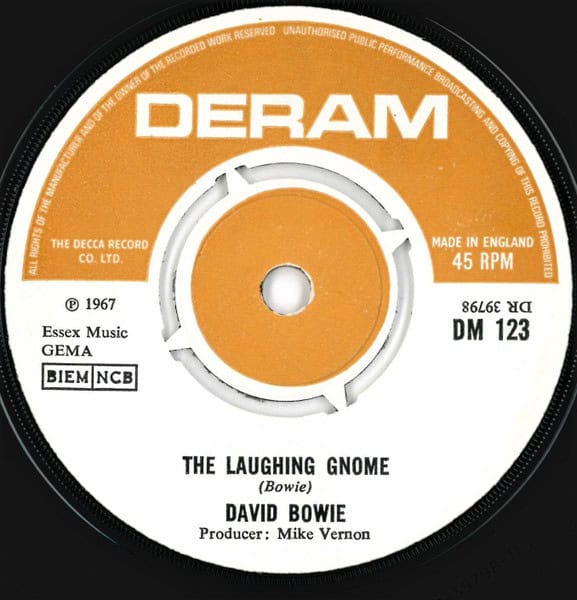
Deram released The Laughing Gnome in the United Kingdom on 14 April 1967. The Gospel According to Tony Day appeared on the B-side. Both recordings featured John Eager on drums.
The single did not enter the British charts when first released. It nevertheless became one of the most widely recognised recordings from Bowie’s Deram period after his later commercial success brought renewed attention to his early catalogue.
Decca reissued The Laughing Gnome in Britain in 1973. The reissue reached number six on the UK singles chart. This later success came from the same recording containing Eager’s 1967 drum performance; he did not return to record a new version for the reissue.
The distinction matters because the 1973 chart appearance is part of the release history of Eager’s original recording, not evidence of a renewed studio collaboration with Bowie.
The release of David Bowie
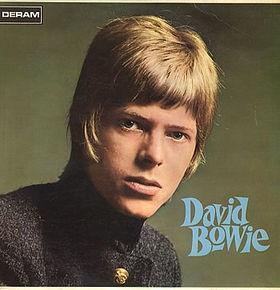
Bowie’s self-titled debut album was released by Deram in the United Kingdom on 1 June 1967. It appeared in separate mono and stereo editions.
John Eager was credited as the album’s drummer and performed on twelve of its fourteen tracks. He also supplied backing vocals on selected recordings and played Chinese gong on Silly Boy Blue.
The album brought together recordings made between November 1966 and February 1967. Its changing combinations of former Buzz members, guitarists and orchestral musicians reflected Bowie’s transition from a singer working with a regular backing group to a solo recording artist supported by musicians selected for individual sessions.
The album was not a commercial success. Its release did not establish Bowie as a major recording artist, and his wider breakthrough remained more than two years away.
The original United States edition was released on 11 August 1967. It omitted We Are Hungry Men and Maid of Bond Street, both of which featured Eager. The British edition therefore contains two more Eager performances than the original American configuration.
The later version of Love You Till Tuesday
On 3 June 1967, two days after the album appeared, Bowie returned to Decca Studios to record new versions of Love You Till Tuesday and When I Live My Dream.
These were separate recordings made after completion of the album. The new version of Love You Till Tuesday used an orchestral arrangement by Ivor Raymonde and was prepared for single release.
Eager is not reliably credited as the drummer on the 3 June remakes. His confirmed involvement remains with the album versions recorded on 25 February. The later recordings should therefore not be added to his discography without direct personnel evidence.
Did You Ever Have a Dream as a single B-side
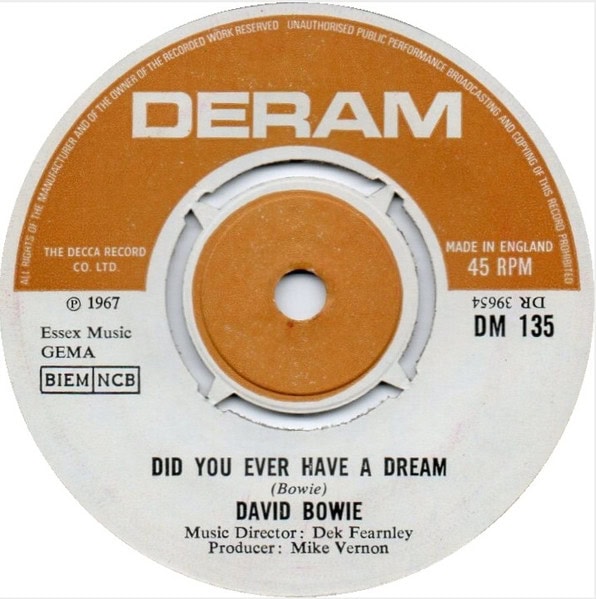
The new version of Love You Till Tuesday was released in the United Kingdom on 14 July 1967. Its B-side was Did You Ever Have a Dream, recorded on 24 November 1966 with Eager on drums.
The two sides of the single came from different sessions. Eager is confirmed on the B-side but is not credited here with the newly recorded A-side. Listing him generally as the drummer on the entire single would therefore be misleading.
The single did not enter the British charts. It was subsequently released in the United States on 28 August 1967, again with Eager’s performance on Did You Ever Have a Dream as the B-side.
The end of the documented collaboration
Eager’s final confirmed new recording performance with Bowie took place during the album session of 25 February 1967. The subsequent mixing and vocal sessions retained earlier drum tracks but did not document a new performance by him.
Later releases continued to make his work available. Album reissues, compilations and the successful 1973 reissue of The Laughing Gnome all reused recordings made during 1966 and early 1967.
No reliable evidence has been found that Eager returned to Bowie’s live or studio groups after this period. He should not be connected to The Riot Squad, Bowie’s later BBC sessions or any subsequent touring ensemble without supporting documentation.
What is known about Eager’s later life
Reliable published information about John Eager‘s professional and personal life after his work with Bowie is extremely limited. No verified account has been located that supports a detailed narrative of later bands, recording projects or other employment.
For that reason, this page does not attempt to create a later-career biography from namesakes, incomplete database entries or unsupported online claims. The absence of information should be acknowledged rather than filled with assumptions.
Eager’s documented place in music history rests on the work that can be verified: his months as Bowie’s regular drummer in The Buzz, the group’s extensive 1966 live schedule and his participation in studio recordings released by Pye and Deram.
Confirmed released recordings with David Bowie
John Eager‘s documented work with Bowie includes nineteen distinct commercially released recordings. This total counts the 1966 single and 1967 album versions of Rubber Band separately because they were different studio performances.
The following list includes only recordings on which Eager’s participation is directly supported by the available personnel information:
- Do Anything You Say – drums and vocals
- Good Morning Girl – drums and vocals
- Rubber Band – 1966 single version, drums
- The London Boys – drums
- Uncle Arthur – drums
- Sell Me a Coat – drums
- Rubber Band – 1967 album version, drums
- Love You Till Tuesday – 1967 album version, drums
- There Is a Happy Land – drums
- We Are Hungry Men – drums
- When I Live My Dream – 1967 album version, drums
- Little Bombardier – drums
- Silly Boy Blue – drums, Chinese gong and backing vocals
- Join the Gang – drums
- She’s Got Medals – drums
- Maid of Bond Street – drums
- Did You Ever Have a Dream – drums
- The Laughing Gnome – drums
- The Gospel According to Tony Day – drums
This list does not credit Eager with the released version of I Dig Everything, its B-side I’m Not Losing Sleep, the June 1967 single remake of Love You Till Tuesday or the later version of When I Live My Dream. Reliable personnel information does not establish his participation on those recordings.
Other documented sessions
Eager also took part in recordings that were abandoned, replaced or not commercially released in their original form. These sessions remain part of his working history with Bowie, but they must be kept separate from his released discography.
He participated in the new television backing track for Can’t Help Thinking About Me, prepared for Bowie’s appearance on Ready Steady Go! in March 1966. He did not play on the original Pye single recorded with The Lower Third.
Eager also took part in the unsuccessful group attempt to record I Dig Everything on 6 June 1966. Tony Hatch rejected that performance and made the released master with session musicians on 5 July.
The early version of The Gravedigger, recorded at RG Jones Studios on 18 October 1966, also involved Eager as part of the documented session personnel. Bowie later recorded the composition again as Please Mr Gravedigger. The released album version did not include Eager.
John Eager‘s place in Bowie’s early career
John Eager‘s association with Bowie belonged to a short but active period between February 1966 and early 1967. He was not a member of Bowie’s later touring groups and did not participate in the albums through which Bowie achieved international recognition during the 1970s.
His importance rests instead on his presence during Bowie’s transition from the final months of his rhythm-and-blues and mod period into the more individual material recorded for Deram. Eager worked with Bowie before commercial success, when live engagements, television exposure and recording opportunities were still being pursued without any guarantee of a breakthrough.
As the drummer in The Buzz, he supported Bowie through a demanding schedule of club and ballroom appearances. The Marquee performances, the Bowie Showboat residency and the appearance on Ready Steady Go! placed Eager within Bowie’s principal live group for most of 1966.
His studio work was more extensive than a description of him solely as “the drummer in The Buzz” might suggest. He played on Bowie’s first solo-billed single, both sides of Bowie’s first Deram single, twelve tracks on the 1967 debut album and the recordings that became The Laughing Gnome and its B-side.
Eager’s contributions also included backing vocals and, on Silly Boy Blue, Chinese gong. These credits reflect his role as a working band member capable of contributing beyond the drum kit when the arrangements required it.
Legacy
The historical record does not support exaggerated claims about Eager’s influence on Bowie’s later music. His documented collaboration ended before Space Oddity, The Hype, the Spiders from Mars and the other ensembles most commonly associated with Bowie’s international career.
What the record does establish is that Eager was one of Bowie’s regular musicians during a formative and professionally uncertain period. He performed with Bowie across Britain, appeared with him on television and contributed to recordings that document the development of Bowie’s writing and presentation during 1966 and 1967.
The recordings preserve Eager’s work even though reliable information about his wider life and career remains limited. His place in Bowie’s history is therefore best understood through the surviving performances themselves rather than through unsupported biographical claims.
John Eager was the drummer who accompanied Bowie through the complete live history of The Buzz and remained involved as a studio musician while Bowie completed his first album. That documented body of work provides a clear and lasting connection to the earliest phase of David Bowie’s career as a solo recording artist.
Official Website & Further Information
No verified official website or authorised social-media account for John Eager has been identified. Links belonging to other people with the same name have therefore not been included.
DavidBowieWorld.com is dedicated to documenting the careers of David Bowie’s collaborators through carefully researched historical information and, where available, first-hand contributions from the artists themselves. This page will continue to be updated as new verified information becomes available.
Article Origin
This article has been researched and written exclusively for DavidBowieWorld.com. It has been compiled from documented recording personnel, contemporary performance information, release histories and published research relating to David Bowie and The Buzz.
No personal contribution from John Eager has been claimed. Information about his background and later life has been omitted where reliable documentation could not be established.
© DavidBowieWorld.com — David Bowie Collaborations & Creative Circle Archive.
