
Derek “Del” Roll & David Bowie – Drummer in The Riot Squad
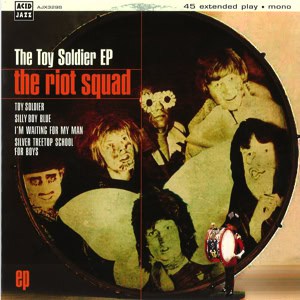
Image: David Bowie World collection / editorial use
Derek Michael Roll, better known in the 1960s as Derek “Del” Roll, was the drummer in The Riot Squad during the brief but fascinating period in which David Bowie worked with the band in spring 1967.
Roll was not a long-term Bowie collaborator, but he played drums in one of Bowie’s most curious early transitional groups: the line-up that rehearsed with Bowie, performed with him and recorded material including a version of I’m Waiting For The Man and Bowie’s provocative original Little Toy Soldier.
His Bowie connection belongs to the unstable moment between Bowie’s first Deram album and the more experimental, theatrical and underground influences that would soon become essential to his future work.
- Full name: Derek Michael Roll
- Known as: Derek “Del” Roll
- Born: 14 August 1946
- Role: Drums
- Band: The Riot Squad
- Bowie period: spring 1967
- Bowie-era line-up: David Bowie, Rod “Rook” Davies, Brian “Croak” Prebble, Bob Evans, George Butcher and Derek “Del” Roll
- Key recordings: I’m Waiting For The Man, Little Toy Soldier, Silly Boy Blue
- Important note: No publicly verified death date is currently known
Who was Derek “Del” Roll?
Derek “Del” Roll was a British drummer whose best-known Bowie connection came through The Riot Squad, a London group with a complicated history and many line-up changes.
Roll’s role in Bowie’s story is short but important. He was the drummer in the Riot Squad line-up that worked with Bowie in 1967, when Bowie was moving between his first solo album, his continuing search for a live band and his growing interest in more provocative underground material.
Because detailed public information about Roll’s wider life is limited, the safest and most historically accurate way to present him is through his documented work with The Riot Squad and his brief connection with Bowie.
Before Bowie: The Riot Squad
The Riot Squad existed before David Bowie joined them. The group was formed in 1964 and went through several line-ups, managers, producers and musical directions before Bowie became involved.
Earlier versions of The Riot Squad included musicians such as Graham Bonney, Ron Ryan, Bob Evans, Mitch Mitchell and others. The band recorded for Pye Records and became part of the busy London pop and club circuit of the mid-1960s.
Roll joined The Riot Squad before the Bowie period. His real name was Derek Michael Roll, and the stage name Del Roll became the form most closely associated with his Riot Squad work.
The Joe Meek period
Before Bowie entered the picture, The Riot Squad were also associated with producer Joe Meek, one of the most imaginative and eccentric figures in British pop recording.
The band recorded material at Meek’s Holloway Road studio, and this period contributed to their reputation as more than a straightforward beat group. The combination of stage energy, changing line-ups and experimental production surroundings helped create the environment Bowie later entered.
Roll’s drumming belonged to this pre-Bowie Riot Squad world. That matters because Bowie did not recruit Roll as an individual sideman. Bowie stepped into an existing band, and Roll was part of that already functioning unit.
The Bowie-era Riot Squad line-up
The best-documented Bowie-era Riot Squad line-up consisted of:
David Bowie – vocals, guitar, harmonica
Rod “Rook” Davies – guitar
Brian “Croak” Prebble – bass guitar, vocals
Bob Evans – saxophone, flute
George Butcher – keyboards
Derek “Del” Roll – drums
This was not a long-term Bowie band, but it is one of the most intriguing of his pre-fame collaborations. The group sits between the Deram album period and the later Bowie who would draw openly on mime, theatre, underground rock and more challenging forms of performance.
Bowie joins The Riot Squad
Bowie’s final show with The Buzz took place in late 1966. Although members of The Buzz remained involved in recordings for his debut album, Bowie spent the early part of 1967 without a stable regular backing group.
In March 1967, Bowie began rehearsing with The Riot Squad at The Swan pub in Tottenham, London. These rehearsals gave him a live band again at a moment when he was trying to take his songs, image and stage ideas into new territory.
Roll’s role was direct and practical: he was the drummer who helped drive this new Bowie/Riot Squad line-up during rehearsals, live performances and the studio recordings that followed.
Rehearsals at The Swan, Tottenham
The Swan pub in Tottenham became an important location in the Bowie/Riot Squad story. Bowie rehearsed there with the band over several consecutive days in March 1967.
At these rehearsals, Bowie brought in material that moved beyond ordinary club-band repertoire. The songs included his own compositions and covers that pointed toward the underground music he was beginning to absorb.
For Roll, this meant adapting to a frontman whose ideas were changing quickly. Bowie was no longer simply trying to be a rhythm-and-blues or mod singer. He was beginning to combine song, image, theatre, provocation and outside influences in a more personal way.
The Velvet Underground connection
One of the most historically important aspects of Bowie’s Riot Squad period is the early appearance of The Velvet Underground in his repertoire.
Bowie had recently encountered the first Velvet Underground album and was fascinated by its raw, confrontational sound. Long before he became widely known as one of the Velvets’ great British champions, he was already bringing their material into his own live and studio work.
The Riot Squad recording of I’m Waiting For The Man is therefore highly significant. It shows Bowie engaging with Velvet Underground material at a remarkably early stage, years before that influence became part of the standard Bowie narrative.
I’m Waiting For The Man
On 5 April 1967, Bowie and The Riot Squad recorded a version of I’m Waiting For The Man at Decca Studios.
This was not a commercial release at the time. It was an archival recording that later became important because it documents Bowie’s early fascination with the Velvet Underground.
Roll’s drumming on this material should be understood within that context. He was not playing on a polished pop single; he was part of a rougher, more exploratory session that captured Bowie testing a more underground direction.
Little Toy Soldier
The Bowie original Little Toy Soldier, also known as Toy Soldier, is one of the most striking recordings associated with Bowie and The Riot Squad.
The song is heavily influenced by the darker and more transgressive side of the Velvet Underground. It is far removed from the more whimsical surfaces of some of Bowie’s Deram material.
For Roll, the track represents one of the clearest surviving examples of his presence in Bowie’s Riot Squad period. The drummer’s role was to support a piece of music that was deliberately strange, theatrical and uncomfortable.
Silly Boy Blue
Silly Boy Blue is another song connected with the Riot Squad sessions. Bowie had already been developing the song during this period, and it would also appear on his 1967 debut album.
The Riot Squad-related material shows how Bowie was testing songs in different settings. He could move a composition between solo album arrangements, band performance and experimental demo or session contexts.
Roll’s presence in this phase places him inside Bowie’s working process at a time when songs were still fluid and arrangements were still changing.
Silver Tree Top School For Boys
Silver Tree Top School For Boys has sometimes been mentioned in connection with Bowie’s Riot Squad period. However, the band’s involvement with a recorded version is not as securely documented as the better-known recordings.
For historical accuracy, it is safest to treat Silver Tree Top School For Boys as a song associated with the same broad period, while avoiding a firm claim that a confirmed Riot Squad recording with Roll exists unless supported by a specific release or session source.
This caution is important because Bowie’s 1960s archive is full of demos, acetates, later releases, bootlegs and conflicting memories. A strong page should distinguish between confirmed recordings and likely or possible associations.
Live shows with Bowie
Bowie’s time with The Riot Squad appears to have lasted only a short period in spring 1967. One documented live appearance took place at Tiles on Oxford Street in London on 13 April 1967, with Bowie backed by The Riot Squad.
Contemporary descriptions suggest that Bowie’s presence pushed the band toward a more theatrical and visual stage act. This was the period when Bowie was also becoming interested in mime, make-up, costume and performance as something more than simply singing songs.
Roll’s drumming was part of that stage world: a live foundation underneath a frontman who was beginning to test ideas that would later become central to his identity.
The psychedelic and theatrical shift
The Riot Squad period is important because it shows Bowie moving away from ordinary band formats and toward a more theatrical and experimental idea of performance.
The group’s stage act reportedly involved visual exaggeration, costumes, flowers, make-up and moments of theatrical provocation. Bowie’s influence seems to have encouraged this more adventurous direction.
Roll was part of the rhythm section beneath that shift. His contribution may not be individually documented in great detail, but as the drummer in the Bowie-era line-up, he helped carry the music while the stage presentation became stranger and more ambitious.
Posthumous and archival releases
The recordings made by Bowie with The Riot Squad were not released at the time. For many years they circulated mainly as obscure archival material, of interest to collectors and serious Bowie historians.
Later releases such as The Last Chapter: Mods & Sods and The Toy Soldier made this material more widely available, allowing listeners to hear how different the Riot Squad recordings were from Bowie’s more polished Deram work.
These recordings are historically valuable because they capture Bowie at a point where his songwriting, influences and performance instincts were all in motion.
Video

Video: Little Toy Soldier

Video: Silly Boy Blue

Video: I’m Waiting For The Man

Video: Silver Treetop School for Boys
-
Video: Little Toy Soldier
BOWIE ~ RIOT SQUAD ~ LITTLE TOY SOLDIER -
Video: Silly Boy Blue
David Bowie The Riot Squad - Silly Boy Blue (demo 1967) -
Video: I’m Waiting For The Man
David Bowie & The Riot Squad - I’m Waiting For The Man (1967 Version / 2025 Stereo Mix) (Visualiser) -
Video: Silver Treetop School for Boys
The Riot Squad - Silver Treetop School for Boys
These videos document the Bowie/Riot Squad period and related archival material. They help place Derek “Del” Roll within the short but important 1967 phase in which Bowie worked with The Riot Squad and explored darker, more theatrical and more underground material.
The recordings from this period should be understood as archival documents rather than major contemporary releases. Their importance lies in what they reveal about Bowie’s direction at the time.
Why Derek “Del” Roll matters
Derek “Del” Roll matters because he was the drummer in one of Bowie’s last important pre-fame band experiments.
His role was not comparable to later major Bowie drummers such as Woody Woodmansey or Dennis Davis, and it should not be exaggerated. But Roll was present at a revealing moment: Bowie was beginning to move beyond the Deram image and toward something more confrontational and theatrical.
As drummer of The Riot Squad during this period, Roll helped support Bowie’s first known steps into Velvet Underground material and some of his strangest early songwriting.
Legacy within Bowie’s universe
Within David Bowie’s wider collaboration history, Derek “Del” Roll should be remembered as the drummer in the Bowie-era Riot Squad line-up of spring 1967.
His contribution was brief but historically meaningful. Through The Riot Squad, Roll became part of a transitional moment between Bowie’s first album and the more experimental, theatrical, underground-aware artist who would emerge in the years that followed.
The Riot Squad recordings are rough, strange and sometimes difficult, but that is exactly why they matter. They show Bowie reaching toward new possibilities, and Derek “Del” Roll was one of the musicians who helped carry that experiment.
