Derek Boyes & David Bowie – Keyboards in David Bowie and The Buzz
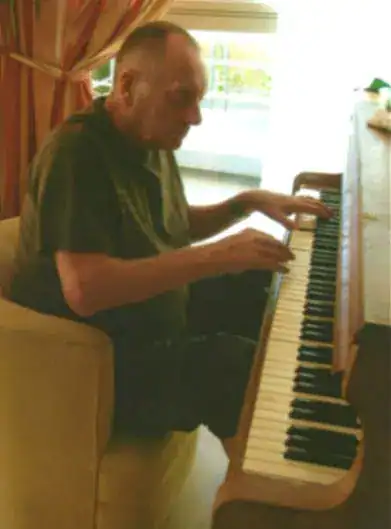
Image: David Bowie World collection / editorial use
Derek Boyes, born Derrick Boyes, was the keyboard player in David Bowie and The Buzz, the short-lived band that accompanied Bowie during the crucial 1966 transition into his Deram recording period.
Boyes played keyboards, including organ and piano, during the sessions that produced Rubber Band and The London Boys. His role places him at the exact moment when Bowie moved away from the mod-band identity of The Lower Third and toward the theatrical, music-hall-influenced songwriting of his 1967 debut album.
He was known in The Buzz by the nickname “Chow”, apparently to avoid confusion with the band’s bassist Derek “Dek” Fearnley.
- Real name: Derrick Boyes
- Common Bowie credit: Derek Boyes
- Nickname: “Chow”
- Born: 13 June 1944, Scarborough, North Yorkshire, England
- Died: 8 January 2011, Norfolk, England
- Role: Keyboards, organ, piano
- Bowie band: David Bowie and The Buzz
- Key recordings: Rubber Band, The London Boys
- Era: 1966 Deram transition period
Who was Derek Boyes?
Derek Boyes was a British keyboard player best remembered in Bowie history for his work with David Bowie and The Buzz. His birth name was Derrick Boyes, but the spelling Derek Boyes became attached to his Bowie credits and is the form most commonly seen by collectors and listeners.
Boyes was not a long-term Bowie collaborator, but his contribution belongs to a vital early moment. In 1966 Bowie was still searching for a clear artistic identity, moving quickly through bands, names, record labels and styles. The Buzz formed part of that restless search.
Boyes’s keyboards helped support Bowie’s first Deram recordings, where the music began to move away from straightforward rhythm and blues and mod rock toward the theatrical, character-based songwriting of Bowie’s first album.
Early life in Scarborough
Derrick Boyes was born in Scarborough, North Yorkshire, on 13 June 1944. He learned piano from an early age and began performing in teenage groups in the Scarborough area.
This local music scene brought him into contact with guitarist John “Hutch” Hutchinson, who would become an important figure in Bowie’s early career. Hutchinson’s connection later helped bring Boyes into Bowie’s orbit.
Like many young musicians of his generation, Boyes moved through local groups before reaching the London music scene. His keyboard skills made him useful at a time when organ and piano were central to many British beat, R&B and pop groups.
The John Hutchinson connection
John Hutchinson, often known simply as Hutch, was the link between Boyes and Bowie’s new band in 1966.
In early 1966, Bowie was assembling a new group after the collapse of The Lower Third. Hutchinson invited Boyes to audition for the band, and Boyes moved down to London for the first time.
This move brought Boyes into the small but intense world of Bowie’s mid-1960s career: club work, television opportunities, unstable line-ups, changing record labels and the constant search for a breakthrough.
David Bowie and The Buzz
David Bowie and The Buzz was one of Bowie’s final band identities before his 1967 solo debut album. The group followed The Lower Third and included musicians who helped Bowie through the period leading to his Deram contract.
The Buzz line-up associated with the 1966 Deram recordings included David Bowie on vocals and guitar, Derek Boyes on keyboards, Derek “Dek” Fearnley on bass guitar and John Eager on drums.
The band should not be confused with Bowie’s later, better-known collaborators. The Buzz did not become famous in their own right, but they played an important role in helping Bowie bridge the gap between his early mod singles and the theatrical pop of his first album.
Why “Chow”?
Boyes was known within the band by the nickname “Chow”. The most commonly repeated explanation is practical: there was already another Derek in the group, bassist Derek “Dek” Fearnley.
Nicknames were common in bands of the period, especially in close touring and recording environments. In Boyes’s case, “Chow” helped distinguish him from Fearnley and became part of the memory of Bowie’s Buzz period.
Rubber Band
Rubber Band was recorded on 18 October 1966 at RG Jones Studios in Morden, south-west London. It became Bowie’s first single for the Deram label and was released in the United Kingdom on 2 December 1966.
The recording moved Bowie sharply away from the mod attack of The Lower Third. Instead, Rubber Band introduced a music-hall and theatrical style, with brass-band imagery, First World War references and a strongly staged vocal performance.
Boyes is credited on the original recording as a keyboard player, with sources variously identifying his part as piano or organ depending on the release and documentation. The key point is that his keyboard contribution forms part of the first Deram sound world Bowie presented to the public.
The single failed to chart, but it was historically important because it helped open Bowie’s Deram period, the phase that led directly to his 1967 debut album.
The London Boys
The B-side of Rubber Band was The London Boys, one of Bowie’s strongest early songs. It had originally been connected to the Lower Third period but was reworked and recorded with The Buzz for the Deram single.
The London Boys is darker and more emotionally direct than Rubber Band. Its lyrics tell the story of a young person drawn into the London scene, with references to alienation, pills and the dangers of trying to belong.
Boyes’s organ part is important because it helps give the track its atmosphere. Where Rubber Band looks toward theatrical character-song writing, The London Boys still carries some of the mod-era darkness of Bowie’s previous work.
The Deram contract
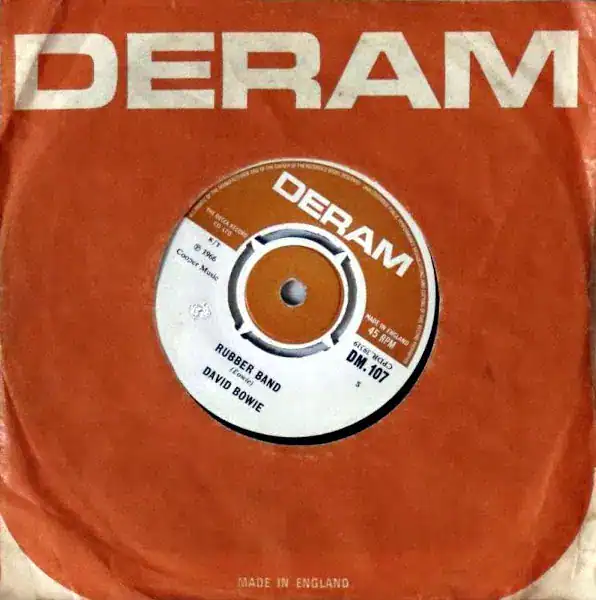
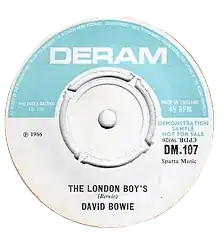
The October 1966 session that produced Rubber Band and The London Boys helped Bowie secure a contract with Deram, a subsidiary of Decca Records.
This was a significant moment. Bowie had released several unsuccessful singles under earlier names and with earlier bands, but Deram gave him the chance to record a full debut album.
Boyes’s presence at this turning point means that his contribution, while brief, belongs to one of the most consequential transitional moments in Bowie’s early career.
Please Mr Gravedigger
During the same broad recording period, Bowie also worked on an early version of what became Please Mr Gravedigger. The song would later be re-recorded for the 1967 album in a very different, theatrical form.
This material shows how quickly Bowie was changing. The Buzz period sits exactly between mod club-band Bowie and the more eccentric Deram songwriter who created character pieces, children’s songs, comic miniatures and strange theatrical scenes.
The 1967 debut album
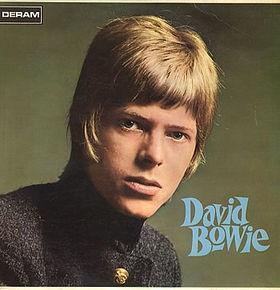
By the time Bowie’s debut album David Bowie was released in 1967, Boyes had already parted company with the band.
Because he was widely known by his nickname “Chow”, his real name was reportedly misspelled as Derek on the album sleeve, and that spelling remained attached to his Bowie history.
This is why the distinction between Derrick Boyes and Derek Boyes matters. The first is his real name; the second is the spelling by which many Bowie collectors know him.
After Bowie
After leaving Bowie’s band, Boyes joined The Truth. He later returned to Yorkshire and continued playing keyboards.
Unlike Bowie, Boyes did not become a major public figure. His musical life remained closer to the world of working musicians: local scenes, bands, keyboards and continued performance away from international celebrity.
Accounts of his later life emphasise that he never stopped playing music, even after his brief Bowie connection had become a matter of historical interest for collectors and researchers.
Death
Derrick Boyes died on 8 January 2011 in Norfolk. He was 65 years old.
His passing prompted renewed attention from Bowie historians because his small role sits at a crucial point in Bowie’s development. The Deram period has often divided listeners, but it remains essential for understanding how Bowie moved from R&B and mod bands toward theatrical songwriting and solo identity.
Why Derek Boyes matters
Derek Boyes matters in Bowie’s story because he was present at the threshold of the Deram era. He was not a major long-term collaborator, but he contributed keyboards to recordings that helped Bowie move into a new phase.
Rubber Band and The London Boys show two different sides of early Bowie: theatrical music-hall playacting on one side, and darker London youth observation on the other. Boyes’s keyboard work belongs to both.
His story also reminds us that Bowie’s early career was built through a sequence of short partnerships. Many of these musicians appeared briefly, but each helped Bowie test a different version of himself.
Legacy within Bowie’s universe
Within David Bowie’s wider collaboration history, Derek Boyes should be remembered as the keyboard player in David Bowie and The Buzz, active during the 1966 Deram transition period.
His contribution is modest but real: keyboards on Rubber Band and The London Boys, two recordings that stand at the doorway to Bowie’s first album.
Boyes did not shape Bowie’s mature sound in the way later collaborators would. But he was part of the process by which David Bowie moved from band frontman to solo artist, from mod hopeful to theatrical songwriter, and from Davy Jones into the artist who would soon become David Bowie.
